On April 1, 2026, India's SWM Rules 2026 — the new Solid Waste Management Rules — take effect, mandating four-stream waste segregation, digital traceability, and polluter pays enforcement across every urban local body. This is the most significant regulatory overhaul in Indian waste governance in a decade. Here is what the SWM Rules 2026 mean, what they demand, and where the implementation gaps remain.
Published: March 31, 2026 · Updated: March 31, 2026 · Reading time: 22 min
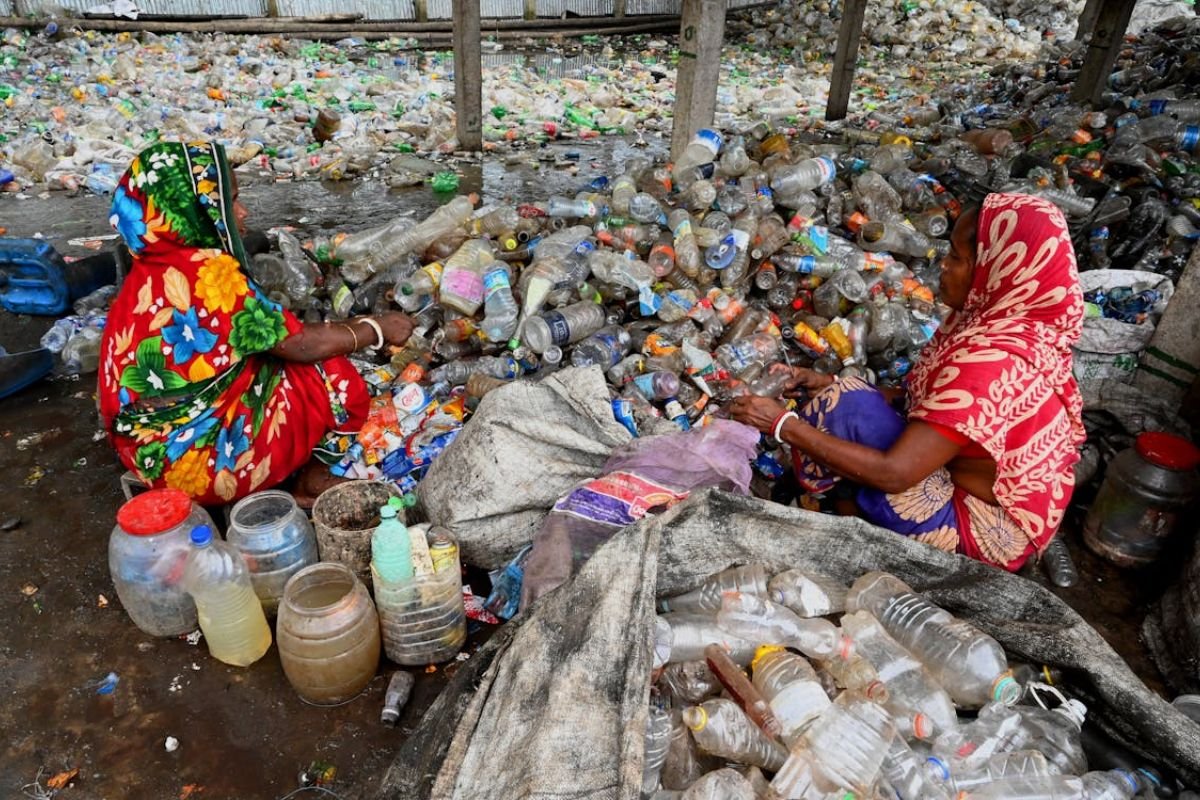
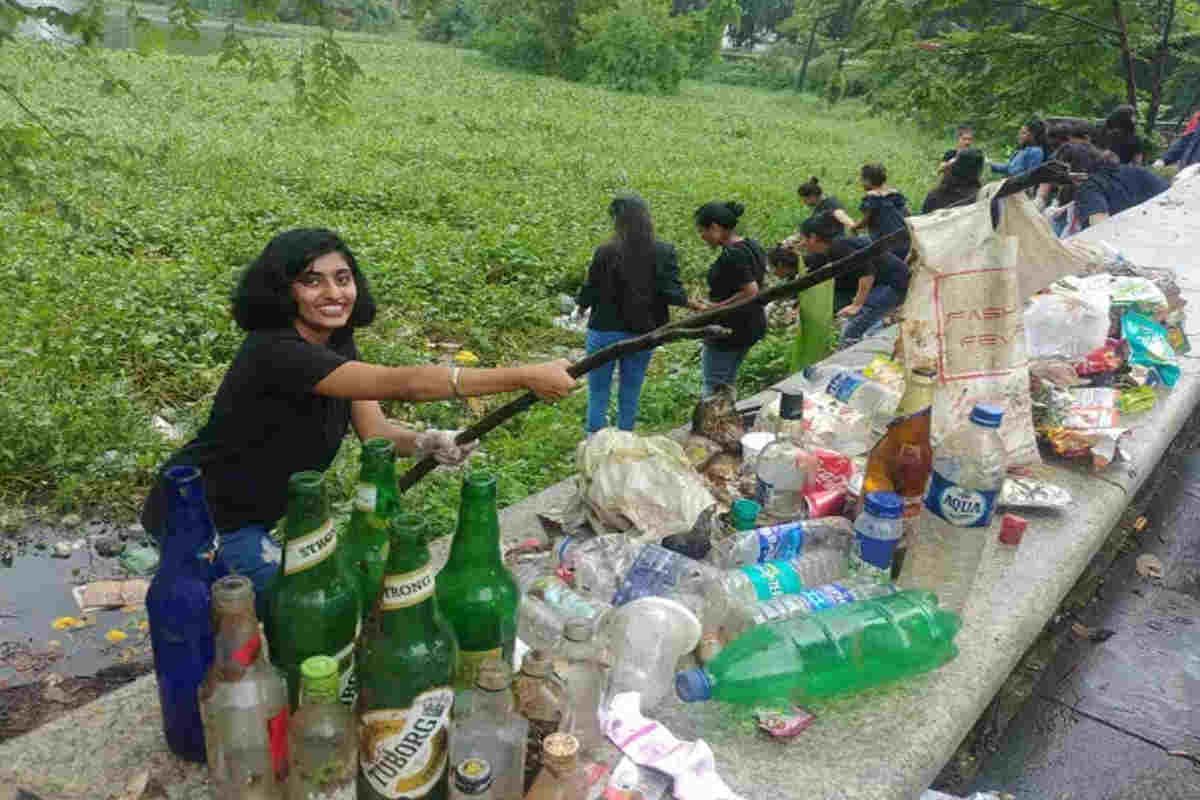
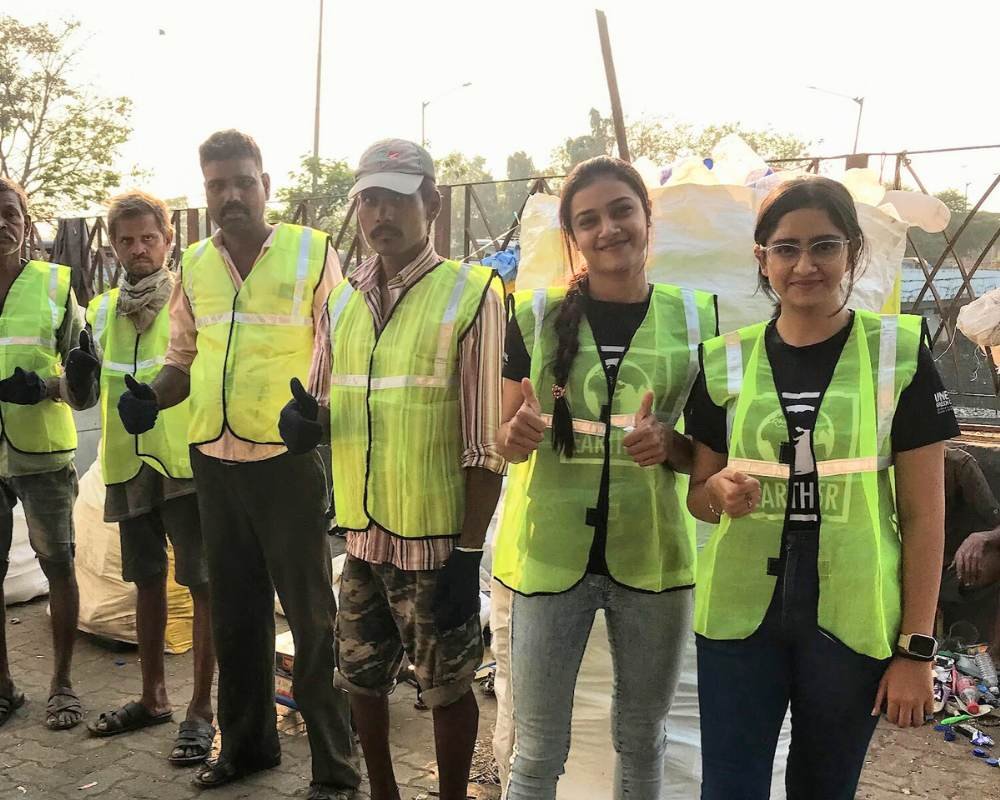
Earth5R field teams conducting manual waste segregation and audit operations — the kind of ground-level execution that India's SWM Rules 2026 now mandate at national scale.
170K
Tonnes of waste generated daily across India
~50%
Of collected waste currently treated or processed
$7.85B
India municipal SWM market size in 2025
165 MT
Projected annual waste generation by 2030
01 The Regulatory Context: Why India Rewrote Its Waste Rules
India generates approximately 62 million tonnes of municipal solid waste annually. Of this, roughly 43 million tonnes are collected, but only 12 million tonnes are treated before disposal. The remaining 31 million tonnes end up in landfills or open dumpsites — a figure that has grown steadily since the previous waste segregation rules were notified in 2016. After a decade of uneven implementation, the Ministry of Environment, Forest and Climate Change issued a complete regulatory reset on January 28, 2026.
The Solid Waste Management Rules, 2026, notified under the Environment (Protection) Act, 1986, supersede the SWM Rules of 2016 and take effect from April 1, 2026. The previous framework introduced source segregation and extended producer responsibility (EPR) as concepts, but compliance remained inconsistent. Urban local bodies (ULBs) bore near-total responsibility while waste generators faced minimal enforcement. According to peer-reviewed research published in the Royal Society, only about a quarter of India's 4,000+ waste processing facilities operated at full capacity under the old rules.
The systems gap was structural, not just operational. The 2016 rules prescribed infrastructure deadlines — processing facilities within two years, sanitary landfills within three, dumpsite remediation within five — but most were missed. According to CPCB's 2021–22 Annual Report, India's daily waste generation reached approximately 170,000 tonnes per day, with per-capita waste generation projected to rise from 0.34 kg/day to 0.7 kg/day by 2025. Without a fundamental shift from municipal-responsibility to shared-liability governance, the gap between generation and processing was destined to widen.
The Supreme Court has tied waste governance to constitutional rights. In its February 2026 ruling in Bhopal Municipal Corporation v. Dr Subhash C. Pandey, the Supreme Court framed solid waste management as inseparable from Article 21 — the right to life. The Court issued pan-India directives for implementation of SWM Rules 2026, mandating sworn affidavits of infrastructure readiness from local authorities before April 1 and classifying urban waste management as a constitutional obligation, not an administrative option.
Economic pressures are accelerating compliance urgency. India's municipal solid waste management market was valued at USD 7.40 billion in 2024 and is projected to reach USD 10.37 billion by 2030 at a CAGR of 5.72%. SEBI's BRSR reporting requirements, combined with new SWM penalties, mean that waste non-compliance now carries both regulatory and financial-market consequences — particularly for listed entities operating as bulk waste generators.
02 The Four-Stream Framework: What SWM Rules 2026 Change
The most visible change under SWM Rules 2026 is the shift from broadly defined wet-and-dry waste segregation to a mandatory four-stream system. Every waste generator — households, offices, institutions, defence establishments, railways — must now segregate waste into wet, dry, sanitary, and special care categories before handing it to authorised collectors. This is not advisory. Non-compliance triggers environmental compensation under the polluter pays principle.
🟢
Wet Waste
Kitchen waste, vegetable peels, fruit scraps, meat, flowers. Processed via composting or bio-methanation at nearest facility.
🔵
Dry Waste
Plastic, paper, metal, glass, wood, rubber. Routed to Material Recovery Facilities (MRFs) for sorting and recycling.
🔴
Sanitary Waste
Diapers, sanitary towels, tampons, condoms. Must be securely wrapped and stored separately.
🟠
Special Care Waste
Paint cans, bulbs, mercury thermometers, expired medicines. Collected by authorised agencies at designated centres.
Under the 2016 rules, waste segregation was primarily framed around wet and dry categories, with domestic hazardous waste mentioned but rarely enforced. The addition of sanitary waste and special care waste as distinct streams acknowledges the health and environmental risks these materials pose when mixed with general waste. This change is particularly relevant for plastic waste management and EPR compliance, since sanitary products containing plastic composites have been a persistent contamination source in recyclable streams.
The operational architecture has shifted. Local bodies are now responsible for collection, segregation, and transportation in coordination with Material Recovery Facilities (MRFs), which are formally recognised under the rules for the first time. MRFs also serve as deposition points for e-waste, special care waste, and sanitary waste — creating a structured downstream pathway that the 2016 framework lacked. For organisations tracking compliance across e-waste and other waste verticals, this represents a significant formalisation of processes.
03 Bulk Waste Generators: The New Compliance Threshold
The SWM Rules 2026 introduce a precise definition of Bulk Waste Generators (BWGs) and a new accountability mechanism — Extended Bulk Waste Generator Responsibility (EBWGR). This is the most consequential shift for corporations, institutions, and commercial real estate operators, as it directly connects waste generation volume to legal and financial liability.
A Bulk Waste Generator is now defined as any entity with a floor area of 20,000 square metres or more, water consumption of 40,000 litres per day or more, or solid waste generation of 100 kg per day or more. This captures government offices, large commercial establishments, residential societies, hospitals, educational institutions, and industrial campuses. According to the government's own estimates, BWGs account for approximately 30% of total solid waste generation in India.
EBWGR creates a certificate-based accountability system. Bulk waste generators must either process wet waste on-site or purchase Extended Bulk Waste Generator Responsibility certificates — similar in concept to EPR certificates for packaging. This effectively makes waste processing a cost line item for large entities, aligning waste management incentives with the ESG compliance frameworks that listed companies are already navigating under SEBI's BRSR requirements.
Non-compliance carries defined financial consequences. Environmental compensation will be levied for operating without registration, false reporting, forged documents, and improper waste disposal. The Central Pollution Control Board (CPCB) will issue guidelines, while State Pollution Control Boards will impose penalties. Critically, landfill fees for unsegregated waste will now exceed the cost of proper segregation, transport, and processing — making non-compliance more expensive than compliance for the first time.
The real estate and construction sectors face immediate exposure. With the 20,000 sq.m. floor area threshold, most commercial complexes, shopping malls, and large residential societies fall under BWG classification. Companies in the sustainable construction and real estate sector now require documented waste management plans, on-site processing infrastructure, or verified EBWGR certificate procurement to maintain compliance.
04 SWM 2016 vs. SWM 2026: A Comparative Analysis
The transition from SWM 2016 to SWM 2026 is not an incremental update. It represents a structural redesign of India's waste governance architecture — shifting from advisory municipal service to enforceable shared responsibility. The table below maps the key differences across compliance dimensions.
Parameter
SWM Rules 2016
SWM Rules 2026
Impact
Segregation Streams
Wet, dry, domestic hazardous (3 streams)
Wet, dry, sanitary, special care (4 streams)
Cleaner recyclable streams; reduced contamination
Bulk Generator Definition
Broadly defined; uneven application
Floor area ≥20,000 m², water ≥40,000 L/day, or waste ≥100 kg/day
Institutional support for recycling infrastructure
Carbon Credits
Not mentioned
Local bodies encouraged to generate carbon credits
Revenue pathway for compliant municipalities
Compliance Timeline
Uniform deadlines
Differentiated: 18, 24, 36 months by city population
Realistic phased rollout
Sources: MoEFCC Gazette Notification Jan 28, 2026; CPCB; PIB Release PRID 2219676; Down to Earth analysis.
Sustainability-driven ESG and CSR initiatives by Earth5R — bridging the gap between regulatory compliance frameworks and on-ground waste management execution across Indian urban centres.
05 Digital Traceability: The Centralised Online Portal
For the first time in Indian waste governance, the SWM Rules 2026 mandate a centralised digital infrastructure for monitoring the entire waste lifecycle — from generation to final disposal. This is the technical backbone that transforms the rules from advisory to auditable. Every registration, authorisation, audit report, and compliance disclosure will flow through a single CPCB-administered online portal.
The portal replaces the fragmented physical reporting system with digital tracking across collection, transportation, MRF processing, disposal, and legacy dumpsite remediation. Waste processing facilities must submit reports online. Audit reports are required to be uploaded directly. State Pollution Control Boards will issue registrations and authorisations through the portal, and ULBs will file quarterly disclosures and annual reports.
The implementation challenge is institutional, not technological. As analysis by Down to Earth highlights, the rules assume uniform administrative capacity across ULBs — a condition that does not exist in practice. Experience with the Swachhatam Portal under Swachh Bharat Mission revealed significant variability in digital readiness among India's urban local bodies. Data quality, staff training, and network infrastructure remain unresolved prerequisites.
For corporates, the portal creates an audit trail. EBWGR compliance, waste processing volumes, and environmental compensation records will now exist in a centrally accessible digital system. This has direct implications for BRSR reporting, ESG audits, and investor due diligence. Companies using platforms like the Earth5R Sustainability Innovation Lab for field-verified environmental data can now cross-reference their own tracking with government portal data — adding a compliance verification layer.
06 India's Waste Generation Trajectory: The Numbers
India's waste generation is growing faster than its processing capacity. Understanding the scale is essential for evaluating whether the SWM Rules 2026 can close the gap. The data below synthesises CPCB records, TERI estimates, and NITI Aayog projections to map India's waste trajectory from current baseline to 2050.
India's Annual Solid Waste Generation — Baseline to Projection
Sources: CPCB Annual Report 2021–22; TERI; NITI Aayog; UNEP Global Waste Outlook
2016 (baseline)
52 MT
2024 (current)
62 MT
2030 (projected)
165 MT
2050 (projected)
436 MT
Current Waste Processing Status in India (of 62 MT annual generation)
Source: TERI; CPCB; Ministry of Housing and Urban Affairs
Collected
43 MT (69%)
Treated
12 MT (19%)
Landfilled
31 MT (50%)
Uncollected
19 MT (31%)
Physical Composition of India's Municipal Solid Waste (by wet weight)
Source: PMC/Royal Society Open Science; CPCB
Organic / Biodegradable — 51.3%
Plastic — 9.2%
Paper — 6.0%
Glass & Metal — 3.5%
Inert / Other — 30.0%
The compositional data underscores why four-stream segregation matters. Over half of India's waste is organic — suitable for composting or bio-methanation when properly separated. The 9.2% plastic fraction, when contaminated with sanitary or organic waste, becomes non-recyclable. Effective segregation at source is not just regulatory compliance — it is the prerequisite for any viable plastic waste recovery or circular economy strategy.
07 RDF Mandates and Industrial Waste-to-Fuel Transition
The SWM Rules 2026 prescribe an increase in the fuel substitution rate from the current 5% to 15% over a six-year period for industrial units, including cement plants and waste-to-energy (WTE) facilities. Refuse Derived Fuel (RDF) — produced by shredding and dehydrating high-calorific non-recyclable waste — is being positioned as a key demand-side mechanism for diverting waste from landfills. This creates a new industrial supply chain at the intersection of waste management and energy.
The 3× increase in RDF requirement creates structured demand for processed waste. Currently, India's cement industry alone consumes approximately 1.6 million tonnes of alternative fuels per year, at around 5% thermal substitution rate (TSR). The mandate to reach 15% TSR within six years implies demand growth to approximately 4.8 million tonnes of RDF annually — just from cement kilns. When WTE plants are included, total industrial demand for processed municipal waste could exceed 6 million tonnes annually by 2032.
This converts waste processing from a cost centre to a revenue generator. RDF carries commercial value as an alternative fuel. Municipalities and processing facilities that produce quality RDF can sell it to industrial consumers — transforming waste management economics. The rules explicitly define RDF composition (non-recyclable plastic, paper, textiles with high calorific value), providing a quality benchmark that enables commercial contracting. For organisations engaged in quick commerce sustainability and packaging-intensive industries, this creates a downstream pathway for non-recyclable packaging fractions.
08 SWM Rules 2026 Implementation: The Gap Between Rules and Readiness
The SWM Rules 2026 are structurally stronger than their predecessor. However, multiple credible analyses — from the Down to Earth editorial team, Mongabay India, and governance experts — flag a fundamental concern: the gap between regulatory ambition and institutional capacity. The rules prescribe compliance without uniformly ensuring the conditions for compliance exist.
India's towering landfills — Bhalaswa, Ghazipur, and Okhla in Delhi alone — are visible symbols of this historical deficit. Delhi generates approximately 600 grams of waste per person per day, the highest among Indian cities, and processes only 64% of collected waste. As Mongabay India reports, the remaining 36% still reaches landfills — and this is in India's capital.
The centralisation concern is real. State-level officials, including from Kerala's Local Self Government Department (LSGD), have flagged that a highly centralised digital framework may be impractical for states with well-developed decentralised waste management systems. Kerala, for example, operates through local self-government bodies using a combination of homestead composting, community bio-gas plants, and the Kudumbashree network. A one-size-fits-all portal risks undermining state-specific systems that are already functional — a concern that resonates with the broader governance debate about centralism versus federalism in environmental policy.
Infrastructure deficits persist at scale. The Supreme Court's February 2026 order directed authorities to certify readiness before April 1, including registration on the CPCB portal, operational Material Recovery Facilities, procurement of four-stream compartmentalised vehicles, and establishment of escrow accounts for environmental compensation. Whether all 4,000+ ULBs meet these conditions on Day 1 remains an open question. CPCB data shows that only about a quarter of India's waste processing plants operate at full capacity, and many cities still lack adequate collection vehicles, trained staff, and processing infrastructure.
Differentiated compliance timelines offer some realism. The rules provide 18 months for the largest cities, 24 months for mid-sized urban centres, and 36 months for smaller municipalities. State governments must prepare state-level strategies within one year, and all local bodies must frame or update byelaws by March 2027. This phased approach is a structural improvement over the uniform deadlines of 2016 — but only if accompanied by adequate funding and capacity building.
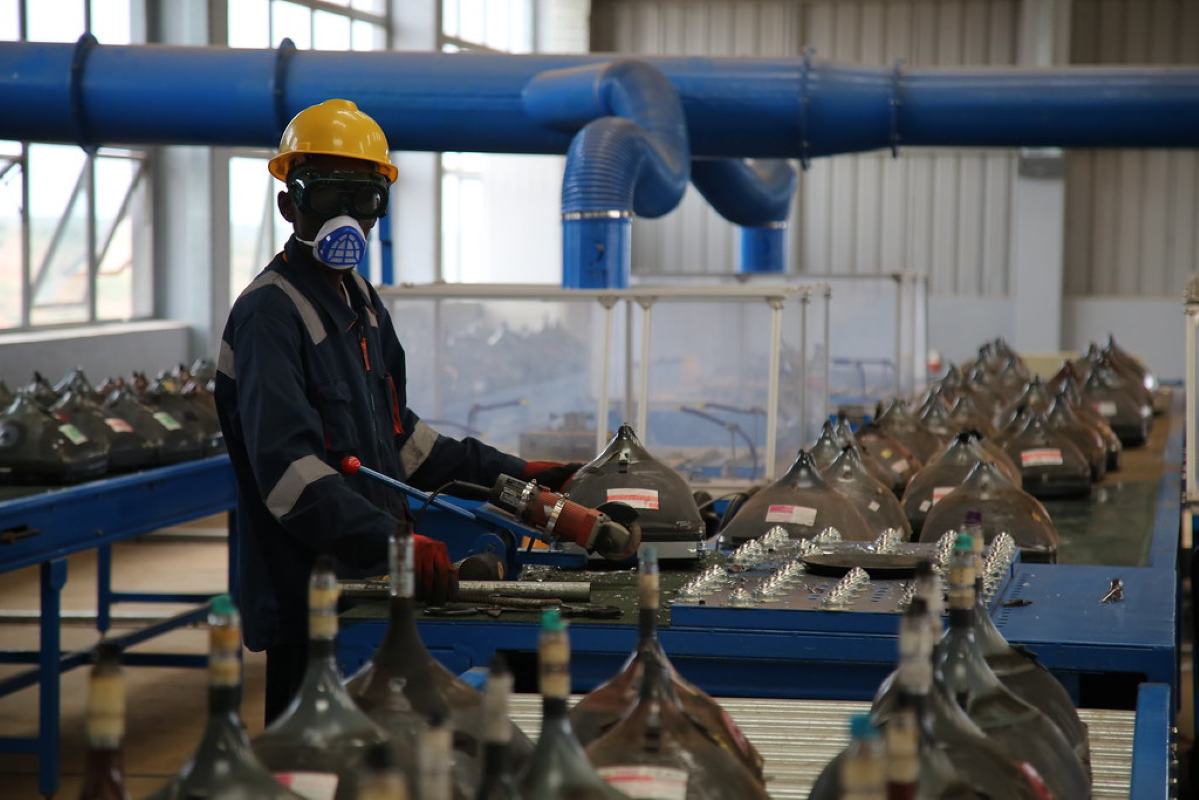
Electronic and hazardous waste — now classified under the special care waste stream in SWM Rules 2026. Proper collection, handling, and routing to authorised processing agencies is mandatory from April 1.
09 The Market Opportunity: Sizing the Compliance Economy
India's waste management sector is not just a compliance cost — it is a rapidly expanding market. The combination of stricter regulation, growing waste volumes, urbanisation, and industrial demand for processed materials is creating a multi-billion dollar compliance economy. For technology providers, processing infrastructure operators, consulting firms, and data platforms, the SWM Rules 2026 represent a market-defining regulatory catalyst.
India Municipal SWM Market Size (USD Billion)
Source: Mordor Intelligence; US International Trade Administration; Industry Estimates
2024
$7.40B
2025
$7.85B
2028 (est.)
~$9.0B
2030 (proj.)
$10.37B
The compliance infrastructure gap alone is worth billions. With EBWGR certificates, digital portal integration, four-stream collection vehicles, on-site processing equipment, MRF upgrades, and legacy dumpsite remediation, the capital expenditure required across India's 4,000+ ULBs and tens of thousands of BWGs will be substantial. The Swachh Bharat Mission Urban 2.0 has already boosted solid waste processing capacity by approximately 1.06 lakh TPD, but the SWM 2026 mandate demands further scaling.
Carbon credits add a new revenue dimension. The rules explicitly encourage local bodies to generate carbon credits from waste management operations — particularly from methane avoidance via composting and bio-methanation, and from landfill diversion. For organisations with verified, field-level emissions data and climate impact investment capability, this opens an additional value pathway. Municipal-scale carbon credit generation from waste projects is an emerging asset class that aligns with India's commitments under the Paris Agreement.
10 How Earth5R Enables Implementation at Scale
The SWM Rules 2026 establish a clear regulatory mandate. What remains unresolved for most organisations — from municipal authorities to corporate BWGs — is the operational question: how to implement, verify, and report compliance at the granularity these rules demand. Earth5R's infrastructure was designed to answer precisely this challenge, long before the 2026 notification. Here is the architecture.
Field-Verified Data at Scale
Earth5R operates one of the largest ground-truth sustainability datasets in the world, with over 2.4 billion proprietary data points spanning waste audits, water quality readings, air monitoring, agricultural surveys, and circular economy tracking across 65+ countries. Every data point originates from field-verified operations — geo-tagged, commercially auditable, and built for regulatory scrutiny. Under the SWM 2026 framework, where digital traceability and audit-ready reporting are mandatory, this data infrastructure provides the verification layer that most compliance systems currently lack.
Waste Stream Mapping and Material Recovery Intelligence
Through the Earth5R Sustainability Innovation Lab and the TERRA platform, organisations can access item-level waste profiling, material composition analysis, recovery rate benchmarking, and EPR compliance mapping across waste streams. The platform's waste and circularity module covers 840 million+ data points — enabling corporations to map their waste generation against the four-stream framework, identify processing gaps, and build EBWGR compliance documentation with field-verified evidence.
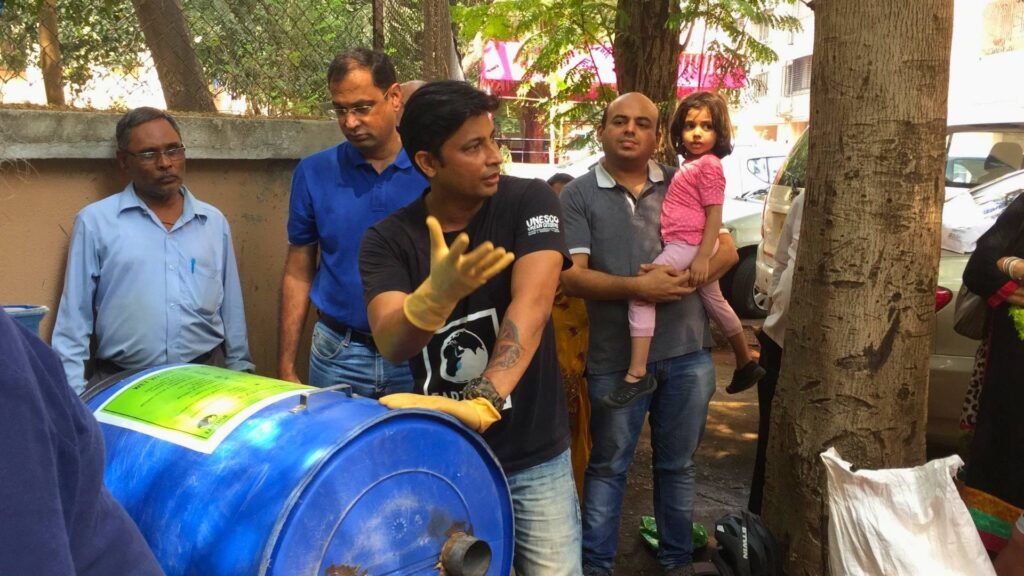
Earth5R's community-driven waste segregation programme in Mumbai — combining source-level compliance with livelihood generation for waste workers, the operational model that SWM Rules 2026 demand at national scale.
Community Deployment and Behaviour Change Infrastructure
Regulation mandates waste segregation. Implementation requires behaviour change. Earth5R's network of BlueCities sustainability hubs operates across Indian urban centres, deploying trained community teams for door-to-door segregation education, waste audit campaigns, and source-level monitoring. This field infrastructure — connecting sustainability-trained professionals with municipal systems — is the missing link between regulatory text and on-ground practice.
ESG Consulting and BRSR Alignment
For listed companies and large institutions, SWM compliance is now a BRSR reporting variable. Earth5R's ESG consulting architecture integrates waste management compliance into broader sustainability reporting frameworks. The proprietary TERRA Score™ and CvR Gap™ assessment tools provide a data-driven evaluation of an organisation's compliance posture — mapping actual performance against regulatory benchmarks and identifying priority action areas. This transforms waste compliance from a checkbox exercise into a measurable, improvable business function.
SaaS, Data Monetisation, and Partnership Models
Earth5R's platform operates as a sustainability intelligence system available to corporations, consulting firms, and municipal bodies. Partnership models include SaaS access for ongoing compliance monitoring, project-level consulting engagements for BWG certification, and data licensing for organisations building ESG analytics products. For municipalities exploring carbon credit generation from waste operations — as now encouraged by the SWM 2026 rules — Earth5R's verified emissions data and field documentation provide the credibility infrastructure needed for credit issuance and trading.
Measurable Impact Pathways
Earth5R's work spans 17+ industry sectors, from plastic packaging and fashion to food service, real estate, and automotive. Each engagement produces documented, auditable outcomes: tonnes of waste diverted, items recovered and catalogued, behaviour change metrics, and compliance documentation aligned with BRSR, GRI, and SEBI frameworks. The infrastructure is not theoretical — it is operational across India, deployed with recognised partners, and verified by institutions including UNESCO, Google, and the Paris Peace Forum.
11 The Transition Path Forward
The SWM Rules 2026 are now in force. The question for every stakeholder — from municipal commissioners to CSR heads to waste processing operators — is: what does a realistic implementation roadmap look like? The path forward requires coordinated action across policy, technology, partnerships, and field execution. Below is a structured roadmap.
Phase 1 — April to September 2026
Baseline and Registration. All BWGs identify their classification status. ULBs register on the CPCB centralised portal. Organisations conduct waste audits to establish baseline generation volumes, composition, and current disposal pathways. State governments begin drafting state-level SWM strategies. This is the diagnostic phase — and the window to engage partners like Earth5R for ESG and waste assessment.
Phase 2 — October 2026 to March 2027
Infrastructure Buildout. MRFs become operational or are upgraded for four-stream processing. BWGs install on-site wet waste processing systems or secure EBWGR certificates. Collection vehicle fleets transition to four-compartment models. Digital reporting workflows are established. Local byelaws are updated by March 2027 deadline. Organisations engage with sustainability innovation platforms for technology integration.
Phase 3 — April 2027 to March 2028
Compliance Verification and Scaling. State Pollution Control Boards begin auditing waste processing facilities. Landfill fees for unsegregated waste take full effect. Environmental compensation enforcement escalates. Carbon credit pilots emerge in forward-leaning municipalities. Large corporations integrate waste compliance data into BRSR filings. Legacy dumpsite biomining programmes gain momentum via quarterly portal reporting.
Phase 4 — 2028 to 2032
System Maturation and RDF Market Development. RDF fuel substitution rate progressively increases toward the 15% mandate. A functioning market for processed waste materials develops between municipalities and industrial consumers. Smaller cities reach compliance via the 36-month differentiated timeline. Performance data from the centralised portal enables evidence-based policy refinement. The waste management sector matures from regulatory burden to economic asset class.
The Five Pillars of Effective Transition
Policy Clarity: The regulatory intent of SWM 2026 is clear, but operational guidelines from CPCB — particularly on portal architecture, EBWGR certificate issuance, and environmental compensation rates — must be issued promptly. Without these, ULBs cannot operationalise the rules effectively. Advocacy from civil society and industry bodies will be essential to ensure timely issuance and practical design of these guidelines.
Technology Integration: Digital monitoring, AI-driven waste analytics, GPS-tracked collection vehicles, IoT-enabled bins, and blockchain-based material tracing are not futuristic concepts — they are available now. The SWM 2026 portal provides the regulatory hook. Organisations that integrate verified data platforms — such as Earth5R's TERRA infrastructure — with government portal reporting will have a structural compliance advantage.
Partnerships: No single actor can implement SWM 2026 in isolation. Municipal authorities need private sector infrastructure. Corporations need waste management operators. Technology providers need field data. Consulting firms need verified impact evidence. Earth5R's model — combining community deployment, data intelligence, ESG consulting, and impact investment architecture — demonstrates how a networked partnership approach can bridge the gap between regulation and execution across multiple industry sectors.
Field Execution: Rules are written in New Delhi. Compliance happens in wards, lanes, and housing societies. The critical bottleneck in Indian waste management has always been the last mile — training sanitation workers, educating households, monitoring collection, and verifying segregation at source. Earth5R's BlueCities network and trained community teams provide exactly this field execution infrastructure, connecting national regulation to neighbourhood-level action.
Measurement and Accountability: The SWM 2026 framework mandates quarterly reporting, annual audits, and performance rankings on the CPCB portal. For organisations committed to genuine compliance — not just paper compliance — this requires robust, field-verified measurement systems. The TERRA Score™ assessment framework provides an independent, data-driven compliance evaluation that can be used alongside government portal metrics to demonstrate genuine progress to regulators, investors, and stakeholders.
How Organisations Can Engage
Corporates, municipalities, consulting firms, and institutional investors looking to navigate the SWM 2026 transition have clear pathways to engage with Earth5R's infrastructure. These include waste audit and baseline assessment services, BRSR-aligned ESG compliance consulting, community deployment for behavioural change and source-level waste segregation, TERRA Score™ evaluations for data-driven compliance benchmarking, technology integration for digital monitoring and reporting, and partnership models for carbon credit generation from waste operations. Each engagement is structured around measurable outcomes, field-verified data, and internationally recognised credibility.
FAQ Frequently Asked Questions
What are the four waste streams mandated under India's SWM Rules 2026?
The SWM Rules 2026 require all waste generators to segregate waste at source into four streams: wet waste (kitchen and organic waste, for composting or bio-methanation), dry waste (recyclable materials like plastic, paper, metal, and glass, routed to Material Recovery Facilities), sanitary waste (diapers, sanitary products, wrapped and stored separately), and special care waste (paint cans, bulbs, mercury thermometers, expired medicines, collected at designated centres). This replaces the earlier three-stream system and applies to households, institutions, and commercial establishments from April 1, 2026.
Who qualifies as a Bulk Waste Generator under SWM 2026?
Any entity with a floor area of 20,000 square metres or more, water consumption of 40,000 litres per day or more, or solid waste generation of 100 kilograms per day or more is classified as a Bulk Waste Generator (BWG). This includes large residential societies, commercial complexes, hospitals, educational institutions, government offices, and industrial campuses. BWGs must either process wet waste on-site or obtain Extended Bulk Waste Generator Responsibility (EBWGR) certificates, and account for approximately 30% of India's total solid waste generation.
What penalties apply for non-compliance with the new waste rules?
The SWM Rules 2026 introduce environmental compensation based on the polluter-pays principle. Penalties apply for operating without registration, false reporting, forged documents, and improper waste handling. Critically, landfill fees for sending unsegregated waste to sanitary landfills will exceed the cost of proper segregation, transportation, and processing — making non-compliance financially unviable. The Central Pollution Control Board will issue guidelines, while State Pollution Control Boards will impose compensation.
How does the Refuse Derived Fuel (RDF) mandate affect industries?
The rules mandate that industrial units using solid fuel — particularly cement plants and waste-to-energy facilities — must increase their fuel substitution rate from the current 5% to 15% over six years using RDF. This creates a growing industrial demand for processed non-recyclable waste, estimated to reach approximately 4.8 million tonnes annually from cement kilns alone by 2032. The mandate effectively creates a commercial market for processed municipal waste, transforming waste management from a pure cost centre to a potential revenue stream.
How can organisations prepare for SWM Rules 2026 compliance?
Organisations should begin with a comprehensive waste audit to establish baseline generation volumes and composition. BWGs should assess their classification status and plan on-site processing infrastructure or EBWGR certificate procurement. Digital reporting workflows should be established for the centralised CPCB portal. Engaging with experienced sustainability partners — such as Earth5R's ESG consulting services — for waste management strategy, BRSR alignment, community engagement, and field-verified compliance documentation is a practical first step for organisations serious about genuine implementation.
This article was published as part of EarthJournal, Earth5R's research and sustainability intelligence publication. Earth5R is India's largest environmental organisation, recognised by UNESCO and awarded by Google, delivering large-scale sustainability projects from organic farming transitions to water conservation and urban sustainability programmes.
Explore Earth5R's Sustainability Solutions
ESG consulting, circular economy programmes, and community-driven environmental action across India.