Organic Farming
The concept of Creating Shared Value (CSV), introduced by Michael Porter and Mark Kramer, has radically reshaped how forward-looking companies approach development. Rather than treating Corporate Social Responsibility (CSR) as a side project, CSV urges companies to embed social progress into the core of their business strategies. Nowhere is this more vital, or more effective, than in agriculture.
In rural economies, especially in the Global South, agriculture is the backbone of employment, sustenance, and community structure. But the sector faces a trifecta of crises: climate vulnerability, resource depletion, and market fragmentation. CSV steps into this vacuum by identifying business opportunities in solving these social problems. A company doesn’t just donate seeds, it co-develops regenerative input systems that reduce carbon emissions, improve yields, and ensure long-term supply stability.
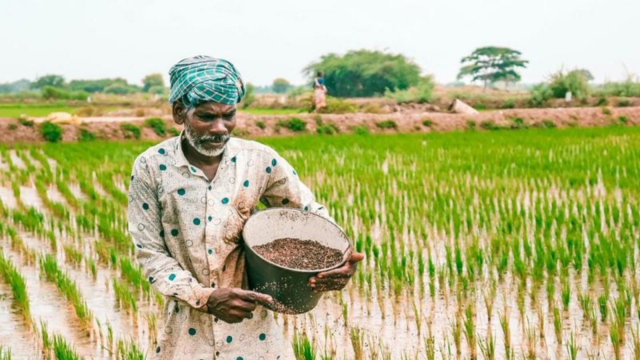
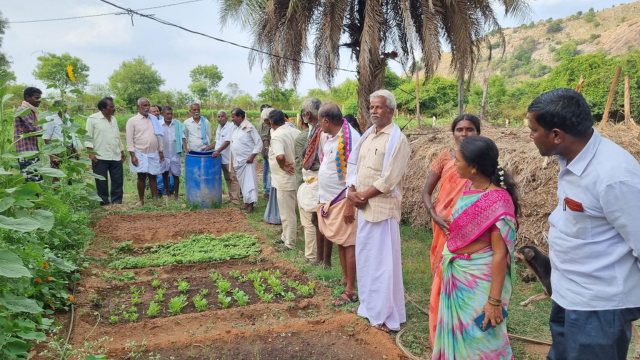
For example, Earth5R’s regenerative farming initiative in India wasn’t just an environmental project, it created eco-livelihoods for farmers while building resilience into food supply chains. The NGO trained farmers in composting, water conservation, and organic input creation, reducing their input costs while improving soil health. The shared value? Farmers earned more, and supply chain partners gained access to stable, high-quality, pesticide-free produce that aligned with growing global demand for sustainability.
Shared value in agriculture also means thinking in loops instead of lines. Rather than viewing the supply chain as a one-way movement of goods, CSV encourages a circular model, where waste becomes input, urban consumption supports rural regeneration, and farmers become stakeholders in product development. For instance, companies sourcing organic cotton are now investing in farmer education and soil health, realizing that improved biodiversity and soil fertility protect not only communities but also future raw material streams.
Defining shared value in agriculture is not abstract theory. It’s the business of transforming rural inequality into corporate sustainability, a model where farmer prosperity, ecological balance, and long-term profit are not conflicting goals, but mutually reinforcing outcomes.