
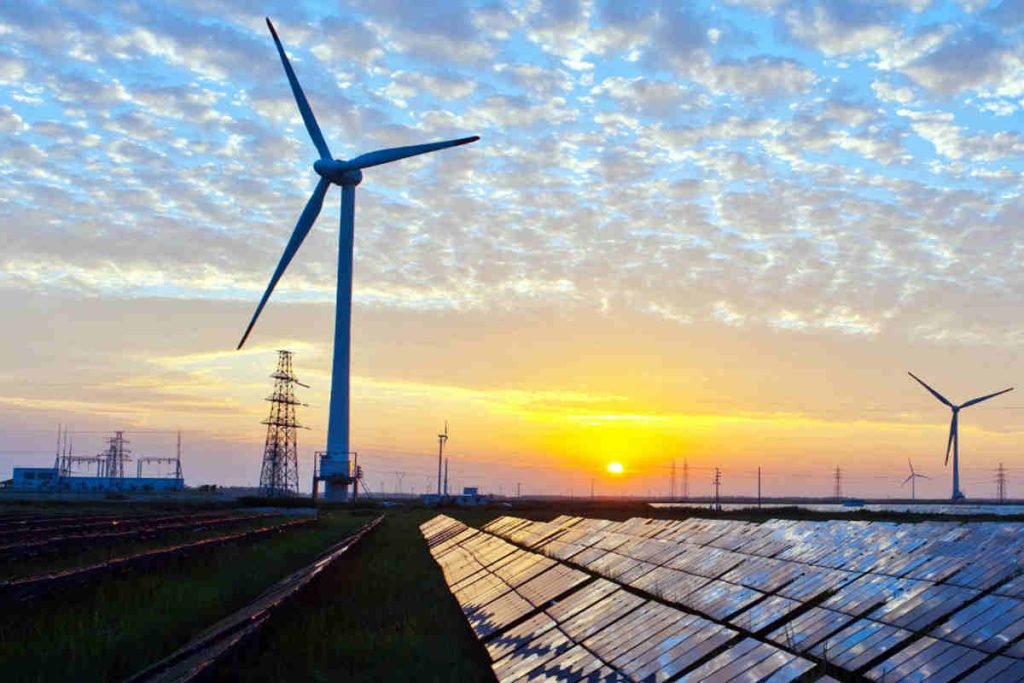
Why India Is the New Global Green Tech Magnet
India today stands at the crossroads of climate ambition and industrial growth. With over 1.4 billion people, deepening energy demand, and an equally urgent need to reduce carbon emissions, the country has emerged as a major target for green tech companies and clean-energy innovators. According to a recent market analysis, the Indian clean-technology market generated around USD 63.4 billion in 2024, and is expected to grow to USD 152.5 billion by 2030, a compound annual growth rate (CAGR) of 16.1 %.
Several factors converge to make India compelling for global firms:
- A clear national climate agenda, anchored around the goal of reaching net-zero by 2070.
- Policy frameworks that actively invite foreign direct investment in clean-tech and promote manufacturing of batteries, green hydrogen, storage solutions.
- A large domestic market hungry for affordable clean power, urban mobility, industrial decarbonisation and hence opportunity for scalable innovations.
- Growing global competition (US, EU, China) pushing Indian policymakers and firms to leap-frog into next-generation technologies.
At the same time, India’s challenges;grid integration, access to financing, land acquisition, policy implementation delays mean that major green-tech firms that commit here are doing more than simply selling: they are partnering, localising, and scaling. They are making India their “playground” for innovation and deployment.
In this article, we deep dive into ten global green tech firms that are expanding in India;how they operate, what they bring, and how they tie into India’s climate-industrial future. Along the way we connect the firms’ strategies to India’s policy push and market dynamics, offering a research-based feature story for readers interested in climate, industry and investment.
The Policy & Market Push Behind the Green Tech Boom
National Green Hydrogen Mission, EV Policy, and Net-Zero Roadmap
The government of India launched the National Green Hydrogen Mission in January 2023. This mission is designed to position India as a global hub for green-hydrogen production, usage and export. For example, one target is production of 5 million tonnes of green hydrogen annually by 2030.
Complementing hydrogen, India’s renewable-energy targets are ambitious. For instance, the country aims to reach 500 gigawatts (GW) of non-fossil energy capacity by 2030, and some forecasts suggest that India is already on track to have 50 % of its power generation capacity from low-carbon sources ahead of schedule.
Policies also support electric mobility, domestic manufacturing (“Make in India” for batteries), smart grids, and industrial efficiency. These form the backbone of the “green tech expansion” opportunity: firms investing in India align with both climate goals and industrial-manufacturing ambitions.
India’s Rapid Energy Transition & Industrial Decarbonisation Trends
India’s installed renewable energy capacity continues to grow rapidly. For example, as of March 2024, India’s installed solar capacity stood at 81.81 GW, representing 63.4 % of total renewable generation. More broadly, the clean-technology market across all sectors (renewables, storage, efficiency, waste) is expanding. The renewable-energy market alone in one projection is pegged to grow significantly by 2030.
Industrial decarbonisation is no longer niche. Heavy sectors such as steel, cement, and refining are under pressure (both domestic and international) to adopt cleaner technologies. That creates openings for global firms with advanced solutions in batteries, hydrogen, digital energy-management systems, and circular waste technologies.
Global Investors Eye India’s $200 B+ Cleantech Opportunity
The size of India’s clean-tech market underlines why global firms are entering in scale. For example, the clean-technology market in India is estimated to reach USD 152.5 billion by 2030 from USD 63.4 billion in 2024. Another report projects the green‐technology and sustainability market in India to grow from USD 837.2 million in 2024 to USD 8,603.2 million by 2033 (CAGR 27.36 %).
Venture capital and investment flows are rising as well. One article notes that India’s climate-tech VC scene raised around USD 5 billion in 2022—a 29 % increase since 2019.
In short: global green-tech firms see India as a large, fast-growing market; a manufacturing base; and a climate-innovation hub. The firms featured below have chosen India accordingly and their stories show how this is playing out in practice.
1. Tesla Energy : Distributed Solar & Battery Storage in India
While most headlines focus on Tesla’s electric vehicles, the company’s cleantech expansion into India is now being led by its energy division. Tesla Energy is in active discussions with the Government of India and select state utilities to introduce Powerwall battery storage systems and solar-plus-storage microgrids for residential, industrial, and rural electrification use cases.
The push aligns with India’s growing need for distributed energy storage, especially as the country scales rooftop solar under the PM Surya Ghar scheme, which targets 10 million solar homes. Tesla’s model fits the behind-the-meter storage gap, where India currently lacks high-efficiency lithium-ion home batteries that can stabilise rooftop systems during power cuts or grid instability.
Multiple reports indicate that Tesla has proposed a local assembly model, beginning with semi-knockdown units and scaling to full cell-to-pack manufacturing once policy incentives and land allocation are confirmed. States under consideration include Tamil Nadu, Gujarat, and Telangana, which already host battery or EV supply-chain ecosystems.
If approved, this would position India as Tesla Energy’s third major storage hub after the US and Germany, creating local jobs across installation, software servicing, and power-electronics integration.
What sets Tesla apart is not the battery alone, but the software layer; its AI-based energy management platform, already deployed in Australia and California, can optimise community microgrids and reduce peak-load stress on utilities. For India’s overstrained distribution companies, this turns storage from a household product into grid infrastructure support, making Tesla a strategic; not luxury;entrant in India’s clean-energy transition.
2. Ørsted A/S: Offshore Wind & Hybrid Energy Parks
The Danish firm Ørsted has become one of the world’s largest developers of offshore wind, driving cost reductions and industrial-scale renewables. But its India strategy is more nuanced: rather than immediate large-scale offshore wind builds, the presence in India is emerging via partnerships, knowledge-transfer and manufacturing readiness, within the broader green-tech expansion theme.
India Strategy & Market Fit
India has a coast-line with theoretical offshore wind potential of ~70 GW according to some assessments. Yet significant tenders have been delayed or cancelled, reflecting nascent market conditions. For Ørsted, this means strategic entry ahead of full commercial roll-out, through:
- Collaborating with Indian utilities and states on policy design, site assessment and grid-integration of offshore/hybrid systems.
- Exploring “hybrid energy parks” combining wind, solar and storage—capabilities where Ørsted already has global expertise.
- Evaluating supply-chain partnerships in India for turbine components, installation services or port facilities, anticipating future manufacturing localisation.
Investment Footprint & Climate Impact
Globally Ørsted has installed more than 10.2 GW of offshore wind and a further ~12 GW under construction or awarded. The firm’s business model emphasises full-lifecycle involvement: development, construction, operations. While India-specific GW-scale projects for Ørsted remain limited publicly, the strategic positioning aligns with India’s clean-energy goals (e.g., 500 GW non-fossil capacity by 2030).
In terms of climate impact, offshore wind can offer average capacity factors of 40-50 % in suitable sites, reducing fossil-generation significantly. As India’s grid decarbonises, such large-scale offshore systems will be key.
Key Partnerships & Local Value Chain
Ørsted’s global play emphasises supply-chain scale and cost leadership. For India, the firm could support states like Tamil Nadu or Gujarat which have identified offshore wind zones. The government of India, through Ministry of New and Renewable Energy (MNRE), has released offshore wind policy frameworks inviting bids. In that sense, Ørsted’s technology-transfer and port/logistics expertise become strategic.
While no major manufacturing-plant announcement has been made publicly for India (as of this writing), the company’s footprint indicates readiness for localisation when market signals firm up.
Why Ørsted Matters for India
- Industrial expertise: Ørsted has led cost-reductions in offshore wind globally, which bodes well for India’s nascent industry.
- Hybrid model capability: Combining wind, solar and storage can help solve India’s grid-integration issues and strengthen reliability.
- Supply-chain boost: If Ørsted localises component manufacturing or service hubs, India could capture higher value in the global offshore wind chain.
- Job & skill creation: Constructing and operating offshore systems requires large-scale skilled workforce such as: manufacturing, installation, maintenance—boosting employment opportunities in India’s coastal states.
Challenges & caveats
- India’s offshore tenders have been postponed or shelved, signalling market risk for offshore developers.
- Ørsted has publicly stated that its Asia-Pacific focus is shifting to markets where it already has awarded projects (Taiwan, South Korea) rather than entering new Asian geographies at scale for now.
- Offshore wind remains capital-intensive and subject to site-specific permitting, grid connection and environmental constraints. India’s coastal ecosystem and regulatory framework still have work to do.
Northvolt AB:Lithium-ion Battery Gigafactory Investment
The Swedish battery manufacturer Northvolt AB stands out for its ambition to build large-scale lithium-ion cell production and recycling platforms and while its direct footprint in India remains limited, its strategic positioning makes it salient for the Indian green-tech ecosystem.
India Strategy & Market Fit
India’s push toward electric mobility and domestic battery manufacturing under frameworks like the “India Battery Mission” has elevated global cell-makers into potential partners. Although Northvolt has not yet publicly announced a full-scale Indian gigafactory, the firm’s mission (“manufacturing with clean energy; our mission is to deliver batteries with a 90% lower carbon footprint than cells made using coal power”) confirms its technology stance.
For India, this means:
- Potentially leveraging Northvolt’s clean-manufacturing model to align with India’s renewable-powered cell manufacturing ambitions.
- Integrating into India’s EV battery supply-chain push—where local content, scale, and systems-integration matter.
- Contributing to the broader Indian goal of gigafactory size-up (industry estimates suggest India aiming for 50 GWh+ cell manufacturing under PLI schemes).
Investment Footprint & Climate Impact
Globally, Northvolt inaugurated its flagship “Northvolt Ett” gigafactory in Sweden in late 2021 with an aspiration to reach ~60 GWh annual capacity.
Though India-specific deployment remains at the exploratory stage, the value lies in the transfer of capacity and manufacturing best-practice. If replicated or partnered in India, such a facility could support India’s target of reducing battery cell cost-per-kWh, increasing EV adoption and decarbonising mobility segments.
The climate impact: high-volume battery manufacturing and recycling can reduce upstream emissions (via renewably powered manufacturing) and downstream emissions (by enabling EVs, storage, smart grid solutions).
Key Partnerships & Local Value Chain
While no public Indian MoU of Northvolt remains prominent at this time, the broader supply-chain ecosystem in India is preparing for global integration: India’s PLI scheme for advanced chemistry cells, state manufacturing zones in Tamil Nadu and Gujarat, and the EV battery value-chain roadmap all open windows for firms like Northvolt to enter.
Should Northvolt establish a local manufacturing node or JV, it would bring:
- Clean manufacturing practices (low-carbon production)
- Recycling expertise (closing the loop on battery materials)
- High-skill jobs (cell-production, quality control, automation) and thereby build India’s industrial base in advanced batteries.
Why Northvolt Matters for India
- Technology transfer potential: With rigorous sustainability standards and cell manufacturing know-how, Northvolt sets a benchmark.
- Manufacturing scale awareness: India needs large-scale factories (gigafactories) to reduce costs and build export capability; Northvolt embodies this scale.
- Circular economy linkage: Their recycling ambition aligns well with India’s interest in green manufacturing and material resource-efficiency.
- Supply-chain consolidation: As India moves from import-heavy to domestic-plus-export orientation, foreign firms anchored locally bring credibility and capability.
Challenges & Caveats
- Northvolt has faced production ramp-up delays and financial pressures in its European operations (e.g., reports of pausing cathode-active materials at its Skellefteå plant). These issues highlight the complexity of battery-cell manufacturing, especially when scaling.
- For India, while ambition is high, policy implementation, land/utility availability, and raw-material sourcing remain hurdles. Earth5R’s earlier research notes that “going from lab-scale to high-volume cell manufacturing in India involves multiple technology, policy, supply-chain and talent risks.”
- A direct India announcement by Northvolt is yet to be confirmed, meaning it remains an opportunity rather than a fully-commissioned presence.
4. Schneider Electric: Industrial Energy Efficiency & Smart Grids
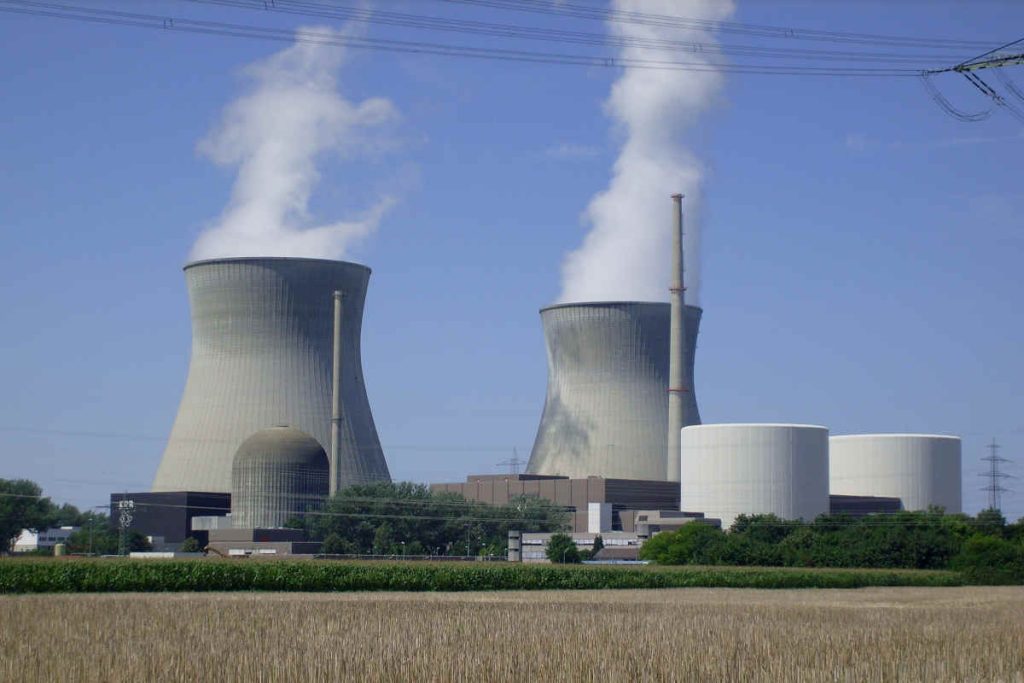
Schneider Electric is turning India into a core manufacturing and innovation base for electrification and digital grids. The company announced a new 500,000 sq. ft. facility at Hosur, Tamil Nadu to expand production for its IT and energy-management portfolio, strengthening “Make in India” ambitions and local supply chains.
This builds on Schneider’s Bengaluru Smart Factory program, where the firm deploys its EcoStruxure platform to cut energy bills and improve uptime; proof that industry can decarbonise while raising productivity. The Bengaluru site reports double-digit efficiency gains and consolidated manufacturing to scale exports.
On the grid side, Schneider pushes smart-grid and microgrid solutions for DISCOMs, campuses, data centres, and transit. These systems balance loads, integrate rooftop solar, and add storage and EV charging, improving reliability while lowering peak demand. The firm’s India offers highlight advanced distribution automation, AMI integration, and microgrid controllers designed for variable renewables.
Financially, India has become one of Schneider’s largest markets. In 2025 the company moved to take full ownership of its India unit, citing faster decision-making and long-term growth headroom. Reuters reported India contributed multi-billion-euro sales and houses 31 factories and numerous distribution centres.
Schneider also publishes detailed ESG data and claims large downstream CO₂ avoidance enabled by its customers useful for Indian buyers under SEBI’s BRSR regime. Its 2024 sustainability disclosures outline progress on Scope 1–3 and supply-chain decarbonisation.
Why it matters: India’s industrial estates, data-centre clusters, and urban utilities need efficiency first and digital grids to absorb renewables. Schneider’s local manufacturing, export orientation, and proven grid-digitisation tools make it a cornerstone for reliable, low-carbon power from factory floors to city feeders.
5. Enphase Energy: Microinverters for Rooftop Solar
India Strategy & Market Fit
Enphase Energy, a U.S.-based clean-tech firm, has strategically positioned itself in India’s rooftop solar and storage segment. The company has expanded its microinverter systems in India and announced a push into home-battery products tailored to India’s market.
Its advantage lies in its microinverter technology: rather than a single large inverter for many panels, each panel has its own inverter (“module-level power electronics”), which helps with shading, rooftop complexity, and variable conditions common in India.
Under India’s rooftop-solar drive (e.g., schemes like PM Surya Ghar Muft Bijli Yojana targeting millions of residential solar homes), Enphase’s microinverter solution is well-aligned to enable modular, scalable adoption.
Investment Footprint & Climate Impact
While Enphase’s largest manufacturing base remains global, the company reports significant deployment metrics: it has shipped tens of millions of microinverters globally and is scaling product offerings for India.
In India specifically, one 2018 installation in Karnataka utilised ~13,235 Enphase microinverters for a 4.5 MW rooftop system highlighting early scale adoption.
For India’s climate ambitions, widespread adoption of module-level microinverters means better yield, higher rooftop uptake, and faster integration of solar into the grid. That helps reduce reliance on fossil-based generation and supports distributed energy transition.
Key Partnerships & Local Value Chain
Enphase opened an R&D centre in Bengaluru and has collaborated with local module manufacturers for Indian deployment.
Additionally, they partnered with Indian financing platforms to address financing hurdles for rooftop solar adoption; critical in a price-sensitive market.
The combination of local R&D, global tech and Indian partner ecosystems enables Enphase to embed itself in India’s solar-value chain beyond simply selling equipment.
Why Enphase Matters for India
- Rooftop-focus: In a country where rooftop solar faces shading, varied roof-types and grid instability, microinverters deliver strong performance.
- Modularity & scalability: Their panel-level conversion means easier expansion and servicing of systems; useful for both homes and distributed commercial installations.
- Storage-ready: With the company launching battery products in India, their ecosystem is shifting from just solar to full solar-plus-storage solutions; aligned with India’s electrification and grid-resilience goals.
- Localisation potential: By establishing R&D and local partnerships, Enphase is not just an importer but a long-term player in India’s clean-tech manufacturing and deployment ecosystem.
Challenges & Caveats
- Microinverter adoption in India still remains limited compared to string or central inverters because of higher upfront cost.
- India’s rooftop solar market continues to face hurdles: financing, net-metering changes, discom delays; macro issues beyond the company’s control.
- While Enphase has announced battery entry, full manufacturing localisation and large-scale deployment in India is still evolving.
6. Plug Power: Green Hydrogen Electrolyzer Roll-out in India
India Strategy & Market Fit
Plug Power is positioning itself to become a key player in India’s emerging green-hydrogen infrastructure. The company has publicly stated its intention to develop multi-gigawatt electrolyser manufacturing plants and projects in India by 2030, contingent on demand and policy support.
Specifically, Plug Power’s President remarked that the firm is “exploring the possibility of setting up multi-gigawatt electrolyser manufacturing plants in India by the end of the decade” under favourable cost and demand conditions.
India’s climate-tech agenda, with the National Green Hydrogen Mission and heavy-industry decarbonisation drive, creates a natural opportunity for electrolyser firms. Plug offers modular PEM (proton-exchange membrane) electrolyser solutions designed to couple with renewable power; ideal in India’s expanding solar and wind environment.
Investment Footprint & Climate Impact
While a fully localised Indian manufacturing site is yet to be confirmed, Plug Power’s global technology and upstream readiness underpin its commitment. For example, the company operates a 1.2 GW electrolyser factory in the U.S. and is scaling manufacturing capacity worldwide.
If India becomes a manufacturing hub for Plug’s electrolysers, the climate impact would be significant: large-scale green hydrogen production enables displacement of fossil hydrogen, supports steel/cement decarbonisation, and enables long-duration storage and industrial feedstock use.
Key Partnerships & Local Value Chain
Plug Power has indicated willingness to collaborate with local Indian partners to accelerate cost-reduction and localisation. As one statement reads: “We are happy to collaborate with a big player locally in India who understands the market here better than we do … so that we can get this industry jump-started by driving cost down.
These partnerships could span manufacturing, stack assembly, operations, service/support, and export of Indian-made electrolysers. Such value-chain localisation aligns with India’s focus on domestic manufacturing and job creation in clean energy.
Why Plug Power Matters for India
- Green hydrogen scale-up: India’s target to produce green hydrogen and its derivatives (e.g., ammonia, e-fuel) needs large-scale electrolyser deployment; Plug offers a mature platform.
- Technology leadership: Plug’s PEM electrolyser technology brings modularity, scalability and integration with renewables; key for India’s variable grid and renewable base.
- Manufacturing & job potential: A local facility could generate manufacturing jobs, build supply chains, and position India as an export hub—not just a consumer.
- Policy leverage: As India designs incentives under the Green Hydrogen Mission, players like Plug that are internationally active help validate India’s ambition and attract global investment.
Challenges & Caveats
- The firm’s India plans remain conditional on demand and cost drivers; there is not yet a publicly announced large-scale India electrolyser plant with full details.
- Green hydrogen remains cost-intensive, and India’s competitiveness will depend on renewable-power cost, domestic manufacturing, and policy frameworks (tax credits, procurement mandates).
- Supply-chain and raw-material constraints (e.g., for catalysts, membranes, stack components) may slow localisation or raise costs.
- Execution risk: scaling electrolyser manufacturing to multi-GW and integrating with industrial customers (steel, refinery, chemicals) will require large coordination and capital.
7. Vestas Wind Systems A/S: Wind Turbine Manufacturing & Export Hub
India Strategy & Market Fit
Vestas Wind Systems A/S, a Danish wind-turbine manufacturer, has had a presence in India since 1997. The company has evolved from purely supplying turbines to establishing a manufacturing and value-chain footprint in India, especially through factories in Tamil Nadu and Gujarat. For example, Vestas Wind Technology India Pvt. Ltd. operates a blade production facility in Ahmedabad (Gujarat) and a nacelle/hub assembly factory in Chennai (Tamil Nadu).
This aligns strongly with India’s goals: the country is pushing wind-energy capacity expansions (onshore and offshore), and domestic manufacturing of turbine components is part of the “Atmanirbhar Bharat” / wind manufacturing ecosystem agenda. Vestas’ local footprint allows it to better service Indian wind tenders (auctioned by Solar Energy Corporation of India/state DISCOMs) and reduce lead-times.
Investment Footprint & Climate Impact
Vestas has secured orders in India, such as a 130 MW contract with Indian renewable-energy developer Vibrant Energy for its V155-3.6 MW turbines in 2023. Their manufacturing investments in India are designed not only to serve domestic demand but also to make India an export hub , for example, Vestas announced in 2019 a new nacelle/hub assembly factory in Tamil Nadu with the express aim of increasing export capacity. In terms of climate impact, a 252 MW project awarded in India in 2018 (located in Tamil Nadu) is projected to offset approximately 724,000 tons of CO₂ annually.
Key Partnerships & Local Value Chain
Vestas collaborates with local Indian suppliers and states to scale manufacturing. For example, the blade manufacturing facility in Gujarat and the assembly plant in Tamil Nadu show Vestas investing in India’s component-ecosystem. Moreover, Vestas’ India R&D and service footprint enables it to tailor turbines for Indian wind conditions (e.g., low-wind sites) and deliver service operations domestically, helping reduce lifecycle costs and improve reliability.
Why Vestas Matters for India
- Localized manufacturing: By producing key components and assemblies in India, Vestas helps build India’s wind manufacturing ecosystem, reducing import dependency.
- Technology adaptation: Turbines designed for Indian conditions help optimise energy production in low/moderate-wind zones.
- Export potential: India becomes not only a consumption market but a global manufacturing hub for wind-turbine components and possibly full modules, which supports jobs, exports and industrialisation.
- Decarbonisation support: Large-scale wind deployment enabled by firms like Vestas contributes directly to India’s target of 500 GW non-fossil energy capacity by 2030 and industrial decarbonisation.
Challenges & Caveats
- Despite strong manufacturing intent, some projects face land-, infrastructure-, and grid-integration challenges, especially in newer wind zones.
- Localisation thresholds and economic viability of exports depend on global supply-chain costs, logistics, and competitiveness vis-à-vis other hubs (e.g., Europe, China).
- Policy risk remains: tariffs, tender design, state-level implementation can slow down capacity-additions or delay orders.
8. Veoli: Circular Waste-to-Resource and Urban Water Solutions
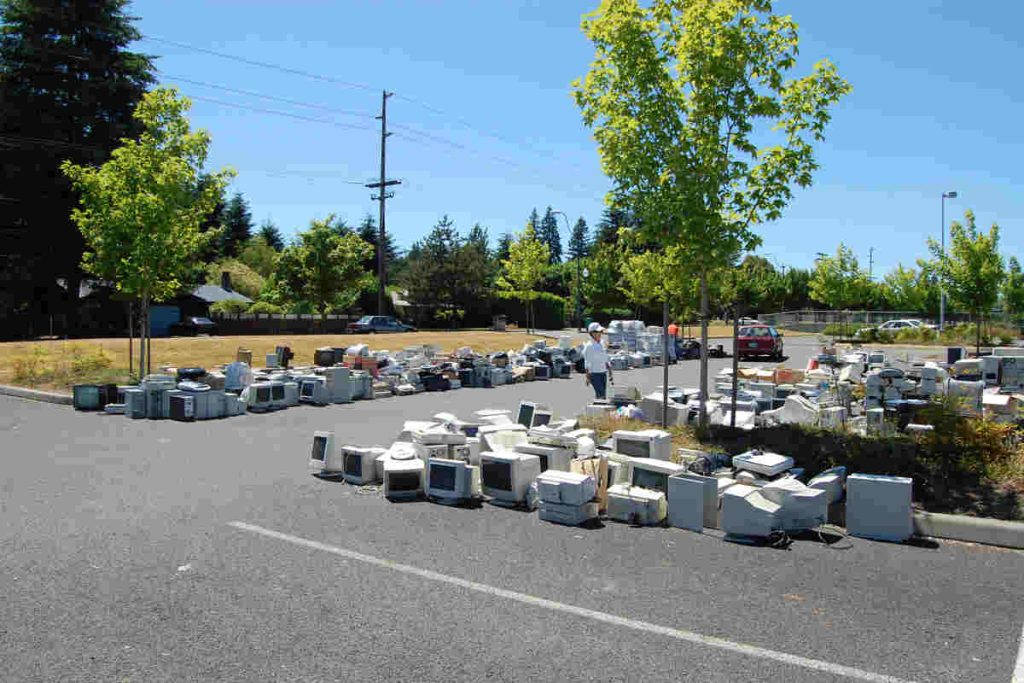
Veolia, the France-based global leader in water, waste, and circular-economy services, has been steadily expanding its presence in India; positioning itself as a key partner for cities and industries trying to transition from linear “use-and-dump” systems to resource-recovery models.
India Strategy & Market Fit
Veolia’s India strategy is built around municipal water management, industrial effluent treatment, and circular waste solutions for sectors like pharmaceuticals, food processing, refineries and smart cities.
One of its most notable India operations is the Nagpur 24×7 water supply programme, the first full-city public–private partnership in India to provide continuous drinking-water access to over 2.7 million people. The project was awarded under the JNNURM mission and is run by Veolia in partnership with the Maharashtra government.
In the waste sector, Veolia is developing waste-to-energy and material-recovery projects, including plastic recycling, sludge valorisation, and landfill-mining feasibility studies with Indian municipalities. Its solutions are closely aligned with India’s Swachh Bharat Mission, Extended Producer Responsibility (EPR) mandates for plastics, and the Smart Cities Mission.
Investment Footprint & Climate Impact
Veolia operates more than 60 water and wastewater treatment plants in India, serving a mix of cities and private industrial clients. In 2022, the company expanded capacity in its industrial services division to support zero-liquid-discharge (ZLD) systems, now mandatory in several Indian states for polluting industries.
Its local projects contribute to:
- Reduced freshwater extraction
- Lower landfill load through material recovery
- Methane avoidance via composting, biomethanation, or waste-to-energy upgrades
- GHG reduction by substituting virgin materials with recycled inputs
Key Partnerships & Local Value Chain
Veolia works with Indian corporates such as NTPC, Reliance Industries, JSW Steel, and state water boards in Karnataka, UP, Maharashtra and Tamil Nadu.
The company has also partnered with French Development Agency (AFD)-funded urban water projects and with the World Bank on urban water resilience in climate-vulnerable Indian cities.
Its India workforce includes over 4,000 employees, with active skill development in SCADA operations, industrial wastewater chemistry, and circular-economy logistics.
Why Veolia Matters for India
- Water Security: India is projected to face a 50% water demand–supply gap by 2030. Veolia’s leak-reduction, reuse, desalination and metering expertise helps reduce stress on aquifers and rivers.
- Circularity & ESG: As Indian companies file Business Responsibility and Sustainability Reports (BRSR), Veolia offers measurable ESG-compliance pathways—especially waste diversion, energy recovery, and freshwater saving.
- Urban Transformation: Continuous water supply, sewage treatment and biomethanation are core to decarbonised, liveable cities—central to India’s Smart Cities and AMRUT missions.
- Industrial Decarbonisation: Recycling and waste heat recovery improve Scope 1 & 2 footprints in chemicals, textiles, cement and steel.
Challenges & Caveats
- PPP urban contracts in India face tariff-setting delays, political resistance to metering, and payment backlogs.
- Municipal solid waste segregation rates remain low, limiting feedstock quality for circular systems.
- Water pricing in India is still far below true cost, reducing financial viability for high-tech reuse or desalination unless subsidised.
- Compliance enforcement on industrial wastewater is uneven across states.
9. Siemens Gamesa: Wind Blade Production & Skill Development
India Strategy & Market Fit
Siemens Gamesa has built a strong manufacturing and service presence in India over the last decade. The company’s Indian operations include a blade factory in Nellore (Andhra Pradesh), a nacelle factory in Mamandur (Chennai, Tamil Nadu), and an operations-&-maintenance centre in Red Hills (Chennai).
This localisation aligns with the Indian wind-energy industry’s push under “Atmanirbhar Bharat” to build domestic manufacturing ecosystems for turbines and components.
Further, Siemens Gamesa’s engineering centre in India, based in Bengaluru, has grown to become one of its major R&D hubs globally, with more than 500 engineers added in recent years.
By manufacturing components locally and developing turbines tailored for Indian wind regimes (for instance, the SG 3.X platform), Siemens Gamesa links its global technology to Indian market conditions and local supply-chain needs.
Investment Footprint & Climate Impact
In India, Siemens Gamesa has secured major orders such as a 302 MW contract for its SG 3.X platform turbines for a project in Karnataka.
These orders support the deployment of domestic manufacturing and installation, enabling India to scale wind capacity with locally-built units. By manufacturing blades and nacelles in India, the company reduces import dependency and improves supply-chain resilience.
Technically, wind turbines installed by Siemens Gamesa contribute to emission reductions by replacing fossil-fuel generation. For example, manufacturing locally shortens logistics and supports faster deployment, important for India’s target of adding large wind-capacity under its non-fossil energy goals.
Key Partnerships & Local Value Chain
Siemens Gamesa works with Indian component suppliers for blades, towers and logistics; for instance, it collaborates on blade-material innovation with Indian partners such as Aditya Birla Advanced Materials to develop recyclable blade technology in India.
On the skill-development front, its India engineering centre and training programmes support a talent pipeline of wind-industry technicians, engineers and service personnel. The company is also a certified training provider for wind-tower and service-technician skill sets in India.
Why Siemens Gamesa Matters for India
- Manufacturing localisation: By producing blades, nacelles and performing service locally, Siemens Gamesa helps build India’s wind-equipment ecosystem rather than just importing finished turbines.
- Technology adaptation: Its R&D centre in India enables adaptation of turbines for Indian wind regimes, high-temp conditions and grid integration challenges.
- Skills & jobs: The engineering centre, local manufacturing and service network create skilled employment opportunities and build long-term industry capability.
- Wind capacity expansion: As India targets major wind-capacity additions (both onshore and offshore), the presence of major turbine OEMs like Siemens Gamesa ensures scalability and reliability.
Challenges & Caveats
- In 2025, Siemens Gamesa announced the divestment of 90% of its Indian onshore wind business to a consortium led by TPG Rise Climate, retaining only 10% stake. This shift raises questions about long-term commitment and the strategic role of India operations.
- While manufacturing localisation is strong, further scaling to export-level manufacturing, full value-chain integration (e.g., advanced blades, offshore turbine components) and long-term supply-chain robustness remain to be proven in India’s context.
- The wind-industry in India faces structural challenges; land-acquisition, grid-integration delays, variable CUF (capacity utilisation factor), and competition from solar plus storage. These external risks affect all OEMs including Siemens Gamesa.
10. BYD: Electric Buses & Battery Innovation for Indian Cities
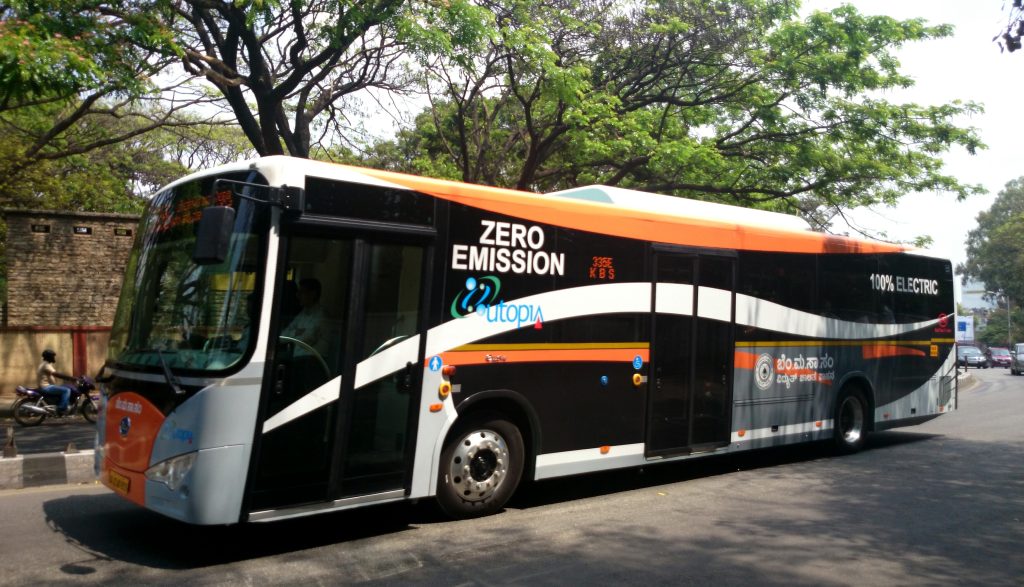
China-based BYD (Build Your Dreams) has become one of the most influential foreign players in India’s electric-mobility transition, particularly through its electric buses, battery technology, and fleet-focused EV platforms.
India Strategy & Market Fit
BYD entered India in 2007 and has since moved from component supply to full-scale EV assembly and bus manufacturing. In partnership with Hyderabad-based Olectra Greentech, BYD has already deployed over 1,500 electric buses across Indian cities including Mumbai, Delhi, Hyderabad, Kochi, Pune, and Surat. These deployments are tied to the FAME-II subsidy programme, which supports state transport undertakings (STUs) in electrifying public buses.
BYD also launched the e6 electric MPV for commercial fleets, targeting airport shuttles, corporates, and ride-hailing operators, signalling expansion beyond buses into fleet-grade passenger EVs in India.
Investment Footprint & Manufacturing
BYD operates a manufacturing facility in Sriperumbudur, Tamil Nadu, where it produces bus chassis, battery packs, and power-electronics assemblies. The firm announced that it plans to scale this plant to produce 5,000 buses per year, depending on state-level tenders and fleet demand.
With its proprietary Blade Battery technology; a lithium iron phosphate (LFP) cell design known for high safety and long cycle life; BYD aims to position India not just as a market but a future battery localisation hub, aligned with India’s ACC PLI scheme.
Key Partnerships & Local Value Chain
- Public transport electrification with BEST (Mumbai), TSRTC (Telangana), BMTC (Bengaluru)
- Strategic supply agreements with Reliance-owned mobility platforms and logistics fleet operators
- Olectra-BYD JV for bus manufacturing, assembly, service, and after-sales support
- Engagement with NITI Aayog and Ministry of Heavy Industries for tender participation and charging standardisation
Why BYD Matters for India
- Public transport decarbonisation: India has over 1.8 million registered buses; electrifying even 20% of them could cut millions of tonnes of CO₂ annually.
- Battery localisation path: BYD’s LFP chemistry aligns with India’s mineral constraints and fire-safety requirements.
- Fleet-first approach: While personal EV adoption is slow, fleet electrification; buses, cabs, logistics is scaling fast, and BYD dominates this segment.
- Urban air-quality gains: Each BYD K9 e-bus is estimated to save ~100 tonnes of CO₂ per bus per year, depending on city duty cycles.
Challenges & Caveats
- India has increased scrutiny of Chinese FDI post-2020, delaying approvals for fresh investments.
- Competition from Tata Motors, JBM, PMI Electro, and Switch Mobility is accelerating localisation pressure.
- Battery-cell localisation is still not confirmed—most packs are assembled in India but cells are imported.
- Slow STU procurement cycles and grid/charging infra gaps continue to delay large-scale deployment.
H2: Case Studies: How These Firms Are Changing India’s Climate Future
Case Study 1: Mumbai’s e-bus leap with Olectra-BYD and BEST
Mumbai’s bus operator, BEST, began adopting Olectra-BYD electric buses under the FAME program. Early deployments set the template for India’s big-city fleets. They proved the economics of city duty cycles and fast, depot-based charging. In 2019, BEST added more Olectra-BYD buses and reported reliable range for urban routes. That early proof-of-concept helped other cities move faster.
The long-term lesson is simple. When states build bankable contracts and charging depots, operators can scale clean fleets without service disruption. Mumbai’s experience showed how a gross-cost contract (GCC) model, clear performance norms, and maintenance bundling reduce risk for public agencies. Today, several STUs use similar models for larger tenders.
Why it matters: Urban buses drive daily air-quality outcomes. Large e-bus fleets cut tailpipe emissions and noise, and they anchor citywide charging networks for other vehicles later.
Case Study 2: Nagpur’s 24×7 water PPP with Veolia
Nagpur pioneered India’s first citywide 24×7 drinking-water PPP, executed through Orange City Water (a Veolia-linked venture). The model focused on district-metered areas, pressure management, metering, and leak reduction to cut non-revenue water (NRW) while improving reliability. Policy think-tanks have documented the step-by-step implementation design. Recent city records show the program continues to evolve, as the municipal corporation refines oversight and pushes further NRW reduction.
The experience is nuanced. Independent observers flagged trade-offs around source water stress and tariff practices, underscoring the need for transparent data and social safeguards. That debate helped improve contract design and public monitoring in later phases.
Why it matters: India’s climate resilience hinges on urban water security. Continuous supply, leak control, and wastewater reuse can delay costly new abstractions. Cities that get operations, metering, and grievance redressal right can scale reuse and cut pumping emissions.
Case Study 3: Vestas builds projects and exports from India
Vestas has combined local manufacturing with steady project wins to serve India and export markets. In 2023, the company secured a 130 MW order from Vibrant Energy for V155-3.6 MW turbines. Orders like this support blade and nacelle production in India and build a service workforce for long-term operations. The project pipeline also shows how bankable OEMs reduce execution risk in wind auctions.
Local factories in Tamil Nadu and Gujarat shorten logistics and speed up commissioning. They also enable India to supply parts beyond domestic demand when conditions are right. As tenders scale, such footprints can help India become a regional wind-equipment hub.
Why it matters: Wind complements solar’s daytime profile. Local supply chains reduce costs, improve uptime, and keep value in the economy; key for India’s 500 GW non-fossil target.
Economic Impact: Jobs, Investments & Supply Chains
India’s clean-energy surge is driving job creation, investment flows and domestic supply-chain growth. According to the Ministry of New and Renewable Energy (MNRE), the renewable-energy sector generated around 1.02 million job-years in 2023. Foreign direct investment into renewables reached roughly US $12.67 billion by March 2025, signalling global vote of confidence.Meanwhile, a Bloomberg New Energy Finance (BNEF) report states India may require US $223 billio n of investment by 2030 to hit its wind and solar targets.
Supply-chain effects are also evident. For example, MNRE’s large-scale solar-module PLI scheme allocates manufacturing capacity of 39,600 MW under Tranche-II, fostering domestic component production. The combined impact: clean-tech firms expanding here create local manufacturing jobs, partner with Indian component suppliers, and help build an export-ready climate industrial ecosystem.
Barriers & Policy Gaps Slowing Momentum
India’s green-tech expansion is real, but progress is slowed by structural, financial, and regulatory bottlenecks that global firms repeatedly flag.
The first challenge is policy execution lag. While India has strong national missions; Green Hydrogen, ACC Batteries, offshore wind; the on-ground rollout is slow due to state-level clearances, land acquisition issues, and fragmented utility regulation. Delays in tender finalisation and payment backlogs from state DISCOMs weaken investor confidence.
A second barrier is cost of capital. India’s clean-energy finance still carries higher interest rates than the US, EU or China. That raises the levelised cost of energy, making technologies like offshore wind, storage, or electrolysers harder to scale without long-tenure concessional finance.
Third, grid readiness lags behind renewable growth. Congestion, curtailment, and lack of storage procurement frameworks limit large-scale solar-wind-hybrid deployment.
Finally, domestic manufacturing policy remains uneven. PLI schemes exist, but supply-chain gaps; critical minerals, advanced R&D, skilled workforce keep India dependent on imports for batteries, electrolysers, and power electronics.
Until these gaps narrow, India risks being a deployment market, not a full green-tech manufacturing and innovation hub.
Outlook 2030: What Comes Next for India’s Green Tech Playbook
The next seven years will determine whether India becomes a global climate-tech manufacturer or remains only a high-growth market for foreign technology. Three shifts are already visible.
First, co-innovation is replacing pure import models. Global firms like Vestas, Schneider, and BYD are no longer just selling hardware; they are embedding R&D, software, and workforce skilling inside India. By 2030, India is expected to host multiple gigafactories for batteries, electrolysers, and power-electronics, supported by PLI-linked demand visibility.
Second, ESG-driven capital will shape industrial strategy. Indian corporates now face SEBI’s mandatory BRSR disclosure regime. As global buyers demand low-carbon supply chains, Indian steel, cement, auto, and chemicals industries will need green hydrogen, storage, and efficiency tech at scale. That creates long-term demand security for clean-tech manufacturers.
Third, India is poised to shift from energy transition to energy exports. With solar-wind hybrids, green ammonia corridors, and deep-sea cable proposals, India could eventually supply clean electrons and molecules to Asia, Africa, and the EU. The question is not technology but policy speed, financing depth, and local supply-chain depth.
If India aligns manufacturing, market demand, and policy certainty, 2030 could mark the moment it joins the climate-economy’s top tier; not as a follower, but as a builder.
Conclusion: The Decade That Will Decide India’s Climate Leadership
India’s green-tech story is no longer a future projection. It is unfolding in real time—in factories in Tamil Nadu, bus depots in Mumbai, wind corridors in Gujarat, and hydrogen pilot plants in Rajasthan. The next decade will decide whether this momentum becomes a structural transformation or remains a cycle of fragmented pilots and policy announcements.
What makes this decade decisive is that climate action and economic strategy have finally converged. Clean-tech is no longer treated as a CSR add-on or an “environment ministry issue,” but as a manufacturing, jobs, energy-security, and export-competitiveness priority. The entry of ten global firms profiled here shows how India is being repositioned from an energy-importing nation to a potential hub of renewable manufacturing, green-hydrogen production, and circular-economy logistics.
But ambition alone is not destiny. India will need to solve three non-negotiables:
- Execution speed; from tenders to grid upgrades to land and bankability.
- Affordable capital because decarbonisation without concessional finance remains a paper plan.
- Deep localisation; so India does not simply assemble green hardware but owns IP, skills, and supply chains.
If those pieces align, India will not just meet its 2030 renewable targets; it will help define the next generation of global climate industry standards.
This is India’s make-or-miss decade. The world is watching. Investors are waiting. Cities are choking. And the climate clock does not pause.
What India does between 2025 and 2035 will decide whether it becomes the world’s largest clean-energy laboratory or the world’s last big fossil-fuel consumer trying to transition too late.
The choice is not technical. It is political, financial, and organisational.
And the window is open, but not for long.
FAQs: 10 Global Green Tech Firms Expanding in India: An Earth5R Deep Dive
1. Why are global green tech firms expanding in India?
Because India is one of the fastest-growing clean-energy markets, backed by strong policies, rising energy demand, and the government’s net-zero 2070 target.
2. What sectors are attracting the most green tech investment in India?
Batteries, electric mobility, solar-plus-storage, wind manufacturing, hydrogen, industrial efficiency, and circular waste solutions.
3. How does India benefit from foreign clean-tech firms?
They bring technology transfer, local job creation, supply-chain development, and large-scale climate impact.
4. What role does policy play in clean-tech expansion?
Schemes like the National Green Hydrogen Mission, PLI incentives, and FAME-II reduce risk for investors and accelerate domestic manufacturing.
5. Which company is leading rooftop solar micro-inverter tech in India?
Enphase Energy is a key player due to its panel-level microinverter systems suited to India’s complex rooftops.
6. How are global firms helping India build a green supply chain?
By setting up factories (e.g., Vestas, Schneider), partnering with Indian OEMs, and training local engineers and technicians.
7. What is the economic impact of India’s green transition?
Over 1 million job-years already created (MNRE) and more than USD 12 billion in clean-energy FDI (DPIIT data).
8. Why is battery manufacturing central to India’s strategy?
Because batteries power EVs, storage systems, and hydrogen plants, reducing fossil fuel dependence and boosting export potential.
9. What makes Tesla’s entry into India important?
Not just EVs; Tesla Energy plans to bring grid-scale batteries and Powerwall home storage, solving India’s power-cut and grid-stability issues.
10. Why is offshore wind still slow in India?
Policy clarity exists, but tenders, grid studies, and port infrastructure are delayed—global firms await bankable contracts.
11. How is BYD contributing to India’s e-mobility future?
Through electric buses, LFP battery tech, and localized manufacturing with Olectra.
12. What is the biggest barrier to green hydrogen deployment in India?
High cost of electrolysers and lack of long-term industrial purchase agreements.
13. Which company is helping India digitize its power grid?
Schneider Electric through smart-grid, microgrid, and industrial energy-efficiency deployments.
14. How does Veolia support India’s circular economy?
By managing municipal water projects, industrial wastewater, and waste-to-resource systems.
15. Why do global firms prefer India as a manufacturing base?
Large domestic demand, export logistics advantage, policy incentives, and lower labour and renewable energy cost.
16. What is India’s renewable energy target for 2030?
500 GW of non-fossil electricity capacity.
17. Which policy supports domestic battery manufacturing?
The ACC (Advanced Chemistry Cell) Production Linked Incentive (PLI) scheme.
18. What are the main risks slowing clean-tech growth in India?
High financing costs, slow state-level clearances, grid constraints, and import dependence for key components.
19. Will India become a green tech exporter?
Yes, if localisation deepens; exports of wind turbines, batteries, hydrogen, and solar hardware are expected post-2030.
20. Why is 2025–2035 called India’s “make-or-break climate decade”?
Because decisions made now will lock in either a fossil-based industrial path—or a green, globally competitive economy.
What You Can Do Next ; Be Part of India’s Green Transition
India’s clean-tech revolution is not only driven by policy and global companies — it depends on informed citizens, investors, and decision-makers. The decade ahead will define whether India becomes a climate innovator or remains a late adapter.
If you’re a policymaker: Push for faster execution, not just announcements.
If you’re an investor or business leader: Back technologies that create local jobs and cut real emissions.
If you’re a citizen or student: Choose clean mobility, rooftop solar, skill training, or climate-aligned careers.
If you’re a journalist or educator: Amplify verified data, not hype.
If you’re part of a corporation: Align your supply chain with India’s net-zero goals before regulations force you to.
The shift has already started. What matters now is scale, speed, and participation.
Join the transition; demand cleaner systems, support climate-positive policies, and power India’s leap to a green economy.
Authored by- Sneha Reji