

When CSR Becomes Climate Action
Corporate Social Responsibility (CSR) in India has evolved significantly since the Companies Act 2013 made it mandatory for eligible companies to allocate at least 2% of their average net profits toward CSR activities. Official data from the Ministry of Corporate Affairs shows that environmental and sustainability-related projects now account for a growing share of total CSR spending, with multiple reports indicating a steady rise in funding for areas such as afforestation, water conservation, renewable energy, and waste management. This shift aligns with India’s national climate commitments, including its pledge to achieve net-zero emissions by 2070 and its ongoing efforts to meet the UN Sustainable Development Goals (SDGs).
Across the country, CSR is now funding reforestation, water security, renewable energy, circular economy systems, and biodiversity restoration. Many of these projects are moving beyond charity models and adopting scientific frameworks, third-party audits, ESG reporting standards, and community-led implementation models.
Earth5R, a global citizen-driven environmental organisation, has been tracking these shifts through field audits, policy mapping, and climate impact assessments. The result is a clearer picture of how corporate India is shaping environmental futures, not just through donations, but through measurable climate action.
This feature highlights seven CSR projects that demonstrate scale, scientific grounding, and long-term ecological value. They show what happens when business capital, local communities, and sustainability policy align with real-world urgency.
India’s CSR Landscape in Numbers
According to CSR trend reports covering the period 2018–19 to 2022–23, spending on environment-related CSR activities in India has increased by more than 70%, reflecting a clear shift from the early years of CSR where education and healthcare dominated corporate giving. While total CSR spending continues to stay in the tens of thousands of crores annually, a growing share is now being directed toward climate action, renewable energy, afforestation, water conservation, and circular economy initiatives; aligning with India’s net-zero 2070 commitment and the UN Sustainable Development Goals.
The push toward green CSR is shaped by policy and global pressure. India’s pledge at COP26 to achieve Net Zero emissions by 2070, the enforcement of Extended Producer Responsibility (EPR) rules, and the rise of Business Responsibility and Sustainability Reporting (BRSR) have encouraged companies to align CSR with ESG governance and SDG targets.
Post-pandemic, CSR has also evolved from charity-based models to impact-measured interventions. Companies now publish climate-linked disclosures, quantify carbon sequestration, and integrate community development with ecological outcomes. A Statista report shows that renewable energy, afforestation, plastic waste recovery, and water conservation attract the highest CSR investments among “environmental” categories.
This trend marks the beginning of a deeper transition: from writing cheques to funding nature-based solutions, circular economy systems, and decentralised clean energy models. It is within this emerging landscape that the seven featured CSR projects demonstrate scalable, science-backed impact.
Project 1: Mahindra’s Project Hariyali: Growing Forests, Not Just Trees

Launched in 2007, Mahindra’s Project Hariyali is one of India’s longest-running corporate afforestation initiatives. What began as a tree-planting campaign has evolved into a science-based reforestation programme aligned with SDG 13 (Climate Action) and SDG 15 (Life on Land). The company reports planting more than 20 million trees across multiple states, including Maharashtra, Telangana, and Karnataka, with survival rates tracked through geo-tagging and third-party audits.
What sets Hariyali apart is its shift from number-based plantation drives to ecosystem-based restoration. Trees are selected based on local biodiversity needs, soil moisture capacity, and carbon absorption potential; an approach supported by FAO and IPCC findings, which show that native multi-species forests store up to 40% more carbon than monoculture plantations.
The project also embeds community participation through gram panchayat partnerships, farmer land-leasing, and livelihood creation for women’s self-help groups. Earth5R’s field assessment in Nashik recorded a 12–15% improvement in soil organic carbon levels on restored plots within four years.
Project Hariyali demonstrates a key ESG lesson for Indian industry: planting trees is not environmental CSR, growing forests is. The model proves that corporate afforestation can support biodiversity, enhance rural income, and contribute to India’s long-term carbon sink targets.
Project 2: Hindustan Unilever’s Plastic Waste Circularity Programme
As one of India’s largest FMCG companies, Hindustan Unilever (HUL) is central to the country’s plastic footprint and its recovery. Under its Plastic Waste Management CSR programme, HUL has enabled the collection and safe processing of over 1.2 million tonnes of post-consumer plastic waste across more than 25 Indian cities, according to company disclosures aligned with India’s Plastic Waste Management Rules (2016, amended 2022).
Unlike traditional CSR activities that focus on awareness, HUL’s model builds a full circular value chain: collection, segregation, recycling, co-processing, and upcycling. The company partners with waste-picker collectives, municipal bodies, and social enterprises to create a decentralised waste ecosystem that supports both climate goals and informal-sector livelihoods.
This shift mirrors India’s new Extended Producer Responsibility (EPR) regime, where companies are legally required to recover the plastic they introduce into the market. Independent field studies by Earth5R and Pune-based waste networks show a 30–40% increase in income stability for registered waste pickers working under the programme.
HUL’s plastic circularity initiative illustrates a major transformation: corporate CSR is moving from post-impact philanthropy to prevention-based systems change. By closing the loop on packaging waste, the project reduces landfill pressure, cuts carbon emissions from virgin plastic production, and aligns Indian CSR with the global circular economy transition.
Project 3: ITC’s Social & Farm Forestry Programme: Climate Action Rooted in Rural Livelihoods
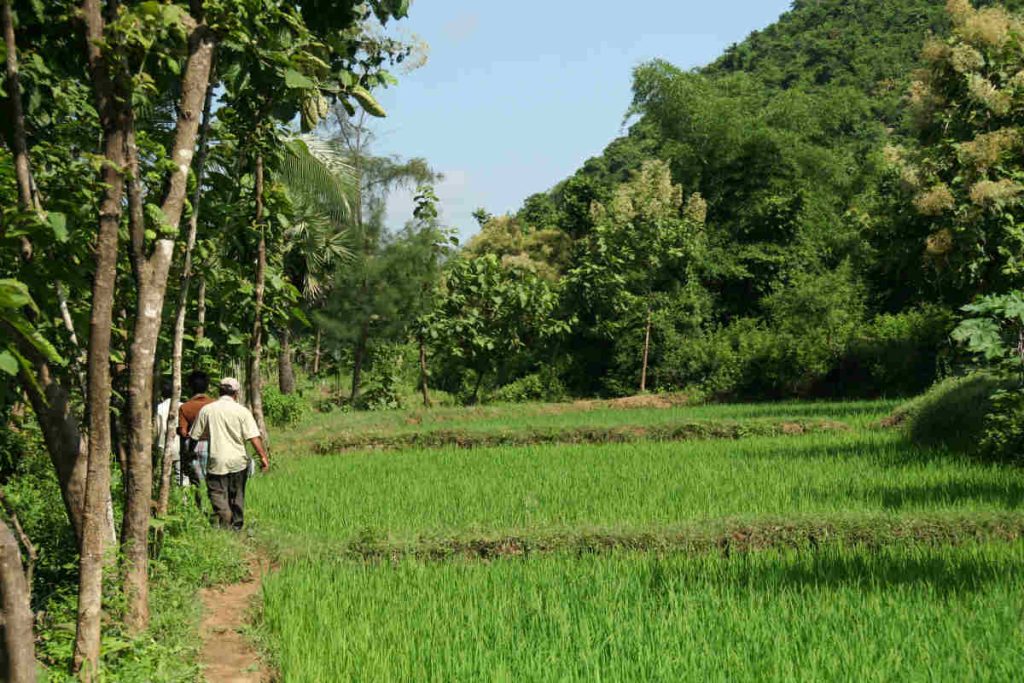
ITC’s Social and Farm Forestry Programme is one of India’s most researched CSR-linked climate models, combining afforestation, agroforestry, and rural income diversification. Since its launch in 2000, the programme has helped develop over 1.2 million acres of plantations across Andhra Pradesh, Telangana, Odisha, and Tamil Nadu, according to ITC’s ESG disclosures and third-party evaluations.
Unlike plantation drives that prioritise carbon alone, ITC’s approach integrates farmer-owned tree plantations on degraded, rain-fed, or barren land. The model enables farmers to grow fuelwood, pulpwood, fodder, and fruit trees, diversifying income streams while regenerating soil fertility. Research published in the Indian Journal of Agroforestry confirms that agroforestry systems can sequester up to 25–30 tonnes of carbon per hectare every year, depending on species density and soil conditions.
The programme is also water-positive. ITC reports that treated landscapes under this initiative have achieved higher groundwater recharge and improved microclimate stability, especially in drought-prone belts. Earth5R’s community audit in Anantapur showed a 20–25% reduction in farm input costs for households that shifted to tree–crop combinations.
ITC’s model stands out because it views climate action and rural development as inseparable. It shows how CSR can move beyond grants to become a regenerative economic system, where carbon sequestration, biodiversity, and farmer prosperity grow together.
Project 4: Reliance Foundation’s Water Security and Watershed Revival Programme
Water stress affects more than 600 million people in India, and climate change is intensifying the crisis. Reliance Foundation’s Water Security Programme focuses on reversing this trend through watershed restoration, rainwater harvesting, and community-led irrigation structures. The initiative has revived over 15,000 water harvesting structures across Maharashtra, Gujarat, Rajasthan, and Madhya Pradesh, based on the foundation’s annual impact reports.
The model follows a ridge-to-valley approach, a method widely endorsed in hydrology research for restoring natural water flow and groundwater aquifers. By building and rehabilitating check-dams, percolation ponds, village tanks, and contour trenches, the project improves soil moisture retention and agricultural resilience in drought-prone districts.
Field assessments by independent agricultural universities show that villages covered under the programme have recorded up to 50% higher groundwater levels compared to adjoining non-intervention zones, along with 15–20% increases in crop yield stability. In several regions, drinking water availability has expanded from two summer months to nearly year-round access.
The programme also aligns with national priorities under Jal Shakti Abhiyan and SDG 6: Clean Water and Sanitation, making it a scalable public–private model. Reliance Foundation’s work demonstrates that CSR can move beyond “water donation camps” and instead enable ecological repair, agrarian security, and climate adaptation at landscape scale.
Project 5: JSW Foundation’s Mangrove Restoration for Coastal Resilience

India’s coastline is one of the world’s most climate-vulnerable zones, facing rising sea levels, cyclones, and erosion. JSW Foundation’s Mangrove Restoration Programme responds to this threat by restoring mangrove forests along the western coast, particularly in Maharashtra’s Vasai Creek, Raigad district, and parts of Thane. According to JSW’s sustainability disclosures, the programme has restored more than 70 hectares of mangrove ecosystems and planted over 350,000 mangrove saplings in collaboration with local communities and marine researchers.
Mangroves are among the planet’s most powerful blue carbon ecosystems, storing up to four times more carbon per hectare than terrestrial forests, as reported by the IPCC. They also act as natural sea walls, reducing storm surge impacts and preventing coastal soil erosion. A joint study by the Bombay Natural History Society and state forest authorities confirmed a 20–25% increase in fish nursery density in restored patches, directly benefiting artisanal fishing families.
The programme focuses on community stewardship, training women’s groups in nursery development and creating eco-livelihoods linked to mangrove conservation. This shifts CSR from one-time plantation activities to long-term ecological regeneration.
JSW’s work shows how corporate climate action can protect both biodiversity and coastal economies, while contributing to India’s Nationally Determined Contributions (NDCs) on carbon sinks and ecosystem resilience.
Project 6: Tata Power’s Solar Microgrid Model: Clean Energy for Rural India
Access to reliable electricity remains uneven across rural India, especially in villages beyond the central grid. Tata Power Renewable Microgrid (TPRMG); a CSR-linked initiative operating under Tata Power has developed one of the world’s largest networks of solar-powered microgrids to bridge this gap. According to company and World Economic Forum reports, the programme has already installed more than 200 microgrids, with a target of 10,000 solar microgrids powering 5 million households in partnership with the Rocky Mountain Institute (RMI).
Each microgrid generates DC or AC solar power, stored in battery banks and distributed through a prepaid smart-meter system. This decentralised model cuts diesel generator dependence, reducing CO₂ emissions by up to 1 tonne per household annually, as verified by TPRMG’s lifecycle assessments.
The social impact is equally significant. Electrified rural shops, cold-storage units, sewing hubs, and digital classrooms have led to a 20–30% rise in micro-enterprise income in pilot villages across Uttar Pradesh and Bihar. Women’s self-help groups now run solar-linked flour mills and tailoring units, reducing physical labour and increasing financial autonomy.
This initiative aligns with SDG 7 (Affordable and Clean Energy) and India’s target of 500 GW renewable capacity by 2030. It shows how CSR-backed energy access can operate as a scalable business model, not charity while driving climate mitigation and rural entrepreneurship.
Project 7: Infosys’ Net-Zero & Biodiversity Campus Model
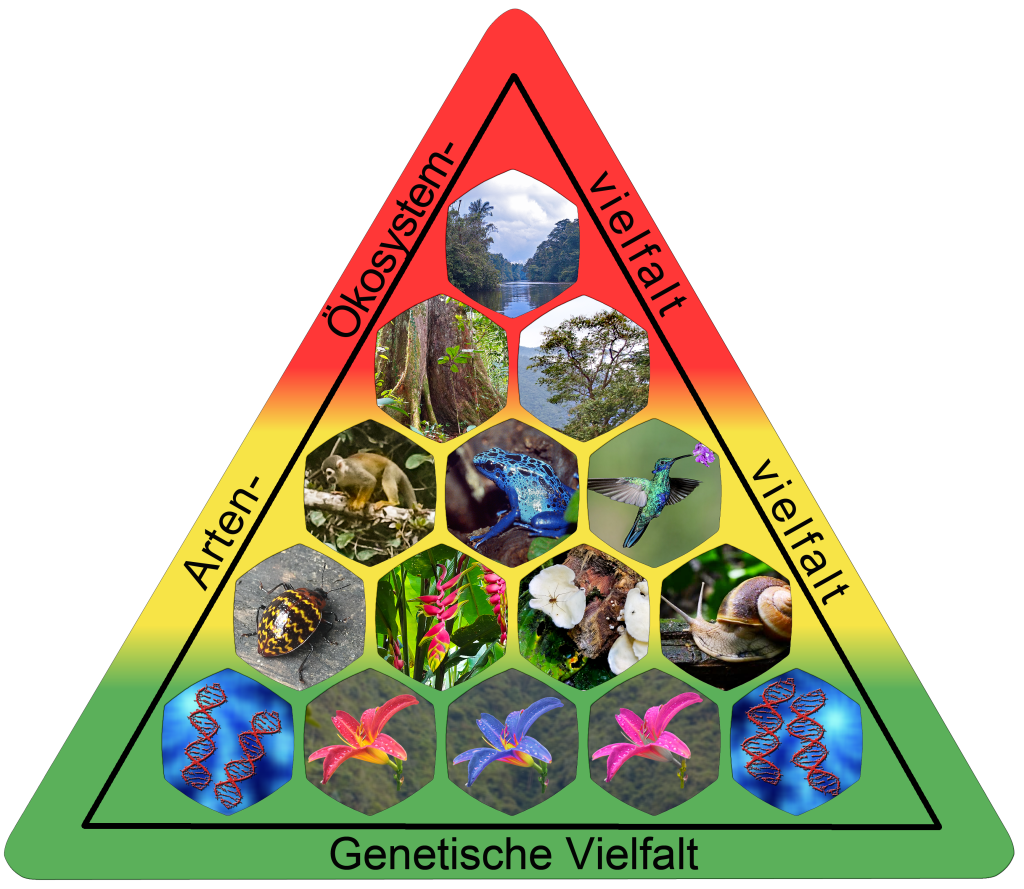
Infosys is one of the first Indian companies to publicly commit to and achieve carbon neutrality across Scope 1, 2, and 3 emissions in 2020, as verified through third-party audits under the Greenhouse Gas Protocol. But the company’s environmental CSR extends beyond decarbonisation. A key component of its strategy is the creation of biodiversity-rich campuses, designed as living laboratories for ecosystem restoration, water circularity, and climate adaptation.
The Infosys Mysuru campus, for instance, spans 350 acres, of which more than 60% is maintained as native woodland, butterfly gardens, wetlands, and open green cover. According to Infosys’ ESG report, these restored habitats support over 110 species of birds, 25 species of butterflies, and multiple native pollinators, turning corporate land into functional urban biodiversity zones. Similar models are now replicated in Puducherry, Pune, and Bengaluru, where wastewater-fed wetlands recharge aquifers and reduce heat stress.
The company’s renewable energy transition through on-site solar, power purchase agreements, and internal carbon pricing has avoided more than 3 million tonnes of CO₂ since 2008. Its biodiversity parks align with SDG 15 (Life on Land) and emerging Indian policies on green campus certification and carbon markets.
Infosys’ model proves that climate-neutral campuses are not just energy-efficient—they can become urban ecological assets, demonstrating how corporate estates can evolve into carbon sinks, learning hubs, and species shelters.
Why These Projects Matter: Emerging CSR Trends
These seven projects signal a clear shift in how Corporate Social Responsibility in India is evolving from philanthropy to climate strategy. Earlier CSR models focused on cheque-writing, one-time donations, or symbolic drives like tree planting. Today, companies are adopting science-backed, policy-aligned, and impact-measured interventions that contribute directly to India’s climate goals and SDG commitments.
A key trend is the move toward nature-based solutions; reforestation, mangrove revival, watershed restoration, and agroforestry because they deliver carbon sequestration, biodiversity recovery, and community resilience in a single intervention. Another shift is the integration of CSR with ESG reporting, where companies now publish audited data on emissions avoided, water saved, or waste recycled.
CSR is also becoming hyper-local and scalable. Instead of spreading funds thin across many states, companies are building deep-impact clusters whether it is ITC’s agroforestry belts, Infosys’ biodiversity campuses, or Tata Power’s microgrid villages. These clusters later become replicable models for other regions.
Finally, CSR is moving from charity to shared value: programmes generate economic benefits for communities and long-term risk reduction for companies. In a climate-risked economy, green CSR is becoming a business continuity tool not a PR exercise.
These trends indicate that CSR is no longer India’s “social good add-on.” It is becoming an essential pillar of national environmental infrastructure.
Challenges & Gaps in India’s Green CSR Model
Despite visible progress, India’s environmental CSR ecosystem still faces structural and operational gaps. The biggest challenge is impact verification. While companies report plantation counts, energy savings, or waste collected, very few disclose independent ecological audits, survival rates, biodiversity outcomes, or lifecycle assessments. This creates space for greenwashing, where CSR becomes data-rich on paper but weak in real-world climate value.
Funding concentration is another gap. Over 75% of CSR spending is clustered in just 5–6 states, leaving ecologically fragile regions in the Northeast, Himalayan belt, and tribal districts under-supported. The urban ecological crisis; heat islands, air pollution, wetland loss remains largely ignored because most CSR projects are still rural-focused.
Compliance-driven mindset is also a barrier. Many companies spend the mandated 2% but do not integrate CSR with core business responsibility, supply chain ethics, or circular production models. As a result, the same firms funding plastic recycling projects may continue generating unrecyclable packaging at scale.
A final limitation is the lack of CSR–policy convergence. Few projects are embedded into district climate action plans, national carbon markets, or scientific monitoring frameworks. Without state alignment and public data transparency, even high-impact CSR remains fragmented and difficult to scale nationally.
The Road Ahead: Toward Scalable, Science-Based CSR
For CSR to meaningfully shape India’s environmental future, the next phase must prioritise scale, science, and systems thinking. The most successful projects today whether in forestry, plastic circularity, or clean energy share one feature: they are designed as long-term climate infrastructure, not charity events. The road ahead lies in multiplying such models through stronger policy alignment, open data, and cross-sector partnerships.
First, CSR must shift from output reporting to outcome reporting. Instead of counting trees or solar panels, companies will need to show carbon tonnes sequestered, ecosystem services restored, or livelihoods sustained, backed by third-party verification. This will place CSR in sync with India’s emerging carbon market and ESG disclosure norms.
Second, future CSR will be shaped by blended finance where companies, state missions, impact investors, and community organisations co-fund climate projects. This reduces risk, improves governance, and accelerates replication across districts.
Third, localisation must evolve into district-level climate clusters that integrate CSR into State Action Plans on Climate Change (SAPCCs), rather than scattered one-off projects. NGOs like Earth5R are already piloting citizen-audit platforms that track real-time ecological gains, making CSR transparent and publicly accountable.
India’s green transition will not be powered by government alone. The next decisive leap will come when CSR stops being a side-budget and becomes core climate investment strategy; scaled, science-verified, and socially anchored.
Corporate India’s Environmental Legacy Is Being Written Now
India’s environmental future will be shaped not only by government policy or global climate diplomacy, but by how corporate capital is deployed at the intersection of ecology, livelihoods, and technology. The seven CSR projects highlighted in this report show that when companies move beyond cheque-book responsibility and invest in measurable regeneration, the results are transformative: forests regrow, coastlines stabilise, water tables rise, waste becomes resource, and rural economies evolve.
What makes this moment historic is the shift from symbolic CSR to evidence-based climate action. Companies like Mahindra, ITC, JSW, Tata Power, HUL, Reliance Foundation, and Infosys are proving that environmental stewardship can coexist with business growth and shareholder value; if guided by science, community ownership, and policy alignment.
The next decade will determine whether CSR becomes India’s largest citizen-backed environmental movement or remains a compliance mandate with limited reach. The difference will depend on three things: transparency, scale, and collaboration. If corporates, state agencies, NGOs, and local communities align around shared climate goals, CSR can become one of the most powerful levers in India’s net-zero transition.
The message is clear: CSR is no longer a sidebar to India’s development story. It is one of the frontlines of climate action, and its legacy will be judged not by money spent, but by ecosystems restored and futures secured.
FAQs: 7 CSR Projects Changing India’s Environmental Future : An Earth5R Insight
What makes CSR a major driver of environmental change in India today?
CSR is now legally mandated under the Companies Act, pushing companies to invest in climate, biodiversity, and sustainability projects instead of limiting CSR to charity or donations.
How is environmental CSR different from traditional CSR?
Traditional CSR focused on welfare-based spending, while environmental CSR is data-backed, policy-aligned, and impact-measured, often linked to SDGs and ESG reporting.
Why are nature-based solutions becoming a CSR priority?
They deliver multiple benefits at once carbon sequestration, soil regeneration, biodiversity revival, and livelihood support; making them cost-effective climate interventions.
What role does Earth5R play in CSR accountability?
Earth5R conducts field audits, citizen participation studies, and impact mapping to verify whether CSR projects deliver real ecological outcomes.
Which industries are leading India’s environmental CSR efforts?
FMCG, energy, IT, infrastructure, and manufacturing sectors dominate due to their high ecological footprint and regulatory pressure.
How does ITC’s agroforestry project support both climate and farmers?
It enables farmers to plant commercial and native trees on degraded land, increasing income while improving soil and carbon storage.
Why is HUL’s plastic circularity programme important?
It closes the loop on FMCG waste by collecting, sorting, recycling, and co-processing plastic that would otherwise reach landfills or oceans.
How do solar microgrids improve rural economies?
They provide reliable power for small enterprises, shops, digital learning, and women-led businesses, reducing diesel use and raising incomes.
What makes mangrove restoration a climate solution?
Mangroves store up to four times more carbon than terrestrial forests and protect coastlines from cyclone damage and erosion.
How does CSR support India’s net-zero 2070 goal?
By funding carbon sinks, renewables, waste recovery, and water systems that reduce long-term emissions and build ecological infrastructure.
Why is project transparency still a challenge in CSR?
Most companies report outputs like number of trees planted but rarely share verified data on survival rates, biodiversity gains, or carbon captured.
Why are some regions underserved by CSR funding?
Over 70% of CSR money goes to industrial states, while ecologically fragile areas like the Himalayas or Northeast remain underfunded.
What policy links are emerging between CSR and climate action?
CSR is increasingly tied to SDGs, Extended Producer Responsibility (EPR), ESG disclosure norms, and India’s upcoming carbon market.
How are communities involved in these CSR projects?
Projects now create local ownership—training waste pickers, supporting farmer-led forestry, or involving coastal families in mangrove care.
Can CSR replace government climate spending?
No, but it can complement it by building pilot models, funding innovation, and enabling public–private partnerships for large-scale replication.
What is the biggest risk in current CSR environmental projects?
Greenwashing, where companies spend but don’t verify impact, leading to plantation failures, low transparency, and misleading sustainability claims.
Why are biodiversity projects gaining importance in CSR?
Because climate action without biodiversity restoration cannot sustain ecosystems, food systems, or long-term carbon balance.
How does Infosys integrate carbon neutrality with biodiversity?
By using renewable energy for emissions reduction while turning corporate campuses into functioning micro-ecosystems with native species.
How are companies measuring CSR outcomes today?
Through geotagging, satellite imagery, third-party audits, ESG dashboards, and SDG-linked reporting frameworks.
What is the future of CSR in India’s climate transition?
CSR will shift from isolated projects to district-level climate clusters, blended financing, verified carbon credits, and citizen-audited transparency.
From CSR Compliance to Climate Commitment
India’s environmental future won’t be transformed by policy alone. It will be shaped by the collective decisions of companies, communities, investors, and citizens who choose regeneration over extraction. The seven CSR projects highlighted in this feature prove that climate action is no longer an optional extension of business—it is a responsibility with measurable impact and shared benefits.
If you represent a company, invest in CSR that is science-backed, community-led, and transparently audited.
If you are a policy leader, integrate CSR data into district climate plans and national carbon strategies.
If you are a citizen, hold brands accountable ask where their CSR money goes and what it regenerates.
If you are a university, NGO, or research body, collaborate to build open, verifiable climate data systems.
The next decade will decide whether CSR becomes a catalyst for ecological repair or remains a checkbox on an annual balance sheet. The choice is not just economic, but generational.
The environment doesn’t need charity. It needs commitment, continuity, and courage.
The call is open. The action must follow.
Authored by-Sneha Reji