
The Return of Soil, Seed, and Sovereignty
India’s food system stands at a crossroads. For almost 60 years, national agricultural policy has relied on the logic of chemicals, monocultures, and market-linked productivity. That model delivered food security, but at a cost the country can no longer ignore. Nearly 52 per cent of India’s agricultural land suffers from some form of degradation (ISRO Land Degradation Report, 2021). Topsoil, which takes centuries to form is now disappearing at a rate of 5.3 billion tonnes every year (ICAR).
Chemical dependence has not translated into secured prosperity. India spent ₹1.75 lakh crore in fertiliser subsidies in FY 2023, yet the average real income of a farmer has barely grown in a decade. The NSSO 2021 survey shows that 50 per cent of agricultural households are still in debt, with fertiliser and pesticide costs forming a major portion of those liabilities. The Green Revolution fed the nation; it did not free the farmer.
Meanwhile, climate change is no longer a distant threat. According to the IMD and World Bank, 75 per cent of India’s districts are now climate hotspots. Erratic rainfall, heat stress, and falling groundwater have turned agriculture into a risk economy. Rural youth are migrating, not because they want to leave farming but because farming is leaving them.
This is why the rise of organic and regenerative agriculture is not a nostalgic return to the past. It is a policy-relevant, scientifically validated response to a multidimensional crisis. Natural farming in Andhra Pradesh, Sikkim’s statewide organic transition, and seed sovereignty movements in the Himalayas are not isolated experiments. They represent a systemic rethink of soil economics, public health, gendered labour, and rural dignity.
These movements anchor a new idea: that renewal of land and renewal of livelihoods are inseparable. They shift the farmer from being a consumer of inputs to a producer of fertility, biodiversity, and community wealth. They restore the language of commons; soil, seed, water, knowledge in a sector long dominated by markets and middlemen.
What follows is an evidence-based exploration of eight such movements. Each offers a blueprint not only for ecological recovery, but for India’s transition to a green rural economy aligned with climate, nutrition, and policy goals.
The Science Behind the Shift: Why Organic Farming Matters Now
India’s renewed interest in organic and regenerative farming is not ideological. It is scientific, economic, and urgent. Decades of research from ICAR, FAO, IPCC, and independent agro-ecology institutes now point to a shared conclusion: industrial agriculture has reached its ecological and productivity limits.
Short-term gains from urea, DAP, pesticides, and hybrid seeds have created long-term soil fatigue. The Food and Agriculture Organization (FAO) estimates that 33% of the world’s soil is already moderately or highly degraded, and India is among the top five countries most affected. ICAR’s 2021 report shows that over 147 million hectares of Indian land face soil degradation, much of it linked to chemical-intensive farming and erosion.
Soil Decline and Yield Plateau
India’s fertiliser consumption has grown from 7 million tonnes in the 1970s to over 62 million tonnes in 2022, yet the yield increase has stagnated to below 1% annually in major cereal crops (NITI Aayog discussion paper, 2023). The curve is no longer rising ; it is flattening. The Green Revolution boosted wheat yields from 0.8 to 3 tonnes per hectare. Today, even with more inputs, the ceiling has barely moved.
The Chemical Dependency Trap
Studies from the Indian Institute of Soil Science show that soils in Punjab and Haryana now need 2–3X more fertiliser to produce the same output as in the 1990s. A large part of that input cost is external bought, not produced on-farm, increasing rural debt, dependency, and vulnerability.
Organic Farming & Climate Resilience
Organic systems, by contrast, create fertility through biomass, compost, cow dung, cover crops, and microbial activity. Long-term trials by the Rodale Institute (USA) and ICRISAT (India) show that organic plots can sequester between 2–4 tonnes of carbon per hectare per year, improve water retention by 20–30%, and achieve yield parity after 3–5 transition years, especially in rainfed regions.
Policy Alignment: India’s Quiet Pivot
India has already institutionalised organic farming through:
- Paramparagat Krishi Vikas Yojana (PKVY); cluster-based organic adoption
- National Mission on Sustainable Agriculture (NMSA) ; agro-ecology focus
- Bhartiya Prakritik Krishi Paddhati (BPKP),natural farming
- Jaivik Kheti national organic marketplace portal,linking farmers to buyers
- Namami Gange Organic Corridor; 6,000+ villages shifting to pesticide-free cultivation along the river basin
These policies are not yet the mainstream, but they signal a shift: from yield maximisation to soil restoration, from chemical subsidy to biological self-reliance.
Movement 1: The Natural Farming Revolution in Andhra Pradesh
When the Andhra Pradesh government launched its transition to natural farming in 2016, it was viewed by many as ambitious. Over the years the initiative, now known as Andhra Pradesh Community‑Managed Natural Farming (APCNF) (formerly Zero Budget Natural Farming or ZBNF) has scaled into one of the largest agro-ecology transitions in India. The shift matters: it places farmers and soil at the heart of policy, rather than inputs and debt.
What makes Andhra’s model different
APCNF rejects external chemical-inputs, and emphasises in-situ fertility. Practices include Beejamritam (seed treatment using cow-dung/urine mix), Jiwamritam (microbial soil booster), mulching, intensive cover-cropping, indigenous seeds and live soil covers. Rather than a top-down subsidy model, the programme is built on farmer-to-farmer training, anchored via 1.8 lakh women’s self-help groups (SHGs) under the state’s rural empowerment institutions.
Scale & Impact
- Andhra’s goal: transition 6 million farmers across approximately 8 million hectares by 2024.
- A Life-Cycle Assessment study found that ZBNF model fields in Andhra reduced input costs significantly and improved resilience.
- According to research published in Sustainability, short-term crop yield penalty is not seen when farmers adopt ZBNF; across six districts the yields held up comparably to conventional.
- Economically: One study shows natural-farm paddy had 27% higher net returns compared with conventional farming due to lower material costs.
- On the policy side: An analysis by Council on Energy, Environment and Water (CEEW) estimated that if ZBNF were scaled in Andhra, fertiliser-subsidy savings of ₹2,071 crore annually could be achieved under full penetration.
Why the world is watching?
International agencies now treat Andhra’s model as a climate-resilient agriculture prototype. The programme has been profiled by the United Nations Environment Programme (UNEP) and other global actors as a “global public good”. The model also integrates a carbon-credit framework and regenerative-economy logic, signalling green finance potential for smallholder farmers.
Sikkim: World’s First 100% Organic State
In the austere slopes of the Himalayas, Sikkim; one of India’s smallest states has achieved what many believed to be a pipe dream: the transition to 100 per cent organic agriculture. This section explores how the state built its path, the impacts seen so far, and the challenges that remain.
From Ambition to Policy
The journey began early. In 2003 the government of Sikkim declared its aim to become a “totally organic state”.By 2010 it launched the Sikkim Organic Mission (SOM), which laid out a roadmap for phasing out synthetic fertilisers and pesticides, setting up state certification mechanisms and training farmers in agro-ecological practices.
By 2015-2016, all farms in Sikkim were declared to have converted to certified organic cultivation, and the state formally became India’s first “100 per cent organic state”.
What the Transition Looked Like
Sikkim’s shift involved:
- Banning the sale and use of chemical fertilisers and pesticides statewide.
- Establishing the Sikkim State Organic Certification Agency to certify produce and ensure integrity.
- Promoting small-holder farmers (roughly 66,000 families) across about 76,000 ha under certified organic cultivation.
- Leveraging local agro-ecology: terrace farming, diversifying crops (cardamom, buckwheat, millets, hill rice) and aligning with the mountain terrain.
The Gains: Soil, Society, and Brand

- The globally recognised reward: Sikkim’s policy received the Future Policy Award Gold 2018, co-organised by the Food and Agriculture Organization (FAO) for the best agro-ecology law.
- The organic branding has boosted tourism and agro-food reputation: Sikkim markets itself as a “clean, green, organic” destination, which draws eco-tourists and premium niche markets.
- The model shows how a mountainous, small-state context can transition away from chemical-intensive farming, offering lessons for climate-resilient agriculture.
The Realities and Challenges
However, the story is not entirely without blemish. Several analysts point to economic and structural stresses:
- Farmers report lower incomes compared to expectations, due to small land holdings, high logistics costs, and competition from cheaper non-organic produce.
- Market linkages remain weak; many farmers still sell through local roadside stalls rather than premium export chains.
- Although labelled 100 per cent organic, the terrain and micro-plots mean yields are small and food-security remains a concern; Sikkim still depends on imports for staple grains.
- Replicability is contested: Several studies caution that Sikkim’s small size, terrain and agro-ecology make scaling to large, flat agricultural states difficult.
Why It Matters for Rural Renewal
Sikkim’s example underscores that organic farming is not just a niche hobby but a state-level policy tool for renewal of rural landscapes and economies. Through its clear policy commitment, institutional backing and brand-leveraging, Sikkim demonstrates:
- How policy can shift the entire farming paradigm, not just isolated projects.
- How eco-tourism, organic branding and agriculture can work in tandem to boost rural livelihoods.
- That small-holder, diversified agro-ecologies can become valuation assets (soil, seed, community knowledge) rather than liabilities.
When placed in the broader national context, Sikkim becomes a reference point: if a small Himalayan state can achieve “100 per cent organic”, then parts of India’s larger agricultural states may consider hybrid models of regeneration, value-chains and ecological transitions.
Key Takeaway
Sikkim’s 100 per cent organic journey shows that complete agro-ecological transitions are possible when policy, community and environment align. At the same time, the story reminds us that scale, market integration and farmer incomes are still critical bottlenecks to ensure such transitions lead to meaningful rural renewal.
Indigenous Seed Sovereignty Movements
In the small fields of the Himalayas and the plains of central India, a quieter revolution is germinating; one that places the seed back in the hands of the farmer. The movement for seed sovereignty seeks to overturn the industrial-scale control of genetics and restore nature, culture and local agency in agriculture.
What is seed sovereignty and why it matters
Seed sovereignty means that farmers have the right to save, exchange, breed and sell seeds freely , rather than being locked into corporate-owned, patented varieties. According to the Navdanya movement, “Seed sovereignty is the right of seeds to live, evolve and be shared” and is central to food sovereignty.
Why this matters:
- Traditional seed varieties are thoroughly adapted to local conditions—soil, climate, pests, making them more resilient when agro-ecologies shift.
- Studies show that reliance on high-response hybrid or genetically modified varieties reduces biodiversity, raises input costs, and increases vulnerability.
- Seed diversity is a foundation for climate-resilient farming: more varieties mean more options when drought, pests or floods arrive.
Scale & structure of the movement
Navdanya reports that across India:
- More than 120 community seed banks have been established, working with smallholder farmers to collect, store and share indigenous seed varieties.
- Over 500,000 farmers have been trained in seed-sovereignty practices and organic agroecology.
- More than 4,000 rice varieties, along with hundreds of millets, pulses and native crops, have been preserved through seed-saving networks.
- Case Study: In the foothills of Uttarakhand, the Beej Bachao Andolan (Seed Save Movement) emerged when local farmers refused commercial seed dependency. The community seed bank there now supplies varieties to neighbouring villages, restoring local varieties such as Kulthi (horse-gram) or Jhangora (barnyard millet) and enabling crop diversification.
Why this is stronger than just organic certification
While many organic farming initiatives focus on reducing chemical inputs, the seed-sovereignty movement addresses root causes: who controls the seed, who sets the terms of cultivation, and who reaps the benefits of biodiversity. It intervenes at the genetic and cultural level, not merely the input level.
From a policy angle, it challenges intellectual property regimes such as the Plant Variety Protection (PVP) Act, the influence of multinational seed companies, and the corporatisation of agriculture. The movement then aligns with the broader goals of rural renewal, because farmers regain not only inputs but agency.
Challenges & caveats
- Community seed banks often lack funding, cold-storage and market linkages for seed surplus.
- Scaling local seed systems into formal value chains remains difficult ; certified seed systems still dominate policy discourse.
- In many states, illegal seed trade, patent conflicts and regulatory uncertainty undermine farmer trust.
Market Linkages, Value Addition & Fair Price Models
One of the biggest paradoxes in India’s organic farming story is this: farmers grow organic, but are forced to sell conventional. The missing piece is not awareness, skill, or even production. It is the market architecture that still rewards chemical agriculture and undervalues ecological produce.
The “Grow Organic, Sell Conventional” Trap
Organic farmers frequently face three structural barriers:
- Lack of assured buyers or procurement systems
- Price discovery controlled by middlemen, not farmers
- Insufficient value-addition and processing infrastructure
As a result, many farmers end up selling organic produce at conventional market rates; losing the premium that should compensate for effort, time, and risk during the transition
Where Solutions Are Emerging
India’s shift from “producer-centric organic farming” to “market-linked organic ecosystems” is now driven by Farmer Producer Organisations (FPOs), cooperatives, GI-tagged value chains, and farm-to-consumer digital platforms.
Examples include:
- Organic turmeric FPOs in Sangli, Maharashtra creating value-added powder and oleoresin exports instead of selling raw turmeric
- GI-tagged Lakadong turmeric (Meghalaya) now fetching 2–3× the mandi price due to standardized processing and branding
- Organic millets from Deccan plateau entering institutional markets like ICDS and mid-day meals, backed by state procurement
Instead of selling raw crop, farmers turn produce into pickles, oils, flours, spices, herbal teas, millet laddoos, dehydrated vegetables, increasing income by 40–200% depending on product category.
Why This Matters for Rural Renewal
Organic farming succeeds only when farmers sell stories, not commodities.
Value-addition turns a crop into a brand. Market linkages turn a farmer into an entrepreneur. Fair-price models turn agriculture into livelihood dignity, not survival.
The Policy Gap
India still spends ₹1.75 lakh crore subsidising chemicals, but far less building organic market ecosystems. Unless procurement, processing, and logistics reform match production reform, organic farming will stay a movement of hope, not income.
Community-Based Farming Models & Women-Led Regeneration
Across India’s rural landscape, some of the most successful organic transitions are not individual stories; they are collective stories. When agriculture is organised through Self-Help Groups (SHGs), Farmer Producer Organisations (FPOs), cooperatives, and panchayat-led clusters, the risks are shared, labour is pooled, input costs drop, and women farmers ; long invisible in policy become economic decision-makers.
Why Women Are at the Core of Organic Farming
Women are integral to Indian agriculture, yet face systemic disadvantages. For instance, SHG programmes in South Asia show how women farmers reinvest earnings into social welfare and productivity. A UNDP account from Uttar Pradesh describes how women-led supply-chain collectives increased incomes and broke market barriers.
Case Study: Odisha’s SHG-Led Farming Clusters
In Odisha, the state’s flagship programme for women farmers ; Mission Shakti has aimed to quadruple the farm income of 1 lakh women in 40 backward blocks over four years through SHGs.In remote Koraput’s Kanjariguda village, an all-women SHG set up a solar-powered rice and millet milling centre. This enterprise now supports over 500 rice farmers and 270 ragi farmers, improving local income and services.
Social Capital means Risk Reduction
Community-based farming works because it addresses multiple risk vectors:
- Input cost risk: Shared seed banks, collective composting and labour pools reduce per-farmer cost
- Climate risk: Diversified cropping and communal decision-making spread risk among members
- Market risk: Shared logistics and processing help women avoid exploitative middlemen
Unlike contract farming or corporate value chains, community farming keeps ownership local. It blends ecology and equity and economics, proving that organic farming is not just a soil revolution, but a social architecture revolution.
Why This Movement Matters
India’s future of regenerative agriculture will likely be written not by individual hero farmers, but by village-level cooperatives of women, youth, and smallholders who regenerate land and community together. When women lead the process of farm-to-market, the benefits ripple into nutrition, education and social stability.
Movement 6: Urban-Rural Circular Farming Economies
In cities sprawling with high-rise towers and concrete surfaces, a quiet revolution is folding the urban and rural into one circular loop. This is not just about proximity of farms to cities ; it’s about urban waste becoming rural fertility, food waste becoming farm inputs, and farms feeding cities and citizens regenerating land. The concept of an urban-rural circular farming economy is gaining traction as a powerful lever for rural renewal, sustainable agriculture, and climate resilience.
From Waste to Wealth: Nutrient Loops Reimagined
Cities produce enormous volumes of organic waste, yet only a fraction finds its way back into the soil. A recent study of Earth5R in Mumbai showed how neighbourhood efforts collected kitchen scraps and green waste, converted them into compost, and transferred that compost to peri-urban and rural farms; thus closing a nutrient loop. The same work points out that urban agriculture can play a role in absorbing organic municipal waste and reducing landfill dependence.
Another Indian study found that in Mumbai only about 12.45 % of collected municipal solid waste is scientifically processed; leaving much of the organic fraction untreated. Redirecting this “waste” back to farming offers environmental benefit plus economic value for rural producers.
Case Study: Earth5R in Mumbai
Working under the “smart citizen” programme, Earth5R engaged local households in waste segregation. They turned organic waste into compost and helped local farmers access that compost for regenerative farming. This model illustrates how urban demand for sustainable food and rural supply of fertility can become co-dependent.
Why It Matters for Rural Renewal
- Input cost reduction: Rural farmers gain access to composted, nutrient-rich soil amendments derived from urban waste, cut their reliance on expensive fertilisers.
- Market linkage & identity: Urban consumers pay premium for locally-grown regenerative produce ; strengthening farmer incomes and rural value-chains.
- Circular economy jobs: Compost production, logistics, waste segregation, farmer training create new rural-urban employment bridges.
- Climate mitigation: Diverting food/green waste from landfills reduces methane emissions; regenerating soil increases carbon sequestration.
Policy & Implementation Challenges

- Urban local bodies often lack systems for segregating and transferring wet waste to farms; the “collection-to-compost-to-farm” link is weak.
- Rural logistics, transport of compost, certification of its efficacy and matching to farm needs need coordination.
- Policy frameworks still treat urban waste management and agriculture as separate silos; integrated planning is rare. The Council on Energy, Environment and Water (CEEW) report on India’s circular economy potential emphasises gaps in policy and infrastructure.
Moving Forward: Scaling the Loop
For this movement to scale:
- Urban municipalities must allocate a clear share of segregated organic waste for rural composting markets.
- States should incentivise linkages between urban compost-producers and rural organic/regenerative farms.
- Private sector and CSR-funded models can establish circular logistics hubs.
- Certification and traceability (e.g., “Urban-compost fed” on-farm produce) can attract premium urban consumers.
This movement frames organic farming not just as rural production but as urban-rural co-production: where cities feed the farms, farms feed the cities, and both regenerate land, livelihoods and ecosystems.
Movement 7: Organic Millets & the Climate-Smart Staple Revival
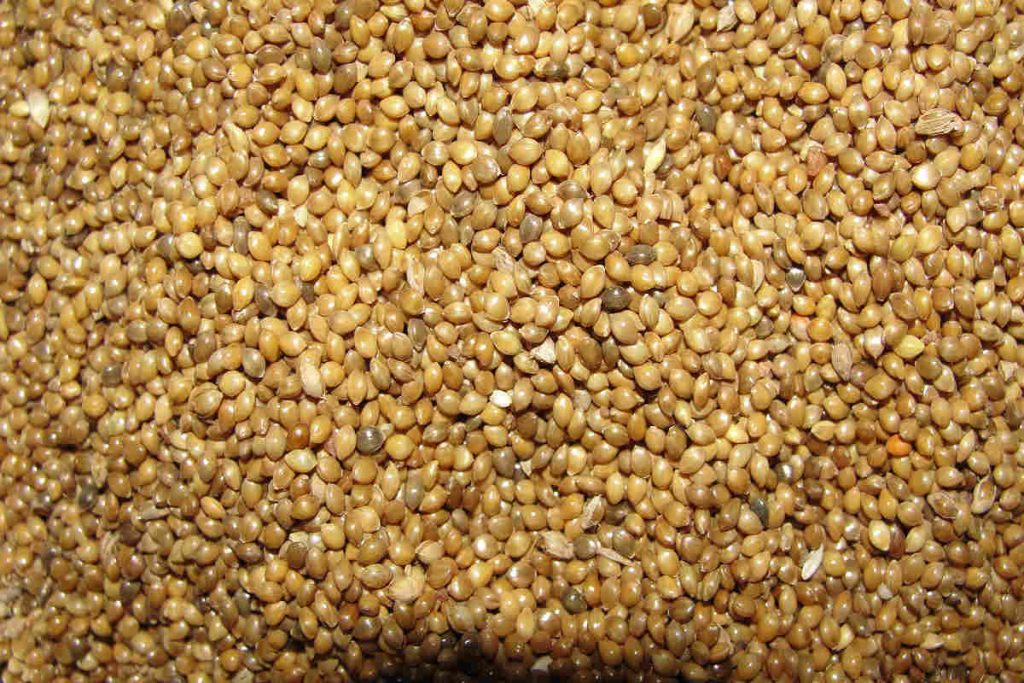
Millets are returning to India’s policy conversation for a clear reason: they handle heat and water stress better than most cereals while demanding fewer external inputs. An ICRISAT overview confirms that millets are climate-resilient dryland crops with lower water needs than rice and wheat, and strong performance in rainfed systems that dominate Indian agriculture.
Peer-reviewed work on pearl millet shows why. A synthesis published with ICRISAT authorship in Frontiers in Plant Science reports high heat tolerance (up to ~42 °C) and drought-hardy traits linked to its C4 physiology and root architecture. These traits matter as India faces more frequent and intense heat extremes, documented by the IPCC Sixth Assessment as a major risk to staple grain productivity and rural livelihoods.
Nutrition policy is part of the story. The FAO classifies millets as “nutri-cereals” and details their micronutrient advantages over refined staples, including higher fibre and minerals across several species (e.g., finger millet’s calcium, iron-rich small millets), strengthening the case for public programmes to diversify diets.
India elevated the agenda globally by spearheading the International Year of Millets 2023, a UN-backed push reflected in official Government of India releases.
These are complemented nationally by policy momentum during IYM-2023, which formalised millet promotion across ministries and states.
Why this movement advances rural renewal
Millets align ecological reality with economics. Climate fitness reduces crop failure risk; lower external inputs ease cash-flow stress; and nutrition-linked demand opens value-added markets that favour smallholders and women-led enterprises. Technically, the crops’ heat and drought tolerance documented by ICRISAT and peers, combined with India’s policy pivot during IYM-2023, make millets a practical pillar for organic and rainfed farming clusters, especially in dryland districts where paddy and wheat are increasingly vulnerable.
Movement 8: Digital & Youth-Led Organic Entrepreneurship
A new generation is rewriting the farm economy with code, logistics, and traceability. Their ventures do not replace cooperatives or FPOs. They extend them using digital rails to cut waste, certify trust, and open markets for organic produce.
India already has public digital rails for agriculture. The National Agriculture Market (e-NAM) connects mandis on a single electronic platform and continues to expand its network of integrated markets across states, creating price discovery and remote bidding for smallholders . On the organic side, the government’s Jaivik Kheti initiative functions as a one-stop portal to promote organic farming and enable e-commerce of verified organic produce ; portal overview). Compliance is underpinned by the Jaivik Bharat integrity database jointly developed by FSSAI, APEDA, and PGS-India;which lets buyers check certification and product details .
Two additional public pillars help small organic brands signal trust at scale. First, PGS-India provides a participatory, low-cost assurance system for groups of organic farmers, anchored by the National Centre for Organic & Natural Farming . Second, APEDA tracks certified organic production and exports, and publishes annual programme data; for FY24 it reports ~3.6 million tonnes of certified organic products across categories from cereals and millets to spices and processed foods..
Traceability is moving from pilot to practice. The Coffee Board of India launched a blockchain-based e-marketplace to bring end-to-end traceability and shorten buyer layers; an official pilot announced by the Government of India and subsequently documented in the Board’s annual report. Similar digital approaches show promise for organic spices, millets, and horticulture where provenance drives premiums.
International evidence reinforces the direction. A joint FAO–ICRISAT compendium of digital agriculture case studies from India documents how mobile advisories, remote sensing, and data platforms improve smallholder decisions and market access, including for climate-smart crops . The World Bank’s Digital Agriculture Roadmap Playbook similarly synthesizes how digital solutions; advisory, market linkages, and traceability—can raise farmer incomes when paired with last-mile support and institutions like FPOs
The youth angle is structural, not cosmetic. Incubators within the public research system—such as those documented by ICAR-NAARM are building capacity for agri-startups focused on advisory, logistics, inputs-as-a-service, and farm-to-home channels that organic clusters can plug into . When these digital ventures interface with e-NAM, Jaivik Kheti, PGS-India groups, and APEDA export protocols, they give organic FPOs something the old system rarely offered: verifiable quality, discoverable prices, and direct buyers.
The result is modest but real: lower transaction frictions, stronger provenance, and better access to premium markets. Digital rails do not solve credit, storage, or roads. But they make every kilometre count, especially for organic producers who sell trust as much as they sell crops.
Challenges & Critiques
While the eight organic farming movements reviewed above hold promise, a candid assessment shows that scaling these successes remains difficult. Key structural bottlenecks continue to limit the pace and equity of rural renewal through organic systems.
Certification, Scale & System Cost
Certification for organic produce remains a complex hurdle for many smallholders. According to a recent review, large-scale conversion policies to organic agriculture face shortages of certified inputs, limited market access, and weak supply-chain infrastructure.
In India, one study noted that out of more than 1.5 million organic producers, the total certified organic land is only about 2 per cent of the net sown area. In other words: getting to scale requires more than intent—it requires the full ecosystem.
Lower Yields & Transition Risks
The transition from conventional to organic farming often entails a yield drop in initial years especially in input-heavy systems. A review by the International Journal of Sustainable Agriculture states that lower yields, higher labour costs, and nutrient limitations can all delay profitability in organic systems. Until the soil health rebuilds and market premiums kick in, many farmers face income risk.
Input Costs & Labour Intensity
Organic agriculture tends to be more labour-intensive and demands different skills than conventional farming. Studies show that labour scarcity, high cost of human-intensive tasks (weeding, composting, cover-cropping) is a consistent challenge in India’s small-farm context. Without mechanisms to reduce labour burden (mechanisation, community labour pools, value-addition) many farmers struggle to transition smoothly.
Market Linkages, Infrastructure & Premiums
As earlier sections noted, the promise of premium pricing often fails when organic producers encounter weak value-chains. A recent USDA GAIN report found that India’s organic sector is valued at about US $2.5 billion for 2023/24, but the report also flags that “challenges within India’s organic certification process pose a threat to the credibility of the organic sector.” Other sectoral research points to inadequate storage, fragmented logistics, and absence of consistent buyer access as real constraints.
Policy/Institutional Gaps & Uneven State Implementation
Despite multiple national schemes (for example, cluster-based programmes under PKVY, MOVCDNER) implementation across states remains uneven. Some states record high enthusiasm, others slow uptake. A study on North-East India found that the main constraints included weak capacity in extension services, certification back-logs and lack of private sector engagement.Without coherent institutional support, many organic transitions remain patchy.
The “Green Premium” Dilemma
For many smallholders, the shift to organic is a gamble: lower inputs but higher risk, uncertain premiums, and longer pay-back. One review cautions: “If premiums vanish or the conventional market collapses, the farmer bears disproportionate risk in conversion.”
In sum, while the eight movements outlined point to a structural transformation of rural agriculture, scaling and sustaining organic farming demands much deeper systemic reforms; certification reform, labour strategy, value-chain infrastructure, inclusive finance, and state-market coordination. Without these, organic farming risks remaining an island of excellence rather than the backbone of rural renewal.
Organic Farming as Rural Renewal, Not Just Soil Renewal
Across India, the push toward organic and regenerative farming is often treated as an environmental story. But the eight movements documented here show something deeper: this is a rural economic story, a social equity story, and a climate-adaptation strategy rolled into one.
Whether it is Andhra’s community-managed natural farming, Sikkim’s policy-led statewide shift, women-run millet collectives in Odisha, or digital traceability models linking farmers to urban markets, the common thread is not “going chemical-free.” It is rebuilding agency where industrial agriculture erased it.
Agency over seed.
Agency over soil.
Agency over price, knowledge, and risk.
The evidence is clear: organic systems can restore degraded lands, reduce dependency on volatile input markets, and improve resilience in drought-prone districts. But the movements that work are not those that treat farming as an individual act. They are collective systems, rooted in networks of FPOs, SHGs, seed commons, circular waste loops, and public digital infrastructure.
At the same time, the challenges are not ideological; they are structural. Certification costs, transition-period yield shocks, storage gaps, limited processing infrastructure, and inconsistent policy follow-through continue to prevent organic farming from becoming a mainstream rural development pathway. Without reforms in procurement systems, crop insurance, climate finance, and logistics, most farmers will remain trapped between intention and feasibility.
So the question before India is no longer “Can organic farming work?” It already does scientifically, economically, socially, when the ecosystem around it functions.
The real question is:
Will the state, market, and citizen sector work together long enough to make it scale?
If the answer is yes, organic farming will not stay a niche for boutique brands or idealistic districts. It will become a public development strategy; one that regenerates soil health, revives rural incomes, strengthens women’s collectives, and prepares India’s farm economy for a hotter, drier, more uncertain future.
What grows from that point is not just food.
It is dignity, resilience, and a different idea of prosperity.
FAQs: 8 Organic Farming Movements Powering Rural Renewal: An Earth5R Insight
What is the core reason behind the rise of organic farming movements in India?
Organic farming is increasing because it addresses soil degradation, farmer debt, climate risks, and declining yield returns from chemical-based agriculture.
Is organic farming only about avoiding chemical fertilisers and pesticides?
No. It is a systems approach that includes seed diversity, soil biology, community ownership, local markets, and climate resilience.
How is natural farming in Andhra Pradesh different from traditional organic farming?
Andhra’s model is community-managed, low-input, and uses farm-based microbial solutions instead of external organic inputs; making it cost-free for farmers.
Why is Sikkim considered the world’s first organic state?
Because the entire state legally banned chemical fertilisers and pesticides and converted 100% of its cultivable land to certified organic production through state policy.
What is “seed sovereignty” and why does it matter?
Seed sovereignty means farmers control, save, and exchange seeds without dependence on patented or corporate seed systems , protecting biodiversity and climate resilience.
Why do many organic farmers still sell at conventional market rates?
Due to weak aggregation, lack of processing units, and absence of premium-linked procurement; a gap often called the “missing middle” of the value chain.
How do women-led farming collectives support organic transitions?
Women’s SHGs reduce risk through shared labour, seed banks, nutrition gardens, and collective sales, while reinvesting earnings in families and community welfare.
What role does urban waste play in rural organic farming?
Food and green waste from cities can be composted and supplied to rural organic farms, reducing landfill emissions and lowering farmers’ input costs.
Why are millets central to organic and climate-resilient farming?
Millets need far less water, survive in heat and drought, and provide high nutrition,making them ideal for dryland, organic, and tribal farming systems.
What digital tools are helping organic farmers scale?
Platforms like e-NAM, Jaivik Kheti, PGS-India certification, and blockchain traceability pilots connect farmers to verified buyers and reduce middlemen.
Does organic farming lead to yield loss?
In the first 2–3 transition years, yes in some crops. Once soil biology recovers, studies show yield stabilisation or increase, especially in rainfed regions.
Why is certification a barrier for small farmers?
Certification is expensive, bureaucratic, and slow, which is why India introduced low-cost PGS-India group certification for smallholders.
What is the biggest policy challenge for organic farming today?
India still subsidises chemicals heavily but has limited public procurement, storage, and processing support for organic crops.
Can organic farming alone solve India’s rural crisis?
No. But combined with FPOs, fair pricing, climate finance, and public nutrition missions, it can become a major pillar of rural renewal.
How is climate change linked to the growth of organic movements?
Chemical-based monocultures fail under heat waves and erratic rainfall, while organic and biodiverse systems show higher climate resilience.
Do organic farmers earn more than conventional farmers?
Only when they have access to value-addition, direct markets, or institutional buyers. Without that, premiums are inconsistent.
What is the biggest misconception about organic farming in India?
That it is “old-fashioned” or “anti-technology.” Most successful models integrate science, data, policy, and community systems.
Are there government schemes that support organic farming?
Yes. PKVY, MOVCDNER, BPKP, Jaivik Kheti portal, and state-specific missions like Andhra CMNF and Karnataka Millet Mission.
What will determine whether organic farming scales nationwide?
Fair price systems, farmer collectives, public procurement, climate finance, and rural processing infrastructure,not just training.
What is the biggest takeaway from the eight movements covered in the article?
Organic farming works best not as an individual practice, but as a community, economic, and ecological transition model powered by policy and markets and people.
From Awareness to Action: Building India’s Regenerative Future
The future of India’s farms will not be shaped by policy papers alone. It will be shaped by citizens who choose responsibly, institutions that procure ethically, governments that invest long-term, and markets that reward regeneration instead of extraction.
If organic and regenerative farming are to move from “pilot projects” to “national transformation,” every sector has a role:
Consumers: Choose traceable, locally grown organic food. Every conscious purchase funds soil health, not chemical dependency.
Schools & Institutions: Demand millets, pesticide-free produce, and farmer-linked procurement in mid-day meals and hostels.
State Governments: Shift subsidies from fertilisers to farmer-owned processing, storage, and community seed systems.
Corporate & ESG Investors: Channel climate finance, carbon credits, and fair-trade contracts into farmer-led FPOs.
Urban Local Bodies:Turn food waste into compost and link it to organic clusters, closing the city-to-farm nutrient loop.
Universities & Agri-Students: Document soil data, monitor field evidence, and help scale community-led farming science.
Media & Storytellers:Spotlight the farmers who are already rebuilding India’s food future, not just the crises they endure.
If you care about soil, water, food, farmer dignity, and climate stability — this is not a spectator issue.
Regeneration is not a movement to watch.
It is a movement to join.
Authored by- Sneha Reji