
Introduction: From Waste to Wisdom—The Rural Revolution Reclaiming Sustainability
In the quiet corners of the world where asphalt gives way to soil and harvests replace high-rises, rural farmers—long cast as passive stakeholders in the climate crisis—are emerging as unsung heroes of sustainable innovation. These communities, armed with ancestral wisdom and a rising tide of environmental awareness, are reimagining waste not as a by-product, but as a powerful tool for regeneration.
Their work is increasingly aligned with the goals of organizations like the Global Alliance for the Future of Food, which advocates for system-level change in agriculture.
The global food system is paradoxical. On one hand, nearly one-third of all food produced—about 1.3 billion tonnes—is wasted annually. On the other, more than 820 million people still suffer from hunger. Most of this food waste ends up in landfills, decomposing anaerobically and releasing methane — a greenhouse gas over 80 times more potent than CO₂ over a 20-year period.
In response, rural farmers across the globe are reclaiming the narrative by converting waste into wealth. In Maharashtra, India, the tradition of vermicomposting uses earthworms to digest organic farm residues and create nutrient-rich humus. This ancient-yet-modern method is gaining traction through community-driven composting efforts, reducing reliance on synthetic fertilizers.
This movement isn’t just environmental—it’s economic. Waste-based livelihoods are a key component of the circular economy, especially in low-income regions. These innovations align with global frameworks like the UN Sustainable Development Goals, especially Goal 12 (Responsible Consumption and Production) and Goal 13 (Climate Action).
Yet, the story doesn’t end at the village compost pit or biogas unit. Grassroots organizations like Earth5R are bridging rural practices with urban ecosystems.Their initiatives—from zero-waste communities to river clean-up programs—demonstrate how local action can scale to global impact.
To understand how these everyday heroes are crafting a model of regeneration, this article explores the science, stories and systems behind the rural sustainability movement. From compost heaps to plastic-free waters, these farmers are not just cultivating crops—they’re cultivating climate solutions.
Their message is simple, yet profound: waste is not the end—it’s the beginning of wisdom.
The Scientific Rationale: Why Rural Sustainability Makes Climate Sense
In the race to mitigate climate change and reduce greenhouse gas emissions, rural waste management stands as one of the most underutilized climate solutions. For too long, agricultural waste has been treated as mere refuse, burned with little thought to its ecological potential. But science is now catching up with what rural communities have known for generations: waste is a biological asset, not an environmental liability.
Agricultural residues are typically rich in nitrogen and other nutrients. When these materials are mismanaged, they become climate threats. The burning of crop residues in places like Punjab and Haryana in India contributes significantly to particulate matter pollution. According to a 2019 study published in Nature Sustainability, open field burning accounts for over 14% of India’s total PM2.5 emissions, which are linked to respiratory diseases and severe health impacts.
Yet, when the same residues are processed through composting or anaerobic digestion, they become potent tools for ecological regeneration. Composting, for instance, not only diverts waste from landfills but also reduces methane emissions dramatically. According to the U.S. Environmental Protection Agency (EPA), organic waste composting can cut greenhouse gas emissions by up to 50% compared to landfill disposal.
The scientific logic doesn’t end with soil. Compost has been shown to increase soil carbon sequestration, a process where atmospheric CO₂ is captured and stored in the ground.
A meta-analysis published in Global Change Biology in 2020 revealed that the application of compost can boost soil organic carbon stocks by an average of 25–30% over a decade, particularly in degraded lands. This is a game-changer in climate mitigation, turning farmlands into carbon sinks.
Equally compelling is the role of biochar, a charcoal-like substance produced by pyrolyzing agricultural waste. Unlike traditional composting, biochar production locks carbon into a stable form for centuries. Studies in Nature Communications suggest that biochar could offset as much as 12% of global greenhouse gas emissions annually, if adopted widely across agricultural regions. In rural Kenya, for example, smallholder farmers are adopting low-tech kilns to produce biochar from maize stalks and using it to revitalize depleted soils.
This isn’t just a matter of chemistry—it’s a matter of food security. Healthy soil, enriched with organic matter from compost or biochar, retains moisture longer and resists erosion better. In an era of increasing droughts and unpredictable rainfall, this resilience becomes essential. A study from the International Food Policy Research Institute (IFPRI) found that organic soil management practices can boost crop yields by 20–50% in sub-Saharan Africa.
Furthermore, nutrient cycling — returning organic matter back into the soil — reduces the need for chemical fertilizers, which are both expensive and environmentally taxing. Synthetic nitrogen fertilizers — while effective — contribute to nitrous oxide emissions, a greenhouse gas nearly 300 times more potent than CO₂. In contrast, compost slowly releases nutrients, minimizing runoff and pollution of nearby water bodies.
In essence, science now validates what traditional agricultural societies have practiced intuitively: close the loop, feed the soil, and respect nature’s cyclical rhythms. Where modern industrial systems create linear chains of consumption and waste, rural sustainability builds circular systems of renewal. Each compost pit is a miniature climate solution; each handful of biochar, a tool for planetary repair.
It is this fusion of empirical science and grassroots ingenuity that forms the bedrock of the rural sustainability movement. By treating organic waste as a resource rather than rubbish, rural farmers are aligning with some of the most powerful biogeochemical processes on Earth. And in doing so, they are not just farming for food—they are farming for the future.
Composting & Nutrient Cycling: Reviving Soil, Sustaining Lives
In a world increasingly driven by synthetic solutions, composting stands out as an ancient technology with revolutionary potential. For rural communities, where access to costly chemical fertilizers is often limited, composting is not just a sustainable choice—it is a survival strategy.
It offers a way to reclaim control over food production, reduce environmental harm, and close the nutrient loop between food consumption and soil restoration.
Composting is, at its core, a biological process where microbes, fungi, and small invertebrates work together to break down organic matter—kitchen scraps and animal dung—into humus.
This dark, earthy substance is rich in nutrients and microbial life, acting as a natural soil conditioner that improves fertility, structure, and water-holding capacity. What makes composting particularly powerful is its low-tech, low-cost nature, making it ideal for widespread adoption.
Scientific studies strongly support the use of compost to restore soil health. Research published in Soil Biology and Biochemistry has shown that compost application significantly increases microbial biomass, leading to improved nutrient availability and long-term fertility.
In India, this ancient wisdom has found modern champions. One standout example is the Earth5R initiative, which has implemented community composting programs across rural and urban fringes. In areas like Aarey Colony, where Earth5R mobilized women-led households to compost kitchen waste, the results have been striking.
Organic waste that once clogged local streams and attracted disease-carrying pests is now transformed into nutrient-rich fertilizer for community gardens and nearby farms. According to Earth5R’s data, this initiative has diverted over 1,000 tonnes of organic waste per year from municipal landfills, drastically reducing methane emissions and creating decentralized sources of fertility.
A particularly inspiring case comes from Earth5R’s partnership with Silver Crest Apartments in Mumbai, where residents were trained in decentralized composting. What began as a zero-waste pilot turned into a full-scale, closed-loop nutrient system. Compost generated on-site is now shared with local farmers on Mumbai’s outskirts, creating a bridge between urban consumption and rural production.
Beyond composting, nutrient cycling refers to the systematic return of nutrients to the soil, ensuring that nothing goes to waste in the food ecosystem. Livestock manure, traditionally seen as a nuisance, is now being revalorized through composting and vermicomposting techniques.
In states like Tamil Nadu and Odisha, small-scale farmers have integrated vermicomposting units using Eisenia fetida (red worms), which produce a potent form of compost known to enhance crop yields by up to 35%, according to studies from the Indian Council of Agricultural Research (ICAR).
This is not just good for the land—it is good for the economy. In regions where Earth5R has introduced composting-as-livelihood training, especially for women and marginalized groups, families have reported an average monthly income boost of ₹2,000–₹3,000 by selling excess compost or using it to grow market vegetables. In a country where millions live on less than ₹150 per day, this is a meaningful and measurable impact.
Composting is more than waste management—it is nutrient justice. In the linear model of industrial agriculture, nutrients are extracted from the soil, transferred to cities in the form of food, and end up rotting in landfills. Composting intervenes in that broken cycle, reconnecting soil with sustenance. It’s the biological equivalent of giving back what you take—a practice of reciprocity grounded in both science and ethics.
As climate pressures mount and soil degradation threatens food security worldwide, composting and nutrient cycling are not luxuries—they are necessities. They offer a science-backed, community-powered model of regeneration, transforming what was once discarded into the foundation of a sustainable food future.
And perhaps most importantly, they remind us that sustainability doesn’t always require new inventions—sometimes, it just requires remembering what the Earth has always known.
Circular Economy & Livelihoods: Turning Trash into a Tool for Rural Empowerment
In the industrial model of development, waste is considered an unfortunate inevitability—an end-product to be disposed of, not a resource to be valued. But in the rural economies quietly reshaping sustainability across the Global South, this logic is being radically reversed. Here, waste is not the endpoint—it is the raw material for livelihoods, innovation, and resilience.
The circular economy, as defined by the Ellen MacArthur Foundation, is a system designed to eliminate waste and regenerate natural systems. Instead of the traditional “take-make-dispose” model, the circular economy emphasizes reuse, repair, recycling, and biological regeneration.
In practice, this means turning agricultural waste into compost, plastic into products, and discarded materials into sources of income and employment for rural communities.
In Mumbai’s Powai and Kurla neighborhoods, Earth5R initiated a large-scale solid waste management project that trained over 4,500 families across 15 slums in composting, recycling, and upcycling.
Local residents were taught to transform plastic bags into handbags, fabric scraps into pouches, and organic waste into high-quality compost. According to Earth5R’s reports, these communities now divert approximately 2.85 tonnes of waste every day from landfills, resulting in a reduction of over 1,040 tonnes of landfill-bound waste annually.
More importantly, this transformation isn’t merely ecological—it’s economic. The compost, recycled products, and upcycled goods are sold in local markets, creating micro-enterprises that contribute over ₹1,00,000 per day to the local economy.
This isn’t charity—it’s circular capitalism at its most inclusive. For women like Kavita, a single mother living in the Ghatkopar slum, waste has become the foundation of economic independence. “I used to rely on irregular cleaning jobs,” she says. “Now I sell eco-products at the Sunday haat (market) and earn more than I ever did before.”
This intersection of sustainability and social equity is a hallmark of Earth5R’s model, which has been recognized by the United Nations and several municipal bodies. By embedding environmental education within economic training, the initiative ensures that circular practices become habits, not just projects.
What makes these efforts even more compelling is their alignment with the Sustainable Development Goals (SDGs), especially SDG 5 (Gender Equality) and SDG 8 (Decent Work and Economic Growth). In Aarey Colony, Earth5R’s women-led zero-waste initiative has empowered households to generate compost from food scraps, maintain hygienic surroundings, and sell surplus compost to local farms.
Scientific research supports this community-led model. A study published in Resources, Conservation and Recycling found that circular economy interventions in urban-rural interfaces can increase household income by 20–40% while reducing per capita carbon footprints by nearly 50%. When combined with skill-building and market access, waste becomes a vector for upward mobility, not just environmental relief.
Analogies abound. A rural circular economy is like an ecosystem: everything connects, nothing is wasted. Just as forests recycle nutrients through fallen leaves and decaying matter, these communities reuse what others discard. The result is a self-sustaining, regenerative system in which waste becomes wealth and pollution becomes opportunity.
In the end, the circular economy is not just a technical framework—it is a philosophy of life. It asks us to rethink value, rediscover connection, and restore balance. For the rural farmers and families leading this quiet revolution, it’s also a pathway to dignity and empowerment. In their hands, yesterday’s waste becomes today’s work and tomorrow’s wealth.
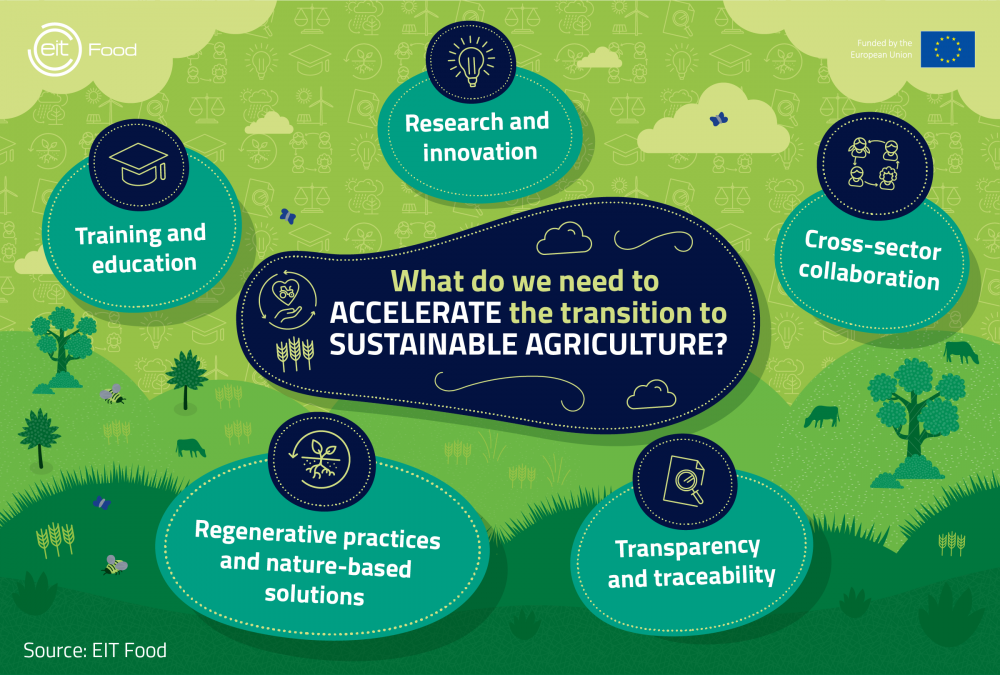
key enablers for accelerating the shift to sustainable agriculture, including research, education, collaboration, and regenerative practices.
River Cleanup & Community Collaboration: Healing Waters, Empowering People
In the early morning haze along the Mithi River in Mumbai, something unusual is happening. What was once a waterway choked with plastic waste has become the stage for a community-led environmental revival, where residents, volunteers and grassroots organizations join forces not just to clean a river—but to reclaim an ecosystem and a sense of collective responsibility.
This is not a municipal directive. It is a people-powered restoration project, fueled by hope, science, and collaboration.
Urban rivers like the Mithi are emblematic of the pollution crisis in rapidly growing cities. According to a report by the Central Pollution Control Board: (CPCB), over 351 river stretches across India are severely polluted, mostly due to untreated sewage and solid waste dumping. These rivers serve as lifelines for drinking water, agriculture, and cultural rituals, yet they are often treated as open drains.
A leading example of this transformation is the Earth5R initiative, which has pioneered community-centric river cleanup projects in India. In its campaign along the Mithi River, Earth5R trained volunteers, students, and local families in solid waste segregation , eco-brick creation and upcycling.
Over 800 volunteers worked together to remove more than 15 tonnes of waste in a matter of weeks, restoring not just the riverbanks but the public morale. What’s crucial here is not just the volume of waste removed—it’s the model of engagement. Earth5R’s approach doesn’t rely solely on cleanup events, but instead builds “eco-armies” within communities who are empowered, and invested in the long-term stewardship of their surroundings.
River cleanup is not just a visual intervention; it has deep ecological implications. Studies in Environmental Monitoring and Assessment show that community cleanup efforts significantly improve biochemical oxygen demand (BOD) and dissolved oxygen (DO) levels in urban rivers, making them more hospitable for aquatic life.
But cleaning rivers is only one part of the solution. What makes Earth5R’s model distinctive is its commitment to community collaboration as a foundational strategy. Local women’s groups are trained in making compost from waste collected along riverbanks. Schoolchildren are engaged in creating educational materials and digital awareness campaigns, thereby cultivating an eco-conscious generation.
Small businesses are involved in the creation of recycled products from river waste—converting pollutants into purses, bins, or construction materials. Each participant becomes a stakeholder in a shared future, and each action reinforces the idea that environmental justice begins at home.
The story of river cleanup is, in many ways, a story of social healing. In places like Powai Lake and the Mula-Mutha River in Pune, cleanups have brought together people from different religions, castes, and economic backgrounds, bonded by a common cause. These collaborations demonstrate that when environmental action is localized and democratized Environmental Action – Wikipedia, it becomes more than policy—it becomes culture.
Perhaps the most striking metaphor here is that of the river itself. Rivers are natural connectors: they link landscapes – Wikipedia, livelihoods, and lives. When a river is clean, it symbolizes a healthy relationship between people and ecosystems. When it is polluted, it reflects neglect, disconnection, and imbalance.
Ultimately, river cleanup efforts backed by community collaboration represent an emerging blueprint for grassroots environmental governance. They show that with the right training, trust, and tools, even the most polluted landscapes can be transformed into living symbols of regeneration.
Technology Empowering Rural Sustainability: When Innovation Meets the Soil
In the heartlands of rural India, where tradition and resilience run deep, a quiet technological revolution is taking root. Far from the high-rises and server rooms of global tech hubs, smart innovations are being harnessed to tackle age-old problems of waste and food insecurity. But this isn’t about high-end gadgets—it’s about low-cost, high-impact technologies that are enabling rural communities to leapfrog toward sustainability.
Across the globe, technology is often viewed as a disruptor. In rural sustainability, however, it acts as a bridge—linking knowledge with need and innovation with empowerment. Take, for instance, the growing role of mobile-based advisory services. In states like Maharashtra and Karnataka, farmers now receive real-time updates on weather, pest outbreaks, and optimal sowing windows through platforms like IFFCO Kisan.
Beyond mobile alerts, precision farming technologies are also gaining ground. Solar-powered drip irrigation systems are helping farmers reduce water consumption by nearly 50–60% while improving yields, as documented by a 2022 report from The Energy and Resources Institute (TERI). In water-stressed regions like Bundelkhand, this is not just a technological upgrade—it is a lifeline.
Yet perhaps the most compelling stories emerge where technology is integrated with grassroots participation. Earth5R, a leader in community sustainability projects, has effectively used digital platforms to train rural women in waste management, composting, and Upcycling.
Through its mobile app and community dashboard, Earth5R enables households to track their waste generation, join Cleaning up local branches, and learn circular economy skills remotely. This model of tech-enabled learning has allowed Earth5R to reach over 40,000 individuals across 11 countries, many of whom are in low-connectivity areas.
There is also a strong movement toward low-tech innovations that are highly scalable. In Tamil Nadu, local entrepreneurs are manufacturing Biogas units from kitchen and livestock waste, allowing villagers to generate cooking gas while reducing dependence on firewood. These biogas systems, backed by simple Mobile Maintenance alerts, have cut household emissions dramatically and improved indoor air quality.
Similar results are being seen with vermicompost monitoring devices, which alert users to moisture or temperature issues, helping them optimize compost output without constant supervision. These tools are being piloted in areas where traditional Composting enhancing the efficiency and quality of organic fertilizer production.
Analogies help illustrate this transformation. Where once the plow was the symbol of the rural economy, today it is the solar panel, the compost sensor, and the mobile app that mark the contours of modern rural resilience. Technology is not replacing traditional knowledge—it is amplifying it, bringing age-old practices like Mulching, composting, and mixed cropping into the 21st century.
Importantly, this technological wave is not limited to farming. Clean energy solutions such as pay-as-you-go solar microgrids are lighting up off-grid villages across Jharkhand and Chhattisgarh. Supported by platforms like Simpa Networks and SELCO, these systems are enabling evening study hours for children, powering cold storage units for perishables, and even supporting cottage industries.
According to data from the International Renewable Energy Agency (IRENA), decentralized solar solutions have boosted rural income by up to 50% in some pilot regions, primarily through productivity and education gains.
But technology alone is not the hero—access, training, and localization are what determine success. This is where partnerships matter. NGOs, local governments, and tech startups must collaborate to ensure that innovations are not just available, but also affordable, adaptable, and aligned with rural realities.
What’s emerging, then, is a new paradigm:rural techno-sustainability, where innovation serves the people, not the other way around. And at the center of this shift are communities that, when empowered with the right tools and trust, are showing the world that sustainability doesn’t always require disruption—it often requires connection.
In the interplay between soil and Silicon, the old and the new, a future is being built—one compost pile, one solar lamp, one data point at a time.
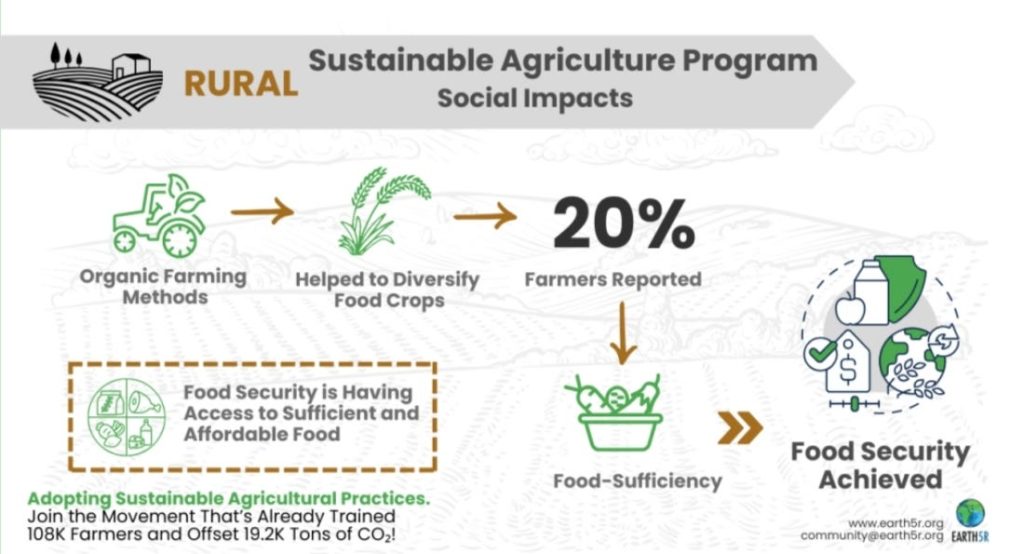
Social impacts of the Rural Sustainable Agriculture Program by showcasing how organic farming and crop diversification have led 20% of farmers to report improved food sufficiency.
Policy & Scaling: From Local Practices to Global Paradigms
At the heart of every global transformation lies a local story. In the realm of sustainability, this couldn’t be truer. From compost bins in rural Maharashtra to clean energy grids in Ethiopia, small-scale environmental practices are not only flourishing at the grassroots—they are shaping the global dialogue on climate, resilience, and equity.
But for these micro-level innovations to truly move the needle, they need one essential ingredient: enabling policy frameworks that can scale the impact beyond the village borders.
In recent years, national and international policy landscapes have begun to recognize the value of community-led and circular sustainability efforts, especially those led by rural populations. For instance, India’s Swachh Bharat Abhiyan (Clean India Mission) provided a major policy platform that normalized decentralized waste management and sanitation at the panchayat (village council) level.
According to the Ministry of Drinking Water and Sanitation, over 110 million toilets were built, and thousands of villages declared themselves “open defecation free.” However, beyond infrastructure, the mission embedded behavioral change in rural populations—something that Earth5R and other grassroots groups built upon by offering waste valorization and sustainability training.
What’s emerging is a dual-channel approach: top-down policy meets bottom-up practice. Earth5R’s community-driven initiatives in the circular economy and environmental education have caught the attention of municipal corporations in Mumbai, Pune, and Bengaluru.
The Municipal Corporation of Greater Mumbai MCGM) integrated Earth5R’s models into its solid waste segregation campaigns across 24 wards. This shows how effective policy adoption doesn’t always begin in government—it often follows where communities lead.
Globally, this model is gaining traction. The United Nations Development Programme (UNDP) and the Global Environment Facility (GEF) are supporting programs that fund and scale rural sustainability practices with proven local outcomes. In Rwanda, for instance, policies promoting community composting and rainwater harvesting —originally piloted in a few cooperatives—have now scaled nationally through formal policy recognition.
Crucially, scaling isn’t just about multiplying the same solution. It requires adaptive policy-making that can localize models based on geography and resources. For example, while solar-powered drip irrigation may be ideal for semi-arid Gujarat, the same may not be appropriate in flood-prone Assam. Good policy, therefore, must remain context-sensitive while offering institutional backing—subsidies, market linkages, and technical assistance.
There’s also a growing realization that sustainability at scale needs regulatory as well as financial innovation. The Indian government’s push for Extended producer responsibility (EPR) has mandated corporations to take responsibility for post-consumer waste. Organizations like Earth5R are now acting as intermediaries between urban waste streams and rural processing hubs, turning policy obligations into income-generating models.
Policy also plays a role in international knowledge transfer. Initiatives like the Global South-South Development Expo showcase how models from India, Kenya, or Peru can be translated across continents.
One such example is how Earth5R’s zero-waste training modules—originally developed for Indian Rural women—have been adapted by grassroots leaders in Colombia and Nigeria through localized partnerships. This demonstrates that when policy enables openness, innovation flows across borders as fluidly as it does within them.
In many ways, the scaling of rural sustainability practices is analogous to how seeds become forests. A compost pit, a solar pump, or a river cleanup may begin in isolation—but with the right policy climate, they take root, replicate, and reshape entire ecosystems. Just as biodiversity thrives when nurtured by favorable conditions, community innovation flourishes when protected and promoted by thoughtful policy.
Ultimately, policy must do more than legislate—it must listen. When governments view rural communities not as beneficiaries, but as co-creators of solutions, the potential for scaling sustainable practices becomes exponential. And when global frameworks such as the UN SDGs or Paris Climate Agreement draw from this local intelligence, they don’t just reflect ambition—they reflect reality.
In the arc from the compost heap to the climate summit, we are reminded that global change begins at home. And if empowered by inclusive, responsive policy, that change can move from one household, one village, to one world.
Conclusion: From Waste to Wisdom, and Wisdom to the World
In the quiet rhythm of rural life, where nature and necessity have always been in conversation, a profound story of resilience and innovation is unfolding. The transformation from waste to wisdom is not a single event—it is a daily act of agency by countless farmers, women, artisans, and community leaders who are proving that sustainability does not require sophistication—it requires sensitivity.
What we witness across India’s villages and hinterlands is the emergence of a bottom-up sustainability revolution, driven by localized practices such as composting, circular economies, clean energy adoption, and community-led river restoration.These are not just eco-friendly actions—they are acts of environmental justice, ensuring that future generations inherit a planet that is not just livable, but also lovable.
Research from the Indian Institute of Science (IISc) has shown that decentralized composting systems reduce methane emissions by 80% compared to unmanaged landfills, while studies from the National Institute of Rural Development and Panchayati Raj (NIRDPR) reveal that micro-level solar energy solutions improve rural household incomes and reduce carbon footprints simultaneously.
These are not mere statistics—they are markers of a new rural renaissance, one that blends tradition with technology, culture with climate consciousness.
In the quiet rhythm of rural life, where nature and necessity have always been in conversation, a profound story of resilience and innovation is unfolding. The transformation from waste to wisdom is not a single event—it is a daily act of agency by countless farmers, women, artisans, and community leaders who are proving that sustainability does not require sophistication—it requires sensitivity.
What we witness across India’s villages and hinterlands is the emergence of a bottom-up sustainability revolution, driven by localized practices such as composting, circular economies, clean energy adoption, and community-led river restoration.These are not just eco-friendly actions—they are acts of environmental justice, ensuring that future generations inherit a planet that is not just livable, but also lovable.
Research from the Indian Institute of Science (IISc) has shown that decentralized composting systems reduce methane emissions by 80% compared to unmanaged landfills, while studies from the National Institute of Rural Development and Panchayati Raj (NIRDPR) reveal that micro-level solar energy solutions improve rural household incomes and reduce carbon footprints simultaneously.
The conclusion is clear: true sustainability begins not with scale, but with sincerity. When waste is no longer seen as a burden, but as a resource; when policy listens before it dictates; and when technology serves the people, rather than replacing them—we begin to rewrite our environmental future from the grassroots up.
From waste to wisdom, and from that wisdom to the world—this is the path rural India is charting, quietly but confidently. And it is a path the rest of the world would do well to follow.
Frequently Asked Questions: From Waste to Wisdom — Rural Sustainability in Action
What is the concept of “From Waste to Wisdom”?
It refers to transforming agricultural, household, and environmental waste into valuable resources like compost, income, clean energy, and ecological balance through everyday rural practices. It emphasizes how local wisdom and circular thinking are key to sustainability.
How are rural farmers contributing to sustainability?
Rural farmers adopt eco-friendly practices such as composting, rainwater harvesting, crop rotation, and bio-fertilizers. These traditional and low-cost innovations help conserve natural resources while ensuring food and income security.
What is the role of composting in rural sustainability?
Composting helps convert organic farm and kitchen waste into nutrient-rich soil conditioners. It improves soil health, reduces dependence on chemical fertilizers, and cuts methane emissions from open dumping.
How does nutrient cycling benefit agriculture?
Nutrient cycling ensures that organic matter is continuously reused within the farm system, reducing waste and maintaining soil fertility. It mimics natural ecological cycles, making farming more resilient and productive.
What is a circular economy and how does it relate to rural livelihoods?
A circular economy minimizes waste and reuses resources continuously. In rural settings, it involves turning agricultural residues into fuel, manure, and income sources, creating jobs while protecting the environment.
Are there real-world examples of rural circular economy models?
Yes. Organizations like Earth5R have developed programs where rural women collect plastic waste and convert it into eco-bricks, or where food waste is used for composting and biogas, generating both income and energy.
How do community river cleanups impact rural sustainability?
River cleanups reduce water pollution, restore biodiversity, and ensure safe water for irrigation and drinking. Community-led efforts also build local stewardship and collective responsibility for natural resources.
What role does technology play in empowering rural communities?
Technology facilitates sustainable agriculture through solar irrigation, mobile-based weather forecasts, composting machines, and digital marketplaces. It bridges the rural-urban divide and boosts productivity.
Is sustainability only possible through expensive technologies?
Not necessarily. Many rural sustainability practices rely on low-cost, locally available tools and traditional knowledge. While modern tech can amplify impact, behavioral change and community effort are often more vital.
What is Earth5R’s role in rural sustainability?
Earth5R engages rural communities in zero-waste practices, river cleanups, sustainability education, and circular economy training. Their models have been replicated across India and shared internationally.
Can rural sustainability practices influence urban areas?
Yes. Practices like composting, waste segregation, and rainwater harvesting pioneered in rural areas are now influencing urban sustainability models. These ideas demonstrate the feasibility of localized, low-cost solutions.
Are there policies supporting rural sustainability in India?
Policies like the Swachh Bharat Mission, National Solar Mission, and MGNREGA support composting, clean energy, and employment linked to sustainability. However, more targeted support is still needed to scale innovations.
How can urban citizens support rural sustainability?
By reducing waste, supporting local produce, donating to community projects, and volunteering with organizations like Earth5R, urban residents can contribute to rural ecological resilience and circular economies.
What are the environmental benefits of rural waste-to-resource models?
These models reduce landfill pressure, prevent soil and water contamination, and decrease greenhouse gas emissions. They also restore ecological balance through better land, water, and resource management.
How can rural sustainability practices be scaled globally?
By integrating them into international development frameworks, enabling south-south cooperation, and including rural voices in climate policy discourse, these models can be adapted in similar ecological and socio-economic contexts worldwide.
Do rural communities have the knowledge to lead sustainability?
Yes. Rural communities often possess deep ecological knowledge and time-tested practices. With adequate support and recognition, they can lead sustainable development in meaningful and scalable ways.
Is rural sustainability economically viable?
Absolutely. From compost sales to solar energy savings and eco-tourism opportunities, sustainability generates multiple income streams for rural populations while reducing long-term costs.
What is the connection between rural waste management and climate change?
Proper waste management reduces methane and CO2 emissions. When rural areas manage waste through composting and bio-digestion, they directly contribute to climate mitigation.
Can rural youth play a role in sustainability?
Yes. With training, access to digital tools, and platforms for innovation, rural youth can become sustainability leaders, entrepreneurs, and change agents in their communities.
What is the most important step to advance rural sustainability?
Listening to and investing in grassroots solutions. Empowering local communities through education, policy support, and inclusive funding can unlock the full potential of sustainable rural development.
Call to Action: Rekindling Responsibility, Reimagining Rural Futures
From the farmlands of Tamil Nadu to the compost pits of Nashik, one message resounds clearly: sustainability is a collective responsibility, not someone else’s job. Rural India is not a nostalgic vision of the past—it is actively crafting solutions for our future. The everyday practices of smallholder farmers, local innovators, and grassroots groups offer scalable models for climate resilience, food security, and waste reduction.
Each compost heap and repurposed plastic bottle is a quiet act of planetary repair, calling for greater collaboration between rural changemakers and urban stakeholders, governments, and global institutions.
To truly shift course, we must rethink our roles in this ecosystem. Urban citizens can support rural resilience through simple, practical steps—buying from farmers’ markets, reducing waste, or backing zero-waste programs like Earth5R. Most importantly, global climate platforms must elevate rural voices not as beneficiaries, but as innovators. The future will be shaped not by mandates, but by mindsets—by recognizing that rural communities already lead the way in sustainable living. All they need is support, scale, and solidarity. The time to act is not tomorrow, but today—starting wherever we are.
-Authored By Barsha