

Introduction: Bridging Innovation and Community Action for Sustainable Cities
In a world grappling with accelerating environmental crises and urban sustainability challenges, collaborative platforms that connect science, grassroots insights, and policy interventions are becoming more crucial than ever. The recent Blue Cities Network Sustainability Meetup, hosted by Earth5R, exemplified this need for collective innovation.
The session was opened by Sourabh Gupta, Founder and CEO of Earth5R, an environmental organization headquartered in Mumbai with a presence in 65 countries. In his opening remarks, Gupta outlined the vision behind the Blue Cities Network, which seeks to address the growing disconnect between innovative solutions and their adoption at scale. While numerous researchers, entrepreneurs, and civic organizations develop sustainability interventions, these often remain confined within isolated networks. As Gupta emphasized, “The idea was to create a network where we can share ideas, solutions, and also benefit from the network effect, find investors, customers, and partners.”
The meetup brought together distinguished speakers, each contributing unique insights into urban waste management, behavioral change, and innovative water purification technologies. The event featured Kunal Jaiswal and Avadhut Abhyankar from the Centre for Environment Education (CEE) Pune, who shared their extensive city-level circularity assessments, and Professor Shobha Shukla from IIT Bombay, who presented cutting-edge research on sustainable materials, soil remediation, and microplastic degradation.
The overarching goal of the meetup was to explore how diverse technological and behavioral solutions can converge to rejuvenate urban water bodies and create resilient, livable cities. As water bodies turn from blue to grey and black – symbolizing environmental decay – initiatives like Blue Cities Network aim to reverse this decline through knowledge-sharing and collective action.
This article delves into the key highlights from the session, unpacking each speaker’s work, vision, and impact, and presenting critical reflections on how these initiatives can shape the future of sustainable urban ecosystems in India and beyond.
The Vision of Blue Cities Network
The session began with a powerful introduction by Sourabh Gupta, Founder and CEO of Earth5R, an environmental organization based in Mumbai with projects in over 65 countries. Gupta set the stage by explaining the dual focus of Earth5R through its two flagship initiatives: the Blue Cities Network, which works on urban sustainability, and the Circular Farms Network, which addresses rural sustainability challenges.
He described the Blue Cities Network as a collaborative platform designed to overcome one of the biggest barriers in the sustainability ecosystem: fragmentation. “There are a lot of innovators in the urban sustainability space,” Gupta noted, “but everyone has their solutions, networks, and ecosystems. People are working in silos, and many innovative solutions never reach wider adoption.” The Blue Cities Network was thus envisioned to break these silos, fostering an ecosystem where ideas, technologies, solutions, and best practices can be shared seamlessly.
Central to this initiative is the focus on urban water bodies. Gupta articulated a compelling analogy – that the color of a city’s rivers, lakes, and ponds serves as an indicator of its sustainability. “Water bodies in cities are turning black or grey,” he explained. “The color of the water reflects how solid waste is managed, how pollution is controlled, and how resources are used within the city.”
Through the Blue Cities Network, Earth5R seeks to facilitate:
- Sharing of innovative solutions in waste management, pollution control, and water restoration.
- Creation of investment and partnership opportunities for environmental entrepreneurs and researchers.
- Development of city-level strategies to restore the ‘blue’ in urban water bodies, thus enhancing public health and ecological resilience.
Gupta’s vision aligns with global frameworks such as the UN Sustainable Development Goal 6 (Clean Water and Sanitation) and Goal 11 (Sustainable Cities and Communities), emphasizing that healthy water systems are fundamental to sustainable urban life.
The introduction concluded with Gupta welcoming the speakers for the day: Kunal and Avadhut from the Centre for Environment Education (CEE) Pune, and Professor Shobha Shukla from IIT Bombay, whose work exemplifies the scientific, educational, and technological innovations required to realize this vision.
Insights from Centre for Environment Education (CEE) – Kunal and Avadhut
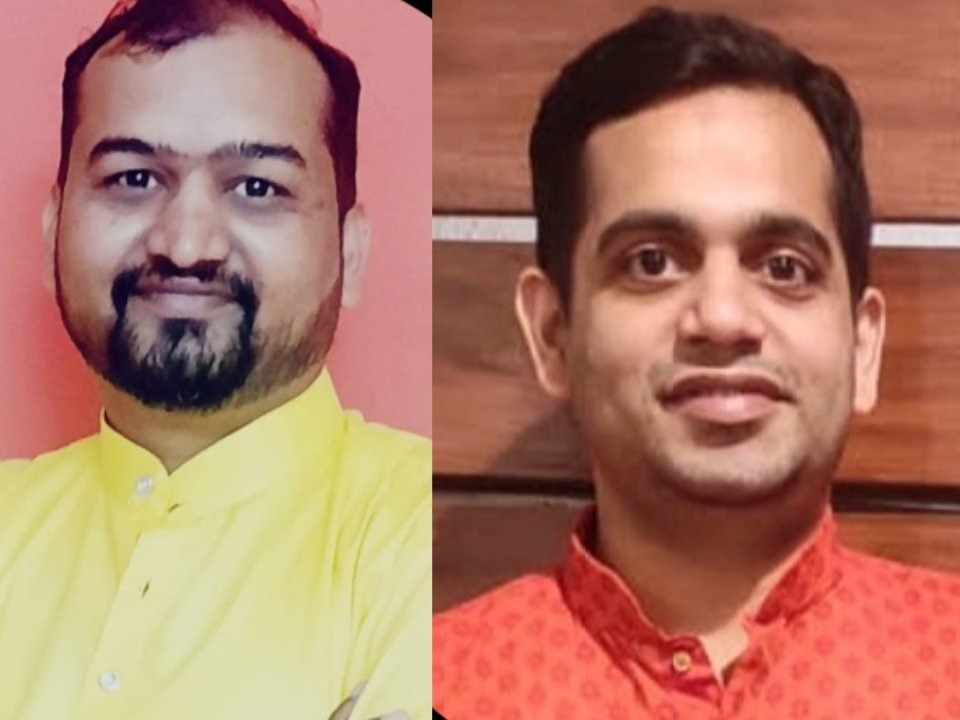
The first presentation of the meetup was led by Kunal Jaiswal and Avadhut Abhyankar from the Centre for Environment Education (CEE), Pune. CEE was established in 1984 as a Centre of Excellence under the Ministry of Environment, Forest, and Climate Change, Government of India, with its headquarters in Ahmedabad and operations spanning over 40 locations across the country.
Introducing CEE’s Mission
Kunal began by outlining CEE’s mission to integrate environmental education with practical action, focusing on areas ranging from school-based sustainability curricula to large-scale municipal collaborations on solid waste management, urban mobility, and citizen participation.
The Circularity Assessment Project
The core of their presentation focused on CEE’s Circularity Assessment Protocol, conducted in the cities of Pune, Surat, and Mumbai. This assessment was designed to create a 360° understanding of plastic litter leakage in urban environments.
Key components of their methodology included:
- Litter Mapping Using Marine Debris Tracker App:
Kunal explained how the team used the Marine Debris Tracker, developed by the University of Georgia’s New Materials Institute, to document small litter items often missed by municipal sweeping. The app allowed field teams to systematically record items like tobacco sachets, food wrappers, bottle caps, and cigarette butts.
- Sampling Strategy:
The cities were divided into 1 km x 1 km quadrants, within which 200 m x 200 m pockets were randomly selected for surveys. In each pocket, a 100 m stretch (typically along footpaths and walking spaces) was assessed. Across each city, 27 such locations were studied to ensure representation of low-density and high-density areas.
- Stakeholder Interviews:
Avadhut elaborated on their snowball sampling methodology, which involved interviewing waste pickers, informal sector workers, shopkeepers, municipal officials, and other stakeholders to map the flow of plastic packaging, waste collection inefficiencies, and local consumption patterns.
- Plastic Packaging Source Mapping:
The team also purchased popular packaged items – from chips and beverages to tobacco products – to trace their manufacturing origins and parent companies. A revealing insight was the wide geographic spread of these companies, with many headquartered in Europe, the USA, and major Indian cities, underlining the global supply chain dimensions of local litter problems.
Findings: The Ubiquitous Tobacco Sachet
One of the most striking findings was the prevalence of gutkha and tobacco sachets, consistently ranking as the top litter item in all three cities. Other dominant litter categories included plastic food wrappers, cigarette butts, and bottle caps – items that are lightweight, non-recyclable, and often escape formal waste management systems.
As Kunal explained, “These small items are highly vulnerable to being washed into drainage systems, rivers, and lakes, especially because traditional sweeping methods cannot collect them effectively.”
City-Specific Patterns
The team noted unique regional patterns, such as handmade gutkha packaging using small rubber bands in Surat, which adds to the waste stream. Such insights are vital for designing targeted behavioral interventions.
From Data to Action
Beyond data collection, Kunal highlighted that CEE prepared city-specific recommendations and project profiles based on these assessments, shared with municipal authorities to inform policies and pilot interventions. For example:
- In Surat, CEE launched solid waste management education programs in five schools, later expanding to eight schools.
- In Pune, they piloted initiatives to formalize scrap stores in the informal sector, though implementation challenges remain.
- In Mumbai, they conducted stakeholder dialogues with dry waste collection centers to enhance segregation and recycling practices.
Open Access and Collaboration
In closing, the team emphasized that all their reports and data are available as open-source resources, fostering collaborative problem-solving among governments, researchers, and NGOs working towards circular urban economies.
The Importance of Behavioural Change – Sourabh Gupta’s Comparative Insights
Following the CEE presentation, Sourabh Gupta shared comparative insights from Earth5R’s previous nationwide litter studies, highlighting the critical link between waste profiling and behavioral change interventions.
Learning from Pan-India Studies
Gupta recalled a large-scale study conducted by Earth5R four years ago, which assessed plastic waste composition and distribution across over 100 Indian cities, including Mumbai, Pune, Bangalore, Delhi, Goa, Jalandhar, and others. The study mobilized thousands of volunteers who carried out systematic surveys along riverbanks, lakefronts, beaches, parks, and urban streets to map litter patterns.
This broad dataset revealed notable differences from the recent CEE findings:
- Prevalence of Multi-Layer Packaging:
Earth5R’s team observed large volumes of multi-layered packaging waste, particularly milk packets, tetra packs, and snack wrappers. Gupta highlighted that Tetra Packs ranked as the third biggest contributor to solid waste in public spaces, especially near lakes and rivers.
- Consumption Behaviour in Public Spaces:
The study identified specific behavioral patterns associated with littering. For instance, lakefront areas frequently hosted birthday celebrations, leading to unique waste streams such as:
- Cake boxes and cake bases are often made of laminated cardboard or aluminium-coated paper.
- Disposable cutlery and plates.
- Plastic soft drink bottles and beer cans are commonly found near celebration spots.
- Diverse Regional Patterns:
While the CEE team in Surat reported handmade gutkha sachets tied with rubber bands as a major litter item, Earth5R’s studies found variations in tobacco packaging waste and celebratory litter trends across cities, underlining India’s complex consumption geographies.
Why Behavioural Understanding Matters
Gupta emphasized that profiling waste is not merely an exercise in data collection; its true value lies in understanding human consumption behaviour, which drives waste generation and leakage. “The purpose of such studies is ultimately to create behavioral change and awareness,” he noted, stressing that without this lens, interventions remain superficial.
For example, following their litter studies, Earth5R implemented targeted behavioral interventions:
- Conducting awareness sessions in schools, colleges, and residential communities, showing residents the types of waste generated locally, and discussing alternatives.
- Designing context-specific clean-up drives and waste reduction campaigns, linking citizens’ consumption patterns directly to environmental outcomes.
- Developing Earth5R’s app, which enables citizens to conduct litter audits in their neighborhoods, promotes a sense of accountability and empowers local action.
Integrating Behaviour Change with Technological Solutions
Gupta’s reflections underscored an important lesson: while data-driven technological interventions (such as CEE’s circularity assessments or IIT Bombay’s innovative materials) are crucial, their impact is amplified only when paired with behavioral change strategies.
“Until we understand why litter is produced and what behavior leads to it, we cannot truly solve the problem,” Gupta concluded, urging the audience to view environmental solutions through an integrated lens of behaviour, policy, and innovation.
Sustainable Materials and Water Innovation – Professor Shobha Shukla
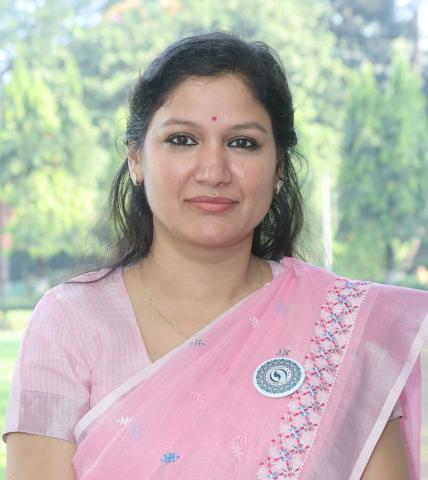
The final presentation of the meetup was delivered by Professor Shobha Shukla, a renowned researcher from the Department of Engineering and Materials Science at IIT Bombay. She is also the head of the Water Innovation Centre, a multidisciplinary initiative involving IIT Bombay, IIT Hyderabad, Pandit Deendayal Energy University (PDEU), Gujarat, and the National Chemical Laboratory (NCL), Pune.
From Photonics to Sustainability
Professor Shukla began by sharing his academic journey, highlighting how his background in photonics and laser-based material science led him to explore applications in environmental sustainability. Upon returning to India in 2012, she sought to create technologies that directly benefit society, particularly in water purification, waste management, and environmental monitoring.
“People often ask what we are contributing to society. High-end research is important, but I wanted to ensure it also results in direct societal impact.”
Innovations in Sustainable Materials
Central to her research is graphene, a carbon-based wonder material with exceptional strength, conductivity, and hydrophobicity. Traditionally, graphene synthesis is expensive and energy-intensive, but Professor Shukla’s team has developed inexpensive, bio-based protocols to create it sustainably.
She explained that carbon-based materials (CHNO – carbon, hydrogen, nitrogen, oxygen) are fundamental building blocks in nature, making them ideal for environmental applications due to their biodegradability and compatibility with microbial degradation pathways.
Key Technologies Presented
- Oil-Absorbing Graphene Foams
- His team has developed graphene-based foams that can absorb up to 27 times their weight in oil, making them highly effective for oil spill clean-ups.
- These foams selectively absorb oil while repelling water, offering a powerful solution for marine and freshwater oil contamination.
- His team has developed graphene-based foams that can absorb up to 27 times their weight in oil, making them highly effective for oil spill clean-ups.
- Arsenic Removal Water Filters
- India faces severe arsenic contamination in drinking water, especially in West Bengal, Assam, Bihar, and Punjab.
- Professor Shukla showcased an IoT-enabled arsenic filter, integrating sediment filtration, carbon filtration, UV disinfection, and real-time arsenic monitoring sensors.
- This innovation ensures safe drinking water at a household level, unlike most community-scale arsenic treatment solutions currently deployed in India.
- India faces severe arsenic contamination in drinking water, especially in West Bengal, Assam, Bihar, and Punjab.
- RO Reject Water Treatment Using Solar Desalination
- Reverse osmosis (RO) systems typically reject 50-60% of input water as brine waste, exacerbating water scarcity.
- His team developed a hybrid system combining RO with solar still desalination, recovering pure water from brine using nanocoated absorber surfaces.
- This innovation converts waste brine into clean water sustainably, crucial for water-stressed regions.
- Reverse osmosis (RO) systems typically reject 50-60% of input water as brine waste, exacerbating water scarcity.
- Heavy Metal Sensors for Mercury, Arsenic, Lead, and Cadmium
- Professor Shukla demonstrated strip-based and electrochemical sensors capable of detecting heavy metals at parts per billion (ppb) levels within minutes.
- For instance, their mercury sensors were tested on fish plasma samples from Powai Lake, revealing contamination levels far exceeding permissible limits.
- These portable sensors can be deployed by seafood industries, municipal bodies, and environmental monitoring agencies for rapid, on-site contamination detection.
- Professor Shukla demonstrated strip-based and electrochemical sensors capable of detecting heavy metals at parts per billion (ppb) levels within minutes.
- Microplastic and Nanoplastic Removal and Degradation
- While microplastics (1 mm – 5 mm) are widely discussed, Professor Shukla stressed that nanoplastics (below 1 micron) pose an even greater threat, as they can bypass conventional filtration systems and accumulate in human tissues and organs.
- His team’s work focuses on developing systems that trap and biologically degrade nanoplastics, converting them into harmless CHNO compounds using bacterial pathways.
- While microplastics (1 mm – 5 mm) are widely discussed, Professor Shukla stressed that nanoplastics (below 1 micron) pose an even greater threat, as they can bypass conventional filtration systems and accumulate in human tissues and organs.
The Holistic Approach: Beyond Removal to Degradation
Professor Shukla emphasized that simply trapping contaminants is not enough. Technologies must ensure complete degradation into non-toxic forms to avoid merely transferring the problem elsewhere.
“Many solutions today just divert the problem – it becomes a ‘not in my backyard’ approach. True sustainability means ensuring secondary and tertiary pollution does not occur.”
Deployment and Market Readiness
While many of these technologies are in advanced pilot stages, Professor Shukla highlighted the need for co-creation partnerships over simple licensing. High-end innovations require handholding during scale-up and deployment, ensuring efficacy and adaptation to local contexts.
For example, their arsenic filter technology has already led to the establishment of a startup partnership model, with IIT Bombay as the manufacturing partner and external organizations as marketing partners.
Implications for India’s Water and Waste Challenges
From heavy metal contamination and oil spills to the silent threat of nanoplastics, Professor Shukla’s presentation underscored how scientific innovation, when integrated with policy and behavioral interventions, can address the most complex environmental challenges.
Her work not only aligns with but also enhances the United Nations Sustainable Development Goals on clean water, health, and sustainable communities, paving the way for a future where technological ingenuity is at the forefront of environmental regeneration.
Audience Interactions and Future Directions
The interactive segment of the meetup sparked thought-provoking questions and reflections from participants, highlighting how these innovative projects can integrate with on-ground sustainability initiatives and market applications.
Bringing Solutions to Market
One participant raised a critical question about scaling and market availability of the technologies presented by Professor Shobha Shukla. Specifically, they asked whether her team’s arsenic filtration device and heavy metal sensors would be available for public or commercial use soon.
Professor Shukla explained that while licensing technologies directly often fails due to a lack of expertise in implementation, her team is actively pursuing a co-creation model. Under this model:
- IIT Bombay acts as the manufacturing partner, ensuring quality control and scientific oversight.
- External organizations or startups serve as marketing and deployment partners to bring solutions to market efficiently. She emphasized the need for handholding and technical support during scale-up, especially for high-end innovations like electrochemical sensors and nanoplastic degradation units.
“We realized that direct licensing doesn’t work because these are advanced technologies needing careful scaling. Co-creating with partners ensures both impact and integrity of the solution,” he said.
Integrating with Rural Sustainability Projects
Sourabh Gupta shared that Earth5R is soon launching a large-scale rural sustainability project in partnership with one of India’s largest food companies and leading banks. The initiative aims to transition farmers from chemical-based farming to affordable organic agriculture, thus making organic food more accessible and economically viable.
He stressed that water quality forms a critical foundation for such projects. Even if farmers adopt organic methods, contaminated irrigation water would compromise food safety. Gupta expressed strong interest in exploring Professor Shukla’s arsenic and fluoride filtration solutions, noting:
“We would like to discuss this further, as clean water is the backbone of any sustainable farming initiative. This project is at a massive scale with strong funder interest, and integrating such technologies can amplify its impact manifold.”
Professor Shukla welcomed this collaboration, reiterating that her team is open to partnerships with NGOs, governments, and corporations to deploy these solutions for systemic change.
Behaviour Change and Technology Integration
The discussions circled back to a recurring theme highlighted by Gupta: technology alone is not enough. Without understanding why waste is generated, why people litter, or why certain consumption patterns persist, technical solutions risk being underutilized.
He emphasized that the Blue Cities Network was created precisely to bridge this gap by:
- Bringing together innovators, entrepreneurs, and researchers.
- Connecting them with community organizations, behaviour change experts, and policy makers.
- Facilitating cross-sectoral collaboration to ensure that solutions reach implementation with cultural and behavioral adaptation.
Looking Ahead: Partnerships and Publications
As the session concluded, Gupta reminded speakers that the meetup recordings would be published on Earth5R’s YouTube channel and their Earth Journal, which reaches over 6.3 million readers across 65 countries. He invited speakers to share their presentations and additional content, ensuring their insights reach policymakers, corporations, students, and environmental professionals globally.
“Please feel free to reach out for any partnerships or enhancements to the article. We will be in touch soon to explore joint projects and take these innovations to the communities that need them most.”
The meeting ended with expressions of gratitude and optimism, underscoring the power of collaborative platforms like Blue Cities Network in driving India’s journey towards urban resilience, clean water, and sustainable development.
Towards Integrated Action: Building Sustainable and Resilient Blue Cities
The Blue Cities Network Sustainability Meetup served as a powerful reminder that India’s environmental challenges require integrated, multi-stakeholder solutions. From urban litter mapping and behavioral change initiatives by the Centre for Environment Education to advanced water purification and microplastic degradation technologies developed by IIT Bombay, the discussions illuminated the critical role of both grassroots action and scientific innovation.
At the heart of this collaborative ecosystem is Earth5R, whose founder, Sourabh Gupta, envisioned the Blue Cities Network as a platform to bridge fragmented efforts in urban sustainability. His reflections underscored that restoring the ‘blue’ in city water bodies goes beyond technical interventions – it demands understanding and transforming human behaviors, consumption patterns, and waste generation practices.
Equally compelling was Professor Shobha Shukla’s emphasis on adopting a holistic approach to technological innovation, ensuring that solutions not only trap contaminants but also degrade them into harmless, nature-compatible forms. Her caution against mere “not in my backyard” approaches resonates strongly in a world where environmental externalities can no longer be ignored or exported.
The session also highlighted the importance of open data sharing and collaborative research, as exemplified by CEE’s open-source circularity assessments and Earth5R’s litter mapping app, which empowers communities and policymakers with actionable insights. These initiatives align seamlessly with global frameworks such as the UN Sustainable Development Goals, particularly Goal 6 (Clean Water and Sanitation), Goal 11 (Sustainable Cities and Communities), and Goal 12 (Responsible Consumption and Production).
Ultimately, the session reinforced a fundamental truth: the journey towards sustainable, resilient cities is not a solitary pursuit. It thrives on networks of trust, innovation, and shared vision. Platforms like Blue Cities Network exemplify this ethos, reminding us that when scientists, educators, NGOs, governments, and communities come together, transformative change is not just possible – it is inevitable.