

The Price Gap: Why Organic Feels Unreachable
For most urban consumers, organic food remains a luxury rather than a lifestyle choice. A survey by ASSOCHAM found that over 62% of Indian households consider organic food unaffordable for daily consumption. Despite the rising awareness of pesticide-related health risks, people continue to pick conventionally grown produce because of a stark price difference that often ranges from 30% to 300% higher for organic items.
The reasons for this price gap are complex. Organic certification is costly, involving annual renewals and compliance processes that small farmers struggle to fund without external assistance. For example, under the Participatory Guarantee System (PGS), farmers bear the costs of soil testing, documentation, and group certification, which is often unviable unless pooled within cooperatives or NGOs like Earth5R that facilitate these processes.
Moreover, the fragmented supply chain inflates prices significantly. Unlike conventional produce, which flows through established procurement and distribution networks, organic food often travels longer routes to reach niche urban markets, incurring extra transport and handling costs. According to a 2021 DownToEarth report, the absence of scale in production and distribution makes it difficult to achieve competitive pricing.
In cities like Mumbai or Delhi, organic vegetables sold in premium retail stores can cost four to five times the price of regular vegetables purchased from local mandis. This difference is further amplified by the branding and packaging costs associated with “organic” labels. For an urban poor family living on less than INR 200 per day, these prices place organic food firmly out of reach, reducing it to an aspirational trend rather than a public health necessity.
Comparing this with countries such as Denmark reveals a stark contrast. The Danish government’s Organic Action Plan 2020 managed to integrate organic food into public institutions like schools and hospitals, reducing procurement costs and normalising organic consumption as a daily practice rather than an elite choice (IFOAM).
As long as organic food continues to remain confined to premium markets, it will fail to become an inclusive lifestyle solution for urban health and sustainability. Bridging this price gap is thus the first critical step towards democratising organic consumption, ensuring it benefits not just the privileged few but the urban population at large.
Where the Cost Comes From: Supply Chain Issues
The high cost of organic food is deeply rooted in its fragmented and inefficient supply chain. Unlike conventional produce, which moves seamlessly from large-scale farms to wholesale markets and retail shops, organic food lacks an integrated procurement and distribution network. According to FAO, the absence of aggregation centres for organic produce forces farmers to depend on middlemen or private organic retailers, each adding their margin to the final price.
A major challenge arises from a lack of cold chain infrastructure. Perishable organic produce, like leafy vegetables, fruits, and herbs, requires rapid transport and refrigeration to maintain quality without chemical preservatives. However, as highlighted by The Hindu Business Line, India’s cold chain capacity remains inadequate, leading to high wastage – up to 40% of fresh produce, which translates into higher per-unit pricing for consumers to cover these losses.
Another factor inflating costs is the low volume of organic produce in local markets. Because demand remains concentrated in urban premium segments, traders hesitate to procure in bulk. This fragmented sourcing drives up procurement costs and limits market access for small organic farmers. The result is a paradox where urban markets remain undersupplied while farmers are unable to scale due to poor distribution support.
In cities like Bengaluru, however, models such as HOPCOMS (Horticultural Producers’ Cooperative Marketing and Processing Society) have historically bridged this supply chain gap for conventional produce by aggregating directly from farmers. Similar initiatives tailored for organic produce could reduce middleman layers and stabilise prices for consumers.
Without systemic reforms in supply chain integration, cold storage expansion, and direct procurement models, organic food will continue to remain expensive, limiting its reach to only the top urban percentile and denying its health and environmental benefits to broader society.

Direct Farmer-to-Consumer Models
Amidst these challenges, direct farmer-to-consumer models have emerged as a promising solution to make organic food more affordable. By eliminating intermediaries, these models ensure that farmers receive fair prices while consumers pay less.
One successful example is Earth5R’s community organic markets established in Mumbai slums, where urban poor communities were trained to grow organic vegetables in microfarms and sell directly within their neighbourhoods. This reduced transportation costs and bypassed wholesale commissions, making organic food available at prices comparable to conventional produce in local markets.
Similarly, digital platforms like Farmizen and Fresh India Organics have pioneered subscription-based farm-to-home delivery models. Consumers subscribe to weekly baskets of organic vegetables directly harvested from farmers, with costs reduced by avoiding retail mark-ups. A 2022 study in Agricultural Economics Research Review found that such direct marketing can reduce consumer prices by 15-20% while increasing farmer earnings by 25-30%.
These models also build trust and transparency, which is critical in the organic market where consumers are often sceptical about certifications. When buyers know their farmers or visit the production sites virtually, their willingness to pay improves, and word-of-mouth expands the customer base without heavy marketing costs.
However, scaling these models requires policy support for farmer collectives, digital training, and urban market linkages. Without enabling infrastructure, such as decentralised collection centres and efficient delivery logistics, their affordability advantage remains confined to limited urban pockets.
Nevertheless, direct farmer-to-consumer networks offer a replicable pathway to integrate affordability with equity, empowering small farmers while democratizing healthy organic food for urban populations.
Role of Government in Pricing and Subsidies
The affordability of organic food is not solely determined by market forces; government policies play a pivotal role in shaping its price structure. In India, while schemes such as the Paramparagat Krishi Vikas Yojana (PKVY) promote organic farming through cluster-based approaches, direct subsidies that reduce consumer prices remain limited.
Countries like Bhutan, which aims to be 100% organic, have set a precedent by integrating organic farming subsidies into national agriculture policy, covering certification, manure production, and market linkages (IFOAM Asia). This holistic support reduces production costs, enabling organic food to be priced closer to conventional produce.
In contrast, Indian farmers often shoulder certification costs themselves, which can range from ₹15,000 to ₹30,000 annually per group under PGS India. Without state support to offset these expenses, smallholders either avoid certification altogether or pass on the cost to consumers, increasing market prices.
Furthermore, input subsidies in India continue to favour chemical-based agriculture. The government spends over ₹70,000 crore annually on fertiliser subsidies (PRS Legislative Research) but provides only a fraction of that amount for organic inputs like vermicompost, biofertilisers, and biopesticides. Redirecting even a small portion of these subsidies towards organic inputs could significantly reduce production costs and market prices, encouraging farmers to transition without economic penalties.
States like Sikkim, India’s first fully organic state, have demonstrated how policy interventions can make organic farming affordable. The Sikkim Organic Mission included training, certification assistance, input subsidies, and market linkages, resulting in increased availability and moderate pricing of organic produce (DownToEarth).
For organic food to shift from luxury to lifestyle, policy frameworks must integrate consumer affordability as a core goal, combining farmer incentives with urban subsidy models to bridge the price gap sustainably.
CSR Retail Models: Discounted Access for Low-Income
In recent years, corporate social responsibility (CSR) initiatives have emerged as powerful tools to make organic food accessible to low-income communities. Large retail chains and food companies have leveraged CSR funds to create discounted organic distribution channels in urban slums and underserved areas.
For example, Earth5R’s CSR collaborations with hospitality brands have facilitated the distribution of surplus organic produce from premium hotels and farm partners to marginalised communities in Mumbai. This not only reduced food waste but also introduced organic food to urban poor families at prices 50-70% lower than market rates.
Globally, companies like Whole Foods in the US have implemented similar models through their Whole Cities Foundation, establishing community markets in low-income neighbourhoods to ensure healthier food access at subsidised rates. The foundation collaborates with local food entrepreneurs and cooperatives to source organic and natural foods directly, bypassing traditional retail markups.
In India, CSR funds remain largely untapped for food access programs. As per KPMG’s India CSR Reporting Survey 2022, only 6% of CSR budgets were allocated to hunger and nutrition initiatives, with an even smaller fraction directed towards organic food access. Redirecting these funds towards building discounted organic retail models could democratise health for millions while fulfilling corporate sustainability goals.
These models also create urban employment opportunities by engaging local youth and women in retail operations, last-mile delivery, and awareness campaigns on organic consumption. By combining social good with environmental sustainability, CSR-based discounted retail can become a catalyst for shifting organic food from an elite niche to a community norm.
Case Study: Affordable Organic in Mumbai Slums
In the dense informal settlements of Mumbai, where food security is a daily struggle, the idea of organic food may seem implausible. Yet, projects by organisations like Earth5R have demonstrated that organic food affordability is achievable even in urban slums when approached through community-driven models.
Earth5R’s Sustainable Communities program in Powai slums trained local women to grow organic vegetables using vertical farming, recycled containers, and rooftop microfarms. These women, often homemakers with limited incomes, cultivated spinach, coriander, fenugreek, tomatoes, and chillies without chemical inputs. The harvest was distributed within the community at prices matching or only marginally above mandi rates. In an interview with Earth5R’s Founder, residents shared that they experienced improved nutrition and savings on daily vegetable expenses.
The initiative also created economic opportunities, enabling women farmers to earn supplemental incomes by selling surplus produce to nearby apartment residents seeking fresh organic vegetables. This dual pricing model – affordable community rates and slightly higher external sales – ensured sustainability while keeping organic food within reach of the urban poor.
Beyond affordability, these microfarms built resilience against supply shocks, such as during COVID-19 lockdowns when slum residents struggled to access fresh produce from closed markets. Locally grown organic vegetables became a lifeline, enhancing both food security and health outcomes amidst vulnerability.
This model highlights that making organic affordable is not merely an economic challenge but a question of innovative urban planning and community empowerment. Replicating such initiatives in slums across India could transform organic food from an elite privilege into a tool for public health and social equity.
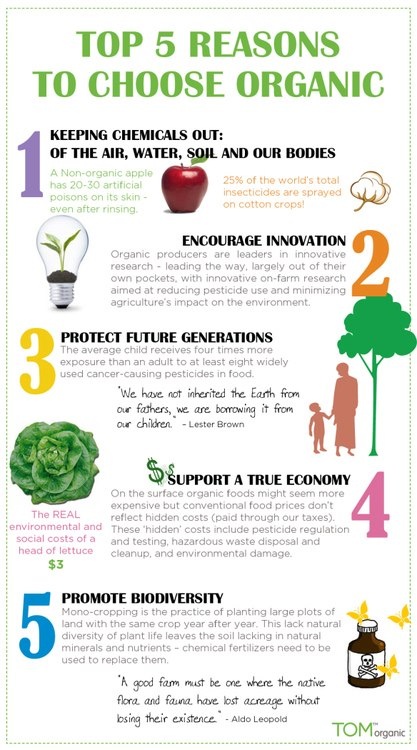
This infographic highlights five powerful reasons to choose organic, from keeping harmful chemicals out of our food systems to promoting biodiversity. It reinforces how organic choices protect health, future generations, and the environment – a reminder of why cities must make organic accessible for all.
Urban Farming as a Cost Reduction Strategy
Urban farming has emerged globally as a cost-reduction strategy for organic food, cutting transportation, storage, and distribution expenses while enhancing local food security. Cities like Havana, Cuba, where over 90% of vegetables are grown within city limits, demonstrate how urban farming can integrate organic food into daily diets affordably (FAO Urban Agriculture).
In India, urban farming remains underutilised despite its potential. According to a TERI study, rooftop organic farms could supply up to 15-20% of a city’s vegetable requirements, reducing dependence on distant peri-urban farms and cutting retail prices by eliminating transport costs.
Organisations like Earth5R have piloted urban farming projects in Mumbai and Bengaluru, training residents to grow organic vegetables in terrace gardens, balconies, and community spaces using compost from household waste. These initiatives integrate waste management with food production, reducing input costs and enhancing affordability. Residents report savings of ₹500-₹800 per month on vegetables, making organic consumption feasible even for middle-income families.
Singapore provides another strong example. Under its “30 by 30” food strategy, the government funds vertical organic farms within the city to produce 30% of national food needs by 2030, stabilising prices and reducing import dependence. This approach integrates urban planning, policy, and technology to make organic food accessible for all residents.
Scaling urban farming in Indian cities requires enabling policies: legalising rooftop and community farming, subsidising compost and organic seeds, and integrating urban agriculture into smart city master plans. Only then can urban farming evolve from isolated projects to a mainstream affordability strategy, transforming organic food into a lifestyle choice accessible to every citizen.
Partnering with Local Bodies for Distribution
One of the most overlooked yet powerful strategies to make organic food affordable is partnering with local municipal bodies and urban governance institutions for distribution. Local governments possess infrastructure, administrative networks, and public trust – assets that can bridge the gap between organic producers and consumers.
For example, in Kerala, the Kudumbashree Mission collaborates with municipal corporations to run community organic markets, where women farmers sell vegetables grown without chemical inputs directly to urban consumers at prices comparable to conventional produce. These weekly markets are set up in public grounds and bus stands, eliminating rental costs and significantly reducing consumer prices.
Similarly, the Bruhat Bengaluru Mahanagara Palike (BBMP) has partnered with farmer producer organisations to organise “Raitha Santhe” (farmers’ markets) within the city, connecting organic and natural farmers directly with buyers. Consumers benefit from fresh, affordable produce while farmers avoid middlemen commissions, ensuring better earnings.
In Mumbai, Earth5R’s collaboration with ward offices facilitated community organic markets in slum redevelopment colonies. Municipal support ensured space allocation, publicity through ward newsletters, and integration with local waste management systems to supply compost for organic cultivation. These partnerships reduced logistical costs and increased market visibility, making organic food accessible in urban poor settlements.
Globally, cities like Toronto and London have integrated organic farmers’ markets into municipal food policies to enhance affordability and nutrition security (Toronto Food Policy Council). Such initiatives align with SDG 11 (Sustainable Cities and Communities) by promoting local production and sustainable consumption patterns.
Strengthening partnerships between urban local bodies, NGOs, and farmer groups is therefore essential to embed organic distribution within public systems, ensuring affordability, stability, and universal access in urban food landscapes.
Changing Consumer Mindsets and Habits
Even as supply chains, policy subsidies, and local partnerships evolve, the long-term affordability of organic food depends on transforming consumer mindsets and habits. For most urban consumers, organic remains associated with premium branding, aesthetic packaging, and celebrity endorsements rather than fundamental health and environmental security.
A 2021 Mintel report found that 54% of Indian urban consumers are willing to buy organic food if it is affordable, but only 22% understand its full environmental and health benefits. This knowledge gap limits demand elasticity, keeping organic markets confined to niche segments.
Changing this mindset requires sustained public awareness campaigns, as seen in Denmark, where schools integrate organic literacy into their curricula and public institutions procure organic produce, normalising it as an everyday choice (IFOAM Europe). In India, NGOs like Earth5R run community workshops in Mumbai and Delhi slums, educating families about the dangers of pesticide exposure and demonstrating affordable organic farming methods. Participants report reduced reluctance towards organic food once they see its direct health benefits and feasible pricing models.
Behavioural change also involves rethinking consumption habits. For example, instead of buying expensive packaged organic spices, families can grow basic herbs like coriander, mint, and chillies in balcony pots. Urban farming workshops by Earth5R have empowered over 2000 households in Mumbai to integrate microorganic gardens, enhancing daily nutrition at minimal cost.
Furthermore, the media plays a pivotal role. Highlighting authentic stories of small farmers, successful community farming models, and health transformations through organic diets can build emotional connections, shifting organic from a status symbol to a lifestyle norm.
Ultimately, affordability is as much about mindset as it is about market dynamics. Empowered consumers who understand the real value of organic food will create the demand volumes necessary to drive systemic price reductions, making organic a lifestyle accessible to all.

Can We Make Organic Cheaper Than Regular?
The question of whether organic food can become cheaper than conventionally grown produce seems radical, but global and Indian precedents suggest it is achievable under the right systemic conditions. In countries like Uganda, smallholder organic farmers produce at lower costs than chemical-dependent farms because they rely on traditional seed saving and composting practices, avoiding expensive fertilisers and pesticides (IFOAM Organics International).
In India, however, the economics remain inverted. Conventional farming benefits from heavy government subsidies on urea, DAP, and other synthetic fertilisers, amounting to ₹70,000 crore annually (PRS Legislative Research). Organic farmers, by contrast, receive limited input support, making organic manure and certification disproportionately expensive. If even a fraction of these subsidies were redirected towards organic inputs, compost infrastructure, and farmer training, production costs could decline significantly.
Another dimension is soil health economics. Studies by ICAR show that organic farms, over three to five years, achieve higher net returns due to reduced input costs and stable yields from improved soil fertility. For example, Sikkim’s fully organic farmers reported savings on fertiliser expenditure and comparable yields in vegetable crops after their transition (DownToEarth).
Market structure also plays a role. The premium pricing of organic produce in urban India is often driven by branding, packaging, and retailer margins rather than production costs. Direct farmer-to-consumer models like Farmizen or community organic markets organised by Earth5R eliminate these intermediaries, offering organic vegetables at prices matching or slightly above conventional market rates.
Globally, Denmark’s Organic Action Plan showcases how policy, institutional procurement, and market integration can drive down organic prices. By making organic food a default choice in public kitchens, schools, and hospitals, demand volumes rose, enabling economies of scale that brought down prices (IFOAM Europe).
The future of organic affordability lies in integrated policy reform, supply chain restructuring, and behavioural change. If subsidies are reallocated to organic inputs, local production is scaled through urban farming, distribution is streamlined via municipal partnerships, and consumer demand normalises organic consumption, organic food could not only match but undercut conventional prices in the long term.
As Earth5R’s urban farming projects in Mumbai slums reveal, when communities grow their own organic food using compost from household waste, the effective cost is almost zero. This is the ultimate affordability model – one where food sovereignty eliminates market dependency, making organic not just cheaper but truly accessible for all.
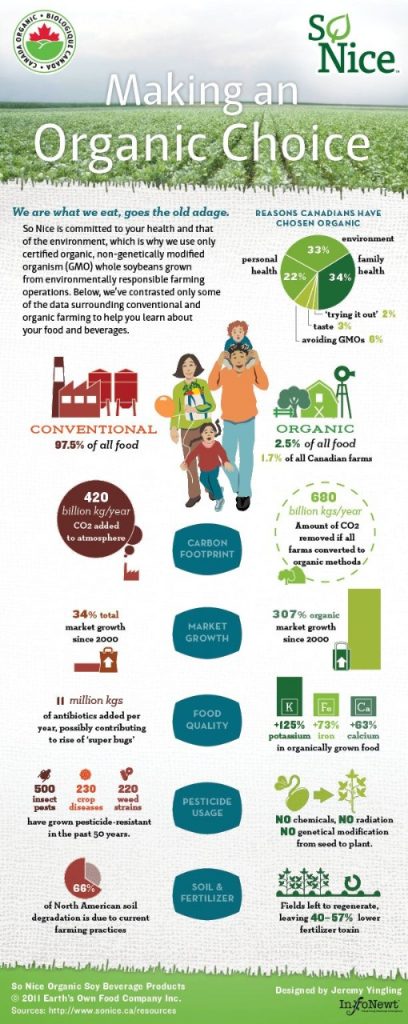
This infographic contrasts conventional and organic food systems, highlighting the environmental benefits and market growth of organic choices. It underscores why cities must prioritise organic affordability to unlock its health, climate, and economic advantages for everyone.
From Luxury to Lifestyle – The Road Ahead
As this exploration reveals, making organic food affordable is not an unattainable dream but a multifaceted challenge that demands systemic solutions. By restructuring subsidies, integrating urban farming (Earth5R Urban Farming), fostering direct farmer-to-consumer networks, and building strategic partnerships with municipal bodies, cities can transform organic food from a luxury niche into a mainstream lifestyle choice.
Ultimately, organic affordability is not only an economic imperative but an environmental and public health necessity. It is time urban planners, policymakers, corporations, and citizens collaborate to make organic food a default, not an exception, in India’s urban diets, fostering healthier lives and sustainable cities for generations to come.
FAQs On Making Organic Affordable: What Cities Must Do to Shift from Luxury to Lifestyle
What is organic food?
Organic food is grown without synthetic fertilisers, pesticides, or genetically modified organisms, using natural processes that maintain soil and environmental health.
Why is organic food more expensive than regular food?
Organic food costs more due to certification expenses, smaller production volumes, inefficient supply chains, and lack of subsidies that conventional farming receives.
Can organic farming be profitable for small farmers?
Yes, studies show that organic farming can be profitable over time due to reduced input costs and premium pricing, but initial transition support is critical.
How does certification increase the cost of organic food?
Certification involves annual inspection, soil testing, and documentation, costing ₹15,000-₹30,000 per farmer group in India, which raises final market prices.
Are there examples where organic food is affordable for poor communities?
Yes, Earth5R’s urban farming initiatives in Mumbai slums enable families to grow and access organic vegetables at costs similar to or lower than market produce.
How can direct farmer-to-consumer models reduce organic food prices?
These models eliminate middlemen, reduce distribution costs, and ensure farmers get fair prices while consumers pay less than retail organic store prices.
What role does the government play in making organic food affordable?
Governments can provide subsidies for organic inputs, support certification costs, integrate organic produce in public procurement, and build farmer market linkages.
How do subsidies impact organic food pricing?
Redirecting fertiliser subsidies towards organic inputs and training could lower production costs, enabling organic produce to be priced competitively with conventional food.
What are urban farming’s benefits for organic affordability?
Urban farming cuts transport and storage costs, provides fresh organic food locally, reduces household expenses, and enhances city food security.
Can CSR initiatives make organic food accessible?
Yes, CSR-funded discounted retail models can distribute organic food in low-income communities, reducing prices and improving nutrition outcomes.
How does consumer mindset affect organic affordability?
When consumers understand organic food’s health and environmental benefits, demand rises, creating economies of scale that lower prices.
Is it possible for organic food to become cheaper than conventional food?
With policy support, restructured subsidies, urban farming, and efficient supply chains, organic food can potentially become cheaper in the long term.
Which countries have successfully made organic food affordable?
Denmark and Bhutan have integrated organic farming into national policies, public procurement, and community markets, making organic food widely accessible.
What are the main barriers to organic food affordability in India?
High certification costs, lack of subsidies, fragmented supply chains, limited consumer awareness, and poor urban market integration remain key barriers.
How does Earth5R work to make organic food affordable?
Earth5R runs urban farming programs, community organic markets, and CSR collaborations to train people, grow organic food locally, and distribute it at low cost.
How can municipal bodies help make organic food affordable?
Municipalities can provide market spaces, integrate organic produce in public food programs, and support urban farming through policy and resource allocation.
Why is making organic affordable important for cities?
Affordable organic food improves public health, reduces environmental pollution, enhances food security, and builds resilient urban food systems.
How can individuals contribute to making organic affordable?
Individuals can support local farmers, grow herbs and vegetables at home, buy directly from producers, and advocate for organic-friendly policies.
What is the environmental benefit of affordable organic food?
Organic farming reduces soil and water pollution, enhances biodiversity, and lowers the carbon footprint, contributing to sustainable urban development.
What is the future of organic affordability in India?
With integrated policy reforms, urban farming expansion, CSR models, and changing consumer habits, organic food can shift from an elite trend to an everyday reality for all.
Turning Awareness into Action: Your Role in Making Organic Affordable
It’s time to redefine what we eat and how we source it. Whether you are a policymaker, corporate leader, urban planner, or an everyday citizen, take the first step towards making organic food affordable. Support local farmers, grow your own herbs, advocate for subsidy reforms, or collaborate with organisations like Earth5R to build sustainable community models. Together, we can shift organic food from a luxury to a lifestyle – for healthier people and a healthier planet.
-Authored by Pragna Chakraborty