
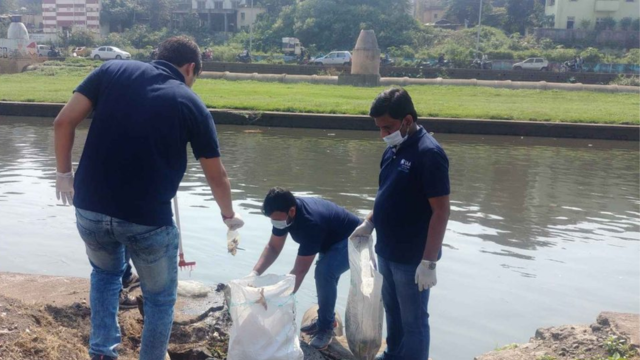
A Dual Lens on Sustainability
The latest BlueCities Meetup brought together two distinct yet deeply connected perspectives on sustainable living — one rooted in water conservation and community empowerment, the other in designing homes that heal both people and the planet. Hosted under the umbrella of the BlueCities Network, a global movement powered by Earth5R, this session was more than just an exchange of ideas — it was a cross-disciplinary collaboration at the intersection of grassroots environmentalism and eco-conscious urban design.
The BlueCities initiative, part of Earth5R’s award-winning work, envisions a world where urban resilience, community participation, and climate action converge to build healthier, greener, and more equitable cities. These meetups regularly convene practitioners, researchers, designers, and activists who are reshaping the sustainability landscape through local innovation and global thinking.
In this episode, two speakers from vastly different domains illuminated a shared vision:
- Dr. Indira Khurana, a seasoned environmentalist and policy expert, spoke passionately about the rejuvenation of small rivers and decentralized water management as a cornerstone of climate resilience.
- Nitu Rarh, a biophilic designer and academic, offered a vision for sustainable homes and cities that prioritize wellness, affordability, and ecological harmony.
Together, their insights stitched a rich narrative — from rural river basins to urban bedrooms — reminding us that sustainability is not a one-size-fits-all solution, but a tapestry woven from local wisdom, scientific rigor, and innovative design.
Speaker 1– Dr. Indira Khurana
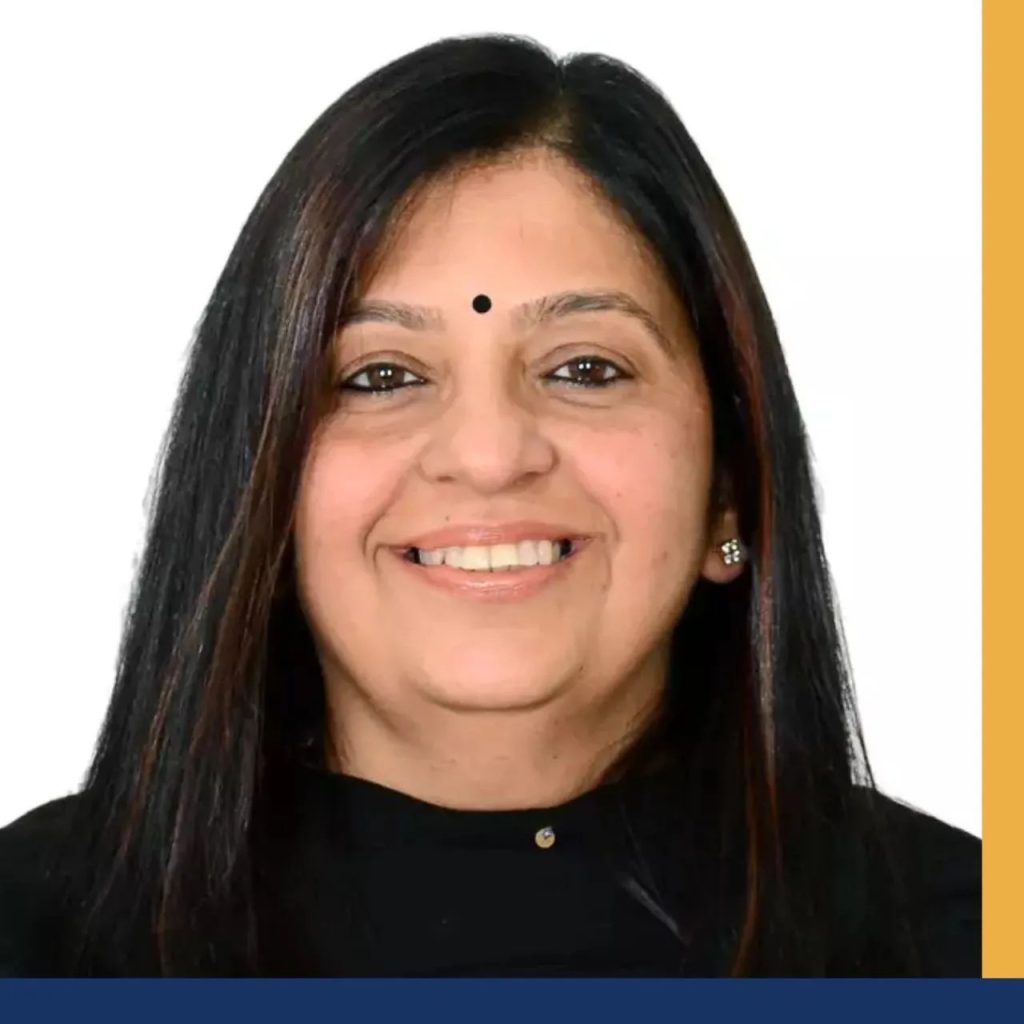
A leading voice in India’s water governance and climate action landscape, Dr. Indira Khurana brings over three decades of experience in environmental policy, rural development, and water security. At the BlueCities Meetup, she was introduced by Saurabh Gupta, Founder and CEO of Earth5R, who acknowledged her enduring impact on both grassroots and institutional water initiatives across India.
Dr. Khurana is currently the Chairperson of the Indian Himalayan River Basin Council and the Chief Advisor at Tarun Bharat Sangh, a pioneering organization in water conservation, founded by the legendary Rajendra Singh, widely known as “The Waterman of India.” Her work spans diverse geographies and disciplines — from groundwater rejuvenation and rainwater harvesting to climate-resilient livelihoods, with a strong emphasis on gender inclusion and community participation.
In her role at Tarun Bharat Sangh and other organizations such as the Coastal Salinity Prevention Cell in Ahmedabad, Dr. Khurana has advocated for integrating traditional ecological knowledge with modern science, making a compelling case for localized climate adaptation. She is also a respected researcher and writer, having authored policy papers, academic articles, and books on WASH (Water, Sanitation, and Hygiene), river basin management, and community-led conservation models.
At the core of her philosophy is the belief that people must be empowered to manage their water — an approach that not only conserves resources but also strengthens rural resilience, reduces urban migration, and fosters peace and dignity in marginalized communities. Her talk at the BlueCities Meetup served as a call to urban sustainability practitioners to learn from rural success stories — stories where water is not just a resource, but a catalyst for social transformation and ecological balance.
Bridging BlueCities and Rural Wisdom
One of the most compelling threads in Dr. Indira Khurana’s presentation was her argument for a cross-pollination of ideas between rural and urban water management. While her decades of work have primarily focused on rural watershed restoration, she made a persuasive case for applying these low-cost, high-impact strategies to urban sustainability challenges, especially those championed by the BlueCities Network.
As cities across India and the globe grapple with urban flooding, groundwater depletion, and heat stress, Dr. Khurana emphasized that rural models of decentralized rainwater harvesting, small stream rejuvenation, and community-led governance can be replicated in urban ecosystems. She referenced Earth5R’s own work in urban lake and river restoration, which aligns closely with the climate resilience principles demonstrated by rural initiatives such as Tarun Bharat Sangh’s river revival projects and the Jal Sahelis movement.
She proposed a vision for “urban Jal Sahelis” — inspired by the grassroots women-led water brigades of Bundelkhand — who could lead city-based campaigns for water body revival, wetland protection, and aquifer recharge. These urban counterparts could organize river walks, clean-up drives, and water literacy yatras, just as their rural sisters have done across hundreds of drought-prone villages.
Dr. Khurana also stressed the need for creating “water-secure zones” within cities — neighborhoods, colonies, or industrial townships that become models of zero water discharge, flood-resilience, and community-owned water management. She envisioned these as living laboratories where residents harvest every drop of rain, recycle greywater, and engage in citizen science to track water quality and usage.
Furthermore, she called for bridging the academic-practitioner gap by encouraging collaborative research between universities and on-ground organizations. By studying the outcomes of these hyperlocal interventions, researchers can generate evidence that informs policy change, while communities gain tools to improve their initiatives with scientific validation.
Ultimately, Dr. Khurana’s message was clear: resilient cities must learn from rural innovations. The BlueCities model, she argued, can scale faster and more effectively if it embraces India’s existing grassroots water wisdom, not as a separate discourse, but as the foundation for sustainable urban futures.
Speaker 2– Nitu Rarh
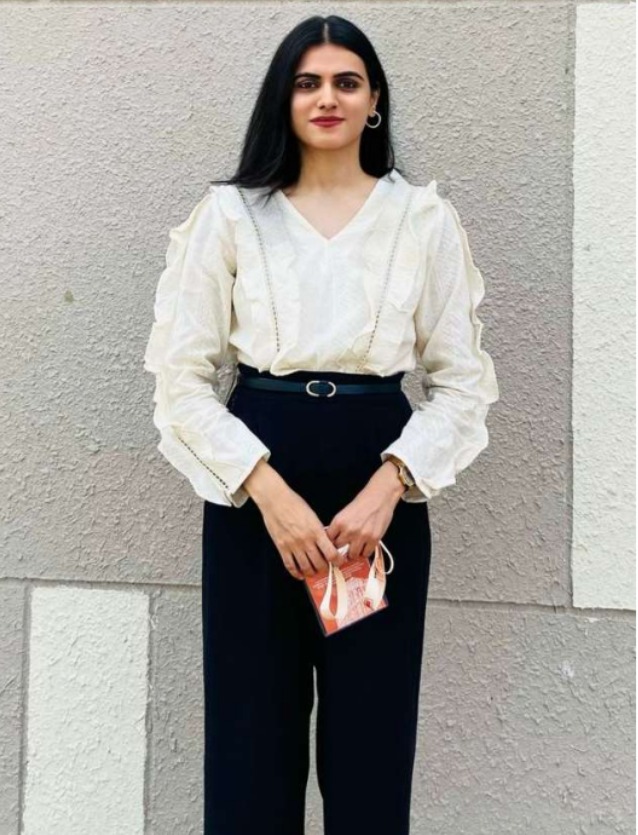
If Dr. Indira Khurana brought a deep dive into water systems and grassroots climate action, the second speaker, Nitu Rarh offered a refreshing urban lens through the world of biophilic interior design. A creative force at the intersection of architecture, sustainability, and wellness, Nitu is an Interior Designer at Design Design Studio and serves as an Assistant Professor in the Interior Design Department at INIFD (Inter National Institute of Fashion Design), Jaipur. She is currently pursuing her PhD in Biophilic Design from Banasthali Vidyapith, a premier women’s university in Rajasthan.
Her research and practice are centered around a single idea: that homes should not just shelter us — they should heal us. At a time when urban Indian homes are becoming increasingly synthetic, energy-intensive, and disconnected from nature, Nitu’s work emphasizes the re-integration of natural elements into living spaces through thoughtful design. Her efforts are rooted in the global concept of biophilic design, which seeks to reconnect humans with nature in the built environment.
Through her studio and academic work, Nitu is developing climate-responsive interiors that use local materials, natural ventilation, indoor greenery, and energy-efficient layouts to create spaces that reduce environmental impact while improving mental and physical well-being. Her collaborations with architects in Jaipur and Jaisalmer have led to biophilic makeovers of villas, apartments, and now hotels, demonstrating that sustainability and elegance can coexist — even on a modest budget.
What sets Nitu apart is her practical, people-focused approach. She isn’t designing just for awards or aesthetics — her biophilic design framework is meant to be affordable, scalable, and replicable across Indian urban settings, from high-rise apartments to compact homes. In doing so, she represents a new wave of Indian designers who are redefining sustainability not just in structural terms, but through the lens of health, happiness, and cultural relevance.
Her inclusion in the BlueCities Meetup highlighted a growing recognition that urban sustainability isn’t only about waste management and water reuse — it’s also about how we live, breathe, and feel inside our homes. As cities expand vertically and stress levels rise, Nitu’s vision of nature-inspired interiors offers both a design solution and a wellness intervention — timely, relevant, and deeply human.
Biophilic Living – Designing Homes That Heal
In her presentation, Nitu Rarh unpacked the core philosophy of biophilic design — a rising global movement that positions nature as a vital design element in architecture and interiors. Unlike conventional sustainability frameworks that focus mainly on energy efficiency or material sourcing, biophilic design emphasizes the emotional and psychological connection between people and their environment.
Her talk, titled “Biophilic Living: Designing Homes for Well-being and Sustainability,” began by outlining the urgent need for reconnection with nature in urban India, where people spend over 90% of their time indoors. Drawing from her own research and design practice, she showed how incorporating natural light, ventilation, organic materials, and greenery can reduce stress, improve air quality, and lower energy consumption.
Nitu’s biophilic design framework — developed at her Design Design Studio in Jaipur — is deeply rooted in local climate conditions and cultural practices. Some of the key strategies she shared include:
- Maximizing daylight through strategic window placement, cross-ventilation, and light-reflective surfaces
- Replacing energy-intensive materials like POP (Plaster of Paris) and synthetic fabrics with limewash, cotton, jute, and locally available sandstone
- Incorporating indoor plants like Areca palm, snake plant, and spider plant to purify air and uplift mood
- Installing window gardens, vertical green walls, and low-tech water features that help regulate indoor temperature while also enhancing well-being
- Eliminating the use of plastic furnishings, instead opting for bamboo, terracotta, and perforated bricks to ensure natural cooling and light diffusion
These design interventions have produced measurable impacts. In pilot homes built using her biophilic model, Nitu observed:
- A 25–30% reduction in energy use
- Up to 20% lower construction costs due to the use of local, cost-effective materials
- Improved occupant mood, sleep, and overall satisfaction, particularly in post-COVID contexts where mental health and indoor comfort have become paramount
Beyond practice, Nitu is also helping educate the next generation of designers. At INIFD Jaipur, she has integrated biophilic design principles into her sustainable design curriculum, mentoring students to think beyond trends and towards eco-empathetic architecture. Her work has sparked growing interest among developers in cities like Jaipur and Jaisalmer, where traditional materials and vernacular forms are naturally aligned with the principles of biophilic and climate-sensitive design.
Nitu’s talk made it clear that biophilic design is not a luxury — it’s a necessity. Especially in dense, high-stress urban environments, our built spaces must go beyond functionality and support emotional, physical, and environmental well-being. As she aptly put it, “The future of sustainable buildings begins inside our homes — let’s bring nature back, one room at a time.”
Biophilic vs. Green Design – A Layered Perspective
During the engaging Q&A session that followed her presentation, Nitu Rarh found herself fielding a compelling question from the audience: How is biophilic design different from green buildings and sustainable interiors? The discussion opened up a thoughtful dialogue about the overlap, differences, and evolution of environmental design philosophies — particularly green architecture, biophilic frameworks, and biomimicry.
Nitu clarified that while green building design — often guided by standards such as the IGBC (Indian Green Building Council) and LEED (Leadership in Energy and Environmental Design) — focuses primarily on reducing a building’s environmental footprint, it often stops short of addressing the human emotional connection with nature. Green buildings typically emphasize:
- Energy efficiency
- Water conservation
- Low-carbon materials
- Waste reduction during construction and use
In contrast, biophilic design goes a step further by intentionally fostering a positive psychological and physiological relationship between humans and their natural surroundings. While both approaches may share common tools — like natural light, ventilation, and non-toxic materials — biophilic design emphasizes natural forms, patterns, colors, and sensory elements that influence human behavior, mood, and cognitive function.
As Terrapin Bright Green — a leading biophilic design research group — puts it, biophilia is about designing for people, not just for performance. Nitu also pointed out that traditional Indian homes, with their central courtyards, jaalis (latticed screens), stepwells, and local mud-plastered walls, have long embodied biophilic principles — even if the term was never used. In many ways, she argued, biophilic design is “old wisdom in new packaging.”
The conversation also touched upon biomimicry, another design approach that draws inspiration from natural systems, processes, and forms — like buildings modeled after termite mounds for natural cooling or materials that mimic lotus leaves for self-cleaning surfaces. While biomimicry tends to focus on innovation driven by nature’s engineering, biophilic design is more about experiencing and living with nature on a daily basis.
The discussion helped clarify misconceptions — particularly the idea that biophilic design is just about adding plants indoors. Instead, Nitu emphasized that true biophilic environments involve a conscious shift in design philosophy, where every material, form, and function is evaluated for its impact on human well-being, emotion, and ecological integration.
Ultimately, the session highlighted a crucial takeaway: green design may be necessary for planetary survival, but biophilic design is essential for human thriving. When combined, they can create spaces that are not only efficient and eco-friendly but also deeply nourishing to the human spirit — a goal that aligns perfectly with the broader mission of the BlueCities Network.
The Way Forward – Convergence of Nature, Design, and Community
The BlueCities Meetup concluded with a unifying message: sustainable urban futures will be shaped by the convergence of grassroots water wisdom, inclusive design, and empowered communities. Despite their different domains, both Dr. Indira Khurana and Nitu Rarh emphasized that climate resilience is no longer the sole responsibility of engineers, architects, or governments — it is a shared civic responsibility, embedded in both our public infrastructure and private choices.
Dr. Khurana’s insights showed how community-led water management, particularly in rural and peri-urban areas, can offer scalable models for cities facing water insecurity, flooding, and heatwaves. Her vision of “urban Jal Sahelis” — citizen groups inspired by the women water warriors of Bundelkhand — presents a powerful grassroots model for river rejuvenation, aquifer restoration, and flood mitigation. She also called for integrating citizen science tools and academic collaboration into these initiatives, urging research institutions and urban development bodies to work hand-in-hand with communities on the frontlines of climate change.
Meanwhile, Nitu Rarh offered a complementary urban interior revolution — urging architects and homeowners to adopt biophilic design as a pathway not just to carbon reduction, but to mental well-being and cost savings. Her case studies in Jaipur and Jaisalmer demonstrated that climate-responsive architecture can be affordable, scalable, and joyful, especially when rooted in local materials, vernacular knowledge, and cultural aesthetics.
The synergy between their work points to a larger opportunity for the BlueCities Network and its community of practitioners, researchers, and activists:
- Promote localized, low-cost water literacy campaigns in urban and peri-urban areas
- Design demonstration zones or “living labs” within cities to test decentralized rainwater harvesting, energy-efficient housing, and participatory restoration models
- Foster collaboration between biophilic designers and water conservation experts to integrate sustainable interiors with nature-positive neighborhood planning
- Build partnerships across sectors — from urban municipalities and NGOs to private developers and educational institutions — that align with the Sustainable Development Goals (SDGs), especially SDG 6 (Clean Water and Sanitation), SDG 11 (Sustainable Cities and Communities), and SDG 13 (Climate Action)
The speakers’ shared call to action was unmistakable: whether you’re restoring a stream in a forgotten hamlet or redesigning a flat in a concrete jungle, your choices matter. A water tank in a village, a limewashed wall in a city home, or a student-led river walk — each of these is a micro-action that contributes to a macro shift toward ecological balance.
As Earth5R’s BlueCities initiative expands its footprint globally, bringing together innovators from across continents, this meetup served as a reminder that transformation begins at home — and at the grassroots. Through the synergy of place-based action and planetary thinking, a new blueprint for sustainable cities is taking shape — one river, one room, one community at a time.
The Future Is Flowing — Step In
The insights shared during this BlueCities Meetup weren’t just theoretical — they were a powerful reminder that sustainability begins with action. Whether you’re a policymaker, designer, community leader, student, or homeowner, there are tangible steps you can take to contribute to climate resilience and ecological harmony in your local context.
If you were inspired by Dr. Indira Khurana’s vision for decentralized water governance, consider initiating or joining community-led water conservation drives. You can:
- Map and monitor neglected urban streams and lakes using tools like Earth5R’s Citizen Science Toolkit, which empowers residents to track water health
- Start a water literacy campaign in your neighborhood, school, or college to raise awareness about local water bodies and rainwater harvesting
- Collaborate with NGOs or municipal bodies to revive local wetlands and stormwater drains before the next monsoon
If Nitu Rarh’s biophilic design philosophy resonated with you, begin transforming your space — even one room at a time — into a nature-connected sanctuary. Try:
- Replacing plastic interiors with natural materials like bamboo, limewash, and cotton upholstery
- Adding low-maintenance indoor plants like snake plant or pothos to improve air quality and reduce stress
- Maximizing natural light and cross-ventilation in your home design or renovation plans
- Exploring resources like the 14 Patterns of Biophilic Design to guide your home transformation
Want to scale your impact? Get involved with Earth5R’s global volunteer programs or partner with the BlueCities initiative to bring climate-positive solutions to your city, institution, or business. From lake restoration projects and circular economy workshops to urban farming models and eco-education in slum areas, there are numerous ways to be part of the growing BlueCities movement.
You can also:
- Nominate speakers or local heroes for upcoming meetups
- Host a BlueCities micro-meetup in your neighborhood or academic institution
- Support community-led sustainability projects through CSR or academic research collaborations
Remember, resilience isn’t built overnight, and it doesn’t require large-scale infrastructure. As this session showed, a restored stream or a reimagined room can have a profound ripple effect — economically, socially, and ecologically.
So start small. Stay rooted. And help build a BlueCity — wherever you are.