
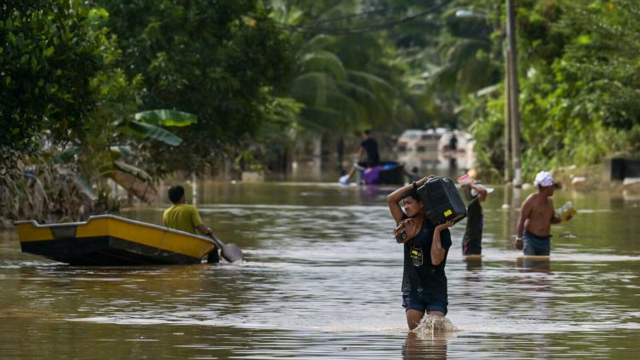
Nature’s Barrier: The Role of Riverbank Forests in Urban Resilience
Riverbank forests act as natural buffers that shield cities from climate change impacts such as floods and rising heat. They provide critical ecosystem services like stabilizing soil, storing rainwater, and reducing storm surges. By absorbing excess water, they prevent urban flooding that overwhelms drainage systems. These green belts are now central to nature-based solutions for resilient urban design.
Unlike engineered embankments, riparian forests regulate water naturally and reduce runoff velocity. They minimize damages caused by flash floods that disrupt urban drainage systems. A World Resources Institute study shows cities with intact river forests recover faster from storms. Their vegetation boosts groundwater recharge, strengthening water reserves for dry seasons. Protecting them is key to water security in urban landscapes.
These forests also cool overheated cities, countering the urban heat island effect. Through evapotranspiration and shade, they regulate microclimates along rivers. Green corridors enable airflow that reduces pollution and enhances comfort in summer. The World Health Organization links green zones to fewer heat-related deaths. Trees near rivers function as vital public health infrastructure in a warming world.
Riverbank ecosystems sustain habitat corridors that support species survival in growing cities. They are critical for urban biodiversity including fish, birds, and insects. Research by WWF proves reforestation of riverbanks restores pollinators crucial for agriculture. These ecological webs strengthen resilience and help systems recover after disasters. Conserving healthy ecosystems ensures that biodiversity thrives alongside urban growth.
Forests provide economic benefits by reducing costs of disaster response and healthcare. They enhance public spaces for recreation and tourism, improving city livability. Cities adopting them in climate adaptation strategies save millions compared to hard infrastructure. Riverbank forests also raise property values by improving air and water quality. Such green investments make urban economies more resilient.
For long-term protection, integrated urban planning must align city growth with ecological safeguards. Collaboration among municipal governments, NGOs, and local citizens is essential for restoration. Strong policy frameworks can expand these forests and limit encroachment. Without action, urban sprawl will erode natural floodplains and worsen disasters.
Treating riverbank forests as climate resilience infrastructure ensures safer, greener, and healthier cities.
How Trees Along Rivers Reduce Flood Risk and Erosion
Trees along riverbanks prevent destructive soil loss by anchoring earth with deep root systems. Their roots bind sediments and reduce slippage during heavy rainfall, keeping banks intact. By slowing water velocity, vegetation lowers the chance of riverbank erosion. Forest cover also reduces silt entering rivers, maintaining aquatic habitats. This natural engineering strengthens resilience compared to costly hard infrastructure.
During extreme weather, forests act like sponges that absorb rainfall and gradually release it. This process prevents sudden surges that overwhelm urban flood systems. Research by the United Nations University shows tree-lined floodplains can reduce peak flood heights significantly. They also recharge groundwater tables, sustaining supplies during dry months. Protecting river forests is essential to meet rising water demand.
By intercepting rainfall, tree canopies reduce surface runoff and prevent flash flooding. Leaves, stems, and forest litter act as barriers, dispersing raindrop energy and preventing soil compaction. This allows rainwater to infiltrate rather than rush into storm drains. Such hydrological functions, recognized by IPCC reports, enhance flood control naturally. The combination of canopy cover and roots supports sustainable watershed management.
Tree belts also protect surrounding communities from landslides and collapsing embankments. Studies from the International Union of Forest Research Organizations show riparian vegetation reduces risks in steep terrain. Trees provide slope stability, especially in monsoon-prone regions of India and Southeast Asia. Their ability to moderate sediment flow preserves rivers for navigation and agriculture.
Healthy riparian forests also minimize pollution entering waterways. They filter out nutrient runoff from agriculture and urban waste before it reaches rivers. This reduces harmful algal blooms that deplete aquatic oxygen and threaten fish. Vegetation traps sediments and chemicals, acting as natural treatment plants for water. A World Bank study confirms forests improve water clarity and reduce purification costs.
Real-world examples highlight their importance: the Yamuna floodplains in Delhi and Sabarmati River in Ahmedabad show how forests reduce erosion and flooding risks. In Chennai, restoration of riparian zones after the 2015 floods improved resilience, according to CSE reports. Globally, the Mississippi River floodplain forests protect farmland and cities downstream.
Such cases prove that tree-lined rivers are indispensable for building climate-smart, flood-resistant cities.
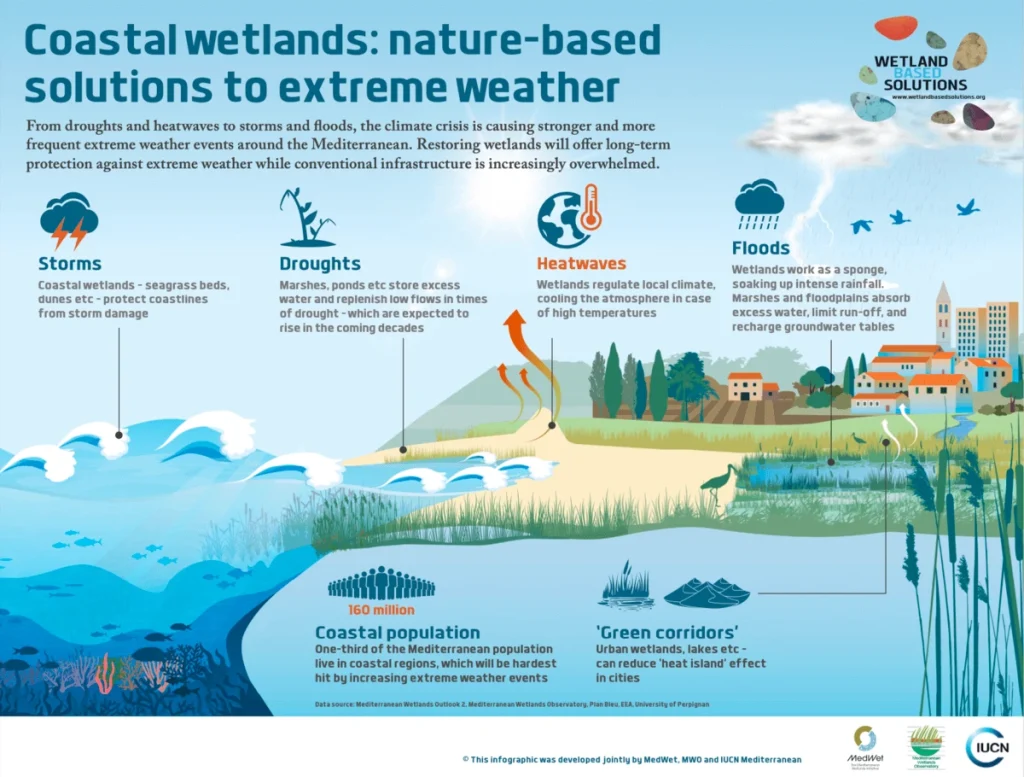
This infographic highlights how coastal wetlands act as nature-based solutions, protecting communities from storms, droughts, floods, and heatwaves. It emphasizes wetlands’ role in climate resilience by storing water, regulating temperatures, and reducing urban heat island effects.
Cooling the Concrete: Riverbank Forests as Natural Air Conditioners
Cities experience the urban heat island effect, where concrete traps heat and raises temperatures. Riverbank forests help counter this by providing shade and reducing surface heat. Their canopies lower surrounding air temperatures through evapotranspiration. Research by the World Meteorological Organization shows urban areas with tree cover stay significantly cooler. This makes riparian greenery essential for climate adaptation.
Tree-lined rivers create natural ventilation corridors that circulate fresh air in dense neighborhoods. They reduce heat build-up by interrupting hot air pockets around buildings. These effects are vital in cities where air pollution worsens heat stress. A study by NASA Earth Observatory confirms that shaded water bodies surrounded by forests improve air circulation. As a result, riverbank trees contribute directly to public health resilience.
Cooling effects also reduce dependence on energy-intensive air conditioning, cutting emissions that fuel climate change. Neighborhoods near river forests report lower electricity use during summer peaks. A World Bank assessment shows integrating green spaces in cities reduces overall energy demand.
The International Energy Agency links nature-based cooling to long-term energy efficiency. By creating cooler zones, riparian forests become allies in sustainable urban energy planning.
These forests also improve mental health and community well-being. Proximity to shaded green spaces is associated with reduced stress and better social cohesion. Riverbanks provide recreational areas that encourage physical activity. Research by Harvard T.H. Chan School of Public Health highlights the role of nature in lowering cardiovascular risks linked to heat. Thus, cooling from trees improves not only climate resilience but also quality of life.
Shaded banks also protect rivers themselves from overheating. High water temperatures degrade aquatic ecosystems by lowering oxygen levels and endangering fish. Trees regulate microclimates along rivers, keeping waters cooler for aquatic biodiversity.
The Food and Agriculture Organization stresses riparian vegetation as critical for freshwater resilience. By safeguarding rivers, forests enhance ecosystem services that cities rely upon for food, water, and health.
Examples abound: in Pune, tree-lined Mula-Mutha riverbanks help mitigate heat; in Chennai, Cooum reforestation lowered local temperatures; and in Kolkata, shaded riverfronts act as cooling corridors. Globally, projects along the Seine in Paris and Los Angeles River show similar success. These cases confirm riverbank forests are indispensable natural air conditioners for modern cities.
Restoring Biodiversity Through Riverbank Reforestation
Riverbank forests are vital biodiversity hotspots that support diverse plant and animal life. Reforestation with native tree species rebuilds habitats lost to urbanization and pollution. These ecosystems provide shelter for birds, amphibians, and mammals along waterways. A CBD report highlights the role of riparian forests in sustaining ecological connectivity. Restoring them ensures resilience of urban ecosystems.
Riparian zones act as ecological corridors linking fragmented habitats. They enable wildlife migration, crucial for species survival amid climate shifts. Restoration projects documented by WWF show bird and pollinator populations rebounding quickly. Vegetation buffers improve soil health, benefiting both terrestrial and aquatic organisms. According to IUCN, connected green corridors enhance climate resilience for cities.
Riverbank trees also support aquatic biodiversity. Shaded waters maintain cooler temperatures needed for fish spawning. Forest litter enriches rivers with organic matter, feeding invertebrates at the base of food chains. A FAO study shows that reforested banks improve freshwater productivity. These effects cascade across ecosystems, strengthening fisheries that support urban food supplies. Healthy forests mean healthy rivers.
Reforestation efforts also revive pollinators such as bees and butterflies that thrive in riparian vegetation. These species are essential for urban agriculture and food security. Reports by UNEP emphasize how restored green belts increase pollinator services, benefiting crops and urban gardens. Native flowering trees planted along rivers diversify habitats further. In turn, they strengthen resilience against ecosystem collapse.
Riverbank forests provide nesting grounds for migratory birds, boosting biodiversity conservation on a global scale. Wetland-linked riparian zones, highlighted in Ramsar Convention reports, are critical for avian survival. Restoring these forests increases urban bird diversity and supports eco-tourism. Research by Cornell Lab of Ornithology links green belts with improved species richness.
Examples demonstrate success: the Ganga rejuvenation project restored fish habitats through riparian planting; Mumbai’s Mithi River reforestation boosted bird populations; and Yamuna floodplain projects restored biodiversity corridors in Delhi. Globally, Amazon restoration and Danube River efforts show similar gains. These cases confirm riverbank reforestation is essential for urban biodiversity revival.
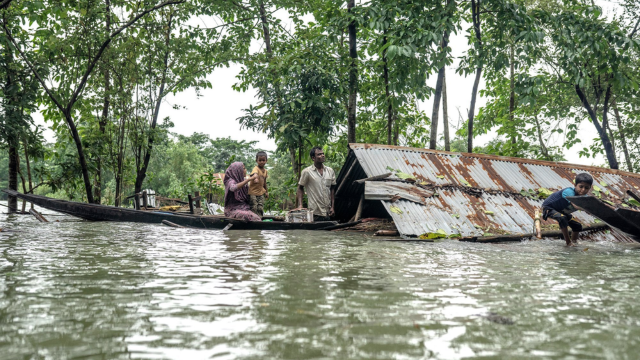
Earth5R’s Citizen-Led Projects for Riverbank Forest Restoration
Earth5R has pioneered citizen-led restoration by engaging local communities in riverbank forest revival. Through the Blue Cities Program, citizens participate in tree planting and ecosystem monitoring. Volunteers map degraded riparian zones using GIS tools to guide interventions. According to UNDP, community-driven actions ensure stronger ownership of conservation outcomes.
In Mumbai, Earth5R mobilized citizens to reforest stretches of the Mithi River, reducing pollution and heat islands. Tree belts established by volunteers stabilize soils and buffer against floods. Citizen science enables monitoring of biodiversity recovery. Reports from World Bank emphasize that inclusive, grassroots-led reforestation creates measurable urban resilience. These interventions reconnect rivers with surrounding urban ecosystems.
In Chennai, citizen groups partnered with Earth5R to restore riverbanks and wetlands. Volunteers planted native species suited to floodplains, ensuring long-term survival. Schools and colleges integrated eco-education with reforestation drives. Research by IUCN shows that local participation boosts tree survival rates compared to top-down projects. Earth5R makes reforestation both participatory and sustainable.
Earth5R integrates circular economy principles into reforestation by converting urban waste into organic compost. This reduces landfill burden while enriching soils along riverbanks. Community composting initiatives directly support sapling growth. Reports by FAO highlight the importance of nutrient cycling in forest restoration. Such innovations ensure reforestation is ecologically restorative and economically viable for urban communities.
The projects also build climate resilience by addressing both heatwaves and flooding risks. Restored riverbanks increase carbon sequestration while improving water infiltration. WRI reports that riparian reforestation can reduce flood damages by up to 30%. Earth5R’s model demonstrates how citizens can directly combat climate threats. These projects show that collective action is central to nature-based solutions.
Global recognition has followed Earth5R’s work, with partnerships involving UNESCO, ICLEI, and municipal governments. These collaborations scale citizen-led models across cities. Case studies published on Earth5R’s platform document replicable methodologies for riverbank restoration. By empowering local people, Earth5R ensures long-term stewardship of green belts.
Linking Green Belts with Blue Cities for Climate Protection
Green belts along rivers act as critical buffers, connecting urban forests with waterways to reduce climate vulnerabilities. By merging reforestation efforts with blue infrastructure, cities develop resilience against floods and heatwaves. Studies by the World Resources Institute show that integrated green-blue corridors enhance stormwater absorption and lower peak flood levels. These systems transform fragmented initiatives into holistic climate protection.
Earth5R’s Blue Cities Program illustrates how green belts along rivers can protect both biodiversity and human settlements. Riverbank forests serve as living walls against urban heat islands, reducing local temperatures by several degrees. Reports from IPCC emphasize that such solutions strengthen adaptation to rising climate risks.
By linking ecosystems and infrastructure, cities reduce vulnerability while promoting sustainable development.
Integrating green belts into city master plans ensures riverbanks are conserved for long-term resilience. In Pune, green corridors have been mapped to safeguard rivers and improve connectivity between forests. Earth5R mobilizes local residents to plant native riparian species that adapt to floodplains. Such integration aligns with recommendations from the Convention on Biological Diversity.
Green belts also create wildlife corridors, linking aquatic and terrestrial habitats for biodiversity conservation. Earth5R collaborates with citizen groups to restore lost vegetation and promote pollinator diversity. Studies by Nature show that urban ecological corridors enhance species migration and reduce ecosystem fragmentation. These efforts contribute to healthier rivers, more resilient forests, and vibrant urban ecosystems.
Green-blue integration offers substantial economic benefits by reducing disaster management costs. Restored riverbanks cut flood recovery expenses while providing cooling that lowers energy demand for air conditioning. Earth5R demonstrates how nature-based designs lower urban infrastructure costs compared to conventional engineering. UNEP highlights these solutions as cost-effective pathways for urban resilience.
By linking green belts with the Blue Cities framework, Earth5R showcases a replicable model for global cities. Partnerships with ICLEI, UNESCO, and civic authorities scale these approaches across regions. The resulting ecological corridors provide cleaner air, better water security, and stronger disaster preparedness. As climate risks intensify, green belts stand out as critical urban shields that protect both people and ecosystems.
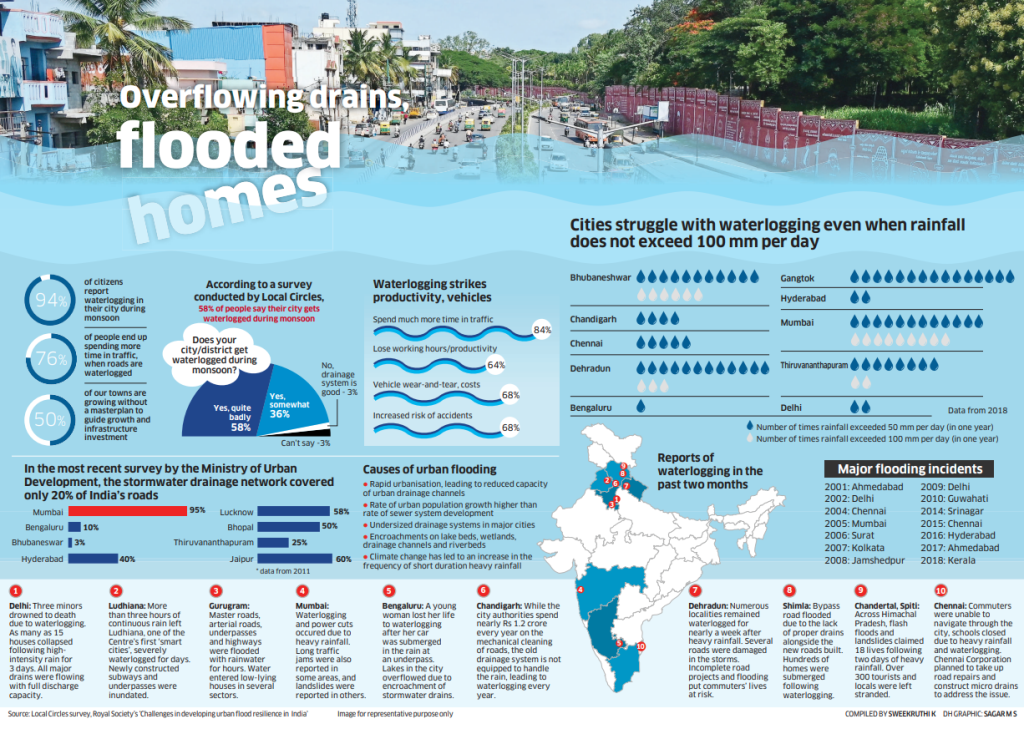
The infographic reveals how inadequate drainage and rapid urbanization make Indian cities vulnerable to flooding, even with moderate rainfall. It also shows the widespread impact of waterlogging on traffic, productivity, and public safety.
How Riverbank Forests Improve Water Quality and Aquatic Life
Riverbank forests act as natural water filters by trapping sediments, nutrients, and pollutants before they reach rivers. Dense vegetation reduces the flow of agricultural runoff carrying fertilizers and pesticides that harm aquatic ecosystems.
Studies from the Journal of Environmental Management confirm that riparian buffers improve water clarity and prevent eutrophication. By safeguarding rivers, these forests directly support human and ecosystem health.
Healthy riverbanks provide shaded areas that regulate water temperature critical for aquatic species survival. Trees along rivers prevent overheating that threatens fish like trout and salmon. Research from US Forest Service shows that shaded river stretches host more diverse aquatic life than open channels. This natural cooling helps protect ecosystems against climate change.
Nutrient cycling within riverbank forests sustains food webs in freshwater systems. Fallen leaves and organic matter fuel microbial activity that supports invertebrates, which in turn feed fish. According to WWF, this nutrient transfer strengthens biodiversity across rivers. By creating stable food sources, riparian forests ensure thriving aquatic communities.
Riverbank roots stabilize soil and reduce erosion that clouds rivers and suffocates aquatic habitats. Sediment overloads often block fish gills and destroy spawning grounds, threatening freshwater biodiversity. Earth5R promotes riparian tree planting to restore natural filters that reduce turbidity. Cleaner waters directly enhance oxygen levels, sustaining healthier fish populations.
Riverbank vegetation also absorbs toxic metals and pollutants from industrial discharges before they enter rivers. This improves safety for aquatic life and for communities relying on rivers for drinking water. Research in Environmental Science & Technology highlights how riparian buffers reduce mercury and lead levels in streams. Such eco-barriers make forests critical allies in urban water security.
The presence of thriving riparian forests fosters aquatic biodiversity hotspots that benefit both ecosystems and communities. Earth5R’s citizen-driven projects engage volunteers to restore degraded banks, planting native vegetation to improve water quality. These efforts align with UN SDG 6 on clean water and sanitation while supporting sustainable fisheries. Together, these forests ensure rivers remain lifelines for people and nature.
Earth5R’s Partnerships for Large-Scale Urban Tree Planting
Earth5R builds collaborations with municipal governments to integrate tree planting into city planning. By working with urban planners and sustainability experts, they identify riverbanks and flood-prone areas most in need of restoration. Such projects align with the Paris Agreement on climate resilience. Partnerships ensure that local communities actively participate, making greening efforts more sustainable.
Corporates play a major role in Earth5R’s model through CSR funding that supports large-scale tree planting. Companies align their ESG goals with environmental action by financing riparian restoration. Reports from UNEP confirm that corporate partnerships accelerate reforestation impact in urban areas. Earth5R facilitates transparent impact measurement so businesses and cities both benefit from improved ecosystems.
Educational institutions partner with Earth5R to involve students in citizen science projects along rivers. Universities integrate riparian restoration into environmental curricula, allowing youth to contribute data and plant trees. Programs supported by UNESCO highlight how education fosters environmental stewardship. By engaging schools and colleges, Earth5R ensures riverbank restoration becomes an intergenerational movement.
Earth5R also collaborates with international NGOs to scale up tree planting in cities worldwide. Groups like WWF and Conservation International provide technical expertise and funding for biodiversity-rich riparian projects. Partnerships are guided by IUCN frameworks that emphasize nature-based solutions. Together, they restore ecosystems while building global resilience against climate disasters.
Local communities remain at the heart of Earth5R’s partnerships. Volunteer groups engage in tree planting drives that restore degraded riverbanks while fostering ownership. According to FAO, involving communities improves long-term forest survival rates. Earth5R leverages mobile citizen tech platforms to track sapling growth and ensure transparency. This grassroots involvement strengthens climate adaptation strategies in cities.
These partnerships also unlock access to climate finance mechanisms that fund large-scale reforestation. Through collaborations with World Bank and Global Environment Facility, Earth5R channels resources to urban restoration programs. Verified carbon credits from riparian forests attract investors committed to sustainability. By combining policy, finance, and citizen engagement, Earth5R sets a replicable blueprint for urban resilience.
Policy Frameworks to Protect and Expand Riverbank Forests
Strong legal frameworks like the National Water Policy and National Forest Policy in India emphasize riparian protection. These policies recognize riverbank forests as key for flood control and climate resilience. Internationally, the EU Green Infrastructure Strategy and Ramsar Convention guide wetland-linked forest restoration. Together, they establish accountability for governments in preserving ecosystem services.
Urban policies also support riparian greening through zoning laws and land-use regulations. Cities implement buffer zone rules to prevent construction along riverbanks. Reports from World Bank highlight how such regulations lower disaster risks. By integrating riverbank forests into urban planning, cities secure cooling effects and protect water systems for future generations.
International agreements provide guidance for riparian forest expansion. The Paris Agreement urges countries to adopt nature-based solutions for adaptation. The Convention on Biological Diversity calls for restoring ecosystems vital for species survival. Programs like UN Decade on Ecosystem Restoration promote large-scale riparian planting. These frameworks unite nations in aligning restoration efforts with global sustainability goals.
Policy success also depends on community inclusion in decision-making. Frameworks like Agenda 21 emphasize participatory planning where citizens influence riverbank management. Case studies from ICLEI reveal that bottom-up governance accelerates restoration. By linking local councils with communities, policies ensure practical, people-driven implementation. This collaborative approach builds long-term urban resilience.
Financial mechanisms embedded in policies drive large-scale tree planting. Tools like Payment for Ecosystem Services reward farmers protecting riverbanks. Governments access Green Climate Fund and Adaptation Fund to finance projects. Studies from OECD confirm that effective funding frameworks sustain restoration efforts. With financial backing, cities expand riverbank forests and safeguard against climate shocks.
Monitoring and enforcement remain crucial in these frameworks. Tools like remote sensing and GIS mapping track tree growth and land use changes. Reports from UNEP emphasize accountability to avoid encroachment. By adopting biodiversity indicators, policymakers ensure forests deliver ecosystem services. Transparent enforcement secures compliance, making riparian forest expansion a measurable climate solution.
The Future of Green Shields: Scaling Nature-Based Solutions for Cities
The future of riverbank forests lies in scaling nature-based solutions as mainstream urban policy. Reports from UN-Habitat stress integrating riparian forests into sustainable city planning. Initiatives like the 100 Resilient Cities program highlight their role in cooling and flood protection. By embedding forests into climate adaptation plans, cities move from reactive measures to long-term resilience.
Scaling requires technological innovation. Tools such as satellite monitoring and AI-driven mapping enhance forest tracking and management. Digital platforms like Global Forest Watch allow governments and citizens to measure impact. By linking big data with urban ecosystems, cities can design adaptive policies. Technology enables transparent reporting and accelerates the spread of riverbank forest projects.
Future frameworks must integrate climate finance for rapid expansion. Mechanisms like the Global Environment Facility and Green Climate Fund provide scalable funding streams. Reports from the World Resources Institute confirm that investing in riverbank forests delivers high economic returns for cities. As climate threats intensify, financing ensures riparian ecosystems become part of urban infrastructure.
Public engagement will define the scale of adoption. Citizen science platforms enable residents to track forest growth and water quality. Examples from India’s National Mission for Clean Ganga show how communities drive riverbank greening. Reports by ICLEI highlight how local ownership ensures sustainability. By empowering residents, future frameworks transform passive beneficiaries into active stewards.
Global collaborations will also shape the future of Green Shields. Partnerships through UNEP, IUCN, and WWF are promoting riparian restoration worldwide. Knowledge exchange under the Convention on Biological Diversity strengthens local action. Case studies from OECD demonstrate how international alliances amplify impact. Linking global experience with local innovation ensures scalable and effective riverbank forests.
The long-term vision is creating self-sustaining urban ecosystems. Future cities must view riverbank forests as green infrastructure equal to roads or bridges. Studies from IPCC confirm that such systems lower risks from floods and heatwaves. By aligning with Sustainable Development Goals, governments can embed them into urban futures. Ultimately, Green Shields will evolve into a cornerstone of global climate resilience.
Conclusion: Reimagining Cities with Green Shields
Riverbank forests are not just ecological buffers but vital urban infrastructure. By reducing floods, moderating heatwaves, and enhancing biodiversity, they ensure cities remain livable under climate stress. Reports from UNEP emphasize their role in global resilience. Embedding them into urban planning is no longer optional but a necessity for survival.
Community participation is central to long-term success. Programs like India’s Namami Gange Mission demonstrate how citizens restore riverbanks at scale. Studies by ICLEI show that local stewardship fosters deeper ownership. Digital tools such as Global Forest Watch enable residents to track progress. Public involvement transforms Green Shields into shared legacies rather than isolated projects.
The economic case is equally strong. Research by the World Bank highlights that every dollar spent on nature-based solutions yields multiple returns. Mechanisms like the Green Climate Fund and Global Environment Facility offer critical financing. When cities prioritize ecosystem services, they not only safeguard communities but also boost long-term prosperity.
Looking ahead, Green Shields must scale globally through alliances and policy frameworks. Efforts by IUCN, WWF, and UN-Habitat already pave the way. Linking climate adaptation strategies with urban reforestation creates lasting resilience. By treating riverbank forests as frontline defenses, cities can evolve into models of sustainable development. The time to act is now, before climate extremes outpace human response.
Frequently Asked Questions: Green Shields: How Riverbank Forests Are Protecting Cities from Floods and Heatwaves
What are riverbank forests?
Riverbank forests are dense stretches of trees and vegetation growing along river edges, acting as natural buffers against floods, erosion, and heatwaves.
Why are riverbank forests called “Green Shields”?
They are called Green Shields because they protect cities by absorbing floodwaters, cooling urban temperatures, and safeguarding biodiversity.
How do riverbank forests reduce flood risk?
The tree roots stabilize soil, slow down water flow, and absorb excess rainfall, which helps prevent flooding and erosion in cities.
Can riverbank forests help during heatwaves?
Yes, they lower surrounding temperatures by providing shade and releasing water vapor, functioning as natural air conditioners in overheated cities.
Do riverbank forests improve water quality?
Absolutely, they filter pollutants, trap sediments, and prevent agricultural or urban runoff from directly contaminating rivers and lakes.
How do riverbank forests support biodiversity?
They provide habitats for birds, fish, insects, and mammals, helping restore ecological balance in urban and semi-urban river corridors.
Are riverbank forests effective in highly urbanized areas?
Yes, even small stretches of restored forests along city rivers significantly reduce heat, pollution, and erosion while enhancing public spaces.
What role do communities play in protecting riverbank forests?
Community stewardship, citizen monitoring, and volunteer-led planting drives ensure forests thrive and remain protected over time.
How does Earth5R contribute to riverbank forest restoration?
Earth5R leads citizen-led reforestation projects, educates communities on sustainability, and links urban citizens with river protection activities.
Do riverbank forests affect aquatic life?
Yes, by reducing pollution and stabilizing temperatures, they create healthier water ecosystems that sustain fish and other aquatic species.
Can riverbank forests prevent soil erosion?
Tree roots strengthen riverbanks, binding soil together and preventing erosion that otherwise leads to river widening and land loss.
Are riverbank forests cost-effective for cities?
Compared to artificial flood barriers or cooling systems, riverbank forests are inexpensive and provide multiple long-term benefits simultaneously.
What policies exist to protect riverbank forests?
Policies include urban green belt regulations, national river protection laws, and international frameworks that encourage nature-based solutions.
How do riverbank forests link with Blue Cities?
They form part of the Blue Cities model, where green infrastructure and river restoration combine to strengthen urban resilience.
What challenges threaten riverbank forests?
Encroachment, deforestation, industrial dumping, and lack of policy enforcement remain the biggest challenges to their survival.
Can riverbank forests reduce urban air pollution?
Yes, trees trap dust particles, absorb harmful gases, and improve air quality in nearby urban neighborhoods.
How can citizens participate in riverbank restoration?
People can join tree-planting campaigns, reduce river pollution, support local NGOs, and demand stronger environmental policies.
What is the future of riverbank forests in cities?
With climate change intensifying, they will become critical infrastructure for flood protection, cooling, and urban sustainability.
How are governments supporting these initiatives?
Many governments are investing in reforestation drives, climate adaptation programs, and incentives for nature-based urban development.
Why must cities urgently act to expand riverbank forests?
Because climate extremes are rising, delaying action risks irreversible ecological damage and puts millions of urban residents at risk.
Call to Action: Growing Our Green Shields Together
The time to protect our cities is now. Riverbank forests are more than just green spaces; they are natural shields standing between urban populations and climate extremes. Every tree planted along a river strengthens the resilience of our communities against floods, heatwaves, and ecological collapse.
We cannot wait for governments alone to act. Citizens, schools, businesses, and local organizations must come forward to reclaim degraded riverbanks and restore them into thriving green corridors. Each small step—whether planting a sapling, supporting reforestation drives, or reducing pollution—contributes to a larger transformation.
Riverbank forests also represent hope. They symbolize the possibility of cities coexisting with nature instead of fighting against it. By nurturing these ecosystems, we safeguard not just our environment but also our cultural heritage, health, and collective future.
Let us join hands in building resilient cities protected by the strength of nature. Together, we can turn our riversides into powerful Green Shields that guard against climate threats and leave behind a safer, cooler, and greener world for generations to come.
~Authored by Barsha Sharma