
The Rise of Floating Farms: Agriculture Meets Water Innovation
Floating farms are emerging as a bold response to shrinking arable land and the growing urban demand for food. In cities facing land scarcity, innovators are turning to water as the next frontier of agriculture. By combining advances in hydroponics, aquaponics, and solar-powered platforms, urban planners are creating ecosystems that produce food where land-based farming is no longer feasible.
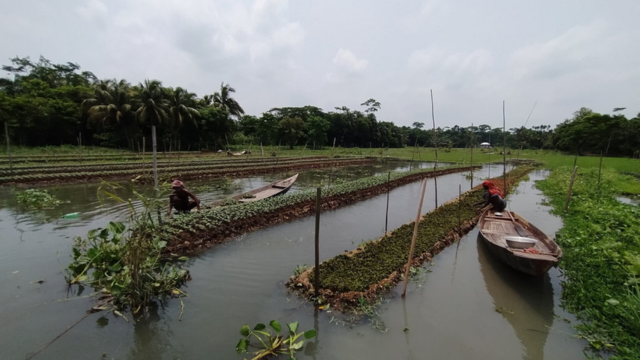
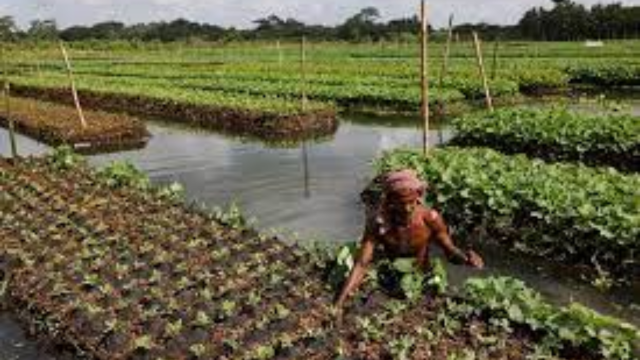
Historically, water-based farming is not entirely new—floating rice paddies have existed in Bangladesh and Cambodia for centuries. Yet modern innovations push this idea into an urban context, where megacities face rapid expansion and reduced farmland.
Projects such as the floating dairy farm in Rotterdam demonstrate that food production can be reimagined on water. Unlike traditional farms, these structures integrate renewable energy and closed-loop nutrient cycles, minimizing ecological impact while maximizing efficiency.
Rising sea levels and frequent flooding have already forced cities to rethink their infrastructure. Floating farms represent an adaptive strategy that turns a challenge into an opportunity by reclaiming water surfaces for food cultivation. They reduce dependence on global supply chains, cut emissions from transport, and make fresh produce available locally.
At their core, floating farms blend architecture, ecology, and technology into sustainable city infrastructure. Their design often includes lightweight modular platforms, renewable-powered irrigation systems, and integrated waste recycling units.
Studies show such systems can mitigate urban heat islands while enhancing aquatic biodiversity. Unlike conventional farming, floating agriculture strengthens the connection between food production and ecosystem health.
Examples worldwide highlight the adaptability of these systems. In Singapore, floating aquaponics units grow vegetables and fish side by side, while Kerala’s Kuttanad wetlands showcase traditional floating cultivation practices. Such projects align with global urban sustainability goals by reimagining food systems without expanding land use.
With the rise of IoT sensors, floating farms now optimize nutrient cycles and ensure precision-based farming practices.
As the world grapples with climate crises and resource depletion, floating farms are becoming symbols of resilience. They show how innovation can work with nature rather than against it. Supported by circular economy models, these farms provide food, filter water, and strengthen urban climate readiness. What began as experiments in a few cities could soon evolve into a mainstream solution for megacities worldwide.
Why Cities Need Water-Based Food Production Systems
The rapid growth of urban populations has created unprecedented pressure on food systems, with limited land forcing cities to rethink agriculture. Traditional farming expansion leads to deforestation and soil degradation, while supply chains often stretch across continents.
By utilizing urban water bodies, floating farms reduce land use stress while ensuring food remains accessible. This innovation aligns with sustainable development goals that prioritize resilient and resource-efficient food systems.
Relying on global food imports makes megacities vulnerable to supply chain disruptions, as witnessed during the COVID-19 pandemic. Transporting food over long distances also adds to carbon emissions, increasing the ecological footprint of daily diets. Floating farms in lakes and rivers help shorten this chain, producing crops and fish locally. This reduces dependency on external markets while promoting climate-resilient cities.
Urban poverty and food insecurity are rising, with millions struggling to afford nutritious meals in dense cities. By cultivating food close to consumers, floating farms reduce costs linked to logistics and wastage.
They enhance food sovereignty, giving communities greater control over what they grow and consume. Integrating floating agriculture with community-supported farming can empower residents to actively participate in food production.
Another challenge for cities is the loss of arable land due to urbanization, soil erosion, and industrial growth. By moving agriculture onto water, cities free up space for green infrastructure while keeping food production close to consumers. This prevents further biodiversity loss and reduces pressure on rural farmlands. Such strategies enable food security without expanding destructive monoculture farming.
Cities are also struggling with the rising demand for freshwater resources. Floating farms often use closed-loop hydroponics or aquaponics systems that recycle water efficiently. This can reduce usage by up to 90% compared to conventional farming, a critical factor in water-stressed regions. By combining food cultivation with ecosystem restoration, floating farms provide dual urban benefits.
Floating food systems also promote social resilience, by creating jobs in urban farming and connecting communities to local water resources. They support inclusive growth by offering training and livelihoods for women and youth. In addition, they integrate seamlessly into circular economy frameworks, where waste is repurposed and ecosystems thrive.
Thus, floating farms are not only food producers but also community builders and resilience anchors.
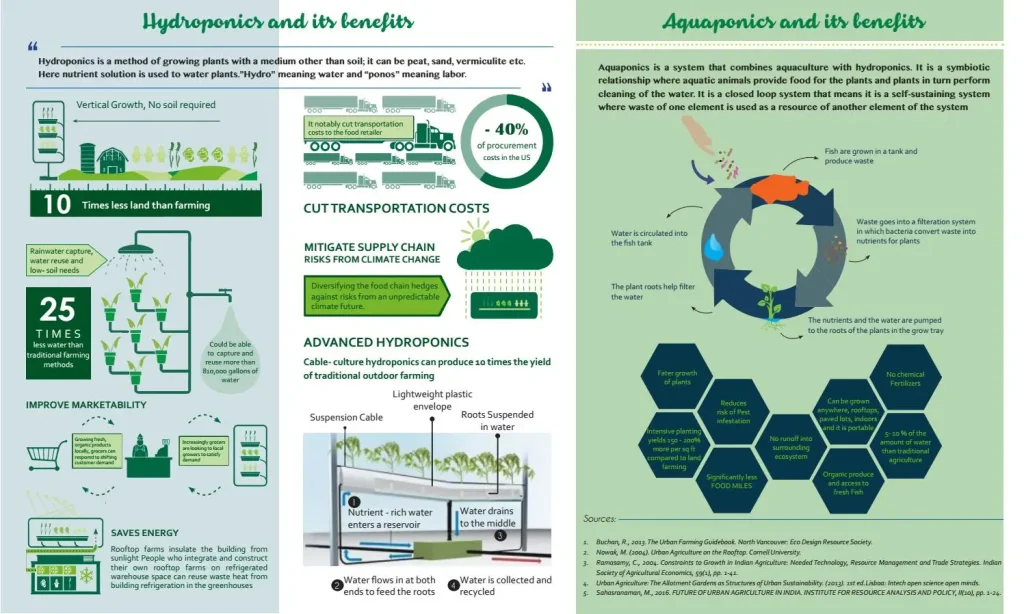
This infographic highlights the benefits of hydroponics and aquaponics, showcasing how these systems save water, reduce land use, and improve sustainability. It explains how nutrient recycling, reduced transport costs, and eco-friendly farming methods can transform urban agriculture into a climate-resilient solution
Designing Floating Farms for Urban Lakes and Rivers
Designing floating farms begins with understanding urban water ecosystems, where depth, currents, and pollution levels define feasibility. Engineers use buoyant platforms made of recycled plastic, bamboo, or modular rafts to support cultivation. These structures must withstand weather shifts while providing stability for crops. Integrating renewable energy systems ensures irrigation and monitoring operate sustainably.
Floating farms can adopt various architectural models, from enclosed greenhouses to open raft gardens. Transparent domes maximize photosynthesis while protecting crops from storms. Multi-layered rafts expand vertical growing space, combining hydroponics with aquaponics to produce vegetables and fish.
Designers also consider accessibility, ensuring walkways connect farms to urban shorelines. This allows citizens and farmers to directly engage with food systems.
Materials play a vital role in sustainability. Using biodegradable composites or recycled plastics minimizes environmental damage. Locally sourced bamboo or wood lowers construction costs and supports circular economy principles. Farm layouts also incorporate rainwater harvesting to reduce freshwater demand. In polluted lakes, integrated biofiltration systems help clean water while supporting crops.
Effective design also accounts for urban biodiversity, creating habitats that attract fish, birds, and pollinators. Floating wetlands can be combined with farming units to boost aquatic ecosystem health. Structural innovations like living shorelines enhance resilience against erosion while linking farms with natural systems.
Including green corridors ensures cities benefit from both food and ecological balance. In this way, floating farms double as ecosystem services.
Technology integration is equally important. IoT devices measure water pH, nutrient levels, and oxygen, ensuring healthy fish and plants. Automated irrigation systems reduce labor and optimize water use. Drones monitor crop growth, while AI platforms predict yields and detect diseases. Combining such tools with solar panels creates smart, self-sustaining farms. These digital layers make floating agriculture scalable and climate-ready.
Finally, floating farm designs must be socially inclusive. Projects in Bangladesh and India show that communities adopt solutions better when designs are low-cost and participatory. Training local farmers builds community ownership. Collaboration with municipal bodies ensures legal support and long-term viability. By integrating citizen voices, floating farms transform from experimental projects into widely accepted urban infrastructure.
Integrating Aquaponics and Hydroponics in Floating Platforms
Hydroponics allows plants to grow without soil by using nutrient-rich water, while aquaponics combines plant systems with fish farming. In aquaponics, fish release waste that is converted into nutrients by beneficial bacteria, feeding plants in return. These methods drastically reduce pesticide use while saving water. On floating farms, such systems thrive because natural water bodies provide stable environmental conditions.
Hydroponic systems can be installed in vertical racks or horizontal beds, enabling high yields in small spaces. Crops like lettuce, spinach, and herbs grow quickly in nutrient film techniques, while tomatoes and cucumbers adapt well to drip irrigation hydroponics. Floating designs make use of solar-powered pumps to circulate water efficiently. This closed-loop reduces evaporation, conserving resources compared to soil farming.
Aquaponics offers added resilience by producing both protein and vegetables in a single system. Fish such as tilapia, catfish, and carp integrate well into nutrient cycles. Waste from these species enriches water for leafy greens, while plants act as natural biofilters. Studies show aquaponics reduces water use by up to 90% compared to conventional agriculture. On floating farms, these cycles create balanced ecosystems.
The synergy of aquaponics and hydroponics enhances food security by producing diverse food in limited urban spaces. Floating units can integrate sensor-based monitoring to track nutrient levels and ensure crop health. Using organic fish feed further strengthens sustainability. Integrating these systems into urban waterfronts not only supports nutrition but also revitalizes underutilized water bodies.
Scaling such models requires innovative infrastructure. In Singapore, floating aquaponics produces both greens and seafood near the city. In Bangladesh, traditional floating gardens are merging with modern hydroponics to adapt to floods. Combining renewable energy with digital farming makes these systems climate-ready. This hybridization transforms water bodies into hubs of resilient food production.
Community participation strengthens these platforms further. Training residents in urban farming skills ensures ownership and reduces dependency on external food sources. NGOs and local governments can provide microfinance for aquaponics units, empowering marginalized groups. When linked to circular economy principles, waste is recycled into productive loops. Thus, aquaponics and hydroponics redefine how cities produce food in sustainable harmony.
Earth5R’s Vision for Sustainable Urban Floating Farms
Earth5R envisions floating farms as part of its broader Blue Cities initiative, where urban waterways become hubs of sustainability. These farms are not limited to food production but also support ecosystem restoration. By integrating citizen engagement with floating farming, Earth5R creates inclusive models where communities co-manage water bodies. This approach enhances climate resilience while ensuring local food accessibility.
The organization promotes farming systems that align with circular economy principles. Organic waste from cities can be transformed into nutrient solutions for hydroponics, reducing landfill pressure. Floating farms also filter pollutants, acting as bio-remediation systems. Through these synergies, Earth5R fosters a holistic connection between urban ecosystems and communities. Such models create sustainable, regenerative cityscapes.
In India, cities like Mumbai, Bengaluru, and Chennai face polluted lakes that could be repurposed through floating farms. Earth5R aims to pilot such projects by combining lake cleanups with food cultivation. These initiatives address multiple challenges: waste, pollution, and food insecurity. By engaging citizens in stewardship, floating farms become symbols of community-driven change.
Partnerships with CSR programs and corporations enhance the scalability of floating farms. Businesses can invest in food security projects while demonstrating ESG commitments. Earth5R acts as a bridge between private funding and community needs, ensuring impact is measurable and transparent. With proper impact assessment, floating farms evolve from small-scale pilots into transformative city infrastructure.
Education is central to Earth5R’s approach. By conducting citizen training programs, the organization equips urban residents with knowledge of hydroponics and aquaponics. These programs not only teach sustainable farming but also strengthen livelihood opportunities. Schools and universities are also engaged, embedding floating farms into climate education. This grassroots involvement ensures long-term continuity.
Ultimately, Earth5R views floating farms as platforms for social innovation and ecological balance. They become living labs where technology, community, and environment interact. With citizen science tools, data on water quality and productivity can be gathered in real-time. As cities prepare for climate change, Earth5R’s vision positions floating farms as critical for resilient, inclusive, and sustainable futures.
How Floating Farms Improve Water Quality and Ecosystem Health
Floating farms act as natural filters, absorbing pollutants from lakes and rivers while producing food. By integrating constructed wetlands, these platforms capture nutrients and heavy metals that degrade water bodies. The use of aquaponics systems further enhances nutrient cycling. Such setups reduce reliance on harmful chemical fertilizers, which often leach into waterways.
Urban lakes often suffer from eutrophication, where excess nutrients create algal blooms. Floating farms tackle this by using root filtration, where plant roots absorb nitrogen and phosphorus. These systems mimic nature-based solutions found in wetlands. By drawing pollutants directly from the water, floating farms restore oxygen balance. This helps sustain aquatic biodiversity, which is often threatened in urban contexts.
Research highlights that floating farms can aid carbon sequestration. Plants absorb CO2 emissions while their root zones capture sediments that would otherwise choke ecosystems. As they stabilize sediments, these platforms prevent erosion along lake shores and riverbanks. The process aligns with UN SDG 14, which emphasizes the protection of life below water. Thus, floating farms contribute to both climate and aquatic resilience.
Floating structures also provide habitat for fish populations, amphibians, and birds. As vegetation grows, they create micro-ecosystems that attract species seeking food and shelter. These habitats mimic floating wetlands that have been used globally for restoration projects. In turn, this boosts biodiversity indices, making urban waters healthier. The presence of fish and insects further enhances natural pest control, reducing chemical interventions.
Floating farms can even improve water circulation through hydraulic designs. Modular layouts allow for controlled water flow that prevents stagnation. This limits the spread of mosquito-borne diseases, a common urban health concern. By promoting oxygenation, floating farms combat anaerobic conditions. Such interventions simultaneously enhance public health and ecological balance, addressing multiple city challenges.
Beyond ecosystems, floating farms foster citizen participation. Volunteers involved in monitoring water quality gain awareness of urban ecology. With support from IoT sensors, citizens can track real-time data on nutrient levels and oxygen content. This participatory science approach builds environmental stewardship. Ultimately, floating farms transform polluted waters into living classrooms for sustainability.
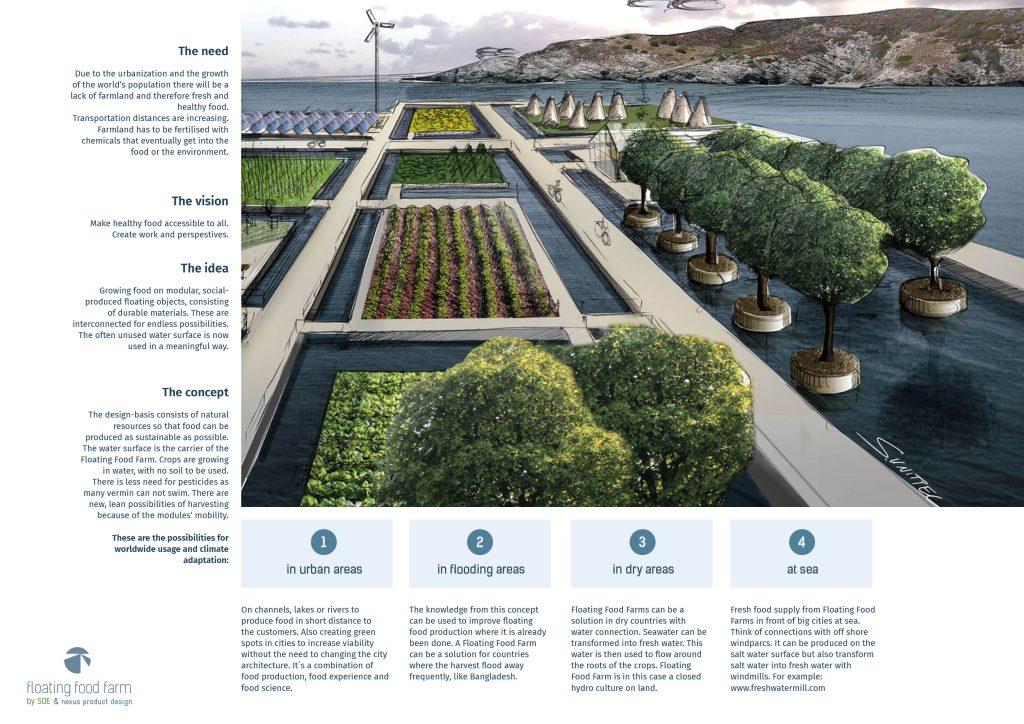
This infographic illustrates the concept of floating food farms, where crops grow on modular water-based platforms powered by natural resources and renewable energy. It highlights their potential in urban areas, flood zones, dry regions, and at sea, making food systems climate-adaptive, sustainable, and accessible for all.
Case Studies of Floating Agriculture in Global Cities
One of the most famous examples is the Floating Farm Rotterdam, a dairy farm built on water to address land scarcity. It produces milk while recycling rainwater and converting food waste into cattle feed. Its modular design aligns with circular economy principles. By integrating solar panels, the farm generates clean energy. This initiative demonstrates how floating structures can be both ecological and economically viable.
In Bangladesh, traditional floating gardens known as “dhap” have been practiced for centuries. Farmers cultivate vegetables on beds made from water hyacinth, a plant that otherwise clogs waterways. This technique supports food security in flood-prone regions. Recognized by UNESCO as intangible cultural heritage, these farms show how indigenous knowledge offers climate resilience.
In China, Qingdao’s floating solar-aquaculture farms combine fish cultivation with renewable energy production. Solar panels float above fish ponds, generating electricity while shading waters to reduce evaporation. This integrated design addresses both energy security and food needs. It also prevents harmful algal growth by controlling sunlight penetration. Such hybrid systems exemplify multifunctional use of aquatic space.
Singapore has invested in the Sembcorp Tengeh Floating Solar Farm and coupled it with urban aquaculture. By integrating hydroponics and controlled-environment farming, Singapore enhances food resilience. With limited land, these water-based innovations reduce dependence on imports. The model aligns with the Singapore Green Plan 2030, proving that floating systems are key to future-ready cities.
In India, experimental floating farms in Kerala are reviving traditional water-based agriculture. Communities cultivate vegetables on mats of aquatic vegetation, turning flood-prone zones into productive landscapes. These projects reduce disaster risks while supporting rural livelihoods. By combining aquaponics with tradition, Kerala demonstrates how modern and ancestral practices can merge.
In the U.S., New York City’s floating oyster reefs restore ecosystems while doubling as urban farms. The Billion Oyster Project places floating platforms where oysters filter pollutants and improve water clarity. These reefs provide habitat for marine biodiversity while protecting shorelines from storm surges. The project highlights how floating farms can blend food production, ecosystem health, and climate defense in megacities.
Earth5R’s Citizen Engagement Programs for Water-Based Farming
Earth5R emphasizes citizen participation as the foundation of sustainable projects. Its community-driven model enables residents to co-create floating farms in cities. By engaging citizens in sustainability training, Earth5R ensures knowledge transfer on aquaponics and hydroponics. Volunteers are also encouraged to monitor water quality, aligning with SDG 6. This inclusive framework builds long-term ownership and accountability.
Workshops led by Earth5R integrate local communities and schools to educate youth on water-based food production. These sessions introduce children to climate education and environmental stewardship. Hands-on experiences allow participants to design mini floating platforms. By fostering early awareness, Earth5R ensures younger generations grow with sustainability values.
Earth5R also connects corporate CSR initiatives with citizen projects. Employees volunteer to co-build floating farms as part of corporate sustainability programs. This collaboration bridges business responsibility and grassroots action. By linking green jobs with citizen-led farming, Earth5R generates local livelihoods. Such partnerships ensure floating agriculture scales beyond pilot projects into sustainable enterprises.
Digital citizen engagement is another key aspect of Earth5R’s approach. Through mobile applications and GIS-based platforms, communities track floating farm performance. Citizens record data on crop yield and water quality, creating real-time transparency. Gamified features encourage participation and learning about sustainable consumption. This digital engagement transforms citizens from passive consumers into active urban farmers.
Earth5R organizes citizen science programs where locals measure aquatic biodiversity. These activities track ecosystem health around floating farms. Residents test for dissolved oxygen and nutrient levels using simple kits. The collected data supports climate adaptation strategies and informs municipal planning. By engaging diverse groups, Earth5R bridges scientific research with community empowerment, fostering evidence-based sustainability.
Public events, like floating farm festivals, celebrate water-based farming and build local pride. Earth5R combines art, music, and farming workshops to draw citizens into sustainability dialogues. These interactive events highlight climate resilience while showcasing green innovations. Through cultural engagement, Earth5R makes ecological solutions accessible and inspiring for urban populations.
Policy and Infrastructure Support for Floating Farm Development
Building floating farms requires strong urban policy frameworks that integrate water-based agriculture into city planning. Governments must align with sustainable food strategies and climate action plans. Local municipalities can incorporate floating farms into blue-green infrastructure initiatives. Policies encouraging circular economy models ensure waste-to-resource systems thrive.
Infrastructure support is equally crucial for scaling floating farms. Investments in renewable energy enable platforms to run on solar and wind. Cities must also develop water management systems that integrate farming with urban drainage networks. This prevents nutrient overload and ensures balance in aquatic ecosystems.
Public infrastructure can be co-designed with nature-based solutions that support biodiversity while advancing sustainable farming practices.
Financial incentives can accelerate adoption of floating farms. Subsidies for urban agriculture encourage farmers and entrepreneurs to experiment with water-based systems. Governments can create green bonds and climate finance mechanisms to fund large-scale projects. Incentive structures should also include carbon credits for farms improving water quality.
Collaboration between research institutions, policymakers, and communities strengthens floating farm development. Universities provide scientific validation of aquaponics and hydroponics models. Policy think tanks generate urban adaptation strategies for integrating water-based farming into resilience planning. Citizen input ensures projects meet local food security needs.
Legislation on water rights and zoning laws determines where floating farms can operate. Clear rules prevent conflicts with fishing communities and urban shipping routes. Integrating floating farms into wetland conservation policies also safeguards ecosystem services. Legal frameworks must evolve to balance food production, biodiversity protection, and community livelihoods within urban waterscapes.
International cooperation can further boost floating farm adoption. Organizations like the World Bank and UN-Habitat can guide cities in scaling water-based agriculture. Cross-border projects share knowledge exchange platforms and sustainable innovation models. Such alliances build resilience against global food insecurity and climate-induced disruptions.
The Future of Food: Scaling Floating Farms for Climate-Ready Cities
The future of food in urban areas lies in climate-smart agriculture, where floating farms become central to resilient food systems. By merging aquaponics and hydroponics with water ecosystems, cities can secure fresh food supplies. As climate change disrupts traditional farmlands, floating farms act as adaptive alternatives. Their integration into urban food policies ensures equitable distribution of nutritious produce.
Scaling floating farms requires advanced smart farming technologies like IoT sensors for nutrient monitoring. AI-driven analytics can optimize plant growth while reducing energy waste. Linking these farms with blockchain food traceability strengthens consumer trust. Future floating platforms will rely on renewable energy grids to remain sustainable. Cities adopting these innovations create resilient farming ecosystems ready for climate shocks.
Urban planners envision floating farms as part of circular economy systems, where waste is recycled into resources. Nutrient-rich fish waste can be reused in hydroponic farming loops to minimize fertilizer use. Rainwater harvesting integrates naturally with floating designs, lowering dependence on municipal water. Combined with composting systems, these models create self-sufficient urban food hubs.
Community-driven models will define the success of floating farms. Citizen participation in co-managing farms fosters ownership and resilience. Educational initiatives led by local NGOs and schools build awareness about sustainable diets. Urban cooperatives can democratize access to water-based agriculture. Platforms like Earth5R showcase how citizen science accelerates ecological farming practices.
Global collaboration will also accelerate floating farm development. Knowledge exchange through international forums and city networks spreads innovation across borders. Sustainable Development Goal 2 emphasizes ending hunger with resilient food systems. Floating farms aligned with UNFCCC climate agendas can attract multilateral funding.
Through cross-border cooperation, cities strengthen food security while mitigating global ecological risks.
Ultimately, floating farms represent a new paradigm for urban resilience. They reimagine how cities interact with water, food, and ecosystems. As population growth accelerates, innovative farming strategies are non-negotiable. By merging technology, community, and policy, floating farms create climate-ready cities that thrive in uncertainty. This transformation redefines the future of sustainable urban living.
Conclusion
Floating farms are more than futuristic concepts; they are a necessity in building resilient food systems. By harnessing the potential of urban waterways, cities can adapt to climate change while ensuring year-round food security. This shift transforms water bodies from neglected spaces into thriving ecological and agricultural hubs.
The integration of aquaponics and hydroponics within floating platforms reduces land dependency. When combined with renewable energy and closed-loop resource systems, these farms become climate-ready models of sustainability. They demonstrate how technology and ecology can co-exist for urban resilience.
Community engagement is the driving force behind successful floating farms. Through citizen participation, local cooperatives, and educational outreach, floating farms turn passive city dwellers into active ecological stewards. This inclusivity ensures equitable access to food while strengthening social ties.
Looking ahead, floating farms will redefine the future of cities. By merging innovation, policy support, and public involvement, they provide a pathway toward sustainable development. They stand as living proof that food, water, and climate action can converge, shaping thriving ecosystems and healthier urban futures.
Frequently Asked Questions: Floating Farms: Merging Agriculture and Aquatic Ecosystems in Cityscapes
What are floating farms?
Floating farms are agricultural systems built on water bodies such as lakes, rivers, or coastal areas, using platforms to grow crops or raise fish without depending on traditional farmland.
Why are floating farms important for cities?
They provide fresh food locally, reduce dependency on imports, and help cities adapt to land scarcity and climate change while supporting sustainable ecosystems.
How do floating farms work?
They use techniques like hydroponics and aquaponics, where plants grow in nutrient-rich water and fish waste is recycled as fertilizer, creating a closed-loop system.
What crops can be grown on floating farms?
Leafy greens, herbs, tomatoes, cucumbers, strawberries, and even rice in certain models can thrive on floating platforms using modern farming techniques.
Do floating farms require soil?
Most floating farms do not use soil; instead, they rely on hydroponic systems where plants grow in water with added nutrients, or aquaponics linked with fish farming.
How do floating farms benefit the environment?
They improve water quality, reduce carbon footprints, conserve land, and support biodiversity by creating habitats for aquatic organisms.
Are floating farms expensive to build?
Initial costs can be high due to infrastructure and technology needs, but long-term savings come from efficient resource use, renewable energy integration, and reduced transportation.
Can floating farms survive extreme weather?
Yes, with proper design, floating farms can withstand storms and floods. Modern models use flexible platforms, renewable energy, and storm-resilient anchoring systems.
How do floating farms help fight climate change?
They reduce emissions from food transport, use renewable energy, recycle resources, and adapt food production to rising sea levels and unpredictable weather.
What role does aquaponics play in floating farms?
Aquaponics combines fish farming with hydroponics, where fish waste provides nutrients for plants, and plants purify water for fish, creating a self-sustaining cycle.
Do floating farms use a lot of energy?
Not necessarily. Many are powered by solar, wind, or biogas energy, making them highly efficient and sustainable in the long run.
Can floating farms be community-run?
Yes, citizen participation, cooperatives, and local organizations can manage floating farms, making food production inclusive and community-centered.
Where have floating farms been implemented successfully?
Examples exist in the Netherlands, Singapore, Bangladesh, and India, where urban waterways have been converted into productive agricultural spaces.
Do floating farms improve food security?
Yes, by producing food within cities, floating farms reduce dependence on imports, increase access to fresh produce, and create resilient supply chains.
Are floating farms suitable for developing countries?
Absolutely. In countries facing land shortages or flood risks, floating farms can be low-cost, scalable, and climate-resilient food production solutions.
How do floating farms affect water quality?
They filter pollutants, recycle nutrients, and prevent algal blooms, thereby improving water quality and supporting healthier aquatic ecosystems.
Can floating farms be integrated with urban planning?
Yes, they can be included in sustainable city masterplans, turning unused water surfaces into productive landscapes that merge food, water, and energy systems.
What challenges do floating farms face?
High setup costs, maintenance, policy gaps, and public awareness are key challenges, but innovation and partnerships are helping overcome them.
How can citizens participate in floating farm projects?
People can join workshops, volunteer for maintenance, support local cooperatives, or engage in citizen science programs to monitor and manage floating farms.
What is the future of floating farms in cities?
With scaling, technology integration, and policy support, floating farms are set to become central to climate-ready cities, providing sustainable food and healthier ecosystems.
Call to Action: Building the Future with Floating Farms
Floating farms represent a turning point in how cities can merge food, water, and sustainability. By participating in this movement, citizens can transform unused waterways into thriving sources of nourishment and resilience. Every effort counts toward creating greener and healthier cityscapes.
Earth5R is driving change by promoting water-based farming models that empower communities and restore ecosystems. Through citizen engagement and sustainable innovation, floating farms become more than food producers; they evolve into living classrooms for climate action. Your involvement can accelerate this transformation.
Policy makers, businesses, and residents all have a stake in shaping climate-ready cities. Supporting floating farms means investing in food security, renewable systems, and cleaner waterways. Together, we can build an urban future where ecological balance and human well-being go hand in hand.
The time to act is now. Join Earth5R’s initiatives, volunteer for community projects, or advocate for sustainable city planning that includes floating farms. By uniting innovation and collective action, we can redefine urban living and ensure lasting harmony between people and nature.
~Authored by Barsha Sharma