
Introduction: Why Food and Energy Systems Must Converge
Agriculture and energy are inseparable pillars of human survival, yet they are often treated as isolated systems. Farming depends heavily on energy inputs, from running irrigation pumps to operating tractors, while energy systems also rely on crops for biofuel production. However, both sectors face escalating climate challenges, resource depletion, and rising global demand.
The need to link these two domains into a unified agri-energy alliance has never been more urgent, especially to ensure future resilience.
The global food system consumes nearly 30% of the world’s energy resources, contributing significantly to greenhouse gas emissions. At the same time, agriculture is vulnerable to extreme weather fueled by fossil fuel dependence, causing instability in yields and prices. Integrating clean energy into food systems offers a pathway to break this cycle.
By redesigning production, distribution, and consumption, society can balance sustainability with human development.
The urgency of convergence is underscored by rapid population growth, expected to reach 10 billion by 2050, which will double the demand for food and electricity. Current models of industrial farming and centralized energy production are unsustainable. Rising soil degradation, water scarcity, and carbon emissions worsen the crisis.
Embracing an agri-energy alliance can help governments, farmers, and innovators create scalable, low-carbon systems.
Furthermore, the interdependence of food and power highlights social equity issues. In developing regions, farmers face energy poverty, which limits access to refrigeration, irrigation, and processing. This perpetuates food losses and entrenches rural poverty. A clean energy-food nexus enables local communities to tap into solar mini-grids and biogas systems, creating employment while reducing hunger.
Scientific research shows that renewable integration enhances both productivity and resilience in farming. Solar-powered drip irrigation increases crop yields, while wind energy can support grain drying and storage. Investments in microgrids ensure that farmers are less exposed to energy price volatility. By merging technologies, communities build a climate-smart food system while supporting the Paris Agreement.
Ultimately, linking clean power with sustainable food systems is not just an environmental choice—it is an economic and ethical imperative. A well-structured agri-energy alliance can lower production costs, reduce emissions, and improve global food security.
By aligning policies under the UN Sustainable Development Goals, nations can bridge the divide between agriculture and energy. This transformation secures a future where energy fuels food and food strengthens energy systems in a circular, regenerative economy.
The Energy Demands of Modern Agriculture
Modern agriculture is one of the most energy-intensive sectors, relying on fossil fuels for plowing, harvesting, and food transport. From synthetic fertilizers manufactured with natural gas to diesel-powered machinery, farms consume vast resources daily. Irrigation pumps alone account for nearly 20% of global electricity use in agriculture. Without clean transitions, this dependency deepens climate risks.
The demand stretches across supply chains, where food processing, refrigeration, and packaging require immense power. Cold storage consumes large shares of electricity, especially in tropical nations battling post-harvest losses. Studies by the International Renewable Energy Agency show how transitioning to renewables could lower operational costs. As energy prices rise, the burden on farmers intensifies.
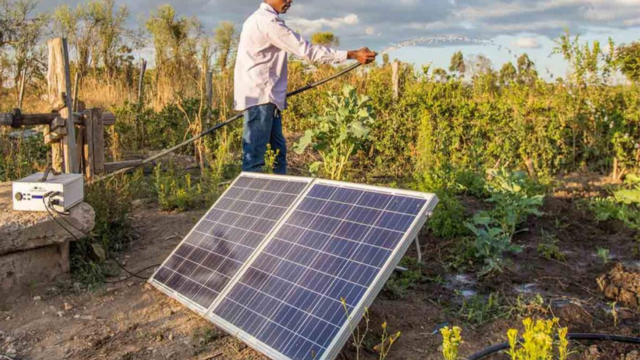
In regions like South Asia and sub-Saharan Africa, expanding irrigation networks has multiplied diesel use. Farmers often lack access to reliable grid electricity, leading to dependence on costly fuels. This dynamic worsens energy poverty and increases vulnerability to fuel market fluctuations. Renewable-powered irrigation, such as solar pumps, offers a viable alternative to reduce emissions and costs.
Beyond the farm gate, transportation represents another major drain on energy resources. Trucks moving perishable goods rely on petroleum, while aviation is essential for high-value crops. Food miles significantly add to the sector’s carbon footprint. Solutions like biofuels and electric freight provide opportunities to reduce reliance on fossil energy. Integrated energy planning is critical for sustainable logistics.
Another overlooked aspect is the energy embedded in fertilizer and pesticide production. The Haber-Bosch process consumes nearly 2% of global energy, locking farming into fossil-based cycles. Shifting toward green ammonia powered by renewable hydrogen offers an alternative pathway. Similarly, producing organic inputs reduces chemical energy footprints. This shift aligns with broader carbon neutrality goals.
Taken together, the vast energy needs of modern farming reveal why integration with clean power is essential. Agriculture cannot meet future food security demands without reducing reliance on non-renewable sources. Linking farms to solar, wind, and bioenergy will lower costs and build resilience. A clear agri-energy alliance ensures that food systems evolve sustainably while mitigating climate change.
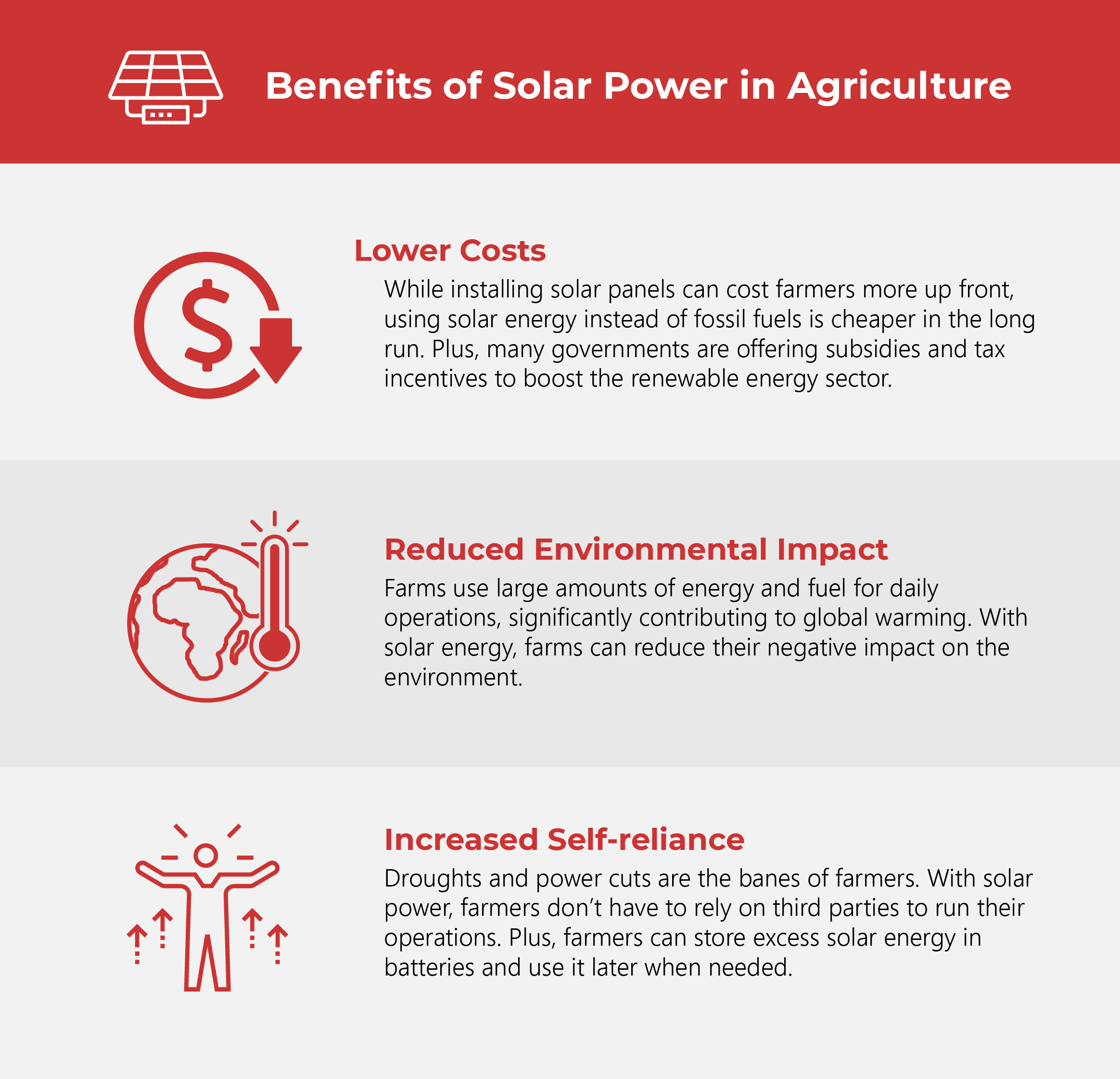
This infographic highlights the key benefits of solar power in agriculture, including lower costs, reduced environmental impact, and greater self-reliance for farmers. It emphasizes how renewable energy not only saves money but also promotes sustainability and resilience in farming operations.
Clean Power as a Catalyst for Sustainable Farming
The integration of renewable energy into agriculture is transforming the sector into a climate-smart system. Solar panels on farms reduce electricity costs while providing power for irrigation, cooling, and processing. Wind turbines can generate distributed energy, reducing dependence on fossil imports. Such adoption also supports sustainable intensification, ensuring food systems are both productive and resilient.
Clean energy fosters resource efficiency by enabling precision agriculture technologies powered by solar and wind systems. These innovations use real-time data for optimized planting, irrigation, and harvesting. Microgrid solutions allow farms to remain independent during grid outages. By adopting low-carbon practices, farmers cut emissions while increasing efficiency. This synergy strengthens both food and energy security.
Solar-powered cold storage reduces post-harvest losses, which account for nearly one-third of food waste globally. Off-grid solar refrigeration extends the shelf life of perishable crops, increasing farmers’ income. When combined with renewable-powered logistics, these solutions ensure fresher produce reaches markets. By reducing dependence on diesel generators, clean power secures both livelihoods and the environment.
Hydropower and biogas also present sustainable opportunities in agriculture. Small-scale hydro units power rural mills, while animal waste is converted into clean cooking fuel. Integrating biogas into farm energy cycles lowers methane emissions while producing organic fertilizer. This dual benefit improves soil health, reducing dependence on synthetic inputs. Such models show how clean energy adds circular value to farming systems.
Emerging innovations in green hydrogen could reshape fertilizer production and mechanized farming. Hydrogen-based ammonia offers carbon-free fertilizer, while fuel cell tractors may replace diesel engines. With support from policy frameworks and investment programs, these technologies will scale faster. Such clean power catalysts ensure that agriculture evolves beyond being an energy consumer into an energy producer.
Ultimately, embedding renewable solutions across agriculture ensures more than emission reductions—it fosters resilience, equity, and profitability. Farmers can generate additional income by selling surplus solar power back to grids, creating decentralized energy markets. This shift positions farming as a driver of the green transition. By linking clean power with sustainable practices, we can secure global food systems for future generations.
Solar Farms and Food Production: A Symbiotic Model
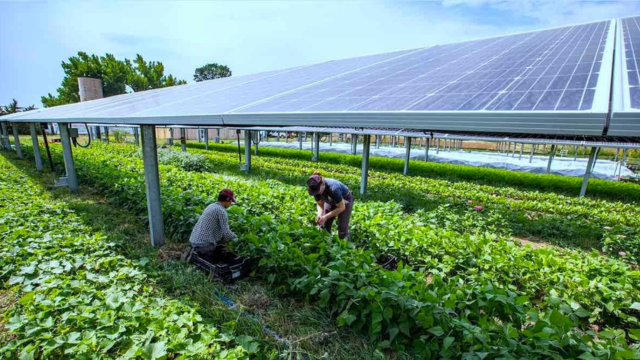
The concept of agrivoltaics combines solar energy production with crop cultivation, maximizing land efficiency. Instead of competing for land, farms integrate solar panels above fields where vegetables, grains, and fruits grow. Research from the National Renewable Energy Laboratory shows that crops under panels often require less irrigation due to reduced evaporation. This synergy boosts food yields while generating clean power.
Solar farms also diversify income streams for farmers struggling with price volatility. By leasing land to energy developers, farmers receive steady revenue while maintaining agricultural output. Programs such as India’s KUSUM scheme highlight how policy support accelerates adoption. These initiatives align with climate resilience goals while creating rural green jobs. Thus, solar farming becomes both an economic and ecological safety net.
The shading effect of solar panels benefits heat-sensitive crops like tomatoes, peppers, and leafy greens. By reducing heat stress, panels improve photosynthesis efficiency. Studies by the University of Arizona found that yields of some crops doubled under shared solar systems. This integration demonstrates how solar technology directly supports sustainable agriculture. It shifts the paradigm from energy-versus-food to energy-with-food.
Solar-powered greenhouses extend this model by creating controlled environments powered entirely by renewables. Integrated photovoltaic glass allows sunlight for crops while generating electricity simultaneously. Such designs reduce reliance on fossil fuels for heating and cooling, making farming more climate-friendly. When combined with water-efficient systems, these structures maximize resource use.
Community-based solar farms also strengthen energy access in rural regions where electricity shortages are common. Farmers can share benefits through cooperatives, lowering individual costs while boosting productivity. Microfinance enables smallholders to invest in solar irrigation and processing units. These cooperative models foster inclusive growth, ensuring small-scale farmers are not left behind in the clean energy transition.
Ultimately, solar-agriculture partnerships embody a vision of circular resilience. They improve carbon reduction outcomes, strengthen rural economies, and optimize land use. By aligning with the Sustainable Development Goals, agrivoltaics become a cornerstone of regenerative farming.
As energy and agriculture converge, solar farms emerge not as land competitors but as mutual allies. This approach offers scalable solutions for global climate and food challenges.
Wind, Bioenergy, and Water-Efficient Irrigation
Wind energy plays a vital role in powering agricultural systems, particularly in regions with consistent wind resources. Farmers can deploy small-scale turbines to operate pumps, grain dryers, and storage facilities. Larger farms may invest in community wind projects, generating electricity for both local use and grid supply. By reducing reliance on diesel generators, wind enhances both sustainability and resilience.
Bioenergy offers another opportunity to close energy loops within farming systems. Crop residues, animal waste, and food processing byproducts can be converted into biogas or bioethanol. This provides decentralized power for households and farm operations while lowering methane emissions. Studies show that integrating bio-digesters with agriculture improves waste management and boosts energy security for smallholders.
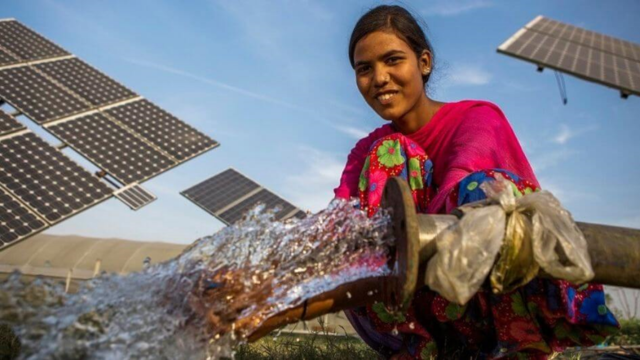
Efficient irrigation remains one of the most pressing agricultural energy challenges. Traditional flood irrigation wastes both water and power, while drip irrigation powered by solar or wind pumps drastically reduces consumption. By using smart sensors and data analytics, farmers can optimize water distribution. Such approaches are critical in regions suffering from water scarcity. Clean energy ensures these systems are scalable.
Wind-driven irrigation has historical precedence, as windmills once powered rural water systems before electrification. Today, modern turbines connected to microgrids revive this principle with far greater efficiency. Farmers in remote regions benefit most, as they avoid costly fuel imports and grid expansion. By merging traditional knowledge with renewable innovation, farming becomes more adaptive and climate-resilient.
Bioenergy also supports circular farming by producing organic fertilizer as a byproduct of biogas production. This reduces dependence on synthetic inputs while enriching soil health. Countries like Germany have scaled farm-based biogas to feed national grids, offering farmers steady income streams. With policy incentives and investment, similar models can flourish globally, advancing a low-carbon agricultural economy.
Together, wind, bioenergy, and efficient irrigation represent a triad of clean solutions for farming. By embracing integrated approaches, agriculture can cut costs, boost yields, and improve sustainability. These technologies reduce dependence on fossil fuels while enhancing resilience to climate shocks. The agri-energy alliance thus leverages diverse renewable sources to secure future food systems.
Agri-Energy for Rural Empowerment and Farmer Prosperity
Access to clean energy directly impacts rural livelihoods by lowering farming costs and improving productivity. Solar irrigation pumps reduce reliance on expensive diesel while ensuring reliable water access. In many regions, mini-grids power not only farms but also schools and clinics, creating social benefits. This inclusive access strengthens community resilience while expanding opportunities for rural families.
Energy-enabled agriculture generates new income streams for farmers. Selling surplus solar electricity to national grids diversifies household revenue. Farmers engaged in agrivoltaics benefit from both crop yields and power sales. Additionally, decentralized bioenergy systems provide fuel for local enterprises, reducing dependence on imported fossil fuels. Such diversification empowers farmers economically and reduces rural poverty.
Clean energy access improves food processing and storage capacity in remote regions. Solar-powered cold chains extend the shelf life of vegetables, milk, and fish. This reduces post-harvest losses, which are especially high in tropical climates. Localized energy also powers grain milling and packaging, enabling farmers to capture more value within supply chains. These advancements support rural prosperity while boosting national food security.
Employment opportunities expand when agriculture and energy converge. Renewable energy projects require installation, maintenance, and monitoring, creating local green jobs. Training farmers in solar technology and bioenergy operations builds rural technical capacity. This reduces migration pressures while fostering local expertise. Empowered rural workers thus become active participants in the green transition.
Access to reliable energy also enhances gender equality in rural regions. Women benefit when clean power reduces manual labor tied to fuelwood collection and food processing. Solar lighting and electric cookstoves free up time for education and entrepreneurship. Studies show that empowering women through sustainable energy strengthens overall community well-being and economic resilience. This inclusive approach ensures prosperity is widely shared.
Ultimately, agri-energy alliances serve as catalysts for rural transformation. Farmers move from being energy consumers to energy producers, contributing to national grids and rural industries. These shifts reduce inequality, improve food sovereignty, and generate pathways for long-term sustainability. By combining food and energy security, nations create a foundation for resilient rural economies and farmer prosperity.
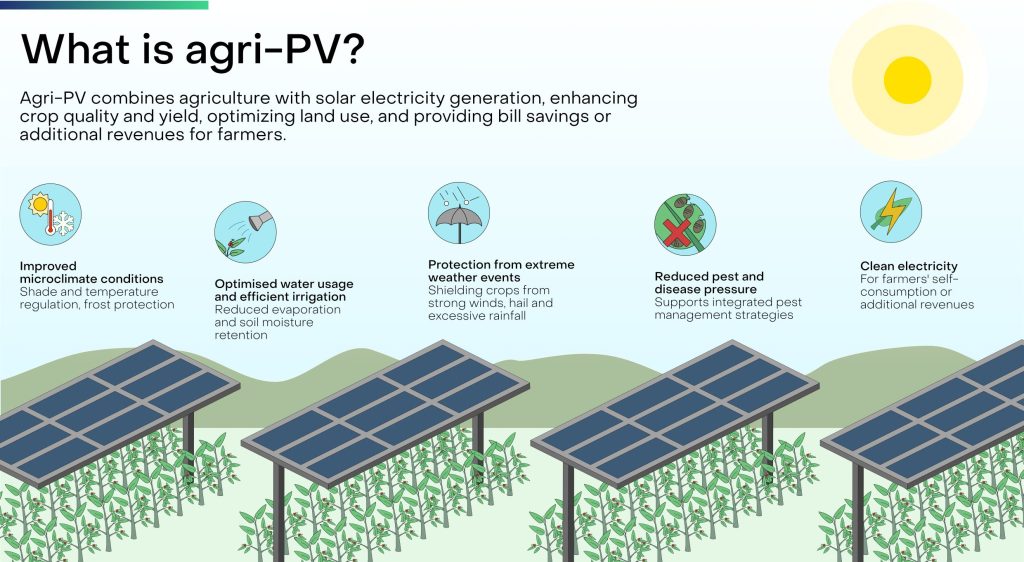
This infographic illustrates how Agri-PV integrates solar energy with farming to boost crop yield and sustainability. It showcases key benefits such as improved microclimate, efficient water use, protection from extreme weather, reduced pest pressure, and clean electricity for farmers.
Reducing Carbon Footprints Across the Food Chain
Agriculture contributes nearly one-third of global greenhouse gas emissions, making carbon reduction critical for sustainability. From fertilizer production to food transport, energy-intensive processes drive emissions upward. Clean power solutions such as solar-powered irrigation and wind energy reduce fossil reliance. Aligning agriculture with climate action goals ensures resilient and low-carbon food systems.
Decarbonizing fertilizer production is a key strategy in lowering agricultural emissions. The Haber-Bosch process consumes massive energy, but green ammonia powered by hydrogen offers alternatives. Shifting toward organic fertilizers and composting further lowers carbon footprints. Supporting farmers with policy incentives can accelerate adoption. This transition strengthens the role of agriculture in achieving net-zero targets.
Food processing and storage also carry heavy carbon impacts. Cold storage powered by diesel generators emits pollutants and raises costs. Replacing these with solar refrigeration and efficient biogas systems reduces emissions. Research from the World Bank highlights that clean energy-powered supply chains can cut carbon while preserving food. This dual approach ensures both sustainability and affordability.
Transporting food across long distances adds significant carbon emissions. Investing in electric freight and promoting local food systems can reduce dependency on fossil fuels. Biofuels offer interim solutions for aviation and heavy trucking. As supply chains adapt, the food-energy nexus will play a central role in lowering logistics-related emissions.
Packaging, often overlooked, significantly affects the food system’s carbon footprint. Shifting from single-use plastics to biodegradable alternatives reduces both waste and emissions. Clean energy in packaging plants further cuts industrial energy use. Circular approaches like compostable materials reinforce sustainability across the chain. These changes align agriculture with sustainable consumption goals.
By embedding renewable solutions throughout the food chain, agriculture can transition from a major emitter to a climate solution. Clean energy cuts emissions, strengthens resilience, and improves efficiency across production, processing, and transport. This integrated pathway positions the agri-energy alliance as central to achieving global climate targets. Reducing footprints ensures food systems thrive without compromising the environment.
Policy and Investment Pathways for an Agri-Energy Future
Strong policy frameworks are essential for linking agriculture with clean energy. National strategies such as renewable energy roadmaps set clear targets for adoption. Programs like India’s KUSUM scheme and Kenya’s solar irrigation initiatives show how targeted policies accelerate rural energy transitions. By aligning with SDGs and the Paris Agreement, governments ensure sustainable progress.
Investment remains a decisive factor in scaling agri-energy solutions. Green bonds and climate finance mechanisms provide funding for renewable infrastructure in rural areas. Private investors are increasingly attracted to agrivoltaics and bioenergy projects. Public-private partnerships, supported by development banks, mobilize capital at scale. These channels reduce risks while ensuring technology adoption.
International organizations play a critical role in driving cross-border cooperation. Initiatives by the FAO, IEA, and IRENA establish knowledge platforms and financing models. Regional alliances, such as Africa Renewable Energy Initiative, highlight collective action opportunities. These frameworks ensure smallholder farmers gain access to modern energy. Collaboration enhances knowledge-sharing while avoiding duplication of efforts.
Subsidies and incentives are powerful tools for encouraging adoption. Feed-in tariffs guarantee farmers revenue for surplus energy sales. Tax credits and grants support renewable installations like solar pumps and biogas plants. Targeted carbon pricing mechanisms drive industries to adopt low-emission technologies. These incentives create a level playing field for farmers entering the clean energy market.
Research and development funding is equally important in advancing innovative models. Support for green hydrogen fertilizer, solar-powered cold storage, and precision irrigation accelerates breakthroughs. Academic collaborations with farm cooperatives ensure localized solutions. By prioritizing R&D, nations build adaptive systems that evolve with technological shifts. This strengthens food-energy resilience.
Ultimately, policy and investment pathways must converge into a cohesive strategy. Governments, businesses, and communities must align around net-zero commitments. Strong institutions channel capital into scalable agri-energy systems while safeguarding equity. This coordinated approach ensures long-term sustainability, positioning the agri-energy alliance as a cornerstone of global climate action and food security.
Challenges: Land Use, Technology, and Equity Concerns
One of the biggest challenges in agri-energy integration is land use competition. Expanding solar or wind farms may reduce available land for food production, creating tensions in densely populated regions. Innovative solutions like agrivoltaics help balance these needs, but large-scale adoption requires careful land management policies. Without equitable frameworks, smallholder farmers risk displacement.
Technological barriers also limit adoption in many rural areas. Access to modern equipment, digital tools, and maintenance services remains low. Farmers often lack training to manage renewable energy systems, leading to poor utilization. High upfront costs for solar panels and biogas plants further discourage investment. Bridging these gaps requires capacity building and innovative financing models.
Equity concerns arise as wealthier farmers and corporations are often the first to benefit from agri-energy projects. Without inclusive policies, marginalized groups risk being excluded from clean energy access. Research highlights that gender and income disparities affect participation in sustainability initiatives. Ensuring energy justice requires subsidies, training, and cooperative ownership models that prioritize vulnerable communities.
Environmental risks must also be considered. Large-scale bioenergy projects may increase deforestation if not regulated properly. Similarly, excessive groundwater pumping for irrigation powered by renewables could worsen water stress. Policies promoting circular economy models ensure that agri-energy projects remain regenerative. Sustainable governance frameworks are necessary to avoid unintended ecological impacts.
Financing challenges persist, particularly for smallholder farmers in developing nations. Limited access to credit and high interest rates prevent investment in renewable technologies. While green bonds and climate funds exist, they often bypass rural communities. Localized microfinance programs and cooperative lending models can close this gap. Without financial inclusion, the benefits of agri-energy alliances remain unevenly distributed.
Finally, political and institutional barriers can slow progress. Weak governance structures and fragmented policy frameworks reduce coordination between energy and agricultural sectors. Conflicting priorities often delay large-scale renewable adoption. Strengthening multi-stakeholder collaboration ensures coherent strategies that address land, technology, and equity issues simultaneously. Overcoming these barriers is vital for building resilient agri-energy systems.
The Road Ahead: Building Resilient Agri-Energy Systems
The future of agri-energy lies in integrated systems that combine renewable technologies, sustainable farming, and inclusive policies. By linking solar power with precision agriculture, farmers can improve yields while reducing costs. Countries investing in clean energy infrastructure also enhance food security. Collaborative models ensure agriculture and energy work together, not in isolation.
Community-driven projects are central to resilience. Cooperatives that pool resources allow farmers to share renewable energy benefits fairly. Rural microgrids powered by solar panels or wind turbines can provide affordable electricity. When linked with sustainable irrigation, such systems increase food output. Local ownership models empower communities and reduce dependency on external corporations.
Policy frameworks must drive this transition. Governments can offer subsidies and tax incentives for renewable integration into farming. Regional alliances like the African Renewable Energy Initiative show the power of collaboration. Regulatory reforms can encourage innovation while protecting vulnerable farmers. Aligning policies with climate goals ensures long-term impact.
Financing solutions are equally critical. Expanding green finance and climate-smart agriculture funds can accelerate adoption. Blended finance models allow public and private investment to complement each other. Farmers also benefit from microfinance programs and community lending. Accessible funding ensures no group is excluded from the agri-energy alliance.
Technology innovation will shape the next frontier. Advances in AI-powered farming and energy storage will strengthen productivity. Coupling hydroponics and agrivoltaics with renewable power reduces resource strain. With ongoing research from global institutions, integrated solutions will expand rapidly. Innovation ensures resilience in the face of climate change.
Finally, the road ahead requires inclusive global cooperation. International agencies like FAO, UNDP, and IRENA must foster knowledge-sharing platforms. South-South partnerships can scale sustainable energy in food systems across regions. A just transition demands equity-centered frameworks. By uniting energy and agriculture, humanity can build resilient systems that nourish people and the planet.
Conclusion: Powering Food and Energy Together
The agri-energy alliance is no longer a vision but a necessity for sustainable development. As climate change worsens, integrating clean energy into farming ensures food security and reduces emissions. Solar agriculture, wind-powered irrigation, and biogas systems illustrate practical solutions. By adopting these models, nations can stabilize both ecosystems and economies.
Farmers stand at the center of this transition. Access to renewable power lowers production costs while increasing resilience. Agri-voltaic systems enable dual land use for crops and solar generation. Microgrids extend energy access to remote farming regions, ensuring no community is left behind. Partnerships with research institutions provide farmers the skills to thrive sustainably.
Investment and policy alignment are crucial. Expanding green bonds, carbon credits, and climate-smart financing will scale adoption. International frameworks and national strategies must prioritize energy-agriculture integration. By fostering inclusive policies, governments can empower rural farmers while meeting global climate targets.
Ultimately, the road to resilient food systems depends on synergy between energy and agriculture. Platforms like Sustainable Energy for All, FAO’s climate action, and UNDP’s sustainability programs highlight the way forward. Building global coalitions ensures clean energy feeds farming, and farming fuels prosperity. The agri-energy alliance is humanity’s pathway to resilience and nourishment for generations ahead.
Frequently Asked Questions: The Agri-Energy Alliance: Linking Clean Power with Sustainable Food Systems
What is the Agri-Energy Alliance?
It is a collaborative approach that links clean energy with sustainable agriculture to ensure food security and environmental resilience.
Why is renewable energy important for farming?
Renewables lower costs, reduce emissions, and provide reliable power for irrigation, storage, and processing.
How does solar energy benefit agriculture?
Solar panels can power irrigation systems, reduce electricity costs, and even support crop growth through agrivoltaics.
Can wind energy be used in farming?
Yes, wind turbines can provide electricity for farms, powering machinery, irrigation, and storage facilities.
What role does biogas play in food systems?
Biogas converts farm waste into clean fuel, reducing dependency on fossil fuels while managing waste sustainably.
How do microgrids help rural farmers?
Microgrids provide decentralized, affordable power, ensuring farmers in remote areas can access reliable electricity.
What is agrivoltaics?
It is the practice of combining solar energy generation with crop cultivation on the same land for dual benefits.
How does renewable energy improve food security?
By powering irrigation, storage, and processing, renewable energy reduces post-harvest losses and boosts yields.
Are agri-energy solutions cost-effective for small farmers?
With supportive financing and subsidies, renewable energy systems become affordable and profitable over time.
What policies support agri-energy systems?
Policies include subsidies, tax incentives, rural electrification schemes, and climate-smart agriculture programs.
What is the role of cooperatives in agri-energy?
Cooperatives allow farmers to pool resources and share the benefits of renewable energy projects collectively.
How does clean energy reduce climate risks for farming?
It lowers reliance on fossil fuels, cuts emissions, and builds resilience against extreme weather impacts.
What technologies are shaping the agri-energy alliance?
Key technologies include solar irrigation pumps, AI-powered farming, wind turbines, and biogas digesters.
Can agri-energy systems reduce food waste?
Yes, renewable-powered storage and cold chains significantly cut post-harvest losses in fruits and vegetables.
How does agri-energy impact rural employment?
It creates green jobs in energy installation, maintenance, and sustainable farming practices.
What financing options exist for farmers?
Farmers can access microfinance, green bonds, blended finance models, and community lending systems.
How does energy access empower women farmers?
Reliable power reduces manual labor, increases productivity, and opens new income opportunities for women.
Is agri-energy relevant for urban farming?
Yes, renewable-powered hydroponics and vertical farms in cities reduce dependence on external food sources.
What is the global relevance of the agri-energy alliance?
It supports climate goals, reduces hunger, and creates sustainable economies worldwide.
What is the future of agri-energy systems?
The future lies in inclusive, technology-driven, and policy-backed models that merge clean power with food systems.
Call to Action: Powering Food and Energy Together
The urgency to align clean energy with sustainable farming cannot be ignored. Climate change, rising food demand, and energy insecurity make the Agri-Energy Alliance more important than ever. By joining forces, we can transform agriculture into a resilient, low-carbon system. This is a collective mission for the future of humanity.
Policymakers have the responsibility to craft frameworks that enable farmers to adopt renewable solutions easily. Clear incentives, financing models, and rural energy programs can unlock opportunities for millions. When governments make sustainability a priority, farming communities thrive. Bold action today secures food and energy security for tomorrow.
Farmers stand at the heart of this transition, and empowering them is the key to success. Renewable-powered irrigation, biogas, and solar storage reduce costs while stabilizing harvests. This shift not only enhances productivity but also protects livelihoods from energy shocks. Adoption means resilience, prosperity, and sustainability for generations ahead.
Citizens, businesses, and civil society all play an essential role in strengthening the agri-energy movement. Supporting sustainable practices, investing in green innovations, and spreading awareness multiplies the impact. A clean, fair, and resilient food system is within reach. Together, we can power both people and the planet into a sustainable future.
~Authored by Barsha Sharma