
Introduction: Reviving Rural Soils with Green Manure
Rural India’s agricultural base has been steadily declining due to soil degradation, intensive chemical fertilizer use, and unsustainable farming practices. As farmers push for higher yields, soils lose organic matter, leading to reduced crop productivity and declining nutritional value. This ecological crisis threatens rural livelihoods that depend on fertile land for survival.
In this scenario, green manure emerges as a time-tested, sustainable method to restore soil vitality. By using cover crops like sunhemp or clover, farmers enrich soil with organic matter and natural nutrients, reducing reliance on synthetic inputs. Green manure not only improves soil fertility but also helps farmers adopt climate-smart agriculture.
Organizations like Earth5R are spearheading grassroots green manure projects that integrate circular economy principles with rural farming systems. Their initiatives focus on community participation, farmer-led innovation, and capacity building. By mobilizing villagers to adopt regenerative methods, Earth5R tackles the twin challenges of soil degradation and food insecurity.
The use of green manure also strengthens biodiversity in farmlands by promoting natural habitats for beneficial insects and microorganisms. This reduces dependence on pesticides while improving soil structure and water retention capacity. As a result, farmers cultivate more resilient soils that can withstand droughts and unpredictable climate change impacts.
By aligning with sustainable development goals, particularly SDG 2 (Zero Hunger) and SDG 13 (Climate Action), green manure projects strengthen the ecological base of rural economies. With support from CSR programs, these initiatives extend beyond individual farmers to benefit entire rural communities. Such holistic approaches empower people to restore soils while generating inclusive growth.
Ultimately, the revival of soils through green manure demonstrates how traditional knowledge can blend with modern sustainability practices to create enduring agricultural solutions. Earth5R’s localized interventions serve as scalable models that not only enrich soils but also ensure food security and resilience for future generations. With soil as the foundation, the pathway to sustainable rural development becomes clearer.
The Crisis Beneath Our Feet: Soil Health Challenges in Rural Agriculture
Soil degradation is one of the most urgent environmental problems facing rural farmers today, with nearly 30% of global land already degraded according to the FAO. Over-reliance on chemical fertilizers, poor irrigation management, and monocropping practices accelerate the loss of organic matter. These factors lead to declining crop yields and weakening soil structure, threatening rural food security.
The intensive use of pesticides and synthetic inputs contaminates soil ecosystems, killing vital microorganisms and reducing natural fertility. With climate change exacerbating droughts and floods, degraded soils lose their ability to absorb water and nutrients. This further pushes smallholder farmers into cycles of debt as they depend on external inputs. Left unchecked, soil damage risks undermining rural livelihoods for millions of families.
In India, nearly 147 million hectares are affected by soil erosion, caused by unsustainable plowing and deforestation. As protective vegetation cover disappears, fertile topsoil is washed away, reducing nutrient availability. Erosion also reduces groundwater recharge capacity, worsening rural water crises. The loss of this natural capital jeopardizes sustainable agriculture and threatens future harvests.
Over-farming has also led to widespread soil salinization, especially in irrigated regions where excess salts accumulate. Saline soils drastically reduce crop diversity and yield potential, forcing farmers to abandon fields. Rising soil acidity and declining microbial life further diminish soil resilience. Without urgent interventions, salinity will continue to expand across large tracts of rural farmland.
Another growing issue is the reduction of soil organic carbon, the backbone of soil fertility. Intensive tillage and crop residue burning destroy organic carbon stocks, releasing greenhouse gases into the atmosphere. The loss of carbon-rich soils not only accelerates climate change but also diminishes water retention, leaving fields vulnerable to drought. Soil carbon depletion undermines both ecological stability and rural economies.
Most critically, rural farmers often lack access to sustainable alternatives that could restore soil health without financial burden. Traditional methods like green manure and organic composting are undervalued compared to quick-acting chemical fertilizers. Without widespread policy support and grassroots awareness, soil degradation will deepen, reducing rural resilience to economic shocks.
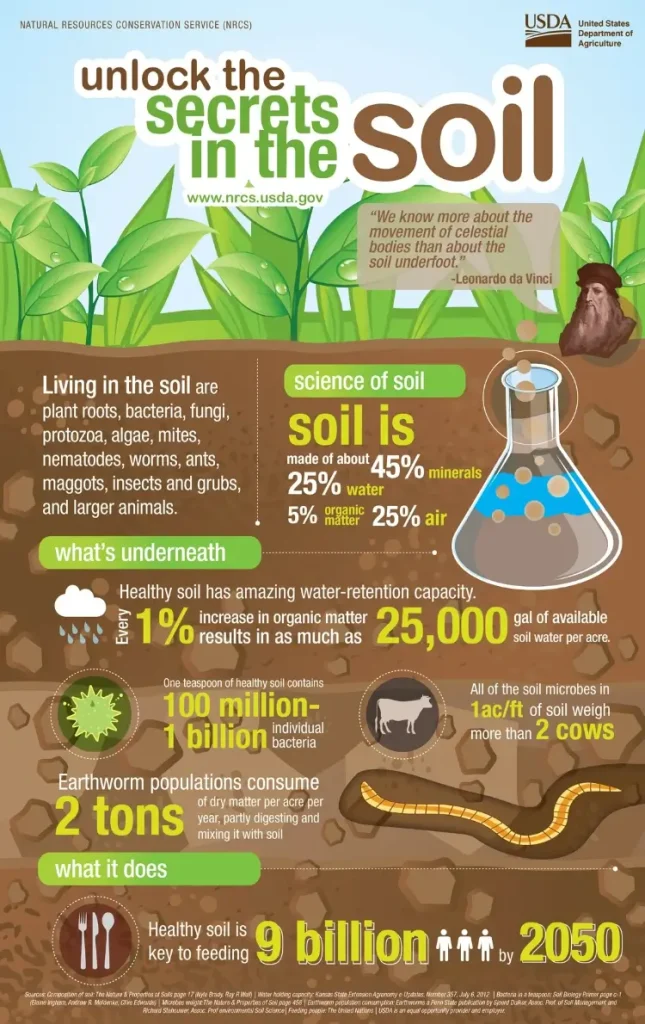
The infographic highlights the vital role of healthy soil in global food security, showing how it can sustain nearly 9 billion people by 2050. It emphasizes that soil health directly links to humanity’s survival, making conservation and enrichment critical for the future.
Green Manure as a Natural Solution: Science and Benefits
Green manure refers to specific cover crops that are cultivated and then incorporated into the soil to enrich its organic matter. Plants such as sunhemp and cowpea naturally fix nitrogen, reducing the need for synthetic fertilizers. These crops improve soil structure, prevent erosion, and enhance biodiversity in rural ecosystems. By boosting soil fertility, green manure strengthens farming resilience.
The process relies heavily on biological nitrogen fixation, where leguminous plants host beneficial bacteria that convert atmospheric nitrogen into plant-usable forms. This natural enrichment supports sustainable agriculture, lowering dependency on chemical fertilizers. Studies show that incorporating green manure increases soil organic carbon and enhances nutrient cycling. It ensures long-term productivity without harming the environment.
Green manure also acts as a natural barrier against pests and weeds by creating plant diversity in fields. By reducing the monoculture effect, it lowers the need for pesticides and chemical herbicides. Furthermore, crops like sesbania release compounds that suppress harmful organisms, supporting healthier soils. This ecological service improves ecosystem balance in farmlands.
In addition to nutrient enrichment, green manure enhances soil moisture retention and reduces vulnerability to drought. Organic matter from decomposed crops improves the soil’s water-holding capacity, protecting rural farms from climate change impacts. Enhanced water infiltration also reduces flooding risks, making farmlands more climate-resilient. Thus, green manure is a tool for both productivity and adaptation.
The use of green manure aligns with agroecology principles by prioritizing natural processes over external inputs. It fosters circular economy practices, where farm residues return to the soil as nutrients rather than waste. Farmers benefit from reduced costs while enhancing soil biodiversity. This integration ensures a balance between rural livelihoods and environmental conservation.
Globally, green manure is recognized as a key element in achieving sustainable development goals, particularly SDG 2 (Zero Hunger) and SDG 15 (Life on Land). By reducing greenhouse gas emissions from synthetic fertilizers, it supports climate action goals under international agreements. For rural communities, this translates into improved food security and a pathway toward long-term agricultural resilience.
Earth5R’s Community-Based Green Manure Initiatives
Earth5R has pioneered community-led sustainability projects that empower rural farmers to adopt regenerative practices like green manure. Their approach combines local participation with environmental education, ensuring that knowledge spreads across entire villages.
Through grassroots mobilization, farmers collectively manage resources, reducing soil degradation and strengthening rural resilience. This inclusive method transforms sustainability into a shared responsibility.
Central to Earth5R’s model is capacity building, where farmers receive hands-on training in green manure techniques. By demonstrating practices like cover cropping and mulching, Earth5R ensures easy adoption at the community level. Villagers learn to prepare organic compost and integrate residues back into the soil, enhancing soil fertility. Training also builds confidence in reducing dependency on costly synthetic fertilizers.
Women’s self-help groups play a vital role in these initiatives, with Earth5R ensuring gender-inclusive participation. By involving women in decision-making, the program supports social empowerment alongside environmental gains. These groups often lead composting units, manage seed banks, and oversee collective farms. This integration fosters inclusive growth and ensures knowledge is passed across generations within rural households.
Youth engagement is another pillar, with Earth5R involving students and rural youth networks in soil enrichment projects. Young volunteers document results, share knowledge on digital platforms, and promote climate-smart farming practices. By making agriculture more appealing to the younger generation, Earth5R helps reduce rural-to-urban migration and fosters sustainable rural economies. This intergenerational model ensures long-term continuity.
A key strength of Earth5R’s initiatives is linking local action with CSR partnerships. Corporations support farmer training, provide seeds for cover crops, and fund community composting systems. This collaborative framework creates measurable outcomes in soil restoration and carbon sequestration. The model not only benefits corporations through sustainability reporting but also strengthens local food systems.
Through these community-driven programs, Earth5R has established replicable models of sustainable rural development. By combining traditional knowledge with modern environmental practices, the initiatives create circular economies in villages. Soils enriched by green manure not only increase crop productivity but also restore ecological balance. Ultimately, Earth5R’s initiatives demonstrate how local communities can lead global action against climate change.
Techniques and Models: From Cover Crops to Crop Rotation
One of the most widely used techniques Earth5R promotes is cover cropping, where plants like clover, mustard, and sunhemp are grown to protect soil. These crops prevent erosion, fix nitrogen, and add organic matter when plowed back into fields. Studies show that cover crops improve soil structure, enhance nutrient cycling, and reduce reliance on chemical fertilizers. This makes them vital for regenerative farming.
Another important method is crop rotation, where farmers alternate between cereals, legumes, and vegetables to maintain soil balance. Rotating crops helps break pest cycles, improves soil biodiversity, and prevents nutrient depletion. For example, legumes add nitrogen for subsequent cereal crops, reducing the need for synthetic inputs. This technique promotes sustainable intensification without harming ecosystems.
Mulching is another practice Earth5R encourages, involving the application of crop residues or organic matter on soil surfaces. Mulching reduces evaporation, suppresses weeds, and maintains consistent soil temperatures. It also enhances water infiltration, protecting crops during droughts. Farmers using mulching often report reduced input costs and healthier soils.
Intercropping, where multiple crops are grown together, is also integral to Earth5R’s model. By planting legumes with cereals or vegetables, farmers promote complementary nutrient use and minimize pest infestations. This method enhances ecosystem services and reduces the spread of crop diseases. Intercropping improves yield stability, making it valuable in the context of climate change and uncertain weather patterns.
Earth5R also advocates for green manure incorporation, where leguminous crops are plowed back into soil before maturity. This boosts organic carbon, increases soil nitrogen, and fosters beneficial microbial activity. Farmers practicing this technique often witness long-term improvements in crop productivity. Green manure incorporation reduces dependence on external fertilizers while restoring ecological balance.
Finally, Earth5R integrates these techniques into a circular farming system, where each practice complements the other. Cover crops feed into mulching, crop residues return as organic matter, and rotations sustain soil fertility. This holistic model aligns with agroecology principles and strengthens rural livelihoods. The result is resilient farms that ensure food security while safeguarding ecosystems for future generations.
Case Studies: Rural Villages Transformed by Green Manure Projects
In Maharashtra, Earth5R introduced green manure practices through farmer training workshops. Villagers adopted cover crops such as dhaincha and sunhemp, which restored soil fertility and reduced dependence on synthetic fertilizers. Over three growing seasons, farmers reported improved crop yields and higher income stability. This initiative became a model for neighboring villages.
In Tamil Nadu, a community-led project focused on integrating mulching with green manure cultivation. Farmers applied organic compost and crop residues to enrich soils while also practicing crop rotation. The region saw a reduction in soil erosion and better water retention. Earth5R’s intervention enhanced community resilience against climate change impacts.
A pilot project in Uttar Pradesh demonstrated the potential of intercropping with legumes and cereals. Earth5R guided farmers to integrate nitrogen-fixing plants, which enriched soil naturally and reduced pest incidence. The initiative supported ecosystem services while lowering pesticide use. Over time, families experienced greater food security and diversified incomes through surplus crop sales.
In Madhya Pradesh, Earth5R partnered with CSR-funded programs to implement community-based composting and green manure incorporation. Farmers observed improved soil organic carbon and increased groundwater recharge. These improvements boosted long-term crop productivity and reduced farmer debts. The program highlighted the role of public-private collaboration in soil restoration.
In Karnataka, youth groups engaged by Earth5R played a central role in capacity building. They promoted digital awareness on green manure through mobile-based apps, enabling farmers to adopt eco-friendly practices quickly. This initiative reduced rural-to-urban migration by creating sustainable livelihoods. Farmers not only improved soil fertility but also gained confidence in pursuing sustainable agriculture.
Across these villages, the introduction of green manure has transformed degraded lands into thriving ecosystems. Earth5R’s approach of combining traditional knowledge with modern agroecology has delivered measurable results. Increased crop productivity, improved biodiversity, and resilient soils have made farming more sustainable. These success stories show the scalability of community-driven models.
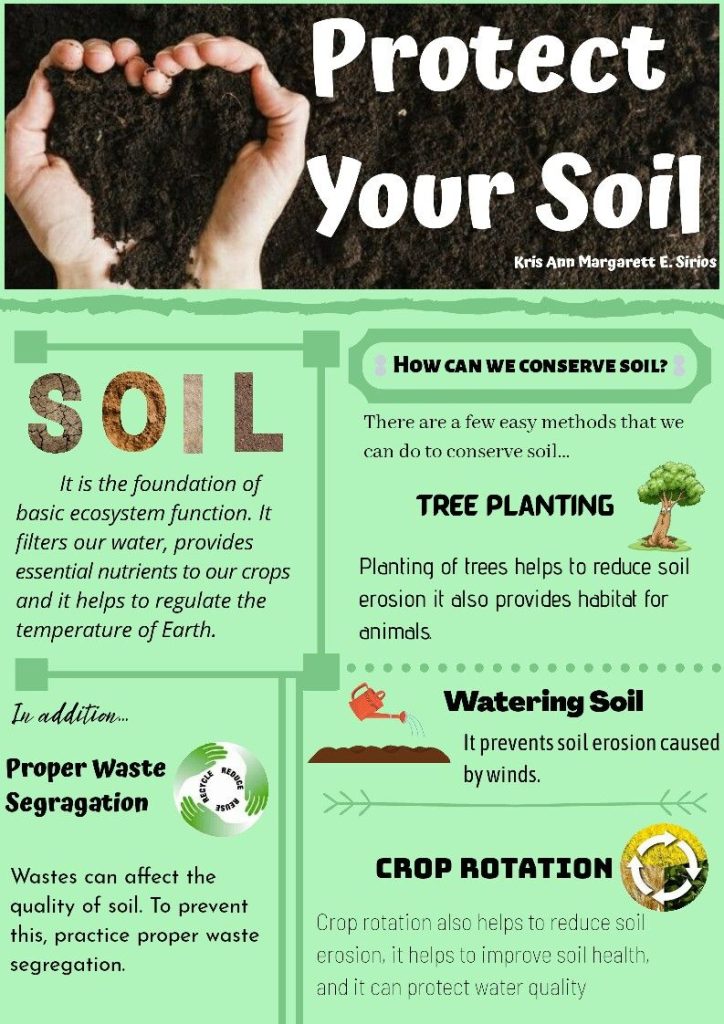
The infographic emphasizes simple yet powerful methods of soil conservation, such as tree planting, crop rotation, watering soil, and waste segregation. It highlights that soil is the foundation of life, providing nutrients, filtering water, and regulating Earth’s temperature, making its protection essential.
Economic and Social Benefits: Beyond Soil Fertility
Green manure reduces farmer reliance on costly synthetic fertilizers, cutting input costs significantly. By planting cover crops and recycling organic matter, farmers save money while maintaining soil fertility. This financial relief lowers agricultural debt burdens, enabling families to reinvest earnings in education and healthcare. Thus, green manure becomes an economic as well as ecological asset.
Adopting these practices also creates stronger rural economies by increasing farm productivity and generating surplus produce. Higher yields translate into better market access, supporting income diversification. Communities benefit from improved food security, reducing vulnerability to crop failures. With sustainable methods, farmers build resilience to climate change impacts while reducing long-term risks.
Socially, Earth5R’s projects encourage community cooperation, where farmers share knowledge and resources. Group-based composting, seed banks, and collective farming strengthen trust networks. This cooperative spirit fosters inclusive growth and social cohesion in villages. Green manure thus goes beyond soil health, strengthening the social fabric of rural life.
The inclusion of women through self-help groups ensures gender equity in agriculture. Women manage compost units, supervise organic farming practices, and participate in decision-making processes. Their leadership contributes to economic empowerment while ensuring household nutrition security. This inclusive participation aligns with sustainable development goals, especially SDG 5 on gender equality.
Youth engagement also drives wider socio-economic benefits. By involving rural youth in training, Earth5R creates opportunities for green jobs and skill development. Digital tools for farm monitoring encourage innovation and reduce urban migration. This helps retain talent in villages, ensuring long-term sustainability. Young people become champions of climate-smart agriculture.
Finally, the collective outcomes of green manure extend into public health and environmental protection. Reduced chemical use lowers risks of water contamination, safeguarding ecosystems and human health. Cleaner soils and water improve rural quality of life. In this way, green manure projects become drivers of holistic development, balancing economic growth with social and ecological well-being.
CSR Partnerships: Scaling Green Manure for Wider Impact
Corporate Social Responsibility (CSR) has become a powerful enabler for sustainable agriculture. Companies now channel investments into rural development, supporting farmers in adopting eco-friendly practices. Through green manure initiatives, CSR funds directly promote soil restoration, biodiversity enrichment, and climate resilience. These partnerships extend beyond philanthropy, aligning corporate responsibility with sustainable growth.
Earth5R collaborates with businesses to design community-driven projects that empower farmers. By combining corporate resources, technical expertise, and local knowledge, these projects scale faster and more effectively. CSR-backed training workshops help farmers learn organic cultivation techniques, seed management, and composting. This integration ensures continuity, allowing green manure programs to sustain beyond initial pilot stages.
CSR funds are also invested in capacity building initiatives that strengthen rural institutions. Support for farmer cooperatives, self-help groups, and women-led enterprises increases adoption of green manure practices. When businesses align CSR with inclusive growth, they help address poverty and inequality while restoring soil ecosystems. These investments multiply social and environmental benefits across villages.
Additionally, CSR programs enable access to technology and innovation. Tools such as mobile apps for soil monitoring, GIS mapping, and remote sensing make it easier to track green manure impact. Farmers can better plan crop rotations and measure improvements in soil organic carbon. This blend of tradition and technology creates scalable, data-driven rural solutions.
CSR-backed green manure projects also strengthen climate action goals by contributing to carbon sequestration. Businesses report these efforts as part of their ESG strategies, improving brand reputation and stakeholder trust. By investing in soil regeneration, companies actively participate in sustainable supply chains that benefit both producers and consumers. Such initiatives bridge the gap between corporate responsibility and grassroots impact.
Looking forward, Earth5R envisions expanding these partnerships through long-term CSR collaborations. By linking local communities, government schemes, and businesses, the model becomes self-sustaining. The future lies in scaling green manure adoption across rural landscapes, creating climate-smart villages. With CSR support, these projects can transform rural economies while healing ecosystems.
Measuring Impact: Tracking Soil Health and Carbon Sequestration
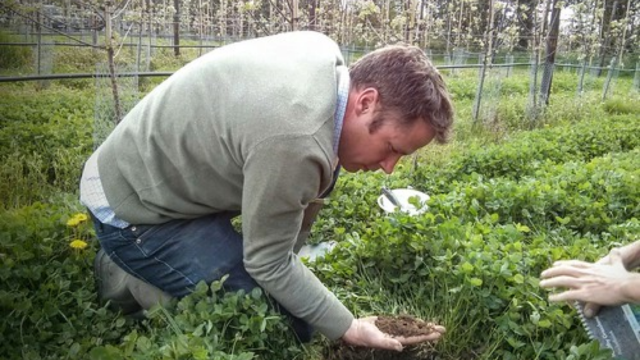
Tracking the impact of green manure begins with monitoring soil fertility indicators. These include soil organic matter, nitrogen levels, and microbial activity, all crucial for productivity. Earth5R trains farmers to use field-based soil tests alongside laboratory analysis. This ensures data-driven decision-making while improving agricultural sustainability. Reliable metrics make progress visible and actionable.
Earth5R also uses participatory monitoring methods where communities track soil improvements collectively. Farmers maintain field logs of crop yields, compost applications, and rainfall patterns. This local data is then cross-referenced with scientific soil assessments. Such collaboration integrates farmer experience with research insights, making measurement more holistic and empowering.
Another critical metric is soil organic carbon, which directly reflects carbon sequestration capacity. By enriching soil with green manure, farmers help capture atmospheric CO2, mitigating climate change. Earth5R employs carbon calculators and field measurements to estimate sequestration levels. These results are vital for aligning rural initiatives with global climate goals.
Technology enhances impact tracking through remote sensing and GIS mapping. Satellite imagery detects changes in vegetation cover, soil moisture, and erosion. Earth5R integrates these datasets with ground-level observations for precise monitoring. This technology-driven model ensures transparency in reporting environmental progress.
CSR-linked projects also demand strong impact assessment frameworks. Earth5R provides businesses with measurable indicators such as increased yields, reduced fertilizer use, and higher soil carbon. These results are shared in sustainability reports, demonstrating accountability. Such documentation builds trust with stakeholders while validating community benefits.
Ultimately, measuring impact helps shape long-term policy interventions. Data from Earth5R’s projects informs government schemes, supports climate finance access, and guides rural development strategies. By proving that green manure enhances soil health and sequesters carbon, Earth5R positions itself as a leader in nature-based solutions. This evidence-driven approach makes scaling both credible and impactful.
The Road Ahead: Building Soil-First Rural Economies
The future of rural sustainability lies in building soil-first economies that prioritize regeneration over extraction. Healthy soils are the foundation of food security, water conservation, and climate resilience. By placing soil health at the core of agricultural policy, communities can ensure long-term nutritional security and sustainable livelihoods. Earth5R envisions scaling such approaches across India’s rural landscapes.
Integrating green manure into national agricultural missions will accelerate adoption. Linking it with government schemes such as soil health cards and organic farming programs ensures systemic support. Partnerships with local cooperatives and panchayats strengthen grassroots delivery. With structured backing, green manure can become a mainstream tool for sustainable farming.
The future also requires embedding climate-smart agriculture into rural planning. By combining green manure with agroforestry, crop diversification, and water harvesting, Earth5R promotes holistic land management. These integrated systems reduce climate risks while improving rural incomes. Building such adaptive models is crucial for long-term resilience.
Private sector involvement will remain central through CSR partnerships. Businesses aligning with ESG frameworks can invest in soil restoration as part of sustainable sourcing strategies. Supporting Earth5R’s initiatives not only benefits communities but also strengthens supply chain sustainability. Such collaborations ensure soil-first economies receive consistent funding and visibility.
Education and awareness will be vital for scaling soil-first models. Training rural youth, women’s self-help groups, and farmers ensures knowledge transfer. Integrating soil literacy into school curricula can nurture future generations of soil stewards. Awareness campaigns will help shift communities away from chemical dependency toward regenerative practices.
Ultimately, Earth5R’s vision is to create regenerative economies where soil health drives prosperity. By connecting policy, business, and community, these economies balance ecology and livelihoods. A soil-first approach restores ecosystems, empowers farmers, and enhances climate action. This pathway ensures India’s rural regions evolve into resilient, carbon-smart landscapes ready for the future.
Conclusion: Cultivating Resilient Futures through Green Manure
Green manure stands at the intersection of sustainable agriculture, soil restoration, and community empowerment. By prioritizing soil health, rural farmers safeguard food security while reducing dependence on chemical inputs. Earth5R’s grassroots projects prove that simple, natural methods can regenerate degraded ecosystems.
The economic benefits extend beyond the farm, lowering costs and enabling inclusive growth. Farmers gain stronger market access, while communities enjoy greater stability and resilience. By reducing agricultural debt, green manure projects foster financial independence and rural prosperity.
Socially, these initiatives strengthen community cooperation. Women-led self-help groups and youth participation create inclusive models of leadership. Such collaboration ensures that soil-first approaches contribute to gender equality and long-term social cohesion.
Looking ahead, scaling soil-first economies requires CSR partnerships, supportive policy frameworks, and sustained awareness. By aligning with climate-smart agriculture, Earth5R envisions resilient rural landscapes. The future of sustainable farming lies in collective action, rooted in the strength of healthy soils.
Frequently Asked Questions: Rural Green Manure Projects- Earth5R’s Techniques for Sustainable Soil Enrichment
What is green manure and why is it important for rural agriculture?
Green manure is a practice where specific crops are grown and then plowed back into the soil to improve fertility. It naturally enriches the land with nutrients, reduces chemical dependence, and restores soil health for long-term sustainability.
How does Earth5R promote green manure in rural areas?
Earth5R trains farmers through community workshops, provides seeds for cover crops, and builds awareness of sustainable practices. Their model focuses on collaboration with local groups to make green manure adoption easy and impactful.
Which crops are commonly used as green manure?
Crops like sun hemp, cowpea, dhaincha, and clover are widely used because they fix nitrogen, improve organic matter, and decompose quickly. They are especially suited for Indian rural climates and soil types.
What are the main benefits of green manure for soil health?
Green manure increases organic carbon, improves soil structure, enhances water retention, and prevents erosion. It also boosts microbial activity, which keeps the soil alive and fertile.
Can green manure reduce the use of chemical fertilizers?
Yes, green manure significantly reduces dependence on costly chemical inputs. It provides natural nutrients to crops, lowering expenses for farmers while keeping soil healthier in the long run.
How does green manure support food security?
By improving soil fertility and increasing yields, green manure ensures stable food production. This helps rural families access sufficient food and reduces vulnerability to crop failures.
What role does Earth5R play in farmer training?
Earth5R organizes hands-on training sessions, field demonstrations, and knowledge-sharing platforms. They empower farmers with practical skills in composting, crop rotation, and soil testing to ensure green manure adoption.
How do green manure projects contribute to climate change mitigation?
Green manure captures carbon in the soil through organic matter and reduces greenhouse gas emissions by limiting synthetic fertilizer use. This helps in building climate-resilient rural landscapes.
Is green manure suitable for all types of soil?
Yes, though the benefits vary depending on soil texture and fertility. With the right crop selection, green manure can improve sandy, clay, and loamy soils by enhancing their natural balance.
What economic advantages do farmers gain from green manure?
Farmers save money on fertilizers, achieve higher yields, and improve crop quality. These gains increase income stability, reduce debts, and support reinvestment in family needs.
How are women involved in Earth5R’s green manure projects?
Women play a vital role through self-help groups, managing compost units, and leading awareness campaigns. Their involvement ensures gender-inclusive development and strengthens household nutrition security.
Does green manure improve water conservation in farming?
Yes, by increasing soil organic matter, green manure enhances water retention. It reduces irrigation needs and prevents runoff, which is critical in water-stressed rural areas.
Can green manure be combined with other sustainable farming techniques?
Absolutely. It integrates well with practices like agroforestry, mulching, crop diversification, and organic composting, creating a comprehensive approach to sustainable agriculture.
What role does CSR play in scaling green manure projects?
Corporate Social Responsibility initiatives provide funding, training resources, and technology support. With CSR backing, Earth5R can expand green manure adoption to more rural communities.
How is the impact of green manure projects measured?
Impact is measured by testing soil fertility, tracking crop yields, and monitoring carbon sequestration. Earth5R also uses digital tools and participatory monitoring to record long-term improvements.
Does green manure affect biodiversity in rural ecosystems?
Yes, positively. By reducing chemical use, green manure promotes soil microbes, pollinators, and beneficial insects, which enhance ecological balance and crop resilience.
Are rural youth engaged in green manure initiatives?
Yes, Earth5R actively involves rural youth by offering training in sustainable farming, technology use, and leadership roles. This creates green jobs and reduces urban migration.
What challenges exist in adopting green manure?
Challenges include lack of awareness, initial labor requirements, and hesitation to shift from traditional fertilizer use. Earth5R addresses these through education and demonstration projects.
How does green manure support sustainable rural economies?
It reduces costs, improves yields, and creates cooperative farming opportunities. With soil as the foundation, rural communities can build long-term sustainable livelihoods.
What is Earth5R’s long-term vision for green manure in India?
Earth5R envisions creating soil-first rural economies where regenerative practices like green manure are mainstream. Their goal is to restore ecosystems while empowering communities for climate-smart growth.
Call to Action: Join the Soil-First Movement
Healthy soils are the foundation of thriving rural communities and sustainable farming. By embracing green manure practices, we can regenerate land, secure food supplies, and empower farmers. Every effort invested in soil health is an investment in the future.
Earth5R has shown that community-driven green manure projects can transform agriculture from the ground up. Farmers, women, and youth are already leading the way in building resilient rural landscapes. Now is the time to amplify these efforts and scale their impact.
You too can be part of this movement by supporting soil-first initiatives in your community. Whether through participation, advocacy, or collaboration, your involvement strengthens the collective mission of sustainability. Together, we can restore balance to our ecosystems.
The path to resilient rural economies begins with enriched soils and empowered communities. Let us commit to building a future where prosperity grows hand in hand with ecological responsibility. Join Earth5R in cultivating a greener, healthier tomorrow for all.
~Authored by Barsha Sharma