
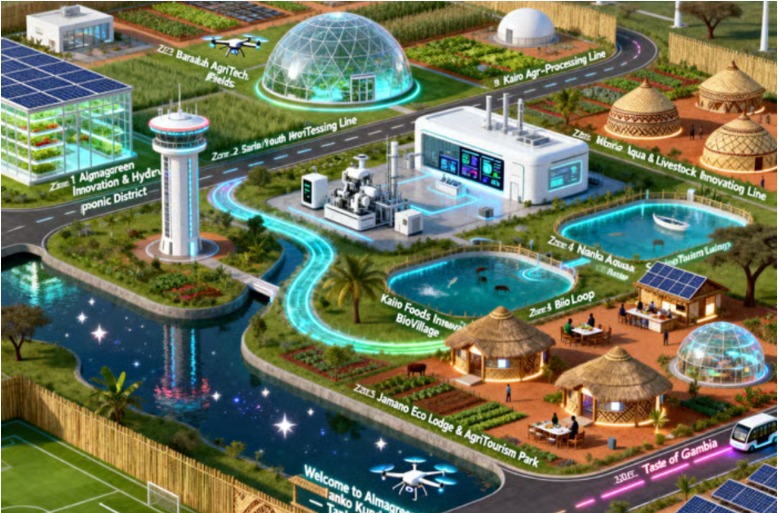
The Adaptation Imperative: Navigating the Unavoidable Changes to Our Climate
The science, as laid out in the starkest terms by the Intergovernmental Panel on Climate Change (IPCC), is unequivocal. Even if global greenhouse gas emissions were to cease today, the world is already locked into a significant degree of climate change. The record-breaking heatwaves, erratic monsoons, and rising sea levels of the past few years are not fleeting anomalies, they are the baseline of our new reality.
For decades, the global conversation has rightly focused on mitigation, the crucial effort to reduce emissions and prevent the worst-case scenarios. Mitigation is our attempt to slow the storm. However, we must now equally prioritize adaptation, which involves learning how to survive and thrive within the storm that has already arrived. Adaptation is the pragmatic and necessary adjustment of our societies and ecosystems to the climate impacts we can no longer avoid.
Climate adaptation technology is not a single concept, but a vast and growing arsenal of tools and strategies. It ranges from gene-editing techniques that create drought-resistant crops to sophisticated AI models that predict flash floods with pinpoint accuracy. It encompasses everything from coastal barrier designs that mimic mangrove forests to simple, community-led rainwater harvesting systems that recharge local aquifers.
The year 2030 looms large as a critical milestone on this journey. It marks the deadline for the United Nations’ Sustainable Development Goals (SDGs), a comprehensive blueprint for global peace and prosperity, where nearly every goal is threatened by climate impacts. Furthermore, the 2030 horizon is a key checkpoint for nations to deliver on their commitments under the Paris Agreement, making this decade the decisive window for action.
This article provides a research-driven exploration into the most promising climate adaptation technologies poised for significant impact by 2030. We will examine the scientific evidence behind innovations in water management, agriculture, and urban infrastructure. Our focus is to identify the tangible, scalable solutions that can move from the laboratory to the landscape, building a more resilient and equitable world for the challenges ahead.
Securing Our Most Precious Resource: Water Technology for a Thirstier World
Climate change is relentlessly rewriting the world’s water story. The challenge is a profound paradox, a tale of extremes where devastating floods and crippling droughts are becoming two sides of the same climate coin. Altered precipitation patterns, such as the increasingly erratic Indian monsoon, and the accelerated melting of Himalayan glaciers threaten the stability of water supplies for billions. In this new era, ensuring water security requires a radical shift from traditional management to technologically enhanced resilience.
The first frontier of innovation lies in creating freshwater from unconventional sources. Imagine pulling clean drinking water directly from thin air. This is the promise of Atmospheric Water Generation (AWG), a technology rapidly evolving beyond niche applications. Advanced systems now use novel sorbent materials, like metal-organic frameworks (MOFs), which act like super-sponges, efficiently capturing water molecules even in arid environments with low humidity. These systems, often solar-powered, are becoming a decentralized lifeline for water-scarce communities.
Simultaneously, we are transforming the 70% of our planet covered in saltwater into a viable resource. While traditional desalination has been criticized for its high energy use and environmentally harmful brine discharge, next-generation solutions are changing the equation. Technologies like solar-thermal desalination use concentrated sunlight to evaporate and distill water, significantly cutting fossil fuel dependence. These innovations are making the ocean a more sustainable source of freshwater for coastal cities facing depleted rivers and aquifers.

Beyond producing new water, technology is making our use of existing resources drastically more intelligent. Artificial Intelligence is emerging as the digital nervous system for our water infrastructure. By analyzing vast datasets from satellites, ground sensors, and weather models, machine learning algorithms can now provide highly accurate, localized forecasts for floods and droughts. This predictive power, as demonstrated by platforms like Google’s Flood Hub, moves us from reactive disaster response to proactive preparation, saving lives and livelihoods.
This intelligence extends directly to the fields that feed us. Smart irrigation systems are a prime example of high-impact adaptation. Instead of flooding fields on a fixed schedule, these systems use a network of IoT sensors to measure real-time soil moisture and crop needs. An AI-driven controller then delivers precisely the right amount of water at the right time. Research from agricultural bodies consistently shows this approach can reduce water consumption by up to 60% while simultaneously increasing crop yields.
Ultimately, technology’s greatest impact is realized when it empowers local communities. The work of organizations like Earth5R exemplifies this synergy. Through initiatives like the ACT (Action-oriented Community Transformation) Project in cities like Nagpur, residents are trained in rainwater harvesting and watershed management. By combining scientific principles with community participation, these projects help recharge local groundwater, reduce urban flooding, and build a culture of water stewardship from the ground up, proving that some of the most effective adaptations are a blend of high-tech knowledge and local action.
The Future of Food: Cultivating Resilience in a Hostile Climate
The global food system is standing on a precarious edge. With the world’s population projected to exceed 8.5 billion by 2030, the demand for food is surging, yet the very foundations of agriculture are being eroded by climate change. Farmers across the world, from the wheat belts of North America to the rice paddies here in India, are grappling with unprecedented heat stress, soil degradation, and unpredictable weather that threaten global food security.
To meet this challenge, scientists are innovating at the most fundamental level, rewriting the very DNA of our food supply. Using revolutionary gene-editing tools like CRISPR-Cas9, researchers can now make precise changes to a plant’s genetic code. This technology acts like a pair of molecular scissors, allowing for the rapid development of crops with built-in resilience, such as varieties of rice that can thrive in salty, coastal soils or maize that can withstand prolonged periods of drought.
Alongside genetic advancements, a revolution is happening beneath our feet. Scientists are harnessing the power of the soil microbiome, creating advanced bio-stimulants and microbial treatments. These are essentially probiotics for the soil, consisting of beneficial bacteria and fungi that form a symbiotic relationship with plant roots. According to research from institutions like the Consultative Group on International Agricultural Research (CGIAR), these treatments help crops absorb nutrients more efficiently, improve soil structure to retain water, and enhance natural pest resistance, reducing the need for chemical inputs.
While some solutions focus on adapting the plant, others adapt the entire environment where they grow. Controlled Environment Agriculture (CEA), and specifically vertical farming, offers a climate-agnostic solution to food production. By growing crops in stacked layers indoors, these “agricultural skyscrapers” can be located in the heart of urban centers, insulated from floods, droughts, and pests. This method provides a year-round growing season and, according to U.S. Department of Agriculture data, can use up to 95% less water and 99% less land than traditional field agriculture.
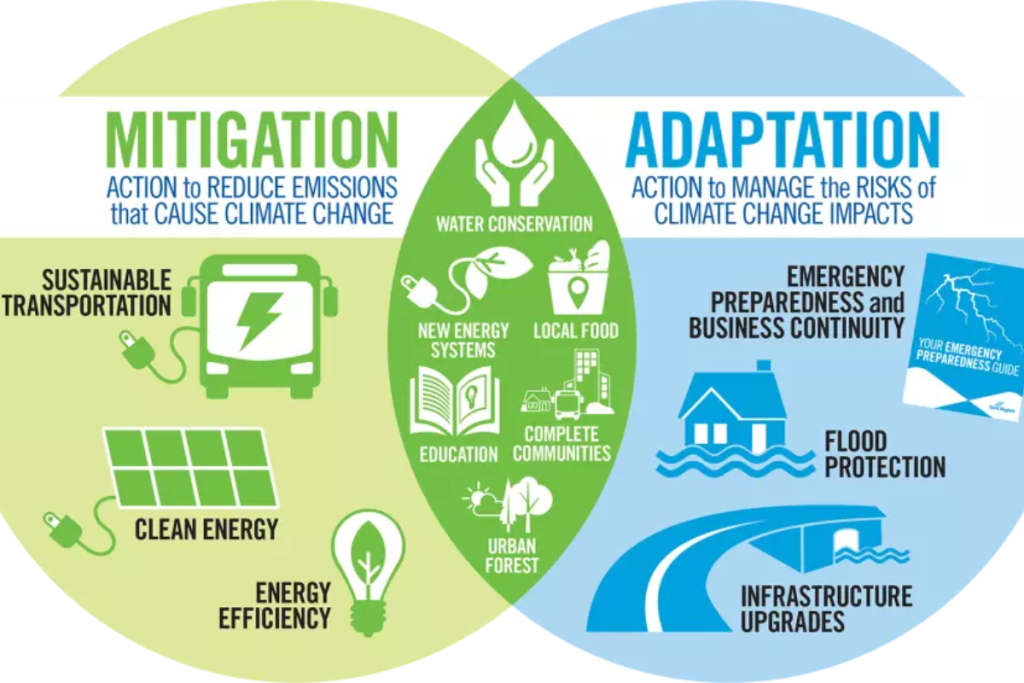
This infographic helps clarify the two key strategies for addressing climate change: reducing the cause (mitigation) and managing the effects (adaptation).
These high-tech concepts find powerful echoes in community-led initiatives. Organizations like Earth5R are pioneering urban sustainability by training residents in organic terrace gardening and composting. This grassroots movement creates decentralized food systems, reduces household waste, and enriches local soil with compost. It demonstrates that building food resilience is not just about advanced laboratories, it is also about empowering communities to cultivate their own sustainable futures, one rooftop at a time.
Reinventing the Metropolis: Building the Climate-Proof Cities of Tomorrow
Our cities, the vibrant engines of the global economy, are fast becoming urban hotspots of extreme climate vulnerability. The very materials that build them, concrete and asphalt, create a phenomenon known as the Urban Heat Island effect, causing metropolitan areas to be significantly warmer than their rural surroundings. This turns cities into heat traps, intensifying heatwaves, straining energy grids with demand for air conditioning, and posing serious health risks to residents.
When the skies open, these same hard, impermeable surfaces prevent rainwater from being absorbed into the ground. Instead, the water is channeled into overburdened drainage systems, turning streets into rivers and leading to devastating flash floods. As climate change promises more intense heat and more concentrated rainfall, our cities are on the front lines, facing systemic risks that threaten the core of our urban infrastructure.
In response, innovators are redesigning the very skin of our cities. A simple yet powerful solution lies in passive cooling technologies like high-albedo or “cool” roofs. By using materials that are white or specially formulated to reflect more sunlight, these surfaces absorb less heat. The science is straightforward, much like choosing a white shirt over a black one on a sunny day. Research from bodies like the Berkeley Lab’s Heat Island Group shows these surfaces can stay up to 30°C cooler than traditional rooftops, reducing indoor temperatures and cutting air conditioning costs by over 20%.
To tackle the deluge, urban planners are turning to nature-based solutions. Permeable pavements and green infrastructure are designed to act like a giant sponge rather than a concrete shield. These surfaces allow stormwater to filter through into the ground below, which reduces the burden on drainage systems, recharges vital groundwater aquifers, and naturally filters pollutants. Cities that integrate these technologies, as outlined by the U.S. Environmental Protection Agency (EPA), see significant reductions in flood risk and improved water security.
Beyond physical changes, the future of urban resilience is digital. Next-generation Early Warning Systems (EWS) are moving from regional forecasts to hyper-local predictions. By integrating vast networks of IoT sensors with AI-driven weather models, cities can now issue warnings for a flash flood or a heatwave on a block-by-block basis, giving residents and emergency services critical time to prepare.
Perhaps the most groundbreaking innovation is the development of “Digital Twins.” This involves creating a highly detailed, dynamic virtual replica of a city’s entire infrastructure. This digital model can be used as a flight simulator for city planners, allowing them to test the resilience of bridges, power grids, and water systems against simulated climate events like a powerful cyclone or a prolonged drought. Trailblazing projects like “Virtual Singapore” are already using this technology to identify vulnerabilities and design smarter, more climate-proof infrastructure for the future.
The Digital Foundation: How Data and AI Power Climate Resilience
Underpinning every successful climate adaptation, from a smart irrigation grid to a flood-resilient city, is a powerful and unseen foundation, data. The effectiveness of our response to climate change hinges entirely on our ability to accurately monitor, predict, and understand its complex impacts. Technology’s greatest role is perhaps not in the physical solution itself, but in providing the intelligence that guides it.
Our primary source of this intelligence comes from above. Earth Observation satellites are our eyes in the sky, providing a continuous, planetary-scale health check. Modern missions like NASA’s SWOT (Surface Water and Ocean Topography) satellite or the European Space Agency’s Copernicus Sentinel fleet are not just cameras, they are sophisticated scientific instruments. They provide unprecedentedly precise data on everything from sea-level rise down to the millimeter, to changes in groundwater storage deep beneath our feet.
This constant stream of information is the raw material for climate action. Think of these satellites as a global MRI machine, scanning the Earth for symptoms of climate stress. They show us where coastlines are most vulnerable, where aquifers are being depleted, and where ice sheets are becoming unstable, forming the bedrock of all reliable climate models and forecasts.
However, data alone is not enough. The sheer volume of information transmitted by these systems is far too vast for humans to analyze effectively. This is where Artificial Intelligence and Machine Learning become indispensable. AI acts as the ‘brain’ that processes this torrent of data, identifying subtle patterns and making predictions with remarkable accuracy. This field, known as Climate Informatics, is the engine behind the technologies we’ve discussed.
When an AI model predicts a flash flood, it is processing satellite imagery, river gauge data, and atmospheric readings. When a smart irrigation system decides when to water a crop, its algorithm is analyzing soil moisture data and weather forecasts. AI is the crucial link that transforms raw data into actionable, life-saving decisions. Without it, we would be drowning in information but starved of wisdom. This digital partnership, between the watchful eyes of satellites and the predictive power of AI, is the essential enabler making proactive and targeted climate adaptation a reality for 2030.
The Road to 2030: From Innovation to Widespread Implementation
The technological innovations poised to define this decade offer a compelling glimpse of a climate-resilient future. Yet, the path from a promising prototype in a lab to widespread protection on the ground is fraught with significant, real-world barriers. The race to 2030 is not just about invention, it is fundamentally about successful and equitable implementation.
A formidable hurdle is the staggering financial gap. Advanced adaptation technologies, from desalination plants to the AI systems that manage smart grids, carry high upfront costs. The latest UNEP Adaptation Gap Report highlights that the adaptation finance needs of developing nations, which are often the most vulnerable to climate impacts, are 10-18 times greater than current international public finance flows. Without a dramatic increase in accessible funding, the best technologies will remain out of reach for those who need them most.
Beyond the balance sheets lies a critical question of equity. Technology is not inherently neutral, its benefits are shaped by who can access and control it. A state-of-the-art flood warning system has limited value for residents in informal settlements who may not have smartphones or a reliable way to receive alerts. We must actively work to ensure that solutions are co-designed with communities, are affordable, and are culturally appropriate to avoid creating a two-tier world of ‘climate haves’ and ‘climate have-nots’.
Innovation also requires a fertile policy ground in which to grow. A city can have access to the best cool roof materials, but without updated building codes that mandate or incentivize their use, traditional heat-absorbing surfaces will continue to dominate construction. Governments play a crucial role in creating supportive regulatory environments, de-risking private investment in adaptation tech, and fostering international cooperation through platforms like the UNFCCC Technology Mechanism to speed up technology transfer.
Finally, we must navigate the subtle but profound risk of maladaptation. This occurs when a solution, intended to reduce vulnerability, inadvertently introduces new problems. For instance, building a massive sea wall to protect a coastal city may seem like a robust adaptation. However, according to studies on coastal engineering, it can destroy vital mangrove ecosystems, disrupt local fishing livelihoods, and simply shift the flood risk to an adjacent, unprotected community. Successfully navigating the road to 2030 requires a holistic approach that measures success not just by the technology deployed, but by the long-term, equitable resilience it builds.
Conclusion: From Innovation to Action on the Path to 2030
As we have seen, the decade leading to 2030 is armed with an extraordinary array of technological solutions to the climate crisis. From harvesting water directly from the air and redesigning crop DNA for resilience, to building digital twins of our cities to stress-test them against future storms, human ingenuity is rising to meet the adaptation challenge. These are not concepts of a distant future, they are tangible, evidence-based tools available today.
However, the greatest lesson from this exploration is that technology, in isolation, is not a silver bullet. A smart irrigation system is only as effective as the policy that makes it affordable for smallholder farmers. A sophisticated early warning system only succeeds if it is paired with community-level education and accessible evacuation plans. True resilience is not built in a lab, it is forged through an integrated approach that weaves technology into the fabric of society.
The path to a resilient 2030, therefore, requires a multi-faceted strategy. It demands a fusion of groundbreaking technology with robust policy reform, sustainable financing models that unlock private and public capital, and deep community engagement, as exemplified by the grassroots work of organizations like Earth5R. This ensures that solutions are not just imposed but are co-created, leading to more equitable and lasting outcomes.
The clock is ticking towards 2030, a deadline that carries the weight of our collective climate promises. The challenge is immense, but the opportunity is equally profound. By investing in and scaling these adaptation technologies now, we can move beyond simply reacting to disasters. We have the chance to proactively build a world that is not just safer and more resilient, but also more equitable and sustainable for all. The time for innovation is here, the time for decisive action is now.
Frequently Asked Questions
What is the fundamental difference between climate mitigation and climate adaptation?
Climate mitigation refers to the efforts aimed at reducing or preventing the emission of greenhouse gases, essentially tackling the root cause of climate change. Climate adaptation, on the other hand, involves adjusting our systems and behaviors to cope with the climate impacts that are already happening or are unavoidable, focusing on reducing our vulnerability to harm.
Why is the year 2030 highlighted as such a critical milestone for climate action?
The year 2030 is a crucial deadline for several interconnected global goals. It marks the target for the UN’s Sustainable Development Goals (SDGs), which are heavily impacted by climate change, and it serves as a key checkpoint for nations to meet their emission reduction and adaptation commitments under the Paris Agreement.
How can technology realistically extract drinking water from the air, especially in dry regions?
This is achieved through a technology called Atmospheric Water Generation (AWG). Modern systems use advanced sorbent materials, such as metal-organic frameworks (MOFs), which act like high-tech sponges to capture water molecules from the atmosphere, even at low humidity levels. These systems are often powered by solar energy, making them a viable, decentralized water source for arid communities.
What makes “next-generation” desalination different from older methods?
While traditional desalination is effective, it is often energy-intensive and produces a harmful, salty brine discharge. Next-generation technologies, such as solar-thermal and microbial desalination, are being developed to significantly reduce the reliance on fossil fuels and find more sustainable ways to manage the brine, making saltwater a more environmentally friendly resource.
What specific role does Artificial Intelligence (AI) play in managing water resources?
AI acts as a predictive brain for water systems. It analyzes massive datasets from satellites, weather stations, and ground sensors to accurately forecast floods and droughts with localized precision. In agriculture, it powers smart irrigation systems, ensuring water is used only when and where it is needed, which drastically reduces waste.
The article mentions CRISPR-Cas9. What is its role in creating climate-resilient agriculture?
CRISPR-Cas9 is a powerful gene-editing tool that allows scientists to make precise and rapid changes to a plant’s DNA. This is used to develop new crop varieties with desirable traits for a changing climate, such as high tolerance to drought, heat, or salty soil, achieving in years what traditional breeding could take decades to accomplish.
What are the main advantages of Controlled Environment Agriculture (CEA) and vertical farming?
Controlled Environment Agriculture offers a climate-proof method of food production. By growing crops indoors in vertically stacked layers, it is shielded from extreme weather events. This method uses significantly less water and land compared to traditional farming and allows for year-round food production directly within urban centers, shortening supply chains.
What is the “Urban Heat Island” effect and how do technologies like cool roofs combat it?
The Urban Heat Island effect is a phenomenon where metropolitan areas are significantly warmer than surrounding rural areas due to heat-absorbing materials like concrete and asphalt. Cool roofs use high-albedo (reflective) materials that reflect more sunlight and absorb less heat, which can lower surface temperatures by as much as 30°C and reduce the need for air conditioning.
How does a “Digital Twin” help make a city more resilient?
A Digital Twin is a dynamic, virtual replica of a city’s physical infrastructure. City planners can use this model as a simulator to test how their infrastructure, such as power grids or bridges, would hold up against various climate stresses like a major hurricane or flood. This allows them to identify and fix vulnerabilities before a real disaster strikes.
What is the importance of Earth Observation satellites for climate adaptation?
Earth Observation satellites, like those in the Copernicus program, act as our planet’s health monitors. They provide the critical, large-scale data on sea-level rise, groundwater depletion, and ice melt that forms the foundation of all accurate climate models. This data is essential for understanding risks and planning effective adaptation strategies.
The article mentions “maladaptation.” What does this term mean and can you provide an example?
Maladaptation occurs when a solution intended to reduce climate vulnerability backfires and inadvertently creates new problems. A classic example is building a large sea wall that, while protecting one area, destroys crucial coastal ecosystems like mangroves and can even worsen flooding in adjacent, unprotected communities.
What is the single biggest barrier to implementing these advanced technologies?
The most significant barrier is the finance gap. Many of these technologies have high upfront costs, and the financial support flowing to developing nations for adaptation is a fraction of what is actually needed. Without significantly increased investment, access to these life-saving technologies will remain limited.
How does the issue of equity relate to climate adaptation technology?
Equity is crucial because the benefits of technology are not automatically distributed fairly. An adaptation strategy is only truly successful if it is accessible to and benefits the most vulnerable populations. It involves ensuring solutions are affordable, easy to use, and co-designed with the communities they are meant to protect.
Can simple, community-led projects truly make a difference alongside high-tech solutions?
Absolutely. The article highlights community-led projects in rainwater harvesting and urban farming to show that effective adaptation is a blend of approaches. These grassroots efforts build local resilience, foster a culture of sustainability, and ensure that solutions are grounded in the real-world needs of the community.
What are bio-stimulants and how do they help crops adapt?
Bio-stimulants are treatments containing beneficial microbes, like bacteria and fungi, that improve soil health. They act like probiotics for the soil, helping plants absorb nutrients and water more efficiently and enhancing their natural defenses against pests and stress, thus making them more resilient in a changing climate.
What is the function of permeable pavements in a city?
Unlike traditional asphalt, permeable pavements are designed to allow rainwater to pass through their surface and seep into the ground below. This acts like a natural sponge, which reduces stormwater runoff, prevents flash flooding, and helps to recharge underground aquifers.
Is technology the ultimate solution to the climate adaptation problem?
No, the article concludes that technology alone is not a silver bullet. While it provides powerful tools, its success depends on an integrated approach. True resilience is achieved only when technological innovation is combined with supportive government policies, sustainable financing, and active community engagement.
How does smart irrigation know when to water the crops?
Smart irrigation systems use a network of IoT (Internet of Things) sensors placed in the soil to constantly monitor moisture levels. This real-time data, combined with weather forecasts, is fed into an AI controller that determines the precise amount of water a crop needs and delivers it exactly when and where it is most effective.
What is Climate Informatics?
Climate Informatics is a specialized field that combines climate science with data science, including AI and machine learning. It is the discipline focused on developing the complex algorithms and models needed to analyze the massive datasets generated by satellites and sensors, turning that raw data into the predictive insights used for forecasting and planning.
What is the main call to action from the article?
The primary call to action is to move urgently from innovation to implementation. It stresses the need for a concerted effort from governments, investors, and communities to overcome financial and policy barriers in order to scale up these proven technologies, ensuring we can build a safer and more equitable world by the 2030 deadline.
Forge Our Resilient Future: A Call to Action for 2030
The evidence is clear, and the innovations are within our grasp. We possess the scientific knowledge and the technological tools to build a world resilient to the climate impacts that lie ahead. The blueprints for a safer future, outlined in this article, are not science fiction; they are a practical roadmap. The only remaining variable is our collective will to act.
The window of opportunity to meaningfully prepare for 2030 is closing. This is not a challenge for a distant generation; it is the defining task of ours. Therefore, we call upon every stakeholder to move from passive observation to active participation:
- For Policymakers and Civic Leaders: You are the architects of change. The time is now to embed climate resilience into every decision. Update building codes to mandate cool roofs and permeable surfaces. Create policies that de-risk and fast-track private investment in adaptation technologies. Streamline access to climate finance and champion international cooperation to ensure no community is left behind.
- For Investors and Industry Innovators: You are the engines of the transition. Direct capital towards the technologies that protect lives and livelihoods. Invest in the startups scaling gene-edited crops, next-generation water solutions, and AI-powered warning systems. Forge public-private partnerships to deploy these innovations at a scale that matches the urgency of the crisis.
- For Communities and Individuals: You are the foundation of resilience. Demand ambitious climate action from your leaders. Participate in local initiatives, from urban gardening projects to water conservation drives. Champion and adopt sustainable practices in your daily lives. Your collective voice and actions create the unstoppable momentum needed for systemic change.
The path to 2030 will be paved not by one single breakthrough, but by millions of coordinated actions. Let us embrace this challenge not with fear, but with a shared sense of purpose. Let us innovate, invest, and implement with the urgency this moment demands. The future is not yet written—let’s build a resilient one, together.
~ Authored by Abhijeet Priyadarshi