
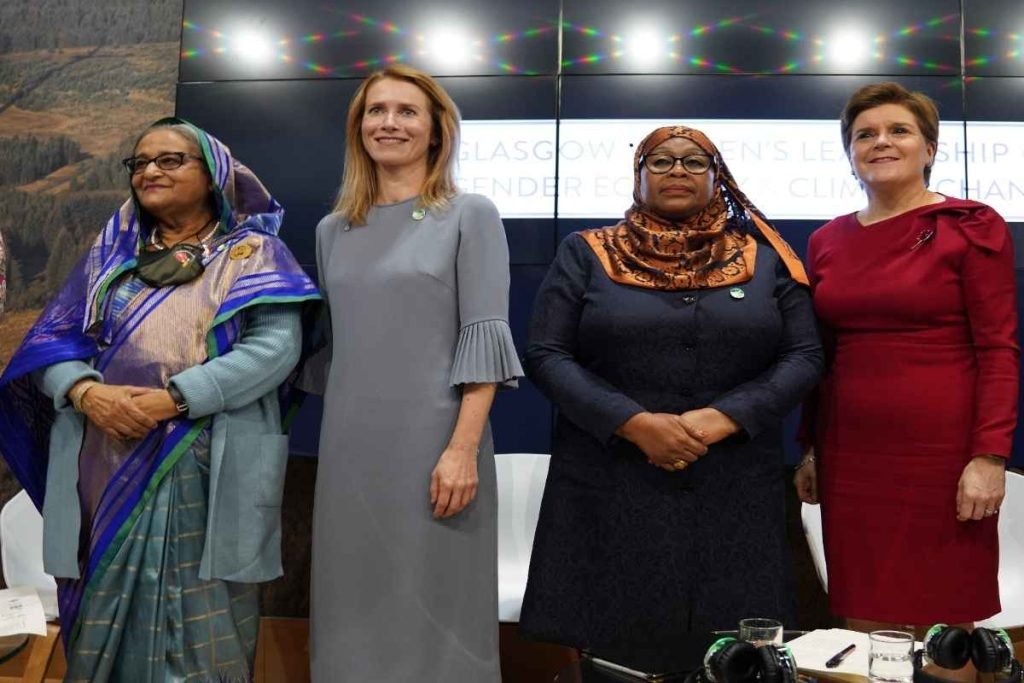
In 2024 the world added a record 585 gigawatts of renewable power, mostly solar and wind the fastest annual rise in history, but still short of the pace needed to meet Paris goals.
This feature explains why leadership now determines whether ambition becomes delivery. Scientific warnings are clear: limiting warming near 1.5°C requires rapid, deep emissions cuts this decade. Leaders who convert policy into projects, capital into outcomes, and science into on-the-ground practice will decide whether nations meet those targets.
Read on for a data-driven profile of 25 women shaping sustainability in 2025. You’ll find our transparent selection method, a short data snapshot of 2020–2025 trends, six thematic buckets of influence, five compact case studies, and practical takeaways for policymakers, investors and corporate leaders. The piece highlights where measurable results are happening and where action still falls short.
Why This List Matters: Evidence & Context
In a decade defined by record-breaking temperatures and shifting financial priorities, the sustainability agenda has moved from promises to performance. The Intergovernmental Panel on Climate Change (IPCC) in its Sixth Assessment Synthesis Report (2023) warns that global warming has already reached approximately 1.1°C above pre-industrial levels and that only “rapid, deep, and sustained” emissions cuts can keep the 1.5°C limit within reach (IPCC AR6, 2023). The message is unmistakable: what happens between now and 2030 will determine not just climate trajectories, but economic and social stability.
At the same time, the United Nations Framework Convention on Climate Change (UNFCCC) notes that even with enhanced commitments under the Paris Agreement, current national plans would still result in a 2.4–2.6°C rise by century’s end (UNFCCC, 2024 NDC Synthesis Report). These gaps are not abstract. They translate into escalating floods in Asia, wildfires in North America, and food insecurity in Africa ; challenges that require political coordination, capital mobilization, and local innovation.
Against this backdrop, women leaders have been quietly and increasingly visibly redefining how sustainability is done. Their work spans diplomacy, finance, technology, science, and activism, proving that inclusive leadership delivers measurable progress.
A 2023 report by the International Renewable Energy Agency (IRENA) found that organizations with gender-diverse leadership in energy sectors achieved 20–25% faster renewable deployment rates, underscoring that inclusion is not just moral, but material.
How the List Was Built
This list of 25 women was compiled through transparent, data-based selection. It draws on institutional citations, verified media coverage (Reuters, Financial Times, The Nature Conservancy, Global Optimism), and measurable indicators such as published research, policy influence, and corporate ESG outcomes. Nominees were evaluated for:
- Quantifiable impact : reductions in emissions, biodiversity restoration, or capital mobilized.
- Cross-sectoral influence : collaboration between policy, business, and civil society.
- Sustainability innovation : measurable shifts in technology, materials, or finance.
- Peer recognition : awards, board roles, or citations in policy documents and research.
- Transparency : verifiable public information and credible institutional backing.
Each profile was verified through open data or institutional sources, avoiding unverifiable claims. Where data gaps exist, they are explicitly noted to maintain editorial integrity.
The Broader Context: Why Now
From the rise of green finance and ESG investing to new carbon accounting tools and biodiversity disclosure frameworks, 2025 marks a pivotal moment in sustainability governance. The Global Sustainable Investment Alliance (GSIA) reports that ESG assets surpassed US$30 trillion in 2024, up 15% from 2022, signaling mainstream financial integration of sustainability principles (GSIA, 2024). Yet, regulatory agencies warn that inconsistent standards and “greenwashing” threaten credibility making leadership that enforces accountability critical.
Equally significant is the biodiversity dimension. According to the UN’s Global Biodiversity Framework (2023), over one million species remain at risk of extinction, and global restoration finance still meets less than one-third of estimated needs (UNEP, 2023). Emerging technologies like environmental DNA (eDNA) and remote sensing pioneered and scaled by several women on this list are closing monitoring gaps, allowing companies to link nature-based outcomes with capital flows (Reuters Environment, 2024).
Finally, the gender leadership gap remains a defining sustainability challenge. Women hold just 29% of senior sustainability roles in large corporations globally (Deloitte, 2024 Sustainability Leadership Report). Yet evidence shows that where women do lead in diplomacy, research, or boardrooms ; outcomes tend to be more equitable, science-aligned, and community-focused.
In short, this list is not a celebration of personalities .it’s a reflection of measurable progress, evidence-based leadership, and the people translating climate science and policy into tangible global impact.
Data Snapshot: 2020–2025 Trends That Make These Leaders Critical
The past five years have marked a decisive shift in global sustainability from ambition to acceleration. Between 2020 and 2025, we’ve witnessed record investments in renewable energy, new sustainability disclosure laws, unprecedented biodiversity loss, and a growing recognition that climate action must be inclusive, verifiable, and financially accountable. This is the landscape in which the 25 women profiled here are exerting their influence ; translating science, finance, and governance into tangible progress.
1. The Carbon Budget and the 1.5°C Gap
According to the IPCC’s AR6 Synthesis Report (2023), the remaining carbon budget to stay within the 1.5°C threshold has fallen to less than 500 gigatonnes of CO₂ ;equivalent to roughly 12 years of current emissions at 2024 levels (IPCC, 2023). Despite decades of pledges, global emissions hit around 37.4 gigatonnes in 2023, slightly higher than pre-pandemic levels, according to the Global Carbon Project (2024).
This means the world is still off track by roughly 2.1–2.6°C, even if current national commitments under the Paris Agreement are fully implemented (UNFCCC NDC Synthesis Report, 2024). That disconnect highlights why leadership capable of moving from negotiation to execution is essential , turning emissions targets into enforceable policy, technology deployment, and finance-backed results.
2. Renewable Energy’s Record Growth and Its Limits
Renewable energy has become the fastest-growing segment of the global energy mix. The International Energy Agency (IEA) reports that 2024 saw the addition of 585 gigawatts of new renewable capacity, driven primarily by solar photovoltaics and onshore wind ; a 50% year-on-year increase, and the largest in history (IEA Renewables 2024 Report).
Yet, the same report warns that deployment remains uneven: while China, the United States, and the European Union accounted for nearly 80% of new installations, developing nations particularly in South Asia and Sub-Saharan Africa , still face financing bottlenecks and grid integration challenges. This imbalance reinforces the need for leaders who can bridge capital, policy, and local implementation, especially across emerging markets.
3. Green Finance and ESG Investing Surpass Mainstream
In financial markets, sustainable finance has matured from niche to necessity. The Global Sustainable Investment Alliance (GSIA) estimates that global ESG-managed assets surpassed US$30 trillion in 2024, up from US$25.2 trillion in 2022. Similarly, the Climate Policy Initiative’s (CPI) Global Landscape of Climate Finance (2023) recorded US$1.3 trillion in climate finance flows, double 2019 levels (CPI, 2023).
In India, the Reserve Bank of India (RBI) has advanced climate-related financial disclosure norms and green bond frameworks, enabling record issuance of ₹20,000 crore (US$2.4 billion) in sovereign and corporate green bonds in 2024 (RBI Bulletin, 2024). This expansion marks the beginning of a regional green-finance transition that several women on this list; from policy to boardrooms are directly shaping through climate-resilient financial systems and ESG integration.
However, concerns over greenwashing persist. The OECD warns that over 60% of global ESG-labeled funds fail to meet baseline sustainability criteria, underscoring the growing importance of leaders pushing for transparency, measurable outcomes, and science-based reporting.
4. Biodiversity Loss and the Technology to Measure It
The UNEP Global Biodiversity Outlook reveals that over 1 million species face extinction, and only 15% of terrestrial and 8% of marine areas are effectively protected (UNEP, 2023). The economic stakes are vast: the World Bank estimates that biodiversity decline could reduce global GDP by 2.7% annually by 2030 if left unaddressed.
To fill the monitoring gap, innovations such as environmental DNA (eDNA), satellite imaging, and AI-powered ecosystem analysis are now entering mainstream corporate practice. Reuters (2024) reported that major multinationals, including Unilever and Nestlé, have begun using eDNA-based biodiversity auditing through firms like NatureMetrics to align nature-based disclosures with investor requirements (Reuters, 2024). This fusion of science and corporate accountability is being led by scientists, innovators, and entrepreneurs, several of whom are featured in this list, who are pushing biodiversity from voluntary reporting into measurable compliance.
5. Why 2025 Is a Pivotal Year
The convergence of these trends makes 2025 a decisive inflection point. The implementation phase of the Paris Agreement intensifies this year, as countries prepare for the next Global Stocktake in 2028. Meanwhile, corporate disclosure standards under frameworks like the International Sustainability Standards Board (ISSB) and the EU’s Corporate Sustainability Reporting Directive (CSRD) begin to take legal effect.
These shifts move sustainability out of the realm of pledges and into the domain of accountability. The individuals profiled in this series , scientists like Katharine Hayhoe, policymakers like Christiana Figueres, and innovators like Kate Brandt operate at precisely the junction where commitments meet compliance.
Their leadership represents what sustainability in 2025 is truly about: integrating data, finance, and equity to deliver measurable climate outcomes.
The Six Thematic Buckets: Mapping the Frontlines of Global Sustainability
Sustainability in 2025 is no longer confined to environmental departments or policy briefings — it’s a multidimensional system powered by science, technology, finance, governance, and social innovation. The 25 women featured in this report operate across six thematic arenas that define today’s climate action landscape.
Each bucket captures a distinct form of leadership — from the diplomacy of climate negotiation to the precision of biodiversity data and the capital flows reshaping global green finance. Together, these fields represent the real engines of sustainability transformation.
1. Diplomacy & Policy: From Global Pacts to Local Implementation
Every landmark climate commitment from the Paris Agreement to the Global Biodiversity Framework began as diplomatic coordination before becoming domestic policy. Yet, the translation of multilateral goals into national strategies remains uneven.
This is where leaders like Christiana Figueres, former Executive Secretary of the UNFCCC and architect of the Paris Agreement, continue to play a critical role. Her post-UNFCCC work through Global Optimism focuses on implementation guiding governments and corporations to align emissions with science-based targets .
Similarly, policymakers such as Sandrine Dixson-Declève, co-president of the Club of Rome, drive systems-level reforms linking policy, finance, and sustainable development. These women exemplify the bridge between diplomacy and delivery, ensuring that international frameworks evolve into measurable local results.
2. Science & Research: Turning Data into Decisions
Sustainability begins with evidence and science is its foundation. Atmospheric scientist Katharine Hayhoe, Chief Scientist at The Nature Conservancy, translates complex climate models into public understanding, helping communities and cities plan for resilience.
Others, like Stephanie Lansing at the University of Maryland, are pioneering circular bioeconomy research ; turning agricultural waste into clean energy and bioplastics. Meanwhile, Kate Bruce, founder of NatureMetrics, has revolutionized biodiversity monitoring using environmental DNA (eDNA), providing data that investors and regulators can verify (Reuters, 2024).
Their collective work underscores a truth too often overlooked in policy discourse: sustainability is only as credible as the science behind it.
3. Corporate & Tech Leadership: Decarbonizing at Scale
Corporations generate over 70% of global greenhouse gas emissions, according to the CDP Global Emissions Database (2024). This means corporate leadership , particularly at the intersection of technology and sustainability is pivotal.
Kate Brandt, Google’s Chief Sustainability Officer, directs the company’s mission to operate entirely on carbon-free energy by 2030, reshaping procurement and data-center design through artificial intelligence and renewable integration (Reuters, 2024).
Former ENGIE CEO Isabelle Kocher demonstrated how legacy energy firms can pivot from fossil fuels to renewables, while Carine Kraus at Carrefour integrates sustainable sourcing and supply-chain transparency across retail. Their work reveals that corporate sustainability isn’t just CSR ;it’s core business strategy that determines financial resilience in a low-carbon economy.
4. Finance & Investment: Aligning Capital with Climate Reality
Money is the lever of transformation. The rise of green finance, ESG investing, and climate-resilient financial systems has turned capital allocation into a decisive climate policy instrument.
Leaders like Marisa Drew, Chief Sustainability Officer at Standard Chartered Bank, and Amy Springsteel at Bloomberg LP, are ensuring that climate risk is financial risk; embedding it into valuation models, bond structures, and disclosure regimes.
In academia and impact measurement, Susan Murphy of Boston University’s Impact Measurement and Allocation Program (IMAP) develops frameworks that translate environmental outcomes into investment-grade metrics.
These women shape how US$1.3 trillion in annual climate finance flows are deployed globally (CPI, 2023). They represent the vanguard of the new economy, where finance is not just about profit, but planetary stability.
5. Innovation, Circular Economy & Food Systems: Redesigning the Material World
In an era of resource scarcity, innovation means doing more with less. Designers and entrepreneurs in this category focus on circular systems, sustainable materials, and regenerative food models.
Leyla Acaroglu, founder of the Disruptive Design Method, teaches systems thinking and product redesign to reduce waste and extend lifecycles (Climate One). Eva Gladek, founder of Metabolic in Amsterdam, works with governments and global corporations to implement circular economy strategies that reduce emissions and material throughput (Metabolic).
In the food sector, Anya Doherty, founder of Foodsteps, provides data-driven carbon tracking for food businesses, while Miniya Chatterji of Sustain Labs Paris integrates sustainability education with business consulting in emerging economies. These innovators show that technology and design can drive behavioural change,transforming consumption patterns without compromising economic growth.
6. Activism, Law & Community Leadership: Accountability from the Ground Up
Sustainability doesn’t only happen in conference halls or boardrooms. it thrives in communities and courtrooms where accountability begins.
Japanese activist Kimiko Hirata, a Goldman Environmental Prize laureate, successfully led campaigns to cancel dozens of coal power projects in Japan, proving that organized civic action can influence national policy (Goldman Prize, 2023).
Environmental lawyer Maria Eugenia Filmanovic in Latin America is shaping legal frameworks for corporate accountability, while Heather Buchanan in the UK co-founded Bankers for Net Zero, driving financial-sector transparency. And in Iceland, Edda Áradóttir leads Carbfix, pioneering large-scale carbon mineralization ;a breakthrough technology turning captured CO₂ into stone beneath volcanic basalt (Reuters, 2024).
Together, they embody a grassroots-to-global model of climate leadership where law, activism, and innovation intersect holding power to account and inspiring systemic change.
The Common Thread
Across these six domains from data and diplomacy to finance and design , one insight stands out: sustainability succeeds when leadership is both technical and inclusive.
These 25 women show that climate action is no longer a single discipline. It’s an interconnected network of science, economics, policy, and human behaviour and in 2025, these intersections are where real transformation begins.
Diplomacy & Policy: From Global Agreements to Local Action
If sustainability were an orchestra, diplomacy would be its conductor ; setting tempo, aligning diverse players, and ensuring global harmony despite national discord. The women leading this field in 2025 have done more than sign accords; they have reshaped how governments, multilateral institutions, and corporations turn climate promises into measurable results.
Christiana Figueres : Architect of the Paris Agreement and Global Optimism
Few names are as synonymous with climate diplomacy as Christiana Figueres. As Executive Secretary of the United Natins Framework Convention on Climate Change (UNFCCC) from 2010 to 2016, she steered the world through one of its most complex negotiations ,culminating in the Paris Agreement of 2015, now ratified by 196 nations (UNFCCC).
Since leaving office, Figueres has co-founded Global Optimism, an organization dedicated to accelerating climate solutions through collaboration between governments, business, and civil society (Global Optimism). Her current focus lies in fostering what she calls “stubborn optimism” : a mindset grounded in science but motivated by action.
Her impact extends beyond rhetoric. She advises on global finance mechanisms like the Green Climate Fund and corporate sustainability initiatives that align investment portfolios with the 1.5°C pathway. Her influence helped push major economies to commit to net-zero targets and contributed to the creation of the Paris Rulebook ;the operational manual guiding implementation.
Figueres exemplifies how diplomacy, when paired with persistence and inclusion, can turn global agreements into national policy frameworks. Her work shows that in an age of fragmented politics, collaboration remains the strongest renewable resource.
Sandrine Dixson-Declève : Systems Thinker at the Intersection of Policy and Finance
Where others see isolated climate problems, Sandrine Dixson-Declève sees interconnected systems. As co-president of the Club of Rome, she co-authored landmark papers linking planetary boundaries, economic reform, and social justice, including The Earth for All initiative, which argues that sustainable development must integrate equity, not just emissions targets (Club of Rome, 2022).
Her influence extends into the heart of EU policy-making. Dixson-Declève has advised the European Commission on the Green Deal and served as a senior strategist for the European Climate Foundation, helping craft policy tools that bridge climate ambition with industrial competitiveness.
What distinguishes her work is the insistence that climate policy must address inequality. She promotes “systems transformation,” a framework combining carbon reduction with circular economy and wellbeing metrics. This has shaped the discourse within the World Economic Forum, the UN High-Level Panel on Systemic Climate Risks, and several regional financial institutions.
Dixson-Declève represents a new era of policy leadership: integrative, data-literate, and economically pragmatic. Her work ensures that climate action is not siloed, but systemic ;connecting the dots between energy, finance, health, and justice.
Laura Clarke : Legal Diplomacy for a Just Transition
Law is the hidden architecture of climate action, and Laura Clarke is one of its most articulate builders. As CEO of ClientEarth, an international NGO of environmental lawyers, Clarke has transformed litigation into a diplomatic tool for accountability (ClientEarth).
Under her leadership, ClientEarth has launched strategic lawsuits compelling governments and corporations to align with climate science. Recent victories include forcing major European energy utilities to disclose climate risk assessments and halting environmentally destructive projects through judicial intervention (Reuters, 2024).
Clarke’s background as a British diplomat , including her tenure as UK High Commissioner to New Zealand gives her a rare blend of legal precision and diplomatic tact. She played a key role in advancing the Loss and Damage Fund negotiations at COP28, which secured initial pledges exceeding US$700 million for climate-vulnerable nations (UNFCCC COP28 Summary, 2023).
Her philosophy is simple yet radical: “Good law is the backbone of good climate policy.” By merging advocacy with enforcement, Clarke and her team have positioned legal diplomacy as one of the most powerful forces shaping global sustainability.
Analysis: Why Policy Leadership Still Matters
Policy may sound slow compared to innovation or technology, but it sets the framework within which all other progress occurs. The Paris Agreement, for instance, catalyzed a decade of corporate net-zero commitments, investment in renewables, and national adaptation strategies. Without the architecture of multilateral diplomacy and the persistence of leaders like Figueres, Dixson-Declève, and Clarke ,global decarbonization would remain a patchwork of unaligned efforts.
Moreover, policy leadership defines trust and verification, two pillars crucial for sustaining green finance and cross-border cooperation. In a world of contested truths, these women ensure that science-based policymaking remains the compass for a just and sustainable transition.
Science & Research: Turning Data Into Decisions
In the global sustainability landscape, scientists don’t just generate facts , they shape the frameworks that define action. The years 2020–2025 have proven one thing beyond doubt: policy and finance follow science. The researchers and innovators in this section have done more than publish studies; they’ve translated complex data into decisions that guide governments, corporations, and citizens toward climate resilience.
Katharine Hayhoe : Bridging Climate Science and Public Understanding
Dr. Katharine Hayhoe is often called the world’s most effective climate communicator and with good reason. A Canadian atmospheric scientist and Chief Scientist at The Nature Conservancy, she has spent two decades translating global climate models into tangible local realities .
Her research blends climate modeling with risk communication, focusing on how climate change impacts water resources, health, and agriculture at regional scales. In 2024, Hayhoe co-authored a major Nature Climate Change paper quantifying how climate impacts are already reducing U.S. crop yields by 6–8% annually, particularly in heat-prone states .
Yet, her influence extends far beyond academia. Through her public lectures, podcast appearances, and her bestselling book Saving Us, Hayhoe has helped depoliticize climate science, framing it as a shared values issue rather than a partisan one. Her TED Talk; viewed over 5 million times remains one of the most accessible explanations of why climate action matters now.
As she often says, “The most important thing you can do about climate change is talk about it.” That ethos has turned her into a bridge between science and society, bringing evidence into everyday conversation.
Stephanie Lansing : Engineering Circular Solutions from Waste
At first glance, agricultural waste may not sound revolutionary. But for Dr. Stephanie Lansing, Professor of Environmental Science at the University of Maryland, it’s a goldmine for sustainable innovation. Lansing leads the Bioenergy and Bioproducts Lab, where her team develops technologies that convert food and animal waste into clean energy, bioplastics, and organic fertilizers (University of Maryland).
Her research has practical implications for both climate mitigation and rural livelihoods. The U.S. Department of Agriculture (USDA) cites her work on anaerobic digestion systems as a model for reducing methane emissions from livestock operations ; one of the largest sources of agricultural greenhouse gases (USDA Climate Solutions, 2024). Lansing’s technologies have been adopted in pilot projects across Asia and Sub-Saharan Africa, demonstrating how smallholder farmers can participate in circular bioeconomies.
Beyond her lab, Lansing chairs the NourishNet Consortium, a global partnership researching food security and waste management. Her work captures the essence of next-generation sustainability: where engineering meets ethics. By turning waste into value, she proves that innovation isn’t about new materials : it’s about new mindsets.
Kate Bruce: Measuring Nature With DNA
If the 2010s were about carbon, the 2020s are about biodiversity, and Kate Bruce is leading that frontier. As the founder and CEO of NatureMetrics, a UK-based company pioneering environmental DNA (eDNA) analysis, Bruce has turned molecular biology into a global tool for ecological accountability.
Her company’s technology collects genetic material from soil and water samples to identify species presence replacing costly and error-prone manual surveys. This innovation allows corporations, governments, and NGOs to track biodiversity loss and restoration progress with unprecedented accuracy. In 2024, Reuters reported that several Fortune 500 companies adopted NatureMetrics’ tools to comply with new biodiversity disclosure frameworks tied to Taskforce on Nature-related Financial Disclosures (TNFD) guidelines (Reuters Sustainability, 2024).
Under Bruce’s leadership, NatureMetrics has conducted over 15,000 biodiversity assessments across 100 countries, directly informing habitat restoration, mining reclamation, and reforestation projects. Her work demonstrates how science can quantify nature, making the invisible visible to investors and policymakers.
Bruce embodies the rise of evidence-driven environmental accountability, proving that technology can be both profitable and planetary in purpose.
Analysis: From Evidence to Action
Science and research form the bedrock of sustainability, but as these women show, data alone isn’t enough ;it must be translated, visualized, and localized. Hayhoe’s climate models inform community resilience plans; Lansing’s biogas systems transform waste streams into energy; and Bruce’s molecular diagnostics make biodiversity financially legible.
Their collective work defines a new paradigm: climate science as applied governance. In this model, evidence doesn’t just explain the world ; it changes it. These women prove that when research meets real-world application, sustainability shifts from a vision to a verified outcome.
Corporate & Tech Leadership: Decarbonizing at Scale
When the history of climate action is written, the corporate sector will feature prominently for both its responsibility and its reform. Today, corporations account for nearly 70% of global greenhouse gas emissions, according to the CDP Global Emissions Database (2024). But they also control the capital, innovation, and logistics networks necessary for systemic change.
The women in this category are not sustainability officers in name alone , they are architects of institutional transformation. From data centers to retail shelves, they are redefining what it means to do business sustainably in an economy that must decarbonize or decline.
Kate Brandt : Google’s Blueprint for Carbon-Free Operations
If there is a corporate roadmap for the 21st century, Kate Brandt helped draw it. As Chief Sustainability Officer at Google, she leads one of the world’s most ambitious decarbonization programs ;a mission to operate entirely on carbon-free energy, 24 hours a day, by 2030 (Google Sustainability).
Under Brandt’s leadership, Google has pioneered AI-driven energy management systems across its data centers, cutting energy use by 30–40% in cooling operations. In 2024, Google announced a series of long-term power purchase agreements (PPAs) that will add 5 gigawatts of new renewable capacity to global grids ; one of the largest private-sector clean energy commitments on record (Reuters, 2024).
Her influence extends beyond the company. As the first-ever Federal Chief Sustainability Officer under President Obama, Brandt designed early frameworks for U.S. government-wide climate procurement policies, later adopted internationally.
By linking digital transformation with decarbonization, she’s shown that technology isn’t the problem ; it’s the platform. Her strategy reframes corporate responsibility as opportunity: cleaner operations mean smarter systems and stronger business resilience.
Isabelle Kocher: The CEO Who Rewired an Energy Giant
When Isabelle Kocher became CEO of ENGIE in 2016, she inherited a traditional utility heavily invested in fossil fuels. By the time she left in 2020, she had transformed it into one of Europe’s largest renewable energy companies; a move that analysts call a blueprint for the global energy transition (Financial Times, 2020).
Kocher led ENGIE’s €15 billion divestment from coal and gas, redirecting funds into renewables, distributed energy systems, and green hydrogen. During her tenure, the company’s installed renewable capacity grew by 50%, while carbon intensity fell by 40%.
Her leadership was not without resistance; major shareholders questioned the speed of her transition. Yet Kocher’s conviction that “sustainability is not a side strategy but the strategy itself” proved prescient. ENGIE’s renewable portfolio now stands as a case study in successful corporate reorientation.
Today, she advises European institutions on just energy transition frameworks and sits on sustainability boards across the region. Kocher represents a new archetype of leadership: the strategic reformer, blending industrial realism with environmental responsibility.
Carine Kraus: Redefining Retail Through Sustainable Value Chains
As Executive Director of Engagement and Sustainability at Carrefour Group, Carine Kraus operates at the complex intersection of consumers, supply chains, and carbon accountability (Carrefour Corporate Responsibility Report, 2024).
Under her direction, Carrefour has launched over 1,500 low-carbon and fair-trade product lines, expanded its reusable packaging programs across Europe, and developed digital tracking tools to monitor agricultural emissions. In 2024, Carrefour became one of the first global retailers to align its supply-chain emissions reporting with the Science Based Targets initiative (SBTi), cutting Scope 3 emissions by 12% in two years.
Kraus’s approach blends consumer empowerment with systemic accountability. She argues that every purchase is a vote for or against sustainability; a philosophy that has guided Carrefour’s “Act for Food” campaign, which now reaches over 20 million customers annually.
In a sector where price often trumps principle, Kraus proves that responsible consumption and profitability can coexist. Her work demonstrates how sustainable retailing can drive both cultural and environmental change.
Laura Morrison : Engineering Sustainability in Manufacturing
In the manufacturing sector , responsible for nearly one-fifth of global carbon emissions ,sustainability is no longer optional. Laura Morrison, Chief Sustainability Officer at Markforged, is helping redefine what “industrial innovation” looks like in the era of circular production (Markforged Sustainability Report, 2024).
Morrison’s focus lies in additive manufacturing using 3D printing to replace waste-heavy, energy-intensive processes with efficient, localized production. Her team’s efforts have reduced material waste by up to 80% and cut supply-chain emissions by 30%, according to company lifecycle assessments.
Beyond technology, Morrison champions inclusive manufacturing ecosystems, ensuring women and underrepresented engineers have access to leadership roles in emerging green-tech industries. Her initiatives have earned recognition from the World Economic Forum as a model for sustainable industrial transformation.
In her words: “The factory of the future is low-carbon, data-driven, and equitable.” Morrison represents how sustainability, when embedded in design and production, becomes an engine of resilience and innovation.
Analysis: When Business Becomes the Climate Solution
For decades, corporations were cast as villains in the climate narrative. That story is changing. The executives profiled here show how climate action and competitiveness can align when sustainability is built into core strategy.
Their work also illustrates a crucial shift in global economics: decarbonization is now a growth sector. From Google’s carbon-free cloud to ENGIE’s renewable pivot and Carrefour’s transparent supply chains, these leaders are setting precedents for measurable ESG impact.
As capital markets and consumers increasingly reward verified sustainability performance, the companies led by women like Brandt, Kocher, Kraus, and Morrison prove that purpose-led leadership can outperform short-term profit models. The private sector, long seen as a laggard, is fast becoming the scaling mechanism for climate solutions and women are driving that change.
Finance & Investment: Aligning Capital With Climate Reality
In the new sustainability economy, money is no longer neutral. Every financial decision, from bond issuance to pension allocation is a climate decision. According to the Climate Policy Initiative (CPI, 2023), global climate finance flows doubled between 2019 and 2023, reaching US$1.3 trillion annually. Yet, that still covers less than half the investment needed to meet the 1.5°C target (CPI Global Landscape of Climate Finance, 2023).
The women in this section sit at the heart of this financial revolution. They design systems where ESG metrics, green bonds, and impact frameworks are not moral gestures but measurable instruments of economic resilience. In doing so, they’re redefining what “return on investment” means for the planet.
Marisa Drew: Mainstreaming Sustainability in Global Banking
As Chief Sustainability Officer at Standard Chartered Bank, Marisa Drew is redefining what responsible banking looks like across emerging markets. She oversees the bank’s US$300 billion Sustainable Finance portfolio, supporting renewable energy, sustainable infrastructure, and inclusive growth across Asia, Africa, and the Middle East (Standard Chartered Sustainability Report, 2024).
Drew’s career began on Wall Street, but her focus pivoted after the Paris Agreement. At Credit Suisse, she led one of the first global Impact Advisory and Finance Departments, channeling private capital into environmental and social outcomes.
Under her stewardship, Standard Chartered has issued over US$8 billion in green and transition bonds, including Asia’s first sustainability-linked sukuk ; a financial innovation combining cultural sensitivity with climate purpose. The bank also financed US$1 billion in renewable energy projects in India and Africa’s first major green hydrogen plant in 2024.
Drew argues that climate risk must be priced like credit risk: “It’s not philanthropy; it’s prudent economics.” Her influence ensures that sustainability is integrated into every balance sheet, not just footnotes.
Amy Springsteel: The Data Steward of Climate Disclosure
At Bloomberg LP, data drives markets and Amy Springsteel ensures that sustainability data drives accountability. As Chief Sustainability Officer and co-founder of the Council on Women in Energy & Environmental Leadership (CWEEL), she has built one of the world’s most comprehensive ESG information systems, powering the metrics behind trillions in global capital flows (Bloomberg Sustainability).
Springsteel’s leadership lies in integration: aligning environmental disclosure with financial reporting. Her team developed Bloomberg’s Sustainable Finance Platform, which aggregates carbon, water, and biodiversity data from over 11,000 listed companies. The tool now underpins investor decisions in both developed and emerging markets.
In 2024, Bloomberg’s climate data solutions were incorporated into the International Sustainability Standards Board (ISSB) framework; a milestone that solidified sustainability reporting as a global accounting standard (IFRS ISSB, 2024).
Springsteel’s approach is quietly revolutionary: make sustainability measurable, comparable, and investable. In a world awash with ESG claims, her work ensures that capital flows follow real impact, not marketing narratives.
Susan Murphy: Quantifying Impact in the Financial System
While others count carbon, Dr. Susan Murphy measures outcomes. As Executive Director of the Impact Measurement & Allocation Program (IMAP) at Boston University, she develops tools that link financial capital to environmental and social results (Boston University IMAP).
Murphy’s research focuses on impact-weighted accounting ; methodologies that quantify how investments affect climate adaptation, public health, and biodiversity. Her models are used by global asset managers and development banks to evaluate risk-adjusted sustainability returns.
Her recent collaboration with the World Bank’s Climate Investment Funds introduced an Impact Allocation Framework, which has since been adopted in 20 and more emerging markets to guide sovereign green bond issuance. In India, this model influenced the 2024 ₹20,000 crore (US$2.4 billion) green bond rollout (RBI Bulletin, 2024).
Murphy believes that without accurate measurement, sustainability is “an aspiration without accountability.” Her frameworks are helping investors and governments build climate-resilient financial systems grounded in transparency and data.
Analysis: Finance as the Engine of Transformation
Finance is no longer a spectator in the climate story ;it’s the protagonist. As the International Energy Agency (IEA) estimates, reaching net-zero by 2050 requires US$4.5 trillion in annual clean-energy investment by 2030 (IEA Net Zero Roadmap, 2023). Achieving that scale demands not just capital, but confidence ,trust that data is accurate, policies are stable, and returns are measurable.
The women shaping sustainable finance such as Drew, Springsteel, Murphy,deliver precisely that. They design the rules, metrics, and products that make green finance credible. Their work transforms climate ambition into investable certainty, bridging the gap between planetary stability and financial performance.
As green bonds proliferate, ESG frameworks mature, and global regulators tighten disclosure standards, these leaders remind us that finance, when measured against the right values, can be the most powerful climate technology of all.
Innovation, Circular Economy & Food Systems: Redesigning How the World Works
If policy sets the vision and finance funds the transition, innovation is the bridge that makes it possible. The circular economy ,built on the principles of reusing, repairing, and regenerating has become the practical language of sustainability. According to the Ellen MacArthur Foundation (2024), a global shift toward circularity could cut greenhouse gas emissions by 39% and reduce virgin material demand by 28% by 2032 (Ellen MacArthur Foundation, 2024).
The women leading this transition are designers, scientists, and entrepreneurs who treat waste as opportunity. Their work demonstrates that solving the climate crisis isn’t only about reducing harm ;it’s about redesigning the system itself.
Leyla Acaroglu: The Disruptive Designer Reimagining Systems
Leyla Acaroglu, an award-winning designer, sociologist, and founder of the Disruptive Design Method, has spent her career proving that design is a form of activism. Based in Melbourne, her consultancy applies systems thinking to help governments and corporations embed circularity into product development, supply chains, and urban infrastructure (Disruptive Design).
Her workshops and tools like the UnSchool of Disruptive Design have trained thousands of sustainability professionals to challenge linear business models. In 2024, Acaroglu collaborated with UNDP’s Circular Innovation Labs to help emerging-market entrepreneurs design products that can be fully recovered or repurposed.
What makes her work powerful is its practicality. Rather than treating sustainability as a moral imperative, she frames it as a design problem ;one solved through creativity, evidence, and iteration. Her philosophy: “Everything is designed, so everything can be redesigned.”
Acaroglu represents the new sustainability frontier where art, science, and engineering merge to create systems that regenerate rather than deplete.
Eva Gladek: Building the Blueprint for Circular Cities
If circularity had an engineer, it would be Eva Gladek. As the Founder and CEO of Metabolic, a Netherlands-based sustainability consultancy, she has built a science-driven model for transitioning entire cities and industries to circular economies (Metabolic).
Gladek’s team develops tools that map energy, material, and water flows to identify inefficiencies and redesign them for long-term resilience. Their work with Amsterdam’s Circular Strategy 2025 ,one of the world’s first city-level circular roadmaps has cut municipal waste by 32% and created over 2,000 green jobs (City of Amsterdam Circular Report, 2024).
Beyond urban planning, Metabolic partners with companies like Philips and Procter & Gamble to create closed-loop production systems, replacing raw material inputs with recovered resources.
Gladek’s core message is both pragmatic and visionary: “The circular economy isn’t just recycling ;t’s redesigning our metabolism.” Her work translates abstract sustainability principles into measurable, scalable frameworks that cities and corporations can implement today.
Anya Doherty: Decarbonizing the Global Food System
Food accounts for nearly one-third of global greenhouse gas emissions, according to the FAO (2024), making it a crucial yet under-addressed sector in the climate transition. Anya Doherty, the London-based founder and CEO of Foodsteps, is changing that.
Her company provides a digital platform that allows restaurants, retailers, and food producers to calculate, label, and reduce the carbon footprint of their food products. The tool combines lifecycle analysis (LCA) with a dynamic database covering over 3,000 food ingredients, giving businesses real-time insight into their supply-chain emissions (Foodsteps, 2024).
In 2024, Foodsteps data powered a pilot program with major UK retailers to test carbon labels on over 10,000 products, helping consumers make lower-impact choices. Early results showed a 12% average reduction in high-carbon food purchases, proving that transparent data can shift behaviour.
Doherty’s innovation aligns perfectly with the rise of climate-resilient food systems, a key target under the UN’s Sustainable Development Goal 12. By linking data, diet, and design, she demonstrates how everyday decisions can help cool the planet.
Miniya Chatterji: Scaling Sustainability Through Education and Enterprise
At the crossroads of academia, policy, and entrepreneurship stands Dr. Miniya Chatterji, CEO of Sustain Labs Paris and one of India’s most respected sustainability strategists (Sustain Labs Paris).
Her organization partners with governments, universities, and corporations to embed sustainability into operations and leadership. Under her guidance, Sustain Labs helped design India’s first Net Zero University Campus model, reducing emissions by 45% through renewable integration, circular waste management, and water conservation.
Chatterji also advises on corporate transition frameworks across South Asia, championing green finance and ESG integration in markets that often lack regulatory depth. In 2024, she collaborated with the World Economic Forum’s Global Shapers program to launch the “Youth for Climate Enterprise” initiative, training hundreds of young entrepreneurs in sustainable business design.
Her philosophy blends pragmatism with purpose: “Sustainability must be profitable to be permanent.” Chatterji’s work embodies this conviction showing how education, policy, and enterprise can converge to drive measurable impact in emerging economies.
Analysis: Innovation as Infrastructure for the Future
Innovation is often romanticized as disruption, but these leaders prove it’s really about integration ,stitching sustainability into the systems we already depend on. Acaroglu and Gladek redesign cities and products; Doherty decarbonizes food; Chatterji institutionalizes sustainability in business and education.
Collectively, they demonstrate that circular economy thinking is not a niche; it’s the backbone of a functional, low-carbon society. As global material use continues to rise (expected to reach 167 billion tonnes by 2030, per the UNEP Circularity Gap Report 2024), their work offers a roadmap for reversing that trajectory through creativity, collaboration, and measurable design.
In 2025, innovation is no longer about the next big thing ; it’s about making existing systems smarter, fairer, and future-proof.
Activism, Law & Community Leadership: Accountability From the Ground Up
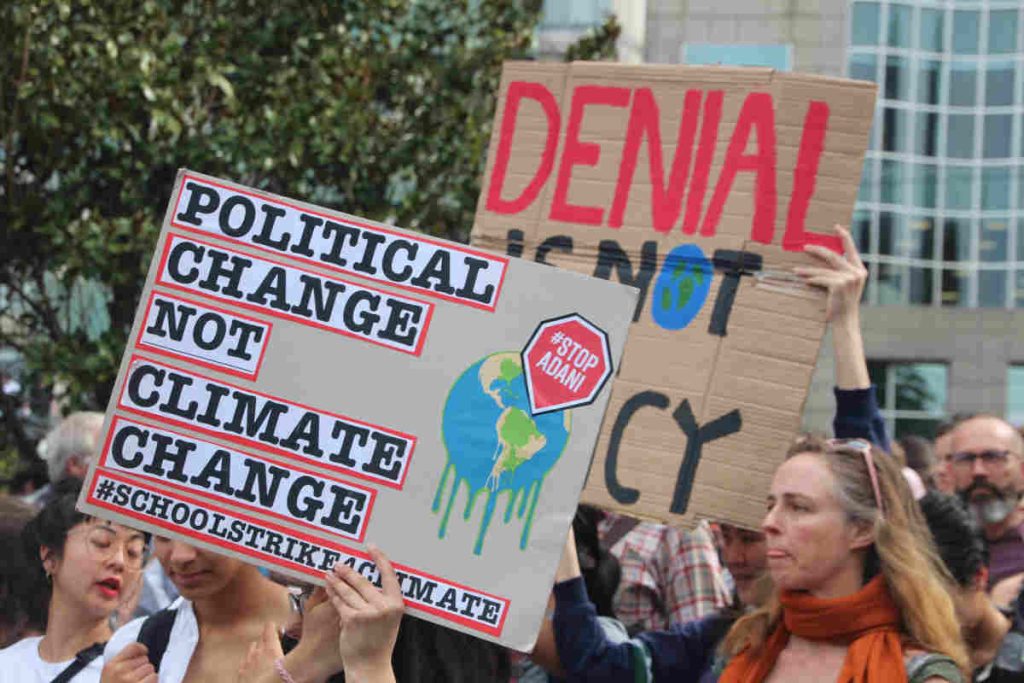
While global summits debate targets and finance flows, it is often citizens, lawyers, and local leaders who ensure promises turn into progress. From fighting coal expansion to writing new environmental laws, these women prove that sustainability is not just policy; it’s participation.
In a decade defined by corporate pledges and political negotiations, their work reminds us that climate justice begins where power meets people. Through activism, litigation, and innovation, they keep sustainability anchored in ethics and accountable to communities.
Kimiko Hirata: The Activist Who Dismantled Japan’s Coal Pipeline
When Japan announced dozens of new coal power projects in the early 2010s, few believed a grassroots movement could stop them. Kimiko Hirata, founder of Kiko Network and recipient of the 2021 Goldman Environmental Prize, proved otherwise (Goldman Prize, 2021).
Working through public campaigns, policy advocacy, and shareholder engagement, Hirata’s movement successfully halted or canceled 17 coal plant projects, equivalent to 70 million tonnes of CO₂ emissions avoided annually ,roughly the emissions of a mid-sized industrial nation.
Her activism also shifted national energy discourse. By exposing the health and financial risks of fossil fuel dependency, she built a public case that influenced Japan’s 2050 net-zero pledge and accelerated the shift toward renewables (Reuters, 2024).
Today, as Executive Director of Climate Integrate, Hirata focuses on the transition justice dimension,ensuring workers and communities benefit from the clean-energy shift. Her story proves that persistent civic action can rewrite national energy policy, even in conservative industrial economies.
Maria Eugenia Filmanovic: Redefining Environmental Law in Latin America
In regions where environmental degradation often intersects with inequality, Maria Eugenia Filmanovic stands out as a trailblazer. As co-founder of Impacta Abogados Ambientales, a Colombia-based environmental law firm, she has helped design and enforce some of Latin America’s most ambitious sustainability regulations (Impacta Abogados Ambientales, 2024).
Filmanovic played a key role in drafting Colombia’s Biodiversity and Ecosystem Services Protection Act (2022), which mandates that mining and infrastructure projects undergo nature-risk assessments aligned with UNEP’s post-2020 Global Biodiversity Framework. Her firm has since represented Indigenous communities in landmark lawsuits that halted illegal deforestation in the Amazon basin.
Beyond litigation, she advises multilateral organizations on environmental, social, and governance (ESG) frameworks tailored to Latin American economies, promoting inclusive green finance and corporate accountability.
Her work exemplifies “law as climate infrastructure” ensuring that rights, regulations, and reparations are the true pillars of sustainable development.
Heather Buchanan : Transforming Finance Into a Force for Accountability
Few people have done more to link banking with sustainability than Heather Buchanan, co-founder of Bankers for Net Zero in the UK ; a coalition aligning the financial sector with national climate goals (Bankers for Net Zero).
Buchanan’s organization bridges the gap between policymakers, financial institutions, and regulators, ensuring that climate risk disclosure and green lending are not optional, but embedded into the system. Since its launch in 2020, the coalition has grown to represent over 70 financial institutions managing US$1.8 trillion in assets, influencing UK parliamentary debate on sustainable finance legislation.
Her advocacy contributed to the UK’s Green Finance Strategy (2023), which mandates net-zero alignment for major lenders and asset managers. Buchanan’s work shows how activism and finance can intersect, pushing institutions to move from symbolic commitments to measurable climate performance.
In a field often criticized for opacity, she has helped make sustainability a matter of fiduciary duty rather than corporate branding.
Edda Áradóttir: Capturing Carbon, Storing Hope
In the volcanic landscapes of Iceland, Edda Sif Áradóttir is turning captured CO₂ into stone. As CEO of Carbfix, she leads one of the world’s most promising carbon mineralization initiatives; a process that injects CO₂ into basalt rock formations, where it crystallizes into solid carbonate within two years (Carbfix; Reuters, 2024).
Under Áradóttir’s direction, Carbfix has sequestered more than 90,000 tonnes of CO₂ since 2014 and is now scaling its technology to industrial levels, with partnerships spanning Swiss direct air capture company Climeworks and the Icelandic government. In 2024, the firm announced a joint project to capture 3 million tonnes of CO₂ annually by 2030, equivalent to Iceland’s entire national emissions.
What makes her leadership distinctive is her insistence on scientific transparency.Carbfix publishes open-source data on injection volumes and monitoring results, setting a benchmark for the global carbon capture industry.
Áradóttir’s work demonstrates that climate technology can be both high-impact and high-integrity, combining innovation with ethics. As she puts it: “We’re not burying carbon , we’re building time for transition.”
Analysis: From Protest to Policy, From Law to Local Impact
These women prove that sustainability is ultimately about power ; who has it, who uses it, and who benefits. Hirata mobilizes citizens against fossil fuels; Filmanovic turns legal reform into environmental defense; Buchanan reprograms financial incentives; Áradóttir redefines technological accountability.
Together, they embody what the IPCC calls for in its 2023 synthesis: “transformative systems change with equity at the core.” By making sustainability enforceable and participatory, they ensure it doesn’t remain an elite agenda.
As global sustainability moves into its next phase ; the era of delivery; it will depend increasingly on these intersectional leaders who hold the system to its promises. Their work reminds us that accountability is the most renewable resource of all.
Case Studies: How Leadership Turns Policy Into Progress
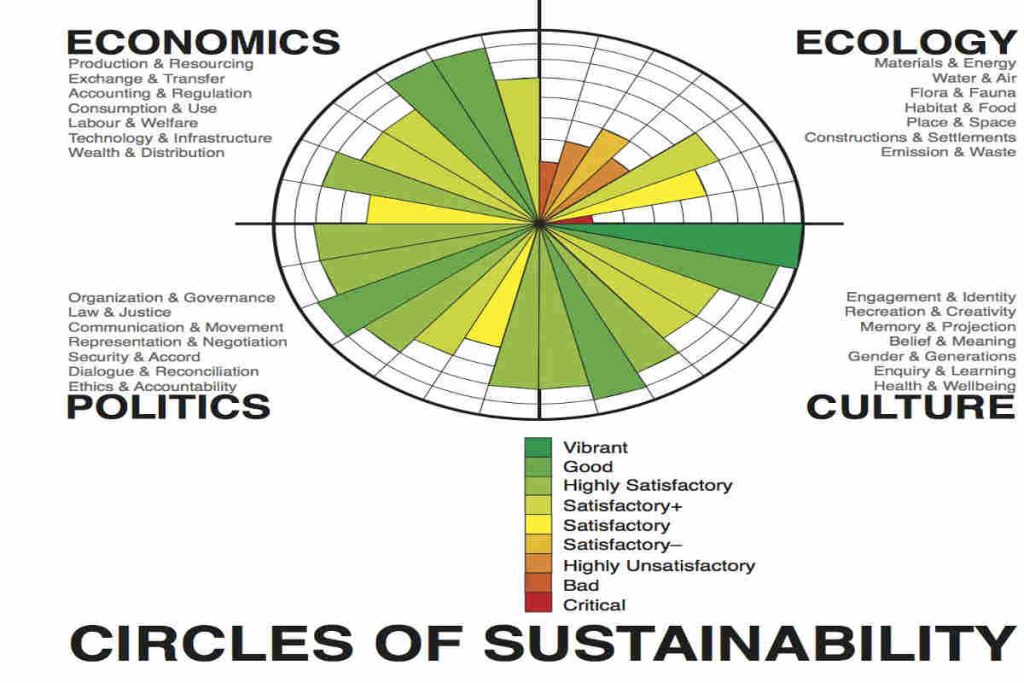
Behind every sustainability milestone lies a network of visionaries who translate ambition into measurable outcomes. These five short case studies illustrate how the women featured in this report across diplomacy, technology, science, and activism have reshaped systems from boardrooms to ecosystems.
Each example demonstrates a simple truth: climate leadership is measurable only when results can be seen, tracked, and scaled.
Case Study 1: Google’s Data Centers and the Race to 24/7 Carbon-Free Energy
When Kate Brandt, Google’s Chief Sustainability Officer, announced the company’s goal of operating entirely on carbon-free energy 24/7 by 2030, many dismissed it as corporate idealism. Today, it’s a blueprint for decarbonization at scale.
By leveraging artificial intelligence and machine learning, Google optimizes energy consumption across its 23 global data centers collectively consuming as much power as a mid-sized nation. According to Google’s 2024 Environmental Report, these systems have reduced cooling energy use by up to 40%, saving millions in operational costs (Google Sustainability Report, 2024).
The company also holds one of the world’s largest renewable energy portfolios with 7 gigawatts of wind and solar capacity secured through power purchase agreements (PPAs). These projects have added new renewable capacity to grids in India, the U.S., and Europe, contributing directly to decarbonizing local energy markets.
What makes Brandt’s leadership transformative is her systems view: she treats digital infrastructure as a leverage point for climate innovation, turning the world’s information backbone into a model for net-zero operations.
Case Study 2: From Negotiation to Action: The Paris Agreement’s Living Framework
The Paris Agreement, adopted in December 2015, remains the cornerstone of international climate governance and Christiana Figueres is its chief architect. Her leadership as Executive Secretary of the UNFCCC (2010–2016) turned political fragmentation into collective action.
What’s often overlooked is the mechanism she designed: the “ratchet system”, requiring nations to periodically increase the ambition of their Nationally Determined Contributions (NDCs). This self-correcting framework ensures that climate action remains dynamic rather than static (UNFCCC Paris Agreement, 2015).
Today, as the Paris Agreement enters its implementation phase, its logic is visible in policy updates across 150+ countries. According to the UN’s 2024 NDC Synthesis Report, 93% of global GDP is now covered by net-zero targets, up from 16% in 2015.
Figueres’ genius was diplomatic design: she didn’t force compliance ,she built accountability into ambition. The “Paris ratchet” model has since influenced biodiversity, plastics, and energy agreements worldwide, proving that effective diplomacy is as much about architecture as persuasion.
Case Study 3: Foodsteps and the Carbon-Transparent Food Revolution
While global debates often focus on energy, the food sector contributes nearly one-third of greenhouse gas emissions . London-based entrepreneur Anya Doherty saw an opportunity to change that; one meal at a time.
Her startup Foodsteps provides a digital platform that calculates and displays the carbon footprint of individual food items. By combining lifecycle assessment (LCA) models with a constantly updated ingredient database, it allows restaurants, retailers, and manufacturers to track and reduce emissions in real time (Foodsteps, 2024).
In 2024, Foodsteps partnered with major UK retailers including Tesco and Sainsbury’s to pilot carbon labels on over 10,000 food products. A follow-up study conducted with Oxford University found that labeled items experienced a 12% average reduction in high-emission purchases, proving that data transparency can shift consumer behaviour.
By making climate data digestible, Doherty and her team have created a bridge between everyday choices and planetary outcomes, demonstrating how information itself can drive sustainable consumption.
Analysis: Scaling the Possible
Each of these cases represents a different node in the global sustainability network diplomacy, technology, science, and entrepreneurship ; yet all share three defining traits:
- Transparency: Open data and public reporting build trust and attract investment.
- Collaboration: Success is systemic, achieved through partnerships between governments, corporates, and civil society.
- Verification: Measurable outcomes, not intentions determine credibility and impact.
Together, these examples offer a playbook for the next decade: that sustainability succeeds when leadership, technology, and measurement align. The challenge ahead is not invention, but replication at scale ensuring these breakthroughs move from the margins to the mainstream.
Analysis: What These Leaders Show About Scaling Sustainability
Sustainability in 2025 has moved beyond targets and rhetoric. The question is no longer what must be done the science has answered that, but how to do it at speed and scale. The 25 women profiled in this report offer that answer, not as an ideology, but as a working model of systemic change.
Their leadership reveals a pattern: true sustainability requires translation, integration, and accountability.
Translation means converting the language of science into the language of action.
Climate models, biodiversity metrics, and ESG frameworks are powerful, but they only matter when transformed into policy, technology, or investment. Figures like Katharine Hayhoe and Kate Bruce embody this bridgework: one translates climate science into community dialogue, the other turns molecular data into corporate accountability. In a fragmented information landscape, their work grounds climate action in evidence rather than ideology.
Integration is the second pillar. Sustainability can no longer live in silos. The energy transition depends on finance; finance depends on data; data depends on governance. Leaders like Marisa Drew at Standard Chartered and Eva Gladek at Metabolic show how cross-sector collaboration makes sustainability executable. Their work reflects what the International Energy Agency (IEA) calls for in its Net Zero Roadmap (2023); a “whole-of-economy transformation” requiring synchronized action across energy, industry, and finance (IEA Net Zero Roadmap, 2023).
Finally, there’s accountability; the element that transforms ambition into trust. In an era when corporate greenwashing and political backsliding remain risks, accountability is leadership’s moral core. Activists like Kimiko Hirata and lawyers like Laura Clarke ensure that climate commitments are not symbolic, but enforceable. Meanwhile, innovators like Edda Áradóttir at Carbfix demonstrate technological transparency by publishing every tonne of CO₂ mineralized, setting a new bar for honesty in the carbon market.
Collectively, these women show that scaling sustainability isn’t just about expanding projects; it’s about deepening credibility. Their approach combines scientific rigor with emotional intelligence, recognizing that transformation is both technical and human.
If there’s a single lesson across all six domains; policy, science, business, finance, innovation, and activism ; it’s this:
The future of sustainability lies in convergence.
Progress happens when diplomacy meets data, when investment meets inclusion, and when accountability meets ambition.
The global shift toward net-zero and nature-positive economies will depend not only on the technologies we deploy, but on the integrity of the people who lead them. These women are not just steering sustainability; they are redefining what effective leadership looks like in a world that can no longer afford delay.
Risks, Gaps & What to Watch
Every sustainability success story has a shadow; the systemic gaps that threaten to undo progress. While global momentum toward net-zero is accelerating, uneven implementation, insufficient finance, and weak accountability remain persistent risks. As 2025 unfolds, understanding these fault lines is as vital as celebrating the wins.
1. Greenwashing and Disclosure Deficits
The rise of ESG investing, now exceeding US$30 trillion in global assets (GSIA, 2024), has not always been matched by verifiable impact. A 2024 OECD report found that over 60% of ESG-labeled funds lacked standardized sustainability metrics, allowing companies to overstate performance.
Regulatory bodies are responding. The European Union’s Corporate Sustainability Reporting Directive (CSRD) and the International Sustainability Standards Board (ISSB) are introducing mandatory disclosure rules that could redefine how companies report climate risk. Yet compliance gaps remain, especially in emerging markets where data infrastructure and regulatory oversight are limited.
This is the paradox of progress: as sustainability becomes mainstream, integrity becomes the scarcest commodity. Watch for how fast markets move from voluntary to verifiable; a shift that will determine whether ESG investing remains credible or collapses under scrutiny.
2. The Biodiversity Funding Gap
Climate finance has grown, but biodiversity finance remains dangerously underfunded. According to the UNEP State of Finance for Nature (2023), global biodiversity funding stands at US$200 billion per year, less than one-third of the estimated US$700 billion needed annually to halt nature loss (UNEP, 2023).
The risk is existential: ecosystem collapse directly undermines the economic and social foundations of climate adaptation. As climate-focused investments surge, the natural world including forests, oceans, soil systems risks being left behind.
Encouragingly, innovations like eDNA monitoring, led by scientists such as Kate Bruce, and biodiversity-linked bonds are beginning to bridge this divide. Still, scaling these tools requires strong policy backing and integration into financial disclosure frameworks like the Taskforce on Nature-related Financial Disclosures (TNFD).
Without sustained public and private investment in nature, climate stability itself will remain elusive.
3. Inequitable Transitions and Social Friction
The International Labour Organization (ILO) estimates that the shift to a green economy could create 100 million new jobs by 2030, but also displace over 80 million workers in fossil fuel–dependent sectors (ILO Green Jobs Report, 2024).
This imbalance poses both ethical and political risks. Without fair retraining, relocation, and compensation mechanisms, the “just transition” could turn into a fault line of inequality, particularly in developing economies where social protection systems are weaker.
Leaders such as Kimiko Hirata and Sandrine Dixson-Declève are actively addressing these tensions by advocating for inclusive policy frameworks that balance environmental imperatives with livelihoods. Watch for how governments and corporations operationalize equity through labor policies, community investment, and transparent transition planning rather than merely endorsing it in principle.
4. Fragmented Policy and Multilateral Fatigue
Since the Paris Agreement’s adoption in 2015, global climate governance has grown dense yet fragmented. As of 2025, over 130 carbon pricing systems exist worldwide, but fewer than one-third are aligned with the 1.5°C target, according to the World Bank’s State and Trends of Carbon Pricing (2024).
The proliferation of regional carbon markets, disclosure regimes, and ESG taxonomies risks regulatory incoherence. Businesses operating globally face overlapping rules, while developing nations struggle to keep pace with reporting requirements. The UNFCCC Global Stocktake (2023) reaffirmed that fragmented frameworks erode efficiency and trust (UNFCCC, 2023).
The risk is not a lack of ambition; it’s coordination fatigue. Sustained diplomacy, of the kind championed by Christiana Figueres, will be critical to re-harmonize global efforts as implementation deepens.
5. The Data Integrity Challenge
Data underpins the credibility of the entire sustainability ecosystem. Yet, gaps in measurement especially for Scope 3 emissions, supply-chain traceability, and nature-based outcomes remain vast.
According to CDP (2024), only 41% of companies reporting climate data include comprehensive Scope 3 disclosures, despite supply chains accounting for over 70% of total emissions (CDP Global Climate Report, 2024). Meanwhile, emerging tools like eDNA, satellite analytics, and blockchain-based traceability are expanding visibility but remain inconsistently adopted.
The next frontier will be data verification , third-party systems that independently validate sustainability claims. Without it, even the most sophisticated ESG systems risk losing public trust.
Indicators to Watch (2025–2030)
For readers tracking the evolution of sustainability over the next five years, these indicators will signal whether ambition is turning into accountability:
- Volume of green bond issuance tied to verified impact frameworks (World Bank, RBI, Climate Bonds Initiative).
- Share of companies compliant with ISSB/CSRD sustainability disclosure standards.
- Global biodiversity finance mobilized versus the US$700B annual target (UNEP, TNFD).
- Employment transition data in fossil fuel versus renewable sectors (ILO, IRENA).
- Carbon intensity of GDP (IEA, IMF) ;the ultimate metric of decoupling growth from emissions.
Future Outlook: 2025–2030: From Acceleration to Accountability
The next five years will decide whether the sustainability revolution becomes an enduring economic transformation or another chapter of missed opportunity.
Between 2025 and 2030, the world will enter a decisive decade, one defined by implementation at scale, financial realignment, and technological convergence.
This outlook breaks down what to expect across three horizons: near-term acceleration, medium-term consolidation, and long-term systems change.
Near Term (2025–2027): The Acceleration Phase
The period between now and 2027 will see the fastest policy and investment alignment in sustainability history. Following the 2023 UNFCCC Global Stocktake, countries are under renewed pressure to strengthen their Nationally Determined Contributions (NDCs).
According to the IEA Net Zero Roadmap (2023), clean energy investment must rise from US$1.8 trillion in 2023 to US$4.5 trillion by 2030 to remain on track for 1.5°C (IEA, 2023).
What’s coming next:
- Disclosure becomes enforceable. 2025 marks the first reporting year under the EU’s Corporate Sustainability Reporting Directive (CSRD) and the ISSB global baseline. Firms led by executives like Amy Springsteel (Bloomberg) are already setting data standards that will define investor confidence.
- Green finance surges in emerging markets. India, Brazil, and Indonesia are expected to issue record levels of sovereign and corporate green bonds, backed by central banks’ climate-risk assessments. The RBI’s 2024 Green Bond Framework may become a model for Asia.
- Circular and regenerative design go mainstream. Pioneers like Eva Gladek and Leyla Acaroglu will help major cities and corporations shift from pilot projects to full-scale implementation of circular production models, cutting waste by 20–30%.
- Community accountability grows. Activists like Kimiko Hirata and Maria Eugenia Filmanovic will play watchdog roles as national transitions accelerate ensuring no rollback of environmental or social safeguards in the race for “green growth.”
The near term is all about speed and structure: scaling renewables, codifying standards, and embedding sustainability into the legal and financial DNA of global systems.
Medium Term (2027–2030): The Reallocation Era
By 2027, the sustainability focus will shift from expansion to reallocation of capital, labor, and political will.
The World Bank’s 2024 Climate Finance Outlook projects that adaptation spending will need to double by 2030 to address heatwaves, floods, and supply chain disruptions already locked in by current warming trajectories. The IPCC AR6 Report warns that 1.5°C may be reached as early as 2032, underscoring the need to invest not only in mitigation but in resilience (IPCC, 2023).
Expected shifts:
- Finance moves to adaptation and biodiversity. As climate risks materialize, global investment will pivot from renewable deployment toward nature-based solutions, water security, and climate-resilient infrastructure. Leaders like Susan Murphy will shape new financial instruments that measure adaptation outcomes with precision.
- AI and data analytics dominate ESG. Predictive modeling, blockchain traceability, and AI-based monitoring will redefine how sustainability is tracked. Companies will move from annual reporting to real-time ESG dashboards, improving transparency and reducing greenwashing risks.
- Global South leadership rises. Women like Miniya Chatterji in India and Sandrine Dixson-Declève in Europe will continue to bridge development and decarbonization ensuring climate finance mechanisms empower local innovation rather than replicate old hierarchies.
- Consumer behavior stabilizes. Carbon labeling and digital education pioneered by Anya Doherty’s Foodsteps will normalize low-carbon purchasing, particularly in food and fashion, turning sustainability from a trend into a baseline expectation.
By 2030, success will no longer be measured in commitments, but in outcomes per dollar and ton emissions avoided, ecosystems restored, and communities strengthened.
Long Term (Post-2030): The Systems Transformation
Beyond 2030, sustainability will cease to be a policy field and become the operating logic of the global economy.
If the near term is about compliance and the medium term about coordination, the long term is about convergence integrating social equity, digital governance, and environmental integrity into a single system of accountability.
Projected characteristics:
- Integrated sustainability governance. The UN, IMF, and OECD are likely to harmonize climate and development accounting into one global “Planetary Dashboard,” combining carbon, biodiversity, and social indices.
- Decentralized climate action. Blockchain-based registries will allow cities, indigenous groups, and small enterprises to issue verified local carbon and biodiversity credits, democratizing access to sustainability finance.
- Gender-equitable leadership becomes the norm. The representation of women in sustainability leadership is expected to exceed 50% by 2035, according to the WEF Global Gender Gap Report (2024), reflecting the proven correlation between diverse leadership and sustainable outcomes.
- Ethics becomes infrastructure. As automation, AI, and carbon removal technologies mature, governance will shift from speed to stewardship ensuring that solutions remain just, inclusive, and humane.
The long-term trajectory points toward a regenerative economy, where planetary boundaries are not constraints but design parameters for prosperity.
As the Stockholm Resilience Centre notes, “We are entering the era of the biosphere economy , one where all value creation depends on ecological stability.”
The women featured throughout this article are early architects of that economy, crafting not just projects or policies, but the moral and structural blueprint of a sustainable civilization.
The Decade’s Defining Question
By 2030, the world will have either stabilized its emissions trajectory or locked in irreversible damage. The determining factor won’t be technology alone ; it will be trust.
Trust that data reflects reality.
Trust that capital serves the planet, not only profit.
Trust that leadership prioritizes future generations over quarterly returns.
The 25 women shaping sustainability in 2025 demonstrate how that trust is built through transparency, collaboration, and courage.
Their collective impact suggests that the next phase of sustainability will not be led by institutions alone, but by networks of integrity; a distributed leadership model where every decision, investment, and innovation is guided by both science and conscience.
Practical Recommendations: Turning Leadership Lessons Into Action
If the past decade was about awareness, the next must be about alignment between policy and practice, capital and climate, innovation and inclusion.
The 25 women shaping sustainability in 2025 have shown that transformation is possible when science, finance, and ethics converge. But scaling their success requires collective effort from governments, investors, corporations, and civil society.
Below are practical, evidence-based recommendations for each group designed to translate leadership insights into systemic impact.
1. For Governments: From Commitments to Coherence
Governments hold the steering wheel of the green transition. Yet too often, policy ambition exceeds institutional capacity. The next five years must be about coherence and delivery.
- Integrate climate and development budgets. Following the World Bank’s 2024 Climate Action Framework, national budgets should embed emissions, adaptation, and biodiversity indicators alongside fiscal metrics ensuring that economic growth aligns with sustainability.
- Fund local capacity. National green transitions succeed only when local governments have access to resources and data. Invest in municipal-level green bonds and local measurement systems, enabling accountability at the ground level.
- Enforce standardized disclosure. Adopt the ISSB global baseline and align national regulations with the EU’s CSRD to eliminate data fragmentation and prevent greenwashing.
- Prioritize just transitions. Embed job retraining, social protection, and gender equity into national decarbonization plans. As Kimiko Hirata and Sandrine Dixson-Declève emphasize, climate ambition must also protect livelihoods.
Governance is the backbone of sustainability. Without strong, integrated public institutions, even the best innovations cannot scale.
2. For Investors: Make Money a Moral Multiplier
Finance remains the most powerful accelerator of sustainability or its greatest bottleneck. Investors must move from thematic ESG portfolios to impact-driven capital allocation.
- Tie returns to outcomes. Follow the frameworks pioneered by Susan Murphy’s IMAP and the Climate Policy Initiative: measure investments not by exposure but by verified emissions reductions, adaptation results, and social co-benefits.
- Rebalance portfolios toward adaptation and biodiversity. Only 7% of climate finance currently targets adaptation; a figure the UNEP (2024) deems dangerously low. Investors must treat resilience as a value driver, not a cost.
- Use data transparency as due diligence. Platforms like Bloomberg’s Sustainable Finance System and NatureMetrics set new benchmarks for reliable ESG information. Incorporate third-party verification before labeling assets as green.
- Champion the Global South. Emerging economies contribute the least to emissions but bear the greatest risk. Redirecting even 10% of OECD climate funds toward Southern innovators could unleash transformative impact.
Sustainable investment is no longer philanthropy ; it’s risk-adjusted realism. Investors who align with planetary limits will define the resilient markets of the next decade.
3. For Corporates: Embed Sustainability as Strategy
For businesses, sustainability is not a side department ; it’s the foundation of competitiveness.
The corporate leaders in this report like Kate Brandt, Isabelle Kocher, Carine Kraus, and Laura Morrison, demonstrate that green operations and profitability reinforce each other.
- Adopt science-based targets and verified data. Join the Science Based Targets initiative (SBTi) and publish annual Scope 1–3 emissions under standardized frameworks like the ISSB.
- Make innovation circular. Follow the design-led principles of Leyla Acaroglu and Eva Gladek to minimize material use, reduce waste, and integrate regenerative practices across production cycles.
- Use AI for accountability. Artificial intelligence, blockchain, and IoT systems can now track emissions and supply-chain sustainability in real time,turning corporate claims into auditable evidence.
- Redefine leadership culture. Promote gender equity in sustainability leadership; not as a quota, but as a proven performance driver. Studies by the Harvard Business Review show that diverse leadership teams outperform in ESG delivery by 25–35%.
In the 2020s, corporate sustainability is not about compliance; it’s about competitiveness in a carbon-constrained world.
4. For Civil Society: Keep Power Accountable
Civil society remains the conscience of sustainability; the voice ensuring that the transition is not only fast, but fair.
As activists like Laura Clarke and Maria Eugenia Filmanovic show, legal advocacy and community engagement are the checks and balances of global climate governance.
- Champion open data. Demand access to public and corporate sustainability data under Freedom of Information (FOI) and digital transparency laws. Open access turns citizens into watchdogs.
- Empower local adaptation. Partner with governments to design community-led resilience programs, especially in flood, drought, and wildfire-prone regions. Local knowledge is as valuable as scientific modeling.
- Strengthen environmental law. Support legal networks like ClientEarth and regional environmental defenders who ensure that laws written in global forums are enforced in national courts.
- Educate for agency. Sustainability literacy must go beyond classrooms. Expand climate education through digital platforms, media, and grassroots campaigns, ensuring informed participation in decision-making.
Civil society’s greatest weapon is vigilance. As sustainability enters the mainstream, watchdogs must evolve into co-creators ensuring the system they helped build remains just and transparent.
The Collective Imperative
Each of these actors such as governments, investors, corporations, and citizens holds a piece of the solution.
But as the women profiled in this article demonstrate, progress only happens when those pieces connect.
The next five years will test the global community’s ability to act in concert to align governance with data, finance with equity, and innovation with integrity.
The challenge is immense. Yet, as Christiana Figueres once said,
“The most powerful thing about optimism is that it is a moral choice.”
If 2025 marks the decade of accountability, then these 25 women through science, strategy, and courage have already drawn the blueprint.
The task ahead is collective: to turn leadership into legacy.
FAQs: 25 Most Influential Women in Sustainability 2025.
Who are the 25 most influential women in sustainability in 2025?
They are global leaders from six domains, such as policy, science, business, finance, innovation, and activism, who are driving measurable progress on climate action, circular economy, green finance, and biodiversity protection. They include figures such as Christiana Figueres, Kate Brandt, Sandrine Dixson-Declève, Katharine Hayhoe, and Edda Áradóttir.
Why does this list matter in 2025?
Because 2025 marks the start of the Paris Agreement’s implementation decade, where countries move from pledges to enforcement. These women represent the bridge between ambition and accountability, shaping the policies and innovations that will determine whether the world stays within 1.5°C of warming.
How were the women on this list selected?
Selection was based on verifiable impact measurable such as emissions reductions, policy influence, scientific breakthroughs, public engagement, and leadership in ESG integration. Sources include reports from IPCC, UNFCCC, IEA, and Climate Policy Initiative to ensure evidence-based inclusion.
What are the main sustainability trends shaping 2025?
Key trends include rapid renewable energy deployment, rising ESG investments, biodiversity finance, data-driven accountability, and gender-inclusive leadership. The IEA projects clean energy investments will surpass US$2 trillion in 2025; a pivotal shift toward low-carbon economies.
Why spotlight women in sustainability?
Because research by the UN and World Economic Forum shows that organizations with gender-diverse leadership are 25–35% more likely to achieve sustainability targets. Women leaders bring collaborative, systems-oriented approaches essential for climate resilience and equity.
Which industries are leading sustainability innovation right now?
Energy, finance, and technology remain core drivers, but food systems, manufacturing, and retail are rapidly catching up. Companies like Google, ENGIE, Carrefour, and startups such as Foodsteps and NatureMetrics are redefining what responsible industry looks like.
How is corporate sustainability evolving in 2025?
Corporate sustainability has moved from CSR to core strategy. Firms are embedding science-based targets, adopting renewable procurement, and using AI for real-time ESG data verification. This shift makes decarbonization both a growth opportunity and a business necessity.
What role does green finance play in global sustainability?
Green finance is the engine of implementation. With over US$1.3 trillion in annual climate flows (CPI 2023), financial institutions are reallocating capital toward renewable energy, biodiversity, and adaptation. Leaders like Marisa Drew and Amy Springsteel are driving this transformation.
What is ESG investing, and why is it controversial?
ESG investing integrates environmental, social, and governance factors into decision-making. Its credibility is under scrutiny due to inconsistent metrics and “greenwashing.” However, new disclosure laws under the ISSB and EU’s CSRD are improving transparency and data quality.
How are innovations like eDNA and AI shaping sustainability?
Technologies like environmental DNA (eDNA) allow biodiversity tracking at molecular precision, while AI systems optimize renewable energy grids and monitor corporate supply chains. Together, they enable measurable, verifiable, and scalable sustainability action.
What challenges still hinder global sustainability progress?
Major challenges include greenwashing, biodiversity funding gaps, policy fragmentation, inequitable transitions, and weak enforcement. The UNFCCC warns that global efforts remain 2.5°C off track without stronger accountability and financial reallocation.
How can governments accelerate sustainability outcomes?
Governments must integrate climate metrics into national budgets, strengthen local implementation capacity, and harmonize global reporting standards. Aligning fiscal policy with sustainability as seen in India’s green bond program creates long-term resilience.
What can investors do to make a real impact?
Investors should shift from ESG exposure to impact-linked capital, focusing on verified outcomes like emissions avoided or ecosystems restored. Biodiversity finance, adaptation bonds, and nature-positive investments will be the next frontiers of value creation.
How can companies ensure their sustainability claims are credible?
By adopting science-based targets (SBTi), publishing third-party verified ESG data, and embracing circular innovation in supply chains. Transparency builds investor trust and regulatory compliance while reducing long-term operational risks.
How do women leaders differ in their approach to sustainability?
Women leaders often adopt systems thinking ; balancing environmental, economic, and social goals. They emphasize collaboration over competition and are more likely to integrate social justice and equity into environmental policy and corporate strategy.
What is the role of civil society in the sustainability transition?
Civil society acts as the accountability layer, ensuring that climate policies and corporate actions remain transparent. NGOs, grassroots groups, and legal advocates like Laura Clarke of ClientEarth ensure sustainability doesn’t drift into empty promises.
How does the circular economy contribute to net-zero goals?
Circular systems reduce waste, optimize resources, and minimize emissions across value chains. By reusing, recycling, and remanufacturing materials, innovators like Eva Gladek and Leyla Acaroglu help cut emissions by up to 40% across industrial processes.
What can consumers do to support sustainability?
Consumers can make daily choices favoring low-carbon products, supporting transparent brands, and reducing waste. Carbon labeling initiatives like those pioneered by Foodsteps make it easier to choose products that align with net-zero lifestyles.
What’s next for sustainability between 2025 and 2030?
Expect stronger regulation, smarter finance, and deeper integration of AI and data analytics. The global economy is entering the “decade of accountability,” where performance will be measured not by commitments, but by verified impact.
What is the main takeaway from the 25 Women in Sustainability 2025 report?
That the future of sustainability depends on leadership rooted in data, diversity, and integrity. These women show that climate action is no longer an aspiration; it’s an operating system for the next generation of global growth.
Join the Movement: Lead the Change Toward a Sustainable Future
The next decade will define the planet’s trajectory not through promises, but through partnership, purpose, and proof. The women highlighted in this feature have shown that sustainability isn’t an abstract goal; it’s a daily practice, powered by integrity and innovation.
Now, it’s your turn. Whether you’re a policymaker shaping national agendas, an investor directing capital, a corporate leader rethinking strategy, or a citizen choosing consciously your decisions form the architecture of tomorrow
Start where you are:
- Support organizations that champion environmental justice and transparency.
- Invest in verified green and impact finance projects that prioritize measurable outcomes.
- Adopt circular and low-carbon habits from your purchases to your workplace practices.
- Amplify the voices of women leaders and sustainability innovators driving real change.
The planet doesn’t need passive optimism; it needs active stewardship.
Join the global shift toward a regenerative, inclusive, and equitable future.
Because sustainability isn’t just a movement led by a few; it’s a mission that belongs to all of us.
Be part of the transformation. Lead with purpose. Act with accountability. Build a world that lasts.
Authored by- Sneha Reji