
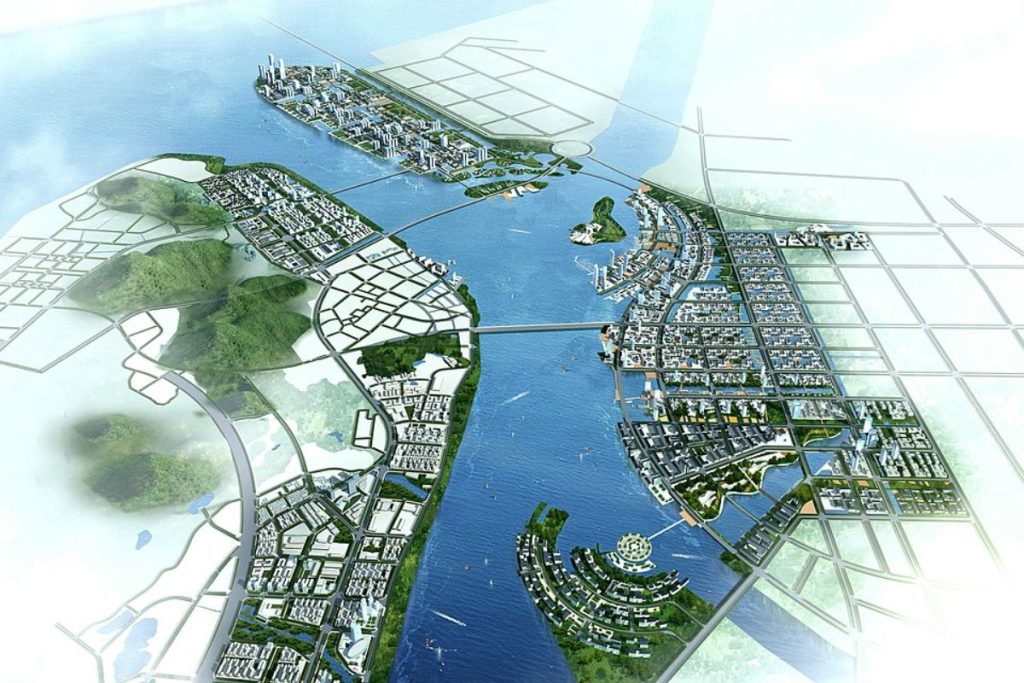
The Urban Imperative: Why Smart Cities Must Evolve to Survive
Our future is undeniably urban. For the first time in history, more than half of the world’s population lives in cities. This urban shift, projected by the United Nations to reach nearly 70% by 2050, has made our metropolises the undisputed engines of the global economy, generating over 80% of the world’s GDP.
But this incredible productivity casts a long, dark shadow. Our cities consume over two-thirds of global energy and are responsible for more than 70% of all greenhouse gas emissions. This concentration of people, assets, and emissions creates a dangerous paradox: the very centers of human progress are now on the front lines of the climate crisis.
This is not a distant threat. Climate change is a clear and present urban reality. We see it in the record-shattering heatwaves crippling cities from Europe to North America, the “sunny day” floods inundating coastal communities, and the devastating super-storms that threaten entire regions.
For years, the proposed solution to urban problems has been the “Smart City.” This term, however, is often mistaken for a futuristic vision of robotic servants. In reality, a smart city is simply one that uses technology as its central nervous system.
It employs a vast network of interconnected sensors, known as the Internet of Things (IoT), to collect real-time data. This data, flowing from traffic lights, air quality monitors, and the power grid, is then analyzed to optimize city functions, manage resources efficiently, and, in theory, improve the quality of life for its citizens.
But being “smart” is not the same as being “safe.” This is where the crucial concept of climate resilience enters the conversation. Think of resilience as a city’s immune system. The Intergovernmental Panel on Climate Change (IPCC) defines it as the capacity of urban systems and communities to prepare for, withstand, and recover quickly from climate-related shocks, like a hurricane, and chronic stresses, like persistent drought.
The central challenge of our time lies at the intersection of these two ideas. A city can be “smart” enough to optimize its bus routes but be completely paralyzed by a single, predictable flood. Therefore, the most successful and livable 21st-century cities will be those that fuse “smart” with “resilient.”
This article argues that this convergence is no longer an academic exercise but an essential, research-driven survival strategy. The solution is not just to install more sensors, but to use the data they provide to make our cities fundamentally stronger, more adaptive, and more equitable.
In this new model, technology is the great enabler. It allows a city to move from a reactive posture, merely cleaning up after a disaster, to a predictive one, anticipating and mitigating risks before they strike. It is the critical difference between counting the cost of damage and preventing it in the first place.
This report will explore the research-backed projects from around the world that are leading this transformation. We will analyze the core technologies, delve into specific case studies from Singapore to Copenhagen, and examine how citizen-centric models are proving that true resilience is built from the ground up.
The Techno-Strategic Framework: A City’s Digital Nerves
To build resilience, a city must first be able to sense, think, and act. This is where the “smart” toolkit becomes the essential strategic framework. It acts as a digital nervous system, allowing city leaders to understand complex, real-time events and respond with precision.
At the most basic level are the Internet of Things (IoT) sensors. Think of these as the city’s digital “nerves,” embedded in the physical world. These sensors constantly monitor vital signs, gathering data on everything from river water levels and air quality to traffic density and energy consumption.
This raw data is then fed to the “brain” of the operation: Artificial Intelligence (AI) and predictive analytics. An AI model, for instance, doesn’t just see that a river is high. It can combine that data with a real-time weather forecast and historical drainage patterns to accurately forecast which specific streets will flood, and in how many hours.
This predictive power is taken a step further with one of the most powerful tools in the modern urban arsenal: the Digital Twin. This is a highly detailed, virtual 3D replica of the city, kept alive with real-time data.
As described in research by firms like Deloitte, city planners can use this digital simulator to ask critical “what if” questions. What happens to our power grid if a heatwave hits 45°C? How will a new sea wall hold up against a 100-year storm surge? A digital twin lets them test interventions virtually, saving billions and preventing failed projects in the real world.
Finally, this all comes together in an Integrated Command Center. This is the city’s “control room,” a physical or virtual hub that breaks down the traditional, inefficient data silos between departments.
Before this, the police, water, and transport departments all had their own data and rarely shared it during a crisis. Today, an integrated platform allows all agencies to see the same map and the same data. This creates a unified operational view, enabling a coordinated, data-driven response.
The scientific rationale for this framework is a fundamental shift from reactive to proactive. For centuries, cities have operated on a cycle of “break and fix.” A disaster happens, and we rebuild. This data-driven approach allows for prediction and prevention.
Instead of just dispatching rescue boats to a flooded neighborhood, the system can warn residents in that exact neighborhood to evacuate hours in advance. Research from institutions like the World Bank consistently links investment in early-warning systems and data infrastructure to measurable reductions in economic losses and, most importantly, saved lives. This digital framework is the architecture of survival.
Resilience in Action: Global Case Studies
The abstract theory of smart resilience comes to life in cities worldwide. These are not futuristic test labs, but working metropolises that have turned data-driven strategies into tangible, life-saving infrastructure. Here are the leading research-backed projects, grouped by the climate challenge they solve.
Theme 1: Mastering Water, From Scarcity to Deluge
For cities, water is a story of extremes, oscillating between devastating floods and crippling scarcity. Smart technology is now being used to manage both.
In Singapore, a nation historically dependent on imported water, scarcity is an existential threat. The solution is the “Smart Water Grid,” a high-tech, island-wide nervous system. This network features WaterWiSe, a world-renowned sensor system that monitors the entire water distribution network in real-time.
This system can detect and locate a tiny leak, often within a day, drastically cutting down on “unaccounted-for water.” This data is complemented by a rollout of 300,000 smart water meters, giving consumers hourly data to manage their own use. This digital backbone is what makes Singapore’s high-tech water recycling (NEWater) and desalination plants truly efficient.

On the other side of the globe, Copenhagen faces the problem of too much water. The city was paralyzed by a billion-dollar cloudburst in 2011, exposing its vulnerability to pluvial flooding. The city’s response is the innovative Cloudburst Management Plan.
This plan brilliantly merges “smart” tech with “green” infrastructure. It treats stormwater as a resource, not waste. Public parks, like the redesigned Enghaveparken, are equipped with smart valves and sensors, allowing them to transform into beautiful, temporary reservoirs during a downpour, protecting critical infrastructure. The goal is to make 90% of the city “rainproof” through a network of these intelligent green spaces.
Theme 2: Cooling the Concrete, Clearing the Air
Urban centers are notoriously hotter than their rural surroundings, an effect known as the Urban Heat Island (UHI). This, combined with chronic pollution, poses a severe public health risk.
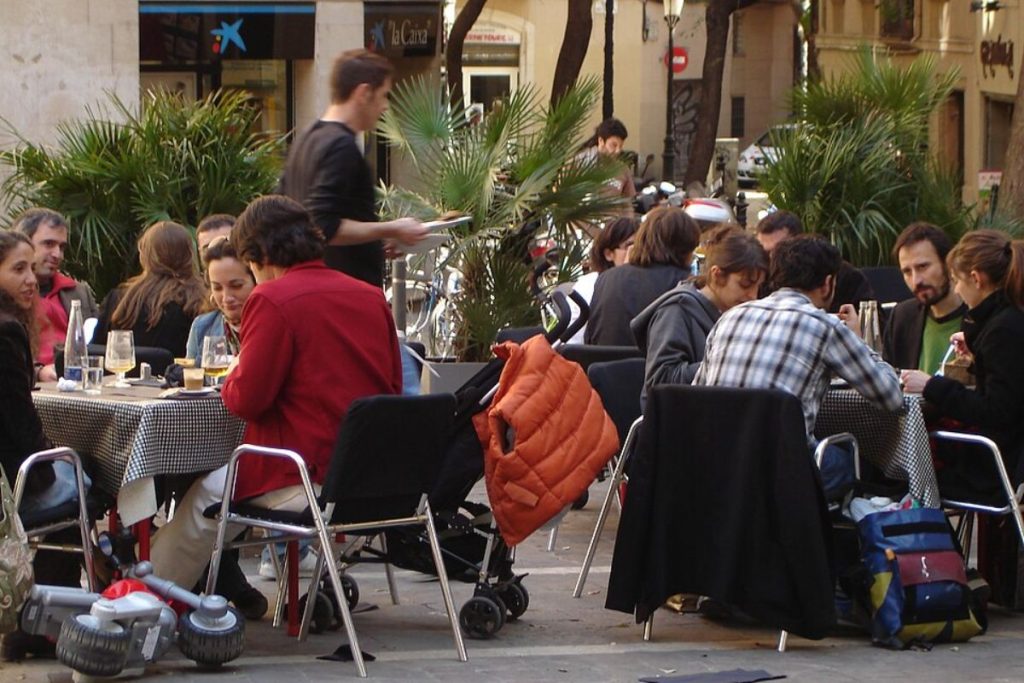
Barcelona’s “Superilles” (Superblocks) project is a direct, research-driven response. The city is using smart traffic management to reclaim its streets for people. The model diverts vehicle traffic around 3×3 block residential grids, freeing internal streets to become green, pedestrian-first plazas.
The results from early superblocks in Poblenou and Sant Antoni are compelling. Research published in The Lancet and other journals points to measurable benefits: residents report improved well-being, tranquility, and better sleep quality. More quantifiably, studies show reduced traffic, lower noise levels, and significant drops in air pollution (especially NOx). This approach to “traffic calming” is also proven to reduce injuries.
Theme 3: Predicting the Unthinkable
For some cities, climate change means a terrifying increase in rapid-onset disasters like landslides and flash floods. Here, smart tech is a vital early warning system.
Rio de Janeiro is a prime example. The city’s unique topography makes its hillside favelas extremely vulnerable to landslides. A catastrophic flood in 2010 resulted in 68 deaths, highlighting the urgent need for a new approach.
The city’s answer is the Centro de Operações (COR), a state-of-the-art integrated command center developed with private partners. COR is the city’s brain, breaking down data silos by integrating real-time feeds from over 50 city agencies.
It analyzes data from over 900 cameras, a 250km-range weather radar, and more than 100 rain gauges. Its AI model can predict a high-risk event. For instance, when rainfall hits a threshold of 40mm in one hour, COR automatically triggers a multi-channel alert, including 200+ sirens in high-risk favelas and text messages to residents. This is the very definition of a proactive, data-driven resilience.
Theme 4: The Green Grid
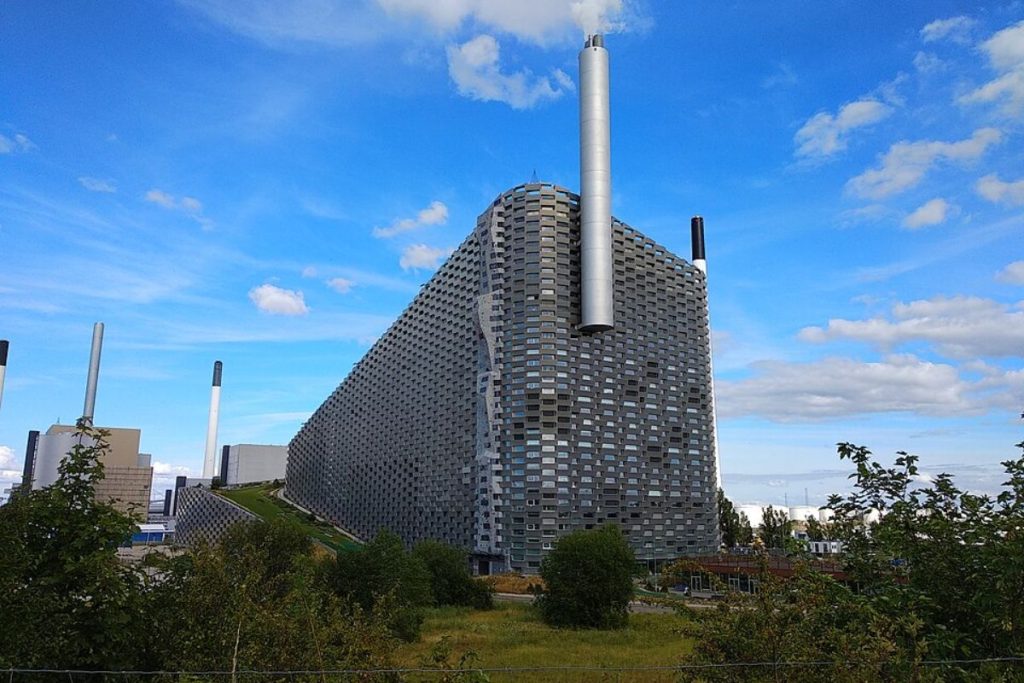
Finally, resilience is about mitigation, specifically the urgent need to decarbonize. Copenhagen again stands out with its ambitious goal of becoming the world’s first carbon-neutral capital by 2025.
This target is only achievable through an exceptionally advanced smart grid. The city’s EnergyLab Nordhavn serves as a full-scale “living laboratory” for smart energy solutions, integrating district heating, power, and transport.
The research-backed evidence is already clear. A city-wide initiative to install smart street lighting has yielded a documented 76% saving on the public lighting energy bill. This intelligent grid is crucial for balancing supply and demand, allowing the city to seamlessly integrate variable renewables like wind power with its famous CopenHill waste-to-energy plant.
The Rise of the “Smart Citizen”: A Bottom-Up Approach to Resilience
While many smart city models are top-down, multi-billion dollar government projects, a different, more democratic framework is emerging from the ground up. This is the “citizen-tech framework,” championed by organizations like the global environmental group Earth5r. It operates on a simple, powerful premise: a city doesn’t just need smart sensors, it needs empowered, data-literate citizens.
This approach argues that the most valuable data doesn’t always come from an expensive, fixed sensor, but from a trained volunteer on the ground. It uses technology not to replace human action, but to verify, scale, and direct it.
For instance, the Earth5R App functions as a crucial accountability tool. It uses digital verification, including timestamps, geotracking, and even blockchain-based methods, to create a reliable, auditable record of on-the-ground environmental action. This turns a simple community cleanup into a verifiable data point for climate action.
This digital proof of work is then combined with high-tech planning. The organization uses GIS mapping and drone surveys to identify critical waste hotspots in rivers or vulnerable landfills. AI algorithms analyze this data to forecast pollution trends, effectively pointing community efforts toward the areas of greatest need for maximum impact.
Community Action as Measurable, Verifiable Data
This citizen-first model transforms grassroots action from “volunteering” into a source of verifiable, research-driven findings. The data collected proves that community action can generate a measurable return on resilience.
Look at the Mithi River in Mumbai. Long clogged with plastic and industrial waste, it poses a severe flood risk. Earth5r’s Mithi River cleanup project, verified through their app, has removed over 11,100 tons of waste. This isn’t just about aesthetics, it directly enhances the city’s climate resilience by improving water flow and reducing flood potential.
Similar results are seen in other projects. A community-led effort at Powai Lake, Mumbai, resulted in the verified removal of 58 tonnes of waste, restoring a critical urban water body.
In Varanasi, a city facing significant water stress, an Earth5r project focused on water resilience. By implementing rainwater harvesting systems in a single residential society, they verifiably captured 100,000 liters of water, measurably reducing that community’s dependence on the strained municipal grid.
The impact on ecological and heat resilience is just as documented. In Chennai, a wetland restoration project saw volunteers plant 5,000 mangrove and wetland saplings. Subsequent research confirmed a 30% increase in fish diversity within the restored area, a powerful metric for ecological health.
In Mumbai, a horticulture program trained 1,400 families in urban greening. This community effort is now offsetting an estimated 4,620 metric tons of CO2 annually, creating vital green cover that directly helps mitigate the dangerous urban heat island effect.
The “Smart Citizen” vs. The “Smart City”
Earth5r’s work provides a compelling counter-narrative to the purely tech-driven smart city. It suggests that the most scalable and robust solutions are not just about top-down monitoring, but are hybrids that integrate technology with community mobilization.
This “smart citizen” model fosters a more equitable and participatory form of resilience. It proves that you don’t need a billion-dollar command center to make a city safer. You need an engaged community, armed with the right tools and data, working block by block to build a future that can withstand the climate challenges ahead.
Beyond the Hype: The Critical Flaws in the Smart City Model
The promise of a data-driven, resilient city is undeniably compelling. We picture clean, efficient utopias where technology anticipates and solves every problem. However, a truly research-driven analysis must look beyond this “techno-utopian” vision.
Like any powerful tool, smart city technology is not a neutral “panacea.” It carries significant, inherent risks that, if left unaddressed, could worsen the very inequalities they claim to solve. The road to resilience is paved with complex, real-world challenges.
The most immediate concern is data privacy and mass surveillance. The same network of IoT sensors, high-resolution cameras, and integrated data hubs that monitors river levels can also be used to monitor citizens. This creates a razor-thin line between public safety and a state of permanent, invasive surveillance.
The Electronic Frontier Foundation (EFF) and other digital rights groups raise critical questions. Who is watching the data from Rio’s thousands of cameras after the flood warning has passed? Without robust, transparent public oversight, the smart city can easily become a “Big Brother” city, normalizing a level of monitoring that erodes civil liberties.
Then there is the critical question of equity, often called “the digital divide.” Many smart solutions, from early-warning apps to smart-meter discount programs, implicitly assume that all citizens have access to high-speed internet and modern smartphones.
This is a dangerous assumption. Research from institutions like the Pew Research Center consistently shows that vulnerable populations, including the elderly and low-income families, are often the least connected. An emergency alert app is useless to a person without a data plan. This gap means technologies can inadvertently prioritize the wealthy, leaving those most at-risk to climate change even further behind.
The enormous price tag is another major hurdle. These integrated systems represent massive upfront capital investments that are simply out of reach for many municipalities, especially in the Global South.
This high cost often forces cities into partnerships with a few giant tech corporations. This can lead to “technological lock-in,” a well-documented problem where a city becomes dependent on a single company’s proprietary software and hardware. This dependency stifles future innovation, raises long-term maintenance costs, and effectively hands over the keys to critical public infrastructure to private, for-profit entities.
Finally, there is the paradox of fragility. A city that runs on code is a city that can be hacked. Cybersecurity is a massive, and often underestimated, risk.
A successful cyber-attack on a smart grid, as warned about by government agencies like CISA, could do far more than steal data. It could shut down a city’s water supply in a heatwave, paralyze the transport network during an evacuation, or disable the very emergency alert system citizens rely on. This digital “single point of failure” could turn a city’s “smartest” asset into its greatest liability.
A New Urban Mandate: From Smart to Sustainable
The evidence is clear: the most successful, climate-proof cities of the future will not be the ones with the most technology, but the ones that use technology intelligently. This marks a crucial evolution in urban planning, moving beyond the simple “Smart City” to embrace a more holistic vision.
Our findings show that true resilience is a hybrid approach. It is a blend of Singapore’s high-tech grid management, Barcelona’s nature-based green infrastructure, Rio’s integrated data-driven warnings, and the community-powered action championed by groups like Earth5r. No single solution works in isolation.
This synthesis is leading to a new, more powerful concept: the “Smart Sustainable City.” This term, now widely adopted by international bodies like the UN, re-frames the entire purpose of urban technology. The goal is no longer just efficiency for its own sake.
Instead, the goal is to use data and technology to achieve long-term sustainability. This means creating cities that are not only efficient but also equitable, inclusive, and environmentally sound. It ensures that the benefits of smart solutions, from clean air to safe streets, are shared by all residents, not just the wealthy or digitally connected.
The future of urban development rests on this integrated model. It recognizes that a city is a complex, living system. A “smart” flood sensor is useless if the “green” infrastructure, like parks and permeable pavements, isn’t there to absorb the water. And that green infrastructure is most effective when its design is informed by the “smart” data.
The ultimate goal is a city that is truly adaptive. The technologies and strategies discussed in this report are not a one-time upgrade. They are the tools that will allow our cities to learn, evolve, and thrive, ensuring a livable, resilient, and equitable future for all citizens in the face of a profoundly challenging climate.
Frequently Asked Questions
What is the difference between a “smart city” and a “resilient city”?
Think of it this way: a “smart city” uses technology and data to optimize efficiency—like managing traffic, saving energy, or streamlining services. A “resilient city” is one that can survive and recover from shocks and stresses, like floods, heatwaves, or pandemics. This article argues that the best approach is to use “smart” tools for the purpose of becoming more “resilient.”
Isn’t “smart city” just a buzzword for more sensors and surveillance?
This is a primary criticism, and it’s a valid concern. While the technology (sensors, cameras, data collection) is real, its purpose determines its label. A project focused only on optimization or surveillance fits the “Big Brother” stereotype. However, the projects in this article, like Rio’s landslide warnings, show how the same technology can be used for public safety and climate resilience, though the risk of misuse remains.
What is a “Digital Twin” and how does it help with climate change?
A Digital Twin is a highly detailed, virtual 3D replica of a city, fed with real-time data from IoT sensors. Its power lies in simulation. Before spending billions on a new sea wall, planners can use the Digital Twin to test it against a virtual Category 5 hurricane. It allows cities to “stress-test” their infrastructure against future climate scenarios and find the most effective solutions before they build them.
How do Barcelona’s “Superblocks” reduce heat and pollution?
The “Superblock” (Superilla) model uses smart traffic management to divert most vehicles around a 3×3 block grid, leaving the internal streets for pedestrians. This has two key research-backed effects: 1) It drastically reduces air and noise pollution inside the block by removing cars. 2) It allows the city to replace asphalt with trees, green spaces, and permeable surfaces, which directly combats the “Urban Heat Island” effect by providing shade and reducing heat-absorbing concrete.
What is Copenhagen’s “Cloudburst Management Plan”?
It’s an innovative, city-wide strategy to handle extreme rainfall, developed after a 2011 flood caused over $1 billion in damage. Instead of just bigger pipes, it combines “green” and “smart” solutions. Parks, like Enghaveparken, are redesigned with smart sensors and valves to act as temporary reservoirs during a storm. Streets are rebuilt to intelligently channel water away from buildings. It’s about treating stormwater as a resource to be managed, not just a problem to be drained.
How does Singapore’s “Smart Water Grid” work?
As a water-scarce nation, Singapore cannot afford to lose water. Its “Smart Water Grid” is a sophisticated network of sensors (like the WaterWiSe system) that monitors the entire water distribution system in real time. These sensors can detect the precise location of a tiny leak, often before it becomes a major break, allowing for rapid repair and saving millions of gallons. It’s like a nervous system for the city’s water pipes.
What is the Centro de Operações (COR) in Rio de Janeiro?
COR is a high-tech, integrated command center. It was created after deadly landslides in 2010 to break down data “silos” between city agencies. It combines real-time data from weather radar, 900+ cameras, 100+ rain gauges, and over 50 city departments. Its AI-driven system can predict landslide risk and automatically trigger 200+ sirens in at-risk favelas, giving residents critical time to evacuate. It’s a prime example of a shift from reactive response to proactive warning.
Can smart city technology actually help in a fast-moving disaster?
Yes, and Rio’s COR is the key example. In the past, by the time government agencies realized the danger of a flash flood, it was often too late. By integrating weather radar and on-the-ground rain gauges, COR’s system can issue an automated warning (e.g., when rainfall hits 40mm in an hour) in seconds, far faster than human-led communication chains. This speed saves lives.
What is the “digital divide” and why does it matter for resilience?
The “digital divide” is the gap between those who have access to modern technology (smartphones, high-speed internet) and those who do not. This is a major equity challenge. If a city’s only emergency warning system is a smartphone app, it will fail to reach the elderly, the poor, or those in areas with bad reception. A truly resilient system must use multiple channels, including low-tech solutions like sirens, to ensure everyone gets the message.
What does Earth5r do differently from government-led projects?
Earth5r’s model is “bottom-up” rather than “top-down.” Instead of the government installing sensors, Earth5r empowers citizens with technology. Their model uses an app for training and to digitally verify on-the-ground environmental action (like a cleanup). This creates measurable, reliable data from community efforts, proving that citizen action can directly reduce climate risks, such as river cleanups preventing floods.
How can a community cleanup be considered a “smart” climate solution?
Earth5r’s Mithi River project is a perfect example. The project verifiably removed over 11,100 tons of waste. This waste, particularly plastic, clogs urban waterways and is a primary cause of flooding during heavy rains. By using drones and GIS mapping to find waste hotspots and the Earth5R App to verify its removal, this “community action” becomes a data-driven, measurable, and highly effective climate adaptation strategy.
What is the “Urban Heat Island” (UHI) effect?
It’s a phenomenon where metropolitan areas are significantly warmer than surrounding rural areas. Materials like concrete, asphalt, and dark roofs absorb and retain the sun’s heat, while waste heat from vehicles and air conditioners adds to the problem. This retained heat makes heatwaves far more dangerous in cities.
How do green spaces like parks and mangroves build resilience?
They are what’s known as “nature-based solutions.” Parks, like in Copenhagen, can be designed to absorb massive amounts of floodwater. Greenery and trees, as in Barcelona’s Superblocks, provide shade and cool the air through evapotranspiration, directly fighting the Urban Heat Island effect. Mangroves, like those in Earth5r’s Chennai project, are a critical natural defense, absorbing storm surges and preventing coastal erosion.
What are the biggest risks of building a smart city?
The article highlights four main risks: 1) Privacy and Surveillance (creating a “Big Brother” state), 2) The Digital Divide (leaving vulnerable populations behind), 3) High Cost and Tech Lock-in (becoming dependent on a few large tech companies), and 4) Cybersecurity (a city that runs on code can be hacked and crippled).
What is “technological lock-in”?
This is when a city becomes dependent on a single company’s proprietary technology (their specific software, sensors, or data formats). It’s like buying a phone that only works with one company’s chargers and apps. This stifles competition, can be very expensive to maintain, and makes it difficult for the city to innovate or switch to a better, cheaper solution later.
Are smart cities only for rich, developed countries?
No. While large-scale projects like Singapore’s grid are expensive, the principles can be adapted. Rio’s COR system, for instance, focuses on a specific, high-priority risk (landslides). Furthermore, the Earth5r “citizen-tech” model is highly scalable and less expensive, as it leverages the power of community volunteers and existing mobile phone technology, making it applicable in developing nations.
Which city is the “best” smart resilient city?
The article shows there is no single “best” city. Instead, the best approach is a hybrid. It would combine Singapore’s high-tech efficiency, Copenhagen’s blend of green and smart infrastructure, Barcelona’s focus on public health and livability, and Earth5r’s model of “smart citizen” engagement.
How does AI actually help predict a climate disaster?
AI models are “trained” on vast amounts of historical data—for example, every rainstorm, soil moisture level, and landslide in Rio for the past 20 years. When the AI sees real-time data (e.g., “it’s raining 30mm/hour,” “the ground is already 80% saturated”) that matches the preconditions of a past disaster, it can calculate a high probability of a new one and trigger an alert.
What is a “Smart Sustainable City”?
This is the evolution of the “smart city” concept. A “smart city” just wants to be efficient. A “smart sustainable city” uses that efficiency to achieve a larger goal: long-term environmental sustainability and social equity, in line with the UN’s Sustainable Development Goals (SDGs). The technology is not the end goal; a livable, equitable, and green city is.
How can I, as a citizen, contribute to my city’s resilience?
The Earth5r model provides a direct answer. You can get involved in local environmental groups, participate in community cleanups, or advocate for more green spaces and better public transport. Using technology to document local issues (like pollution or blocked drains) and reporting them to municipal authorities is also a form of “smart citizen” action.
Be the ‘Smart Citizen’: Your City’s Resilience Starts With You
The evidence is in. The future of our cities in the face of a changing climate will be defined not just by advanced technology, but by human action. It is easy to look at the billion-dollar projects in Copenhagen or Singapore and feel that resilience is someone else’s responsibility.
But as the work of “smart citizens” from Mumbai to Chennai has proven, real change is a hybrid. The most powerful solutions are born when technology empowers community action.
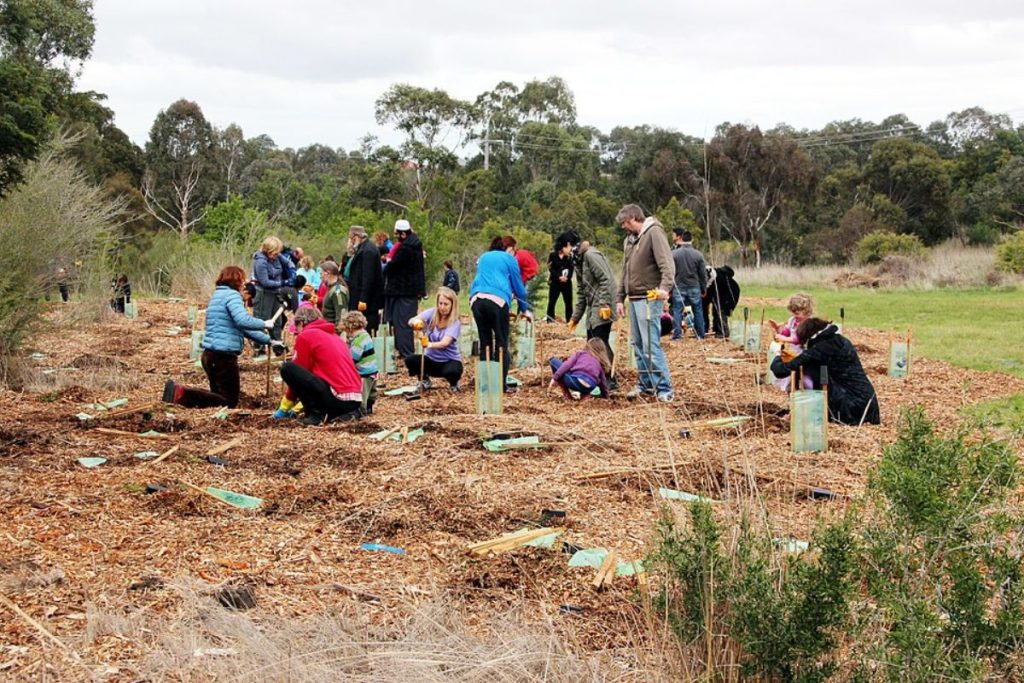
You don’t have to wait for a command center to be built. You can be the “sensor” your community needs. Use your phone to document and report pollution, illegal dumping, or blocked storm drains to your local authorities. Join a local cleanup, a tree-planting drive, or a community garden. Use your voice to advocate for more green spaces, better public transport, and intelligent, nature-based solutions in your own neighborhood.
The most resilient city is not the one with the most code; it’s the one with the most committed, aware, and active community. The “smart city” is a tool. The “smart citizen” is the future.
Get involved. Be the change. Build your resilient city from the ground up.
~ Authored by Abhijeet Priyadarshi