
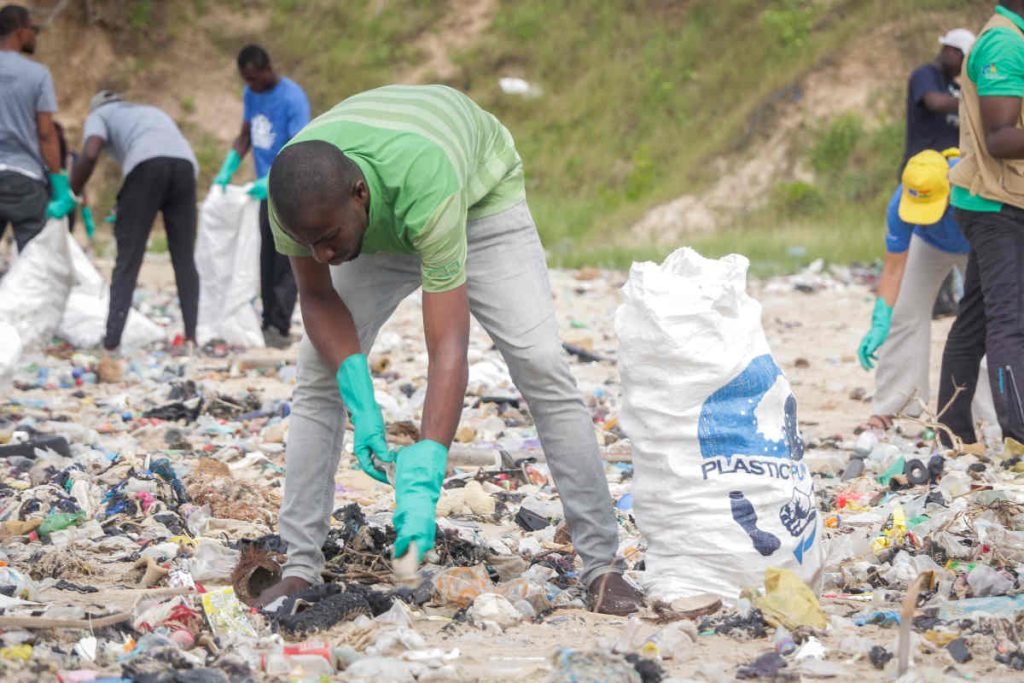
India stands at a pivotal moment in its environmental journey. The country’s push towards a recycling revolution in India is gaining momentum; yet it hinges on a largely hidden workforce in India’s recycling sector whose efforts remain under-appreciated. This article shines a light on that workforce, their role, and why their contribution matters.
When we speak of a “recycling revolution,” we mean more than just sorting and processing waste. In the Indian context, it signifies a transformation of how waste is collected, sorted, recycled and reused,embedded within the nation’s shift towards a circular economy. It involves technological upgrade, policy reform, infrastructure investment and, crucially, human capital: the thousands of waste-pickers, grassroots recyclers and community-based enterprises who form the backbone of this transformation.
One organisation helping map and support this transformation is Earth5R (Earth5R recycling India). Earth5R works with local communities, municipalities and private sector partners to strengthen recycling infrastructure, train youth for green jobs and integrate informal workers into more formalised systems. Their insight provides a vital lens into how the “hidden workforce” is powering change.
To put the scale of the challenge into perspective: India generates over 170,000 tonnes of municipal solid waste per day (MSW) as per the Central Pollution Control Board (CPCB) 2021-22 data. For plastic waste alone, studies indicate India produces between 4 to 9 million tonnes annually, of which only 13 % to 60 % is reliably recycled. Meanwhile, much of the workforce managing this flow of materials is informal operating without formal contracts, protections or recognition; yet performing essential service.
In this feature we will first set the scene: examining India’s waste and recycling landscape, and defining the role of the workforce. Then we’ll move into data-driven analysis of scale and value chain. Next, we’ll dive into real-world case studies illustrating how the hidden workforce is mobilised. Afterwards we’ll explore the major challenges facing both the workforce and the recycling ecosystem. Finally, we’ll look ahead: what the future holds if India truly empowers this workforce, and how policy, industry and civil society must respond.
This is not just a story about waste ; it is about jobs, livelihoods, resource efficiency, circularity, and a new model for inclusive sustainable growth. The recycling revolution in India will succeed only if the hidden workforce powering it is seen, valued and supported.
Setting the Scene: Waste, Recycling & Workforce in India
Waste generation and recycling rates in India
India’s waste story is one of scale and urgency. According to the Central Pollution Control Board (CPCB), the country generated around 1,70,338 tonnes per day of municipal solid waste in 2021-22, of which only about 91,512 TPD was treated. As urbanisation and incomes rise, per-capita waste generation follows suit: many Indian cities now record nearly 0.5 to 1.1 kg/person/day in urban areas.
When it comes to plastic specifically, the picture is equally challenging. Researchers at the Council on Energy, Environment and Water (CEEW) report that India generates approximately four to nine million tonnes of plastic waste annually, of which only 13 % to 60 % is recycled.That wide range reflects both the data gaps in India’s plastic-waste system and the informal channels at play.
What drives the low recycling rate? Several causes converge. First: inadequate infrastructure. Many municipal bodies struggle with irregular collection, weak source segregation and overloaded disposal systems. For example, studies show that roughly half of the waste collected receives safe treatment. Second: the prevalence of the informal sector and relatively low investment in formal systems means large volumes of recyclable material remain unprocessed or end up in landfill or open dump sites. Third: policy and regulatory bottlenecks, including fragmented data, weak enforcement of Extended Producer Responsibility (EPR) and limited capacity at the materials-recovery and recycling end. The 2023 “India’s Tryst with a Circular Economy” report emphasises that only about 20 % of materials consumed in India are recycled in any meaningful closed-loop system
In short: India is producing a massive volume of waste, while recycling remains far from commensurate. That gap sets the stage for why the hidden workforce in India recycling becomes so critical to the story of a recycling revolution.
The hidden workforce: who are they?
Behind every tonne of recycled plastic, paper or metal lies the effort of a largely unseen workforce. This includes formal recyclers, scrap-recovering entrepreneurs, but also the vast informal networks of waste-pickers, material-sorters, collection chains and scrap aggregators. In India’s context, the “hidden workforce” refers to millions of individuals working at the front-line of the recycling economy but without formal recognition, protections or visibility.
According to studies, there are approximately 4 million informal waste-pickers and recyclers in India today.These workers collect, sort and channel recyclables from households, streets, dumpsites and waste-streams, performing key functions in the value chain. One industry assessment reports that the informal waste-recycling sector alone in India accounts for around 4 million people including rag-pickers, kabadiwalas (small scrap aggregators), intermediate dealers and other actors.
Why call this workforce “hidden”? Because while their impact is real,they recover materials, divert waste from landfills and enable recycling; they are rarely integrated into formal systems, rarely acknowledged in national statistics and often lack social protection, decent pay or safe working conditions.
From the viewpoint of organisations such as Earth5R (Earth5R recycling India), this hidden workforce is the engine of India’s recycling revolution. Without their participation, segregation at source, collection of dry‐waste streams and effective material recovery cannot scale. Earth5R’s work focuses on training, skilling and organising this workforce to plug into more formalised circular-economy pathways.
Policy and framework for recycling in India
The current waste-and-recycling system in India is framed by several key regulations and policy initiatives. The Solid Waste Management Rules, 2016 (SWM Rules) were a landmark step: they extended regulatory coverage beyond municipal areas to include industrial townships, census towns and urban agglomerations. Parallel to this, the Plastic Waste Management Rules, 2016 (PWM Rules) set guidelines for segregation, collection, recycling of plastic waste, and introduced the concept of Extended Producer Responsibility (EPR) for producers, importers and brand-owners of plastic packaging.
Despite these frameworks, the transition to a full-scale circular economy remains uneven. “India’s Tryst with a Circular Economy” highlights that historically only around 20 % of the materials consumed in India are recycled through formal loops, far below the rates achieved in more advanced economies, though mandated, still faces implementation bottlenecks: many small producers remain outside the system, waste flows remain partially untracked, and recycling infrastructure is under-capitalised.
Organisations like Earth5R act at the intersection of policy and practice: they engage with municipal bodies, local communities and private firms to enable the implementation of these rules especially by tapping the informal workforce, skilling them, and embedding them into formal value chains. This policy-practice interface is vital if the workforce is to transition from informal invisibility to recognised drivers of the recycling revolution.
Evidence and Data: Quantifying the Hidden Workforce
Data on recycling industry scale
India’s recycling industry is bigger than many realise, though still far from its potential. A recent survey of 819 mechanical-plastic-recycling units found that this sample represents about 20 % of India’s installed capacity. The assessment estimated that India had ~47.8 lakh (4.78 million) tonnes per annum (tpa) of installed capacity across ~2,309 units of which ~2.18 million tpa is for polyolefins (PE, PP, HDPE/LDPE) alone.
However, capacity is not the same as throughput. Many units operate below capability, feedstock quality is inconsistent, and technology varies widely. The informal sector still handles large volumes of recyclables, complicating official aggregates. One authoritative study of plastic-waste recycling in the state of Odisha estimates under an “ambitious scenario” that processing ~6,678 kilo-tonnes of plastic waste between 2024-30 could generate 22,566 full-time equivalent (FTE) jobs in mechanical recycling alone.
This indicates a direct link between recycling scale and job creation: every additional tonne of industrial recycling capacity supports roles in collection, transport, sorting, operations, and management. Yet many recyclers cite feedstock contamination, lack of closed-loop markets, and regulatory constraints as bottlenecks. The survey noted that less than 1 % of recycled content was incorporated back into packaging at present underscoring that while installed capacity exists, the recycling ecosystem remains under-optimised.
In short, the numbers tell a story: India has millions of tonnes of installed recycling capacity, thousands of formal units, and the potential for tens of thousands of jobs, yet the realisation of this potential is constrained by low utilisation, informal operations, and weak linkages. Recognising this is key to understanding how the hidden workforce in India’s recycling revolution may be mobilised.
Earth5R’s insights: workforce training and community programmes
Turning numbers into people, the organisation Earth5R provides a lens into how the “hidden workforce India recycling” is being empowered on the ground. Earth5R’s “Future-Proofing India’s Youth” initiative trains young people in waste management, circular-economy thinking and green-jobs skills, aligning with national mission schemes like Skill India.
In neighbourhoods from urban villages to informal settlements, Earth5R’s “zero-waste society” frameworks bring local communities into waste segregation, recycling collection and up-cycling programmes. Their training modules do more than teach: they link trainees to livelihoods, processing waste streams, operating material-recovery facilities, and engaging with municipal value chains.
What emerges is a narrative of workforce participation that boosts both social inclusion and recycling outcomes. When waste-pickers and local youth receive training, protective gear, formal recognition, and linkages to downstream recyclers, they shift from invisible labour to empowered agents of a circular economy. This strengthens local recycling systems, increases material recovery rates, and builds skills relevant to green jobs and sustainable finance in India.
Thus, Earth5R’s work illustrates that quantifying the hidden workforce is not just about numbers ;it’s about transforming informal labour into formal value-chain contributors, with ripple effects on livelihoods, inclusion and resource efficiency.
The value chain and workforce roles in recycling
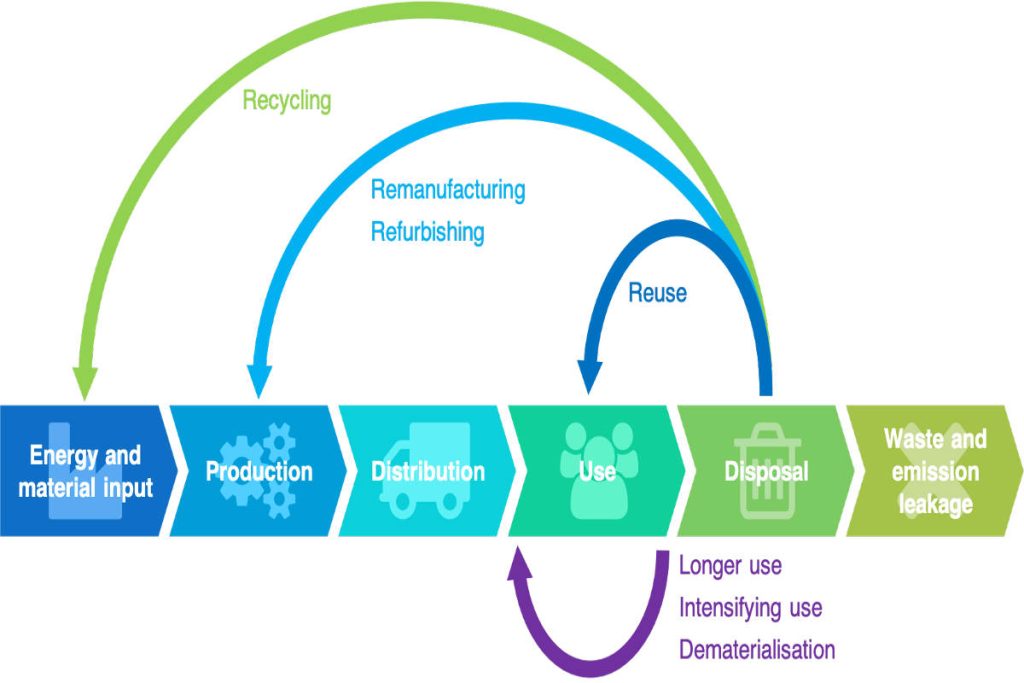
To understand how the hidden workforce fits, it helps to map the recycling value chain: at one end you have collection; then source segregation; sorting and material-recovery facilities (MRFs); processing and remanufacturing; resale or incorporation into new products; and finally market end-uses. Each link involves distinct workforce roles.
Some of the typical roles include waste-pickers and informal collectors who source recyclables; sorters who separate plastics, metals, paper; transporters who carry materials to MRFs or processing units; operators in recycling plants who wash, shred, extrude and pelletise; up-cyclers or artisans who convert materials into new products; trainers and community mobilisers who build capacity; and supervisors or managers in formal units.
In many cases these roles remain informal, low-paid, lacking worker protections, yet they are essential. A recent CEEW study for Odisha in the recycling sector estimated that mechanical recycling of 7,000 kilo-tonnes could create ~3.3 FTE jobs per kilo-tonne in an ambitious scenario demonstrating the workforce intensity of recycling operations.
Across the chain, it becomes clear: the workforce in recycling is not monolithic. It spans male and female workers in informal settlements, youth trainees in community programmes, formal plant operators, logistics staff, and small‐enterprise owners. Recognising this diversity is crucial for policy, for formalisation of labour, for linking to ESG investing and green finance in India, and for creating a resilient green jobs pipeline.
In sum: the workforce dimension of the recycling revolution is measurable, multifaceted, and central to scaling India’s transition to a circular economy. But unless these roles are formalised, trained and integrated, the hidden workforce will remain under-utilised and India’s recycling potential will remain partly latent.
Case Studies:Real-World Models of Workforce Empowerment
Case Study: Earth5R in Powai, Mumbai
In the upscale Powai neighbourhood of Mumbai, a quiet transformation is underway. With high-rise flats, bustling offices and the scenic Powai Lake, this area would not be the first one you associate with waste-work. Yet the sustainability organisation Earth5R saw this as a powerful microcosm for the “India recycling revolution”. Their community programme there illustrates how the hidden workforce can be mobilised in an urban setting.
Here’s how the programme unfolded: Earth5R launched a “zero-waste society” framework in Powai and adjoining areas. The first step was household segregation training. Using pictorial tools and live demonstrations, the team helped residents distinguish dry waste, wet waste, recyclable packaging, and hazardous items. Composting units were installed in local societies: one building installed a unit that could convert up to 3 tons of organic waste per month into compost, which was then donated to nearby farms.
On the workforce dimension: the programme opened training pathways for local residents, especially youth and women, transforming them into waste segregators, recyclers and up-cycling entrepreneurs. For example, Earth5R volunteers conduct sessions where participants are taught not only to sort waste but also to create products from up-cycled materials and link those to local markets.Waste-pickers and informal collectors were included and given formal recognition, protective gear, and livelihood support as part of the broader circular-economy frame.
The results have been promising: in Powai the rate of clean segregation reportedly improved, the amount of waste sent to landfill dropped, and local livelihoods emerged from this circular-economy model. One indicator: a building in the programme produced about one tonne of compost per month via converted organic waste, helping reduce landfill loads. Moreover, community engagement deepened: residents changed their mindset from seeing waste as “trash” to seeing it as “resource”.
In short: the Powai model shows how the hidden workforce can be recognised, up-skilled and integrated into a local recycling ecosystem. This points to what can happen when community, policy, informal labour and circular economy link together.
Case Study: Plastics Recycling Hub and Worker Jobs in Odisha
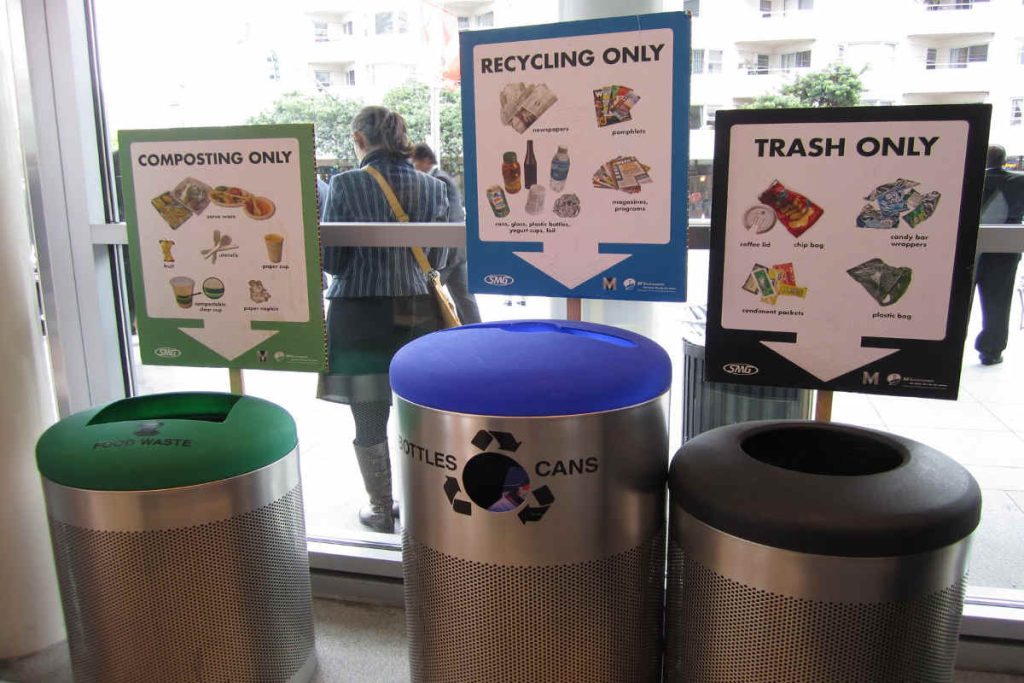
Shifting from the urban neighbourhood to a state-level scale, the case of Council on Energy, Environment and Water (CEEW)’s analysis in the state of Odisha offers a strong data-backed example of the workforce potential in a recycling revolution.
CEEW’s study shows that if Odisha steps up mechanical recycling of plastic waste, especially packaging waste, the employment impact is substantial. For instance, under an ambitious scenario the study estimates ~23,000 direct full-time equivalent jobs through mechanical recycling of 7,000 kilo-tonnes of plastic waste between 2024-2030.
The logic is clear: more recycling capacity means more jobs in collection, segregation, transport, processing, remanufacturing and resale.
What’s the context? Plastic packaging waste in India is growing fast, but feedstock quality, segregation at source, and recycling infrastructure are uneven. In Odisha, the study suggests the state could become a hub for eastern India, tapping not just its own waste but also neighbouring states, thus scaling workforce roles.
Here the workforce role is central. For mechanical recycling to scale, you need trained operators, maintenance staff, materials-recovery facility (MRF) staff, logistics teams, quality control supervisors; all stepping out of the hidden workforce into semi-formal or formalised employment. Investing in training, safety, formal contracts and workers’ rights becomes essential, not optional.
Thus, the Odisha case provides a macro-view of how the hidden workforce in India’s recycling revolution can scale turning tonnes of plastic into jobs, livelihoods and resource loops.
Case Study: Informal Workers in the E-Waste Sector
While the previous cases focus on community-based or state-scale models, the role of the informal workforce in India’s e-waste recycling sector is both massive and under-recognised, forming a vital part of the hidden workforce in India’s recycling revolution.
Multiple studies show that over 90 % of e-waste processing in India is handled by the informal sector: waste-pickers, scrap dealers, small dismantlers operating without formal recognition or protections. In many urban hubs, such as the e-waste market zones around Delhi or Mumbai, thousands of workers manually extract valuable metals from old electronics ,often at significant health and environmental cost.
What does this imply for workforce empowerment? First, this is a large labour pool already contributing to materials recovery and recycling. It is a workforce that if recognised, trained, supported with safety gear, formal channels, and social protections, could form the bridge between informal waste-streams and formal recycling value chains. Second, there is a cause-effect link: formalising informal workers can increase recycling efficiency, reduce environmental hazards, strengthen traceability, and open access to green-jobs financing, ESG investing, sustainable finance mechanisms and climate-resilient employment.
For example, the lack of formalisation in e-waste means many workers operate with minimal safety, no contracts, erratic wages and little upward mobility. Integrating them into formal frameworks would convert hidden labour into visible economic opportunity; a key step in the recycling revolution in India.
Challenges Facing the Workforce and Recycling Ecosystem
Workforce challenges: informality, health, skills and recognition
Despite being the backbone of India’s recycling economy, the hidden workforce often works under precarious conditions. Many workers operate in wholly informal arrangements without formal contracts, access to social security or standard labour protections. A study on informal waste‐picker workers in India notes “the informal nature of their job,poses distinct challenges related to recognition of their work, their acceptance in society, as well as their legal and economic status.”
Health and safety are major concerns. A cross‐sectional study in Telangana found that municipal solid-waste workers had very high rates of musculoskeletal problems (over 76%), injuries (about 40%) and often lacked basic protective equipment. Another research piece identified respiratory disorders, dermatological complaints and injuries prominently among waste-workers in India.
Skills gaps compound the issue. As recycling shifts towards more advanced sorting, digital tracking, segregation and circular economy models, workers often lack training in new roles such as material-recovery facility operation, up-cycling, data monitoring and safe recycling practices. Without such capacity building, the workforce remains limited to low-skilled tasks.
Recognition too is scant. Many waste-pickers and sorters are invisible in official job statistics, their contributions unacknowledged in formal value chains, and their livelihoods fragile. The “hidden workforce India recycling” thus remains largely unprotected and undervalued.
The cause-and-effect link is clear: Where workforce is informal and untrained, recycling efficiency suffers which slows the broader India recycling revolution and limits opportunities for green jobs, sustainable finance, and inclusive growth.
Systemic ecosystem challenges: infrastructure, policy, economics
Beyond workforce issues, the recycling ecosystem in India faces structural hurdles. One major bottleneck is weak collection and segregation at source. Contaminated waste streams reduce yield and increase processing cost. The review “India’s Tryst with a Circular Economy” emphasises that ineffective source segregation in Indian cities undermines recycling targets.
Installed recycling capacity often doesn’t translate into actual operational throughput. For example, a survey of 819 plastic‐recycling units found that the sample represented about 20 % of installed capacity, yet many units remain under-utilised or limited by feedstock quality and market linkages.
Policy and regulatory frameworks exist, but enforcement is uneven. The concept of Extended Producer Responsibility (EPR) has been introduced for plastics and e-waste, yet many stakeholders note that poor awareness, weak data systems and limited oversight hamper effective implementation.
Economically, recycling remains a challenging business. Recycled materials often face competition from cheaper virgin inputs, markets for recycled content remain shallow, and informal vs formal cost structures skew the economics. These pressures make it harder to scale formal recycling operations and provide stable employment.
In effect, the ecosystem’s fragmentation;weak infrastructure, under-used capacity, insufficient policy enforcement and volatile economics slides the burden back onto the workforce, which is forced to fill the gaps under difficult conditions.
Hidden workforce undervaluation and missed opportunity
Because the workforce remains largely invisible and undervalued, India is missing a significant chance to unlock both jobs and resource efficiency. For instance, India recycles only about 20 % of the materials consumed through meaningful loops, far below the levels achieved in more advanced economies (60 %+).
This gap signals a dual opportunity: increasing workforce formalisation and participation could drive recycling volumes, boost resource-efficiency, and generate new jobs linked to the circular economy and green finance in India. But unless the hidden workforce is integrated and supported, these potential gains will remain unrealised.
Thus, the recycling revolution in India hinges not only on technology and regulation, but equally on valuing, up-skilling, protecting and integrating the workforce. Without that, the system risks remaining partial, uneven and exclusionary.
The Future Outlook: Scaling the Hidden Workforce for a Recycling Revolution
Growth potential and employment opportunities
India’s recycling ecosystem is poised for major growth and that represents real opportunity for the hidden workforce underlying the country’s recycling revolution. For example, the national market for recycling equipment is projected to grow from around USD 1,723.4 million in 2023 to USD 2,641 million by 2030, at a compound annual growth rate (CAGR) of ~6.3 %. This expansion signals increasing investment in infrastructure,more machines, more processing, more jobs.
At the same time, organizations such as Earth5R are demonstrating how closed-loop recycling systems can reduce virgin resource extraction by up to 40%.That level of resource efficiency implies that more material will enter recycling pathways and more workforce roles along the chain: collection, sorting, processing, and remanufacturing. In effect, the recycling revolution in India is linked closely to job creation.
If the workforce is properly formalized, trained, and integrated, the employment potential grows further. For instance, in a study in Odisha, processing ~6,678 kilotonnes of plastic waste could generate over 22,566 full-time equivalent jobs in mechanical recycling alone under an ambitious scenario. (As noted in an earlier section) This demonstrates that scaling recycling means scaling jobs. The hidden workforce; waste-pickers, sorters, local community recyclers could step into thousands of formal job roles, transition into green-jobs sectors, and become visible contributors to sustainable finance, climate-resilient systems and circular economy models.
In short, with the right conditions; investment, infrastructure, training; the hidden workforce powering India’s recycling revolution could be a major employment engine, bridging waste management and green-jobs growth.
Policy and practice recommendations to empower the workforce
To realise that potential, concrete policy and practical levers must be pulled. First and foremost: recognition and formalisation of the hidden workforce. Waste‐pickers and material-sorters must be integrated into formal supply chains. That means providing social protections, stable contracts, safety gear and access to training. Otherwise, the workforce remains fragmented and informal, limiting scale and performance.
Next, skill-building programs. New roles are emerging in recycling,from segregation specialists to upcycling artisans, and from digital tracking operators to community-recycling coordinators. Training initiatives need to match these new role profiles. Earth5R’s programmes that train youth in circular-economy skills are a model for this approach.
Then, investment in infrastructure and data systems. Effective recycling begins at source: collection, segregation, and clean feedstock. Without that, downstream processing and job creation suffer. Data systems too enable monitoring, quality control, and linkages to formal markets, key for ESG investing, sustainable finance, and green bonds in India.
Finally: market incentives and industrial linkages. Strengthening markets for recycled content, ensuring economic viability of recycling enterprises, and incentivizing private-sector investment all matter. The policy document “Circular Economy in Municipal Solid and Liquid Waste” (by the Ministry of Housing & Urban Affairs) sets frameworks to support this kind of ecosystem.
By aligning these four pillars; workforce formalisation, skill development, infrastructure/data, and incentives/markets. India can scale its hidden workforce and embed it firmly within the recycling revolution.
Looking ahead: a vision for India’s recycling workforce
Imagine India by 2030: the daily sight in cities and towns is of well-equipped collection crews, recognised waste-pickers with ID cards, people working in modern material-recovery facilities, up-cycling entrepreneurs turning recycled feedstock into valuable goods. The hidden workforce becomes visible, skilled, protected and central to the circular economy.
In this vision, India advances multiple national goals: increased resource efficiency, reduced greenhouse-gas emissions, creation of green jobs, and more inclusive growth. The recycling infrastructure supports not just waste diversion but also new value chains, linking to sustainable finance, ESG investing and climate-resilient systems in India.
Meanwhile, Earth5R’s insight underlines the importance of bridging grassroots action with policy and private-sector involvement. Community-based models generate local livelihoods, while scalable policy frameworks and financing enable national rollout. The result: a recycling revolution in India powered by the hidden workforce, not just as labour but as agents of change.
If this pathway is followed, the hidden workforce will become less hidden, more valued, and more impactful. And the wider economy will benefit, from cleaner cities to stronger green-jobs ecosystems to deeper engagement in sustainable finance in India. The time to act is now.
FAQ:The Hidden Workforce Powering India’s Recycling Revolution: An Earth5R Insight
What is meant by India’s recycling revolution?
India’s recycling revolution refers to the growing shift from traditional waste disposal to a circular economy model, where waste materials are systematically collected, sorted, recycled, and reused. It’s driven by new policies, technology, and especially the hidden workforce; millions of informal waste workers enabling this transformation.
Who makes up the hidden workforce in India’s recycling system?
The hidden workforce includes waste-pickers, sorters, scrap dealers, recyclers, and local community workers who recover and process waste materials every day. Most of them work informally without contracts or protections, yet they handle a major share of India’s recycling effort.
How large is India’s waste problem?
According to the Central Pollution Control Board (CPCB), India generates over 1.7 lakh tonnes of municipal solid waste every day, and roughly half is untreated. Plastic waste alone accounts for 4 to 9 million tonnes per year, with only 13–60% recycled.
What role does Earth5R play in India’s recycling revolution?
Earth5R is a Mumbai-based environmental organisation that works to formalise and empower the hidden workforce. It trains youth and local communities through its “Future-Proofing India’s Youth” programme, helping to build zero-waste societies and green-jobs opportunities.
How does Earth5R’s Powai model work?
In Powai, Mumbai, Earth5R developed a zero-waste society framework where residents segregate waste, compost organics, and channel recyclables to formal recyclers. Local residents and waste-pickers receive training and job opportunities, reducing landfill dependency.
Why is much of India’s recycling workforce informal?
Most waste work evolved outside formal systems due to limited municipal capacity and lack of structured waste management. Workers self-organised into informal networks for survival, without access to social security, healthcare, or legal recognition.
How does informal recycling benefit India’s economy?
Informal recyclers recover thousands of tonnes of waste materials daily that would otherwise end up in landfills. This saves municipal costs, reduces pollution, and contributes to India’s circular economy, even though their economic value often goes unrecognised.
What are the major challenges faced by the recycling workforce?
Key challenges include unsafe working conditions, lack of health insurance, unstable income, and social stigma. Workers often handle mixed waste without protective gear, exposing them to toxins, injuries, and infections.
What is the role of government policy in India’s recycling sector?
India’s Solid Waste Management Rules (2016) and Plastic Waste Management Rules (2016) guide waste segregation, collection, and Extended Producer Responsibility (EPR). However, implementation gaps persist due to poor enforcement and limited local capacity.
What is Extended Producer Responsibility (EPR)?
EPR makes producers, importers, and brand owners responsible for managing post-consumer plastic or e-waste. It aims to shift the cost and accountability of recycling back to companies, promoting circular production systems.
How can formalisation improve the lives of waste-pickers?
Formalisation,through registration, social protection, and inclusion in official supply chains ensures better pay, safer working conditions, and recognition. It also strengthens recycling efficiency and helps cities meet waste-management targets.
What is India’s recycling rate compared to global standards?
India recycles roughly 20% of its total material consumption, compared to 60–70% in advanced economies like Germany or Japan. The gap highlights the potential for scaling the workforce and improving infrastructure.
How does the recycling industry create employment?
Every tonne of recyclable waste processed supports multiple job roles from collectors and sorters to machine operators and remanufacturers. In Odisha, CEEW estimated that plastic-waste recycling could generate 22,500+ full-time jobs by 2030.
What is the economic potential of India’s recycling equipment market?
According to The Times of India and industry reports, India’s recycling equipment market could reach USD 2.6 billion by 2030, creating new opportunities for formal jobs, technology providers, and sustainable finance.
How can the circular economy create green jobs in India?
The circular economy built on reuse, repair, and recycling can create millions of green jobs. Roles include segregation specialists, digital waste-tracking operators, up-cycling artisans, and community waste managers, many drawn from the existing informal workforce.
What are Earth5R’s recommendations for scaling workforce empowerment?
Earth5R advocates for:
- Formal recognition of waste-workers.
- Skill-building programmes for youth and women.
- Investment in recycling infrastructure and data systems.
- Market incentives for recycled materials.
How does recycling contribute to India’s sustainability goals?
Effective recycling reduces landfill pressure, saves resources, cuts emissions, and supports India’s Sustainable Development Goals (SDGs), especially SDG 8 (Decent Work), SDG 11 (Sustainable Cities), and SDG 12 (Responsible Consumption and Production).
Why is data transparency crucial for recycling progress?
Accurate data on waste generation, collection and recycling ensures accountability, helps track EPR compliance, and enables green investors and policymakers to allocate resources effectively for sustainable growth.
What can policymakers do to support the hidden workforce?
Governments can integrate waste-pickers into official waste systems, provide access to social security and healthcare, incentivise municipal partnerships with informal groups, and fund community recycling centres that create local employment.
What is the vision for India’s recycling workforce by 2030?
By 2030, India can transform its waste ecosystem into a circular, inclusive, and tech-driven system. The hidden workforce would be formalised, skilled, and recognised as green-jobs professionals powering India’s recycling revolution and circular economy.
Empower the Hands that Power India’s Recycling Revolution
Every bottle sorted, every kilo of plastic recycled, and every landfill diverted tells a story ; a story written by India’s hidden workforce. These are the people turning waste into opportunity, quietly building the foundation of a circular, sustainable India.
It’s time to make them visible.
Governments, businesses, and citizens must recognize, protect, and empower this workforce. Invest in their training, ensure fair wages, formalize their rights, and support community-led recycling models like those pioneered by Earth5R.
Join hands in transforming India’s recycling revolution into a movement for inclusive growth, green jobs, and sustainable cities.
Because when the hands that clean our streets are valued and supported, the future they build will be cleaner, fairer, and greener for all.
Act Now: Collaborate, support, and amplify initiatives that formalize and skill India’s recycling heroes. Visit Earth5R.org to learn how you can be part of the change.
Authored by-Sneha Reji