

The Evolution of CSR in India and the World
Corporate Social Responsibility has travelled a long path, from being a voluntary gesture of charity to becoming a legally defined obligation and now, increasingly, a climate-aligned strategic priority. The shift reflects a deeper global change: businesses are no longer judged only by profit but by the environmental and social footprint they leave behind.
Before 2014, CSR in India operated mostly as philanthropy. Companies funded schools, hospitals, or disaster relief, but impact measurement was rare. That changed when India became the first country in the world to mandate CSR spending under the Companies Act, 2013. Section 135 made a 2% minimum CSR spend compulsory for firms meeting specific financial criteria, pushing over 17,000 companies into structured CSR contributions. According to the Ministry of Corporate Affairs (MCA), India’s total CSR spending crossed ₹1 lakh crore between 2014 and 2022, yet most funding remained concentrated in education, health, and rural development,not environment-focused action.
Globally, the meaning of CSR has also shifted. The UN Sustainable Development Goals (SDGs), Paris Climate Agreement, and the rise of ESG (Environmental, Social, Governance) investing have redefined corporate responsibility as climate responsibility. Europe now links sustainability with financial regulation through its EU Taxonomy, while the US Securities and Exchange Commission (SEC) is moving toward mandatory climate-risk disclosures. Investors are rewarding companies that embed sustainability into their business models, not treat it as charity.
Yet, despite progress, CSR still shows a compliance mindset rather than an ecological impact mindset. Many companies meet legal requirements but avoid long-term environmental commitments because they lack measurable frameworks, scalable models, or community ownership structures.
The next stage of CSR will be defined by one question: Can companies move from spending money to restoring ecosystems?
The Environmental Reality Check
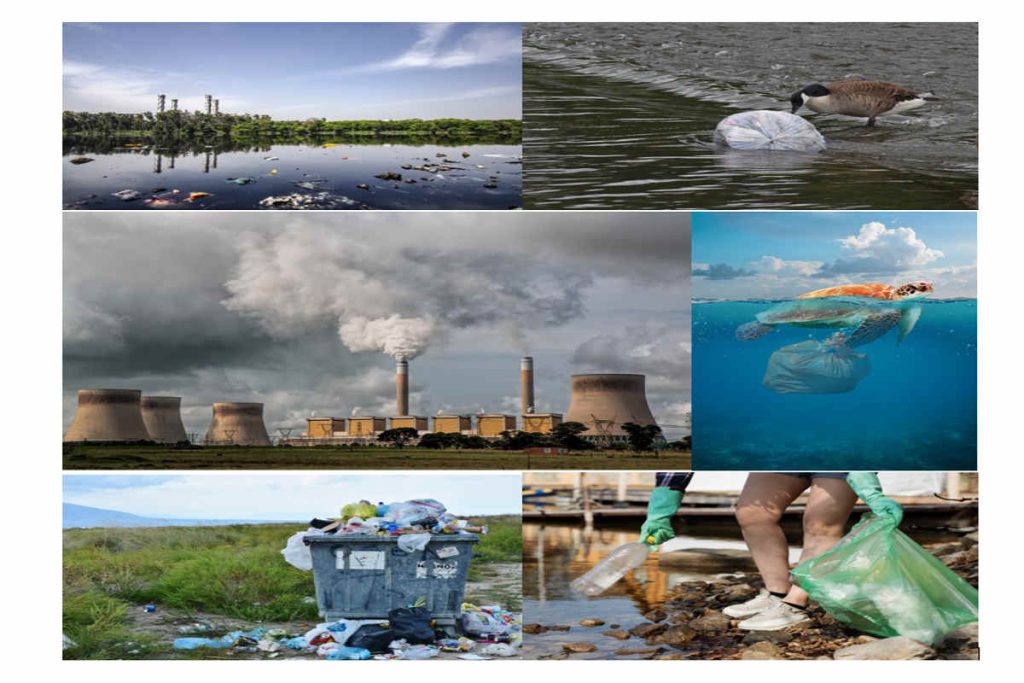
India today stands at the crossroads of rapid economic growth and accelerating ecological collapse. The country is now one of the top five most climate-vulnerable nations in the world, according to the Global Climate Risk Index. The warning signals are not abstract; they are already visible in the air we breathe, the water we drink, and the waste we generate.
India’s air pollution crisis remains one of the worst globally. According to the IQAir “2024 World Air Quality Report”, 13 of the world’s 20 most polluted cities are in India, and many Indian cities record PM2.5 concentrations several times above the WHO guideline. Meanwhile, the Central Pollution Control Board (CPCB) estimates that India produces over 3.5 million tonnes of plastic waste annually, and less than 60% is recycled, leaving the rest to choke landfills, rivers, and oceans.
Water scarcity tells a similar story. A NITI Aayog report warns that 21 Indian cities, including Delhi, Bengaluru, and Hyderabad, are at risk of running out of groundwater. Agriculture, which employs nearly half the country’s workforce, is already suffering from repeated droughts, heatwaves, and erratic monsoons.
Yet, despite alarming data, less than one-fourth of India’s total CSR funds are directed towards environmental sustainability projects (MCA CSR Report, . Most CSR activities remain short-term: tree-planting drives without survival tracking, plastic cleanups without circular systems, or waste management pilots without community ownership.
This mismatch reveals a deeper issue: CSR is reacting to symptoms instead of rebuilding ecosystems. One-year grants and photo-op projects cannot fix climate emergencies that require 10–15 years of consistent investment.
The environmental crisis is no longer a future threat, it is a present economic risk, public health crisis, and social inequality multiplier. If CSR continues as a compliance ritual rather than a climate strategy, India will miss a critical window to act.
Case Studies of High-Impact Environmental CSR
To move beyond compliance to genuine ecological impact, we look at three concrete, verified case studies of CSR in India. Each demonstrates how firms or NGOs built measurable environmental outcomes, not just donation-led optics.
Case Study 1: Earth5R: Community-Led Circular Economy & Waste Segregation
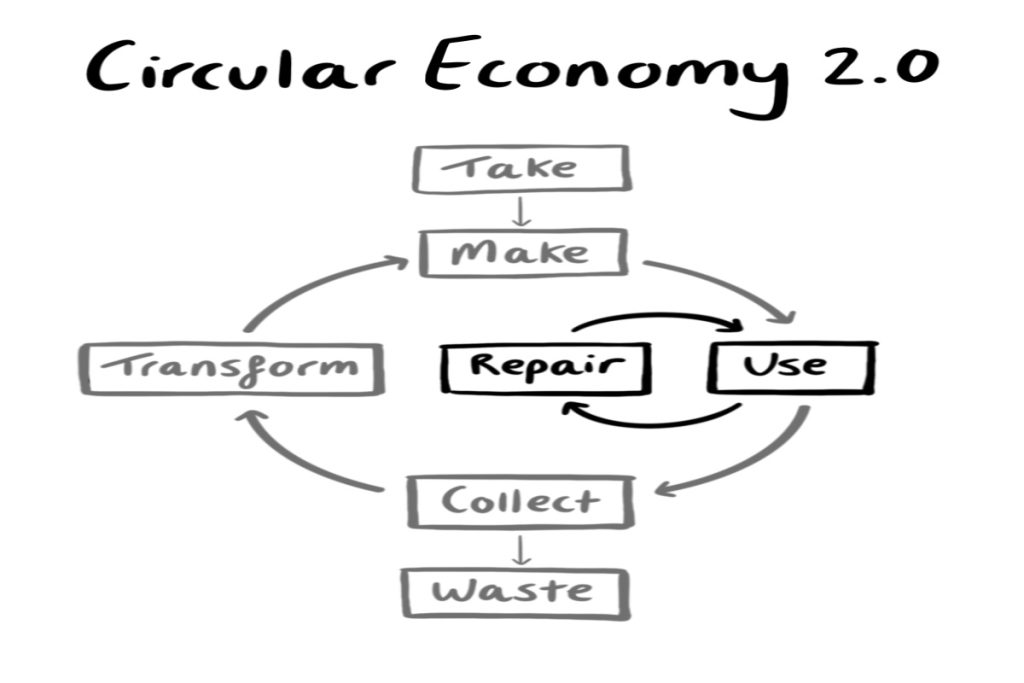
The Mumbai-based NGO Earth5R is an example of how localised, tech-enabled community intervention can drive waste management outcomes. According to their website, Earth5R engages over 1.3 million citizens across 65 countries and provides measurable climate actions through waste-segregation, composting and recycling hubs.
What they do:
- Implement “Zero Waste Society” frameworks in localities such as Powai in Mumbai, where multi-stream bins (dry, wet, plastic, e-waste) and community training are embedded. Earth5R
- Issue carbon certificates to corporate partners to quantify the impact of their CSR-funded interventions. Earth5R
- Example in Dehradun: a dedicated plastic-waste project (“Know Your Plastics”) found 60.9% of collected plastic waste items were multi-layer packaging (MLP), highlighting the need for upstream corporate redesign. Earth5R
Why it matters:
- The approach links environment, livelihoods, and community ownership; women from marginalised communities are trained in sorting & recycling.
- It demonstrates that CSR can become resource-recovery rather than only resource consumption.
- For companies wanting real impact rather than one-off plantation drives this model shows scalability and measurable outcomes.
Case Study 2: ITC Limited: Water Stewardship with Measurable Results
ITC’s water-stewardship program provides a strong example of CSR tied to ecosystem regeneration. According to the company website, its facility at Kovai achieved the Alliance for Water Stewardship (AWS) Platinum-level certification in 2019-20; the first in India. ITC Portal
What they do:
- Watershed restoration, recharge structures, adoption of climate-smart agriculture in surrounding catchments of manufacturing units.
- Linking water security with farmer incomes: healthier watershed and stable irrigation which leads to improved yields following better livelihoods.
Why it matters:
- Water is a foundational ecosystem service; CSR interventions that restore watershed health deliver both environmental and social impact.
- Certification (AWS) provides credible third-party verification of ecosystem outcomes, not just inputs.
- When companies adopt such frameworks, they shift from “doing something” to “doing something measurable”.
Case Study 3: Tata Power Company Limited: Solar Microgrids for Rural Electrification
While not strictly labelled as CSR, Tata Power’s rural solar microgrid programmes illustrate how corporate action can generate climate-relevant outcomes. An article on the company website states: as of June 2021, 161 microgrids installed in one year across Uttar Pradesh and Bihar; the cost of power from these microgrids is about one-fifth the cost of diesel generation. Tata Group
What they do:
- Deploy solar-PV plus battery storage microgrids in off-grid villages, powering households, clinics, shops, street lights, and EV charging.
- The model promotes both clean energy access and lower carbon emissions; an explicit link between CSR/RE and climate impact.
Why it matters:
- It shifts CSR from mitigation to transformation, beyond “planting trees”, to building infrastructure that displaces fossil-fuel use.
- Measurable indicators (number of microgrids, households served, cost reduction vs diesel) provide credible evidence of impact.
- It showcases how corporate CSR can align with national goals of energy access, climate mitigation, and local livelihoods.
What Works: Characteristics of CSR Projects with Real Ecological Impact
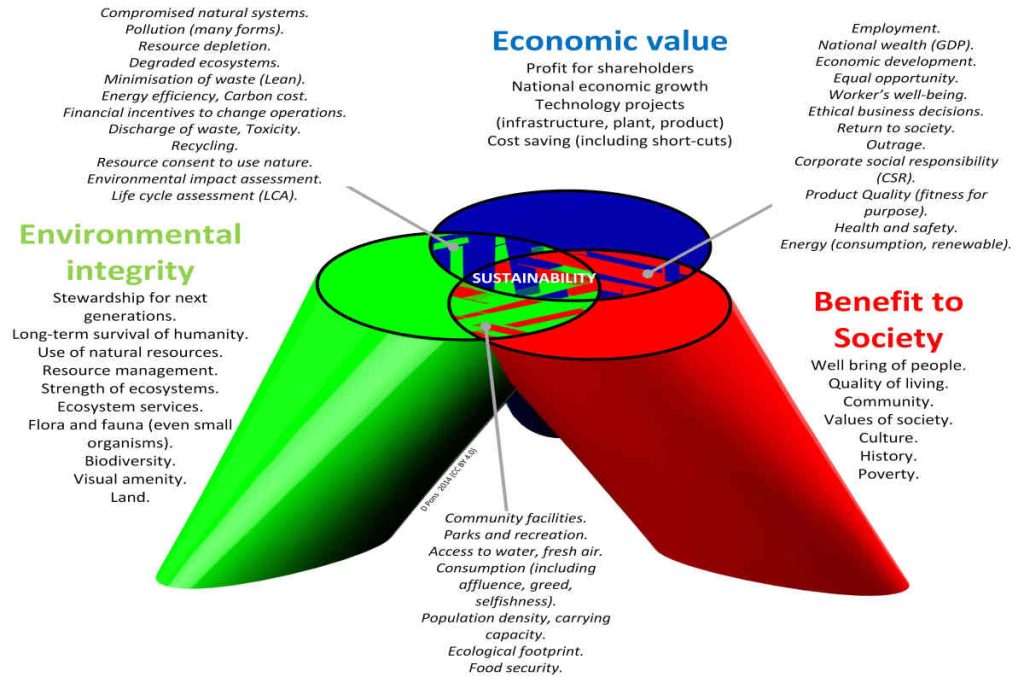
The most successful environmental CSR projects share a common architecture. They are not designed as one-time donations or “brand visibility” campaigns. Instead, they function like long-term ecological investments that generate measurable returns for both communities and the planet. Five core characteristics consistently appear in high-impact CSR models.
1. Community Ownership Over Donation-Driven Intervention
Projects succeed when local residents are participants, not beneficiaries. Earth5R’s zero-waste neighborhood model works because communities run the segregation hubs themselves. When citizens are trained and employed, the project becomes self-sustaining instead of collapsing once CSR money dries up.
2. Science-Backed Metrics Instead of Vague Claims
CSR reporting often celebrates tree counts or kilograms of waste collected, numbers that sound impressive but lack ecological meaning. Impact-driven projects use Life Cycle Assessment (LCA), GHG Protocol, or AWS certification to convert actions into measurable outputs, such as tonnes of CO₂ avoided or litres of water restored. ITC’s watershed programme stands out because it is audited under the Alliance for Water Stewardship framework, giving the data credibility.
3. Multi-Year Funding, Not One-Off Visibility Projects
Climate recovery does not happen on annual CSR cycles. River recharge, soil regeneration, and circular-economy systems need 5–10 years of support. Companies like Tata Power commit to multi-year solar microgrid expansion, ensuring rural communities continue to benefit long after ribbon-cutting ceremonies end.
4. Livelihood and Environment Integration
The most scalable CSR models create green jobs while solving ecological problems. Waste pickers becoming formal recyclers, rural youth trained as solar technicians, farmers earning from water-efficient crops , these are climate solutions that also reduce inequality.
5. Third-Party Monitoring and Public Disclosure
Independent verification separates real impact from greenwashing. Projects that publish audited impact reports build trust with regulators, investors, and communities. As ESG reporting becomes mandatory under SEBI’s Business Responsibility and Sustainability Report (BRSR), transparent CSR will become a corporate survival metric, not a goodwill exercise.
Impactful CSR is no longer about how much money is spent. It is about how much carbon, waste, and ecological stress is reduced and whether people’s lives improve in the process.
The ESG & Policy Shift Corporates Cannot Ignore
Corporate social responsibility (CSR) is no longer operating in a vacuum. For companies in India, transforming CSR into real environmental impact means aligning with evolving policy and regulatory frameworks,most notably through ESG (Environmental, Social, Governance) disclosure regimes and national climate targets.
The Securities and Exchange Board of India (SEBI) has introduced the Business Responsibility and Sustainability Report (BRSR) format for the top 1,000 listed companies in India. Under this framework, companies must now disclose standardised ESG metrics alongside their financial reports. The BRSR pushes firms beyond “we spent X on CSR” to “we reduced Y tonnes of CO₂, or we improved Z hectares of watershed”. Companies that do not keep up risk investor backlash, regulatory scrutiny and reputational damage.
Another key shift: India’s climate commitment. The India has pledged to reach net-zero emissions by 2070 as part of its long-term strategy. This national target means businesses play a pivotal role: corporate decarbonisation and ecological restoration become integral to the broader economic transition. A recent paper argues that “corporate sustainability is now central business strategy” in the context of India’s net-zero goal. SSRN

From a CSR perspective this means:
- Environmental CSR must tie into corporate GHG reduction pathways, not just soft philanthropy.
- Disclosure rules mean companies must measure, manage and report environmental impact. Under BRSR they have to publish essential indicators (98 mandatory) and optionally leadership indicators. EcoVadis
- Value-chain ESG disclosure is becoming mandatory covering upstream/downstream suppliers responsible for 2% or more of purchasing or sales.
- Investors factor ESG scores into valuations, access to capital and cost of funding. Corporate CSR that lacks transparency or measurable outcomes faces higher risk.
In short: for corporates, CSR cannot remain a side project. It must be embedded within ESG strategy, with measurable environmental impact, aligned to national climate goals, and reported under standardized regulatory frameworks. The next decade will test which companies pivot from compliance to impact and which are left behind.
Roadmap: How Companies Can Move From CSR Spending to CSR Impact
A decade after CSR became mandatory in India, the conversation is shifting from how much money companies spend to how much environmental value they create. The transition from check-writing CSR to climate-aligned CSR requires a strategic roadmap ; one that connects corporate budgets to measurable ecological outcomes. The following five steps outline how companies can redesign CSR as regenerative capital, not compliance cost.
Step 1: Align CSR with National & Global Environmental Goals
CSR must support India’s climate commitments, not sit outside them. Companies can map CSR projects to the UN SDGs, India’s Net Zero 2070 pledge, National Action Plan on Climate Change, and state-level climate missions. When CSR reduces carbon, restores water tables, or diverts waste from landfills, it directly contributes to national targets,not just brand positioning.
Step 2: Fund Circular Economy, Not Just Tree Plantations
Tree plantation drives remain the most overused CSR activity but without survival tracking, they deliver little climate impact. Instead, companies should fund circular economy models: plastic recovery, waste-to-resource hubs, repair & reuse systems, or biomass-to-energy projects. These create long-term carbon avoidance and green livelihoods both traceable and scalable.
Step 3: Adopt Science-Based Impact Metrics (ISO, GHG Protocol)
Measurable CSR requires standardised metrics. Tools such as the GHG Protocol, ISO 14064, Life Cycle Assessment (LCA), or Alliance for Water Stewardship (AWS) convert actions into scientifically valid numbers , tonnes of CO₂ removed, litres of water replenished, hectares restored. If it cannot be measured, it cannot be claimed.
Step 4: Partner with Community-Led and Data-Transparent NGOs
The most impactful CSR projects are not vendor-driven but community-owned. Companies should prioritise NGOs that publish open data, train local citizens, and build livelihood pathways , instead of “project contractors” who only execute and exit. This ensures post-funding continuity, social inclusion, and long-term ecological regeneration.
Step 5: Publish Impact Reports with Third-Party Audits
Greenwashing collapses when reporting is audited. CSR impact should be disclosed with independent verification, not internal claims. Third-party audits improve investor confidence, strengthen ESG rankings, and reduce reputational risk under SEBI’s BRSR framework. When data is public, credibility replaces marketing.
Real CSR impact is not an expense ; it is an investment into climate resilience, social equity, and future-proof business. The companies that recognise this early will lead the next decade of sustainable growth.

Future of CSR: From Compliance to Climate Capital
The next decade will redefine the purpose of CSR in India. What began as a legislated obligation is now evolving into a financial and ecological lever: a tool that can accelerate the country’s transition toward a low-carbon, waste-free, climate-resilient economy. CSR is no longer just charity with corporate logos; it is becoming climate capital.
The shift is being driven by three forces. First, climate risk is now a business risk. Heatwaves, crop failures, supply chain disruptions, and water scarcity are already affecting sectors from FMCG to energy. CSR that restores ecosystems is therefore not “giving back” ; it is protecting future business continuity.
Second, investors are demanding evidence, not narratives. Global capital is flowing toward companies with strong ESG scores, science-based climate plans, and transparent impact reporting. In this landscape, CSR projects that deliver measurable carbon reduction, resource restoration, or green jobs will uplift a company’s valuation, not just its reputation.
Third, youth, consumers, and employees are rewriting brand loyalty. A Deloitte survey found that around 70% of Gen Z and millennials consider a company’s environmental credentials important when choosing whom to buy from or work for. CSR that funds circular systems, renewable energy, or biodiversity recovery becomes a talent magnet and market advantage.
The future of CSR will look very different from the past:
- Instead of isolated plantation drives, we will see urban biodiversity corridors and carbon-accounted forest restoration.
- Instead of “plastic cleanups,” companies will co-finance extended producer responsibility (EPR) systems that redesign products and recover waste at scale.
- Instead of reporting amounts donated, companies will report hectares revived, emissions avoided, lives skilled, and ecosystems rebuilt.
CSR will merge with ESG, climate finance, and regenerative economics. The most forward-looking corporations will treat CSR not as cost, but as co-investment in planetary stability, unlocking green jobs, new markets, and resilience dividends.
The question for the next decade is no longer “How much did you spend on CSR?” but “How much climate damage did your CSR prevent or reverse?”
That is the new benchmark of leadership.
From Obligation to Opportunity: CSR as India’s Ecological Turning Point
India is entering a moment where CSR will either remain a statutory expenditure or evolve into a force that reshapes the country’s ecological future. The difference will depend not on how much money companies allocate, but on how intelligently, transparently, and scientifically they deploy it.
For too long, CSR has been measured in rupees spent, trees planted, or photos uploaded. But climate disruption has erased the comfort of symbolic action. Air that cannot be breathed, water that cannot be drunk, waste that cannot be buried, and heat that cannot be survived have made environmental restoration a business necessity, not a moral extra.
The companies that recognise this shift early will not just comply with Section 135; they will co-author India’s climate transition. They will use CSR to:
- Regenerate ecosystems instead of funding annual campaigns
- Create green jobs and community ownership, not short-term charity
- Replace feel-good reports with audited, science-based metrics
- Invest in circularity, renewable energy, and biodiversity resilience
- Turn social responsibility into competitive advantage
The next phase of CSR demands courage: to fund long-term solutions, to reject greenwashing, to measure what truly matters, and to accept that restoring the planet is now part of doing business.
If corporates step up, CSR can become the bridge between policy ambition and ground reality; the capital that rebuilds rivers, restores soil, powers villages, rescues waste, and reduces carbon.
If they don’t, CSR will remain a budget line with no legacy.
The question is no longer whether India can afford impact-driven CSR.
The real question is: Can India afford not to?
FAQs: CSR Beyond Compliance: Building Real Environmental Impact
What is the difference between CSR and ESG?
CSR refers to a company’s voluntary or mandated social responsibility initiatives, while ESG is a measurable framework used by investors to evaluate a company’s environmental, social, and governance performance.
Why is environmental CSR becoming more important in India?
Because India faces severe climate risks such as; air pollution, water scarcity, heatwaves, and waste pollution. CSR funds can help restore ecosystems and support India’s Net Zero and SDG goals.
Is CSR legally mandatory in India?
Yes. Under Section 135 of the Companies Act, companies meeting certain financial criteria must spend at least 2% of their average net profit on CSR.
What types of projects qualify as environmental CSR?
Waste management, renewable energy, biodiversity restoration, climate adaptation, water conservation, circular economy models, and carbon reduction initiatives.
Why are tree plantation CSR projects often ineffective?
Because many lack survival tracking, scientific species selection, or long-term care. Without monitoring, plantations fail to deliver real carbon or biodiversity impact.
How can companies prove their CSR projects are not greenwashing?
By using third-party audits, publishing transparent impact data, and adopting science-based measurement tools like GHG Protocol, AWS, or ISO 14064.
What is circular economy–based CSR?
Projects that reduce waste by repairing, recycling, reusing, or converting discarded materials into economic value, instead of treating waste as disposal.
Can CSR funds be used for climate change mitigation?
Yes. CSR can finance carbon reduction, renewable energy access, reforestation, clean mobility, and energy efficiency programmes.
What is the role of community participation in CSR success?
Projects that involve local communities in planning, ownership, and management are more sustainable than top-down donation models.
Why should CSR projects run for multiple years?
Environmental restoration takes time. Watersheds, forests, and circular waste systems need 5–10 years to show measurable outcomes.
How does CSR link to India’s Net Zero 2070 target?
CSR can finance low-carbon solutions, carbon sinks, and climate-resilient livelihoods, helping bridge the funding gap for India’s climate action.
What are impact metrics in CSR?
Indicators like tonnes of CO₂ avoided, litres of water replenished, tonnes of waste diverted, or number of green jobs generated, measured scientifically, not estimated.
Can CSR funds support social enterprises or start-ups?
Yes, if they align with Schedule VII of the CSR law and create measurable social or environmental outcomes.
Why are ESG disclosures pushing companies to reform CSR?
Because investors now demand proof of environmental impact, not just spending reports. SEBI’s BRSR makes disclosure mandatory for top listed companies.
How can a company choose a credible NGO partner for CSR?
Look for organisations with audited impact data, transparent reporting, community-based models, and long-term programme history.
Can CSR money be used to meet a company’s internal sustainability goals?
No. CSR funds cannot be spent on activities that directly benefit the company’s own operations, but they can support external climate or ecosystem programmes.
What is the biggest mistake companies make in environmental CSR?
Treating CSR as a PR activity rather than a climate-linked investment with measurable, science-based outcomes.
Can CSR be aligned with SDGs?
Yes. Each CSR project can map to one or more UN Sustainable Development Goals, especially SDG 6 (Water), SDG 12 (Waste), SDG 13 (Climate Action), and SDG 15 (Life on Land).
What is third-party CSR audit and why is it needed?
It is an independent review of project impact data. It prevents misuse of funds, improves credibility, and protects companies legally and reputationally.
Is CSR only for large companies?
Legally yes, but voluntarily no. Small and medium businesses can still run sustainability programmes even if CSR law doesn’t apply.
Turning Corporate Responsibility into Climate Action
The window for symbolic CSR is closing. India does not need more cheque-based charity. It needs corporate climate leadership backed by data, community participation, and long-term ecological investment.
If your organisation is still treating CSR as a compliance line item, the time to pivot is now.
Here’s what you can do :
- Audit your current CSR portfolio and Identify which projects deliver measurable environmental impact and which are only activity-based.
- Shift funding toward circular economy, renewable energy, and ecosystem restoration,not one-time events or photo-op campaigns.
- Partner with NGOs and social enterprises that offer transparent, science-backed reporting,not vendors who disappear after implementation.
- Align CSR with ESG, SDGs, and India’s Net Zero roadmap, so your impact counts, not just your expenditure.
- Commit to multi-year projects because real environmental change needs continuity, not annual resets.
- Publish audited impact reports and let your data speak louder than your brand messaging.
If you are a business leader, board member, sustainability head, or CSR manager; the next move is yours.
CSR can be a legal checkbox,
or it can be the capital that rebuilds ecosystems, creates green jobs, and safeguards India’s future.
The choice will define not just your compliance score but your legacy.
Authored by-Sneha Reji