

Introduction: Why Corporate Sustainability in India Matters Now
India has entered a phase where sustainability is no longer a side note in corporate reports. It has become a daily operational priority shaped by climate risk, international supply-chain pressure, and domestic regulation. The country has pledged to reach net-zero emissions by 2070, but that target depends heavily on how fast Indian businesses reduce their footprint and transform their value chains.
Three developments have accelerated this shift:
- Regulation
SEBI now mandates Business Responsibility and Sustainability Reporting (BRSR) for the top 1,000 listed companies. This makes ESG performance a legal disclosure, not a voluntary gesture. - Finance Pressure
The Reserve Bank of India has begun climate-risk assessment for banks and has published a framework for sustainable finance. Lenders and investors increasingly use ESG scores to assess credit risk. - Market & Supply Chain Changes
Indian exporters supplying to global brands face carbon-border rules, extended producer responsibility, and zero-emission sourcing criteria. Companies that fail to decarbonise risk losing access to foreign buyers.
The result is visible across sectors. Cement makers are investing in waste-heat recovery, steel companies are shifting to scrap-based production, banks are screening loans for climate risk, and FMCG manufacturers are running factories on zero-liquid-discharge systems.
This article is based on verified sustainability disclosures, third-party assessments, and policy documentation. The focus is not on CSR projects or philanthropy, but on companies that have made sustainability an operating system built into energy, procurement, logistics, product design, finance, and reporting.
The following sections examine ten Indian companies with credible, independently validated sustainability claims. Each case study highlights:
- A milestone backed by audited or officially published data
- The daily practice that converts policy into routine action
IT services, steel, finance, cement, FMCG, power, and diversified manufacturing, showing that sustainability is no longer limited to one sector or business model. Instead, it is emerging as a baseline for long-term competitiveness.
India’s Sustainability Turning Point: Policy and Market Drivers
India’s corporate sustainability landscape is no longer shaped only by voluntary action. It is being reshaped by regulation, investor scrutiny, global supply-chain expectations, and climate-linked economic risk. The shift from “CSR activity” to “compliance and competitiveness” is being driven by four major forces.
SEBI’s Business Responsibility and Sustainability Reporting (BRSR)
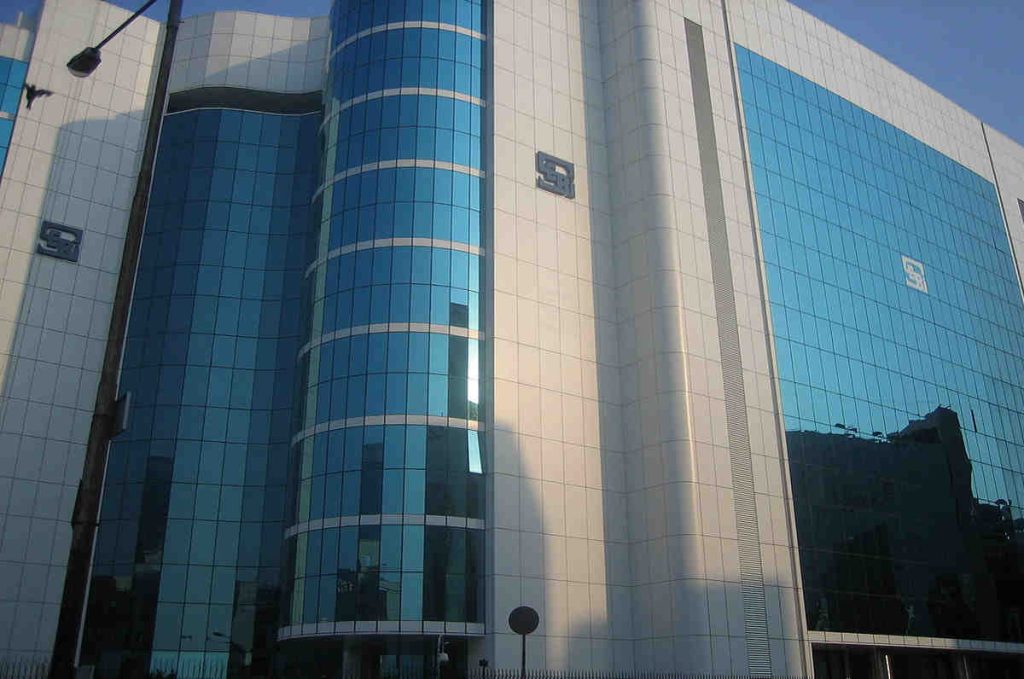
The Securities and Exchange Board of India now mandates BRSR for the top 1,000 listed companies. This makes ESG reporting a regulatory requirement, not an optional disclosure.
The format requires companies to report audited data on:
- Energy and emissions
- Water use and wastewater treatment
- Circularity and waste management
- Supply-chain sustainability
- ESG governance at board and senior management level
BRSR was introduced to align Indian reporting with global standards such as GRI and ISSB, ensuring Indian firms remain competitive in global finance and trade. It has already resulted in better data transparency and comparability across sectors.
RBI’s Sustainable Finance Agenda
The Reserve Bank of India has released guidelines for climate-risk disclosure in the banking sector. Banks are now expected to:
- Assess climate risk in lending decisions
- Classify green finance flows
- Develop sector-specific exposure limits (for example, coal vs. clean energy)
This change means companies that fail to decarbonise may face higher borrowing costs or reduced access to capital. Conversely, firms with strong ESG practices gain priority access to green bonds, concessional loans, and sustainability-linked credit lines.
India’s Mission-Driven Climate Policy
Three policies are pushing industries to adopt long-term sustainability strategies:
- National Green Hydrogen Mission: incentivises hydrogen-based steel, cement, fertilisers, and fuel
- Renewable Energy Target: 500 GW by 2030 : reshaping long-term power contracts and grid planning
- Extended Producer Responsibility (EPR): forces manufacturers to collect and recycle plastic, batteries, and e-waste beyond the point of sale
These policies are turning sustainability from a brand statement into a compliance and cost tool.
Global Supply-Chain and Trade Pressure
Indian companies that export to Europe, the US, or Japan now face:
- EU Carbon Border Adjustment Mechanism (CBAM) on steel and cement
- Mandatory climate disclosure for global buyers
- Packaging and waste laws for FMCG exports
- ESG screening in procurement contracts
For steel, cement, auto components, and consumer goods suppliers, sustainability is no longer about reputation; it is becoming a passport to markets.
Together, these forces have created a landscape where sustainability is not future-facing, but present-tense. Companies that act early gain regulatory headroom, energy cost savings, talent advantage, and investor credibility. Those that delay risk being stranded by policy or pricing shifts.
10 Indian Companies Making Sustainability a Daily Practice
This section examines ten companies that have moved beyond policy announcements and built sustainability into routine business operations. Each case study is based on verified data, third-party assessments, mandatory filings, or independently audited reports. The focus is on practices that happen every day inside the organisation,not one-time CSR activity, offset purchases, or future-dated net-zero promises.
Infosys: Carbon Neutral IT Operations with Real-Time Energy Management
Infosys became carbon neutral in FY 2020, with the status independently assured as per ISO 14068-1.
The company reduced per-employee energy use and now sources a high share of power from renewables and on-campus solar plants.
Why It Matters: As one of India’s largest IT exporters, Infosys shows how service-sector emissions can be reduced without slowing growth, a key blueprint for the wider digital economy.
Wipro: Science-Based Emission Targets Backed by ESG Governance
Wipro’s emission-reduction pathway is validated by the Science Based Targets initiative (SBTi), covering Scopes 1, 2 and 3. The company has committed to reach net-zero emissions by 2040.
Why It Matters: IT and services account for a large share of India’s white-collar emissions, and Wipro’s science-backed trajectory offers a data-aligned model that can be replicated.
Mahindra & Mahindra: India’s First Internal Carbon Pricing Model
Mahindra introduced an internal carbon price of USD 10 per tonne CO₂e, later revised upward, and applies it to capital expenditure and project evaluation.
Why It Matters: Internal carbon pricing shifts sustainability from cost centre to decision filter ; a model now adopted by other Mahindra Group companies and being studied by competitors.
ITC Ltd: Long-Term Triple-Positive Performance
ITC has remained carbon positive for over 20 years, water positive for more than 23 years, and solid-waste recycling positive for over 18 years, as confirmed in audited sustainability reports.
Why It Matters: ITC demonstrates that sustainability can scale across multiple business verticals; hotels, paperboard, FMCG, and agriculturewithout depending on offsets alone.
Hindustan Unilever: Zero-Liquid-Discharge Manufacturing Network
As of FY 2024-25, 25 out of 27 HUL factories operate on a zero-liquid-discharge system, according to the company’s BRSR filing.
Why It Matters: FMCG manufacturing is water-intensive. HUL’s ZLD footprint shows that circular water systems can be scaled nationwide without external subsidies.
Tata Power: Renewable-Heavy Utility Transition
Tata Power has publicly committed to ensure 70 % of its power generation capacity comes from renewable sources by 2030, with a net-zero target set for 2045 or earlier..
Why It Matters: As one of India’s largest private power producers, Tata Power’s long-term shift influences energy market structures and investor confidence.
Reliance Industries: ₹75,000 Crore Clean-Energy Manufacturing Investment
Reliance has committed over ₹75,000 crore to build an integrated clean-energy ecosystem including solar PV, battery storage, fuel cells, and green hydrogen, as announced at its 2021 AGM and detailed on its official filings.
Why It Matters: Reliance controls large capital flows in India. Its pivot signals market readiness for domestic clean-tech supply chains instead of import dependence.
UltraTech Cement: SBTi-Approved Decarbonisation Roadmap
UltraTech has SBTi-validated targets to cut Scope 1 emission intensity by 27 % and Scope 2 by 69 % by FY 2032 from its FY 2017 baseline.
Why It Matters: Cement is one of India’s hardest-to-abate sectors. UltraTech’s pathway aligns corporate strategy with IPCC-compatible science.
Tata Steel: Verified Emission Intensity Targets for Green Steel
Tata Steel plans to cut CO₂ intensity to below 2 tCO₂ per tonne of crude steel by 2025 and below 1.8 tCO₂/tcs by 2030, with disclosures covered by Climate Action 100+.
Why It Matters: Steel is essential to construction, automobiles, and infrastructure. A low-carbon steel pathway reduces national emissions and protects export markets affected by EU carbon tariffs.
HDFC Bank: Green Finance Framework Embedded in Lending
HDFC Bank has a board-approved Sustainable Finance Framework that governs its green bonds, climate-aligned loans, and ESG risk screening.
Why It Matters: Finance is the lever that scales climate action. When banks screen emissions, high-carbon sectors face higher capital costs, accelerating the transition.
What “Daily Practice” Really Means Across These Companies
These ten companies operate in different industries, but their approaches reveal recurring patterns. Sustainability is no longer a strategic document or annual disclosure ; it is becoming a system of daily decisions shaped by data, policy, finance, and operational constraints. The following cross-company behaviours show how this transition is happening on the ground.
Internal Carbon Pricing Moves from Policy to Practice
Mahindra & Mahindra, Infosys, and Tata Steel have already adopted internal carbon pricing. This is not a symbolic figure; it is built into capital expenditure screening, procurement choices, and energy planning.
When a company assigns a cost to carbon, low-emission alternatives become financially competitive. This shifts decision-making from “optional sustainability” to “mandatory financial logic.”
Zero-Liquid-Discharge and Water Circularity Become Factory Norms
Hindustan Unilever and ITC have demonstrated that ZLD plants are feasible at industrial scale. Instead of consuming freshwater and discharging wastewater, factories now recycle 100 percent of their process water.
This matters in India, where 40 percent of districts face some level of water stress. Water-positive business models reduce long-term risk, protect licences to operate, and cut future scarcity costs.
Renewable Energy Is Not a CSR Decision, but an Energy Strategy
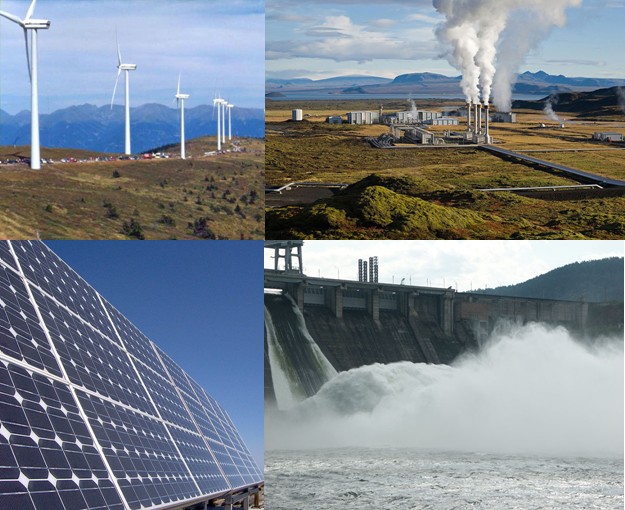
Tata Power, Infosys, Reliance, UltraTech, and ITC all deploy a mix of rooftop solar, utility-scale PPAs, or hybrid renewable projects.
The key shift: renewables are now treated as core infrastructure, not add-ons. Long-term power purchase contracts reduce price volatility and protect margins from fossil fuel shocks.
ESG Reporting Is No Longer a PDF: It’s a Governance System
Wipro, HDFC Bank, and Tata Steel embed sustainability metrics into board-level review, credit approval, or investor reporting.
This is a structural shift: ESG performance has moved from communications to compliance. Audit firms, regulators, and long-term investors now evaluate sustainability data the way financials were evaluated a decade ago.
Circularity Begins in Supply Chains, Not Just Waste Streams
ITC’s agro-forestry model, HUL’s plastic take-back, and Tata Steel’s scrap-based steel production show that circularity is moving into sourcing models.
Instead of “end-of-pipe waste management”, companies are redesigning the flow of materials, not just the disposal of them.
Transition Finance Is Emerging as a Market Signal
HDFC Bank’s green lending framework, Tata Power’s sustainability-linked bonds, and Reliance’s clean-tech capital plan show that climate finance is no longer limited to development banks.
When lending, bonds, and credit ratings include climate risk, markets reward companies with low-carbon plans and penalize those without one.
What This Means for Indian Industry
- Sustainability is becoming measurable, auditable, and comparable.
- Companies with real operational change gain long-term cost and market advantage.
- The conversation is shifting from “green storytelling” to “carbon math and resource efficiency.”
- The next inflection point will come when mid-size companies in supply chains adopt similar practices.
The next section explores the systemic impact of these models beyond the corporations themselves , across MSMEs, policy, and consumer markets.
How These Corporate Models Scale Beyond the Companies Themselves
The sustainability practices of these ten companies are not isolated events. They create ripple effects that influence suppliers, regulators, urban systems, financial markets, and even consumer behaviour. In India, where a large share of production happens through tier-2 and tier-3 suppliers, corporate adoption of sustainability has multiplier effects far beyond individual balance sheets.
Supply-Chain Diffusion to MSMEs
Large companies such as Wipro, ITC, Tata Steel, and HUL are now building ESG requirements into vendor contracts. This means sustainability becomes a qualification parameter, not a voluntary upgrade.
Examples:
- Wipro requires key suppliers to disclose energy, emissions, and labour compliance metrics.
- Tata Steel’s shift to scrap-based steel encourages upstream recycling markets and secondary steel scrap networks.
- HUL’s plastic EPR system relies on waste-aggregator networks, creating formal income streams for informal recycling economies.
This spreads standards horizontally, not by regulation, but by market logic.
Policy Replication at State and City Level
When companies run proven ZLD, circularity, or renewable systems at scale, state governments begin integrating them into industrial norms.
Examples:
- ITC’s watershed and agro-forestry framework has been studied by state agricultural departments.
- Maharashtra and Gujarat have piloted solar-powered industrial clusters based on Tata Power and Reliance’s distributed energy models.
- Cement sector decarbonisation pilots with UltraTech have informed policy drafts under the Indian Carbon Market Scheme.
Corporate practice becomes a test bed for national climate policy.
Finance Becomes a Climate Lever
Once banks like HDFC Bank or multinationals like Tata Power issue sustainability-linked financial instruments, it creates a benchmark for other lenders.
- Green bonds now require disclosed impact indicators, not generic environmental claims.
- Transition loans offer lower interest rates when emission-reduction targets are met.
- Carbon-intensive sectors face higher borrowing costs if they lack verified transition plans.
Finance begins rewarding measurable sustainability rather than green marketing.
Consumer and Employee Influence
Urban consumers are demonstrating higher willingness to pay for low-waste, low-plastic, or fair-supply products. When FMCG leaders like HUL or ITC mainstream circular packaging, it normalises the expectation.
Similarly, job-seekers in IT and engineering sectors now screen companies based on ESG performance. Companies like Infosys and Wipro report higher attraction and retention among younger employees because of climate action credibility.
Sustainability becomes a recruitment and market advantage.
Data Transparency Becomes the New Competitive Layer
With BRSR and independent assurance, sustainability data is now public and comparable. This changes how companies compete.
- Emission intensity per tonne of steel
- Water use per tonne of cement
- Renewable energy share in total electricity
- Carbon disclosure grade (CDP)
These are becoming strategic metrics just like EBITDA or ROCE.
Why This Matters for the Next Decade
- Corporate climate action is beginning to scale beyond the corporate boundary.
- The next stage of India’s transition depends on whether tier-2 suppliers, small factories, and municipal utilities adopt similar systems.
- The companies in this study act as templates, not exceptions.
Barriers, Gaps, and Risks: Where India’s Corporate Sustainability Still Falls Short

Despite measurable progress, India’s corporate sustainability landscape is not without structural weaknesses. The ten companies featured in this study are ahead of the curve, but even they operate within an ecosystem that still has regulatory gaps, data limitations, and transition risks. Understanding these barriers is essential to avoid overstating corporate progress and to frame the road ahead realistically.
Scope 3 Emissions Remain Largely Underreported
Most companies report Scope 1 (direct) and Scope 2 (energy-related) emissions with reasonable clarity. However, Scope 3, the emissions embedded in supply chains, logistics, product use, and end-of-life is still weakly disclosed or inconsistently measured.
- Steel, cement, and oil-linked companies often exclude downstream use emissions.
- FMCG firms track packaging but not agricultural supply-chain emissions.
- Banks report financed emissions only in pilot form, not full portfolios.
Until Scope 3 becomes mandatory, emissions accounting will underestimate real impact.
Overreliance on Carbon Offsets in Some Sectors
Some companies achieve “carbon neutrality” through offset credits rather than deep operational cuts. While offsets may be valid, they mask the difference between emission reduction and emission compensation.
- Forestry and soil carbon offsets carry permanence and verification risks.
- Renewable energy certificates (RECs) are sometimes counted twice by the producer and buyer.
- Offsets do not fix fossil-fuel dependence or industrial process emissions.
India’s future carbon market will likely tighten what counts as a valid offset.
Transition Risk in Fossil-Linked Businesses
Companies making big clean-energy announcements may still depend on legacy fossil assets for most revenue.
- Reliance still earns the majority of its income from oil-to-chemicals.
- Tata Power owns coal-based generating capacity in parallel with renewables.
- Cement and steel plants remain constrained by technology limits, even with SBTi pathways.
The risk is that transition plans may move slower than investor or policy timelines.
Greenwashing Risk Through Selective Reporting
Even when claims are valid, companies often highlight high-performing metrics while downplaying slower areas.
Examples of selective visibility:
- Highlighting renewable energy share but not water withdrawal intensity
- Publishing plastic collection totals without disclosing virgin plastic use
- Announcing “net-zero by 2040” without interim targets or CAPEX alignment
The credibility gap emerges when targets are not tied to investment decisions.
Limited Just Transition Dialogues
Decarbonisation can disrupt jobs, local economies, and informal sectors. Most Indian companies have not yet built “just transition” planning into sustainability strategies.
Key gaps:
- No reskilling roadmap for fossil-based labour
- Limited engagement with informal recyclers, waste pickers, or coal communities
- Lack of social safeguards in supply-chain climate policies
Net-zero without social transition planning can deepen inequality.
Technology and Data Gaps for Mid-Sized Businesses
Even if large corporations adopt low-carbon operations, their suppliers may lack:
- Access to green technology
- Capital for retrofitting machinery
- Personnel for ESG reporting or monitoring
This creates a two-speed transition where listed corporates appear sustainable, while their ecosystems lag behind.
Why These Gaps Matter
- Without Scope 3 disclosure, India risks underestimating industrial emissions.
- Offset-heavy pathways may collapse when carbon markets tighten.
- Transition risk could trigger future asset write-downs or stranded investments.
- Greenwashing incidents can erode public and investor trust.
- A climate transition without a social transition will face resistance and policy instability.
The final section explores the outlook for Indian corporate sustainability over the next decade, what will accelerate it, and what could slow it down.
Future Outlook: What Will Decide India’s Corporate Climate Leadership

The next decade will determine whether India’s corporate sustainability shift becomes a national transformation or remains a story of a few early adopters. The trajectory will depend on how fast policy tightens, capital reallocates, technology becomes affordable, and supply chains adapt. The companies profiled in this deep dive offer prototypes, but scale will depend on five structural forces.
Mandatory Climate-Risk Disclosure Will Raise the Baseline
SEBI’s BRSR is the beginning, not the end. India is expected to move toward:
- Compulsory climate-risk reporting aligned with global ISSB standards
- Sector-specific emission benchmarks for steel, cement, power and finance
- Annual verification of ESG data by independent auditors
Once climate-risk reporting becomes as standard as audited financial reporting, sustainability will no longer be optional for listed or large unlisted companies.
The Indian Carbon Market Will Redefine Cost and Competition
The upcoming Indian Carbon Credit Trading Scheme (CCTS) will convert emissions into a priced commodity. This will create:
- A financial penalty for high-emission companies
- An incentive for low-carbon technology adoption
- A new market for verified industrial decarbonisation credits
Once carbon cost becomes visible, sectors like thermal power, refining, cement, and aviation will face direct balance sheet consequences.
Green Hydrogen, Bio-Based Materials, and Circular Manufacturing Will Shift Industry Models
Heavy industries are entering a technology pivot:
- Green hydrogen pilots in steel and fertilisers
- Alternative binders and low-clinker blends in cement
- Renewable-powered chemical and polymer production
- Circular feedstock models using scrap, bio-waste, and recovered materials
These changes will lower lifecycle emissions, not just operational emissions and redefine what counts as industrial competitiveness.
Finance Will Become the Hardest Enforcement Lever
Banks and investors will increasingly decide who transitions and who stagnates.
Expected shifts include:
- Climate stress tests for loan portfolios
- Lower interest rates for verified low-carbon borrowers
- ESG-linked bond covenants with penalty clauses
- Insurance pricing tied to flood, heat, or drought exposure
Companies without credible transition plans will face higher cost of capital and reduced investor confidence.
Consumers and Workforce Will Reinforce the Transition
Two forces outside regulation will accelerate the shift:
- Urban consumers continue to prefer low-waste, low-plastic, and clean-energy brands
- The talent pool, especially in technology and engineering is more likely to choose employers with strong sustainability performance
Sustainability becomes a brand and recruitment filter, not just an operational system.
What This Means for Indian Industry
- The next phase of sustainability will not be led by pledges but by disclosure, data, and pricing.
- Company-level action must expand into ecosystem-level adoption, especially MSMEs.
- Policy, finance, and technology are aligning the final catalyst will be execution speed.
- The decade to 2035 will determine whether India reaches a low-carbon growth curve or locks itself into expensive late transition.
Closing Reflection
The companies in this study show that sustainability is no longer a branding exercise. It is a practical operating model that reduces cost volatility, protects supply chains, strengthens investor trust, and builds long-term competitiveness.
Their progress does not eliminate the gaps ahead but it does prove that sustainability can be measured, implemented, audited, and repeated. The challenge now is not inventing the model. It is multiplying it.
From CSR to Core Strategy
India’s corporate sustainability journey has moved far beyond the era of symbolic tree-planting drives and annual feel-good reports. The companies featured in this deep dive show a clear shift: sustainability is now integrated into how decisions are made, how capital is allocated, how factories run, and how markets respond.
The turning point is this: sustainability is no longer a cost centre. It is now a competitiveness strategy.
- Infosys and Wipro show that low-carbon digital infrastructure can scale without slowing growth.
- UltraTech and Tata Steel prove that even hard-to-abate sectors can follow science-based pathways.
- HUL and ITC demonstrate that circular water and waste systems work at national scale.
- Reliance and Tata Power show that clean energy is no longer a pilot, but a business vertical.
- HDFC Bank shows that finance is shifting from “green intent” to “green allocation”.
These companies are not perfect , no company is , but they are measurable, verifiable proof that climate-aligned business models already exist in India.
The next test is scale.
Can these models move from top-100 corporates to 500,000 MSMEs?
Can state governments replicate corporate water and energy systems?
Will financial markets reward transition-ready firms and penalise laggards?
Will supply chains decarbonise at the same pace as flagship brands?
If the answer is yes, India will not just meet compliance; it will shape the global narrative on emerging-economy transition. If the answer stalls, the country risks stranded assets, export barriers, and climate-linked economic shocks.
The lesson from these ten companies is simple:
Sustainability is no longer what firms say at conferences.
It is what they measure, disclose, fund, and repeat every single day.
That is the real transition underway from CSR to core strategy, from ambition to accounting, from pledge to practice.
FAQS: 10 Indian Companies Making Sustainability a Daily Practice
What makes these 10 Indian companies different from others claiming to be sustainable?
These companies have third-party-verified sustainability claims, audited data, and operational practices embedded into daily business decisions rather than CSR-based activities.
How were the companies selected for the study?
They were chosen based on verifiable data, regulatory disclosures, science-based targets, and proof of daily operational sustainability rather than future pledges or marketing statements.
Is sustainability now mandatory for Indian companies?
For large listed companies, yes. SEBI’s BRSR framework has made ESG disclosure legally required for the top 1,000 firms.
Which sectors in India are leading sustainability adoption?
IT services, banking, cement, steel, FMCG, and energy are currently ahead, mainly because they face investor pressure, export requirements, or high carbon intensity.
What is the role of internal carbon pricing in Indian companies?
It acts as an internal financial penalty for emissions, influencing capital expenditure, procurement, and long-term business planning.
Are Indian companies actually reducing emissions or just buying offsets?
Some companies reduce emissions operationally, while others still depend on carbon offsets. The strongest performers focus on real reductions first and offsets only as a supplementary tool.
What is zero-liquid discharge (ZLD) and why is it important?
ZLD means a factory recycles 100% of its wastewater on site. It matters because India faces high water stress, and industrial water use is a major contributor.
What is the biggest barrier to full decarbonisation in India?
Scope 3 emissions and the lack of affordable low-carbon industrial technology for small and mid-sized suppliers.
Why is Science Based Targets initiative (SBTi) validation important?
It verifies that a company’s emission-reduction plan aligns with climate science and global temperature goals, not self-declared targets.
How is ESG reporting changing business in India?
ESG metrics are now audited, board-monitored, investor-relevant, and tied to credit ratings, shifting sustainability from PR to compliance.
What role does the financial sector play in corporate sustainability?
Banks and investors are beginning to price climate risk into lending. Companies with strong ESG plans get cheaper capital and better long-term trust.
Why is renewable energy adoption growing among Indian corporates?
Falling solar and wind prices make renewables cheaper than fossil fuel power over long contracts, while also helping firms meet emission targets.
How do multinational supply chains influence sustainability in India?
Export-oriented companies face climate disclosure rules, carbon border taxes, and packaging regulations from foreign buyers, forcing them to adopt ESG standards.
What is the Indian Carbon Credit Trading Scheme?
A government-backed carbon market that will allow companies to buy and sell verified emission reduction credits, turning carbon into a priced commodity.
Can MSMEs adopt the same sustainability practices as large companies?
Not yet at scale. They face cost, skill, and technology barriers, but supply-chain pressure and green-finance incentives are increasing adoption.
What happens if companies ignore sustainability expectations?
They risk export loss, higher borrowing costs, regulatory penalties, stranded assets, and reduced investor trust.
Which company in the study is most advanced in green finance?
HDFC Bank, due to its sustainable finance framework and ESG-linked lending criteria.
Which company has the strongest circularity model?
Hindustan Unilever in water, ITC in waste-materials, and Tata Steel in scrap-based steel, all backed by verified disclosures.
Are Indian companies moving fast enough to meet global climate expectations?
A small group is aligned with science-based pathways, but national progress depends on whether mid-tier and high-emission sectors scale similar models.
What is the biggest lesson from the 10 case studies?
Sustainability is no longer a CSR activity; it is an operational system built on measurement, disclosure, financing, and daily decision-making.
The Transition Needs More Than Headlines : It Needs Participation
India’s corporate shift toward sustainability is real, measurable, and accelerating but it will only shape the future if more businesses, investors, policymakers, and consumers take part in it. The ten companies highlighted here have proved that climate-aligned business models can scale. Now the question is not “Can it be done?” but “Who will join next?”
Whether you are a policymaker designing incentives, a business leader planning investments, a student choosing a career path, or a consumer deciding what to buy your choices influence the speed of this transition.
If you believe India’s growth must also be climate-resilient, here’s what you can do next:
- Support businesses that publish verified sustainability data
- Ask brands, banks, and employers for transparency, not slogans
- Push for mandatory climate-risk reporting across all sectors
- Help MSMEs adopt clean technology and circular supply chains
- Invest time, capital, or expertise in India’s emerging green economy
The next decade decides whether sustainability becomes India’s competitive edge or a missed opportunity.
The transition has started. The question now is: will you be a spectator or a participant?
Authored by- Sneha Reji