
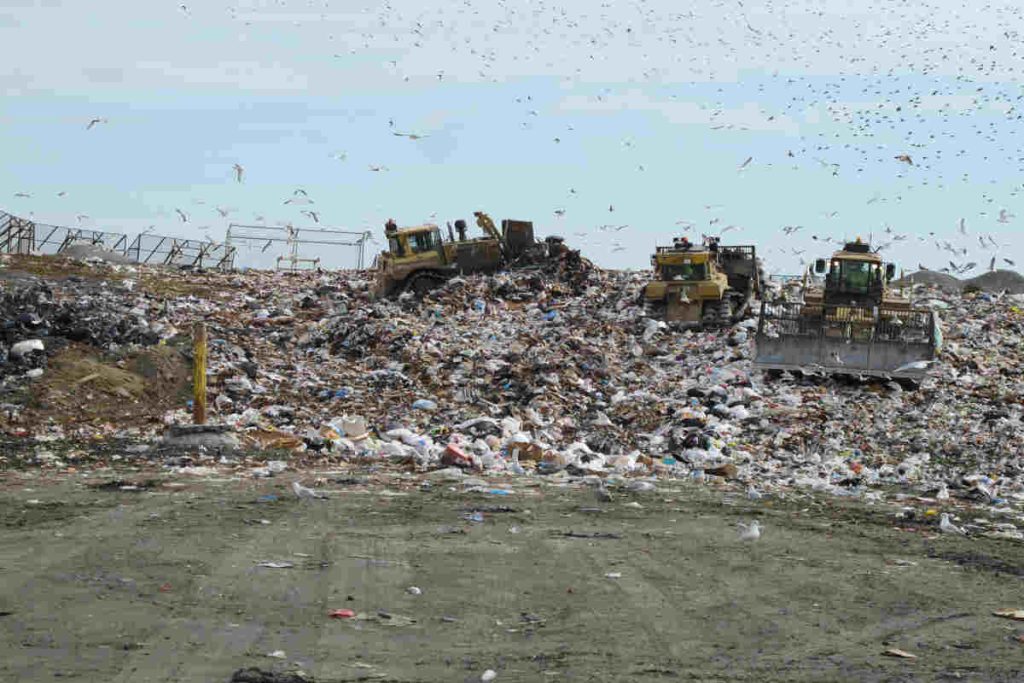
The Silent Crisis Beneath Our Waste
Every day, the world generates mountains of waste that quietly accumulate at the edges of our cities. Most of this waste ends up in landfills that stretch across vast landscapes, often hidden from public view but deeply connected to our planet’s future. These spaces are not passive dumping grounds. They are complex, unstable systems filled with toxic gases, chemical reactions and degraded materials that continue to release pollutants long after disposal.
This growing burden creates a silent crisis. While landfills appear inexpensive and convenient, their long term impacts are costly and far reaching. They affect air quality, groundwater safety, public health, and even food systems through soil contamination. Scientific research from institutions like the United Nations Environment Programme and the World Bank shows that unmanaged waste contributes significantly to climate change, environmental degradation and ecosystem collapse. India alone generates more than 160,000 tonnes of municipal solid waste every day, based on data from the Ministry of Housing and Urban Affairs, and most of it still ends up in landfills.
For ESG investors, the risks are deeper than environmental damage. Landfills create challenges across all three pillars of ESG. They weaken environmental indicators through methane emissions. They affect social metrics when nearby communities face health risks or displacement. They expose governance flaws when companies fail to manage waste responsibly or comply with evolving regulations.
Earth5R, a Mumbai based sustainability organisation, has been documenting these challenges across urban and rural India. Their research and community work highlight the growing urgency for investors to understand landfill related risks in a rapidly transforming environmental landscape.
As global markets shift toward circular economy models, and as climate policies tighten, investors face a critical moment. Landfills are no longer just waste sites. They are potential tipping points that can disrupt financial portfolios, threaten compliance ratings and undermine sustainability commitments.
The next sections examine the five major reasons why landfills have become time bombs for ESG investors, backed by scientific data, international policy documents and real world case studies.
The ESG Landscape and the Landfill Paradox
Across global markets, ESG investing has moved from a voluntary practice to a central feature of capital allocation. Investors use ESG frameworks to evaluate how companies manage environmental impact, social responsibility and governance standards. Yet one sector consistently escapes detailed scrutiny. Waste. More specifically, the vast network of landfills that silently shape environmental outcomes. This gap creates what many analysts now call the landfill paradox. Companies can score well on ESG ratings while their waste still ends up in unmanaged or poorly managed landfills.
A growing body of research from the World Bank and the United Nations Environment Programme shows that waste systems directly influence climate action, water quality, community health and biodiversity. These areas sit at the core of global ESG scoring frameworks such as MSCI ESG Ratings, Sustainalytics Risk Ratings and the Global Reporting Initiative standards. When landfills fail, ESG indicators fail with them. Yet waste is often treated as an operational detail rather than a central risk. This mismatch creates blind spots for investors who rely on ESG metrics.
How Landfills Disrupt Environmental Metrics

Environmental scores are built on measurable indicators. These include greenhouse gas emissions, pollutant output, biodiversity risk and waste management performance. Landfills compromise each of these indicators in ways that are well documented in scientific research. The Intergovernmental Panel on Climate Change notes in its Sixth Assessment Report that landfills are one of the world’s largest anthropogenic sources of methane. Methane has a global warming potential more than twenty five times stronger than carbon dioxide over a hundred year period. ipcc report
Methane emissions continue for decades after waste is buried. Even engineered landfills with gas capture systems cannot eliminate all emissions. This makes landfill dependent companies vulnerable to climate related penalties and carbon pricing regimes that are expanding across Europe and Asia. Research from the United States Environmental Protection Agency shows that landfill leachate also contaminates groundwater with organic pollutants, microplastics and heavy metals. epa gov
This contamination directly affects water related ESG indicators, especially in regions where groundwater remains a primary drinking source. In India, the Central Pollution Control Board has repeatedly warned that leachate from major landfills like Deonar in Mumbai and Ghazipur in Delhi has seeped into surrounding soil and water channels. Such contamination exposes companies to environmental liability and long term remediation costs.
Poor waste systems also degrade biodiversity. When unmanaged waste attracts pests, disrupts soil ecosystems or contaminates wetlands, companies involved in the waste chain may face biodiversity related disclosures under emerging frameworks like the Taskforce on Nature Related Financial Disclosures.tnfd global
These environmental disruptions show why landfill exposure is a clear threat to corporate sustainability ratings.
Why Waste Infrastructure Influences Social Scores
ESG social indicators measure how a company affects people. This includes worker health, community wellbeing, human rights, safety and the quality of life for surrounding populations. Landfills sit at the intersection of all these concerns. Communities living near major landfill sites often report respiratory issues, skin allergies and increased risk of vector borne diseases. The World Health Organization has published multiple reports showing that populations near open dumps face higher exposure to particulate matter and toxic fumes.air pollution
Studies published in The Lancet detail how burning waste contributes to air pollution levels that lead to premature deaths and chronic illness. These health impacts have direct implications for ESG ratings. Companies connected to landfill operations may face community protests, reputational loss and strained relationships with local governments. The Deonar landfill protests in Mumbai and the Ghazipur landfill collapse in Delhi illustrate how rapidly communities can mobilize when waste infrastructure becomes a threat to daily life.
Social scores also capture equity and fairness. Waste workers, many of whom operate in informal conditions across Asia and Africa, face hazardous working environments without protective gear or stable income. Investors who overlook this aspect may unknowingly support supply chains that violate social responsibility commitments.
A company’s waste footprint becomes a measure of how well it protects human health. This makes landfills not just environmental liabilities, but social flashpoints that influence public opinion and investor confidence.
Governance Failures in Waste Audits and Reporting
Governance indicators evaluate transparency, compliance, risk management and ethical conduct. Waste is one of the areas where governance failures are most common. Many companies do not track where their waste goes after collection. Audits often capture only the quantity of waste generated, not the end destination or treatment method. This creates gaps in corporate disclosures and sustainability reports.
The Global Reporting Initiative (GRI) requires companies to report how waste is managed, including the percentage recycled or landfilled.GRI
Yet compliance remains inconsistent. Investigations by non profit organisations and municipal authorities have revealed cases where companies report high recycling rates even when their waste continues to reach landfills. This disconnect between reporting and reality poses a governance risk. It can expose companies to regulatory penalties and accusations of greenwashing.
Government enforcement also struggles to keep pace. While India’s Solid Waste Management Rules 2016 mandate segregation and processing, implementation remains patchy. Similar gaps exist in Southeast Asia and parts of Latin America. Weak oversight allows companies with poor waste practices to continue operating without accountability.
For investors, governance failures signal deeper systemic issues. Companies that cannot control their waste streams may also struggle with other compliance areas such as emissions reporting, labour rights or supply chain transparency. This increases overall ESG risk.
When environmental, social and governance failures converge within landfill systems, they create a dangerous paradox. Landfills appear cheap and convenient today, but they carry hidden costs that build over time. For ESG investors seeking long term stability, understanding these risks is no longer optional.
Reason 1: Long Term Environmental Liability
Landfills carry environmental risks that unfold slowly but persist for decades. These risks remain active long after a landfill closes. Scientists, regulators and environmental economists agree that long term liability is one of the most underestimated threats in the waste sector. ESG investors often overlook it because the impacts are delayed. Yet the consequences are significant enough to affect asset value and compliance ratings for years.
Methane and greenhouse emissions backed by IPCC data

Methane is the most visible and most dangerous output from landfills. As organic waste breaks down without oxygen, it produces methane in large volumes. The Intergovernmental Panel on Climate Change highlights this risk in its Sixth Assessment Report. It states that methane has a global warming potential more than twenty five times higher than carbon dioxide over a century. Climate Change 2021: The Physical Science Basis
Landfills contribute roughly 20 percent of global methane emissions according to data from the Climate and Clean Air Coalition and United Nations Environment Programme. These emissions increase during hot weather and when waste is not compacted or covered regularly. Even modern landfills with engineered liners and gas capture systems cannot eliminate methane completely. Capture efficiency decreases over time and gas continues to leak through soil layers.
This creates a long tail climate liability. When methane rises, a company’s environmental footprint expands. Investors with climate related commitments face a direct conflict. They cannot meet net zero targets if their portfolio includes firms exposed to unmanaged landfill emissions. With new regulations emerging in the European Union, India and parts of Southeast Asia, methane reporting is becoming mandatory. Any company linked to landfill disposal will soon have to account for these emissions. Compliance will raise operational costs and affect ESG scoring.
Leachate contamination risks supported by WHO and EPA research
Leachate is another hidden threat. It forms when rainwater filters through layers of mixed waste, dissolving chemicals, microplastics, heavy metals and organic toxins. The resulting liquid seeps into surrounding soil and groundwater unless managed carefully.
The World Health Organization warns that contaminated groundwater increases risks of waterborne disease, cancer and reproductive health disorders.Health
The United States Environmental Protection Agency explains that landfill leachate typically contains ammonia, solvents, lead, mercury and industrial chemicals. It states that leachate can migrate far from waste sites if liners fail or if landfills are unlined.
These risks are not theoretical. They appear in every country where municipal waste is poorly segregated. India’s Central Pollution Control Board has tested groundwater near open dumps in Mumbai, Delhi and Chennai. Many samples show elevated levels of heavy metals and chemical oxygen demand. These markers indicate severe contamination. When groundwater is polluted, responsibility often falls on the waste generators if accountability can be traced.
Once contamination occurs, remediation becomes expensive and lengthy. Pump and treat systems, soil washing and groundwater monitoring can continue for years. This long term obligation becomes a financial burden for companies and investors.
Financial exposure created by legacy pollution
Legacy pollution is one of the least discussed financial risks in the waste sector. It refers to contamination caused years earlier that resurfaces due to legal action, regulatory pressure or environmental monitoring.
There are several real examples.
In the United States, multiple municipalities have sued manufacturers for dumping waste that later contaminated groundwater. The Velsicol Chemical landfill case in Tennessee became a landmark legal battle after toxins were detected in domestic wells. The cleanup cost exceeded 100 million dollars according to federal court records. Investors in associated companies saw immediate value erosion.
In the European Union, strict enforcement of the EU Landfill Directive has forced older landfills to undergo upgrades or closure. Municipalities in the United Kingdom and Spain have spent tens of millions of euros rehabilitating sites that failed to meet new compliance standards. These costs were often passed on to private operators through litigation or renegotiated contracts.
In India, the National Green Tribunal has issued several orders directing state governments and waste contractors to clear legacy waste. The Bruhat Bengaluru Mahanagara Palike was fined for long term violations linked to landfill mismanagement. Similar directives affected Delhi’s Ghazipur and Mumbai’s Deonar landfills. Companies responsible for collection and transport often faced penalties or increased operational costs.
Legacy pollution creates a pattern. Initial disposal may seem cheap. The real cost emerges years later when contamination is discovered. ESG investors must account for these hidden liabilities. If left unaddressed, they can lead to sudden losses, reputational damage and regulatory penalties.
Landfills represent a cumulative environmental debt. Each year of unmanaged waste adds new layers of risk that future investors must pay for. This is why long term environmental liability remains one of the strongest reasons landfills are time bombs for ESG portfolios.
Reason 2: Regulatory Pressure and Rising Compliance Costs
Regulation is now one of the strongest forces reshaping global waste management. Governments across Asia, Europe and North America are tightening rules as landfills approach capacity and climate targets become urgent. This shift places growing pressure on companies whose waste ends up in landfills. It also affects investors who rely on ESG scores and compliance reports to gauge long term risk.
Landfills once appeared to be the most cost effective disposal option. Today they sit at the center of evolving environmental laws. With stricter emission targets, mandatory reporting and rising penalties, landfill linked companies face higher costs and shrinking operational margins. The World Bank notes in its global waste management review that compliance costs will continue to rise as countries move toward circular economy frameworks.solid waste management
Global landfill reduction laws
Across Europe, the EU Landfill Directive is one of the strongest examples of regulatory reform. The directive aims to cut biodegradable waste in landfills and encourages recycling and recovery. Over two decades, it has pushed member states to reduce landfill dependency through strict caps, monitoring systems and penalties for non compliance.
This policy has reduced landfill use significantly. Countries like Germany, Belgium and the Netherlands now send less than five percent of waste to landfills. The transition was driven by law. It forced municipalities and private operators to invest in composting, recycling and waste to energy facilities. Companies that failed to adapt faced fines and contract losses.
India’s Solid Waste Management Rules 2016 also signal a major regulatory shift. The rules mandate waste segregation at source, processing of biodegradable waste and reduction of untreated dumping. They require local governments and private contractors to develop scientific landfills and avoid open dumping.moef.gov.in
However, enforcement remains uneven. As monitoring improves, companies that do not comply face penalties from the National Green Tribunal. These penalties directly impact financial stability and investor confidence.
Similar reforms are visible in China, South Korea, Indonesia and parts of Latin America. Many cities are now banning certain materials, restricting mixed waste disposal, or imposing landfill taxes. These taxes aim to make landfilling more expensive and push companies toward recycling and resource recovery. For investors, these policy shifts reshape long term cost structures.
Extended Producer Responsibility enforcement
Extended Producer Responsibility, or EPR, is another area where regulations are tightening. EPR policies make manufacturers responsible for the waste generated by their products. This includes collection, recycling and safe disposal. The idea is to reduce environmental burden and shift responsibility away from municipal systems.
The European Union has enforced EPR for packaging, electronics, tyres, batteries and plastics. India has adopted similar EPR rules for plastics, electronic waste and batteries through the Ministry of Environment, Forest and Climate Change.CPCB
These rules require companies to meet recycling targets, track waste movements and report compliance transparently. Failure to meet targets results in fines or withdrawal of permissions. For large corporations, the cost of managing compliance can be substantial. They must invest in collection systems, partnerships with recyclers, digital tracking platforms and third party audits.
For ESG investors, EPR creates a new class of accountability. A company that sends most of its waste to landfills will face higher compliance pressure. This affects sustainability ratings and increases operational risks. EPR is expanding rapidly across global markets. Companies that do not innovate will face escalating costs.
Cost implications for investors and companies
Regulatory pressure shapes budgets. As laws evolve, companies must allocate more resources to waste management. These costs include landfill taxes, compliance audits, environmental monitoring and penalties for violations. The Organisation for Economic Co operation and Development notes that waste sector regulations are becoming more expensive to meet, especially for firms reliant on landfill disposal.OECD
Even routine compliance activities raise expenses. Landfill gas capture systems, engineered liners, leachate treatment plants and monitoring networks require investment. Older landfills often need upgrades to meet updated regulations. These expenses accumulate over time.
For investors, this creates long term financial exposure. Stocks tied to low compliance waste practices may weaken. Companies with high landfill dependency may face shrinking profit margins. New sustainability laws such as the EU Corporate Sustainability Reporting Directive and India’s Business Responsibility and Sustainability Reporting framework require detailed waste disclosures. Inaccurate reporting can damage credibility.
The regulatory shift is clear. Countries want to reduce landfill use and increase recycling. Businesses must adapt or face rising operational costs and declining ESG performance. For investors, understanding this trend is essential for safeguarding long term value.
Reason 3: Social Conflict and Community Opposition
Landfills are not only environmental hazards. They are also social flashpoints that carry real consequences for communities living nearby. Across the world, landfill sites are located close to low income neighborhoods, informal settlements or peri urban regions. These communities face higher health risks and reduced quality of life. As awareness grows, public resistance is rising. This creates reputational and operational risks for companies whose waste ends up in these sites. ESG investors cannot ignore this tension because social instability often leads to legal disputes, political intervention and long term financial losses.
Social risks linked to landfills are now widely documented. Research from the World Bank and United Nations Human Settlements Programme shows that waste sites generate strong community response once pollution begins to affect daily life. This response can shape local politics, influence business contracts and disrupt the operations of waste management companies.
Health impacts documented by WHO and Lancet studies
Public health is one of the strongest drivers of community opposition. Communities living near landfills report higher rates of asthma, chronic cough, skin irritation and other respiratory problems. The World Health Organization highlights that improper waste disposal contributes to air pollution and soil contamination, increasing exposure to harmful chemicals and microorganisms.
The Lancet Commission on Pollution and Health notes that waste burning and landfill emissions contribute to millions of premature deaths every year through increased exposure to particulate matter and toxic gases. Link: When landfill fires occur, large amounts of smoke settle over surrounding homes. This forces schools to close, hospitals to manage sudden spikes in respiratory cases and families to remain indoors for safety. Such events regularly appear in cities across India, Indonesia, Brazil and the Philippines.
Water contamination is another major concern. Leachate from landfills affects groundwater used for drinking and domestic purposes. Families living near older landfills often report strange taste, color changes or health problems linked to contaminated water sources. These issues fuel public anger.
As scientific evidence becomes more accessible, communities use it to demand accountability. Health data strengthens protests and legal petitions. For investors, this means that social unrest is not random. It is backed by credible science that strengthens the community’s case.
Protests and public resistance around landfill sites

Landfill protests are becoming more visible. In Mumbai, the Deonar landfill has seen repeated demonstrations due to fires, poor air quality and waste overflow. Residents have blocked roads, petitioned courts and appealed to politicians for relief. Media coverage of these events has often questioned the performance of the municipal system and the private contractors involved.
In Delhi, the Ghazipur landfill collapse in 2017 sparked national outrage after two people died and large waste masses slid into a nearby canal. Surrounding communities demanded closure of the site and stricter waste management practices. The incident forced the East Delhi Municipal Corporation to rethink waste disposal strategies.
Similar protests have taken place in Indonesia at the Bantar Gebang landfill, in the Philippines at the Payatas dumpsite before its closure and in Kenya at the Dandora dumpsite. In each case, public pressure pushed authorities to investigate waste contractors or enforce new regulations.
Protests reduce operational stability. Companies face delays in transportation, damage to equipment, legal cases and renegotiated contracts. Politicians may intervene to enforce hasty closures or impose new restrictions. These actions have financial implications for contractors and associated industries.
For ESG investors, social unrest erodes the stability of long term investments. A company whose operations trigger public anger will struggle to maintain community trust. This affects brand reputation and reduces investor confidence in the firm’s governance practices.
Reputational and operational risks for businesses
Reputation is a critical factor in the social dimension of ESG. When a landfill catches fire or contaminates water, media coverage spreads quickly. Images of smoke clouds, polluted streams or protests can damage a company’s public image. Negative publicity affects consumer perception and investor sentiment.
Operational disruptions also carry direct financial costs. Waste trucks may be blocked from entering landfill sites. Equipment may be vandalised or damaged in protests. Court orders may temporarily halt operations. Contracts may be suspended or cancelled for non performance.
Companies that ignore early warning signs often face bigger crises later. The social cost of landfill dependence grows each year as more people become aware of environmental health issues. Modern ESG frameworks evaluate how companies respond to community concerns. Poor engagement can lower social scores and weaken a company’s overall sustainability rating.
Landfills show how social risks can quickly escalate. They affect health, livelihoods and dignity. When communities resist, the fallout spreads across business operations and investment portfolios. ESG investors must recognise that landfill related social risk is not a peripheral issue. It is a central factor that shapes long term financial outcomes.
Reason 4: Stranded Asset Risk in the Global Waste Transition
The global waste sector is undergoing a major transition. Countries are shifting from landfill based systems to circular economy models that prioritise recycling, composting and resource recovery. This transition is not driven by choice alone. It is shaped by climate commitments, shrinking land availability and stricter environmental rules. As these forces strengthen, landfills face a growing risk of becoming stranded assets. Investors with exposure to landfill dependent companies must understand this shift because it directly affects long term financial performance.
A stranded asset is an asset that loses economic value long before the end of its expected life. Coal mines, outdated factories and inefficient industrial plants have already shown how policy and market changes can erase value. Landfills are now entering that category. As recycling capacity grows and waste reduction policies intensify, the long term viability of landfill based operations becomes uncertain.
Circular economy policies reducing landfill demand
Across Europe, North America and parts of Asia, governments are investing heavily in circular economy systems. The European Union is one of the strongest examples. Its Circular Economy Action Plan aims to minimise waste generation and promote sustainable product design.economy action plan
Under this plan, recycling targets have increased, and landfill disposal has dropped significantly. In several EU countries, landfilling less than ten percent of waste has become standard practice. This decline is a direct result of policy pressure combined with market innovation. Companies are adopting new materials, while consumers are shifting toward sustainable packaging.
Similar initiatives are visible in South Korea, Japan and Singapore. Japan’s Basic Act for Establishing a Sound Material Cycle Society aims to reduce overall landfill dependency and expand recycling industries.env.go.jp
In India, the Ministry of Housing and Urban Affairs has launched mission based approaches like Swachh Bharat Mission 2.0, which includes strong emphasis on material recovery facilities and decentralised composting. Over time, such policies will reduce the volume of waste reaching landfills. As more cities adopt waste processing systems, existing landfill infrastructure becomes less necessary.
For investors, this means that assets tied to landfill contracts may not remain profitable in the long run. Companies that rely on tipping fees or landfill based revenue models face shrinking opportunities.
How landfill assets lose value over time
Landfills are expensive to maintain. They require monitoring even after closure. Methane capture systems, leachate treatment networks and slope stability measures must continue for decades. These costs increase as landfills age.
However, revenue does not grow with age. As waste diversion increases, landfill intake reduces. Lower intake means lower income. This mismatch creates an unfavorable economic model.
The Organisation for Economic Co operation and Development notes that waste disposal assets face increased depreciation as countries adopt circular strategies.
Moreover, older landfills often require upgrades to meet new compliance standards. These upgrades can include additional liners, improved gas capture systems or leachate treatment plants. For private operators, the investment cost may exceed the expected returns.
When policies shift faster than business models, landfills risk becoming obsolete before companies can recover their investment. This is the classic pattern of a stranded asset.
Risks for waste management companies and investors
Waste management companies that rely on landfill operations face several threats. First, shrinking landfill demand reduces revenue streams. Second, regulatory obligations increase operating costs. Third, competition from recycling and waste to energy companies grows stronger each year.
Investors see the impact through slower growth rates, lower margins and higher liabilities. Rating agencies also consider stranded asset risk in sustainability assessments. A company with heavy landfill exposure may receive a higher risk rating from ESG evaluators.
In Europe, several private waste firms have already begun shifting away from landfill operations because they see diminishing opportunities. In the United Kingdom, many older landfill sites closed early because they were not financially viable under the EU Landfill Directive. Operators were forced to invest in recycling and energy recovery facilities.
In India, similar patterns may appear as more cities adopt waste processing strategies. Large municipal contracts may begin prioritising companies with strong recycling and composting infrastructure. Landfill heavy companies may struggle to secure long term agreements.
For investors, the message is clear. The waste sector is undergoing a structural shift. Landfills are losing relevance, and assets tied to them face depreciation. ESG investors must review portfolios to ensure they are aligned with future policy directions, not past waste practices.
Reason 5: Climate Vulnerability and Disaster Exposure

Climate change has intensified the risks facing landfill sites worldwide. Rising temperatures, unpredictable rainfall, heat waves and extreme weather increase the likelihood of fires, flooding and structural collapse in waste dumps. These events create sudden environmental disasters that carry high financial and legal costs. For ESG investors, this vulnerability is a major red flag because it disrupts operations, damages corporate reputation and exposes companies to long term liabilities.
Scientific agencies have begun tracking landfill related disasters more closely. Remote sensing data from NASA, climate risk assessments by the Intergovernmental Panel on Climate Change and national meteorological reports all show a clear link between climate volatility and waste site instability. As global climate risks worsen, landfills will become even more dangerous. Investments tied to them may face higher insurance rates, increased compliance demands and possible stranded asset risk.
Landfill fires and rising heat events
Landfill fires have become more frequent. They often occur when high temperatures increase methane pressure within buried waste layers. Methane is highly flammable. When heat builds up, gas pockets ignite. These fires can burn for days or even weeks.
NASA’s Fire Information for Resource Management System has detected repeated fire events in large waste sites in India, Southeast Asia and parts of Africa.NASA firms
The Indian Meteorological Department notes that rising heat waves across India have made landfill fires more common, especially in northern cities where waste dries rapidly under extreme temperatures.imd gov
Delhi’s Bhalswa landfill caught fire multiple times in recent years. Videos shared across national media showed thick smoke covering nearby neighborhoods. These fires caused poor visibility on highways, school closures and health warnings from the Delhi Pollution Control Committee. Similar fires occurred at Mumbai’s Deonar landfill, Jakarta’s Bantar Gebang landfill and Manila’s Payatas dumpsite before its closure.
For investors, these fires represent a clear operational risk. They force emergency shutdowns, require costly firefighting interventions and damage equipment. They also trigger public outrage and increase regulatory scrutiny.
Flooding and landfill collapse risks
Waste sites are particularly vulnerable to rainfall and flooding. When heavy rain falls on open dumps, water seeps through waste layers and creates leachate overflow. This contaminated liquid then flows into rivers, lakes and agricultural fields.
The United Nations Office for Disaster Risk Reduction notes that waste dumps in flood prone regions face increased collapse risk as climate events intensify.undrr
One of the most tragic examples occurred in Indonesia in 2005, when the Leuwigajah landfill collapsed after heavy rains triggered a waste slide. More than 140 people died. The incident is documented by UN Habitat and remains one of the most severe landfill disasters in history.
Flooding also weakens landfill slopes. This makes them unstable and prone to landslides. When a landfill collapses, nearby homes, businesses and public infrastructure are endangered. Companies involved in waste transport or landfill operations may face legal action, compensation claims and contract termination.
Waterlogging also increases methane emissions because buried waste decomposes more rapidly under wet conditions. This raises long term climate liability for companies tied to these sites.
Insurance, recovery and legal costs
Insurance companies are now factoring climate risks into their assessments of landfill assets. Dump sites with a history of fires or flooding often receive higher insurance premiums. In some regions, insurers refuse coverage for older or unregulated waste sites because the risk is too high.
Recovery costs after disasters are substantial. Firefighting, soil stabilization, water pumping and public health interventions may take weeks. Municipalities may demand compensation from contractors responsible for landfill maintenance. In cases of contamination, pollution control authorities may impose penalties or direct companies to conduct long term remediation.
Legal costs follow closely. When landfill disasters harm communities, residents often approach courts or environmental authorities. In India, the National Green Tribunal has issued orders directing compensation and clean up mandates after landfill fires and collapses. Companies pay these costs directly or lose future contracts due to poor performance.
For investors, these risks create sudden financial shocks. A landfill fire or collapse can reduce stock value, damage credit ratings and weaken ESG scores. Climate vulnerability transforms waste sites from operational assets into unpredictable liabilities.
Landfill instability will grow as climate patterns shift. Heat, rain and storms are intensifying across regions where waste loads are already high. Investors must treat landfill exposure as a climate risk, not merely a waste management issue.
Case Studies from around the world
Real world landfill events offer a clear window into the complex risks faced by companies, governments and investors. These cases illustrate how environmental failure, community resistance and climate exposure can quickly escalate into full scale crises. Each event shows that landfill related risks are not theoretical. They have already disrupted economies, affected public health and forced costly interventions. For ESG investors, these examples serve as warnings of how quickly waste related liabilities can materialise.
Case Study 1: Leuwigajah Landfill Disaster, Indonesia
The Leuwigajah landfill disaster remains one of the deadliest waste related tragedies in modern history. Located near Bandung in Indonesia, the site held millions of tonnes of unmanaged waste. On February 21, 2005, days of heavy rainfall saturated the landfill. Water seeped through the waste layers and triggered a massive waste slide. Methane trapped within the landfill ignited shortly before the collapse, increasing its destructive impact.
More than 140 people living in informal settlements at the base of the landfill were killed. Homes were crushed under thousands of tonnes of moving waste. UN Habitat later documented the event as a major urban disaster linked to weak waste governance and poor infrastructureunhabitat.org
The tragedy had far reaching consequences. Local authorities were forced to close the landfill permanently and invest in new waste systems. The Indonesian government used the event as a case study to strengthen waste management regulations. Researchers from the Bandung Institute of Technology published several studies linking the disaster to poor monitoring, inadequate slope protection and high methane buildup.
For investors, the key takeaway is the scale of human and financial loss that poor landfill management can create. Waste systems that lack stability pose direct social and environmental risks. Companies involved in the site faced scrutiny, and municipalities revaluated how they awarded contracts and managed compliance.
Case Study 2: Ghazipur Landfill Collapse, India

The Ghazipur landfill in Delhi has become a symbol of India’s waste crisis. Created in 1984, it now rises taller than some city landmarks and continues to receive thousands of tonnes of waste each day. On September 1, 2017, after days of heavy rain, a section of the landfill collapsed. Two people died when a large mass of waste fell onto a nearby road and into the Kondli canal. Traffic came to a halt and emergency teams rushed to the site.
The incident led to significant public outrage. Media outlets across the country broadcast images of the towering landfill and raised questions about municipal accountability. Delhi Pollution Control Committee and Central Pollution Control Board reports later noted that poor waste segregation, uncontrolled dumping and inadequate slope management contributed to the collapse. These findings were published in official government assessments and widely covered by national newspapers.
Following the disaster, the National Green Tribunal summoned municipal authorities and demanded a clear remediation plan. Operational contractors faced criticism for negligence and weak compliance. The incident demonstrated how quickly landfill instability can escalate into crisis.
For investors, Ghazipur showed how urban waste sites can become political and legal hotspots. Companies tied to such sites face reputational damage, contract uncertainty and regulatory intervention. The economic cost goes beyond the immediate collapse. It includes long term clean up, monitoring and reduced trust in waste contractors.
Case Study 3: EU Landfill Reduction Success Case
While landfill disasters highlight risk, policy driven transitions offer another lesson. Europe provides one of the strongest examples of successful landfill reduction. Under the EU Landfill Directive, member states were required to reduce the amount of biodegradable waste entering landfills.
Over two decades, this directive reshaped waste markets. Recycling and composting industries grew rapidly. New waste to energy plants were built. Municipalities invested in material recovery facilities. Companies that relied heavily on landfill disposal were forced to adjust or exit the market.
Countries like Germany, Belgium and the Netherlands reduced landfill use to less than five percent of total waste. These results are documented in European Environment Agency reports and EU progress assessments.eea
The transition came with financial implications. Older landfill sites required rehabilitation. Some private operators faced early contract terminations. Investors who had exposure to landfill dependent firms saw slower returns. At the same time, companies that adapted early to recycling and circular economy models benefited. Their stock performance improved as sustainability became a competitive advantage.
This case shows two sides of the same trend. Landfills can become stranded assets under strict policy pressure. Meanwhile, companies that embrace circular practices gain resilience and investor support.
What These Cases Reveal
These three cases share a common message. Landfill risks grow when oversight weakens, when waste volumes increase and when climate events intensify. They also show that policy can transform the economics of waste management in a short period. For ESG investors, this presents both warning signs and opportunities.
Poor waste governance leads to environmental disasters. Strong regulatory action can shift markets and reward sustainable innovation. The direction of change is clear. Landfills are becoming risk centers rather than long term assets. Investors who recognise this trend early will be better prepared for the next phase of the global waste transition.
The Earth5R Perspective: A Path Beyond Landfills
As landfill risks grow, the global conversation around waste is shifting. Investors, regulators and communities are looking for models that move beyond traditional disposal. Earth5R, a Mumbai based sustainability organisation, has emerged as one of the leading voices in this transition. Its field research, community programs and environmental projects reveal how decentralised solutions can reduce landfill dependence and build long term resilience.
Earth5R works across India and in several international communities. Its approach blends scientific understanding with community engagement. Instead of relying on large centralised landfills, the organisation promotes decentralised waste processing, circular resource management and local economic participation. This shift aligns closely with emerging ESG priorities and helps investors understand how future waste systems will operate.
Decentralised waste recovery models

One of Earth5R’s core strategies is decentralised waste recovery. Large landfills fail because they collect mixed waste from millions of households. When segregation does not happen at the source, waste becomes contaminated and difficult to recycle. Earth5R addresses this problem by promoting household and community level sorting.
Small scale composting units, local material recovery centres and community recycling hubs reduce the flow of waste toward landfills. These decentralised systems also minimise transportation emissions and improve transparency. Research published by UN Habitat shows that decentralised waste management leads to higher recycling rates and more stable community outcomes in developing cities.
Earth5R has implemented such systems in Mumbai, Pune, Bengaluru and several rural regions. By creating neighbourhood based solutions, the organisation reduces the burden on municipal landfills. This model also creates new green jobs and supports informal workers who often face unsafe working conditions in large dumpsites.
These decentralised systems offer a blueprint for how waste can be managed efficiently without relying on large landfill infrastructure. For ESG investors, they represent the direction in which future waste markets are headed.
Community driven circular systems
Circular economy models depend on participation. Earth5R’s programmes focus on training families, businesses and schools to take responsibility for their waste. The organisation uses workshops, mobile apps and on ground volunteers to teach segregation, composting and recycling.
This community centred model has been effective because it aligns social and environmental priorities. When communities participate, recycling increases and landfill dependency decreases. The Ellen MacArthur Foundation notes that circular systems succeed when communities understand the value of materials and adopt behaviour changes.ellen mecharthy
Earth5R’s projects have also supported informal waste pickers by integrating them into formal recycling networks. This improves livelihoods and protects workers from hazardous landfill conditions. Social inclusion strengthens ESG performance, especially in the S pillar of social responsibility.
By empowering local actors, Earth5R creates durable waste solutions that reduce the need for large scale dumping. This reduces environmental risk and improves community health, two factors that directly strengthen ESG outcomes.
ESG aligned strategies for investors
Earth5R’s work offers practical insights for ESG investors seeking long term sustainability. The organisation’s focus on resource recovery aligns with global ESG frameworks such as the Global Reporting Initiative, the Task Force on Climate Related Financial Disclosures and the United Nations Principles for Responsible Investment.
The message is simple. Companies that implement circular systems and reduce landfill dependency will gain stronger environmental, social and governance performance. They will also avoid long term liabilities associated with methane emissions, groundwater contamination and community conflict.
Earth5R has collaborated with corporations on waste audits, recycling strategies and sustainability training. These collaborations show how businesses can adapt to new regulations and improve ESG ratings. Companies that adopt these practices report cost savings, improved brand reputation and better compliance with environmental laws.
For investors, the takeaway is clear. Landfill reduction is not just an environmental goal. It is a strategic investment priority. Firms that partner with organisations like Earth5R will be better positioned to navigate future regulatory shifts and market expectations.
Earth5R presents a path forward. Its community driven, decentralised and scientifically informed approach demonstrates that sustainable waste management is achievable. More importantly, it shows how investors can support models that reduce risk while accelerating environmental progress.
The Investor Outlook: What the Next Decade Holds
The global investment landscape is entering a period of rapid environmental transition. Climate pressure, urbanisation and policy reform are reshaping how countries manage waste. Over the next decade, landfill dependent business models will face shrinking relevance, higher compliance obligations and rising operational risks. For ESG investors, this shift demands close attention. Portfolios that fail to recognise landfill exposure may struggle to align with global climate targets and evolving sustainability standards.
Major financial institutions are already adjusting. Reports from the United Nations Principles for Responsible Investment and the Task Force on Climate Related Financial Disclosures show that environmental liabilities linked to waste systems are shaping investment decisions. As new regulations emerge and circular economy markets expand, landfill risks will become more pronounced.
Shifts in global sustainability finance
Sustainability finance is growing quickly. Banks, pension funds and asset managers are integrating climate and environmental risk models into their investment strategies. The UN PRI, which represents more than 5,000 signatories and over 120 trillion dollars in assets, has emphasised waste management as a material ESG factor.UNPRI
Similarly, the Task Force on Climate Related Financial Disclosures requires companies to reveal how climate risks affect their business models. Waste systems, especially landfills, are vulnerable to climate disruptions. This means waste related exposures must be disclosed and accounted for in risk planning.tcfd.org
Central banks are also entering the conversation. The Network for Greening the Financial System, a global coalition of central banks, warns that polluting industries may face increased borrowing costs. Waste management firms that rely on landfill revenue may struggle if lenders tighten environmental assessments. ngfs.net
As sustainability finance expands, capital will flow toward businesses with strong environmental performance. Companies that reduce landfill reliance will be better positioned to attract funding.
Market signals favouring circular economy players
The circular economy is emerging as one of the most promising investment sectors. Markets for recycled materials, bio based products, compost, sustainable packaging and waste to value technologies are growing. The Ellen MacArthur Foundation estimates that a global circular economy could unlock trillions of dollars in economic value.
Businesses that innovate in this space are gaining investor attention. Startups working on plastic recycling, compostable packaging, waste to energy systems and biogas projects are attracting venture capital. Large corporations are also shifting their supply chains to reduce virgin material use. These trends reduce the volume of waste sent to landfills.
As circular systems expand, landfill operators face declining intake and reduced revenue. Investors see this as a signal that traditional waste disposal sectors may stagnate while recycling and resource recovery industries continue to grow. Companies prepared for this transition will outpace those tied to outdated waste systems.
Why ESG portfolios must move beyond landfill exposed assets
ESG investing aims to identify businesses that are resilient, compliant and aligned with global sustainability goals. Landfill exposure challenges each of these goals. It increases environmental liability, triggers community opposition and raises governance concerns about waste tracking and transparent reporting.
For portfolios committed to climate targets, methane emissions from landfills complicate carbon reduction plans. Recycling and composting systems, in contrast, reduce emissions and support circular resource flows.
Institutional investors, particularly in Europe and North America, are beginning to screen out companies with high landfill exposure. Sustainable indices prioritise waste efficient firms. Insurance companies are raising premiums for landfill linked risks. These changes signal that landfill dependent models will continue to face pressure.
Over the next decade, ESG investors must adopt proactive strategies. These include evaluating waste footprints, assessing landfill liabilities, reviewing compliance with emerging waste regulations and supporting companies with strong circular economy practices. Investment decisions must reflect the reality that landfills will be phased out as countries pursue cleaner, safer and more resilient waste management models.
The future of sustainable investment lies in recognising that landfill exposure is not static. It is a moving risk that grows as environmental and social expectations increase. Investors who reposition early will benefit from market trends and avoid future shocks. The next decade will belong to companies that turn waste into resources, not those that continue to rely on disposal.
A Warning and an Opportunity
Landfills sit at the heart of one of the most urgent sustainability challenges of our time. For decades, they have absorbed the waste of expanding cities and rising consumption. Today, they stand as symbols of a system under growing strain. They release potent greenhouse gases, contaminate water sources, fuel community conflict and carry rising climate risks. Each of these pressures shapes the ESG landscape in ways that investors can no longer ignore.
The evidence is clear across regions and research institutions. Methane emissions from landfills undermine climate targets. Water contamination threatens public health. Waste site fires and collapses reveal how vulnerable landfills are to extreme heat and heavy rain. Regulatory pressure is increasing, and the financial costs of compliance are rising. Together, these risks transform landfills from low cost disposal sites into long term liabilities that can destabilise portfolios.
At the same time, global markets are shifting. Governments are promoting recycling, composting and resource recovery. Businesses are redesigning products to reduce waste. Investors are aligning with climate frameworks and demanding transparency. Each of these trends points toward a future where landfill dependence becomes economically and socially unsustainable.
This transition also brings opportunity. Companies that adopt circular economy strategies will strengthen their ESG performance, attract sustainability focused capital and reduce exposure to regulatory shocks. Investors who recognise these trends early will benefit from the growth of recycling technologies, green materials and decentralised waste systems. Organisations like Earth5R show how community based models can reduce landfill reliance while creating new economic and social value.
The world is approaching a turning point. Landfills that once supported urban growth now threaten environmental stability and financial resilience. As cities generate more waste and climate events intensify, the risks will only grow. Investors have a choice. They can remain tied to outdated waste models or support the transition to systems that protect communities, reduce emissions and create sustainable value.
The path forward is clear. Better waste management is not only a public need but an investment imperative. For ESG investors, the warning is urgent and the opportunity is real. The next decade will reward those who move beyond landfills and toward a circular, resilient and scientifically informed future.
FAQs: 5 Reasons Why Landfills Are Time Bombs for ESG Investors: Earth5R Risk Review
What makes landfills a long term risk for ESG investors
Landfills create environmental, social and financial liabilities that continue for decades, affecting climate metrics, community wellbeing and regulatory compliance.
How do landfills contribute to climate change
They release methane, a potent greenhouse gas highlighted by the IPCC as a major driver of global warming.
Why is landfill methane difficult to control
Even engineered landfills leak methane because gas capture systems cannot collect all emissions and waste continues to decompose for years.
What is landfill leachate and why is it dangerous
Leachate is contaminated liquid formed when rainwater passes through waste. It contains chemicals and heavy metals that can pollute groundwater.
How does groundwater contamination affect ESG performance
It increases environmental liability, triggers regulatory penalties and weakens corporate sustainability ratings.
Why are communities protesting against landfills
People living near landfills face air pollution, health problems, unpleasant odours and lower property values, which fuels public resistance.
How do landfill fires affect public health
Fires release toxic smoke, worsen respiratory illness and force school closures, especially during heat waves.
What role does climate change play in landfill instability
Rising temperatures, heavy rains and extreme weather intensify methane buildup, slope failure and flooding risks.
How do waste policies impact landfill dependent companies
Stricter laws, landfill taxes and recycling mandates raise operational costs and make traditional waste models less viable.
What is Extended Producer Responsibility
It is a policy framework that requires companies to collect, recycle or safely dispose of their products after consumer use.
Why are landfills becoming stranded assets
Circular economy policies and growing recycling capacity are reducing landfill demand, leaving many sites economically unviable.
How do landfill risks influence ESG ratings
They affect every pillar of ESG by weakening environmental outcomes, causing social conflict and exposing governance failures.
Why are investors shifting toward circular economy companies
Circular systems reduce waste, cut emissions and align with future regulations, making them more attractive for long term investment.
How do landfill collapses occur
Weak slope stability, unmanaged waste layers and heavy rainfall can trigger sudden and dangerous waste slides.
What happened in the Leuwigajah landfill disaster
Heavy rain and methane buildup caused a massive waste slide in Indonesia, killing more than 140 people and exposing governance failures.
Why is waste segregation important for reducing landfill risk
Segregation improves recycling efficiency, reduces methane emissions and lowers the burden on centralised landfill sites.
How does Earth5R help reduce landfill dependency
The organisation promotes decentralised composting, recycling hubs, waste training and community participation to cut landfill inflow.
Why are insurers concerned about landfill exposure
Sites with frequent fires or flood risks lead to higher claims and often receive higher premiums or reduced coverage.
What are the financial impacts of legacy landfill pollution
Companies may face remediation costs, lawsuits, regulatory fines and contract termination years after the pollution occurs.
How can ESG investors minimise landfill related risk
By favoring companies with strong circular economy practices, transparent waste audits, decentralised systems, and reduced landfill reliance.
Join the Movement Toward a Landfill Free Future
The evidence is clear. Landfills are no longer just waste sites. They are environmental risks, social flashpoints and financial liabilities that threaten the stability of ESG driven portfolios. The next decade will reward those who act early and invest in sustainable systems that protect both people and the planet.
If you want to support meaningful change, now is the moment. Back circular economy solutions. Encourage responsible waste practices in your organisation. Partner with sustainability leaders like Earth5R who are building community driven models that reduce landfill dependence and restore environmental balance.
Every action counts. Every investment decision shapes the future. Choose solutions that create long term value, protect ecosystems and strengthen resilience. Together, we can move toward cleaner cities, healthier communities and a landfill free world.
Authored by- Sneha Reji