

A Design-Led Strategy for Reducing India’s Plastic Pollution, Circular Economy Losses, and Carbon Emissions: by SEMPACK flexible packaging
India’s plastic pollution crisis is most visible where it is hardest to ignore: rivers carrying floating waste, urban drains choked during monsoons, and landfills expanding well beyond their designed limits.
These visible symptoms often dominate public discourse and media narratives, leading to a strong emphasis on cleanup drives, beach cleanups, river desilting, and waste collection campaigns. While these actions are necessary to mitigate immediate environmental and public health risks, they address only the downstream consequences of a much larger systemic failure.
India currently generates approximately 3.5 to 4 million tonnes of plastic waste every year, with packaging accounting for more than 60 percent of this volume. This dominance of packaging waste is not incidental. Packaging is designed to be short-lived, frequently used only once, and discarded almost immediately after purchase or consumption.
A significant share of this packaging is either technically non-recyclable or economically unattractive to recycle, even when collection systems exist. As a result, leakage into the environment persists despite improvements in municipal solid waste coverage.
This reality carries an important implication for policy and planning. Plastic pollution is not primarily the result of careless disposal or inadequate cleanup capacity. It is fundamentally a design and system failure, embedded upstream in how products are packaged, manufactured, transported, and used.
Waste is not an accident; it is the predictable outcome of design choices. Addressing plastic pollution therefore requires intervention before material ever becomes waste, at the stage where design decisions lock in environmental outcomes for decades.
Why End-of-Pipe Solutions Cannot Keep Pace
This upstream framing shaped a design-led inquiry conducted at the Somaiya School of Design in Mumbai, led by Saurabh Gupta, founder of Earth5R, in collaboration with SEMPACK, represented by its founder Wenaël Regnier.
The intent was not to showcase a product or conduct a promotional demonstration. Instead, the workshop functioned as a critical inquiry into whether packaging redesign can act as preventive environmental infrastructure within the Indian context, where waste systems are uneven and behavioral compliance varies widely.
To understand why this question is urgent, it is necessary to examine how existing packaging systems interact with waste generation, recycling economics, and climate impact at scale.
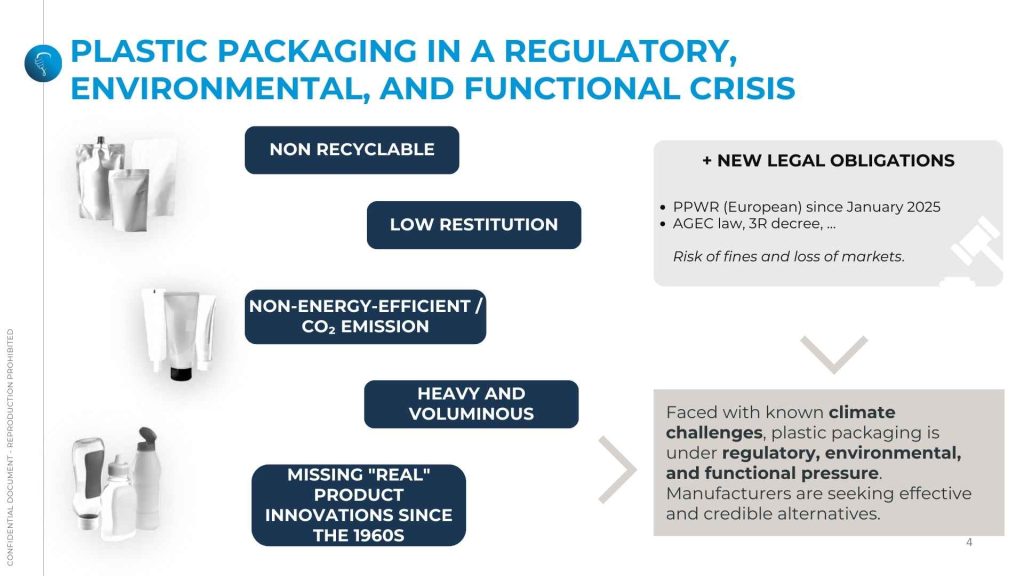
Most packaging formats used across India today trace their origins to the 1960s and 1970s. Rigid plastic bottles, squeeze tubes, glass containers, and multilayer flexible sachets were designed for durability, product protection, shelf stability, and cost efficiency during a period of lower consumption volumes and minimal environmental regulation.
Over time, innovation in the packaging industry focused heavily on process optimization such as faster filling lines, lower unit costs, improved printing, and incremental barrier enhancements. The underlying architecture of packaging formats, however, remained largely unchanged.
This stagnation has had cumulative environmental consequences that are now impossible to ignore.
Material Complexity and the Breakdown of Recycling Economics
One of the most significant consequences of legacy packaging design is material complexity. Modern packaging frequently combines multiple polymers, aluminum layers, inks, adhesives, and coatings to achieve specific functional properties. While these composites improve shelf life and aesthetics, they severely compromise recyclability.
In India, recycling systems rely heavily on informal waste pickers who recover materials based on resale value, ease of sorting, and processing feasibility. Packaging that is difficult to separate, yields low-quality recyclate, or requires specialized facilities is often bypassed entirely. Even when technically recyclable, such materials fail economically. As a result, they are more likely to be discarded, burned, or washed into drains and water bodies.
This mismatch between design complexity and recycling reality explains why high collection rates do not necessarily translate into high recycling rates. Packaging that cannot be economically recycled behaves as waste from the moment it enters the system. From a circular economy perspective, material complexity represents a design debt that society continues to pay through pollution, health impacts, and climate emissions.
Product Wastage as a Hidden Climate and Resource Problem
Product wastage is an often-overlooked dimension of packaging-related environmental impact. Rigid containers, thick tubes, and narrow-neck bottles frequently retain between 10% and 20% of product, and in high-viscosity applications or dispensing through long pipes and narrow channels, product waste can exceed 20%. This residual product is discarded along with the packaging, carrying embedded emissions from raw material extraction, processing, manufacturing, and transport.
This is particularly visible in institutional and industrial dispensing systems, where thick products travel through piping and a significant fraction remains trapped in the system even after the container is considered ‘finished’.
In the Indian context, this problem intersects directly with food and resource security. India wastes an estimated 68 million tonnes of food annually, contributing significantly to methane emissions from landfills. Methane is a greenhouse gas with a global warming potential over 80 times that of carbon dioxide over a 20-year period. Packaging that traps food residues or causes over-dispensing indirectly amplifies this climate burden.
From a systems perspective, packaging design that enables near complete product use functions as a climate mitigation tool. Reducing product waste reduces upstream demand, downstream disposal, and associated emissions. This reframes packaging redesign as a resource efficiency strategy, not merely a waste management intervention.

Logistics, Volume, and Escalating Landfill Pressure
Packaging design also determines logistics efficiency and waste volume. Heavy, bulky, and rigid packaging increases transport emissions throughout the supply chain. FMCG distribution in India involves moving billions of units annually across long distances, often using diesel-powered transport. Packaging weight and volume directly affect fuel consumption, vehicle load efficiency, and transport frequency.
At the disposal stage, volume becomes a critical constraint. Over 70 percent of Indian landfill sites are already operating beyond capacity, leading to uncontrolled dumping, fires, leachate leakage, and public health risks. Rigid packaging occupies disproportionate landfill space and resists compaction, accelerating landfill exhaustion. Waste volume reduction, therefore, is as important as waste weight reduction, yet it receives far less policy attention.
Packaging Redesign as Preventive Environmental Infrastructure
Earth5R’s work across urban river systems has repeatedly demonstrated that cleanup operations, no matter how frequent or well-organized, cannot keep pace with continuous plastic inflow. Plastic enters rivers through stormwater drains, informal dumping, roadside litter, and overflow during monsoon rains. Each cleanup temporarily restores visibility but does not alter the underlying flow of material into waterways.
This pattern underscores a critical insight. Environmental remediation without upstream intervention is inherently reactive and resource-intensive. A more effective strategy is to treat packaging as preventive infrastructure. When packaging is designed to use less material, align with existing recycling systems, minimize product waste, and reduce transport emissions, environmental impact is reduced before waste management begins.
SEMPACK and the Structural Redesign of Packaging Logic
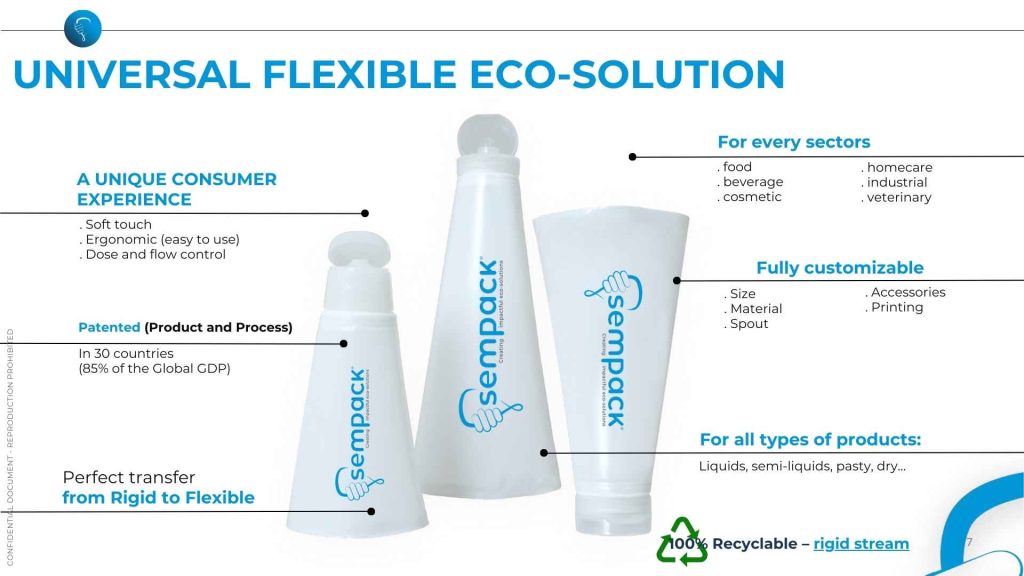
SEMPACK flexible packaging represents a structural redesign of packaging logic rather than a superficial material substitution. It combines the ergonomic stability associated with rigid containers with the material efficiency of flexible packaging, while maintaining compatibility with existing recycling pathways.
The packaging is designed as a monomaterial system, typically using polypropylene or polyethylene, which are already recognized and processed within India’s rigid plastic recycling ecosystem. This compatibility is critical. Introducing novel materials without downstream processing capacity often creates new waste streams. By contrast, aligning with existing infrastructure reduces friction and increases recovery likelihood.

Near-Complete Product Restitution and Waste Elimination
One of the most consequential attributes of this design is near-complete product restitution. Across multiple product categories including sauces, condiments, shampoos, creams, and gels, restitution rates approaching 99 percent have been observed.
This dramatically reduces product waste at the household level and minimizes contamination of packaging waste. Cleaner packaging improves recyclability and reduces the need for washing, cutting, or secondary handling, activities that consume water, energy, and often generate microplastic fragments.
In comparative performance data, product restitution is shown at about 96%* for SEMPACK flexible packaging versus about 86% for a PET bottle and about 91% for a tube, reinforcing that packaging design changes both material recovery and product efficiency outcomes, with restitution reaching up to about 99% for liquid products.
*For liquid products, product restitution reaches approximately 99%; the ~96% value applies to paste-like and high-viscosity formulations.
Material Intensity Reduction and Carbon Implications
Compared to conventional packaging formats, lightweight self-supporting flexible designs can reduce polymer use by 38 to 74 percent depending on the reference format. This reduction lowers fossil feedstock demand and reduces water use substantially when compared with common rigid reference formats, particularly PET bottles.
Transport emissions amplify these benefits. Reducing packaging weight by over 70 percent and enabling post-use compression can reduce transport-related emissions by 20 to 30 percent per unit. Additionally, waste volume reduction of over 80 percent alleviates pressure on waste collection and landfill systems.
Manufacturing Efficiency and Decarbonisation at Scale
Sustainability performance must align with industrial feasibility. Packaging systems that increase energy demand or slow production are unlikely to scale. Advanced manufacturing approaches integrate ultrasonic sealing to join packaging components. Ultrasonic bonding uses localized mechanical vibration to generate heat only where needed, significantly reducing energy consumption compared to conventional thermal sealing.
This approach supports high-speed automation, with production lines capable of exceeding 60 units per minute while reducing electricity use per unit. Such efficiency aligns environmental goals with industrial competitiveness, a key consideration for large-scale adoption in India.
Life Cycle Environmental Performance at the Unit Level
Life cycle assessment provides a standardized framework for comparing environmental impacts across packaging formats.
Independent life-cycle assessments carried out by a French organisation indicate that SEMPACK’s packaging delivers approximately 70% reduction in CO₂ emissions, around 70% reduction in water consumption, and a significant reduction in fossil resource use when compared with conventional rigid packaging formats, including PET bottles and laminated tubes..
These percentage reductions are more meaningful for policy and corporate decision-making, while unit-level values provide technical validation of the same trend. At a 300 mL unit level, comparative LCA indicates climate impact of about 122 gCO₂e versus about 371 gCO₂e for a PET bottle, fossil resource use of about 1.61 MJ versus about 3.86 MJ, and water use of about 144 L depriv. versus about 480 L depriv., making the case that material-efficient design influences carbon, water, and fossil inputs together.
Crucially, these reductions are driven by design-in efficiencies rather than assumptions about perfect recycling behavior. This makes them more reliable and scalable within real-world systems.
For India, where water stress, fossil fuel import dependence, and landfill pressure sit together in the same policy reality, packaging formats that reduce carbon, water, and fossil resource demand simultaneously create a stronger case for pilots and adoption.
Experiential Validation Through the Somaiya School of Design Workshop
Technical metrics alone do not determine success. Packaging interacts with daily routines, habits, and sensory perception. User acceptance is therefore central to scaling any innovation.
A workshop was jointly conducted by SEMPACK and Earth5R as a focused design and training session at the Somaiya School of Design, Mumbai.
The objective of the workshop was to build practical understanding around circular economy principles, packaging innovation, and the role of design in reducing plastic waste and carbon impact. Rather than approaching sustainability only through theory, the session was structured as a live, experience-driven engagement with real packaging solutions.
SEMPACK founder Wenaël Regnier joined the workshop live from France and interacted directly with design students, faculty members, and selected startup participants. He shared the journey behind developing the SEMPACK format, the gaps he observed in conventional packaging, and the design and engineering decisions that shaped the solution.
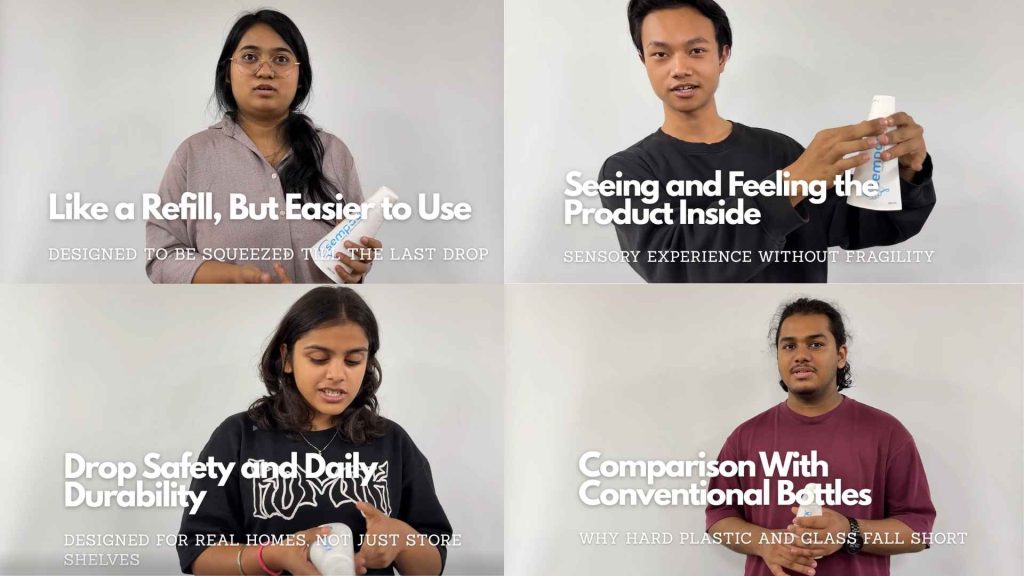
Students actively asked questions on material choices, recyclability, usability, and scalability, creating a two-way exchange rather than a one-directional presentation.A central element of the workshop was hands-on sampling. Participants physically handled SEMPACK packaging samples before receiving detailed technical explanations. This sequencing was intentional.
By allowing users to first touch, squeeze, pour, and observe the packaging through everyday actions, feedback emerged from direct sensory and functional experience rather than pre-conditioned sustainability narratives. Participants also highlighted the sensory experience enabled by the packaging, particularly the ability to smell the product directly and perceive freshness.
Participants also highlighted the sensory experience enabled by the packaging, particularly the ability to smell the product directly and perceive freshness. Unlike rigid or heavily layered packaging that distances users from the contents, this design creates a closer sensory connection with the product.
Such sensory cues are increasingly important for brands seeking to enhance customer experience, build trust, and differentiate products during pilot phases and early market adoption.

Hands-on validation in action: students and practitioners engaging directly with SEMPACK’s flexible packaging to evaluate grip, dispensing control, sensory feedback, and real-world usability during the live design workshop.
Unlike rigid or heavily layered packaging that distances users from the contents, this design creates a closer sensory connection with the product. Such sensory cues are increasingly important for brands seeking to enhance customer experience, build trust, and differentiate products during pilot phases and early market adoption.
The workshop thus functioned as an experiential validation environment, linking user perception, design logic, and circular economy outcomes in a single setting.
Insights From Hands-On User Interaction
Several consistent observations emerged.
- Ergonomic comfort and grip stability: Participants consistently noted that the packaging conformed naturally to the hand, without pressure points, allowing comfortable one-handed use during daily activities.
- Perceived sturdiness despite reduced material use: Users expressed confidence in the packaging’s strength, noting that it did not feel fragile even under firm pressure.
- One-handed operation and closure feedback: The ease of opening and the audible closure sound provided reassurance against leakage and enhanced trust.
- Controlled dispensing and waste reduction: Participants highlighted precise flow control, reducing accidental overuse of sauces and condiments.
- Improved usability for viscous products: Thick products such as moisturisers and shampoos flowed easily without repeated tapping or shaking.
- Elimination of wasteful coping behaviors: The design removed the need to cut open containers to access remaining product, reducing secondary waste.
- Tactile awareness of contents: Feeling the presence and temperature of the contents created a sense of control and material honesty.
“How people hold the packaging, how they squeeze it, how much comes out, these things matter. That is where a lot of waste happens.”
– A user who experienced the Sempack Packaging during the workshop
These observations demonstrate behavioral alignment, which is essential for environmental effectiveness. When sustainable behavior is embedded into design, compliance becomes effortless rather than enforced. This reduces regulatory burden and increases adoption likelihood.
Experiential validation complements quantitative life-cycle data, offering early evidence that design-led solutions can deliver environmental benefits within real behavioral contexts.
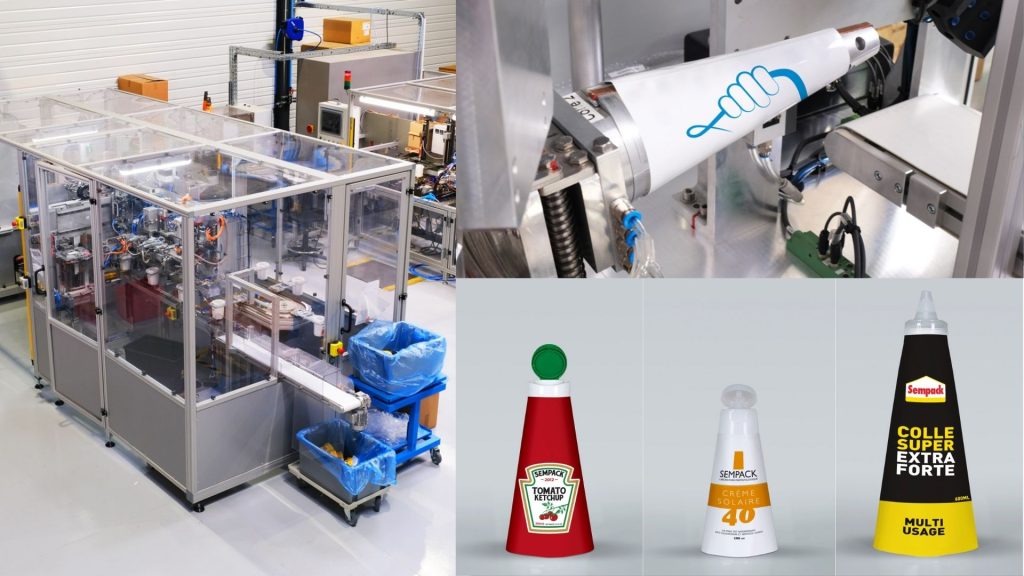
SEMPACK’s innovation shown end-to-end, from precision manufacturing systems to versatile, monomaterial packaging formats designed to reduce plastic use, improve recyclability, and enhance everyday user experience.
Implications for Circular Economy and EPR Policy
A design-centered approach suggests the need for performance-based regulatory frameworks.
- Performance-based EPR systems
Incentivizing outcomes such as material reduction, restitution rate, and recyclability compatibility encourages innovation. - Public procurement as a catalyst
Government adoption of high-performance packaging can accelerate market transition. - Design education as long-term infrastructure
Integrating circular economy principles into design curricula builds systemic capacity.
SEMPACK’s Role in Translating Packaging Innovation Into System-Level Impact
SEMPACK’s role in this context extends beyond introducing an alternative packaging format. It lies in demonstrating how packaging redesign can function as a system-level intervention, influencing material flows, user behavior, manufacturing emissions, and waste outcomes simultaneously.
The approach reflects a deliberate shift away from incremental optimization toward questioning the fundamental assumptions that have governed packaging design for decades.
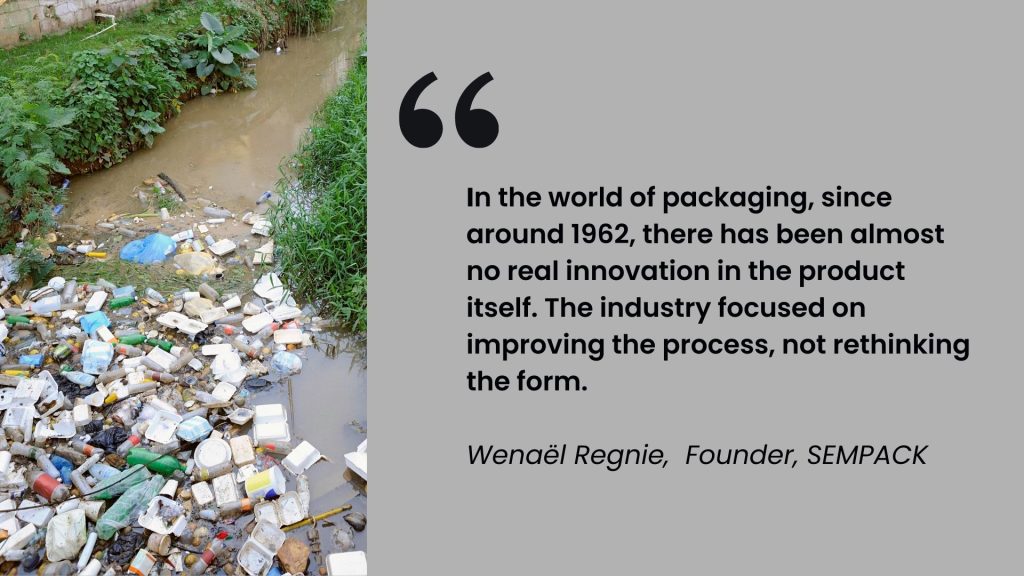
During the workshop, Wenaël Regnier emphasized that while packaging manufacturing has seen significant gains in speed, cost efficiency, and surface-level refinement since the 1960s, the core architecture of packaging has remained largely static.In his view, the industry’s historical focus on process efficiency rather than structural redesign has allowed inefficiencies to persist at scale.
These inefficiencies manifest as trapped product, material complexity, excessive weight, and dependence on disposal systems that are poorly equipped to handle them.
From Cleanups to Design Tables
India cannot clean its way out of plastic pollution. It must design its way out.
Packaging redesign, grounded in material efficiency, manufacturing decarbonisation, and human-centered experience, represents one of the most powerful yet underutilized levers in India’s plastic, circular economy, and climate strategies.
By validating innovation through real human interaction and aligning it with system-level outcomes, the Earth5R–SEMPACK collaboration illustrates a pathway that policymakers, regulators, and industry leaders must now seriously consider.