

India Doesn't Need Another ESG Translation. It Needs an India-Native Methodology.
Global ESG ratings were designed for Western capital markets. They measure how well companies write about sustainability — not what they actually do. For India-specific assessment, this creates a systematic blind spot. TERRA Score was built to close it.
01 The Translation Problem
Every global ESG framework available in India today was originally designed for a different market. When these frameworks are applied to Indian companies, they are not rebuilt — they are translated. And translation, in the context of ESG scoring, introduces a specific and measurable set of blind spots.
MSCI's methodology was built for North American and European institutional investors. Sustainalytics scores companies against disclosure norms rooted in EU regulatory expectations. S&P Global's ESG ratings inherit the structure of the Dow Jones Sustainability Index, which began as a Swiss-American collaboration in 1999.
When a global ESG rater expands coverage to India, the typical process involves mapping Indian regulatory filings to the existing indicator taxonomy. BRSR disclosures are parsed to fit categories designed for GRI or SASB frameworks. Schedule VII CSR compliance is reduced to a philanthropic spend figure. Water consumption data is normalised against national or country-level baselines.
Each of these mapping decisions introduces a loss of signal. This is not a critique of global raters — it is an observation about methodology design. A framework that does not account for India's regulatory structure, water geography, community vulnerability patterns, and informal economy dynamics will consistently produce scores that are technically valid but practically misleading.
02 TERRA Score: Five Dimensions Built for India
TERRA stands for Trajectory, Environmental Reality, Resilience & Systems, Reach & Community Depth, and Accountability. Each dimension is scored 0–100, weighted by sector materiality, and combined into a single verifiable score. The framework uses 34 proprietary sub-indicators across 12 sector profiles.
Trajectory Index (20%) measures where a company is headed, not just where it stands. It tracks 3-year rolling improvement rates, pledge-to-progress ratios, restatement penalties, and SBTi/Paris alignment. Accelerating improvement is weighted 1.4x versus steady improvement — because investors need to know where a company is going, not just where it is.
Environmental Reality (28%) is the heaviest-weighted dimension. GHG intensity is dual-normalised by revenue and physical output to prevent gaming. Water consumption is stress-adjusted using WRI Aqueduct data at the district level — not national averages. Waste circularity rate and TNFD-aligned biodiversity footprint complete the picture.
Resilience & Systems (18%) assesses supply chain ESG cascade into Tier-1 and Tier-2 suppliers, asset-level physical climate risk using IPCC RCP 4.5/8.5 scenarios, and a systemic leverage index measuring how much a company's practices influence sector norms.
Reach & Community (22%) introduces the Vulnerability Depth Index — impact weighted by who is reached, not just how many. Community-Verified Impact scores measure independent ground verification. Geographic depth scoring applies an urban programme discount, weighting rural and peri-urban impact higher.
Accountability (12%) contains the CvR Gap — the signature narrative alignment metric — alongside ESG governance depth and regulatory compliance records across MoEF, NGT, SEBI, and BRSR.
03 The India-Specific Gaps That Translation Cannot Fix
District-Level Water Stress
India's water geography is among the most internally varied in the world. A company operating a manufacturing plant in Anantapur (Andhra Pradesh) faces fundamentally different water risk from one operating in Ernakulam (Kerala), even if both are in South India. Country-level normalisation obscures this 5x variance entirely.
BRSR and NGRBC Alignment
India's BRSR framework, mandatory for the top 1,000 listed companies, is structured around the nine principles of the National Guidelines on Responsible Business Conduct. BRSR is not simply India's version of GRI — it has a distinct structure, distinct disclosure categories, and distinct compliance expectations. An ESG methodology that treats BRSR data as raw input for a GRI-shaped taxonomy loses the regulatory intelligence embedded in the framework itself. TERRA Score maps its dimensions directly to BRSR structure.
Schedule VII CSR Compliance
Under Section 135 of the Companies Act 2013, qualifying Indian companies must spend 2% of average net profit on CSR activities falling within Schedule VII categories. Global ESG raters typically record CSR spend as a single line item. They do not assess whether the spend is directed towards Schedule VII-eligible activities, whether it is diversified across categories, or whether the claimed beneficiary outcomes are independently verified. TERRA Score assesses compliance depth, thematic breadth, and verified impact.
Vulnerability-Weighted Social Impact
A programme delivering vocational training to 5,000 Scheduled Tribe households in a Particularly Vulnerable Tribal Group area is qualitatively different from one reaching 5,000 urban beneficiaries in Mumbai. Without vulnerability-weighted assessment, both register identically in global ESG scores.
PVTGs
Historically excluded
BPL-classified
Female-headed units
04 The CvR Gap: Measuring Narrative Alignment
Every sustainability report tells two stories — the narrative and the numbers. The CvR Gap™ (Claim vs. Reality) measures the distance between them. When that distance is large, it creates reputational and regulatory exposure that skilled analysts, journalists, and regulators now routinely identify.
Earth5R's AI reads each report in two simultaneous passes. Pass 1 extracts all quantitative disclosures — emissions data, water figures, CSR spend, beneficiary counts. Pass 2 analyses narrative claim strength — language intensity, scope of assertions, frequency of unsubstantiated superlatives. The CvR Gap is the ratio between these two scores.
| Narrative Claim | Underlying Data | CvR |
|---|---|---|
| "Our renewable energy transition has been transformational this year" | Renewable % moved from 8.2% → 9.1% (+0.9pp) | 0.74 |
| "We have made meaningful progress on water stewardship" | Water intensity reduced 14% YoY against 2021 baseline | 0.31 |
| "Emissions intensity reduced 28% against our 2019 baseline" | Verified 28.3% Scope 1+2 intensity reduction (third-party assured) | 0.04 |
| "Zero tolerance for environmental violations across all operations" | 3 MoEF consent-to-operate lapses; ₹45L regulatory fine in period | 0.92 |
CvR is not a greenwashing accusation. It is a quantitative signal that gives analysts, investors, and the companies themselves a measurable metric to act on. Companies that proactively understand and close their CvR Gap are far better positioned when regulators, investors, or media scrutinise their sustainability narrative.
05 TERRA Score vs. Global ESG Raters
TERRA Score is not competing with MSCI or Sustainalytics for global institutional mandates. It occupies a distinct position: verified, India-specific, community-grounded ESG intelligence for the Indian market.
| Capability | TERRA Score™ | Global Raters |
|---|---|---|
| India-specific methodology | ✓ Built for India | ✗ Translated |
| District-level water stress weighting | ✓ District-level mapping | ~ Country-level only |
| Community ground-truth verification | ✓ 150+ city field network | ✗ Desk-based only |
| Narrative alignment detection (CvR Gap™) | ✓ AI-powered, proprietary | ✗ Not available |
| Vulnerability Depth Index | ✓ India-calibrated multipliers | ✗ Not available |
| Trajectory / directional scoring | ✓ Core dimension (20%) | ~ Limited |
| BRSR & NGRBC native mapping | ✓ Direct structural mapping | ✗ GRI proxy |
| Schedule VII CSR compliance depth | ✓ Full assessment | ✗ Single line item |
06 How TERRA Score Intelligence Is Produced
A structured four-stage process combining field research, AI-powered extraction, Earth5R's proprietary scoring model, and community-verified ground truth — producing intelligence that no desk-based ESG rater can replicate.
07 India's ESG Regulatory Tailwind
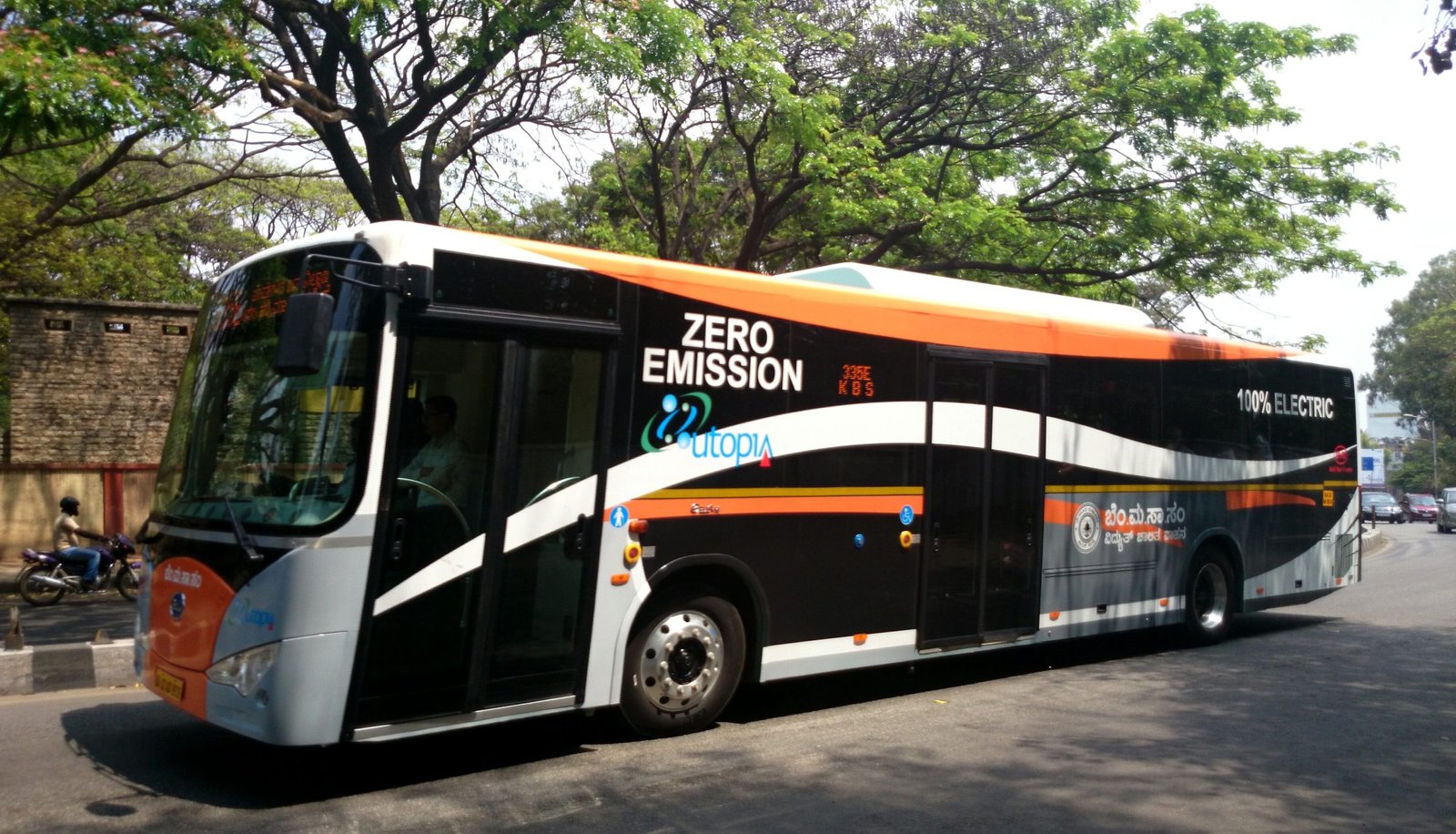
India's capital markets are entering a period of accelerating ESG regulatory demand. Each of these developments creates structured, recurring demand for ESG intelligence that is built for the Indian regulatory environment — not adapted from a framework designed for another one.
08 Ground-Truth Verification: The Structural Advantage No Rater Can Replicate
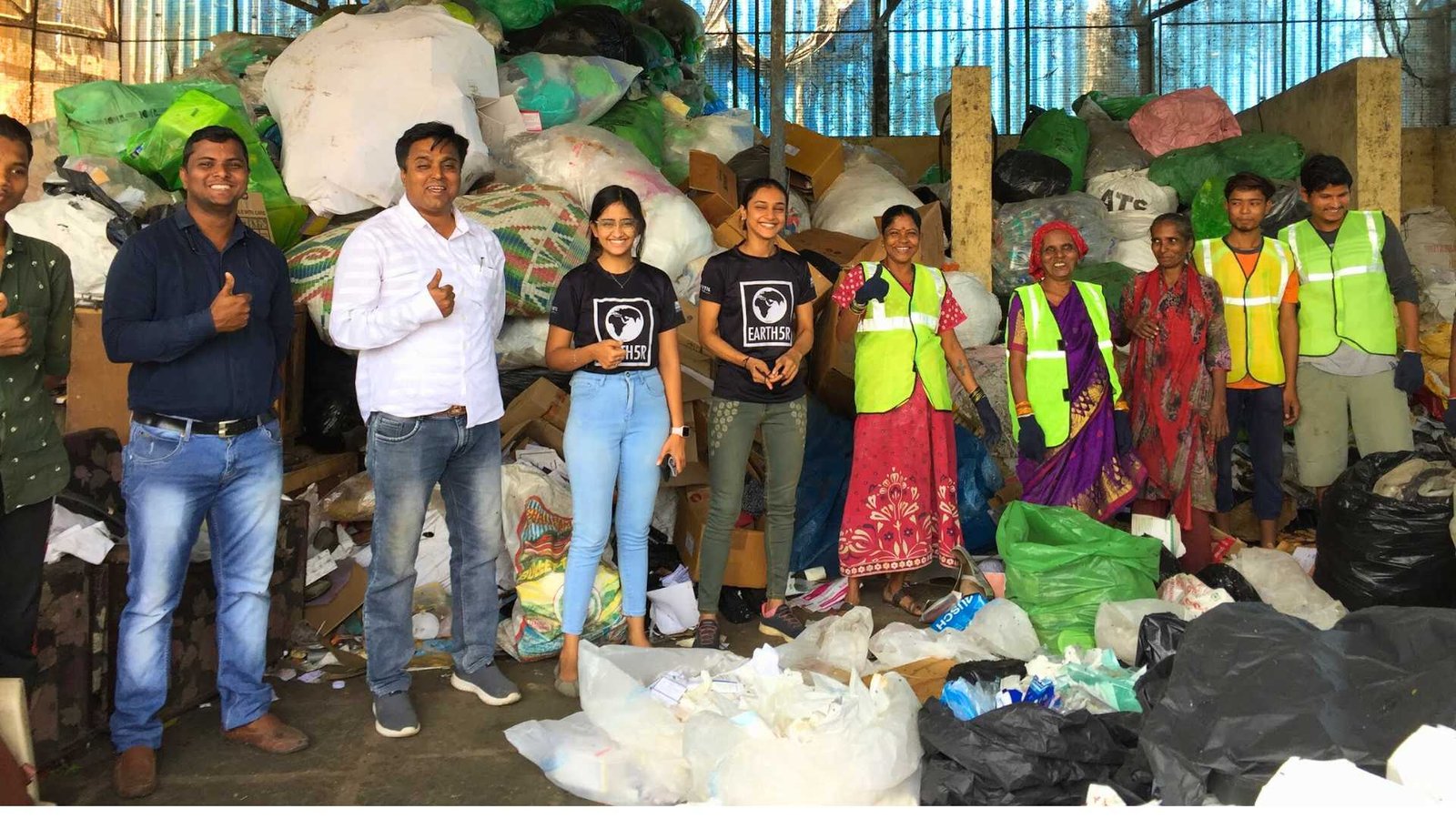
The most significant limitation of every desk-based ESG rater — global or domestic — is the absence of field verification. When a company reports that it provided clean drinking water access to 12,000 households in rural Maharashtra, no global rater has the infrastructure to check whether this is true. The claim enters the score at face value.
Earth5R operates active environmental and community programmes in over 150 Indian cities, with a network of 2.5 million community members and beneficiaries. This field presence collects 2.4 billion geo-tagged, ground-verified environmental data points. When a company's sustainability report claims specific on-ground impact, Earth5R's network can physically verify the claim at the district level.
This capability is structurally impossible for any desk-based rater to replicate. It is the reason Google selected Earth5R's AI modelling among the Top 15 for Sustainability in India — the only organisation from the sustainability sector.
- Compounding data moat: Every company scored, every report collected, and every field verification deepens a longitudinal ESG database that becomes more powerful each year. The Trajectory Index — tracking 3-year improvement rates — cannot be replicated by anyone starting today without three years of prior data. This gap widens annually.
- India-native AI: The CvR Gap model is trained on Indian ESG and BRSR reports, regulatory filings, and MoEF enforcement records — not generic English-language sustainability documents. Its ability to detect narrative-data divergence improves with every Indian report it processes.
- Institutional credibility: Earth5R is United Nations Recognised, selected among Google's Top 15 for Sustainability, and cited as a UNESCO India Technology for Impact case study. When a TERRA Score appears in a board report or investor presentation, it carries citation value that is not purchasable.
Fund managers, corporate sustainability teams, banks, and ESG advisors can request a sample TERRA Scorecard for a company in their sector of interest. Methodology walkthroughs, sector deep-dive reports, and database access are available. To discuss the right product for your use case, schedule a meeting with the founder directly.
09 The Question for India's ESG Ecosystem
The question for fund managers, corporate sustainability teams, banks, and ESG advisors is straightforward: is the ESG data you rely on built for this market, or translated for it?
The difference between those two things is now measurable — and it is material. Each of the regulatory developments now underway in India creates demand for ESG intelligence that understands BRSR structure, maps to NGRBC principles, weights water risk at the district level, assesses community impact through a vulnerability lens, and can verify on-ground claims through an operational field network.
No global framework, however competent, was designed to do this. It is not a limitation of quality. It is a limitation of origin. TERRA Score was built from first principles for this market. Earth5R's track record in environmental data, recognised by the United Nations and Google, underpins the institutional credibility of every score it produces.
10 Frequently Asked Questions
Request a Sample TERRA Scorecard
Sample scorecard delivered within 48 hours. Methodology walkthrough included. Tailored engagement based on your coverage needs.
Explore TERRA Score™ →Methodology and References
- Earth5R — TERRA Score™ ESG Intelligence Platform
- SEBI — Business Responsibility and Sustainability Reporting (BRSR) Framework
- Ministry of Corporate Affairs — Companies Act 2013, Section 135, Schedule VII
- National Guidelines on Responsible Business Conduct (NGRBC) — 9 Principles
- WRI Aqueduct — India District-Level Water Stress Data
- IPCC — RCP 4.5 and 8.5 Climate Scenarios
- TNFD — Taskforce on Nature-related Financial Disclosures Framework
- Science Based Targets initiative (SBTi) — Net Zero Standard
- Reserve Bank of India — Climate Risk Disclosure Framework
- Ministry of Environment, Forest and Climate Change — Carbon Credit Trading Scheme