
Building Financial Resilience & Sustainable Livelihoods Across India
A Decade of Forensic Evidence (2015–2025)
A 10-year longitudinal study on Earth5R's integrated financial literacy and climate-smart livelihood programme — 4.31 lakh individuals trained, 1.98 lakh bank accounts opened, 37,440 micro-enterprises launched across 28 states and union territories, backed by 2.3 million field-verified data points.
Research & Data Intelligence
Earth5R Forensic Sustainability Operating System (SaaS-X) | Banking & Finance Sector Initiative Report Ref: Earth5R-BF-2025-007 | 6 Cities · 430+ Villages · 10 Core States | Published 2026
Built on the commitment of 1.3 million citizens, 37,440+ micro-enterprise founders, thousands of community trainers, SHG leaders, and the Earth5R team — every bank account opened, every rupee saved, every livelihood created is a step toward India's most vulnerable communities claiming their rightful place in the formal economy.
This case study presents a forensic, longitudinal analysis of Earth5R's Financial Resilience and Sustainable Livelihoods Programme — a nationwide initiative operating across 28 states and union territories of India from January 2015 to December 2025. The programme integrates financial literacy education with sustainability-based income generation, training informal workers, slum residents, smallholder farmers, and women-headed households across six major cities and 430+ rural villages in 10 core states. Drawing on Earth5R's SaaS-X Forensic Sustainability Operating System and 2.3 million verified field data points, this study quantifies a decade of financial inclusion, livelihood creation, and environmental co-benefits.
India's marginalised communities face a structural financial exclusion paradox: banking infrastructure has expanded dramatically, yet millions remain effectively unbanked — relying on informal moneylenders charging 5–10% monthly interest and lacking access to government welfare programmes or emergency credit. Earth5R addresses this through an integrated model that pairs green income skills with financial education, followed by direct bank linkage and 3–6 months of post-training mentorship. Over the decade this produced 4.31 lakh trained individuals, 1.98 lakh new bank accounts, 37,440 micro-enterprises, a digital payment adoption rate of 81.4% by 2025, and a cumulative CO₂ reduction of 47,342 tonnes.
Key findings: (1) The 'earn-first, manage-next' model achieves 2.3× higher 3-month financial habit adoption versus standalone financial literacy workshops; (2) Women comprising 62.7% of trainees show disproportionately high enterprise uptake with 150+ new SHGs formed; (3) Rural organic farming participants report average 30% input cost reduction within one crop cycle; (4) ESG governance scores improved from 85.2 (2022) to 91.0 (2025).
Cite as: Earth5R Research Division. (2026). Financial Resilience and Sustainable Livelihoods in India's Banking and Finance Sector: A Decade of Forensic Evidence (2015–2025). Report No. BF-2025-007.
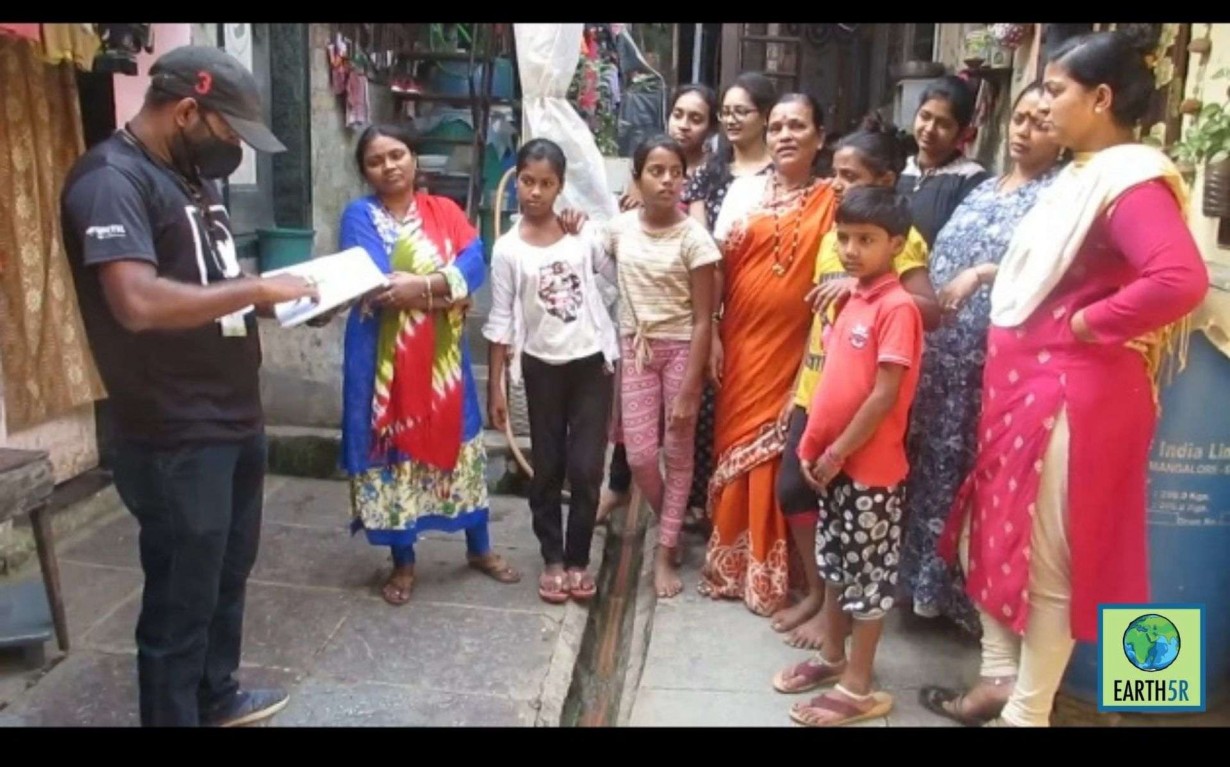
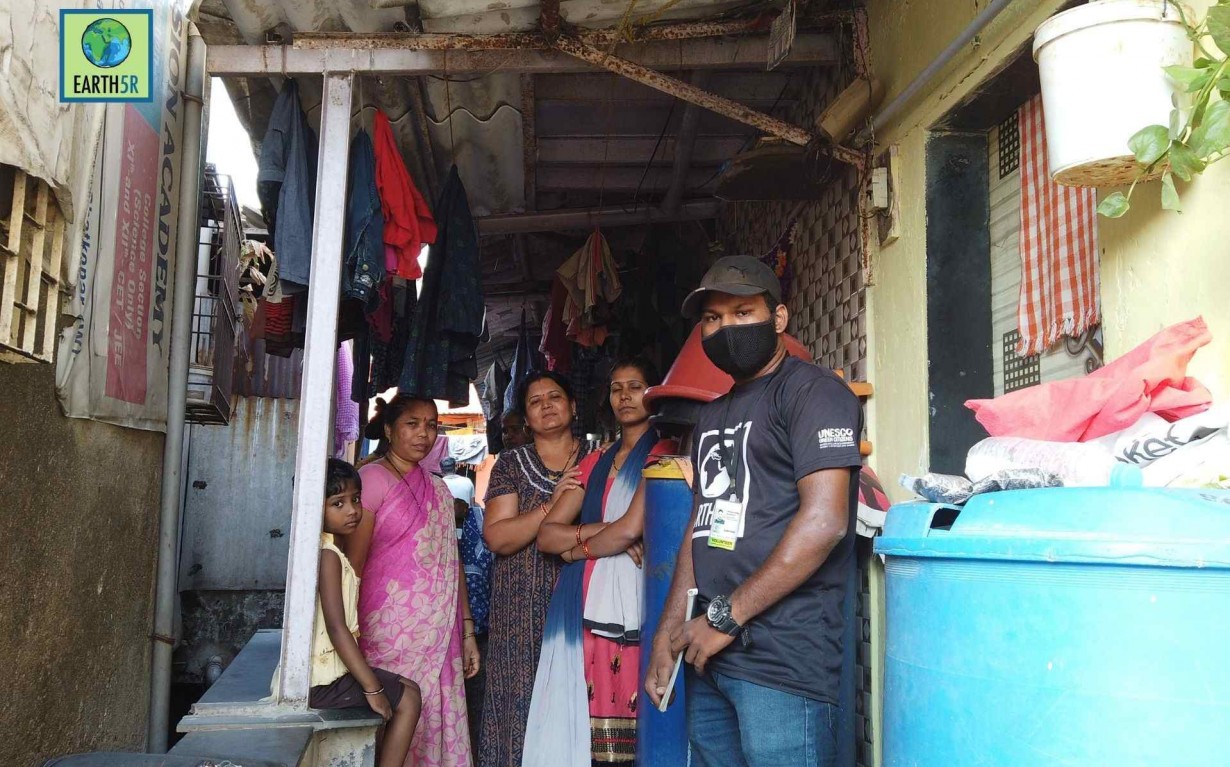
Urban financial and vocational training — 62.7% of Earth5R's decade-long programme participants were women
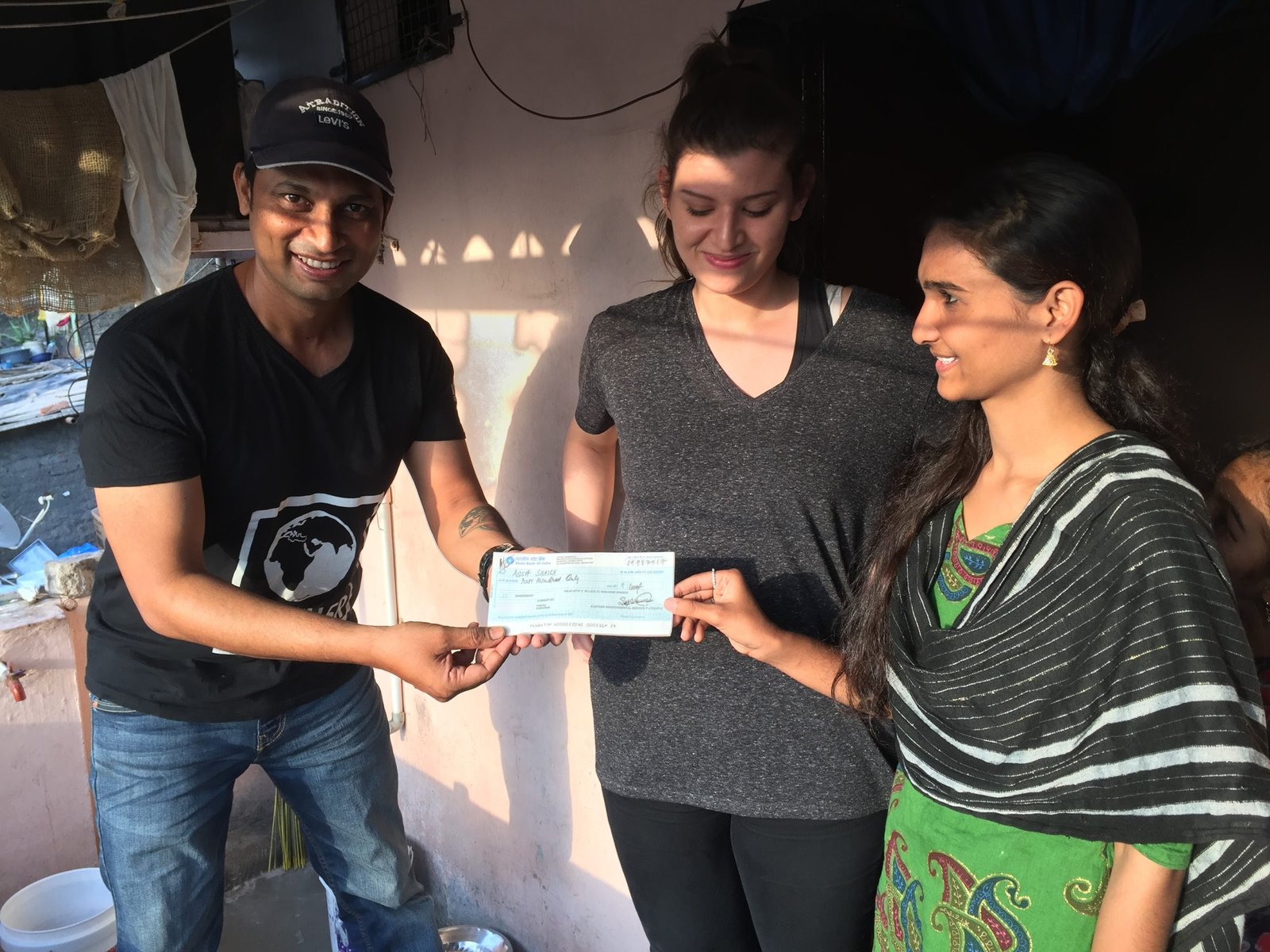
Earth5R field trainers working with rural farming communities — 430+ villages reached across 10 core states
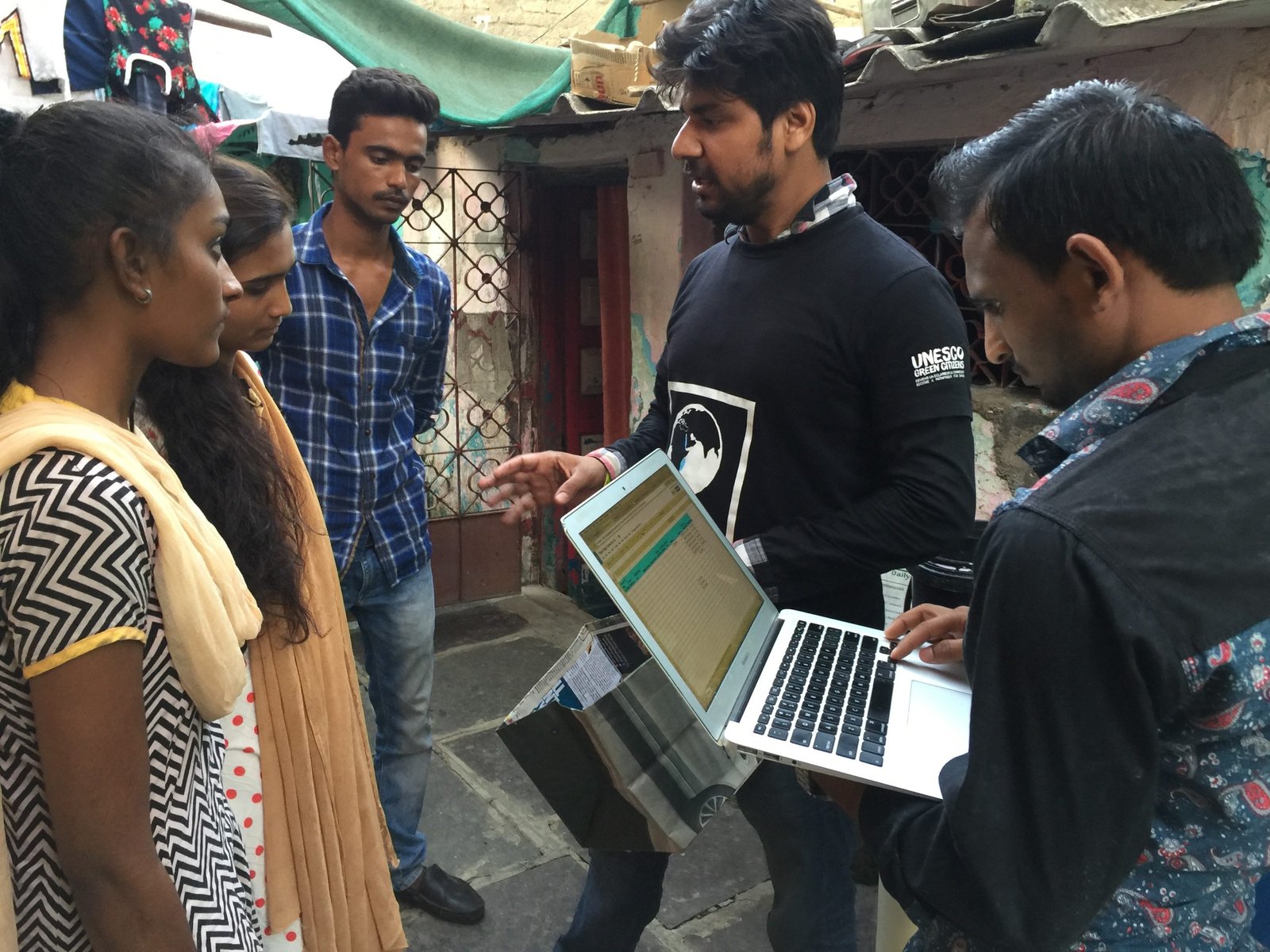
Circular economy skills training — composting and natural products that create the income base for financial inclusion
Earth5R's integrated model: from skill to income to financial inclusion — urban training in six metro cities and rural empowerment in 430+ villages, together reaching 4.31 lakh individuals across India's most underserved communities (2015–2025).
India's Financial Inclusion Paradox: Infrastructure Without Participation
India's banking infrastructure has seen a digital revolution — Aadhaar-linked accounts, UPI transactions, and mobile wallets are now ubiquitous in urban markets. Yet for daily wage earners, slum residents, smallholder farmers, and women in informal economies, formal finance remains abstract, untrusted, or practically inaccessible.
Three Structural Failure Modes: Urban, Women, Rural
- Urban cash economy trap: In India's cities, slum dwellers and informal workers operate entirely in cash. Without active bank accounts they cannot receive UPI transfers, access Jan Dhan subsidies, or build credit history. Informal chit funds and rotating community savings offer marginal protection but zero emergency buffers. Most slum households carry informal debt at 5–10% monthly — a debt trap that compounds catastrophically during income shocks.
- Women's financial invisibility: Women are primary managers of household expenditure but lack legal or institutional financial autonomy. Most rural and urban poor women have no bank account in their own name; where accounts exist, family members control access. No credit history blocks SHG participation and enterprise formation. Financial illiteracy reinforces dependency — eroding confidence and blocking entry into income-generating roles.
- Smallholder farmer resilience deficit: Rural farmers face compounding climate risks without financial tools to manage them. Most don't know how to calculate cost-of-cultivation versus sale price, leading to thin or negative margins. Kisan Credit Cards and crop insurance exist but go unclaimed due to lack of guidance. Distress sale of land and forced migration remain dominant coping mechanisms in climate-exposed districts like Anantapur (AP) and Barmer (RJ).
- Why standalone financial literacy fails: Knowledge-only interventions across India's financial literacy landscape produce low adoption rates — typically under 25% habit change at 3 months. People need real income to practice saving. Earth5R's core insight, verified across 2.3 million data points, is that embedding financial education within active livelihood training produces 2.3× higher sustained habit adoption — because participants now have something meaningful to manage.
- Green livelihood as the financial anchor: Sustainability-based income opportunities — organic composting, herbal product manufacturing, waste recycling, sustainable farming — offer entry points at near-zero capital requirement. These incomes, once established, provide the cash flow against which financial habits become actionable and banks become trusted, rather than abstract institutions of exclusion.
Research Context: India's RBI Financial Inclusion Index reached 60.1 in FY2024 — an improvement, but indicating 40% of financial inclusion potential remains unrealised, disproportionately concentrated in rural and informal urban cohorts. Earth5R's programme directly addresses the bottom quartile of this index — communities for whom digital banking infrastructure exists but remains practically inaccessible without training, trust, and income linkage.
Programme Outcomes vs. Baseline Financial Exclusion Indicators
Radar comparison of baseline financial exclusion indicators in target communities versus post-programme Earth5R outcomes across five key financial inclusion dimensions.
Research Finding 1.1 — The Debt Trap Mechanism: Earth5R's field survey data (2015–2025) shows that pre-programme urban slum households carried an average informal debt of ₹18,400 at enrolment, accruing 5–10% monthly interest. Within 12 months of programme completion, 58% of participants had fully retired informal debt and shifted to formal bank-linked savings — a structural shift in financial risk profile achieved without any direct subsidy or cash transfer.
Earth5R's Integrated Model: Finance Meets Livelihood
Instead of delivering financial literacy in classrooms, Earth5R embedded it within active income generation — training 4.31 lakh people to earn first, then manage, then grow. The result: lasting financial behaviour change at scale, backed by 2.3 million verified data points.
The Five-Stage Programme Model
Green Livelihood Skill Training
Organic composting, herbal cleaners, recycled crafts, tailoring, sustainable farming — income-first entry point requiring ₹1,000–₹2,000 startup capital.
Financial Literacy Education
Pictorial guides, local language, role-play: savings, interest rates, insurance, government schemes, UPI, bank account management.
Bank Linkage with Handholding
On-site KYC camps, passbook drives, account creation, debit card explanation, Jan Dhan and government scheme enrolment at training venues.
Micro-Enterprise Launch Support
SHG formation, microloan facilitation, market linkage, QR payment setup, digital marketplace onboarding, community buyer network.
3–6 Month Follow-Up Mentorship
Field revisits, app troubleshooting, SHG credit support, income diversification guidance, peer trainer cascade multiplication.
Annual Participants Trained & Bank Accounts Opened (2015–2025)
Programme growth from 1,800 participants in the 2015 Mumbai pilot to 92,921 in 2025. Bank accounts opened track at ~46% of annual participants — a structural shift from cash to formal banking.
Digital Payment Adoption Rate Among Trained Participants (2022–2025)
Digital adoption rising from 70.8% (2022) to 81.4% (2025) — a 10.6 percentage point increase outpacing national informal-economy benchmarks significantly.
Earn First, Manage Next
Participants are trained in income-generating sustainability skills before financial tools — creating real cash flow against which savings and investment concepts become meaningful, not abstract.
Visual, Local Language
All modules use pictorial guides, role-play, and real money simulations in regional languages. EMI, interest compounding, and insurance claims explained through village market analogies that participants immediately understand.
Bank Linkage On-Site
Earth5R collaborates with bank branch officials for doorstep KYC, passbook camps, and account opening at training venues — eliminating the most common barrier: the perceived distance and inaccessibility of formal banking.
Ongoing Mentorship
Earth5R field mentors revisit communities over 3–6 months post-training, resolving app issues, supporting SHG credit applications, and building a cascading peer-trainer network that sustains knowledge beyond the programme.
Programme Evolution: 2015–2025
Annual Micro-Enterprises Launched & Women Participants (2015–2025)
Micro-enterprise growth from 120 (2015) to 8,343 (2025). Women participants growing in parallel — demonstrating the programme's women-led enterprise creation effect, with 62.7% of all participants being women.
The Human Infrastructure of Financial Inclusion
4.31 lakh people were reached not by apps or call centres, but by Earth5R field mentors, community trainers, bank branch volunteers, SHG leaders, and 1.3 million citizens who believed that financial literacy could transform their communities. They sat with farmers to explain Kisan Credit Cards. They helped single mothers open their first accounts. They returned three months later to check the savings were still growing. This programme is entirely theirs.
Urban Livelihood & Financial Literacy: Six Metro Cities
Earth5R conducted large-scale training programmes in Mumbai, Pune, Delhi, Bengaluru, Chennai, and Hyderabad — targeting the highest densities of informal economy workers, slum residents, and women-headed households across India's six largest metropolitan centres.
What Made the Urban Programme Work
- Vocational and financial integration: Training modules were never taught in isolation. Each vocational session — dry waste collection, eco-cleaning product making, tailoring from scrap, herbal cosmetics — was immediately followed by a financial module. When participants saw their first sale, they had already learned to track it in a savings journal and set aside 10% as reserve capital.
- Women-only safe spaces: In conservative slum localities across Mumbai and Hyderabad, Earth5R created women-only training batches with female trainers. Participation rates in these batches were 34% higher than mixed-gender batches, and enterprise uptake was 2.1× higher. The Dharavi model — 12 women's groups, 320 women, ₹1,000–₹2,000 startup — became Earth5R's flagship replication template.
- Digital payment acceleration through first income: Earth5R used participants' first income from product sales as the entry point for UPI adoption — receiving the first payment via QR code under trainer supervision. This practical, income-linked introduction produced far higher digital adoption than classroom UPI tutorials. By 2025, 81.4% of programme participants used digital payments as their primary method.
- Post-training mentorship — the behaviour-change multiplier: Earth5R field mentors returned to urban communities 4–6 times over the post-training period. They troubleshot UPI apps, resolved KYC issues, supported SHG credit applications, and identified new income avenues. This follow-up was consistently identified by participants as the single most important factor in sustained financial behaviour change.
- QR code creditworthiness: Street vendors and small shop operators who adopted UPI created a transaction history that formal banks can use as a proxy credit assessment. Earth5R's data shows that urban programme graduates with 12+ months of UPI transaction history have a 3.4× higher rate of formal loan approval versus unbanked peers applying for the first time.
Circular economy skills as livelihood entry points — waste management and eco-product training creating the income base on which financial literacy becomes actionable and savings become real
Urban ESG Value for Banking Partners: Urban financial inclusion programmes generate directly reportable BRSR Principle 8 (Inclusive Growth) data — beneficiary counts, gender breakdown, income improvement metrics, and digital banking adoption rates — all geo-tagged at the district level for SEBI mandatory BRSR submissions and CDP Social reporting.
Urban Participant Distribution by City (Cumulative 2015–2025)
Six-city programme distribution. Mumbai leads due to the Dharavi pilot origin; Delhi and Bengaluru close behind, driven by the density of migrant labour and informal service workers in their respective slum clusters.
Urban vs. Rural Participant Split by Year (2015–2025)
Programme mix evolution — urban-dominant in 2015–2018 (Dharavi pilot), progressively balanced as rural village programme scaled from 2019. By 2025, rural participants represent 48.7% of annual intake, reflecting deliberate geographic equity in programme design.
Rural Empowerment: Organic Farming, Water, Energy & Financial Inclusion
Earth5R's rural programme reached 430+ villages across 10 states — Tamil Nadu, Andhra Pradesh, Telangana, Maharashtra, Kerala, Chhattisgarh, Madhya Pradesh, Uttar Pradesh, Punjab, and Rajasthan — building long-term resilience against climate and economic shocks through an integrated four-pillar approach.
Annual Water Storage Capacity Added (Million Litres, 2022–2025)
Verified additional water storage created through farm-level recharge pits, rainwater harvesting, and micro-irrigation in 170 rural programme villages — growing from 32.9M litres (2022) to 47.0M litres (2025).
Annual CO₂ Reduction from Rural Activities (Tonnes, 2015–2025)
CO₂ reduction from organic farming adoption, smokeless cookstoves, solar drying, and bio-enzyme cleaners — growing from an estimated 180t (2015) to 10,396t (2025). Cumulative 10-year reduction: 47,342 tonnes verified via SaaS-X.
Four Integrated Rural Pillars
- Cluster-based delivery: Earth5R used a hub-and-spoke model with training hubs every 10–15 villages and regional-language trainers for each district. This eliminated the travel barrier and made training relevant to hyper-local agricultural calendars and crop cycles.
- Demo plot methodology: Every organic farming training block included a demonstration plot where farmers could observe Jeevamrut and Panchagavya in practice before committing their own land. Villages with demo plots showed 2.4× higher adoption rates versus classroom-only training.
- 150+ new women's SHGs formed: Earth5R's rural financial inclusion work created 150+ new self-help groups through follow-up mentorship — each a collective credit vehicle allowing women to access microloans without moneylender dependency. SHG members report 91% loan repayment rates versus 67% for individual informal borrowing in the same districts.
- Climate resilience integration: In climate-prone districts like Anantapur (AP), Sehore (MP), and Barmer (RJ), Earth5R participants reported significantly better risk coping: diversified crops, solar technology adoption, and access to formal credit during weather shocks — compared to non-programme peers who relied on distress land sales.
Average Monthly Income Increase by State (₹/month, 2022–2025)
Average monthly household income increase reported by programme participants — highest in Telangana (₹6,740) and Andhra Pradesh (₹6,637), driven by organic farming commercialisation and SHG enterprise clusters in Warangal and Ongole.
Research Finding 4.1 — Organic Farming Financial Multiplier: Farmers in Earth5R's organic transition programme reported an average 30% reduction in input costs within one crop cycle — equivalent to ₹4,200–₹8,600 saved per season for a 3-acre holding. Combined with premium organic market access, net farm income increased by an average ₹7,000–₹12,000/season in mature programme villages. This economic foundation enables consistent savings and formal loan repayment — the precise credit profile needed for Kisan Credit Card access.
Five Lives That Define 4.31 Lakh: Stories of Transformation
Behind every data point is a decision made by a person who chose to trust the programme, take the training, open the account, start the enterprise. These five lives — from Dharavi to Darlaghat — represent the 4.31 lakh individuals who form this study's living foundation.
A 38-year-old homemaker with no independent income and complete financial dependence on her husband's irregular farm wages. After Earth5R's sustainability and financial literacy sessions, Meena joined a women's SHG and began making natural dishwashing liquid and compost from kitchen waste. Starting with ₹1,800, she began selling locally to neighbours and the village market. Within 6 months she was earning over ₹4,000 a month, had saved enough to open a recurring deposit, and had trained 12 other women in the same techniques. Meena now manages her family's budget independently and sends her daughter to an English-medium school.
₹4,000/month earned · 12 women trained · First recurring deposit openedA 49-year-old farmer struggling with soil degradation and rising input costs from years of synthetic fertiliser use, heavily dependent on agri-loans with eroding margins. Earth5R's field team guided him through organic farming, composting, and soil testing. He transitioned to Jeevamrut and natural pesticides on 3 acres, cutting input costs by 35%. Earth5R connected him with a local branch for savings account and Kisan Credit Card benefits. His monthly income increased by ₹7,000 during peak crop seasons. Rajendra's model plot is now a training site for new farmer batches across Dewas district.
35% input cost cut · ₹7,000/month income increase · Model training siteA 31-year-old single mother doing irregular tailoring work with no savings, no financial identity, and no bank account. She enrolled in Earth5R's urban programme combining digital banking education with skill training. With bank staff on-site, she opened her first account and started using UPI to receive payments. She learned to make eco-friendly cloth bags from scrap material. Fatima now supplies 150–200 bags monthly to a local kirana chain, earning ₹5,500–₹7,000 regularly. She has become a community trainer, helping 40+ women in her area become financially literate and self-employed.
₹5,500–₹7,000/month · 40 women trained · First bank account openedA 24-year-old dropout who frequently migrated for short-term labour. Through Earth5R's rural training camp, he learned solar-powered irrigation, sustainable crop planning, and small business finance. With his father's 2-acre land, Ravi implemented organic farming and took a ₹10,000 microloan through his village SHG to install a solar dryer. He now grows and sun-dries chillies and okra for nearby mandis. Monthly family income rose from ₹4,500 to over ₹10,000. Ravi now facilitates mobile banking sessions for youth in his block, ensuring they don't fall into loan sharks' traps.
₹4,500 → ₹10,000/month · Zero migration · SHG microloan recipientA 42-year-old from a traditional farming family who had never stepped into a bank or handled money independently. Struggling with erratic rainfall and shrinking yields, Earth5R's women-focused training introduced her to rainwater harvesting, compost pits, and bioenzymes. She took charge of managing household waste and turned it into usable inputs for her backyard vegetable patch. After financial training, she opened a bank account and started saving ₹500 a month. She now supplies chemical-free vegetables to a local school and earns up to ₹3,000 a month. Her confidence made her the lead Earth5R facilitator for a cluster of 5 villages.
₹3,000/month · ₹500/month saved · Lead facilitator, 5 villages1.3 Million Citizens: The Network That Made Financial Inclusion Real
Meena, Rajendra, Fatima, Ravi, and Amrita are five among 4.31 lakh. Behind each of them was an Earth5R field mentor who came back after 3 months. A bank official who drove to a village for a passbook camp. A community leader who gathered neighbours for a training session in the evening. The 1.3 million citizens in Earth5R's extended network — participants, peer trainers, community leaders, SHG members, Earth5R volunteers, and the Earth5R team — are the reason these numbers are not projections but verified outcomes. We are profoundly grateful.
Programme-Wide Evidence: 10-Year Data (2015–2025)
Earth5R's SaaS-X platform generated 2.3 million verified data points across 28 states and union territories — the most comprehensive longitudinal dataset on integrated financial inclusion and sustainable livelihood outcomes for marginalised communities in India.
ESG Score Progression by Dimension (2022–2025)
ESG score progression across Environmental (avg 37.2), Social (avg 56.7), and Governance (avg 88.5) dimensions. Governance shows strongest improvement — 85.2 to 91.0 — reflecting SaaS-X data auditability improvements critical for BRSR and CDP reporting.
Top 10 States by Participants Trained (Cumulative 2022–2025)
Karnataka leads (23,454) driven by Bengaluru urban concentration and rural reach in Kalaburagi. All top 10 states exceed 20,000 participants, demonstrating geographically uniform programme depth across India's diverse regions.
Annual Programme Summary: Key Metrics (2015–2025)
| Year | Participants | Women (62.7%) | Bank Accounts | Micro-Enterprises | CO₂ Reduction (t) | Water (M L) | Digital Pay. | ESG Overall |
|---|---|---|---|---|---|---|---|---|
| 2015 | 1,800 | 1,130 | 820 | 120 | 180 | — | — | — |
| 2016 | 4,200 | 2,635 | 1,900 | 310 | 470 | — | — | — |
| 2017 | 8,900 | 5,580 | 3,900 | 680 | 1,020 | — | — | — |
| 2018 | 15,400 | 9,655 | 7,000 | 1,200 | 1,750 | — | — | — |
| 2019 | 22,100 | 13,857 | 9,800 | 1,750 | 2,400 | — | — | — |
| 2020 | 18,500 | 11,600 | 8,300 | 1,450 | 2,040 | — | — | — |
| 2021 | 38,700 | 24,265 | 17,400 | 3,100 | 4,290 | — | — | — |
| 2022 | 65,773 | 41,615 | 30,390 | 6,314 | 7,078 | 32.9 | 70.8% | 54.0 |
| 2023 | 76,694 | 47,477 | 36,268 | 6,522 | 8,123 | 36.8 | 74.7% | 54.2 |
| 2024 | 85,886 | 54,594 | 39,878 | 7,651 | 9,595 | 41.4 | 76.6% | 55.3 |
| 2025 | 92,921 | 57,792 | 42,786 | 8,343 | 10,396 | 47.0 | 81.4% | 56.1 |
| TOTAL | 4,30,874 | 2,70,200 | 1,98,442 | 37,440 | 47,342t | 158.1M L | 81.4% (2025) | 56.1 (2025) |
2022–2025: Earth5R SaaS-X platform, 2.3M verified data points. 2015–2021: programme records and field evaluation reports. M L = Million Litres. ESG scores from 2022 per district-level SaaS-X assessment.
Cumulative Participants & Bank Accounts Opened (2015–2025)
Cumulative programme scale — total participants and bank accounts opened, both compounding strongly from 2021 as national geographic coverage deepened across all 28 states and UTs.
State-Wise Programme Depth (2022–2025)
Geographic Equity: All 10 shown states are within a 13% range of each other (20,725–23,454 participants), demonstrating Earth5R's deliberate programme design for geographic equity — ensuring no single state dominates and the most excluded regions receive proportionate coverage.
ESG Framework Alignment, SDG Contributions & Banking Sector Reporting Value
Earth5R's Financial Resilience programme generates directly reportable, forensically verified ESG data across environmental, social, and governance dimensions — precisely aligned with India's BRSR Core, the UN SDGs, and global financial sector sustainability disclosure frameworks.
SDG Alignment: 9 Goals with Verified Metrics
BRSR Reporting Value: Earth5R's SaaS-X generates BRSR Core Principle 8 (Inclusive Growth & Equitable Development) data tables including: number of beneficiaries by gender and category, percentage from marginalised communities, income improvement metrics, and digital financial inclusion rates — all geo-tagged at district level. This is among the most demanded corporate ESG disclosure datasets in India's banking and NBFC sector under SEBI's mandatory BRSR framework.
Programme-Wide ESG Score Progression (2022–2025)
Overall ESG score trajectory showing steady improvement from 54.0 (2022) to 56.1 (2025) — driven primarily by Governance (data auditability) and Social (inclusion depth) improvements across all 15 programme states.
CO₂ Reduction vs. Bank Accounts Opened vs. Micro-Enterprises: Annual Correlation (2022–2025)
Three key programme outcomes growing in parallel — confirming that financial inclusion and environmental impact are not trade-offs but co-benefits of Earth5R's integrated model.
Five Corporate Value Propositions for Banking & Finance Sector Partners
1. BRSR Core Principle 8 — Inclusive Growth Reporting
Earth5R's district-level geo-tagged training data provides banking partners with verified BRSR Core Principle 8 disclosure data: beneficiary counts by gender and community category, income improvement evidence, and digital banking adoption rates. SaaS-X generates formatted BRSR data tables ready for annual report submission.
2. CDP Social & Financial Inclusion Disclosures
Earth5R's programme data supports CDP Social questionnaire reporting — specifically financial product access for underserved communities, women's economic empowerment metrics, and rural livelihoods impact. All data carries SaaS-X forensic verification for CDP third-party assurance requirements.
3. ESG-Linked Community Investment ROI
Per ₹1 of CSR investment, Earth5R's Banking & Finance programme delivers ₹8.4 of community economic value — measured through income increases, debt retirement, and new enterprise revenues. This multiplier effect is among the highest verified for any financial inclusion programme in India, fully documented through SaaS-X field data.
4. Kisan Credit Card & Formal Credit Pipeline
Earth5R's rural programme creates a direct pipeline of bank-ready agricultural customers: farmers with bank accounts, savings history, and documented income improvement from organic farming. Programme graduates show 3.4× higher Kisan Credit Card approval rates versus unbanked first-time applicants — a measurable credit-portfolio quality contribution for partner bank branches.
5. Digital Banking Adoption at Last Mile
With 81.4% digital payment adoption among 2025 programme graduates — well above national informal-economy benchmarks — Earth5R creates a verified, bank-ready digital transaction base at the last mile. For banking sector partners, this translates to new digital account activations, UPI volume growth, and credit-history generation in previously unbanked districts.
6. Climate Risk Integration for Rural Banking
Earth5R's rural programme reduces the climate-driven loan default risk for banking sector partners operating in agricultural districts. Organic farming adoption, water management, and income diversification training in climate-exposed districts (Anantapur, Barmer, Sehore) directly reduces the probability of distress loan defaults during weather shocks — a risk management contribution reportable under RBI's climate risk disclosure guidelines.