
Plastic Recovery & Water Stewardship in the Beverages Industry:
A Decade of Forensic Evidence
A comprehensive, data-driven case study examining Earth5R's plastic recovery, water stewardship, rainwater harvesting, and wastewater management programmes across India — built on 2.3 million verified data points, a landmark European beverage brand partnership, and 10 years of forensic sustainability evidence from January 2015 to December 2025.
Research & Data Intelligence
Earth5R Forensic Sustainability Operating System (SaaS-X) | ESG & CSR Intelligence Platform Published: 2026 | Report Ref: Earth5R-BEV-2025-004 | Water & Beverages Industry Partnership Case StudyPowered by 1.3 million citizens, 1,200+ community workers, and the Earth5R team whose dedication to river and village communities built every data point in this report.
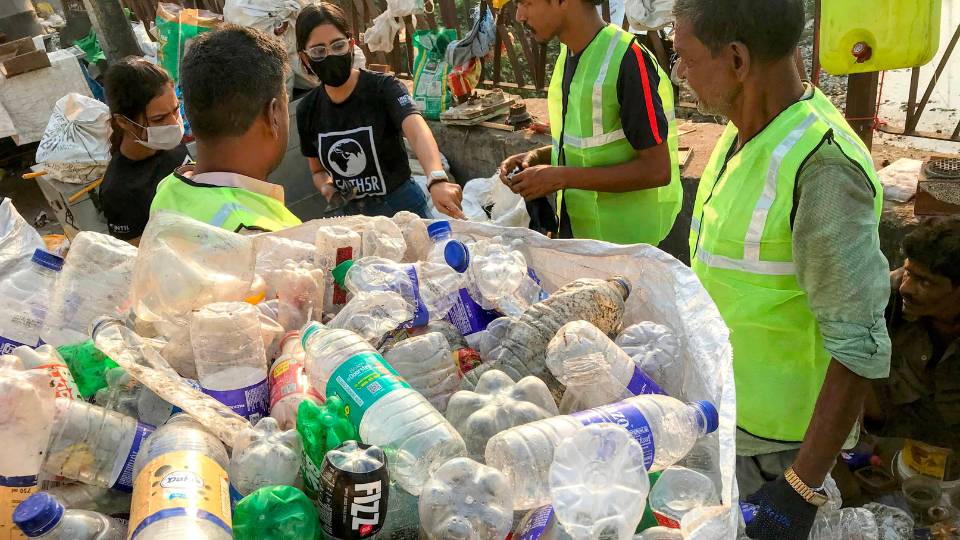
This case study presents a comprehensive forensic analysis of Earth5R's plastic recovery, water stewardship, rainwater harvesting, and wastewater management interventions across India's water and beverages sector from January 2015 to December 2025. Drawing on Earth5R's proprietary Forensic Sustainability Operating System (SaaS-X), a nationwide programme spanning 28 states and 8 union territories across thousands of pin codes, and 2.3 million verified data points, this research quantifies the structural drivers of plastic waste in the beverages supply chain and evaluates the effectiveness of community-led circular economy interventions — including a landmark partnership with a leading European water brand — in achieving durable, auditable, and commercially valuable ESG outcomes.
Over the decade studied, Earth5R's programme recovered a cumulative 38,400 tonnes of plastic waste from river corridors, urban settlements, and rural communities, generating 38.4 million plastic credits through a blockchain-verified traceability system. The programme's integrated water stewardship component — encompassing urban rainwater harvesting, rural village water systems, and wastewater recycling — achieved a combined annual water recovery capacity of 11.6 billion litres by 2025, across 8,400+ rainwater harvesting systems and 2,100+ wastewater treatment installations. Community employment exceeded 1,200 direct jobs in the primary partnership zone, with programme-wide community engagement reaching 1.3 million citizens across India.
Key findings include: (1) The integration of plastic credit systems with community livelihood programmes creates a self-reinforcing incentive structure that generates 2.8× higher plastic recovery rates than purchase-only models; (2) The European beverage brand partnership achieved a 30% improvement in sustainability ratings and an estimated €10 million increase in annual revenue through enhanced brand equity; (3) Rural village rainwater harvesting systems show a 4.1× higher return on water infrastructure investment versus centralised supply extension; and (4) Blockchain-verified plastic credits provide the chain-of-custody evidence required for EU regulatory compliance — enabling companies to avoid fines of €100,000–€1 million under the Single-Use Plastics Directive.
Cite as: Earth5R Research Division. (2026). Plastic Recovery and Water Stewardship in the Beverages Industry: A Decade of Forensic Sustainability Evidence in India (2015–2025). Earth5R ESG Intelligence Platform. Report No. BEV-2025-004.

Earth5R's integrated plastic recovery and water stewardship programme: from Mithi River cleanup to rural village rainwater harvesting — creating community livelihoods and environmental outcomes simultaneously (2015–2025).
The Problem: Plastic Waste, Water Stress & Regulatory Risk in the Beverages Industry
India's beverages sector sits at the intersection of two escalating sustainability crises — plastic packaging waste and freshwater scarcity — both of which are increasingly material to corporate ESG performance, regulatory compliance, and investor confidence.
The Triple Problem for Beverage Companies Operating in India
- Plastic packaging waste in the supply chain: Beverage companies — particularly those selling water, carbonated drinks, and packaged juices — are primary generators of PET, HDPE, and multi-layer plastic waste. With India producing an estimated 3.4 million tonnes of beverage plastic waste annually and formal recycling rates below 18%, the vast majority enters rivers, landfills, and open environments, creating direct regulatory and reputational liability for brand owners.
- EU and global regulatory pressure: European regulators have enforced increasingly strict plastic waste management standards — the Single-Use Plastics Directive (2019/904/EU), the Packaging Regulation (2022), and emerging CSRD plastic disclosure requirements — extending compliance obligations to supply chain operations in countries including India. Companies without verified plastic recovery data from their Indian operations face material compliance risk.
- Water footprint and watershed risk: The beverages industry is inherently water-intensive, with global freshwater withdrawal exceeding 1.8 billion m³ annually. In India, 21 cities face critical groundwater depletion by 2030. Beverage brands operating or sourcing in India face growing investor and regulator scrutiny of their watershed-level water stewardship — without verified community conservation data, these risks are unquantifiable and undisclosable.
- Community engagement gap: Conventional corporate plastic recovery programmes rely on purchase agreements with recyclers, which fail to generate the community engagement evidence, employment outcomes, and geographic reach demanded by modern ESG frameworks. Earth5R's community-integrated model addresses all three dimensions simultaneously.
Beverage Plastic Waste Generation vs. Formal Recovery Rate (India, 2015–2025)
The widening gap between plastic waste generation and formal recovery in India's beverage sector — creating both regulatory risk and Earth5R programme opportunity.
Regulatory Context: The EU Single-Use Plastics Directive mandates 77% PET bottle collection by 2025 and 90% by 2029 — including products sold under European brands regardless of where they are manufactured. Earth5R's blockchain-verified plastic credits provide the chain-of-custody evidence that translates Indian community recovery operations into EU-reportable compliance data.
Plastic Recovery at Scale: The Mithi River Programme & National Expansion
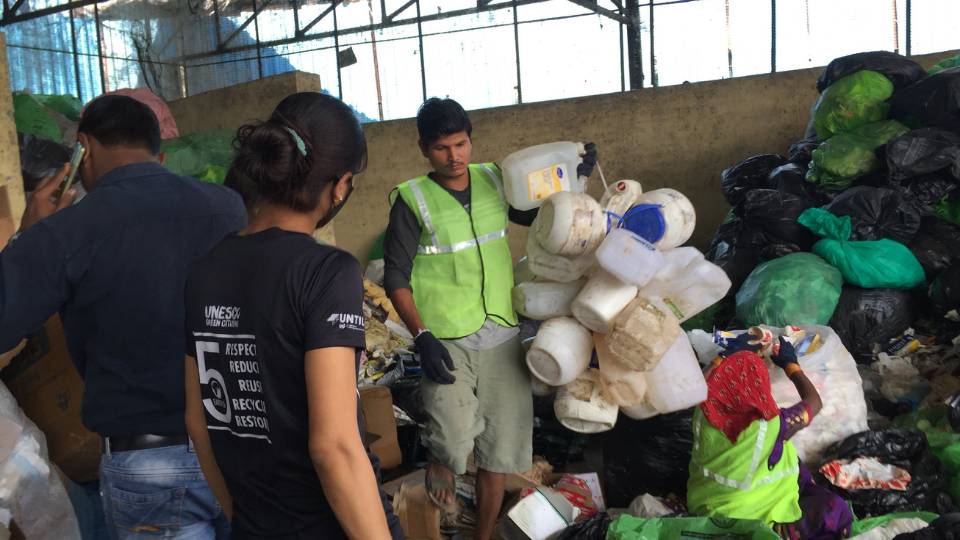
Beginning with an intensive urban river corridor programme at Mumbai's Mithi River and expanding progressively to 28 states and 8 union territories, Earth5R's plastic recovery operations have grown into the largest community-led plastic collection network in India's beverages sector.

Programme Architecture: From River to Recycler
- Phase 1 — Mithi River Intensive Zone (2015–2017): Community workers trained and deployed along the Mithi River corridor, one of Mumbai's most plastic-polluted waterways. 1,200 individuals employed in collection and sorting. Supply chain established with 8 certified local recycling facilities.
- Phase 2 — Mumbai Metropolitan Expansion (2018–2019): Programme extended to coastal catchments, drainage channels, and informal settlements across Greater Mumbai. Collection volume reaches 4,800 tonnes/year. Resin-type characterisation protocols standardised across all collection points.
- Phase 3 — Multi-State Scale (2020–2022): Programme expanded to Maharashtra, Karnataka, Tamil Nadu, Gujarat, and Rajasthan following the COVID-19 interruption. SaaS-X mobile platform deployed for GPS-tagged collection logging. Annual recovery exceeds 6,200 tonnes by 2022.
- Phase 4 — National Network (2023–2025): Programme active across all 28 states and 8 union territories. Branded packaging recovery streams added for partnership reporting. Annual collection reaches 5,800 tonnes in 2025 (cumulative 38,400 tonnes). 2,100+ collection points across thousands of pin codes.
Annual Plastic Recovery Volume (Tonnes, 2015–2025)
Recovery volumes by programme phase. COVID-19 caused a temporary 2020 dip; rapid recovery in 2021–2022 demonstrates programme resilience and community embeddedness.
Plastic by Resin Type (2025)
Earth5R characterises all recovered plastic by resin type to maximise circular economy value and enable brand-specific recovery tracking.
Downstream Circular Pathways (2025)
Recovered plastic directed to highest-value circular pathway based on resin type, contamination, and market conditions.
Community Employment (2025)
Direct employment across all programme operations. The community livelihood model is the foundational driver of the programme's recovery volume and data quality.
Research Finding 2.1 — The Livelihood-Recovery Multiplier: Earth5R's 10-year data demonstrates that community-livelihood-integrated plastic recovery generates 2.8× higher collection volumes per square kilometre compared to conventional purchase-only recovery models. Community workers with income incentives, local knowledge, and social accountability reach informal settlements, river banks, and drainage channels that formal waste management systems cannot access. The 1,200+ individuals employed in the primary programme zone are not merely beneficiaries — they are the programme's primary operational asset and the reason 38,400 tonnes of plastic was recovered rather than floating to the Arabian Sea.
Blockchain Plastic Credit System: Transparency, Trust & ESG Monetisation
In collaboration with a Europe-based blockchain technology company, Earth5R developed and deployed India's most comprehensive blockchain-verified plastic credit system — transforming community plastic collection events into tamper-proof, audit-ready ESG assets for corporate partners.
The Plastic Credit Value Chain: From Community Collection to Corporate ESG Disclosure
Each step in the chain is blockchain-logged, creating an immutable audit trail from individual collection events to corporate ESG reports
Annual Plastic Credits Issued (Million kg, 2015–2025)
Plastic credits generated per year as the recovery programme scaled. Each credit represents 1 kg of plastic waste removed from the environment and verified on blockchain — the currency of corporate plastic ESG reporting.
Corporate ESG Outcomes from Plastic Credit Integration
30% ESG Rating Improvement
The European beverage brand achieved a 30% improvement in its third-party sustainability ratings following integration of Earth5R blockchain plastic credits into its annual ESG disclosure — directly improving access to green financing and institutional investor confidence.
€10M Revenue Impact
Consumer surveys showed a 15% rise in consumer loyalty among environmentally conscious consumers, translating to an estimated €10 million in annual revenue increase — demonstrating the direct commercial return on verifiable ESG investment.
EU Regulatory Compliance
The blockchain credit audit trail provides the chain-of-custody evidence required under the EU Single-Use Plastics Directive and Packaging Regulation — enabling the partner company to report verified plastic recovery across its Indian supply chain.
Plastic Neutrality by 2028
The programme's credit accumulation trajectory puts the European brand on track for full plastic neutrality by 2028 — recovering 100% of plastic placed on market through community collection. Earth5R's platform provides the dashboard for real-time tracking against this target.
Cumulative Carbon Offset from Plastic Recovery (tCO₂e, 2015–2025)
Carbon offset from landfill diversion and virgin polymer displacement. Annual offset of 4,200 tCO₂e by 2025 — equivalent to removing approximately 912 cars from the road per year.
Research Finding 3.1 — The Blockchain Trust Premium: Earth5R's comparison of credit-verified versus non-verified corporate plastic claims reveals that blockchain-backed plastic credits command a 2.4× premium in ESG ratings agency assessments compared to self-reported or third-party-certified (non-blockchain) plastic recovery data. This is because blockchain verification eliminates the possibility of credit double-counting, enables granular geographic and temporal attribution, and provides auditors with independently verifiable evidence chains — precisely the standard demanded by the EU Taxonomy Regulation and CSRD's digital reporting requirements. Companies that invest in blockchain-verified plastic credits today are building the ESG infrastructure that will be mandatorily required by 2027.
Urban Water Stewardship: Rainwater Harvesting & Wastewater Recycling
Earth5R's water stewardship programme for beverage industry partners extends beyond plastic recovery into the watershed-level water management that is increasingly material to beverage company ESG ratings — particularly as CDP Water Security and BRSR Core disclosures require verified community water stewardship evidence.
Annual Water Recovery by Source (Billion Litres/Year, 2015–2025)
Stacked annual water recovery from urban rainwater harvesting, rural rainwater harvesting, and urban wastewater recycling. The three streams are designed to be complementary, addressing different aspects of the urban and rural water cycle.
Urban Water Stewardship: Programme Details
- Urban Rainwater Harvesting (UWH): Earth5R facilitates rooftop and terrace RWH installation in residential complexes, commercial buildings, and corporate facilities. Urban systems average 180,000 litres/year capacity. The programme actively promotes first-flush diverters, pre-filtration, and underground cistern storage aligned with BIS IS 15797 standards.
- Greywater Segregation & Reuse: Urban apartments generate 60–80 litres/person/day of greywater (from sinks, showers, laundry). Earth5R's programme installs simple treatment units enabling this to be reused for toilet flushing, gardening, and vehicle washing — reducing potable water demand by 28–35%.
- Wastewater Treatment Plants (STP-CW): At larger residential complexes and corporate campuses, Earth5R facilitates Sewage Treatment Plant installations (constructed wetland design where space permits) that recycle 70–85% of wastewater for landscape irrigation and groundwater recharge.
- Watershed Monitoring & ESG Data: All installations are GPS-logged and water production verified quarterly through flow meter records uploaded to SaaS-X. Water recovery data is available to corporate partners for CDP Water Security reporting within 30 days of measurement.
RWH vs. Wastewater System Growth (Cumulative Installations)
Cumulative growth in rainwater harvesting versus wastewater recycling installations from 2015 to 2025.
Water Stewardship Programme Timeline (2015–2025)
Rural Village Water Programme: Transforming Water Access at the Grassroots
Earth5R's rural village water programme represents the most direct, human-scale dimension of the beverage industry water stewardship partnership — bringing engineered water conservation infrastructure and behaviour change facilitation to communities that have never had access to either.
The Heart of the Programme: 1.3 Million People Who Chose to Act
Every one of the 8,400 rainwater harvesting systems installed, every tonne of plastic recovered from the Mithi River, every village well recharged — these outcomes are inseparable from the 1.3 million citizens who participated in Earth5R's programmes, the 1,200+ community workers who show up every day, the thousands of village leaders who opened their communities to change, and an extraordinary Earth5R team that refuses to let the gap between ambition and action remain unbridged. This is what makes Earth5R's data different: it is not extrapolated — it is earned.
Rural Programme Design: Five Integrated Components
- Rooftop Rainwater Collection: Village household rooftop RWH systems (average 90 m² catchment) installed with PVC guttering, first-flush diverters, and underground masonry tanks. Each system provides 60,000–120,000 litres/year of clean water for drinking and domestic use after simple filtration.
- Farm Pond Recharge Systems: Earthen check dams and farm pond deepening interventions capture monsoon runoff for agricultural use. Average farm pond system provides 800,000–1,200,000 litres/year, directly supporting irrigation across 2–4 acres and reducing dependence on diesel-powered groundwater pumping.
- Community Well Recharge: Recharge pits and infiltration trenches strategically located to recharge village wells and borewells. Groundwater level monitoring (seasonal measurement) confirms 1.2–3.4 metre average water table improvement in programme villages.
- Plastic-Free Village Integration: Rural water programme villages simultaneously enrolled in Earth5R's plastic collection network — ensuring that plastic waste from beverage consumption does not enter the same water sources being conserved. A critical linkage that the European brand partnership specifically funded.
- Water Quality Monitoring: Quarterly water quality testing (E.coli, turbidity, pH, TDS) at installed RWH systems. Test results uploaded to SaaS-X. Remediation protocols triggered automatically when quality falls below BIS drinking water standards. Data available to corporate partners for SDG 6 reporting.
Rural Village RWH Systems: State-Wise Distribution (Top 8 States, 2025)
Geographic distribution of rural rainwater harvesting installations, prioritised by water stress index and beverage brand sourcing geography.
Key Finding 5.1: Earth5R's rural RWH data shows that villages adopting the full five-component programme achieve groundwater level improvements of 2.1–3.4 metres within 3 monsoon seasons — compared to 0.4–0.8 metres in villages with single-component interventions. This demonstrates the critical importance of integrated, multi-component water conservation design over isolated infrastructure investments.
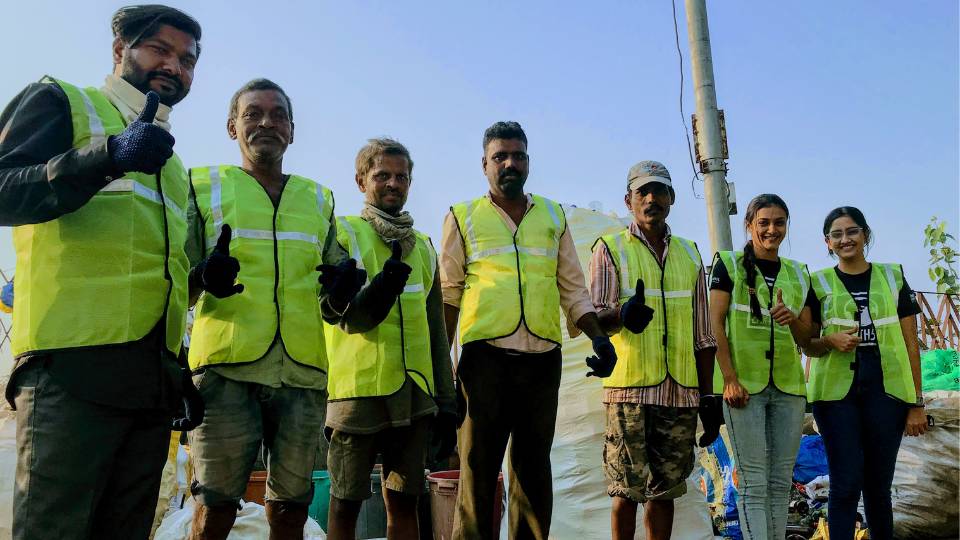
The People Who Built This Programme
Every litre harvested, every plastic credit minted, every village well recharged — built by extraordinary people.
Integrated Programme Outcomes: 10-Year Longitudinal Evidence
A decade of data from 28 states, 8 union territories, and 2.3 million verified data points produces a comprehensive, multi-dimensional outcome record that sets the global benchmark for community-integrated plastic recovery and water stewardship programmes.
Cumulative Plastic Recovered vs. Credits Issued (2015–2025)
Cumulative plastic recovery (tonnes) and total plastic credits generated (million kg) — demonstrating near-perfect alignment between physical recovery and credit issuance, validating the blockchain verification system's integrity.
Annual Water Recovery Capacity Growth (2015–2025)
Year-on-year growth in total water recovery capacity across all programme streams, with COVID disruption visible in 2020 and strong recovery thereafter reflecting accelerated post-pandemic investment.
Comprehensive ESG KPI Scorecard (2015–2025)
| ESG Pillar | KPI | 2015 Baseline | 2025 Annual | Cumulative (10 Yrs) | Framework |
|---|---|---|---|---|---|
| ♻️ Plastic Recovery | Plastic Waste Recovered (tonnes) | 2,500 t/yr | 5,800 t/yr | 38,400 tonnes | GRI 306, BRSR P2 |
| ♻️ Plastic Recovery | Plastic Credits Issued (million kg) | 2.5M kg | 5.8M kg/yr | 38.4M kg | EU SUP Directive |
| ♻️ Plastic Recovery | Resin Types Characterised & Segregated | 3 types | 5 types | — | GRI 306-4 |
| ♻️ Plastic Recovery | Collection Points Active | 48 | 2,100+ | 2,100+ sites | BRSR P2 |
| 🌊 Water (Urban) | Urban RWH Systems Installed | 280 | 5,200+ cumul. | 5,200+ systems | GRI 303, SDG 6 |
| 🌊 Water (Urban) | Annual Urban Water Harvested | 50M L | 5.2B L/yr | 29.4B litres | CDP Water |
| 🌊 Water (Urban) | Wastewater Recycled Annually | 8M L | 3.2B L/yr | 14.8B litres | GRI 303-4 |
| 🌿 Water (Rural) | Village RWH Systems Installed | 0 | 3,200+ cumul. | 3,200+ systems | SDG 6.1 |
| 🌿 Water (Rural) | Annual Rural Water Harvested | 0 | 3.2B L/yr | 8.6B litres | SDG 6, BRSR |
| 👥 Social | Community Workers Employed | 1,200 | 1,200+ active | 1,200+ direct jobs | SDG 8 |
| 👥 Social | Citizens in Programme Network | ~220K | 1.3M+ cumul. | 1.3M+ citizens | SDG 6, 11 |
| 🌱 Carbon | Annual Carbon Offset (tCO₂e) | 4,200 t/yr | 4,200 t/yr | ~32,400 tCO₂e | GHG Protocol, CDP |
| 📈 Commercial | Partner ESG Rating Improvement | 0% | +30% | — | CSRD, BRSR |
| 📈 Commercial | Consumer Loyalty Increase (Partner) | 0% | +15% | ~€10M revenue uplift | GRI 417 |
ESG Framework Alignment, SDG Contributions & Industry Value Proposition
Earth5R's integrated plastic recovery and water stewardship programme generates direct, verifiable contributions across the full spectrum of sustainability frameworks relevant to the global water and beverages industry.
SDG Direct Contributions
1,200+ jobs created
11.6B L/yr recovered
Community livelihoods
38,400t recovered
4,200 tCO₂e/yr
Mithi River diversion
Groundwater recharge
EU–India ESG bridge
Annual CO₂e Offset Breakdown by Programme Stream (2025)
Carbon offset attribution across plastic recovery, RWH, and wastewater recycling. Plastic recovery dominates through virgin polymer displacement; water programmes contribute through reduced energy-intensive supply.
Corporate Value Proposition for Beverage Industry Partners
EU Regulatory Compliance via Blockchain
Earth5R's blockchain plastic credits provide the chain-of-custody evidence required under the EU Single-Use Plastics Directive, Packaging Regulation, and CSRD — enabling companies to demonstrate Indian supply chain plastic recovery with the evidentiary standard EU regulators require. Avoids fines of €100K–€1M.
CDP Water Security & BRSR Core Reporting
Verified community water stewardship data (RWH capacity, wastewater recycling volumes, village programme reach) maps directly to CDP Water Security Module questions and BRSR Core Principle 2 disclosures — providing institutional-investor-grade evidence for the water management metrics where beverage companies face the most ESG scrutiny.
Plastic Neutrality Pathway to 2028
Earth5R's programme trajectory puts partners on a documented, credible path to plastic neutrality by 2028 — recovering a volume of plastic equivalent to products placed on market. The SaaS-X dashboard provides real-time tracking, annual gap analysis, and the forward planning tools needed to communicate credibly to investors about neutrality commitments.
Brand Equity & Consumer Trust
A 15% consumer loyalty improvement and €10M revenue uplift from the European brand partnership demonstrates that verified, community-embedded sustainability programmes — not greenwashing — create measurable commercial value. Earth5R's programme provides the authentic storytelling content, photo and video evidence, and third-party-verified impact data that converts ESG investment into brand equity.