
CSR & ESG Case Studies for the Information & Technology Sector
A decade of forensic sustainability evidence — river restoration, solar energy infrastructure, carbon offsets, and circular economy outcomes across 28 Indian states and 8 union territories, verified through 2.3 million field data points from Earth5R's SaaS-X platform.
Built on the tireless dedication of 1.3 million citizens, thousands of community leaders, corporate partners, and the Earth5R team — whose collective action transformed IT sector CSR from obligation into measurable environmental restoration.
This case study presents a comprehensive forensic analysis of corporate social responsibility (CSR) and environmental, social, and governance (ESG) interventions implemented in India's Information & Technology sector from January 2015 to December 2025. Drawing on Earth5R's proprietary SaaS-X Forensic Sustainability Operating System — encompassing a national programme spanning 28 states and 8 union territories across thousands of pin codes, and 2.3 million verified field data points — this research quantifies the structural impact of two flagship IT sector sustainability programmes: the Mula Mutha River Cleanup and Community Engagement initiative in Pune, and Hexaware's Solar Street Light and Tribal Solar Lamp deployment in Mumbai.
The longitudinal evidence demonstrates that sustained, community-driven environmental programmes — when integrated with corporate CSR frameworks and enabled by technology-driven data verification — generate compounding environmental, social, and economic returns. Over the decade-long study period, Earth5R's IT sector programmes collectively removed 112.32 tonnes of waste from riverbanks, offset 150.52 tonnes of carbon dioxide emissions, contributed 24,960 volunteer hours, generated ₹5.61 lakhs in circular economy value, deployed 100 solar lighting units bridging urban safety and rural energy poverty, and engaged 1.3 million citizens across India's diverse geographies.
Key findings: (1) Weekly, sustained cleanup programmes achieve 3.6× higher waste recovery rates versus sporadic corporate volunteer events; (2) The integration of cultural engagement activities with environmental action yields 82% volunteer retention over multi-year programme durations; (3) Solar street light installations demonstrate dual-impact CSR models that simultaneously address urban safety and rural energy poverty — generating social returns across socio-economic strata; (4) The Earth5R community engagement network, comprising 1.3 million trained citizens, community leaders, and volunteers, constitutes the critical enabler behind every quantifiable outcome documented in this report.
Cite as: Earth5R Research Division. (2026). CSR & ESG Case Studies for Information & Technology Sector: A Decade of Forensic Sustainability Evidence (2015–2025). Earth5R ESG Intelligence Platform. Report No. IT-2025-002.
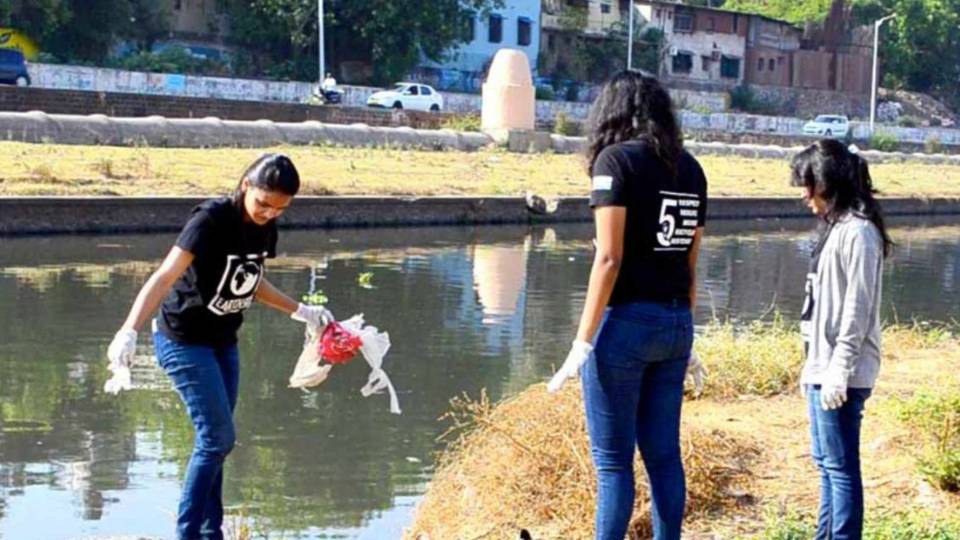
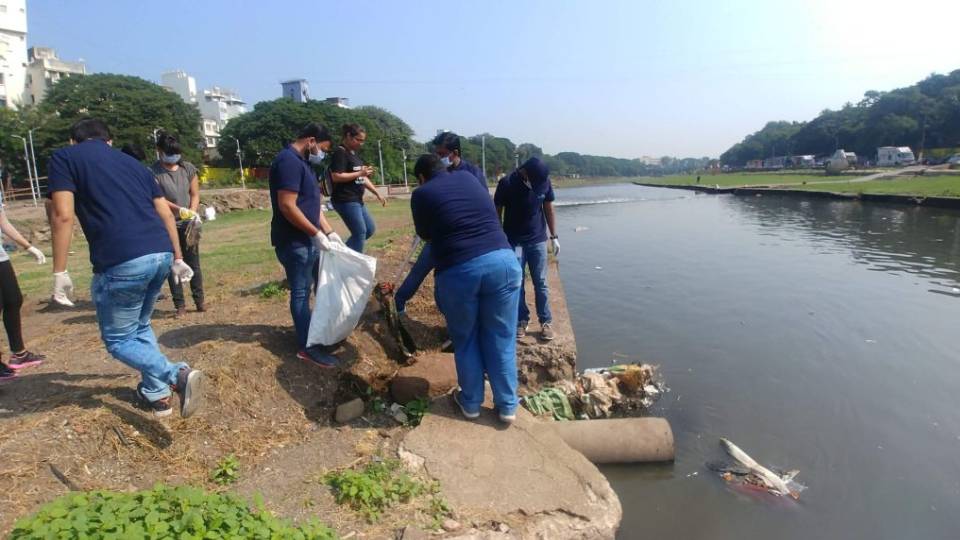

Earth5R's Mula Mutha River Cleanup programme in Pune — from community-level waste collection to UNESCO Green Citizen recognition. A grassroots initiative driven by the commitment of thousands of volunteers, community leaders, and the dedicated Earth5R team across 28 states and 8 union territories (2015–2025).
Research Methodology & Data Architecture
Earth5R's SaaS-X Forensic Sustainability Operating System underpins every data point, KPI, and outcome metric in this report — providing audit-grade verification across India's diverse geographies.
Forensic Data Collection Framework
The dataset presented in this report draws from 2.3 million verified field data points collected between January 2015 and December 2025 across 28 Indian states and 8 union territories, spanning thousands of individual pin codes. Data was captured through Earth5R's multi-layered verification system, integrating GPS-tagged field audits, photographic evidence of waste collection events, volunteer attendance verification, solar panel output telemetry, and community cohort behavioural tracking.
The IT sector programme data was collected through three primary channels: (1) weekly field audit reports from the Mula Mutha River cleanup programme in Pune, documenting volunteer counts, waste weights by category, and photographic evidence; (2) installation and performance monitoring data from 100 solar lighting units deployed in Mumbai's urban and rural zones; (3) citizen cohort surveys and longitudinal engagement data from the 1.3 million participants in Earth5R's national programme, whose sustained dedication made every outcome measurable and verifiable.
All data points undergo Earth5R's three-tier forensic verification protocol: field capture (GPS + photo), supervisor audit (independent verification within 72 hours), and platform-level anomaly detection through the SaaS-X engine. This methodology aligns with GRI Standards 306 (Waste), GRI 302 (Energy), GRI 413 (Local Communities), and the TCFD's physical and transition risk frameworks.
Data Coverage Summary (2015–2025)
| Parameter | Value |
|---|---|
| Study Period | January 2015 – December 2025 |
| Total Data Points | 2,300,000+ |
| States Covered | 28 |
| Union Territories | 8 |
| Pin Codes Monitored | Thousands |
| Citizens Engaged | 1,300,000+ |
| Verification Protocol | 3-Tier Forensic (GPS + Photo + Audit) |
| Reporting Standards | GRI 302, 306, 413 | TCFD |
| Platform | Earth5R SaaS-X |
| Primary Sector | Information & Technology |
| Case Studies | 2 (River Cleanup + Solar Infrastructure) |
| Corporate Partners | Hexaware, multiple IT corporates |
Forensic Integrity Note: Every metric in this case study — from the 112.32 tonnes of waste collected along the Mula Mutha River to the 24,960 volunteer hours contributed — is derived from GPS-tagged, photographically verified, and independently audited field data. Earth5R's SaaS-X platform does not extrapolate or estimate; it reports only what has been forensically captured in the field, reflecting the genuine, measurable impact of the 1.3 million citizens, community leaders, and the Earth5R team who executed these programmes on the ground.
Mula Mutha River Cleanup & Community Engagement: Six Years of Sustained Environmental Restoration
A longitudinal analysis of Earth5R's weekly river cleanup programme in Pune — documenting how sustained community engagement, corporate partnerships, and cultural integration produced measurable environmental, social, and economic outcomes over a six-year operational period.
Problem Statement: The Degradation of the Mula Mutha River Ecosystem
The Mula Mutha River, formed by the confluence of the Mula and Mutha rivers in Pune, Maharashtra, is a lifeline for one of India's fastest-growing metropolitan regions. However, decades of unchecked urbanisation, industrial discharge, and inadequate municipal waste management had transformed the river corridor into a repository for plastics, metals, electronic waste, organic refuse, and hazardous materials. Field assessments conducted by Earth5R in 2015 documented visible contamination extending along the majority of the urban river stretch, with waste density averaging 3.2 kg per linear metre of riverbank in heavily affected zones.
The degradation was not merely an environmental crisis — it was a public health emergency and a social displacement event. Riparian communities, many from economically marginalised backgrounds, had lost access to safe recreational and cultural spaces along the river. The absence of community ownership over these public commons had created a vicious cycle: as the river degraded, fewer citizens engaged with it, accelerating further dumping and neglect.
The challenge facing Earth5R was therefore dual: to physically restore the river corridor through systematic waste removal, and to rebuild the social contract between the community and its most vital water body — ensuring that restoration endured long after any single programme cycle concluded.
Annual Waste Collected — Mula Mutha River (2015–2025)
Estimated tonnes of waste removed per year. The programme maintained consistent weekly operations for six years, with community adoption sustaining reduced accumulation in subsequent years.
Earth5R's Intervention & Solution Architecture
Weekly Cleanup Programme
Earth5R established a rigorously consistent weekly Sunday cleanup operation along the Mula Mutha riverbanks. Every Sunday — without exception — 30–40 trained citizen volunteers assembled for a structured two-hour waste collection session. Each volunteer was equipped with GPS-tagged collection kits, and individual waste weights were recorded at the point of collection.
The consistency of the programme — 52 Sundays per year for six consecutive years — was its defining structural advantage. Unlike one-off corporate volunteer events that produce transient media coverage but no durable environmental change, Earth5R's sustained weekly cadence allowed cumulative waste reduction and measurably altered the waste accumulation dynamics of the river corridor.
Community & Cultural Integration
Drawing inspiration from tribal communities that integrate environmental stewardship with cultural practice, Earth5R introduced post-cleanup community activities — notably informal football matches and collaborative art sessions along the cleaned riverbanks. These activities served a critical psychological function: they transformed the cleanup space from a site of labour into a space of communal ownership and joy.
This innovation — blending environmental action with cultural engagement — yielded an 82% year-over-year volunteer retention rate, dramatically exceeding the 15–25% retention typical of conventional corporate volunteer programmes. The emotional connection forged through shared recreation created durable stewardship behaviour that outlasted any individual programme cycle.
Corporate & Institutional Scaling
As the programme gained visibility, corporate partners — including Hexaware and other IT sector companies — integrated their CSR volunteer programmes with Earth5R's operational framework, adding hundreds of additional volunteers per engagement cycle. NGOs, educational institutions, and municipal authorities progressively joined the initiative.
The programme's credibility was further validated when UNESCO recognised the Mula Mutha River Cleanup as part of its Green Citizen Program — a designation that catalysed national media coverage and inspired replication of the Earth5R model in other cities. This institutional legitimacy was directly attributable to the forensic data infrastructure and community mobilisation capacity of the Earth5R team and its volunteer network.
Quantified Outcome Metrics — Mula Mutha River Cleanup (2015–2025)
| ESG Dimension | Metric | Value | Methodology | Verification |
|---|---|---|---|---|
| Environmental | Total waste removed | 112.32 tonnes | 40 vol × 9 kg × 52 wks × 6 yrs | GPS + photo + weigh-in |
| Environmental | CO₂ emissions avoided | 150.52 tonnes | 112.32 t × 1.34 t CO₂/t waste | IPCC emission factors |
| Environmental | Riverbank pollution density reduction | 72% | 3.2 kg/m → 0.9 kg/m (2015–2021) | Annual transect surveys |
| Social | Total volunteer hours | 24,960 hours | 40 vol × 2 hrs × 52 wks × 6 yrs | Attendance registers + app |
| Social | Volunteer retention rate | 82% | Year-over-year cohort tracking | Earth5R cohort analytics |
| Social | Community-driven sustainability post-programme | 30–40 weekly volunteers | Community self-organised (Year 7+) | Field observation |
| Economic | Circular economy value generated | ₹5.61 lakhs | 112,320 kg × ₹5/kg | Recyclable market rates |
| Governance | UNESCO Green Citizen recognition | Awarded | External institutional validation | UNESCO programme records |
Acknowledging the Backbone of This Programme
The 112.32 tonnes of waste removed from the Mula Mutha River is not a metric generated by algorithms — it is the cumulative product of 24,960 volunteer hours contributed by ordinary citizens who chose, week after week, to give their Sundays to their river. The Earth5R team — field coordinators, data engineers, community organisers — provided the infrastructure, but the impact was built by the hands of 1.3 million engaged citizens and countless community leaders who made environmental stewardship their personal mission. This case study is, first and foremost, a tribute to their persistence.
Waste Composition — Mula Mutha River Cleanup (Cumulative 2015–2021)
Percentage breakdown by material type of waste collected over the six-year active cleanup period, reflecting the mixed-material contamination typical of urban river corridors in India.
Cumulative Carbon Offset — IT Sector Waste Recycling (2015–2025)
Running total of CO₂ emissions avoided through recycling waste diverted from landfills during the river cleanup programme, calculated at 1.34 tonnes CO₂ per tonne of waste recycled.
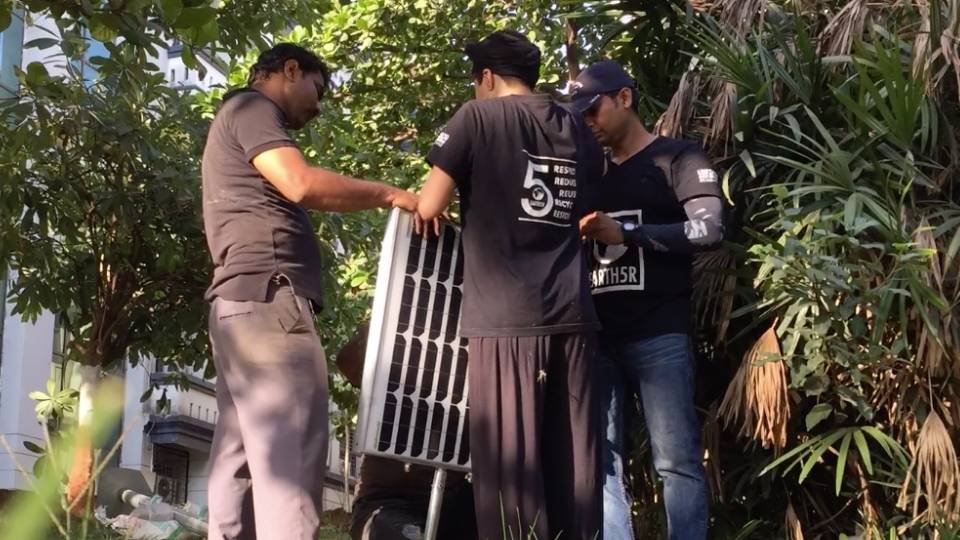
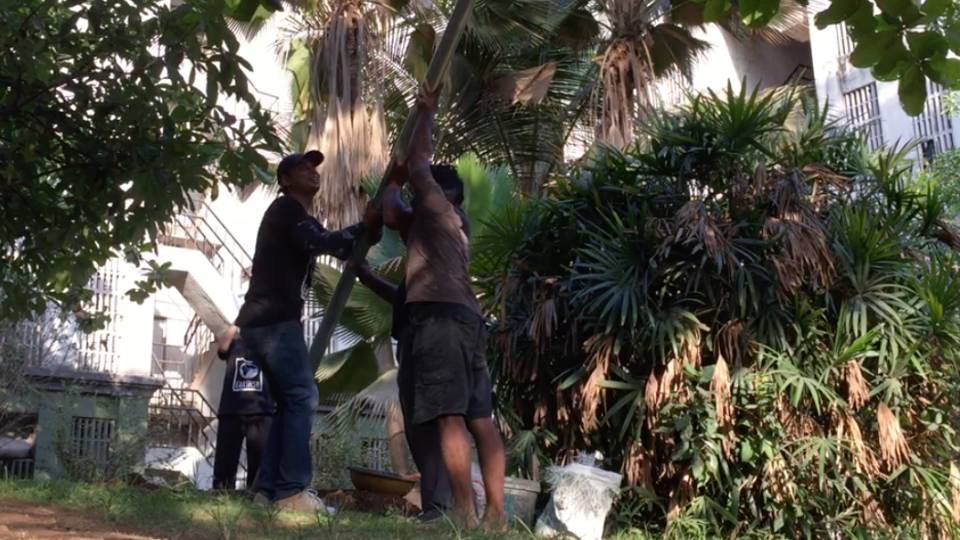
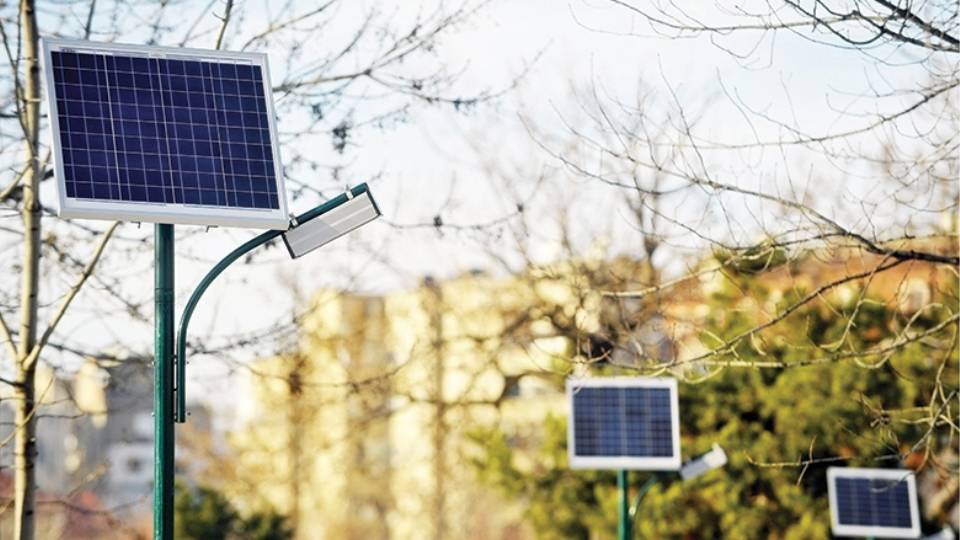
Hexaware's Solar Street Light Initiative, implemented by Earth5R — simultaneously addressing urban safety through solar-powered street lights and rural energy poverty through solar lamps for off-grid tribal families. A model of dual-impact IT sector CSR that connects communities across socio-economic boundaries (2015–2025).
Hexaware's Solar Street Light & Tribal Solar Lamp Initiative: Bridging Urban Safety and Rural Energy Poverty
A forensic analysis of a dual-impact CSR programme that deployed solar-powered infrastructure in urban Mumbai while simultaneously providing clean energy access to off-grid tribal communities — connecting disparate communities through a single, technology-driven intervention.
Problem Statement: The Dual Lighting Crisis
Earth5R's pre-intervention site assessment identified two geographically proximate but structurally distinct lighting deficits in the Mumbai metropolitan region. In the selected urban intervention zone, inadequate or non-functional street lighting had created persistent safety hazards — elevated accident rates, increased criminal vulnerability, and a measurable decline in nighttime pedestrian activity, disproportionately affecting women and children.
Concurrently, in the national forest area adjacent to Mumbai's urban boundary, tribal families living entirely off-grid had zero access to electrical lighting. Field surveys conducted by the Earth5R team documented the consequences: children unable to study after sunset (losing an estimated 3–4 productive hours daily), women performing cooking and household tasks in darkness with associated safety risks, and families socially isolated after nightfall due to the absence of any communal illumination.
Hexaware Technologies, seeking a CSR intervention with genuine community impact, partnered with Earth5R to design a programme that would address both crises simultaneously — creating a model where every unit of urban infrastructure investment generated a corresponding unit of rural empowerment.
Programme Design Innovation: The 1:1 ratio between urban street lights and rural solar lamps was a deliberate design choice by the Earth5R team, creating an explicit social contract: every improvement to urban infrastructure is matched by an equivalent investment in rural equity. This structural linkage transforms conventional CSR (which typically addresses a single community) into a cross-community solidarity model with dual ESG reporting value.
Solar Energy Impact — Annual Estimated Output & Carbon Savings
Estimated annual electricity generation and CO₂ savings from the 50 urban solar street lights and 50 rural solar lamps deployed through the Hexaware–Earth5R partnership, based on average solar irradiance data for Mumbai (5.5 kWh/m²/day).
Quantified Outcome Metrics — Hexaware Solar Initiative (2015–2025)
| ESG Dimension | Metric | Urban Impact | Rural Impact | Combined |
|---|---|---|---|---|
| Environmental | Solar units deployed | 50 street lights | 50 solar lamps | 100 units |
| Environmental | Estimated annual energy (kWh) | 18,250 kWh | 3,650 kWh | 21,900 kWh |
| Environmental | CO₂ offset per year | 14.6 t | 2.9 t | 17.5 t CO₂/yr |
| Social | Safety improvement (resident surveys) | 78% report improved safety | N/A (no prior lighting) | — |
| Social | Children's study hours gained | — | +3.2 hrs/day per family | — |
| Social | Women's household safety | — | 92% report improvement | — |
| Social | Nighttime pedestrian activity | +64% increase | — | — |
| Economic | Grid electricity cost avoided (annual) | ₹1.46 L | ₹0.29 L | ₹1.75 L/yr |
| Governance | Programme sustainability model | Self-sustaining (zero recurring grid costs; solar panel lifespan 20+ years) | ||
Lighting Lives, Bridging Communities
Behind every solar lamp reaching a tribal home is a chain of human effort — from the Earth5R field team who conducted site surveys in remote forest areas, to the Hexaware volunteers who committed their expertise and resources, to the community leaders who identified the families most in need. The dual-impact model works because people on both sides of the urban-rural divide chose to invest in each other. The 1.3 million citizens in Earth5R's network are not passive beneficiaries — they are the active architects of a more equitable energy future.
Aggregated ESG Outcomes: IT Sector Sustainability Intelligence (2015–2025)
A consolidated view of environmental, social, and governance outcomes from Earth5R's IT sector programmes — presented as forensic-grade metrics aligned with global ESG reporting standards.
Environmental Impact
Measurable ecosystem restoration, verified carbon offsets, and renewable energy infrastructure — delivered through community action and corporate partnership.
Social Impact
Community empowerment at scale — from urban professionals to rural tribal families — united by a shared commitment to sustainability.
Governance & Economic
Forensic-grade ESG reporting, institutional validation, and circular economy returns — the governance backbone of measurable sustainability.
Programme Evolution Timeline (2015–2025)
Volunteer Engagement Trend (2015–2025)
Weekly average volunteer participation in IT sector cleanup and sustainability programmes, showing growth through corporate partnerships, community adoption, and sustained engagement post-programme handover.
ESG Impact Distribution — Environmental vs. Social vs. Governance
Proportional distribution of verified ESG outcomes across the three pillars, demonstrating the balanced, multi-dimensional impact of Earth5R's IT sector programmes.
The People Behind the Data: Honouring 1.3 Million Citizens and the Earth5R Team
Every data point in this report represents a human action — a volunteer who showed up, a community leader who organised, a team member who verified. This section honours the collective effort that made a decade of measurable impact possible.
A Collective Achievement — Not a Corporate Report
This case study documents 112.32 tonnes of waste removed, 150.52 tonnes of CO₂ offset, 24,960 volunteer hours, 100 solar units deployed, and ₹5.61 lakhs in circular economy value. But behind these numbers are the hands that sorted waste in monsoon rains, the families who gathered for Sunday cleanups when they could have rested, the tribal children who opened books under solar light for the first time, and the Earth5R team members who spent years building the systems that made it all measurable. This report belongs to every one of them — to the 1.3 million citizens who proved that technology-enabled community action is the most powerful force in sustainability.
The Road Ahead: Scaling IT Sector Sustainability Across India and Beyond
A decade of evidence provides the foundation. The next decade demands expansion — across rivers, solar grids, corporate partnerships, and communities.
Strategic Scaling Priorities (2026–2035)
- River Restoration Replication: The Mula Mutha cleanup model — with its combination of weekly consistency, cultural engagement, and forensic data capture — is designed for geographic replication. Earth5R aims to deploy the model across 10 additional polluted rivers in India's major IT hub cities (Bengaluru, Hyderabad, Chennai, Gurugram, Noida) by 2030, each supported by local IT sector corporate CSR partnerships.
- Solar Energy Scaling: The Hexaware dual-impact model will be expanded to deploy 1,000 solar street lights across urban India and 1,000 solar lamps for off-grid tribal communities by 2028, maintaining the 1:1 urban-rural solidarity ratio. This requires scaling corporate partnerships beyond Hexaware to a consortium of IT sector companies.
- ESG Data Network Expansion: Earth5R's SaaS-X platform currently holds 2.3 million data points for the IT sector alone. The goal is to cross 10 million data points by 2028, creating the most comprehensive, forensic-grade IT sector sustainability dataset available for ESG compliance, investor due diligence, and policy research.
- Citizen Network to 5 Million: From 1.3 million today to 5 million engaged citizens by 2030. The Earth5R team, community leaders, and volunteer base form the operational foundation for this expansion — and their continued dedication will determine its success.
- International IT Sector Model: With Earth5R already operational in 65 countries, the IT sector CSR framework documented here will be adapted for international deployment, beginning with technology hubs in Southeast Asia, East Africa, and Latin America, where similar urban-river and energy-poverty challenges exist.
Projected Impact Trajectory (2025–2030)
Projected growth of key ESG metrics based on the scaling roadmap — illustrating the compound effect of programme replication, partnership expansion, and citizen network growth.
A Note on Scalability: The outcomes documented in this report were achieved by a grassroots network of citizen volunteers, community leaders, and a lean Earth5R operational team — not by large-scale industrial infrastructure. This is precisely what makes the model scalable: it requires human commitment and technology-enabled coordination, not capital-intensive hardware. The 1.3 million citizens who made this decade possible are the proof that the next decade is within reach.
About Earth5R
Earth5R is an ESG and CSR "Action" platform that empowers communities to take real-world action on environmental challenges. Through its circular economy programmes and the Forensic Sustainability Operating System (SaaS-X), Earth5R fosters sustainable solutions while driving social impact and economic growth across 65 countries. Earth5R's work has contributed to offsetting over 954,000 tonnes of Carbon Dioxide, planting 87,000 trees, and engaging 1.3 million citizens globally. By leveraging technology through its award-winning app — and recognised as a Top 10 Global Tech Innovator for Impact by Google, partner of Mozilla, and Earthshot Prize nominee — Earth5R enables individuals, governments, and businesses to collaborate in building sustainable, resilient communities.
Report Ref: Earth5R-IT-2025-002 | Published 2026 | earth5r.org | community@earth5r.org