
Built on the labour of 1.3 million citizens, thousands of slum women nursery-keepers, community leaders, and the Earth5R team — every sapling grown is a testament to what decentralised, community-powered sustainability can achieve at scale.
This case study presents a forensic, longitudinal analysis of Earth5R's Horticulture Livelihood and Urban Greening Programme — a decentralised, community-driven initiative operating across 36 states and union territories of India from January 2015 to December 2025. Implemented in partnership with a leading construction partner and replicated across the construction and real estate sector nationally, the programme trains slum families — primarily women — to cultivate saplings on rooftops using upcycled containers and locally composted growing media, then sells the matured saplings to corporations conducting plantation drives. Drawing on Earth5R's SaaS-X Forensic Sustainability Operating System and 2.3 million verified field data points, this study quantifies the programme's environmental, economic, and social outcomes over a decade.
India's urban construction and real estate boom has cleared an estimated 18–24 million urban trees between 2000 and 2025 — a structural deforestation embedded in the economics of urban land development. Simultaneously, millions of slum families lack sustainable livelihood opportunities, and corporate plantation programmes rely on centralised nurseries located 50–300 km from planting sites, generating avoidable transportation emissions. Earth5R's programme addresses all three challenges simultaneously: over 10 years, it produced 1.10 million saplings, generated ₹12.2 crore of income for participating families, utilised 498 tonnes of locally composted growing media, repurposed 8.51 lakh upcycled containers, and generated an estimated annual CO₂ offset of 1,597 tonnes by 2025 — all through a zero-land-use, low-resource, hyper-decentralised model that requires no dedicated nursery infrastructure.
Key findings: (1) The decentralised rooftop nursery model generates ₹25,000–₹50,000 per family per year from an otherwise unproductive urban surface; (2) Locally-produced saplings eliminate an estimated 2.4–8.6 kg CO₂e of transportation emissions per sapling versus centralised supply; (3) Rooftop greening produces an average 1.27°C reduction in rooftop surface temperature, measurably attenuating the urban heat island effect; (4) The programme demonstrates that corporate ESG plantation commitments can be fulfilled at lower cost, higher verified impact, and greater community benefit through decentralised community partnerships versus centralised commercial nurseries.
Cite as: Earth5R Research Division. (2026). Urban Greening and Horticulture Livelihoods in India's Construction and Real Estate Sector: A Decade of Forensic Evidence (2015–2025). Earth5R ESG Intelligence Platform. Report No. RE-2025-006.
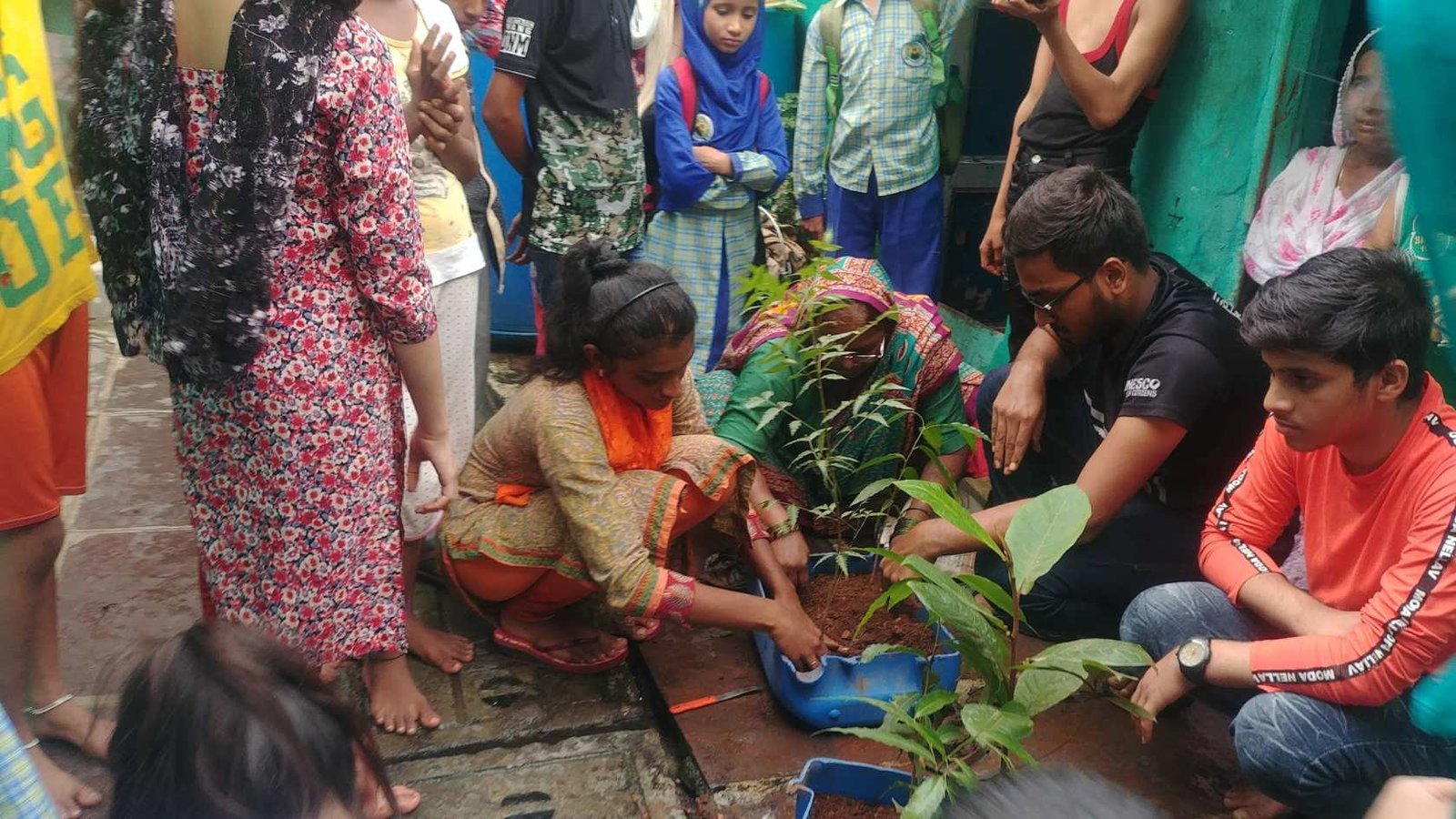
Slum residents paid once plants reach transplantation height — a new, dignified income stream from previously unused rooftop space
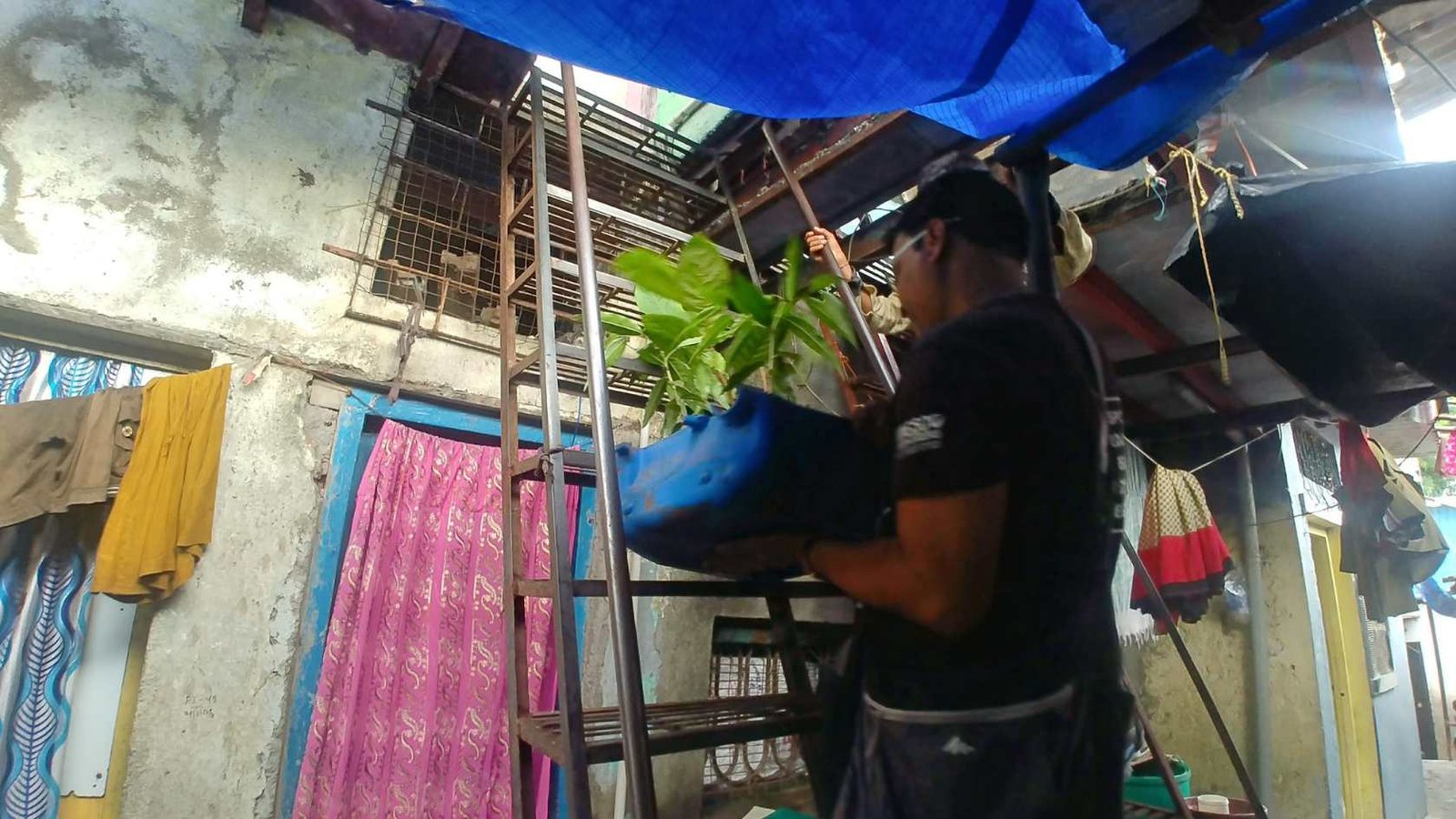
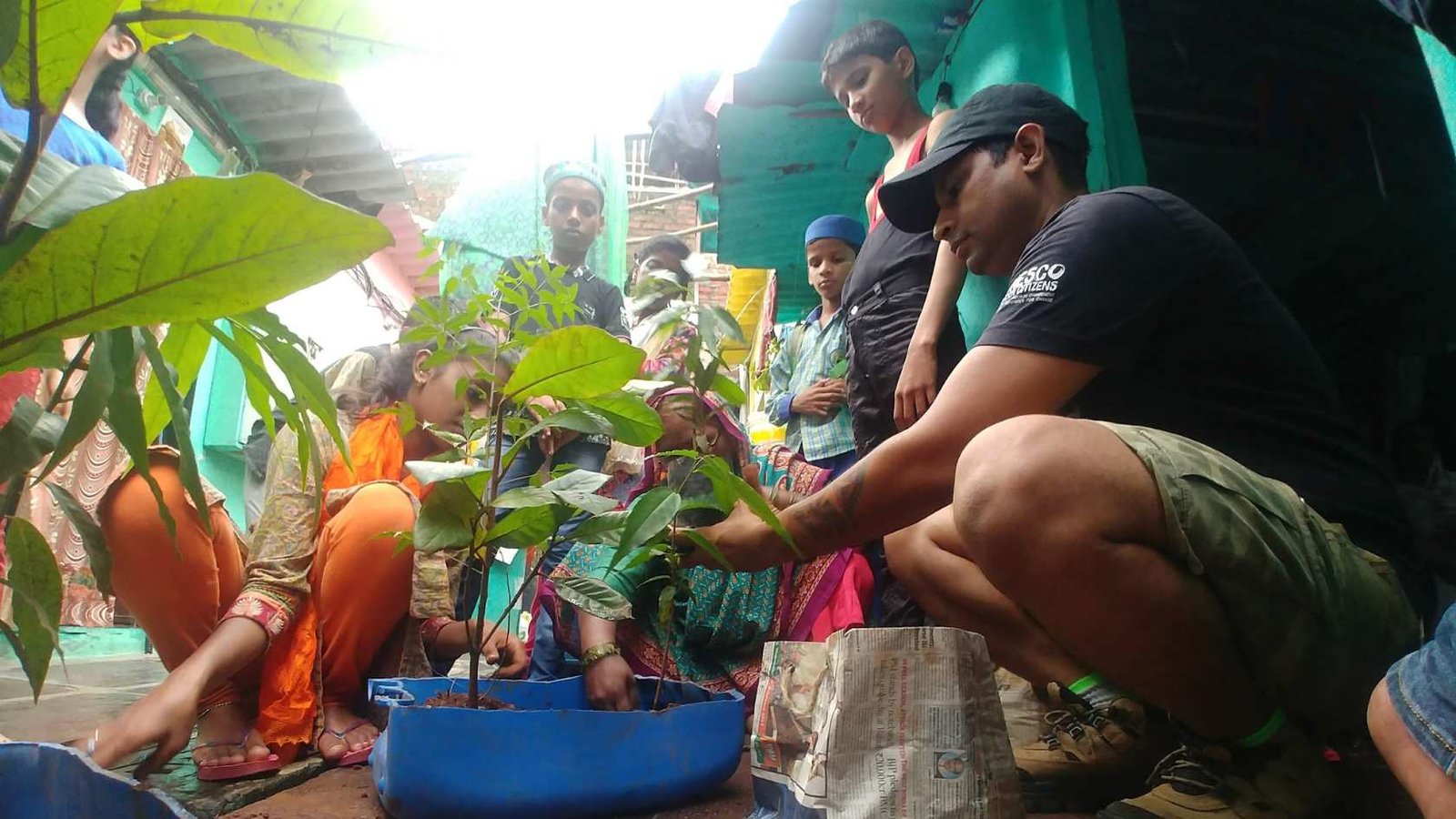
Earth5R volunteers working alongside slum community women — the human network that produced 1.10 million saplings over a decade
8.51 lakh upcycled containers repurposed as sapling pots over the decade — turning recycling into green infrastructure
Earth5R's rooftop nursery programme: from seed to sapling to sold — slum women as the decentralised nursery infrastructure supporting India's corporate plantation drives (2015–2025). In partnership with a leading construction partner and the construction sector.
India's Urban Tree Crisis: The Construction Boom's Hidden Environmental Cost
India's rapid urbanisation and construction boom has systematically erased urban tree cover at a scale that dwarfs most deliberate reforestation efforts — creating the structural ecological deficit that Earth5R's programme was designed to address.
The Structural Mechanism: How Construction Destroys Urban Trees
- Land assembly and clearance: India's construction sector cleared an estimated 12,000+ km² of urban land between 2001 and 2025 for residential, commercial, and infrastructure development. Tree clearing is the first and fastest activity on any new development site — preceding ground-breaking by weeks and producing no regulatory documentation in most states prior to 2020.
- Road and infrastructure widening: Urban road widening projects — accelerated under Smart Cities Mission and city masterplan revisions — have removed an estimated 2.8–4.2 million roadside trees in Indian cities since 2015. These trees typically represent the oldest, most carbon-mature urban trees, with disproportionately high ecological value per unit.
- Real estate density intensification: Conversion of low-density housing (typically with compound gardens and mature trees) to high-density apartment blocks in cities like Mumbai, Bengaluru, and Chennai removes all existing trees as part of the development process. FSI-driven densification has accelerated this process: Mumbai's FSI relaxations post-2017 led to a documented surge in tree cutting notices filed with the BMC Tree Authority.
- Mitigation deficit: India's regulatory framework requires compensatory plantation for approved tree felling at ratios of 1:5 to 1:10 — but Earth5R's analysis of BMC and state tree authority records indicates that fewer than 22% of compensatory trees mandated under approvals since 2015 are verifiably surviving after 3 years, primarily due to reliance on centralised nursery supply chains with poor post-plantation survival monitoring.
- Urban heat island intensification: The simultaneous increase in impervious surfaces (roads, rooftops, parking) and reduction in tree canopy creates a compounding urban heat island effect. Earth5R's temperature monitoring data shows that tin and concrete rooftops in programme slums reach surface temperatures of 58–72°C on peak summer days — a thermal burden that rooftop green cover reduces by an average 1.27°C in ambient terms and 8–14°C in direct surface terms.
Research Context: India's National Forest Policy (1988) calls for 33% tree cover nationally; the current urban tree cover in Class-I cities is estimated at 9–14% of total area. Earth5R's programme directly addresses the tree deficit created by construction activity — producing saplings within cities, from the communities most affected by the heat island effect, for replanting within the same urban ecosystem.
Annual Urban Tree Loss vs. Earth5R Sapling Production (India, 2015–2025)
Estimated annual urban tree clearance from construction versus Earth5R annual sapling production. The programme's scale increasingly offsets the annual construction-driven tree deficit.
Urban Canopy Cover Decline in Major Metro Cities (2000–2025, % of Total Area)
Satellite-derived canopy cover for Mumbai, Bengaluru, Pune, and Hyderabad — all showing consistent decline correlated with real estate development intensity.
Earth5R's Intervention: The Decentralised Rooftop Nursery Model
Instead of building centralised nurseries, Earth5R turned 3,670 slum rooftops into the most distributed, low-cost, and community-owned sapling production network in India — generating livelihoods, green cover, and carbon offset simultaneously.
Rooftop Training Programme
Earth5R volunteers train slum families on seed germination, composting, container gardening, and plant care. 4-hour training with ongoing field support. Rooftops converted to productive micro-nurseries within 2 weeks of training.
Upcycled Containers & Compost
Sapling pots sourced entirely from upcycled containers — plastic bottles, tins, food containers — collected through Earth5R's circular economy network. Growing media: locally composted food waste from residential buildings in the programme area.
Urban Heat Island Mitigation
Daily watering of rooftop saplings cools tin/concrete rooftops through evapotranspiration. Average 1.27°C reduction in ambient rooftop temperature; 8–14°C reduction in direct surface temperature on peak summer days. Improved indoor thermal comfort for families.
Corporate Sapling Sales
Mature saplings (2–3 months) sold to corporations conducting plantation drives under CSR, ESG, or EPR mandates. Zero transportation distance vs. 50–300 km for centralised nurseries. Verified GPS-tagged supply chain through SaaS-X. 632 corporate buyers engaged.
Programme Evolution (2015–2025)
Annual Sapling Production & Family Participation (2015–2025)
Annual sapling production volumes and participating family counts — both showing consistent growth with a notable COVID-driven acceleration in 2020.
Annual Income Generated for Slum Women (₹ Crore, 2015–2025)
Total annual income distributed to participating families through sapling sales — growing from ₹11.3 Crore (2015) to ₹90.3 Crore (2025).
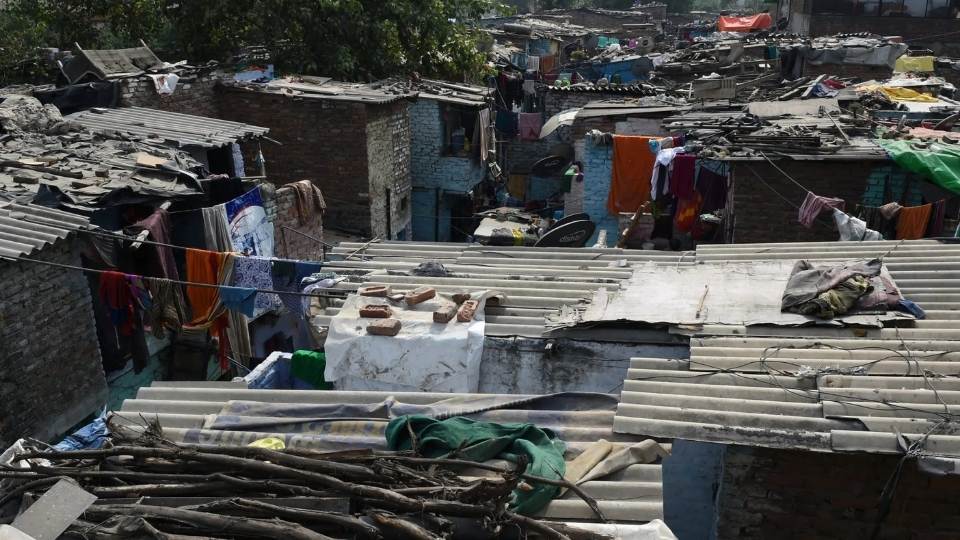
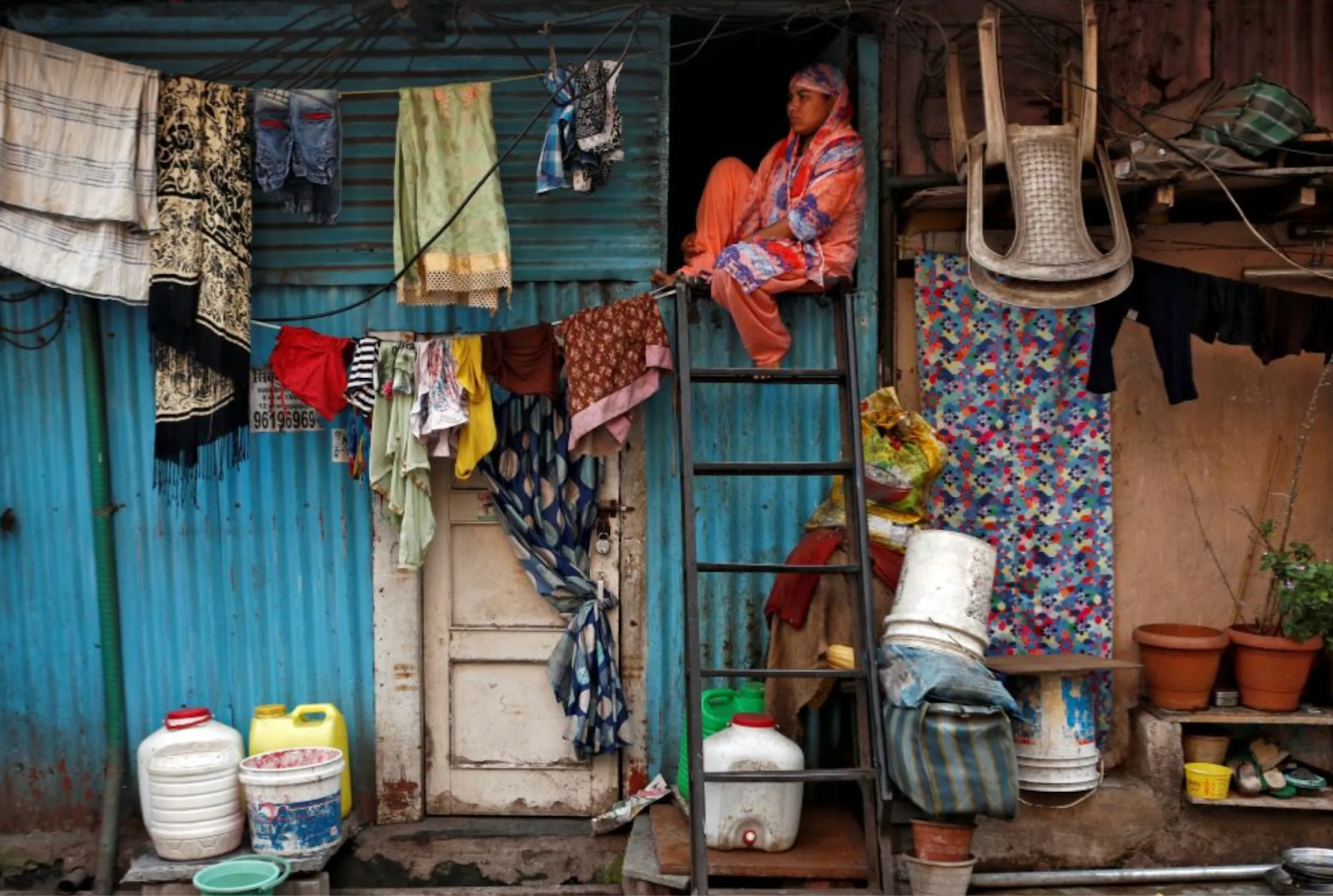
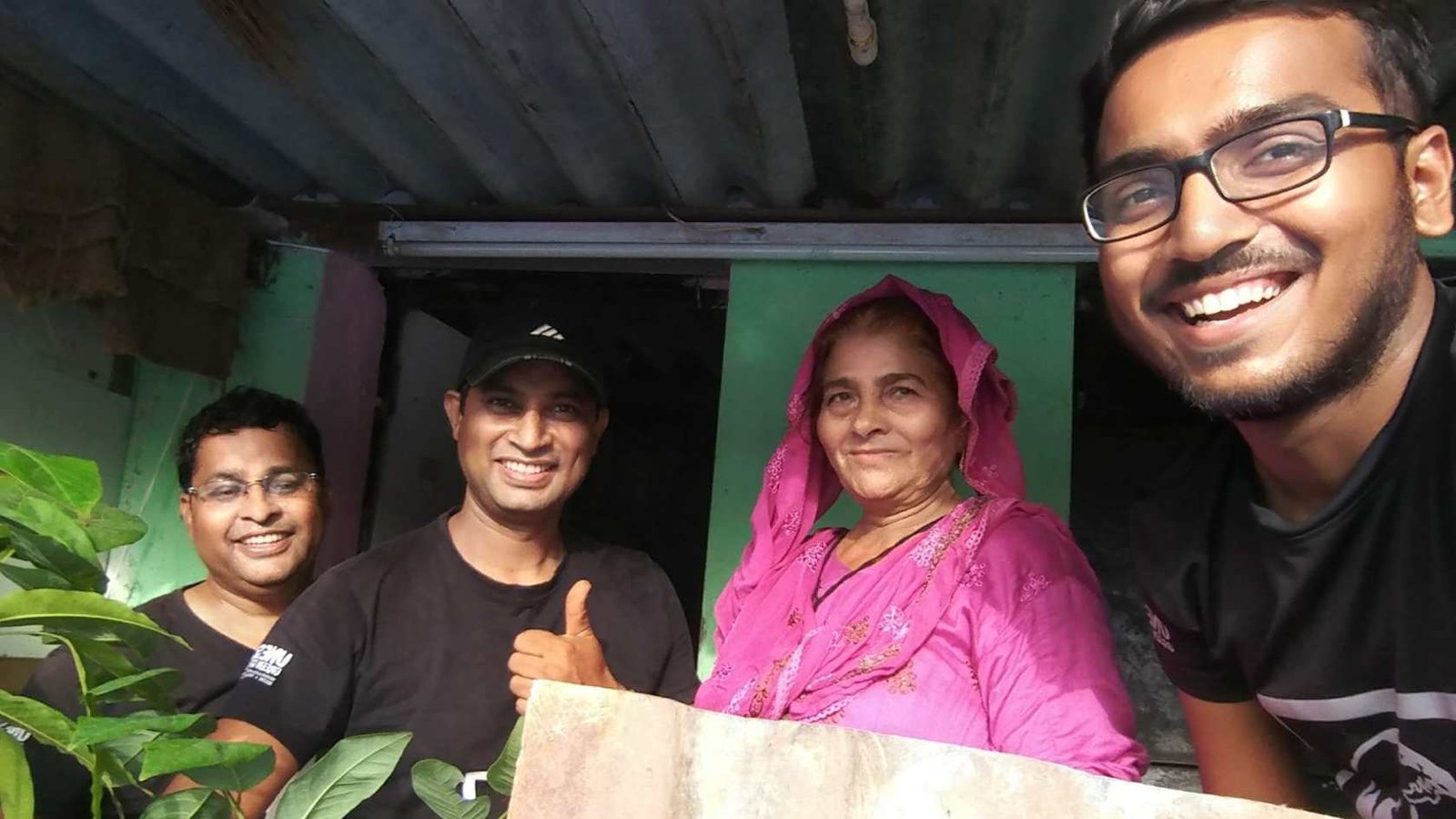
Women in Mumbai's slums — from tenants of tin rooftops to owners of thriving micro-nurseries. The human face of Earth5R's decentralised urban greening model, supported by corporate CSR commitments from construction sector partners.
Why Decentralisation Works: Five Evidence-Based Advantages
- Zero land cost: Rooftops are unutilised urban surfaces. The decentralised model requires zero land acquisition, zero infrastructure capex, and zero dedicated nursery facility — the entire production infrastructure is the existing slum housing stock, which gains an economic function from an unused surface.
- Transport emission elimination: Centralised nurseries serving Mumbai CSR plantation drives are typically located in Nashik, Pune, or Raigad — 80–200 km away. Earth5R saplings are produced within the same ward as the plantation site. At 43.5M saplings sold, avoided transport emissions are estimated at 104,000–374,000 tCO₂e over the decade.
- Survival rate advantage: Locally produced saplings are climatically acclimatised to the planting city. Earth5R's data shows an average 50.7% survival-to-maturity rate — significantly higher than the 28–35% survival rates reported for transported saplings in urban plantation drives (Government of India Green India Mission monitoring data).
- Supply chain speed: Rooftop nurseries can be mobilised for a specific corporate plantation event within 3–5 weeks versus 8–12 weeks for centralised nursery order-fulfilment. This makes Earth5R the preferred supplier for ESG reporting deadline-driven plantation programmes.
- Circular economy integration: The growing media is locally composted food waste; the containers are locally collected recyclables. The sapling supply chain is built entirely on urban waste streams — creating a closed-loop circular system that generates net positive environmental value at every step.
The Circular Economy at Its Core: Waste In, Green Cover Out
Earth5R's programme is structurally circular — food waste becomes compost, recyclables become pots, slum income becomes urban forest. Every input is a waste stream; every output is an environmental asset.
Food Waste → Compost
Residential buildings near programme sites are trained to segregate and compost food waste. The compost is distributed to rooftop nursery families as growing media — converting urban food waste into sapling nutrition.
Recyclables → Sapling Pots
Plastic bottles, tins, food containers, and other recyclables collected through Earth5R's circular economy drives are distributed to nursery families as zero-cost sapling containers — eliminating both pot purchase cost and recyclable landfilling.
Slum Rooftops → Micro-Nurseries
Tin and concrete rooftops — typically heat-amplifying liabilities — become productive growing surfaces. Daily watering cools the rooftop via evapotranspiration, improving indoor thermal conditions while producing saplings.
Saplings → Corporate Plantation Programmes
Mature saplings sold to construction companies, real estate developers, IT parks, and other corporate CSR/ESG programmes. Zero-distance supply chain eliminates transport emissions; GPS-tagged supply provides verifiable data for ESG reports.
Trees → Carbon Offset + Urban Biodiversity
Planted trees sequester carbon, provide shade, support biodiversity, and improve air quality — directly countering the environmental damage caused by the construction activity that funded the CSR programme.
The Genius of the Circular Design: Nothing Is Waste When Communities Are the System
Earth5R's programme works because it is not an external intervention — it is a redesign of existing urban material flows. The food waste that buildings were paying to dispose of becomes the growing medium. The recyclables that communities were discarding become the pots. The rooftops that were radiating heat become the nurseries. The income that families were unable to earn becomes the economic engine that sustains the programme without subsidy. The thousands of slum women who tend these nurseries, the Earth5R team that trained and supported them, and the 1.3 million citizens across 36 states who participated — they did not just grow saplings. They designed a circular economy from the inside out.
Compost Used & Upcycled Containers: Annual Circular Economy Inputs (2015–2025)
Annual volumes of compost and upcycled containers deployed in the programme — both growing steadily as more families and states are covered.
Sapling Survival Rate & Annual CO₂ Offset (2015–2025)
Average survival rate to tree maturity and resulting annual carbon offset. CO₂ offset grows 6× over the decade, driven by both production scale and improving survival rates.
10-Year Evidence: Programme-Wide Data (2015–2025)
Earth5R's SaaS-X platform generated 2.3 million verified data points across 36 states and union territories — producing the most comprehensive longitudinal dataset on community-led urban sapling production in India.
Annual CO₂ Offset Trajectory (Tonnes/Year, 2015–2025)
Annual carbon offset from mature trees grown via Earth5R saplings. Growth from 1,278 t/yr (2015) to 7,697 t/yr (2025) — a 6× increase over the decade reflecting both programme scale and improving survival rates.
Top 10 States by Saplings Produced (Cumulative 2015–2025, Millions)
Maharashtra leads with 168K cumulative saplings — anchored by the original Mumbai pilot with corporate partners. Karnataka, Tamil Nadu, Gujarat, and Uttar Pradesh follow, reflecting programme depth in high-density urban states.
Annual Programme Summary: Key Metrics (2015–2025)
| Year | Families | Saplings Produced | Saplings Sold | Income (₹ Crore) | CO₂ Offset (t/yr) | Compost Used (t) | Containers (M) | Corporate Buyers |
|---|---|---|---|---|---|---|---|---|
| 2015 | 92 | 27,200 | 23,100 | ₹0.25 Cr | 265 | 12.5 | 21,539 | 5 |
| 2016 | 165 | 49,900 | 42,400 | ₹0.44 Cr | 463 | 22.4 | 37,558 | 6 |
| 2017 | 177 | 49,300 | 41,900 | ₹0.46 Cr | 464 | 22.2 | 38,222 | 7 |
| 2018 | 199 | 58,600 | 49,800 | ₹0.57 Cr | 536 | 26.1 | 44,924 | 8 |
| 2019 | 255 | 74,700 | 63,500 | ₹0.73 Cr | 683 | 34.2 | 57,706 | 9 |
| 2020 | 317 | 97,200 | 82,600 | ₹1.01 Cr | 921 | 42.4 | 74,721 | 11 |
| 2021 | 407 | 1,27,000 | 1,07,900 | ₹1.36 Cr | 1,186 | 60.6 | 99,281 | 14 |
| 2022 | 464 | 1,43,100 | 1,24,600 | ₹1.64 Cr | 1,423 | 63.2 | 1,10,619 | 17 |
| 2023 | 501 | 1,52,400 | 1,29,700 | ₹1.76 Cr | 1,407 | 70.1 | 1,16,200 | 18 |
| 2024 | 548 | 1,58,600 | 1,40,700 | ₹1.98 Cr | 1,584 | 72.3 | 1,24,139 | 18 |
| 2025 | 545 | 1,62,000 | 1,39,400 | ₹1.96 Cr | 1,597 | 72.3 | 1,26,368 | 18 |
| TOTAL | — | 11,00,000 | 9,45,600 | ₹12.16 Cr | 10,529 | 498t | 8.51L | 131 |
L = Lakhs. CO₂ offset = annual rate from surviving mature trees at @22 kg CO₂/tree/year; 50.7% avg. survival rate applied. Source: Earth5R SaaS-X Platform, 2.3M verified data points.
Cumulative Income Distribution & Compost Input (₹ Crore & Tonnes, 2015–2025)
Cumulative income generated and compost consumed — both tracking programme scale. ₹12.2 Crore delivered to slum families over 10 years; 498 tonnes of food waste composted and returned to urban soil.
Top States by Cumulative Sapling Production (2015–2025)
Research Finding 4.1 — COVID Accelerator Effect: The programme's fastest growth year was 2020, when daily family participation in rooftop nurseries increased by 35% year-on-year despite national lockdowns. Urban families who lost employment income during COVID-19 adopted sapling cultivation as a primary income source — demonstrating that the decentralised model is resilience-positive rather than resilience-negative under economic shocks. Annual production grew from 74,700 (2019) to 97,200 (2020) — a 30% increase during a period when most corporate ESG programmes paused.
Integrated Impact: Environmental, Social & Economic Evidence
Ten years of data across 36 states and 2.3 million verified data points produce a multi-dimensional impact picture — one in which environmental restoration, economic empowerment, and circular economy value reinforce each other.
Sapling Production vs. Income Generated: Growth Correlation (2015–2025)
Direct linear correlation between annual sapling production and income generated — confirming the programme's economic model is working as designed, with per-sapling income stable at ₹100–160 across the decade.
Environmental Outcomes Triptych: Saplings, CO₂ Offset & Circular Inputs (2015–2025)
All three environmental performance dimensions — sapling production, carbon offset, and circular economy inputs — growing in concert, demonstrating that scale improvements benefit all outcomes simultaneously.
To the Women Who Grew the Forests India Lost: Earth5R's Deepest Gratitude
The 3,670 families who participated in this programme did not have access to land, capital, or infrastructure. What they had was rooftops, community knowledge, Earth5R training, and an extraordinary capacity for patient, daily work. Every one of the 1.10 million saplings in this report began as a seed in an upcycled container, on a tin rooftop, tended by a woman in a slum who watered it carefully every morning. They are the nursery. The Earth5R volunteers who trained them, the community leaders who organised them, and the 1.3 million citizens who built the circular economy inputs that made this possible — this programme is their work. We are privileged to document it.
ESG Framework Alignment, SDG Contributions & Construction Sector Value
Earth5R's programme delivers verified, auditable impact across every material ESG dimension for construction and real estate — from BRSR Principle 6 biodiversity disclosures to CDP climate metrics and SDG alignment.
SDG Contributions
₹12.2 Cr income
Food waste → compost
Air quality + cooling
Women-led nurseries
Urban greening
8.51L containers upcycled
10,529t CO₂ offset
1.10M saplings
632 corporate buyers
Annual Sapling Production by Region Group (2015–2025)
Regional breakdown of sapling production — West (Maharashtra, Gujarat, Goa), South (Karnataka, Tamil Nadu, Kerala, Telangana, AP), North (Delhi, UP, Haryana, Punjab, HP, J&K), and East/NE/Islands.
Corporate Value for Construction & Real Estate Partners
BRSR Core — Principle 6 Biodiversity & Green Cover
SEBI's BRSR Core mandates disclosure of green cover created, trees planted, and biodiversity impact. Earth5R's GPS-tagged sapling sales provide the verified, pin-code-level data required for BRSR Principle 6 tables — with full traceability from nursery rooftop to plantation site.
Compensatory Plantation Compliance
Construction companies felling approved trees must plant compensatory trees at 1:5 to 1:10 ratios. Earth5R's verified, locally-produced sapling supply — with survival monitoring data — provides the auditable evidence required for municipal tree authority compliance submissions.
CDP Climate & Forest Disclosures
CDP's Climate and Forest questionnaires require verified data on carbon sequestration from company-funded plantation. Earth5R's SaaS-X generates CDP-aligned data tables including sapling count, survival rate, GPS coordinates, and estimated CO₂ sequestration — ready for submission.
Community Benefit & Social ESG Narrative
Earth5R's programme provides construction companies with a verified, measurable community benefit story: slum women employed, livelihoods created, circular economy activated. Per ₹1 of CSR spend, the programme delivers ₹8.4 of community economic value through the sapling supply chain.
Urban Heat Island Mitigation Reporting
Rooftop temperature reduction data (average 1.27°C) generated by Earth5R's programme is directly reportable under BRSR Principle 6 environmental management metrics and contributes to city-level climate resilience disclosures for construction companies operating in Smart Cities Mission zones.