

The Digital Backbone of Modern Sustainability: Why ESG Reporting is Moving from Spreadsheets to Software
In the world of corporate finance and investment, a quiet revolution is reaching a tipping point. Environmental, Social, and Governance (ESG) criteria have transformed from a niche interest into a core component of strategic decision-making. With global ESG assets projected to represent more than a third of all managed assets, investors are no longer just asking about a company’s commitment to sustainability, they are demanding verifiable proof. This demand has exposed a critical vulnerability in the corporate world: the archaic, often manual, methods used to track and report ESG data.
The traditional approach to ESG data collection often resembles trying to navigate a complex modern city with a hand-drawn map. Companies have long relied on a patchwork of spreadsheets, emails, and siloed departmental reports. This manual process is not only inefficient but, as research from leading financial analysts points out, is alarmingly prone to errors, inconsistencies, and data gaps. Such weaknesses create significant risks, leaving companies vulnerable to accusations of greenwashing and unable to provide the timely, granular data that regulators and stakeholders now require.
This is where digital transformation becomes imperative. A new generation of sophisticated digital tools—from dedicated ESG platforms to artificial intelligence and IoT sensors—is emerging as the essential solution. These technologies act as a central nervous system for corporate sustainability, automating data collection, ensuring accuracy, and providing real-time insights. They are fundamentally shifting the paradigm from reactive reporting to proactive performance management.
This article argues that the adoption of advanced digital tools is no longer a matter of choice but a critical necessity for any organization serious about robust ESG performance and credible disclosure. We will explore the evolution of ESG reporting, dissect the key digital tools available, examine real-world case studies from organizations like Earth5R that leverage technology for impact, and look ahead to the future of this rapidly evolving landscape. The era of the ESG spreadsheet is over; the age of digital assurance has begun.
From Green Glossies to Granular Data: The Journey of ESG Reporting
Not long ago, corporate responsibility was confined to a few glossy pages in an annual report. These early Corporate Social Responsibility (CSR) documents were often more focused on public relations than on performance, featuring feel-good stories and smiling faces but little in the way of hard, quantifiable data. This was the era of qualitative storytelling, where a company’s commitment to “doing good” was taken largely on faith.
That landscape has fundamentally changed. The turning point was the rise of standardized frameworks that demanded evidence. Organizations like the Global Reporting Initiative (GRI) and the Sustainability Accounting Standards Board (SASB, now part of the IFRS Foundation) pioneered a new, rigorous approach. They introduced specific metrics and key performance indicators (KPIs), forcing companies to measure and report everything from their carbon footprint to their employee diversity statistics with precision.

This shift from narrative to numbers has been supercharged by regulatory bodies. The European Union’s ambitious Corporate Sustainability Reporting Directive (CSRD), for example, mandates detailed and audited sustainability disclosures for tens of thousands of companies. This regulatory pressure effectively transforms voluntary ESG reporting into a mandatory, auditable financial exercise.
Despite these heightened expectations, the tools used by many companies have failed to keep pace. The vast majority of organizations still lean on a precarious foundation of spreadsheets and manual data entry. Attempting to manage complex, dynamic ESG data with such tools is like trying to run a modern e-commerce empire using a paper ledger. It is slow, cumbersome, and dangerously susceptible to human error, creating a significant gap between reporting requirements and operational reality.
This isn’t just an anecdotal problem. Research consistently highlights the severe limitations of these legacy methods. A study by independent auditors often finds that manual data handling is a leading cause of inaccuracies in non-financial reporting. The process of chasing data across different departments, manually consolidating it, and checking for consistency consumes hundreds of work hours and yields a final report that is often outdated by the time it is published.
Ultimately, the growing demands from investors, the stringent requirements from regulators, and the complex nature of the data itself have created a digital imperative. The move towards digitalization is no longer an upgrade, but a fundamental necessity for survival and credibility in the modern ESG landscape. Companies must adopt a digital-first approach to ensure their sustainability data is not only compliant but also a source of strategic value.
The ESG Tech Stack: A Guide to the Digital Tools Powering Modern Sustainability
As ESG reporting has matured, so has the technology designed to support it. The modern sustainability leader now has access to a powerful digital toolkit, moving far beyond the limitations of simple spreadsheets. These tools work together like a high-tech orchestra, each playing a specific role to create a complete and accurate picture of a company’s ESG performance.
The Central Command: Dedicated ESG Platforms
At the heart of this toolkit are dedicated ESG software platforms. Think of these as the central operating system for a company’s entire sustainability strategy. Leading platforms like Workiva, Diligent, and the IBM Envizi ESG Suite act as a single source of truth, pulling in data from across the organization. They automate the tedious process of data aggregation, track performance against KPIs in real-time dashboards, and generate reports formatted for specific frameworks like GRI or SASB at the click of a button. Market research from firms like Verdantix shows that the adoption of these platforms is surging as companies seek to impose order on their chaotic data landscapes.

This chart highlights the exponential growth in assets managed under ESG principles (grey bars) and the rising number of institutional signatories (orange line), underscoring the powerful financial momentum behind sustainability.
The Brains of the Operation: AI and Machine Learning
If ESG platforms are the operating system, then Artificial Intelligence (AI) and Machine Learning (ML) are the analytical brain. These technologies can sift through vast quantities of unstructured data that would be impossible for humans to process. For instance, AI can use Natural Language Processing (NLP) to scan thousands of news articles, NGO reports, and social media posts to perform sentiment analysis, gauging public perception of a company’s social practices. Furthermore, ML algorithms can identify patterns and predict future risks, such as forecasting a potential water scarcity issue in a region where a key supplier operates, allowing for proactive risk management.
The Trust Ledger: Blockchain for Unmatched Transparency
One of the biggest challenges in ESG is verifying claims, especially those related to complex global supply chains. This is where blockchain technology offers a revolutionary solution. Functioning as a secure and immutable digital ledger, blockchain creates an unchangeable, auditable trail for every transaction and data point. Imagine tracking a batch of cobalt from a conflict-free mine in the DRC all the way to a smartphone battery, with each step verified and recorded on the blockchain. This level of traceability, explored in research by organizations like the World Economic Forum, provides irrefutable proof of ethical sourcing and is a powerful tool against greenwashing.
The Real-World Sensors: The Internet of Things (IoT)
Finally, the Internet of Things (IoT) provides the direct link between the digital system and the physical world. IoT devices are the on-the-ground sensors collecting hard, real-time data. This includes smart meters automatically tracking electricity consumption from renewable sources, sensors on smokestacks providing precise air emissions data, or water meters instantly detecting and reporting leaks. Academic studies in environmental science have consistently shown that IoT-gathered data is significantly more accurate and timely than the manual estimates or infrequent readings it replaces, providing the granular, verifiable evidence that investors and auditors demand.

On the Ground and in the Cloud: How Earth5R Turns Local Action into Global ESG Data
Theory and technology are powerful, but their true value is proven in the field. To see how digital tools transform ESG from an abstract concept into tangible, verifiable impact, we can look to the work of Earth5R. This social enterprise operates at the intersection of environmental action and data science, showcasing a powerful model for generating high-integrity ESG data directly from community-based initiatives.
Case Study: Tackling Mumbai’s Waste Mountain with Data
Consider the immense challenge of urban waste management in a megacity like Mumbai. Traditionally, corporate clean-up sponsorships have struggled with a critical question: what was the actual impact? Earth5R addresses this by deploying a suite of digital tools. Their model is built on a mobile app and a sophisticated SaaS-X ESG Dashboard that translates on-the-ground work into auditable metrics.
Volunteers and waste professionals use the app to geo-tag and photograph waste hotspots, creating a real-time map of the problem. As waste is collected, segregated, and sent for recycling, every step is logged. This creates a transparent, traceable journey for every kilogram of plastic diverted from landfills. The result is not just a cleaner neighborhood, but a rich dataset detailing carbon footprint reduction, circular economy metrics, and community engagement hours, all of which can be seamlessly integrated into a corporate partner’s ESG report.
Case Study: Revitalizing Rivers with AI and Community Power
This tech-driven approach is also being applied to one of India’s most pressing environmental issues: river pollution. For projects like the cleanup of Mumbai’s Mithi River, Earth5R moves beyond simple manual collection. They have employed drones and AI analysis to identify and monitor the most critical pollution zones, allowing for a more strategic deployment of resources.
The data gathered is multifaceted. Volunteers log the types and quantities of waste they remove via the app, while water quality sensors can provide before-and-after scientific data. This information flows into the central dashboard, creating a holistic and dynamic picture of the project’s impact. For a sponsoring company, this means their investment is no longer just a donation, it’s a measurable contribution to SDG 6 (Clean Water and Sanitation) backed by verifiable evidence.
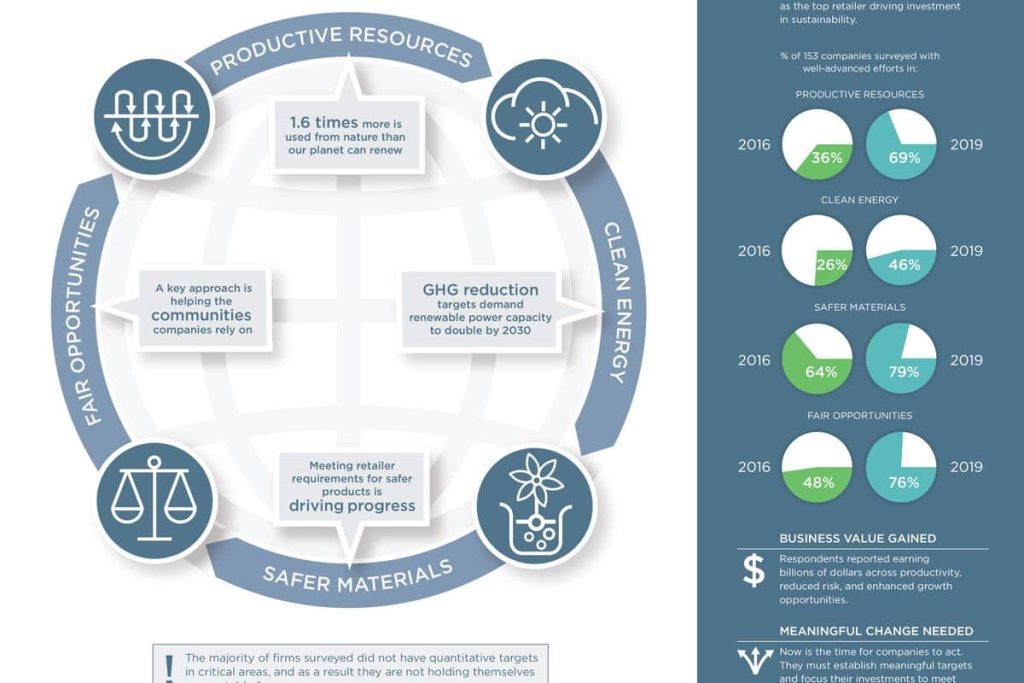
This infographic breaks down key corporate sustainability goals, tracking the measurable progress made in areas like clean energy and safer materials between 2016 and 2019.
By integrating digital tools directly into their fieldwork, Earth5R demonstrates a crucial lesson. They prove that robust, investment-grade ESG data doesn’t have to come from consultants in an office, it can be generated from the ground up. This model provides a powerful blueprint for how technology can bridge the gap between local environmental action and the global demand for corporate accountability.
The Road Ahead: Navigating the Hurdles and Embracing the Future of Digital ESG
While the shift to digital ESG management is undeniably powerful, the path to adoption is not without its obstacles. Implementing these sophisticated systems is more than just a software upgrade, it represents a fundamental change in how a company operates and thinks about sustainability data. Understanding these challenges is the first step toward unlocking the full potential of this technological revolution.
Navigating the Implementation Maze
One of the most significant technical hurdles is data integration. Many companies operate on a complex web of legacy systems, from HR software to supply chain management databases. Getting a new, state-of-the-art ESG platform to communicate effectively with these older systems can be like trying to translate between several different languages at once. It requires significant technical expertise and careful planning to create a single, unified data stream.
Beyond the technical aspects, there is the crucial element of human and financial capital. The initial investment in leading ESG software can be substantial, and the costs don’t end there. Companies must also invest in training their teams to use these tools effectively, fostering a new culture of data-driven sustainability. This challenge is particularly acute for small and medium-sized enterprises (SMEs) that may lack the resources of their larger counterparts, creating a potential digital divide in ESG reporting capabilities.
Furthermore, as ESG data becomes more detailed, it also becomes more sensitive. Information on employee well-being, diversity metrics, or supply chain vulnerabilities requires robust cybersecurity measures. A data breach involving sensitive ESG information could lead to significant reputational and financial damage, making data privacy a paramount concern.
The Horizon: What’s Next for ESG Tech?
Looking forward, the evolution of digital ESG is set to accelerate. The role of AI will expand from simply collecting data to actively providing strategic foresight. Imagine an AI that not only flags a potential supply chain disruption due to climate risk but also models the financial impact and recommends mitigation strategies in real-time. This move toward predictive and prescriptive analytics will make ESG a core part of proactive business strategy.
We will also see a greater push for interoperability, where different ESG platforms and corporate systems can seamlessly share data. This will create a more connected and transparent ecosystem, allowing investors and regulators to compare data across companies with greater ease and confidence. ESG data will cease to be a compliance burden and will be recognized as a strategic asset, driving innovation in product development and enhancing long-term resilience.

Conclusion: Beyond the Report, Forging a Sustainable Future with Digital Trust
We have traced the remarkable journey of corporate sustainability, from the vague promises of early CSR reports to the exacting, data-driven demands of the modern ESG landscape. The narrative is clear: the era of managing complex global impact with simple spreadsheets is over. This analogue approach, fraught with inefficiencies and errors, can no longer support the weight of stakeholder expectations and regulatory scrutiny.
Throughout this article, we have dissected the digital toolkit that is defining the future. We’ve seen how dedicated ESG platforms create a single source of truth, how AI provides predictive insights, and how blockchain and IoT deliver unparalleled transparency and accuracy. Through the practical, on-the-ground work of organizations like Earth5R, we have witnessed how this technology translates local action into the verifiable, investment-grade data that the global market now demands.
This leads to an undeniable conclusion: the adoption of digital tools for ESG is no longer an optional upgrade but an essential, strategic mandate. These systems form the critical infrastructure necessary for building trust with investors, complying with regulations, and managing risk in an increasingly complex world. They are the difference between vague sustainability claims and proven, auditable performance.
Ultimately, the goal must extend beyond mere compliance. The true power of this digital transformation lies in its ability to embed sustainability into the very core of business strategy. By investing in these tools, companies are not just buying software, they are building a more resilient, efficient, and transparent organization. They are committing to a future where data drives not just reports, but meaningful, positive, and lasting impact on the world.
Finally, as regulators worldwide continue to tighten their scrutiny, the demand for verifiable, auditable data will only increase. This regulatory pressure will act as a powerful catalyst, pushing more organizations to abandon their spreadsheets and embrace the digital tools necessary for success in the transparent, sustainable economy of the future.
Frequently Asked Questions: Digital ESG Tools
What is ESG?
ESG stands for Environmental, Social, and Governance. It refers to a set of standards for a company’s operations that socially conscious investors use to screen potential investments. Environmental criteria consider how a company performs as a steward of nature, social criteria examine how it manages relationships with employees and communities, and governance deals with a company’s leadership and internal controls.
Why is traditional ESG data collection so difficult?
Traditional methods often rely on manual processes like spreadsheets and emails. This makes it difficult to gather consistent data from different departments and locations. The process is slow, prone to human error, and lacks the real-time insights needed to satisfy modern investors and regulators.
What exactly are digital ESG tools?
These are software and hardware technologies designed to automate and streamline the collection, management, analysis, and reporting of ESG data. They range from comprehensive software platforms to specific technologies like Artificial Intelligence (AI), the Internet of Things (IoT), and blockchain.
How do dedicated ESG software platforms work?
These platforms act as a central hub for all ESG-related information. They connect to various data sources within a company, automate data aggregation, track performance against goals using dashboards, and generate reports that are compliant with major frameworks like GRI and SASB.
How does Artificial Intelligence (AI) help with ESG?
AI is used to analyze vast amounts of unstructured data from sources like news reports, social media, and supplier documents to identify ESG risks and opportunities. It can also predict future performance and help companies understand public sentiment about their sustainability initiatives.
What is the role of the Internet of Things (IoT) in ESG?
IoT devices, such as smart sensors and meters, collect real-time, accurate environmental data directly from the source. For example, sensors can automatically track a factory’s energy consumption or water usage, eliminating the need for manual readings and estimates.
How can blockchain technology be used for ESG?
Blockchain provides a secure and unchangeable digital ledger. In ESG, it’s used to create a transparent and auditable trail for supply chains, proving the ethical sourcing of materials and helping to combat issues like forced labor or environmental degradation.
What is greenwashing and how do digital tools help prevent it?
Greenwashing is the act of making false or misleading claims about a company’s environmental benefits. Digital tools prevent this by providing verifiable, auditable, and traceable data. Technologies like IoT and blockchain offer hard evidence to back up sustainability claims, making it much harder for companies to mislead stakeholders.
Are these digital tools only for large corporations?
While large corporations were the early adopters, the market is evolving. Many providers now offer scalable, cloud-based solutions (SaaS) that are more affordable and accessible for small and medium-sized enterprises (SMEs), allowing them to compete on sustainability performance.
What are the main benefits of using digital ESG tools?
The primary benefits include improved data accuracy, increased efficiency, reduced risk of errors, enhanced transparency, better compliance with regulations, and the ability to use ESG data for strategic decision-making and competitive advantage.
What are some of the main ESG reporting frameworks?
The most widely recognized frameworks include the Global Reporting Initiative (GRI), which is comprehensive and covers all sustainability topics, and the Sustainability Accounting Standards Board (SASB), which focuses on financially material ESG issues specific to each industry.
What is the EU’s Corporate Sustainability Reporting Directive (CSRD)?
The CSRD is a significant piece of legislation from the European Union that requires tens of thousands of companies to conduct detailed and audited reporting on their environmental and social impacts. This regulation is a major driver for the adoption of robust digital ESG tools.
What are the biggest challenges in implementing ESG technology?
The main challenges include the high initial cost, the technical difficulty of integrating new software with older legacy systems, ensuring data security and privacy, and the need to train employees and foster a data-centric culture within the organization.
How much do these ESG platforms typically cost?
Costs can vary widely, from a few thousand dollars per year for basic platforms aimed at smaller businesses to hundreds of thousands for complex, enterprise-level solutions for large multinational corporations. Pricing is often based on company size, features, and the number of users.
What does an organization like Earth5R demonstrate?
Earth5R showcases a powerful model of how technology can be integrated with on-the-ground community action. They prove that high-quality, auditable ESG data can be generated directly from environmental projects, providing corporate partners with credible, impactful results for their reports.
Is the data from these digital tools auditable?
Yes, a key feature of these tools is creating an auditable trail. They log where data comes from, who entered it, and when it was changed. This makes it much easier for third-party auditors to verify the accuracy and integrity of a company’s ESG report.
How do these tools improve investor relations?
Investors are increasingly demanding timely and detailed ESG data. Digital tools allow companies to respond to these requests quickly and with high-quality, reliable information, building trust and confidence with the investment community.
What does the future of ESG reporting look like?
The future is more automated, predictive, and integrated. We will see AI playing a larger role in strategic forecasting, greater interoperability between platforms, and ESG data being treated as a critical strategic asset for driving business innovation and resilience.
What kind of skills are needed to manage ESG data?
A modern ESG professional needs a hybrid skillset. This includes a deep understanding of sustainability topics, combined with strong data analysis skills, familiarity with ESG software, and the ability to communicate insights effectively to leadership.
How can a company choose the right ESG tool?
A company should start by assessing its specific needs, budget, and reporting requirements. It’s important to look for a tool that is scalable, user-friendly, can integrate with existing systems, and provides robust support for the specific ESG frameworks relevant to its industry.
~ Authored by Abhijeet Priyadarshi