
ESG & CSR for Food, Restaurant & Hotel Industry
Composting Awareness Program by Earth5R
A multi-region programme training 506 food establishments — restaurants, cafés, beach shacks, and hotels — in decentralized composting, waste segregation, and packaging recycling across Ibiza, Malta, Goa, Chennai, and Ratnagiri. 1,884 tonnes of organic waste diverted from landfill annually; 4,708 tonnes CO₂e emissions prevented.
Research & Data Intelligence
Earth5R Forensic Sustainability Operating System (SaaS-X) | Food & Hospitality Sector Initiative Report Ref: Earth5R-FH-2025-012 | 5 Regions · 506 Establishments | Published 2026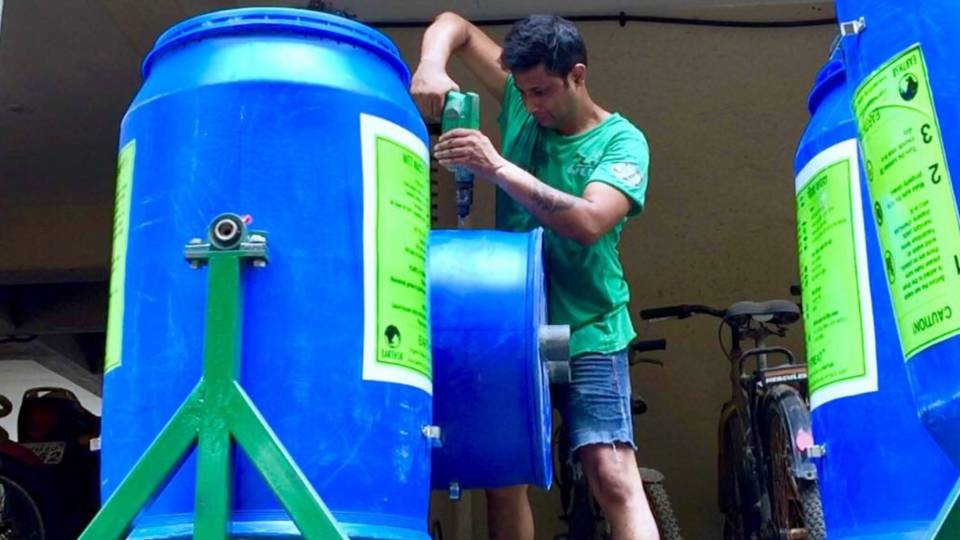
Built on the work of Earth5R volunteers, sustainability trainers, restaurant owners, kitchen staff, and hospitality partners across 5 regions — every kilogram of food waste composted, every plastic bottle segregated, every methane tonne prevented is a measurable step toward circular waste management in the global food industry.
This case study documents Earth5R's Food Industry Waste Management and Composting Awareness Programme — a multi-region initiative targeting restaurants, cafés, beach shacks, hotels, and food stalls across five tourism and hospitality hubs: Ibiza Island (Spain), Malta Island, Goa, Chennai, and Ratnagiri (Maharashtra). The programme trains food establishments to segregate organic waste from plastic packaging, implement decentralized composting systems on-site, and recover recyclable packaging materials that would otherwise be lost to landfill contamination.
The global food service sector accounts for approximately 12% of total food waste generated worldwide (UNEP). Restaurants operating under tight schedules rarely prioritise waste segregation, resulting in mixed organic and plastic waste streams transported directly to landfill — where organic decomposition generates methane, a greenhouse gas with significantly higher warming potential than CO₂. Earth5R addresses this through practical training workshops, live composting demonstrations, composting toolkit distribution, and digital monitoring via the Earth5R app.
Programme outcomes: 506 food establishments trained across 5 regions, 5.16 tonnes of organic waste diverted daily from landfill, 1,884 tonnes composted annually, and an estimated 4,708 tonnes of CO₂-equivalent emissions prevented per year. Packaging waste recovery rates improved significantly through source-segregation systems for PET bottles, plastic containers, multilayer packaging, and glass.
Cite as: Earth5R Research Division. (2026). ESG & CSR for Food, Restaurant & Hotel Industry: Composting Awareness Program. Report No. FH-2025-012.
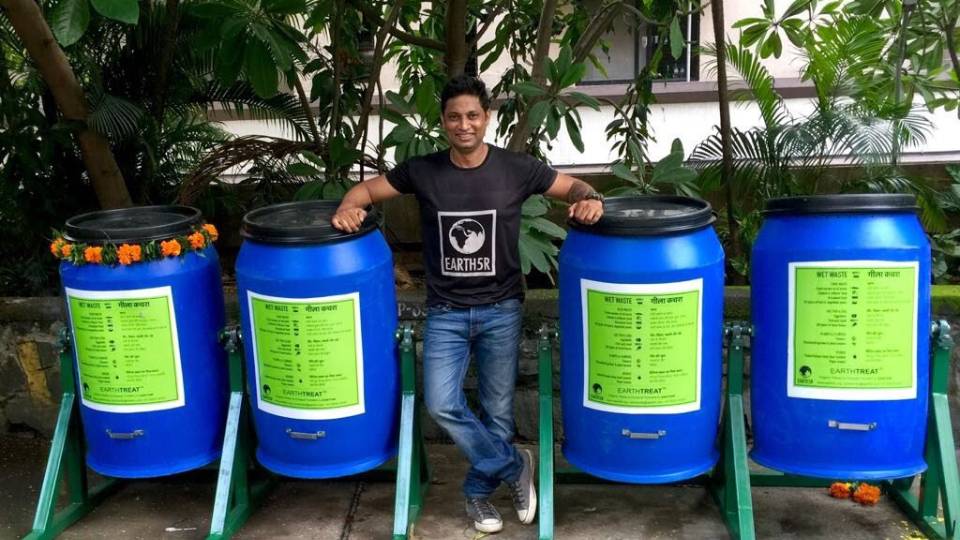
Hands-on composting training at a food establishment — Earth5R trainers demonstrating waste segregation and microbial composting techniques
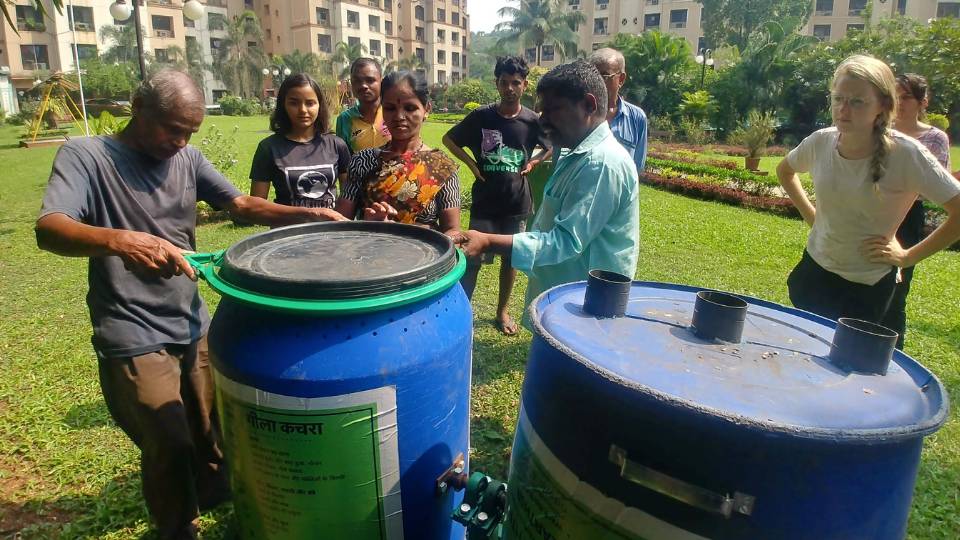
Waste segregation training — restaurant staff learning to separate organic waste from plastic packaging, glass, and multilayer materials at source
Earth5R's composting and waste management programme operates across restaurants, cafés, beach shacks, and hotels — training 506 establishments in decentralized waste systems across Ibiza, Malta, Goa, Chennai, and Ratnagiri.
Food Industry Waste: High Volume, Low Segregation, Direct to Landfill
Restaurants, hotels, and food stalls generate predictable, high-volume waste streams — organic food waste mixed with plastic packaging, glass, and multilayer materials. When mixed and sent to landfill, organic waste decomposes anaerobically and produces methane, while recyclable plastics are contaminated and lost.
Four Structural Barriers in Food Industry Waste Management
- Misconception that composting requires large infrastructure: Most restaurant owners assume composting demands large land areas, expensive machinery, or complex technical systems. Decentralized composting can operate within small spaces — backyards, storage areas, rooftops — using microbial cultures and simple layering techniques. This knowledge gap prevents adoption even among environmentally conscious businesses.
- Odour and hygiene concerns: Fear that composting systems produce unpleasant odours or attract pests is one of the most common reasons food businesses avoid on-site composting. Properly managed systems using microbial cultures and balanced carbon materials operate without odour — but without training and demonstration, this remains an untested assumption for most operators.
- Organic-plastic mixing at source: Restaurants generate large quantities of plastic waste from beverage bottles, takeaway packaging, multilayer wrappers, and disposable utensils. When mixed with organic food waste, the entire stream becomes contaminated — recyclable plastics are lost and organic waste cannot be composted cleanly. Source segregation training is rarely available to small and medium food businesses.
- Tourism zone seasonal surges: Coastal destinations like Ibiza, Goa, and Ratnagiri experience sharp spikes in waste generation during peak tourism seasons. Municipal waste infrastructure is typically designed for base-level demand, not seasonal surges — resulting in overloaded collection systems, waste accumulation near beaches and tourist zones, and increased landfill dependence.
Waste Stream Composition in Typical Food Establishments
Average waste composition across participating food businesses — organic food waste dominates at ~65%, followed by plastic packaging (~22%), glass (~8%), and paper/other (~5%). Source: Earth5R waste audit datasets.
The Methane Problem: When organic waste decomposes in landfill without oxygen, it generates methane — a greenhouse gas with approximately 80× the warming potential of CO₂ over a 20-year period. Diverting one tonne of food waste from landfill prevents an estimated 2.5 metric tonnes of CO₂-equivalent emissions. For 506 food establishments, the cumulative impact is 4,708 tonnes CO₂e prevented annually.
Earth5R's Five-Component Waste Management Model for the Food Industry
The programme integrates training, live demonstration, toolkit distribution, packaging segregation systems, and digital monitoring into a single implementation framework designed for the operational constraints of restaurants and food businesses.
Programme Delivery Model
Awareness & Training Workshops
Structured sessions for owners, kitchen staff, and managers — covering food waste environmental impact, landfill methane, waste categories, segregation practices, and the economics of composting.
Live Composting Demonstrations
Hands-on demonstrations at restaurant sites: waste segregation, organic layering with dry carbon materials (sawdust, dry leaves), microbial culture application, and odour-free decomposition process.
Composting Toolkit Distribution
Each establishment receives composting bins, microbial starter cultures, moisture management materials, and step-by-step instruction manuals — designed for immediate implementation without technical expertise.
Plastic & Packaging Segregation Systems
Separate collection infrastructure for PET bottles, plastic containers, multilayer packaging, glass bottles, and paper. Source-segregation prevents contamination and recovers recyclable materials.
Digital Monitoring via Earth5R App
App-based tracking of training sessions, participating establishments, waste volumes, and environmental impact metrics — generating auditable ESG data for reporting and programme optimisation.

Earth5R's composting programme at work — practical training, composting toolkits, and segregation systems designed for restaurant operational realities
Design Principle — Operational Integration: Every component of the programme was designed around the constraint that restaurants operate under tight schedules with limited space. Composting systems fit within backyards, rooftops, or storage areas. Segregation bins integrate into existing kitchen workflows. Training sessions are structured for kitchen staff shift patterns. This practical design is the primary driver of adoption rates across all five regions.
Organic Waste → Compost
Kitchen scraps, food preparation waste, and plate waste composted on-site using microbial cultures and carbon layering. Resulting compost used for landscaping, herb gardens, or local agriculture.
Packaging → Recycling
PET bottles, plastic containers, multilayer wrappers, and glass separated at source and directed to recycling facilities — preventing contamination from food residue mixing.
Digital Tracking
Earth5R app monitors waste volumes, training completion, and environmental impact metrics — generating verifiable ESG data at establishment level for corporate sustainability reporting.
Zero Odour Systems
Microbial cultures and balanced carbon materials ensure composting operates without odour — directly addressing the most common barrier to restaurant composting adoption.
Five Regions: Tourism Hubs & Urban Hospitality Clusters
Locations were selected for their concentrated food establishment density, high tourist footfall, and seasonal waste generation surges — conditions that make decentralized composting and segregation systems most impactful.
Establishments Trained by Region
Distribution across five programme regions. Ibiza leads (250 establishments) driven by the island's concentrated beach restaurant and nightclub ecosystem. Malta (115) and Goa (75) follow as major coastal tourism hospitality clusters.
🇪🇸 Ibiza Island — 250 Establishments
One of Europe's most prominent tourism destinations. High tourist footfall and continuous food service generate large organic waste volumes. 250 beach restaurants, nightclubs, and hospitality businesses trained in composting and segregation systems.
🇲🇹 Malta Island — 115 Establishments
Malta's coastal tourism industry includes hundreds of restaurants and cafés. 115 establishments trained in decentralized composting and packaging waste segregation. Restaurants began using compost for landscaping and local agriculture — creating a circular system.
🇮🇳 Goa — 75 Establishments
Goa's beaches host hundreds of beach shacks and seafood restaurants generating high organic and plastic waste volumes during tourism season. 75 establishments adopted composting systems and segregation practices, reducing dependence on municipal landfill disposal.
🇮🇳 Ratnagiri — 43 Establishments
Ratnagiri district's seafood restaurants and tourism establishments trained in composting techniques and plastic packaging segregation. Takeaway food services, a significant packaging waste source, were specifically targeted for segregation system deployment.
🇮🇳 Chennai — 23 Establishments
Urban restaurants and food businesses in Chennai's hospitality districts trained in composting and segregation. Urban establishments generate particularly high volumes of kitchen waste and takeaway packaging — decentralized composting reduces the burden on municipal infrastructure.
Daily Organic Waste Diversion by Region (kg/day)
Estimated daily organic waste diverted from landfill, calculated at ~10 kg/establishment/day. Ibiza leads at 2,500 kg/day due to its 250 participating establishments.
Annual CO₂e Emissions Prevented by Region (Tonnes/Year)
CO₂-equivalent emissions prevented through organic waste diversion from landfill, applying the 2.5× methane-to-CO₂e conversion factor per tonne of food waste. Total: 4,708 tonnes CO₂e/year.
Measured Outcomes: Waste Diverted, Emissions Prevented, Behaviour Changed
The programme generated measurable environmental impact across all participating regions — demonstrating that decentralized composting and source-segregation systems are viable, scalable, and effective within the operational constraints of the food service sector.
Programme Impact Summary by Region
| Region | Establishments | Daily Waste Diverted (kg) | Monthly (tonnes) | Annual (tonnes) | CO₂e Prevented (t/yr) |
|---|---|---|---|---|---|
| Ibiza Island | 250 | 2,500 | 76.3 | 912.5 | 2,281 |
| Malta Island | 115 | 1,150 | 35.1 | 419.8 | 1,049 |
| Goa | 75 | 750 | 22.9 | 273.8 | 684 |
| Ratnagiri | 43 | 430 | 13.1 | 156.9 | 392 |
| Chennai | 23 | 230 | 7.0 | 83.9 | 210 |
| TOTAL | 506 | 5,060 | 154.4 | 1,884 | 4,708 |
Calculations based on ~10 kg organic waste/establishment/day. CO₂e uses the 2.5× conversion factor per tonne of food waste diverted from landfill. Earth5R waste audit and SaaS-X field data.
Waste Diversion Scale: Daily → Monthly → Annual
Programme-wide organic waste diversion at three time scales — demonstrating the compounding impact of consistent daily composting across 506 establishments.
Key Programme Outcomes
Behavioural Shift: Beyond quantitative waste metrics, the programme produced a measurable shift in how food businesses perceive organic waste — from disposal cost to usable resource. Establishments began using compost to grow herbs and plants for kitchen use and landscaping, creating a closed-loop system within their operations and reinforcing sustained adoption of composting practices.
ESG Framework Alignment, SDG Contributions & Hospitality Sector Reporting Value
The programme generates directly reportable ESG data across environmental and social dimensions — aligned with BRSR, GRI, and global sustainability disclosure frameworks relevant to the food, restaurant, and hotel industry.
SDG Alignment: 7 Goals with Verified Metrics
BRSR Reporting Value: Earth5R's programme data supports BRSR Principle 2 (Product Lifecycle Sustainability) and Principle 6 (Environmental Protection) disclosures — including waste diverted from landfill, composting volumes, packaging recovery rates, and greenhouse gas emission reductions. All data is geo-tagged at establishment level via SaaS-X for audit-ready ESG reporting.
Environmental Impact: CO₂e Prevented vs. Waste Composted
Relationship between organic waste composted and CO₂-equivalent emissions prevented — the 2.5× multiplier effect that makes food waste composting one of the highest-leverage climate interventions available to the hospitality sector.
Programme Reach: Regional Distribution
Proportional distribution of trained food establishments across all five programme regions — demonstrating coverage across European island tourism, Indian coastal hospitality, and Indian urban food markets.
Corporate Value Propositions for Food & Hospitality Sector Partners
Waste-to-Resource Conversion
On-site composting converts a disposal cost into a usable resource — compost for landscaping, kitchen herb gardens, or local agriculture. Establishments report reduced waste disposal costs and new utility from what was previously a pure expense line.
ESG Disclosure Data
Every trained establishment generates auditable ESG metrics: organic waste composted (kg), packaging waste recovered (kg), and CO₂e emissions prevented (tonnes). SaaS-X provides formatted data tables ready for BRSR, GRI, and CDP reporting frameworks.
Scalable Replication Model
The programme's five-component model — training, demonstration, toolkit, segregation, monitoring — is designed for replication across hotel chains, restaurant groups, food courts, catering companies, cloud kitchens, and food delivery platforms at any scale.