
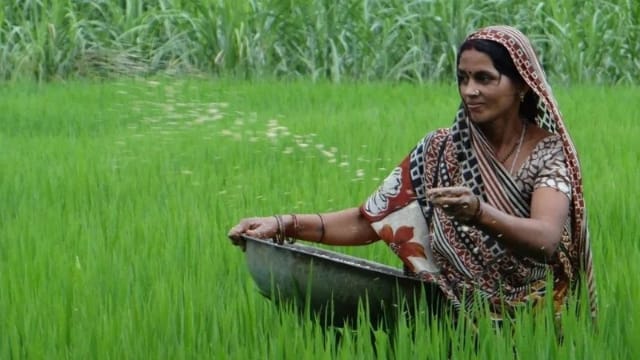
The Regeneration Imperative
India, a nation where over 60% of the population is directly or indirectly dependent on agriculture, is facing a turning point. From climate variability to soil degradation and groundwater depletion, the ecological stress on the subcontinent’s agrarian systems is pushing communities toward the brink of crisis. Conventional agriculture, once celebrated for feeding a growing population, is now revealing its long-term costs—declining soil fertility, chemical dependency, and ecological imbalance.
In response, a silent yet powerful movement is emerging across India’s villages and farmlands. Regenerative agriculture—once considered a fringe concept—is now being embraced as a mainstream solution to rural distress and ecological degradation. Unlike conventional or even organic farming, regenerative agriculture goes a step further. It doesn’t just minimize harm; it actively restores soil health, enhances biodiversity, and sequesters carbon from the atmosphere.
The imperative for this shift is underscored by a growing body of global research. According to the IPCC Special Report on Climate Change and Land, regenerative agricultural practices have the potential to draw down atmospheric carbon, helping to mitigate the effects of climate change. At the same time, they offer tangible socio-economic benefits—reduced input costs, better yields over time, and resilient rural livelihoods.
In this article, we journey into the heart of India’s regenerative agriculture movement—from the soil to the solution—to uncover how grassroots farmers are leading the way toward a more just, fertile, and resilient agricultural future.
Understanding Regenerative Agriculture: Beyond Organic
In recent years, “organic” farming has entered the mainstream lexicon, promising chemical-free food and environmentally conscious cultivation. Yet, as pressing ecological crises deepen, many experts and practitioners are recognizing that organic is necessary but not sufficient. Enter regenerative agriculture—a holistic, systems-based approach that aims not only to sustain, but to heal and enrich natural ecosystems through farming.
At its core, regenerative agriculture is about restoring soil health, increasing biodiversity, improving the water cycle, and enhancing ecosystem services. Unlike organic farming, which often focuses on what is avoided (such as synthetic fertilizers and pesticides), regenerative farming emphasizes proactive land stewardship. It seeks to rebuild soil organic matter, restore degraded land, and capture carbon dioxide, turning farms into carbon sinks.
Pioneered globally by movements such as Regeneration International and documented in studies by organizations like the Rodale Institute, regenerative agriculture rests on a few foundational principles:
- Minimal Soil Disturbance: Reducing or eliminating tillage helps maintain the microbial life that drives soil fertility.
- Cover Cropping and Crop Rotation: These practices prevent erosion, improve nutrient cycling, and break pest cycles.
- Diverse Polycultures: Encouraging plant diversity above and below the ground supports resilient agro-ecosystems.
- Integrated Livestock Management: Grazing animals play a key role in mimicking natural ecosystem functions.
- Composting and Mulching: These not only recycle nutrients but also improve soil structure and water retention.
A 2020 study by Nature Sustainability highlights how regenerative practices can improve crop yields, increase farmer income, and reduce greenhouse gas emissions, particularly when tailored to local agro-climatic conditions. Unlike a one-size-fits-all model, regenerative agriculture is inherently place-based and farmer-led, adapting to the unique soil, weather, and cultural contexts of each region.
In India, the relevance of regenerative agriculture is especially pronounced. With over 30% of the country’s land degraded and climate shocks such as erratic monsoons, droughts, and floods becoming routine, farming models that regenerate rather than deplete natural resources are no longer optional—they are essential. Initiatives like Natural Farming by Andhra Pradesh Community Managed Natural Farming (APCNF) have demonstrated that regenerative principles can be implemented at scale, offering a blueprint for sustainable transformation.
India’s Agricultural Crisis: The Soil is Speaking
India’s agricultural story is at a tipping point. Once hailed for ushering in the Green Revolution, the country’s success in boosting food grain production came at a profound ecological cost. Over the decades, the excessive use of synthetic fertilizers, chemical pesticides, and water-intensive crops has triggered a quiet crisis that is now sounding alarm bells across the subcontinent.
The government’s own State of India’s Environment 2023 report flags that over 90 million hectares of land are degraded. Alarmingly, India loses an estimated 5.3 billion tonnes of soil annually, according to the National Bureau of Soil Survey and Land Use Planning, stripping away not just agricultural productivity but also livelihoods.
Chemical Dependency and Soil Fatigue
The crisis is compounded by India’s entrenched dependency on chemical fertilizers. In 2022-23, the country consumed over 62 million metric tonnes of urea, DAP, and other fertilizers, leading to severe soil imbalances. Micronutrient deficiencies, once rare, are now widespread, affecting both plant health and human nutrition.
The soil’s microbiome—the vast and complex web of beneficial organisms that support plant life—has also suffered. As noted by a Down to Earth report, years of chemical input and monoculture farming have decimated soil microbial biodiversity, making crops more vulnerable to pests, disease, and climate extremes.
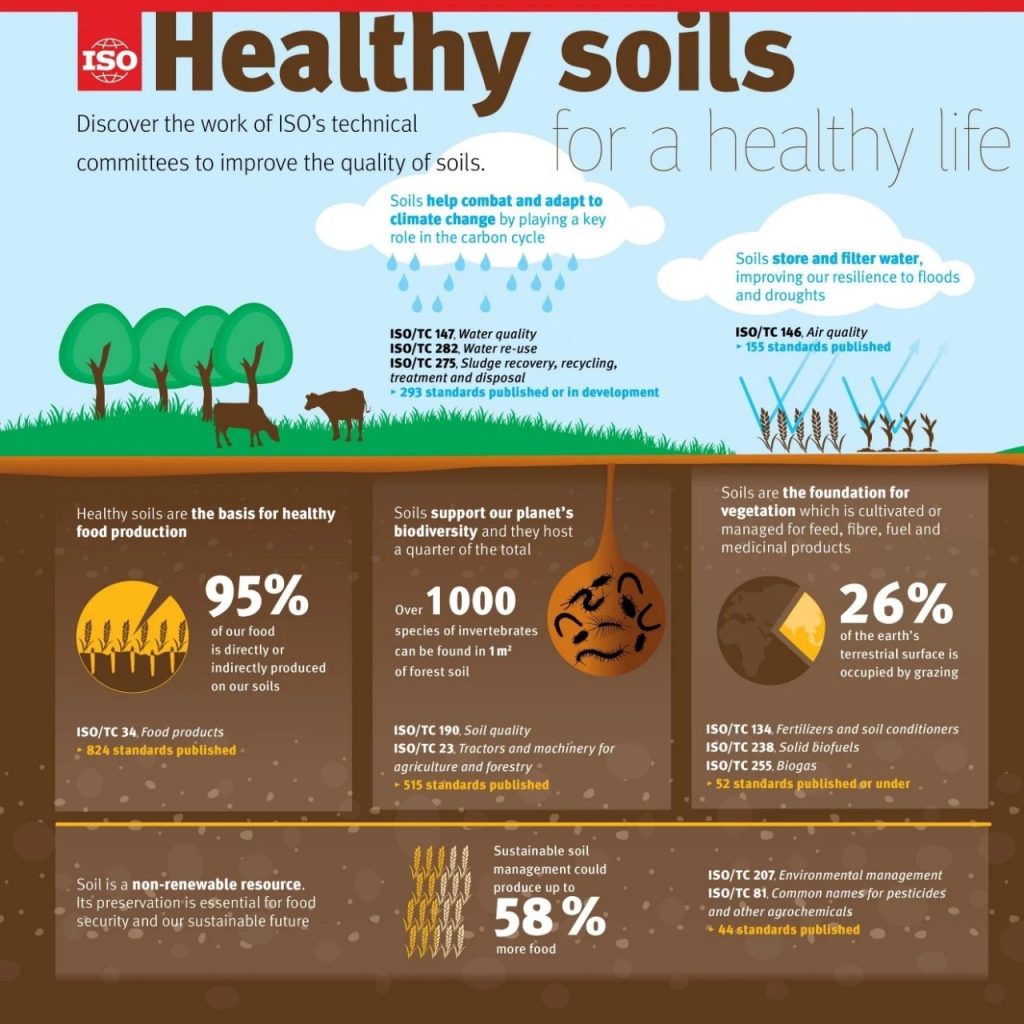
This infographic from ISO highlights the vital role of healthy soils in food production, biodiversity, climate resilience, and water filtration. It reinforces how sustainable soil management—core to regenerative agriculture—can boost food output by up to 58%, aligning directly with grassroots farming efforts in India.
The Water Crisis Connection
Degraded soil and water mismanagement are interlinked. Regions like Punjab and Haryana, once icons of Green Revolution success, are now facing rapid groundwater depletion, with some districts falling into the “dark zone” where water extraction exceeds replenishment. Poor soil health exacerbates the problem by reducing infiltration and moisture retention, increasing reliance on irrigation.
Climate Stress: The Final Blow
As climate change accelerates, India’s degraded soils are less capable of buffering crops against heatwaves, droughts, intense rainfall, and unseasonal frosts. The IPCC Sixth Assessment Report underscores that India’s food systems are highly vulnerable to climatic shocks, with rain-fed farming districts—home to a majority of smallholders—at the greatest risk.
The 2023 heatwaves and erratic monsoon patterns have already slashed wheat and rice yields in multiple states, pushing farmers deeper into debt and distress. Soil degradation further compounds these shocks, making recovery slower and more expensive.
The Urgency for Change
This ecological unraveling demands an urgent shift. The cost of inaction is not just lower yields—it is the collapse of rural economies, rising food insecurity, and the erosion of the very ecosystems that sustain life. As India’s soil continues to degrade, so does its ability to feed a population projected to exceed 1.6 billion by 2050.
But this crisis is not without solutions. As the soil speaks, farmers across India are beginning to listen—and respond. They are rejecting chemical dependency and rediscovering natural, regenerative ways of farming that restore soil vitality, improve water retention, and bring biodiversity back to the land.
This awakening at the grassroots is where hope lies—and where the regenerative movement begins to bloom.
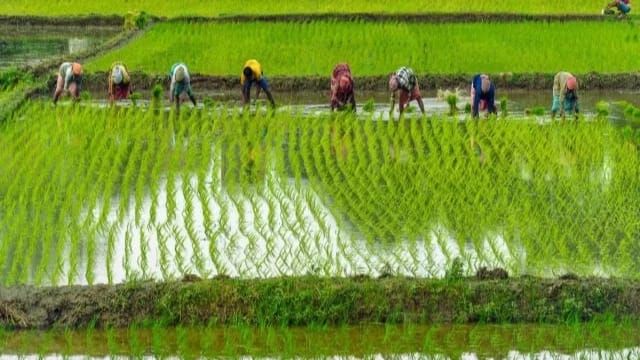
The Rise of the Grassroots Farmer Movement
Across India’s vast rural landscape, a quiet revolution is taking root—not led by technocrats or top-down policy makers, but by grassroots farmers who are redefining the purpose and practice of agriculture. These are not isolated innovators; they are part of a growing ecosystem of community-led change agents who are reviving soil, restoring ecosystems, and reimagining farming as a regenerative, dignified, and climate-resilient way of life.
Crushed under the burden of rising input costs, unpredictable weather, and volatile market prices, millions of small and marginal farmers—who make up over 85% of India’s farming community, according to the Agricultural Census 2015-16,—have begun to seek low-cost, high-resilience alternatives. Regenerative agriculture has emerged as one such lifeline.
From the arid landscapes of Telangana and Andhra Pradesh to the tribal belts of Odisha and Chhattisgarh, grassroots farmer networks are forming to experiment with and spread natural farming, agroecology, and community-led soil regeneration.
Farmer-Led Learning Networks
One of the most powerful features of this movement is its reliance on farmer-to-farmer knowledge transfer. In states like Andhra Pradesh, where the Community Managed Natural Farming (CMNF) model is thriving, over 700,000 farmers have adopted regenerative practices—mostly through peer-led training, Self-Help Groups (SHGs), and Farmer Producer Organizations (FPOs). As outlined in this World Economic Forum article, the CMNF model emphasizes women-led, village-based training and democratic governance.
Similarly, grassroots platforms such as the Zero Budget Natural Farming (ZBNF) movement—spearheaded by agriculturist Subhash Palekar—have brought together farmers from across Maharashtra, Karnataka, and Tamil Nadu. The ZBNF philosophy focuses on zero external inputs, indigenous cow-based preparations, and soil microbial regeneration.
In Punjab, farmer-led groups like Kheti Virasat Mission are helping transition chemical-dependent monocultures into biodiverse regenerative farms. They promote multi-cropping systems, composting, and seed sovereignty, while simultaneously resisting corporate seed and fertilizer regimes.
Indigenous Knowledge, Modern Challenges
What makes these grassroots movements particularly powerful is their anchoring in indigenous agricultural wisdom—much of which had been marginalized during the post-Green Revolution years. From mixed cropping in tribal Jharkhand to community composting in the Deccan Plateau, regenerative farming is not new to India; it is being rediscovered, revitalized, and adapted to today’s climate and market challenges.
Organizations like BAIF Development Research Foundation, Navdanya, and Deccan Development Society (DDS) are working with these farmer networks to scale up such traditional-regenerative blends, offering technical support and creating market linkages for chemical-free produce.
Regeneration as Resistance
For many grassroots farmers, adopting regenerative agriculture is also an act of economic and ecological resistance. It is a way to reclaim autonomy over land, seeds, and food systems that have long been influenced by external actors—be it multinational agribusinesses, pesticide lobbies, or poorly suited government subsidies.
This is especially evident in Dalit and Adivasi farming communities, where regenerative practices are intertwined with efforts for social justice, cultural renewal, and land rights. As noted in the India Exclusion Report, these communities are often at the frontline of both environmental degradation and regenerative leadership.
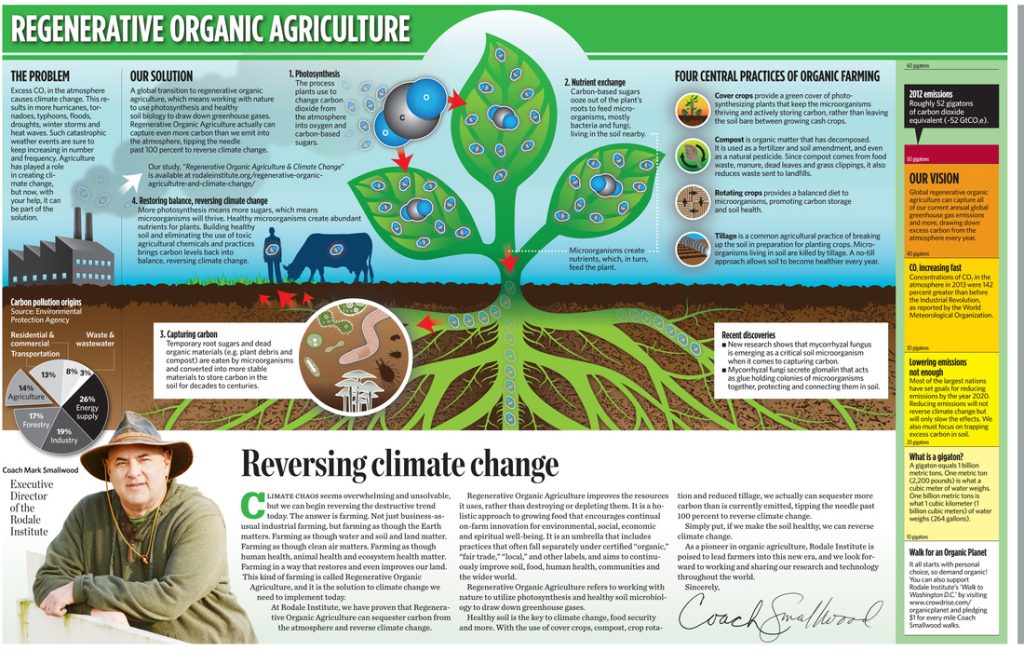
This infographic by the Rodale Institute illustrates how regenerative organic agriculture captures carbon, boosts soil health, and helps reverse climate change. It mirrors the grassroots movement in India, where farmers are reviving degraded lands through practices like composting, crop rotation, and minimal tillage.
Natural Farming Champions: State-Level Success Stories
While grassroots movements are seeding change from the bottom up, several state-level initiatives in India have become global examples of how regenerative and natural farming practices can be scaled effectively with the right support systems. These success stories offer valuable lessons in governance, innovation, and community engagement—demonstrating that the transition to regenerative agriculture is not just desirable, but entirely feasible.
Andhra Pradesh: The Global Flagbearer of Natural Farming
Leading the charge is Andhra Pradesh, where the state government has partnered with civil society and farmers to launch the ambitious Andhra Pradesh Community Managed Natural Farming (APCNF) program. Formerly known as ZBNF (Zero Budget Natural Farming), this initiative is now one of the largest agroecology programs in the world, with over 700,000 farmers across 3,700 villages shifting away from chemical-based agriculture.
The model is built on four non-negotiable principles:
- Zero use of synthetic chemicals
- Soil microbial enhancement
- Crop diversity
- Community-based farmer-to-farmer extension
What sets APCNF apart is its institutional architecture—village-level self-help groups (SHGs), women-led farmer field schools, and community resource persons (CRPs) who are trained to mentor fellow farmers. According to a 2020 report by the Council on Energy, Environment and Water (CEEW), APCNF has improved net incomes, reduced input dependency, and enhanced climate resilience.
The program has also garnered international attention. The United Nations Environment Programme (UNEP) and the World Economic Forum (WEF) have both acknowledged APCNF as a blueprint for climate-resilient, low-cost, inclusive agriculture.
Himachal Pradesh: Natural Farming for Mountain Resilience
In the Himalayan state of Himachal Pradesh, the government has implemented the Prakritik Kheti Khushhal Kisan Yojana (PK3Y) to support natural farming, especially among small and marginal farmers living in fragile mountain ecosystems. Over 1.5 lakh farmers have adopted the technique as of 2023.
This program encourages farmers to replace chemical inputs with jeevamrit (a microbial-rich concoction made of cow dung, urine, and jaggery) and to practice mixed cropping, mulching, and cover cropping. The goal is to enhance soil health, improve water retention, and reduce landslide-triggering erosion—critical issues in mountainous terrain.
As highlighted in a report by NITI Aayog, PK3Y is cost-effective and environmentally sound, and it has sparked enthusiasm among youth and women farmers. The success of the scheme has prompted other hill states like Uttarakhand and Sikkim to evaluate similar models.
Maharashtra: Scaling Agroecology through Women’s Collectives
In Maharashtra, the Women-led Climate Resilient Farming (WCRF) model promoted by the Watershed Organisation Trust (WOTR) has become a benchmark for gender-sensitive regenerative agriculture. It combines agroecology, water harvesting, and collective farming under women’s leadership.
WOTR’s work in drought-prone regions like Ahmednagar has demonstrated how regenerative practices can be embedded within climate adaptation programs, leading to both environmental and social dividends.
Earth5R Case Studies: Regeneration on the Ground
While policy-level programs and state initiatives have driven top-down support for regenerative agriculture, Earth5R, a global environmental organization based in India, has been working at the grassroots level to integrate sustainability, community empowerment, and ecological restoration into farming and land stewardship practices. Through its Blue Citizens and Blue Cities Program, Earth5R mobilizes local communities—especially farmers and marginalized groups—to become custodians of their own ecosystems, including soil, water bodies, and waste systems.
By applying its unique circular economy framework and community engagement model, Earth5R has created a tangible blueprint for regenerative practices in real-world rural settings.
Regenerative Soil Health in Nashik, Maharashtra
In the tribal villages of Nashik district, Earth5R collaborated with local farming communities to address the rapid degradation of soil fertility caused by excessive use of urea and monocropping. The initiative focused on:
- Training farmers in composting techniques using farm waste and cow dung
- Encouraging bioenzyme preparation for natural pest control
- Promoting intercropping and cover cropping to restore soil nutrients
According to field observations shared on Earth5R’s Medium page, farmers reported higher water retention, a visible increase in earthworm activity, and improved crop yields after two growing cycles. Crucially, these interventions cost less than conventional chemical farming, helping reduce debt.
Community Composting and Farm-Waste Valorization in Tamil Nadu
In the agrarian outskirts of Coimbatore, Earth5R initiated a pilot to divert organic farm waste from open dumping and instead use it to enrich degraded soils. With the help of Earth5R’s training modules, farmer cooperatives built decentralized compost units, converting banana peels, coconut husk, and cow dung into nutrient-rich compost.
These composting units not only improved soil organic matter but also created green jobs for local youth, especially landless laborers who became caretakers and sellers of compost. Earth5R provided digital tracking tools to monitor soil health and compost quality, integrating technology with tradition.
This case exemplifies how circular economy principles can regenerate agricultural ecosystems while building rural micro-enterprises.
Lake Regeneration Meets Agroecology in Bengaluru
In its Ulsoor Lake Restoration Program in Bengaluru, Earth5R combined lake rejuvenation with regenerative farming. The project involved setting up floating wetlands, aeration systems, and peripheral plantation using organic mulch, which not only improved water quality but also contributed to soil and plant regeneration around the lake’s buffer zone.
Locals were trained in permaculture techniques, combining native plants, compost application, and rain garden construction, creating a micro-agroecosystem that captured carbon, filtered runoff, and built resilient topsoil. The produce from these buffer gardens—mostly herbs, vegetables, and medicinal plants—was used by nearby communities, promoting hyperlocal, sustainable food systems.
Earth5R’s integrated model showed that regeneration doesn’t stop at the farm—it extends to every corner of the ecosystem, linking soil health with water sustainability, community health, and urban-rural synergy.
Tools of the Trade: Composting, Cover Crops, and Carbon
At the heart of regenerative agriculture is a toolkit of time-tested and ecologically sound practices that rebuild the natural cycles of soil fertility, carbon sequestration, and water retention. These tools are not dependent on industrial machinery or synthetic chemicals; rather, they rely on biological processes, indigenous knowledge, and community participation to rejuvenate the land.
Let’s explore three foundational techniques that are powering the regenerative revolution in India and beyond: composting, cover cropping, and carbon management.
Composting: Closing the Nutrient Loop
Composting is one of the simplest yet most powerful regenerative tools. By turning organic farm waste—crop residues, cow dung, kitchen scraps—into nutrient-rich humus, farmers reduce dependence on synthetic fertilizers while enriching soil microbiology.
In India, composting has deep roots in traditional agriculture. But it is now being scaled scientifically through initiatives like the Indian Council of Agricultural Research’s (ICAR) composting training modules and community-based projects supported by organizations such as Earth5R, BAIF Development Research Foundation, and Navdanya.
Methods like vermicomposting, aerobic composting, and bioenzyme fermenting are increasingly popular among smallholder farmers because they’re cost-effective, climate-resilient, and improve long-term soil structure.
Cover Cropping: Living Roots All Year Round
Cover crops—non-harvested plants grown between primary crops—are a cornerstone of regenerative agriculture. Unlike traditional monocropping, which leaves the soil bare and vulnerable, cover cropping keeps living roots in the soil year-round, preventing erosion, fixing nitrogen, and fostering microbial life.
In India, leguminous cover crops such as sunhemp (Crotalaria juncea), dhaincha (Sesbania spp.), and cowpea are gaining popularity in dryland regions. These plants not only add nitrogen to the soil naturally, but also suppress weeds and serve as fodder.
Carbon Farming: Turning Soil into a Carbon Sink
One of the most compelling aspects of regenerative agriculture is its ability to address climate change directly through carbon sequestration. Healthy soils act as carbon sinks, drawing down atmospheric CO₂ and storing it as stable organic matter. This process is known as carbon farming.
India’s vast degraded lands hold enormous potential. A 2022 report by the Food and Agriculture Organization (FAO) estimates that restoring just 30% of India’s degraded soils through regenerative methods could sequester 2.5–3.5 gigatonnes of CO₂ equivalent over two decades—making agriculture a key player in India’s climate goals under the Paris Agreement.
Women at the Forefront: Regeneration as Empowerment
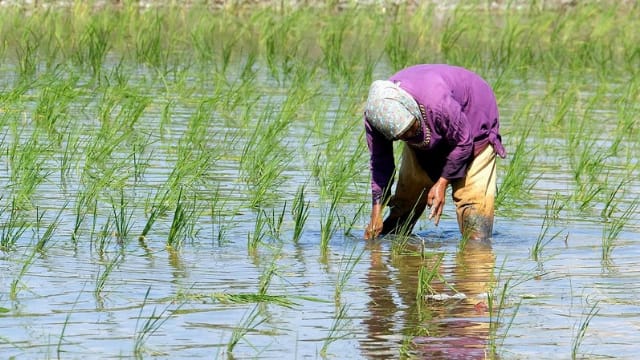
In India’s regenerative agriculture movement, women are not just participants—they are leaders, innovators, and knowledge keepers. While women contribute to nearly 80% of farm labor in India, they have long been excluded from land ownership, financial services, and decision-making spaces. But the shift toward regenerative farming is changing that narrative—placing women at the center of ecological and social transformation.
From Caregivers to Soil Stewards
Traditionally seen as caregivers and food preparers, rural women have an intimate understanding of soil, seeds, water, and nutrition. Regenerative agriculture—rooted in observation, care, and local adaptation—aligns naturally with these skill sets.
Programs like the Andhra Pradesh Community Managed Natural Farming (APCNF) have recognized this potential by structuring their extension model around women-led Self-Help Groups. According to the RySS (Rythu Sadhikara Samstha), over 500,000 women farmers are leading natural farming initiatives, conducting peer-to-peer training, managing seed banks, and monitoring soil health.
These women not only reduce input costs for their families but also foster collective resilience—a powerful buffer against debt, drought, and displacement.
SHGs and Eco-Enterprises: Regeneration Meets Income
The fusion of regenerative agriculture with micro-enterprise development has opened new pathways for rural women. Compost production, organic inputs, food processing and sustainable textiles made from agro-waste are all emerging as women-led eco-businesses.
In Jharkhand, Earth5R-trained women collectives have begun producing and marketing bioenzymes and natural compost, supplying local farms while earning stable incomes. Similarly, in Tamil Nadu, Self-Help Group (SHG) members trained in vermicomposting are selling to neighboring villages, reducing dependence on external chemical inputs.
Such enterprises are not only economically empowering; they help redefine the role of women as environmental entrepreneurs, bridging the gap between ecology and economy.
Women and Climate Resilience
As climate change intensifies, women in agriculture face disproportionate risks, especially in vulnerable areas prone to drought, floods, or crop failure. Yet studies show that when women have access to land, training, and regenerative tools, they produce higher yields, invest more in nutrition, and share knowledge more readily within communities.
A 2020 FAO study confirms that empowering women farmers could increase agricultural productivity in developing countries by up to 30%, significantly reducing hunger and land degradation.
Regenerative agriculture offers a pathway to climate justice—one that acknowledges gendered realities and responds with inclusive, community-based models.
Barriers and Breakthroughs: Scaling the Movement
Despite its promising outcomes, India’s regenerative agriculture movement faces formidable challenges when it comes to scaling up from isolated success stories to nationwide transformation. Yet, where institutional inertia persists, grassroots innovations, community resilience, and policy interventions are beginning to shift the tide.
Barriers to Scaling Regenerative Agriculture in India
Policy and Subsidy Misalignment
India’s current agricultural policies remain heavily skewed toward chemical-intensive practices. According to Oxfam India, government subsidies still disproportionately support urea, synthetic pesticides, and mono-crop systems. These incentives disincentivize transition to natural or regenerative methods, which receive minimal formal backing in terms of capital, risk insurance, or training.
Institutional Resistance and Awareness Gaps
Extension officers and Krishi Vigyan Kendras (KVKs) are often trained in conventional agronomy, leaving a vacuum in the institutional dissemination of regenerative know-how. Many farmers—especially in states less exposed to natural farming programs—lack access to scientific training, peer networks, and market information that support regenerative methods.
Market Access and Certification Bottlenecks
Farmers transitioning to regenerative practices often struggle with market premiums, product differentiation, and organic certification hurdles. Although platforms like Jaivik Bharat have attempted to create a standardized certification ecosystem, it remains time-consuming and expensive, especially for smallholders. Moreover, local mandis are not designed to support or recognize the ecological value of regenerative produce.
Breakthroughs and Pathways to Scale
State-Led Models: Andhra Pradesh and Beyond
The AP Community Managed Natural Farming (APCNF) initiative represents one of India’s most ambitious regenerative agriculture models. With support from the Azim Premji Philanthropic Initiatives and technical collaboration with the United Nations Environment Programme (UNEP), APCNF aims to transition 6 million farmers to natural farming across 8 million hectares by 2030. Its success hinges on a bottom-up, women-led approach, combining government facilitation with SHG ownership and peer-to-peer learning.
Inspired by APCNF, states like Himachal Pradesh, Chhattisgarh, and Odisha are piloting similar programs. Maharashtra’s Palghar District, with Earth5R’s support, has launched training modules that integrate climate literacy with regenerative techniques, fostering hyperlocal stewardship models.
Digital Tools and Farmer Networks
Digital platforms such as Digital Green, KisanMitr, and Regen Farmers Hub are helping bridge the information gap through video-based training, vernacular knowledge dissemination, and community-led content. These platforms enable scalable peer-to-peer learning and have shown measurable improvements in adoption rates of regenerative practices.
Moreover, Earth5R has leveraged WhatsApp-based circular economy education to link farmers directly with urban compost suppliers, reducing both waste and fertilizer costs—an example of tech-enabled circularity in agriculture.
Carbon Markets and Climate Finance
One of the most promising scaling mechanisms lies in carbon credit systems. Regenerative practices like cover cropping, no-till farming, and agroforestry increase soil carbon sequestration, opening the door for smallholder farmers to access carbon financing.
Initiatives like Soil Capital and Carbon+ Farming are exploring measurement, reporting, and verification (MRV) frameworks that could allow Indian farmers to monetize soil health improvements. While still nascent, this represents a future where ecological stewardship is financially rewarded.
A Regenerative Future Rooted in Soil and Solidarity
India stands at a critical crossroads where ecological restoration and rural resilience must go hand in hand. Regenerative agriculture offers not just a method of farming, but a pathway toward food sovereignty, climate stability and community well-being. Rooted in indigenous knowledge, social equity, and natural cycles, this movement is already transforming landscapes—from Odisha’s tribal regions to Andhra Pradesh’s drylands—by empowering farmers, reviving soil health, and rebuilding local ecosystems.
But for this momentum to scale, it needs more than inspiration—it demands solidarity and systemic support. Whether through policy reform, education, ethical consumption, or everyday actions, each of us has a role in this soil-deep revolution. The future of India’s food, climate, and collective consciousness is already growing—in fields, compost pits, and grassroots movements. Now is the time to nurture it.
FAQs On From Soil to Solution: How Grassroots Farmers Are Powering India’s Regenerative Agriculture Movement
What is regenerative agriculture, and how is it different from organic farming?
Regenerative agriculture goes beyond avoiding chemicals—it focuses on actively restoring soil health, biodiversity, and carbon sequestration, making farms more climate-resilient.
Why is regenerative agriculture important for India?
India faces severe soil degradation, water scarcity, and declining farmer incomes. Regenerative agriculture addresses all three by promoting sustainability and self-reliance.
What role do grassroots farmers play in this movement?
Grassroots farmers are the innovators and implementers of regenerative practices, adapting them to local contexts using traditional wisdom and low-cost techniques.
Is regenerative farming profitable for small and marginal farmers?
Yes. It reduces input costs, improves long-term soil fertility, and often results in better yields, especially in rainfed or degraded regions.
Can regenerative agriculture help mitigate climate change?
Absolutely. Practices like cover cropping, composting, and agroforestry draw down atmospheric carbon and enhance carbon storage in soils.
How is regenerative agriculture connected to food security?
By improving soil health and water retention, regenerative farming leads to resilient food systems that are less dependent on erratic monsoons or chemical inputs.
What are some successful regenerative farming initiatives in India?
Notable examples include AP Community Managed Natural Farming (APCNF), Earth5R’s BlueCities model, and farmer-led efforts in Himachal Pradesh and Odisha.
What tools and practices are common in regenerative farming?
Key tools include natural composting, cover crops, intercropping, mulching, and livestock integration.
How do Earth5R case studies contribute to this movement?
Earth5R’s work links regenerative farming with urban sustainability, composting, and citizen participation, building bridges between rural solutions and urban responsibility.
How are women involved in regenerative agriculture?
Women are leading self-help groups, seed banks, and composting collectives—transforming regeneration into empowerment at the grassroots.
What barriers do farmers face in adopting regenerative practices?
Major hurdles include lack of institutional support, market access, training, and initial income gaps during transition.
How can government policy support regenerative farming?
Through subsidies, minimum support prices, crop insurance, and extension services aligned with regenerative methods.
Is regenerative agriculture scientifically validated?
Yes. Studies by FAO, Rodale Institute, and others show regenerative practices improve yields, biodiversity, and soil carbon.
What’s the link between soil health and human health?
Healthy soils produce more nutrient-dense food, reducing dependency on processed foods and mitigating lifestyle diseases.
Can regenerative agriculture scale to meet India’s food demand?
When supported by policy, infrastructure, and market reforms, regenerative agriculture can be both scalable and sustainable.
How does regenerative farming relate to agroecology?
Regenerative agriculture is a subset of agroecology, sharing principles of biodiversity, ecological balance, and socio-economic equity.
How does composting help in regeneration?
Composting turns organic waste into nutrient-rich soil, reducing methane emissions and eliminating the need for chemical fertilizers.
Can urban consumers contribute to regenerative farming?
Yes—by buying from regenerative farmers, composting at home, and supporting farm-to-fork initiatives and farmer cooperatives.
Is regenerative agriculture climate-resilient?
Yes. It builds soil structure and moisture retention, making farms more resistant to droughts, floods, and heat stress.
What’s one action I can take today to support the regenerative movement?
Start by learning where your food comes from. Support local, sustainable producers and reduce food waste to regenerate from your plate outward.
Dig In, Don’t Look Away
The regenerative revolution is already underway—led by farmers, fueled by soil, and sustained by community. Whether you’re in a city apartment or a rural village, you have a role to play. Support local growers, compost your waste, question what’s on your plate, and advocate for regenerative policies. Change begins where your food does: with the soil.
-Authored By Pragna Chakraborty