

The Trillion-Dollar Question: Can We Price Our Way Out of Climate Change?
The global carbon market, a sprawling and complex financial ecosystem, is rapidly emerging as humanity’s primary economic tool in the race against climate change. This research-driven analysis delves into the intricate machinery of this market, exploring its fluctuating prices, identifying its powerful players, and forecasting its critical future role. We will dissect the mechanisms that put a price on pollution, from government-mandated systems to voluntary corporate actions, providing a comprehensive look at a market poised for explosive growth.
At its core, the carbon market operates on a simple yet profound principle, turning carbon dioxide from an external harm into a quantifiable asset. Think of it as a meticulously calculated “budget” for planetary emissions. Some markets, known as compliance markets, are driven by government regulations that set a firm cap on pollution, forcing the largest emitters to either cut back or purchase permits to pollute from cleaner companies. This is the essence of a cap-and-trade system, famously exemplified by the European Union’s Emissions Trading System.
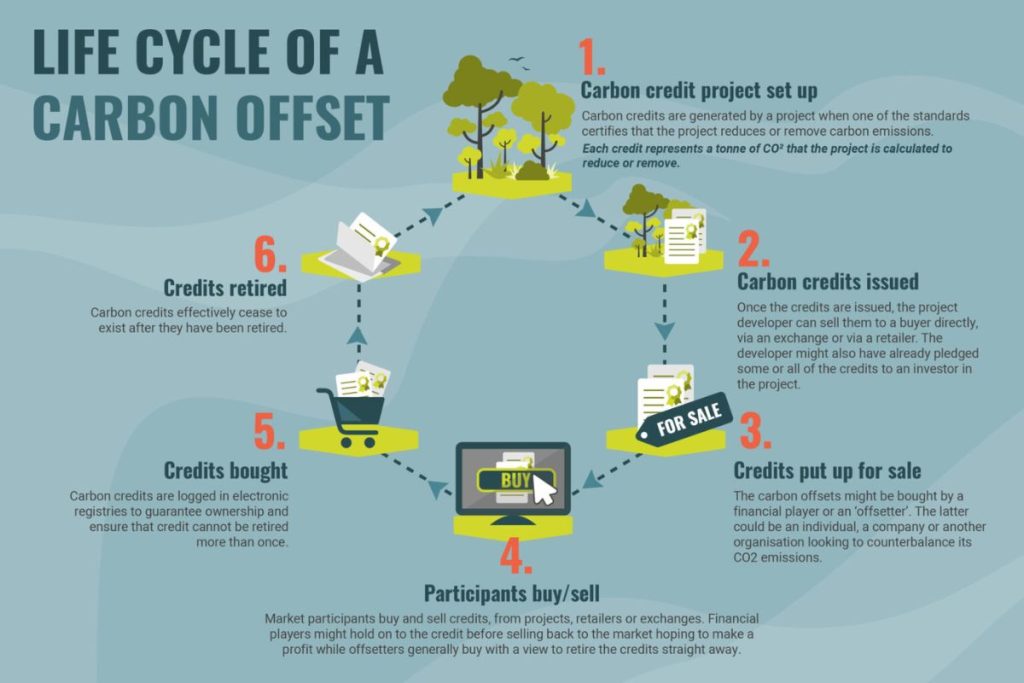
Alongside this regulated arena exists the dynamic voluntary carbon market. Here, environmentally conscious corporations, and even individuals, voluntarily purchase carbon credits to offset their own emissions. Each credit represents one ton of carbon dioxide removed from or prevented from entering the atmosphere, generated by real-world projects like reforesting a watershed or developing a wind farm. The integrity of these credits is paramount, with organizations like Verra and Gold Standard acting as gatekeepers to ensure quality.
The financial stakes are staggering. The global carbon credit market was valued at hundreds of billions of dollars in recent years and, according to analysis from Precedence Research, is projected to skyrocket to over $16 trillion by 2034. This exponential growth is fueled by increasing government ambition and a surge in corporate net-zero pledges. According to the World Bank, direct carbon pricing now covers approximately 28% of global greenhouse gas emissions, a figure that is steadily climbing. This article will unpack this multi-trillion-dollar instrument, offering a clear-eyed view of its prices, players, and predictions for a climate-conscious future.
Turning the Tide on Climate Change, One Tonne at a Time
The clock is ticking on climate action, with each new report from the Intergovernmental Panel on Climate Change (IPCC) underscoring the urgency. Faced with this existential threat, the world is increasingly turning to a powerful economic solution, the global carbon market. This innovative approach seeks to harness market forces to do what regulations alone cannot, make emitting carbon a costly business.
At its heart, a carbon market is a system designed to put a price on pollution. Imagine it as a global marketplace where the “product” being traded is the right to emit one tonne of carbon dioxide (CO₂). This market is broadly split into two distinct yet interconnected realms, the compliance markets and the voluntary markets. The former are government-mandated “cap-and-trade” schemes, while the latter are driven by corporate and individual climate commitments.

This article argues that while the global carbon market is an indispensable tool in the fight against climate change, its ultimate success hinges on transparent pricing, robust international policies, and the committed participation of a diverse set of global players. Its potential to funnel trillions of dollars into green projects is immense, but so are the challenges of ensuring its integrity and effectiveness.
To understand this complex ecosystem, we will embark on a detailed exploration. We will first dissect the architecture of both compliance and voluntary markets, then analyze the volatile world of carbon pricing. Following this, we will identify the key players shaping the market’s future, examine real-world case studies from organizations like Earth5R, and finally, offer research-backed predictions on where this critical market is headed.
The Two Sides of the Carbon Coin: Compliance vs. Voluntary Markets
The global carbon market isn’t a single entity but a tale of two distinct systems running in parallel, each with its own rules, players, and purpose. On one side, we have the rigid, government-mandated compliance markets. On the other, the flexible and rapidly innovating voluntary markets. Understanding the architecture of both is key to grasping how the world is putting a price on carbon.
Compliance Markets: The Heavy Hand of Regulation
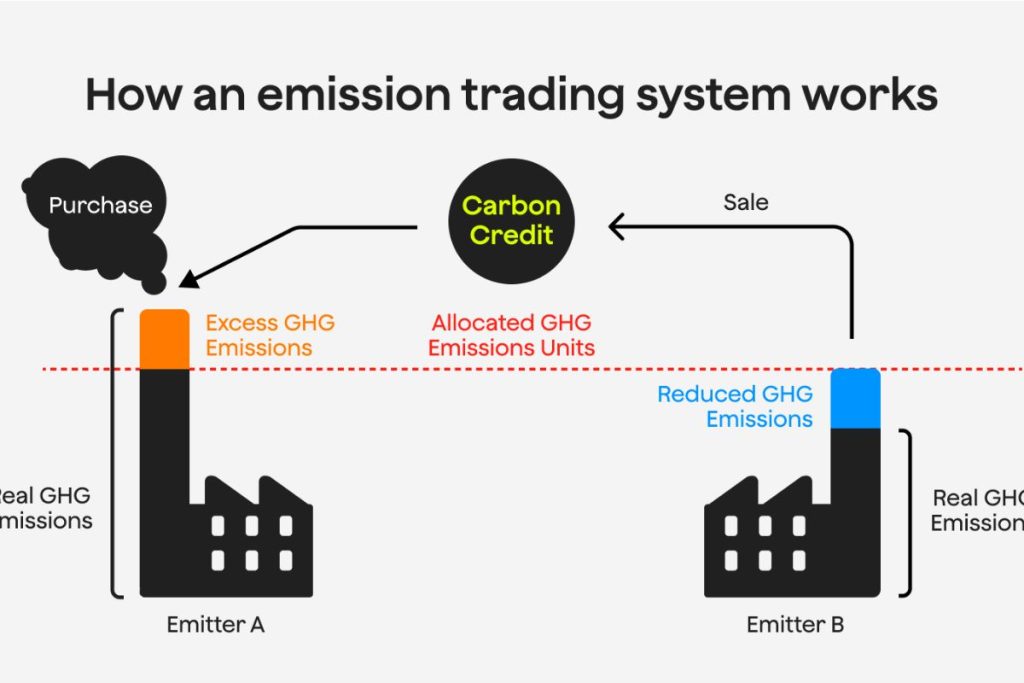
Compliance markets are the titans of the carbon world, born from national or regional laws. The most common model is the Emissions Trading System (ETS), often called “cap-and-trade.” Think of it like a government setting a total pollution budget for its entire industrial sector. This “cap” is a finite number of emissions allowances, which are then distributed or auctioned to companies.
If a company pollutes less than its allowance, it can sell its surplus permits to a company that has exceeded its limit. This creates a powerful financial incentive to decarbonize. The most prominent example is the European Union’s ETS, the world’s first and largest carbon market. It regulates thousands of installations in the power and manufacturing sectors, covering a significant portion of the EU’s total emissions.
Following this model, China’s National ETS launched in 2021, instantly becoming the world’s largest by covered emissions, initially focusing on its massive power generation sector. In North America, the Western Climate Initiative (WCI) links the carbon markets of California and the Canadian province of Quebec, showcasing successful regional cooperation in climate policy.
Voluntary Markets: The Power of Choice
While compliance markets are about following the law, voluntary markets are about leading the charge. Here, companies, organizations, and even individuals choose to offset their carbon footprint by purchasing carbon credits. Each credit represents a certified tonne of CO₂ that has been avoided or removed from the atmosphere thanks to a specific project.
These projects can range from large-scale reforestation in the Amazon to providing clean cookstoves in rural Indian communities, which reduces emissions from burning firewood. The key is that these emission reductions would not have happened without the funding from the carbon credit sale, a concept known as “additionality.”
To ensure these credits are real and impactful, the market relies on trusted, independent standard-setters. The two most prominent are the Verified Carbon Standard (VCS) Program managed by Verra, and the Gold Standard, which is renowned for also verifying a project’s contributions to the UN’s Sustainable Development Goals, ensuring benefits for both the planet and people.
What’s a Tonne of Carbon Worth? Decoding a Volatile Market
Determining the price of a tonne of carbon is less a science and more a complex dance of policy, economics, and technology. Unlike the price of gold or oil, the value of a carbon credit is highly variable, swinging based on where it’s sold, how it was generated, and the economic climate of the day. This section unpacks the dynamic forces that set the price in this crucial market.
The Architects of Price: Key Influencing Factors
The single most important factor driving carbon prices is government policy and regulation. When a government tightens the “cap” in its emissions trading system or introduces a new carbon tax, it restricts the supply of allowances, naturally driving up the price. The ambitious targets set by the Paris Agreement act as a global tailwind, signaling to the market that decarbonization is an economic inevitability.

Market fundamentals of supply and demand are also critical. In compliance markets, an economic boom can increase industrial production and emissions, boosting demand for allowances. In the voluntary market, a wave of corporate net-zero commitments can create a surge in demand for high-quality carbon credits, especially those from projects like reforestation that physically remove carbon from the air.
Furthermore, economic conditions and technological advancements play a huge role. A recession can dampen industrial activity, leading to lower emissions and a slump in carbon prices. Conversely, a breakthrough in renewable energy or carbon capture technology can lower the cost for companies to reduce their own emissions, influencing how much they are willing to pay for carbon credits on the open market.
A Snapshot of a Divided Market
This complex interplay results in a wide spectrum of carbon prices globally. As of late 2025, allowances in the mature EU ETS have often traded at over €70 per tonne, reflecting the continent’s stringent climate policies. This stands in contrast to newer or less ambitious systems where prices can be significantly lower.
The voluntary market is even more fragmented. The price of a carbon credit here depends heavily on its quality and co-benefits. A credit from an older renewable energy project might sell for just a few dollars. However, a credit from a project that uses technology to directly capture and store CO₂ from the atmosphere, or one that verifiably restores a vital ecosystem while supporting local communities, can command a premium price, often exceeding $50 or more per tonne, as tracked by market analysts like Ecosystem Marketplace. This price difference highlights a crucial trend: the market is beginning to place a much higher value on carbon removal over simple emissions avoidance.
The Power Brokers: Meet the Players in the Carbon Ecosystem
The global carbon market is not a monolith, it’s a bustling ecosystem teeming with diverse actors, each playing a critical role. From the government bodies that write the rules to the corporations that play the game, and the watchdogs that keep them honest, the market’s success depends on this intricate web of participants. Think of it as a complex orchestra, where each section must perform in harmony to create the desired result.
The Rule-Makers and the Players
At the very top sit governments and regulators, the architects of the system. National and regional bodies, like the European Commission for the EU ETS, are responsible for setting the emissions caps, allocating allowances, and enforcing compliance. Their policy decisions create the very foundation upon which the multi-trillion-dollar compliance market is built.
The most visible players are corporations, who participate in two primary ways. First, there are the large emitters in sectors like energy, aviation, and heavy industry, who are legally required to participate in compliance markets. Second, there is a growing army of companies voluntarily buying credits to meet their climate goals, often guided by frameworks like the Science Based Targets initiative (SBTi). These companies, along with the project developers who create the carbon-reducing projects, form the core of the market’s supply and demand.
The Financiers, Auditors, and Watchdogs
Acting as the essential lubricant for the entire system are the financial institutions. Investment banks, commodity traders, and specialized carbon funds provide the liquidity needed for a functioning market. They develop sophisticated financial products, manage risk for clients, and play a crucial role in channeling investment capital towards green projects and technologies, with major firms like JP Morgan establishing dedicated carbon transition teams.
Ensuring the integrity of the voluntary market falls to the standard setters and verification bodies. These organizations, like Verra and Gold Standard, are the independent “auditors” of the ecosystem. They develop rigorous methodologies and review projects to certify that the carbon credits generated are real, measurable, and permanent, providing the trust necessary for the market to function.
Finally, civil society and non-governmental organizations (NGOs) act as the market’s conscience and its “watchdogs.” Groups like the Environmental Defense Fund and the World Wildlife Fund (WWF) advocate for stronger climate policies, scrutinize corporate claims to prevent greenwashing, and work to ensure that carbon projects deliver tangible benefits to local communities and biodiversity.
From the Ground Up: How Local Action Fuels the Global Market
To truly understand the carbon market, we must move from the trading floors to the project sites where the real work happens. The market’s value is built on tangible, measurable environmental action. Organizations like Earth5R, an environmental social enterprise, exemplify how grassroots projects can generate high-integrity carbon credits while delivering powerful community benefits.
Case Study: Waste Management and Methane Avoidance in Mumbai
One of the most potent greenhouse gases is methane, often released from decomposing organic waste in landfills. Earth5R’s decentralized waste management programs across various Indian cities, including Mumbai, tackle this issue head-on. By training citizens and businesses in effective waste segregation, the organization ensures that organic waste is composted rather than sent to landfills.
This simple act has a profound climate impact. Every tonne of organic waste composted is a tonne that isn’t producing methane in a landfill. This is known as “methane avoidance,” a critical source of carbon credits. The climate benefit is quantified, verified, and can then be sold on the voluntary carbon market to a company looking to offset its emissions, directly financing the expansion of these vital community programs.
Case Study: Reforestation and Carbon Sequestration
Another powerful pathway for generating carbon credits is through nature itself. Earth5R’s various tree plantation drives are a direct form of carbon sequestration. As trees grow, they absorb carbon dioxide from the atmosphere and store it in their biomass, effectively acting as natural carbon sponges. This is one of the most sought-after forms of carbon removal.
The carbon market link is straightforward. Through rigorous methodologies, the amount of CO₂ expected to be captured by a new forest over its lifetime is calculated. These calculations form the basis for issuing carbon credits. The funding received from selling these credits not only pays for the saplings and labor but also ensures the long-term protection of the reforested area, creating a sustainable cycle of investment and climate action.

Case Study: Circular Economy and Livelihood Training
Beyond direct removals, the carbon market also values projects that reduce emissions by changing consumption patterns. Earth5R’s Livelihood Programs train local communities, particularly women, to upcycle waste materials into new products. This creates a circular economy, reducing the demand for virgin materials whose production is often carbon-intensive.
While the carbon accounting can be more complex, these programs contribute to emissions reduction by preventing waste and promoting sustainable consumption. The social co-benefits, such as providing stable incomes and empowering local communities, make these projects highly attractive in the voluntary market. Buyers are often willing to pay a premium for credits that not only benefit the planet but also drive meaningful social and economic development.
The Verdict: A Critical, Imperfect Tool in the Climate Toolbox
The global carbon market is a story of immense complexity and even greater potential. We’ve journeyed through its dual systems of compliance and voluntary action, seen how prices are shaped by a volatile mix of policy and economics, and met the diverse players who make the market function. It is a financial ecosystem unlike any other, tasked with an unprecedented challenge.
Ultimately, the carbon market is not a silver bullet for the climate crisis. It is, however, an indispensable instrument for channeling capital towards a sustainable future. Its success is not guaranteed, it depends entirely on a global commitment to transparency, integrity, and bold policy action. If managed correctly, this market can be a powerful engine for change, accelerating the global transition to a low-carbon economy and helping us write a more hopeful chapter for the planet.
Carbon Markets: Your Questions Answered
What is a global carbon market?
It’s a financial system designed to reduce greenhouse gas emissions. It operates by putting a price on carbon pollution, creating a financial incentive for countries and companies to invest in cleaner technologies and practices. Think of it as a marketplace for the right to emit carbon dioxide.
What is the difference between a compliance and a voluntary carbon market?
A compliance market is created and regulated by government policy, like a “cap-and-trade” system, which legally requires major polluters to limit their emissions. A voluntary market is one where companies, organizations, and individuals choose to buy carbon credits to offset their own emissions for corporate social responsibility or personal reasons.
What is a carbon credit?
A carbon credit is a tradable certificate or permit that represents the right to emit one tonne of carbon dioxide (CO₂) or the equivalent amount of a different greenhouse gas. Credits can be generated by projects that actively remove or prevent one tonne of CO₂ from entering the atmosphere.
How does “cap-and-trade” work?
A government sets a firm limit, or “cap,” on the total amount of emissions allowed in a specific sector. It then issues a corresponding number of permits. Companies that can cut their pollution cheaply can sell their extra permits to companies for whom cutting emissions is more expensive.
Why do carbon prices vary so much?
Prices depend on many factors, including government regulations, economic activity, and the type of credit. An allowance in the strictly regulated EU market will have a different price than a voluntary credit from a reforestation project in Peru. The key drivers are always supply, demand, and policy.
What makes a carbon credit “high-quality”?
A high-quality credit comes from a project that is proven to be real, permanent, additional, and verifiable. This means the emission reduction is not temporary, would not have happened without the project’s funding (“additionality”), and has been rigorously audited by a trusted third party.
Who are the main players in the carbon market?
The ecosystem includes governments who set the rules, corporations who must comply or voluntarily participate, project developers who create the credits, financial institutions who provide liquidity, verification bodies who ensure quality, and NGOs who act as watchdogs.
What is the role of organizations like Verra and Gold Standard?
They are the leading independent standard-setters and auditors for the voluntary carbon market. They develop the methodologies and verify that projects are delivering on their promised climate benefits, ensuring the integrity and credibility of the carbon credits being sold.
How does planting a tree generate a carbon credit?
As a tree grows, it absorbs CO₂ from the atmosphere through photosynthesis and stores it in its trunk, branches, and roots. This process, called sequestration, can be measured and quantified. A project can issue a carbon credit for every verified tonne of CO₂ its trees are expected to capture over their lifetime.
What are “co-benefits”?
Co-benefits are the positive side effects of a carbon reduction project beyond just the climate impact. For example, a clean cookstove project reduces emissions but also improves indoor air quality and health, while a reforestation project can restore biodiversity and provide local employment. Credits with strong co-benefits often sell for a premium.
What is greenwashing?
Greenwashing is the act of misleading the public about a company’s environmental practices or the environmental benefits of its products. In the carbon market, this could involve a company claiming to be “carbon neutral” by purchasing cheap, low-quality credits that don’t represent real emissions reductions.
Is the carbon market expected to grow?
Yes, overwhelmingly so. With increasing pressure from regulations and consumers, more companies are setting net-zero targets. Analysts from institutions like McKinsey predict the market could grow exponentially, potentially reaching a value of over $50 billion by 2030.
What is Article 6 of the Paris Agreement?
Article 6 is the part of the UNFCCC Paris Agreement that provides a framework for countries to cooperate in achieving their climate targets. It essentially creates the rulebook for a global, government-to-government carbon market, which is expected to unlock significant climate investment.
How does technology impact the carbon market?
Technology is a huge driver of change. Blockchain is being used to improve transparency and prevent the double-counting of credits. Furthermore, new carbon removal technologies, like Direct Air Capture (DAC), are creating new ways to generate high-quality carbon credits by pulling CO₂ directly from the ambient air.
Can an individual participate in the carbon market?
Yes. While individuals don’t typically trade on the major exchanges, they can participate in the voluntary market. Many platforms and project developers allow individuals to calculate their personal carbon footprint and purchase credits to offset their travel, energy use, or general lifestyle.
What is “carbon removal” vs. “emissions avoidance”?
Carbon removal (or sequestration) refers to projects that physically pull existing CO₂ from the atmosphere, such as planting trees or Direct Air Capture. Emissions avoidance refers to projects that prevent future emissions from happening, such as building a wind farm to replace a coal plant. The market is increasingly valuing removal credits more highly.
What does “additionality” mean?
This is a critical concept for credit quality. It means that the emissions reductions from a project would not have happened without the revenue from selling carbon credits. For example, if a profitable wind farm was going to be built anyway, it is not “additional” and should not be eligible to sell credits.
Where are most carbon projects located?
Carbon projects are located all over the world. Many nature-based projects, like reforestation and conservation, are located in the Global South (e.g., the Amazon basin, Sub-Saharan Africa, Southeast Asia) where there is vast potential for climate impact and community co-benefits.
How does waste management reduce emissions?
When organic waste like food scraps rots in a landfill, it releases methane, a greenhouse gas over 25 times more potent than CO₂ over 100 years. Projects that divert this waste to composting prevent that methane from ever being formed, creating a powerful climate benefit.
Is the carbon market the only solution to climate change?
No, it is not a silver bullet. Experts agree it is just one crucial tool in a much larger toolbox. The ultimate solution requires a combination of strategies, including direct government regulation, massive investment in renewable energy, energy efficiency improvements, and shifts in consumer behavior. The carbon market is designed to help accelerate and finance all of these.
Take the Next Step
The global carbon market isn’t just a topic for economists and policymakers; it’s a mechanism that affects our shared future. Now that you understand the prices, players, and predictions, you have the power to be part of the solution.
Start by calculating your own carbon footprint to understand your personal impact. Explore projects from verified platforms like Gold Standard to support initiatives that align with your values. Most importantly, use your voice to advocate for stronger, more transparent climate policies in your community and country. Every action, big or small, helps build a cleaner and more sustainable world.
~ Authored by Abhijeet Priyadarshi