
India’s Choking Lifelines: A Nation’s Sacred Waters Face a Toxic Reality
In India, rivers are not just bodies of water. They are lifelines of a civilization, revered as goddesses and mothers, and deeply woven into the nation’s spiritual and cultural fabric.
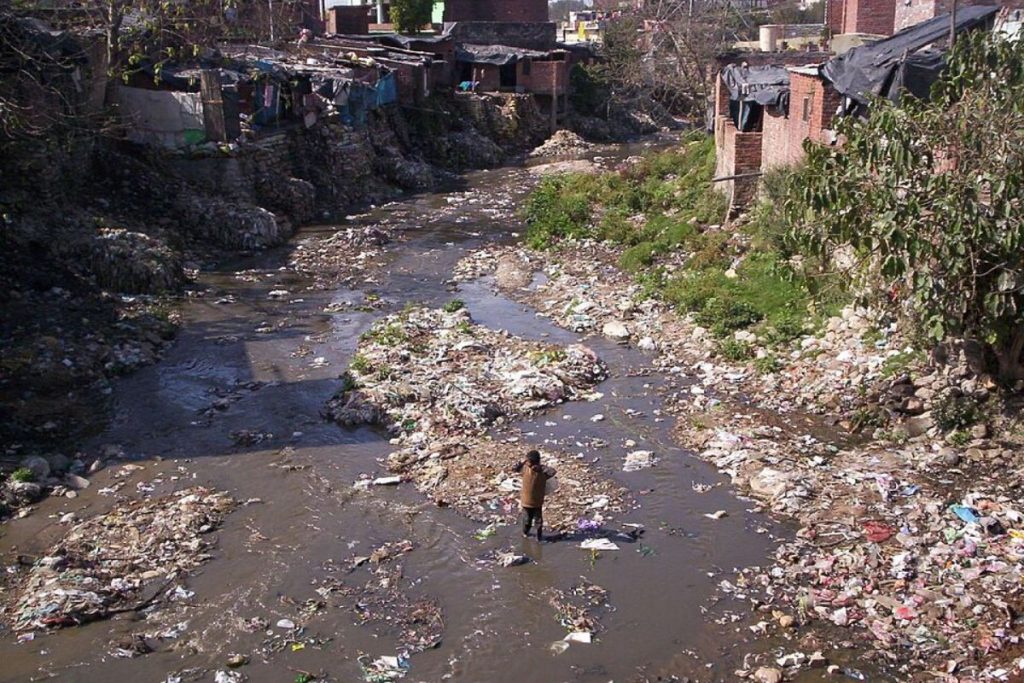
Yet, a profound and dangerous paradox defines their modern existence. The same waters venerated in daily ritual are now choking on a toxic cocktail of urban sewage, industrial chemicals, and agricultural waste. This has turned many sacred lifelines into hazardous, life-threatening drains.
This is not a localized problem but a full-blown national crisis. The Central Pollution Control Board (CPCB), India’s primary environmental monitoring agency, provides the grim data to prove it.
In its 2022 assessment of river quality, the CPCB identified 311 polluted river stretches (PRS) across 279 different rivers. This means significant portions of the country’s major waterways fail to meet even the most basic environmental safety standards.
Even more alarming is the CPCB’s “Priority 1” classification. This category is reserved for the most severe cases, identifying stretches that are critically polluted. These rivers are, in effect, open sewers that pose an immediate and severe threat to human health and the surrounding ecosystem.
It is crucial to understand that “polluted” is not a vague descriptor. It is a precise, scientific classification based on rigorous and continuous water quality monitoring. When scientists declare a river “biologically dead,” they have the data to back it up.
This analysis will move beyond anecdotal evidence to focus on key scientific indicators. These metrics act like a “blood test” for a river, revealing exactly what is poisoning it and where the poison is coming from.
The most critical of these indicators are Biochemical Oxygen Demand (BOD), which measures contamination from organic waste like sewage, and Fecal Coliform (FC), a direct indicator of disease-causing bacteria from untreated human waste.
We will also examine Chemical Oxygen Demand (COD), which signals toxic contamination from industrial chemicals, and Dissolved Oxygen (DO), which is the very measure of a river’s ability to support fish and aquatic life.
This article will provide a research-driven analysis of 10 of India’s most critically polluted rivers. We will move from the banks of the Yamuna in Delhi to the industrial drains of the Mithi in Mumbai.
We will examine the specific scientific data that defines their pollution, investigate the primary sources, from municipal failures to industrial negligence, and explore tangible solutions, including successful community-led case studies that offer a blueprint for restoration.
The Science of Pollution: Decoding the Data That Defines a Dying River
To understand the crisis in India’s rivers, one must first learn to read their “vital signs.” Pollution is not just what you can see or smell, it is a set of measurable data points. Scientists use key indicators to run a diagnostic test on a river, and the results for many of India’s waterways are alarming.
Biochemical Oxygen Demand (BOD): The “Breathing” Test
Think of Biochemical Oxygen Demand (BOD) as a measure of how much “food,” in the form of organic waste like raw sewage, is in the water. This waste becomes food for bacteria and other microbes. As these microbes feast on the pollution, they consume oxygen, just as we consume oxygen when we run.
A high BOD level means the river is filled with microbial activity, all of it frantically consuming oxygen to break down an overwhelming amount of waste. According to the Central Pollution Control Board (CPCB) standards, water safe for bathing must have a BOD less than 3 milligrams per liter (mg/L). Many of India’s polluted stretches are classified as “Priority 1” because their BOD levels soar above 30 mg/L, indicating a suffocating level of organic pollution.
Fecal Coliform (FC): The “Sewage” Indicator
If BOD is the general signal of organic waste, Fecal Coliform (FC) is the specific, undeniable “smoking gun” for sewage. These are bacteria, like E. coli, that originate almost exclusively in the intestines of humans and other warm-blooded animals. Their presence in a river means one thing: raw, untreated feces have entered the water.
This is not just an aesthetic problem, it is a severe public health emergency. High FC counts are a direct indicator of the risk of waterborne diseases like cholera, typhoid, and dysentery. The CPCB’s safety limit for bathing is less than 500 MPN (Most Probable Number) per 100ml. In the worst-hit stretches, like the Yamuna in Delhi, FC levels have been recorded in the millions, making contact with the water extraordinarily dangerous.
COD and Heavy Metals: The “Industrial Toxin” Footprint
While BOD measures organic waste, Chemical Oxygen Demand (COD) measures all chemically oxidizable pollutants. This includes the non-biodegradable industrial waste that microbes cannot eat. A high COD value, especially when it is much higher than the BOD value, points directly to chemical pollution.
This is the “industrial toxin” footprint. It reveals contamination from tanneries dumping carcinogenic chromium, textile mills releasing persistent dyes, and pharmaceutical plants discharging chemical solvents. These heavy metals and persistent pollutants are toxic, and they don’t simply dilute. Instead, they bio-accumulate, building up in the tissues of fish and, ultimately, in the humans who consume them.
Dissolved Oxygen (DO): The “Life” Indicator
Finally, we have Dissolved Oxygen (DO). This is arguably the most important metric, as it is the direct measure of a river’s ability to support life. It is the oxygen that fish, plants, and healthy aquatic organisms “breathe.” DO is in an inverse relationship with BOD and COD, as the very processes that create high pollution consume the available oxygen.
A healthy river should have a DO level above 5 or 6 mg/L. When DO drops below 4 mg/L, the river becomes a “dead zone” where most aquatic life struggles to survive or flees. In several of India’s “Priority 1” stretches, the DO has been measured at 0 mg/L. This is the scientific definition of a “biologically dead” river, a waterway that has effectively suffocated.
The Primary Culprits: Unmasking the Sources of River Pollution
India’s rivers are not dying of natural causes. They are being actively poisoned by a few key culprits. Identifying these sources is the first step to holding polluters accountable and finding solutions. The pollution stems from three dominant and interconnected sources: our cities, our factories, and our farms.
Untreated Sewage: The Volume Crisis
The single largest polluter of India’s rivers is untreated domestic sewage. Our cities are generating wastewater on a scale far beyond their capacity to treat it. According to a CPCB report on Sewage Treatment Plants (STPs), India has the capacity to treat only a fraction of the more than 72,000 million liters of sewage it generates daily.
This means the vast majority, over 70% in many urban areas, is discharged directly into the nearest river. This is the primary driver of the sky-high Biochemical Oxygen Demand (BOD) and astronomical Fecal Coliform counts found in our waters. In simple terms, we are using our sacred rivers as open sewers, turning them into breeding grounds for disease.
Industrial Effluents: The Toxic Cocktail
If sewage is the volume crisis, industrial effluent is the toxic one. Unlike organic waste, this is a chemical cocktail of heavy metals, solvents, and persistent toxins that do not break down. The problem lies in the rampant failure of industries to operate Effluent Treatment Plants (ETPs) or, in many cases, their deliberate bypass to cut costs.
The evidence is clear in key industrial belts. The tannery hub in Kanpur, for example, has long been notorious for leaching carcinogenic chromium into the Ganga. Textile mills in Gujarat and Tamil Nadu release vibrant, toxic dyes, while the pharmaceutical hub in Hyderabad has been found to create a “chemical soup” of drug residues in the Musi River, contributing to high Chemical Oxygen Demand (COD).
Agricultural Runoff: The Silent Killer
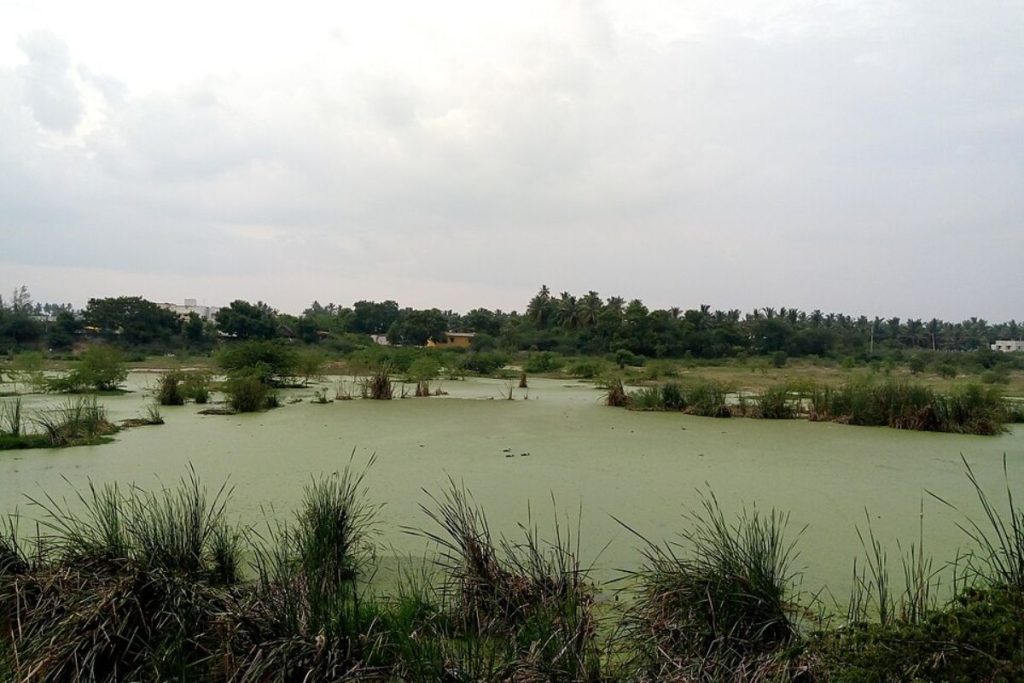
The most insidious culprit is often agricultural runoff, a classic “non-point” source of pollution. It doesn’t come from a single pipe, but from thousands of farms. The excessive use of chemical fertilizers, rich in nitrates and phosphates, washes off the fields with every rain.
This flood of nutrients triggers a deadly process called eutrophication. It acts like a steroid for algae, causing massive “algal blooms” that cover the water’s surface, block sunlight, and consume all the available oxygen as they die and decay. This is what causes a river’s Dissolved Oxygen (DO) to crash, suffocating fish and all other aquatic life, effectively killing the river from within.
Solid Waste and Plastic Pollution
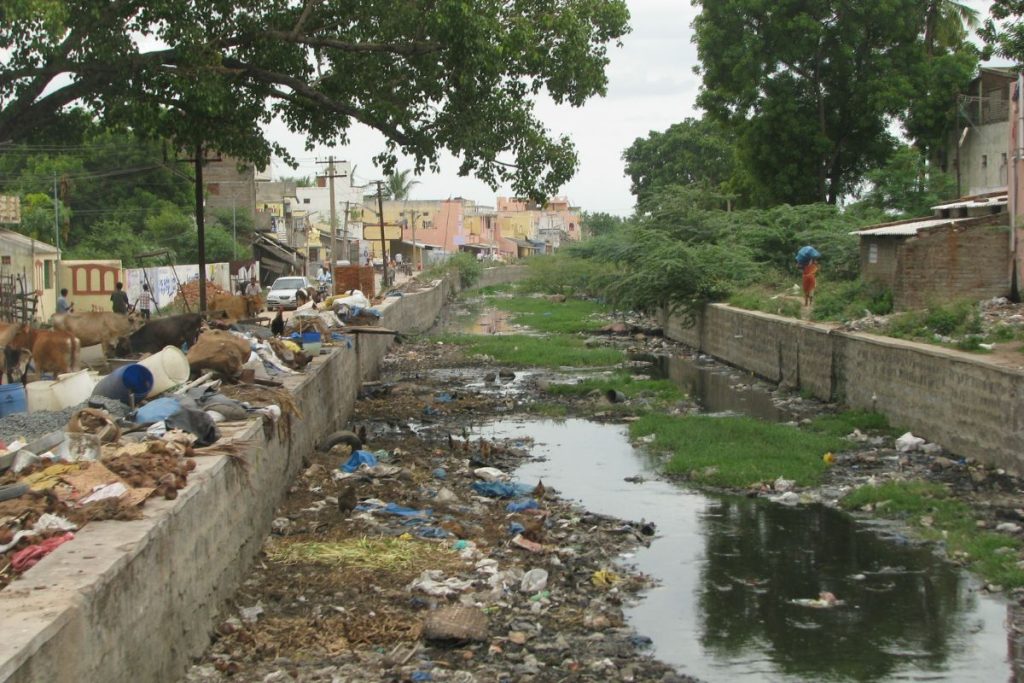
Finally, there is the visible, physical assault of solid waste. Riverbanks near urban centers are often just dumping grounds for municipal garbage. The most damaging component is plastic waste, from bottles and bags to microplastics.
This plastic clogs waterways, alters the river’s flow, and breaks down into microplastics that are ingested by fish and other wildlife. This introduces toxic chemicals directly into the food chain, a chain that often ends with humans. This physical pollution is the most visible sign of a “throw-away” culture that treats rivers as a final destination for waste.
India’s Red List: A Profile of 10 Critically Polluted Rivers
The national statistics on river pollution are stark, but the reality is found in the specific rivers that have become case studies in ecological devastation. These are not just waterways, they are “Priority 1” critical zones as defined by the CPCB, saturated with toxins, sewage, and industrial waste.
1. The Yamuna (Delhi Stretch): A ‘Biologically Dead’ Lifeline
The Yamuna, a sacred river and the main water source for the capital, is perhaps the most tragic example of river pollution in India. As it passes through Delhi, it transforms from a river into a stagnant, toxic sewer.
The “Red Flag” here is astronomical fecal contamination. The primary source is the 18 major drains in Delhi that dump an estimated 3,200 million liters per day (MLD) of untreated sewage directly into the river.
The scientific evidence is horrifying. While the bathing standard for Fecal Coliform (FC) is 500 MPN/100ml, the Yamuna in Delhi has recorded levels in the millions. Its Dissolved Oxygen (DO) frequently drops to 0 mg/L, the scientific definition of “biologically dead,” making it impossible for fish or any complex aquatic life to survive.
2. The Hindon (Uttar Pradesh): An Industrial Sacrifice
A tributary of the Yamuna, the Hindon River in Western UP is a river that has been sacrificed for industrial growth. It flows through a heavily industrialized belt including Saharanpur, Muzaffarnagar, and Ghaziabad.
Its “Red Flag” is a deadly cocktail of heavy metals and industrial toxins. The river is a dumping ground for untreated effluents from sugar mills, distilleries, paper mills, and paint industries.
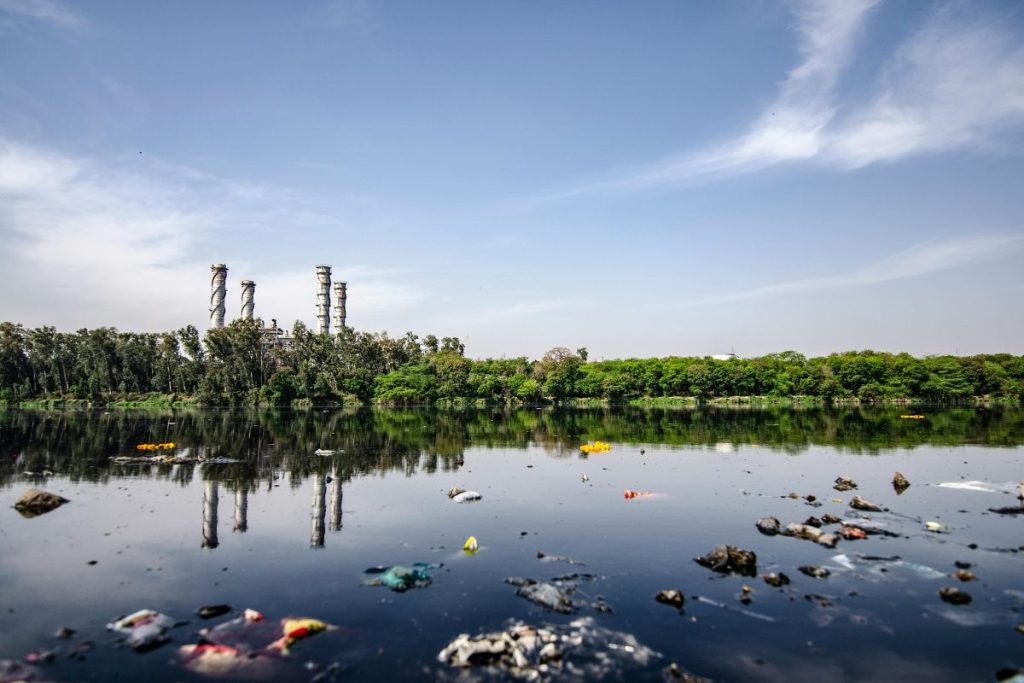
The CPCB has classified the Hindon as a “Priority 1” stretch. Studies have shown its water is saturated with dangerous heavy metals like lead, chromium, and mercury, which have seeped into the groundwater. This has been linked to severe public health crises, including cancer and birth defects, in villages along its banks.
3. The Mithi (Mumbai): The City’s Choked Drain
The Mithi River is less a river and more a 17-kilometer-long urban drain that snakes through Mumbai’s most congested areas. It originates in the city and ends in the Arabian Sea, collecting a torrent of waste along the way.
The primary pollutant is a mix of raw sewage and industrial effluent. The river receives untreated waste from numerous industries, including textile units, tanneries, and pharmaceutical labs, as well as sewage from informal settlements.
The Maharashtra Pollution Control Board (MPCB) has noted its Biochemical Oxygen Demand (BOD) levels are consistently high, often exceeding 30 mg/L (10 times the safe limit). The Mithi gained international notoriety during the 2005 Mumbai floods, when its plastic-choked channel was unable to drain the city, turning a natural disaster into a man-made catastrophe.
4. The Cooum (Chennai): A Stagnant Cesspool
In Chennai, the Cooum River is a glaring symbol of urban neglect. Once a fresh waterway, it is now a stagnant, stinking cesspool that cuts through the heart of the city.
The “Red Flag” is total sewage inundation. It is estimated that nearly 30% of Chennai’s untreated sewage is dumped directly into the Cooum. The river’s flow is so sluggish that these pollutants do not flush out to sea, they simply settle and decay.
Scientific reports confirm the river is ecologically dead. It has near-zero Dissolved Oxygen and Fecal Coliform counts that defy safe limits by thousands of times. The river is so toxic that its water is not even considered fit for industrial cooling, let alone any human or ecological purpose.
5. The Adyar (Chennai): The Cooum’s Toxic Twin
Flowing parallel to the Cooum, the Adyar River suffers a similar, tragic fate. Though cleaner in its upper reaches, it becomes heavily polluted as it enters the Chennai metropolitan area.
Like its twin, the Adyar’s main issue is illegal sewage discharge and industrial dumping. Industries and residential areas along its banks release a steady stream of untreated waste, overwhelming its assimilative capacity.
The Tamil Nadu Pollution Control Board (TNPCB) monitors show critically high BOD and FC levels in its urban stretch. The accumulation of sewage sludge has made the river shallow, and eutrophication from nutrient-rich waste has turned stretches of the river into foul-smelling algae beds.
6. The Ganga (Kanpur Stretch): A Toxic Tannery Hub
While the Namami Gange project has made efforts to clean the nation’s most sacred river, certain stretches remain critically polluted. The most notorious is the 100-km stretch in and around Kanpur.
The “Red Flag” here is toxic industrial effluent, specifically from over 400 leather tanneries. These factories are known to discharge a lethal mix of chemicals, most notably carcinogenic Chromium-6, directly into the river.
Despite treatment plants, non-compliance is rampant. This industrial waste, combined with the city’s massive sewage output, creates a section of the river where the Chemical Oxygen Demand (COD) is dangerously high, and the water is thick with toxic heavy metals.
7. The Gomti (Lucknow, Uttar Pradesh): A Dying Tributary
The Gomti, a vital tributary of the Ganga and the lifeline of Lucknow, is dying a slow death from urban pollution. The river is relatively clean when it enters the city, but it exits as a polluted drain.
The primary source is untreated municipal sewage. Over 130 MLD of raw sewage and industrial waste from paper mills and sugar factories are dumped into the river through dozens of drains.
CPCB data consistently places the Gomti in the “Priority 1” category. Its BOD levels frequently spike, and high Fecal Coliform counts make the water completely unsafe for human use, posing a direct threat to the millions who depend on it downstream.
8. The Sabarmati (Ahmedabad Stretch): A River of Dyes
The Sabarmati Riverfront in Ahmedabad is a celebrated urban project, but this cosmetic beautification hides a dark secret. Downstream from the city, the river is a toxic channel.
The “Red Flag” is massive industrial pollution from textile mills. Ahmedabad is a textile hub, and its mills discharge enormous quantities of untreated, chemical-laden water containing dyes, salts, and processing chemicals.
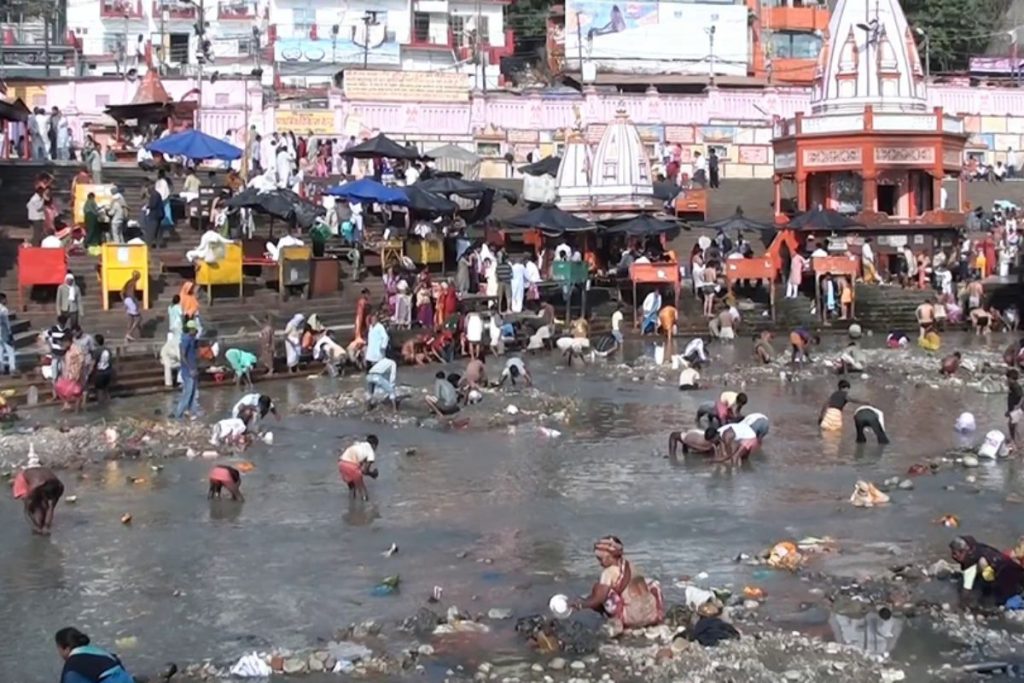
The Gujarat Pollution Control Board (GPCB) data has confirmed that the 120-km stretch downstream from Ahmedabad is critically polluted. The river’s BOD and COD levels are among the highest in the country, and the water is often black or red from the undiluted dyes, killing all aquatic life.
9. The Musi (Hyderabad): A Pharmaceutical Cocktail
The Musi River, which flows through Hyderabad, has the unique and dangerous distinction of being a “pharmaceutical cocktail.” The city is one of the world’s largest hubs for bulk drug manufacturing.
For decades, industries have dumped untreated waste, creating a river contaminated with high levels of antibiotics, painkillers, and other active pharmaceutical ingredients (APIs).
This has led to a global environmental crisis. Scientific studies published in journals have found that this pollution is a “hotspot” for the creation of antibiotic-resistant superbacteria, posing a threat to global health far beyond the river’s banks.
10. The Damodar (Jharkhand & West Bengal): ‘Sorrow of Bengal’
Known as the “Sorrow of Bengal” for its past floods, the Damodar River is now a “sorrow” for a different reason: intense industrial and mining pollution. It flows through the heart of India’s coal belt.
The river is a sink for waste from coal washeries, thermal power plants, and steel industries. This results in high levels of toxic heavy metals, oil, grease, and coal dust, turning the river water black.
The water is highly acidic and has a high Chemical Oxygen Demand (COD). Despite its critical importance to the region’s economy, the Damodar has become a prime example of how industrial activity, without regulation and conscience, can kill a river.
Beyond Top-Down Failures: How Community-Led Action is Reviving India’s Rivers
Amid the grim statistics of dying rivers, large-scale, top-down government solutions often struggle to gain traction against the relentless flow of pollution. However, a different, more agile model is emerging from the ground up, proving that lasting change often starts with the community.
Organizations like Earth5R, an environmental social enterprise, are championing a hyperlocal approach. This model is built on a “Public-Private-Community Partnership” (PPCP) that is both data-driven and deeply human. It operates on a simple, powerful premise: to save a river, you must first empower the people who live on its banks.
Case Study: The Mithi River Revival (Mumbai)
The Mithi River in Mumbai is a textbook example of urban ecological collapse. It is a “Priority 1” polluted stretch, choked with plastic and industrial sludge, where Biochemical Oxygen Demand (BOD) levels consistently top 30 mg/L, ten times the safe limit.
Instead of focusing only on dredging, the Earth5R intervention began by training the local communities, including residents of areas like Dharavi. This training focused on the critical, first step of practical waste segregation at the source.
The true innovation, however, lies in linking environmental action directly to the local economy. This circular economy model trains residents to convert the segregated waste, especially plastics, into new, marketable products like benches, paver blocks, and textiles.
This strategy creates sustainable livelihoods, giving the community a direct financial stake in maintaining a clean environment. It reframes waste from a problem into a resource.
Furthermore, these cleanup efforts are tracked with technology. Volunteers use mobile apps to geotag and quantify the waste removed. This hard data creates a powerful accountability tool, allowing citizens to pinpoint pollution hotspots and pressure municipal authorities and industries for corrective action.
Case Study: Community Action on the Yamuna (Delhi)
This hyperlocal model has proven to be scalable. In communities along the banks of the severely polluted Yamuna River in Delhi, the same principles are being applied to tackle the overwhelming sewage crisis.
Earth5R has conducted extensive workshops focused on household-level waste management, composting, and educating residents on the direct link between their drains and the river’s health.
The results are not just anecdotal, they are measurable. Reports from these interventions have shown a staggering 35% reduction in household waste entering the drainage systems in participating areas.
This bottom-up strategy succeeds where top-down plans fail because it addresses the human element. It proves that to stop pollution, you must change behavior at its source, aligning ecological goals with economic incentives and community pride.
Reclaiming the Rivers: A Three-Pronged Path to Rejuvenation
The crisis facing India’s rivers, while severe, is not irreversible. Rescuing these lifelines from their toxic state is not a matter of finding a single “magic bullet” solution. Instead, it demands a comprehensive, three-pronged strategy that synchronizes top-down policy, modern technology, and bottom-up public action.
If a river is a patient in critical condition, this strategy is the only viable treatment plan, addressing the illness at every level.
1. Policy and Governance (The Top-Down Framework)
At the highest level, a strong legal and regulatory framework is essential to set national standards. Government bodies are the “brain” of the operation, directing the response. Programs like the Namami Gange Mission and the overarching National River Conservation Plan (NRCP) have been crucial in allocating funds and infrastructure.
Furthermore, the judiciary, particularly the National Green Tribunal (NGT), has acted as a powerful enforcement arm. The NGT has repeatedly issued strict orders, imposed massive fines on polluting industries, and held municipal bodies accountable for failing to treat their sewage.
The challenge, however, remains the “enforcement gap.” As many analyses of India’s water governance point out, laws are only as effective as their implementation. Without consistent, incorruptible monitoring and swift penalties for non-compliance, even the best-funded projects will fail to clean the water.
2. Technological Solutions (The Infrastructure “Hardware”)
The second prong is the “hardware” of rejuvenation, the essential infrastructure needed to stop pollution at its source. The single most critical technological intervention is the widespread implementation of Sewage Treatment Plants (STPs).
Think of an STP as a city’s “kidney.” Without it, the urban center dumps its raw, unfiltered waste directly into the river’s bloodstream. The national goal must be to create 100% wastewater treatment capacity for every town and city.
The same non-negotiable standard must apply to industrial waste through Effluent Treatment Plants (ETPs). These are the specialized “detox centers” for factories, scientifically designed to neutralize and remove the toxic chemicals, heavy metals, and dyes from industrial discharge before a single drop re-enters the ecosystem.
3. The People’s Role (The Bottom-Up Movement)
Technology and policy alone are incomplete. A billion-dollar STP can be rendered useless if it is clogged with plastic bags and solid garbage. This is why the third pillar, community ownership, is perhaps the most vital.
This is the bottom-up approach demonstrated by organizations like Earth5R. This model is built on educating and empowering local communities to become stewards of their own environment, starting with the simple, powerful act of waste segregation at the source.
By separating wet, dry, and sanitary waste at the household level, communities ensure that only sewage, not solid trash, enters the drainage system. This fosters a circular economy, turning waste into a resource and giving residents a financial stake in keeping their environment clean.
Ultimately, lasting change is achieved only when stringent policy, functional technology, and an empowered public work in concert.
Reclaiming the Rivers: A Three-Pronged Path to Rejuvenation
The crisis facing India’s rivers, while severe, is not irreversible. Rescuing these lifelines from their toxic state is not a matter of finding a single “magic bullet” solution. Instead, it demands a comprehensive, three-pronged strategy that synchronizes top-down policy, modern technology, and bottom-up public action.
If a river is a patient in critical condition, this strategy is the only viable treatment plan, addressing the illness at every level.
1. Policy and Governance (The Top-Down Framework)
At the highest level, a strong legal and regulatory framework is essential to set national standards. Government bodies are the “brain” of the operation, directing the response. Programs like the Namami Gange Mission and the overarching National River Conservation Plan (NRCP) have been crucial in allocating funds and infrastructure.
Furthermore, the judiciary, particularly the National Green Tribunal (NGT), has acted as a powerful enforcement arm. The NGT has repeatedly issued strict orders, imposed massive fines on polluting industries, and held municipal bodies accountable for failing to treat their sewage.
The challenge, however, remains the “enforcement gap.” As many analyses of India’s water governance point out, laws are only as effective as their implementation. Without consistent, incorruptible monitoring and swift penalties for non-compliance, even the best-funded projects will fail to clean the water.
2. Technological Solutions (The Infrastructure “Hardware”)
The second prong is the “hardware” of rejuvenation, the essential infrastructure needed to stop pollution at its source. The single most critical technological intervention is the widespread implementation of Sewage Treatment Plants (STPs).
Think of an STP as a city’s “kidney.” Without it, the urban center dumps its raw, unfiltered waste directly into the river’s bloodstream. The national goal must be to create 100% wastewater treatment capacity for every town and city.
The same non-negotiable standard must apply to industrial waste through Effluent Treatment Plants (ETPs). These are the specialized “detox centers” for factories, scientifically designed to neutralize and remove the toxic chemicals, heavy metals, and dyes from industrial discharge before a single drop re-enters the ecosystem.
3. The People’s Role (The Bottom-Up Movement)
Technology and policy alone are incomplete. A billion-dollar STP can be rendered useless if it is clogged with plastic bags and solid garbage. This is why the third pillar, community ownership, is perhaps the most vital.
This is the bottom-up approach demonstrated by organizations like Earth5R. This model is built on educating and empowering local communities to become stewards of their own environment, starting with the simple, powerful act of waste segregation at the source.
By separating wet, dry, and sanitary waste at the household level, communities ensure that only sewage, not solid trash, enters the drainage system. This fosters a circular economy, turning waste into a resource and giving residents a financial stake in keeping their environment clean.
Ultimately, lasting change is achieved only when stringent policy, functional technology, and an empowered public work in concert.
From ‘Use and Throw’ to ‘Respect and Restore’
The data has presented an undeniable truth: India’s river pollution is a measurable, scientific crisis, not a vague environmental grievance. The ‘vital signs’ of these rivers, from the Yamuna to the Musi, tell a consistent story.
This story is written in the language of data: critically high Biochemical Oxygen Demand (BOD) from a deluge of organic waste, and astronomical Fecal Coliform (FC) counts that confirm our cities are using these lifelines as open sewers.
It is also written in the toxic ink of Chemical Oxygen Demand (COD) and heavy metals, a clear footprint of industrial negligence where rivers are treated as convenient, free-of-charge dumping grounds for hazardous effluents.
For decades, the approach to solving this has been focused on building “silver-bullet” infrastructure, massive Sewage Treatment Plants (STPs) and treatment facilities. While this technology is a non-negotiable part of the solution, it is clear that concrete and steel alone cannot save a river.
An STP is like a kidney, essential for filtering toxins, but it cannot function if the body is actively ingesting poison and the arteries are clogged with plastic.
The solution, therefore, is not just technological, it is profoundly social. The most promising blueprints for a sustainable future, as seen in community-led models like those from Earth5R, are built on human engagement.
The health of India’s rivers, and by extension, the health of its people, depends on a fundamental paradigm shift. We must move from a linear “use and throw” culture to a circular “respect and restore” mindset. This begins at the source, in every home, with the simple act of segregation, and ends with an empowered community that has a true stake in its own environment.
Frequently Asked Questions: India’s River Pollution Crisis
What is a “Polluted River Stretch” (PRS)?
A Polluted River Stretch, or PRS, is a specific section of a river identified by the Central Pollution Control Board (CPCB) where the water quality fails to meet the required standards. As of the 2022 report, India has 311 such stretches across 279 rivers.
What is the main indicator used to classify a river as “Priority 1” polluted?
The primary indicator is Biochemical Oxygen Demand (BOD). A river stretch is classified as “Priority 1” (the most critical category) if its BOD level is above 30 milligrams per liter (mg/L).
What is Biochemical Oxygen Demand (BOD)?
BOD measures the amount of oxygen required by bacteria to decompose organic waste (like sewage) in the water. A high BOD means there is a large amount of organic pollution, which consumes the river’s oxygen and suffocates aquatic life.
What is a safe BOD level for bathing?
According to CPCB standards, water that is safe for bathing should have a BOD level of less than 3 mg/L.
What does Fecal Coliform (FC) in a river indicate?
Fecal Coliform is a group of bacteria (like E. coli) that originate from human and animal feces. Its presence is a direct and undeniable indicator of untreated sewage in the water, which carries a high risk of waterborne diseases like cholera and typhoid.
What does it mean when a river is “biologically dead”?
This is a scientific term for a river, or a stretch of it, where the Dissolved Oxygen (DO) level has dropped to 0 mg/L. At this point, there is no oxygen left in the water, making it impossible for fish or any complex aquatic organisms to survive.
What is the difference between BOD and COD?
- BOD (Biochemical Oxygen Demand) measures only the oxygen needed to break down organic waste (like sewage).
- COD (Chemical Oxygen Demand) measures the oxygen needed to break down all oxidizable pollutants, including both organic waste and industrial chemical waste (like dyes, solvents, and heavy metals). A high COD-to-BOD ratio often points to industrial pollution.
What is the single largest source of river pollution in India?
The largest source by volume is untreated domestic sewage. It is estimated that over 70% of the sewage generated in India’s urban centers flows directly into rivers without any treatment.
How do industries pollute rivers?
Industries discharge untreated “effluents,” which are a toxic cocktail of chemicals, solvents, and heavy metals (like chromium from tanneries or drug residues from pharma plants). This waste is often non-biodegradable and highly toxic, leading to high COD levels.
What is eutrophication?
This is a process caused by agricultural runoff. When excess fertilizers (nitrates and phosphates) wash from farms into a river, they act like steroids for algae. This causes massive “algal blooms” that block sunlight and consume all the Dissolved Oxygen as they die and decay, suffocating the river.
Why is the Yamuna River so polluted in Delhi?
The Yamuna in Delhi is polluted primarily by the 18 major drains that dump over 3,000 million liters of untreated sewage into it daily. This results in Fecal Coliform counts in the millions (when the safe limit is 500) and a Dissolved Oxygen level of 0 mg/L, rendering it “biologically dead.”
What is unique about the pollution in Hyderabad’s Musi River?
The Musi River is infamously known as a “pharmaceutical cocktail.” It flows through one of the world’s largest drug manufacturing hubs and is contaminated with high levels of antibiotics and other pharmaceutical ingredients, which has led to it becoming a hotspot for creating antibiotic-resistant “superbacteria.”
What specific industry pollutes the Ganga River near Kanpur?
The Ganga stretch near Kanpur is critically polluted by over 400 leather tanneries. These industries are known to discharge effluents containing highly toxic and carcinogenic Chromium-6 directly into the river.
How does plastic waste harm a river?
Plastic clogs the waterway, altering its flow and contributing to flooding. It also breaks down into microplastics, which are ingested by fish and wildlife, introducing toxic chemicals into the food chain.
What is an STP?
STP stands for Sewage Treatment Plant. It is a critical piece of infrastructure designed to remove pollutants from municipal wastewater (sewage) before the water is discharged back into the river.
What is an ETP?
ETP stands for Effluent Treatment Plant. This is a specialized, industrial-scale facility designed to treat and neutralize the toxic chemicals, heavy metals, and other hazardous wastes from a factory’s discharge (its “effluent”) before it reaches the river.
What is the role of the National Green Tribunal (NGT)?
The NGT is a specialized judicial body that handles environmental cases. It acts as an enforcement arm, issuing strict orders, imposing heavy fines on polluters (both industries and municipalities), and holding authorities accountable for failing to protect the environment.
What is the Earth5R model for river cleaning?
It is a “Public-Private-Community Partnership” (PPCP) model that focuses on hyperlocal, community-led action. It trains local residents in waste segregation and creates sustainable livelihoods by turning that waste into new products, giving the community a direct economic stake in keeping the river clean.
What does a “circular economy” mean in the context of waste?
A circular economy is a model that reframes waste as a resource. Instead of the linear “use and throw” model, it creates a “circular” system where waste (like plastic bottles) is collected, processed, and turned back into valuable products (like benches or textiles), eliminating waste from the ecosystem.
What is the most important takeaway from this article?
The most important takeaway is that technology and policy (like STPs and government plans) are essential but incomplete. A lasting solution to river pollution requires a fundamental social shift, driven by community ownership and a circular economy, to stop pollution at its source.
From Bystanders to Stakeholders: The Choice for Our Rivers
The future of India’s rivers will not be decided by government committees or distant industries alone. It will be decided in our homes, on our streets, and along the banks of the water itself. The science is clear, the data is undeniable, and the solutions are a known quantity.
The real question is no longer what to do, but when we will commit to doing it.
Waiting for a single, large-scale solution has led to decades of decay. The path to rejuvenation is a shared one, built from individual responsibility and community action. It starts by refusing to be a bystander to the pollution of our own lifelines.
You can be the source of this change.
Start by segregating waste in your own home to stop the flow of plastics into our drains. Join or organize a local cleanup drive. Use your voice and the data in this report to hold your local representatives and industries accountable. Support organizations that are empowering communities on the ground.
These rivers are our shared heritage. Their restoration must be our shared responsibility.
~ Authored by Abhijeet Priyadarshi