
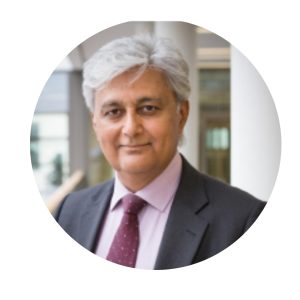
Ovais Sarmad
Vice Chair, GHG Protocol Steering Committee | Former Deputy Executive Secretary, UNFCCC | Chief of Operations & Strategic Advisor, Global Climate Leadership
Ovais Sarmad is a leading figure in international climate diplomacy and governance, known for steering the UNFCCC Secretariat’s operations during critical global climate negotiations. Between 2017 and 2023, he played a key role in implementing the Paris Agreement, finalizing Article 6 at COP26, and setting up the Loss & Damage Fund at COP27.
Before his climate leadership at the UN, he was deeply involved in institutional reform and operations management at the International Organization for Migration (IOM), serving as Chief of Staff and Director of Resource Management over a 27-year tenure. He holds a Bachelor of Commerce from Osmania University and professional certifications in management accountancy (ACMA/GCMA) from the UK.
Global Climate Leadership
At the heart of his UNFCCC service, Sarmad supported the Executive Secretary in managing secretariat staff, guiding strategic operations, and advising on global climate outcomes. Since transitioning from the UN, he now serves as the Vice Chair of the GHG Protocol Steering Committee, continuing his influence on climate standards and public policy.
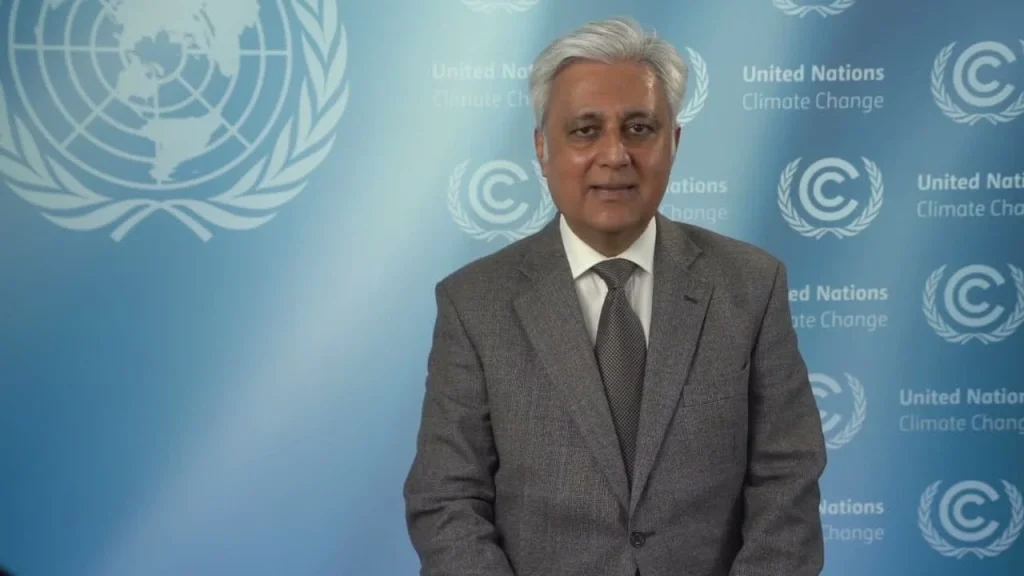
Global Engagement & Impact
Ovais Sarmad has been a prominent voice at international forums, bringing together governments, institutions, and communities to advance climate action. At the UNFCCC, he provided leadership during negotiations that shaped the Paris Agreement rulebook, championed multilateral cooperation, and supported countries in translating commitments into practice.
He has engaged with global think tanks, universities, and private sector leaders — including the Earthna Center for a Sustainable Future in Qatar, the UN System Staff College, and sustainability dialogues with corporations and policymakers. Through these platforms, he has highlighted the urgent need for accountability, solidarity, and innovation in tackling climate challenges.
Sarmad’s influence extends beyond diplomacy. His work emphasizes the connection between climate governance, humanitarian response, and sustainable development, inspiring youth, civil society, and business leaders to play a role in shaping resilient futures.
Honours and Recognition
Ovais Sarmad’s leadership in global climate governance has been recognized at the highest levels of the United Nations and the international community. In 2017, United Nations Secretary-General António Guterres appointed him as the Deputy Executive Secretary of the UNFCCC, entrusting him with the responsibility of guiding the Secretariat through one of the most critical decades for climate action.
During his tenure, he was widely acknowledged for his role in supporting the Paris Agreement implementation framework, finalizing the Article 6 rulebook at COP26, and helping establish the Loss & Damage Fund at COP27, a landmark achievement for climate-vulnerable nations.
He has been honored for his ability to connect diplomacy, operational excellence, and policy innovation, ensuring that multilateral climate negotiations translated into measurable action. His 27 years at the International Organization for Migration (IOM) also earned him recognition for strengthening humanitarian operations, resource governance, and linking migration to climate resilience.
Today, he continues to serve as Vice Chair of the GHG Protocol Steering Committee and as an advisor to global institutions and think tanks, roles that reflect his ongoing influence in shaping climate standards, sustainability frameworks, and international cooperation.
Ovais Sarmad’s recognitions highlight not only his institutional leadership but also his enduring commitment to empowering youth, supporting vulnerable communities, and strengthening accountability in global climate action.
Legacy & Vision
Ovais Sarmad’s legacy lies in aligning strategic governance with real-world climate action solutions. As a mentor and advisor, he remains committed to empowering youth, driving policy innovation, and navigating the intersection of diplomacy and sustainability.