
EarthJournal Research Brief · River Cleanup CSR Projects & Urban Waterways
River Cleanup CSR Projects: From Funding to Field Impact
India’s corporate environmental spending is growing faster than the sector’s capacity to deliver on the ground. The constraint is no longer money or intent — it is field execution, and the operational depth needed to sustain it past the first year.
Where India’s Plastic Leaks — and How Much
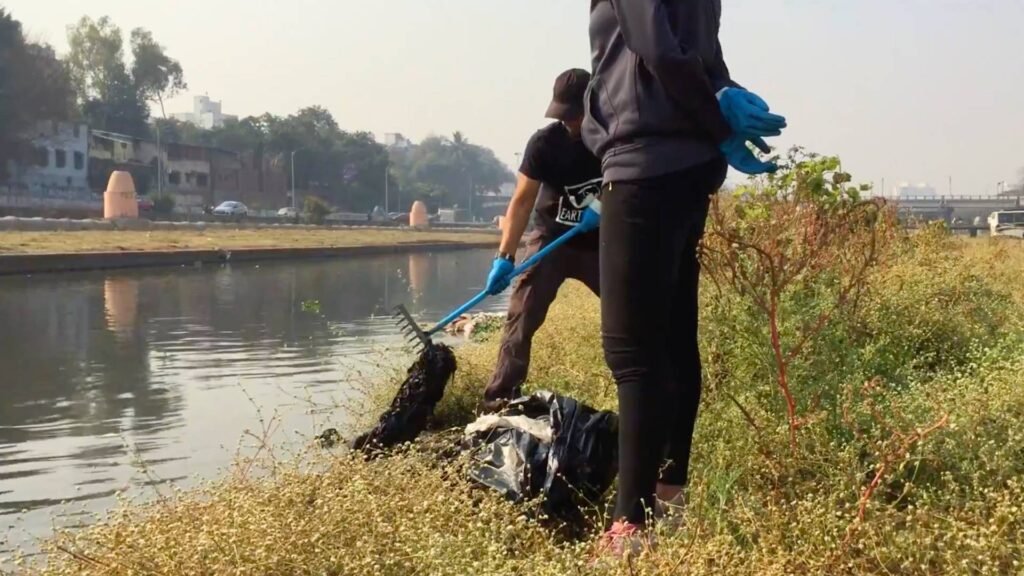
Most plastic that reaches the ocean does not travel there directly. It moves through drains, nullahs and small urban rivers that pass within a few kilometres of the households and businesses that discarded it. This is a structural insight rather than a rhetorical one: it means the leakage point is geographically concentrated, physically accessible, and therefore something a corporate programme can actually be sited against. Interception at the waterway is the last point in the chain where a tonne of escaped plastic can still be captured, which is why river plastic recovery sits where it does in the waste hierarchy.
The modelling work that reframed this problem was published in Science Advances in 2021. Meijer and colleagues estimated that more than 1,000 rivers account for roughly 80% of global riverine plastic emissions, with total annual flows between 0.8 and 2.7 million tonnes. Critically, emissions are spread across two orders of magnitude more rivers than earlier estimates assumed, and small rivers passing through dense coastal cities rank among the highest emitters. UNEP’s summary of the same research puts it plainly: the problem is many pipes, not a few hoses.
The volumes involved are substantial and growing. CPCB’s annual reporting under the Plastic Waste Management Rules places India’s plastic waste generation in the region of 3.9 million tonnes per year, roughly 10,700 tonnes per day — and because several states have historically not reported, that national figure is a floor rather than a central estimate. Globally, the OECD Global Plastics Outlook projects leakage into aquatic environments rising 91% between 2019 and 2060, from 6.1 to 11.6 million tonnes annually.

Mumbai’s Mithi River is a textbook instance of that class. It runs from the overflow of Vihar and Powai lakes through Saki Naka, Kurla, Kalina, the Bandra-Kurla Complex and Dharavi before discharging into Mahim Creek and the Arabian Sea. It is short, entirely urban, drains an extraordinarily dense catchment, and functions simultaneously as a stormwater channel and an informal waste sink. Every attribute that makes it environmentally severe also makes it operationally tractable.
- Short channel length concentrates the intervention. A 17.8-kilometre river can be characterised end-to-end, its accumulation points mapped, and its collection infrastructure sited with precision. A 2,500-kilometre basin, by contrast, makes identifying where to work a multi-year research problem before a single tonne moves.
- Urban catchments produce predictable material composition. Flexible packaging, LDPE film, HDPE containers, thermocol and single-use items dominate the load, which allows downstream processing capacity and recycler agreements to be specified in advance rather than improvised mid-project.
- Flood risk creates municipal budget lines that already exist. Desilting and channel-clearing are funded annually because blockage translates directly into monsoon inundation, so corporate contribution supplements an established public priority rather than competing with one.
- Proximity to population enables continuous field presence. Infrastructure sited inside a city can be staffed, supervised and audited daily by people who live within walking distance, which lowers operating cost and makes year-round operation realistic rather than aspirational.
Where CSR Capital Is Going, and Why Rivers Now Qualify
The funding environment for environmental field programmes in India has changed materially in the last three years, and the change is favourable. Corporate social responsibility spending is no longer a discretionary reputational line item but a statutory obligation with a growing environmental allocation, and river and water-body restoration sits squarely within the activities the law permits. Understanding the shape of that capital pool is the starting point for any organisation planning a serious intervention.
Section 135 of the Companies Act, 2013 obliges qualifying companies — those meeting thresholds on net worth, turnover or net profit — to spend at least 2% of average net profits on activities listed in Schedule VII, which explicitly includes environmental sustainability and ecological balance. India was the first major economy to legislate this. According to the Bharat CSR Performance Report 2026, total Indian CSR spending reached a record ₹40,794 crore in FY2024–25, up 17% year on year, across 72,233 projects and 29,546 contributing companies, at an average project size of ₹56.47 lakh.
The environmental share is the fastest-moving component. Environmental sustainability funding rose 40% year on year to ₹3,397 crore, roughly 8% of total CSR expenditure, while 98% of all CSR funds were spent directly on projects rather than transferred to government funds. Maharashtra, Gujarat, Karnataka, Delhi and Tamil Nadu together absorbed a significant share — a geographic concentration that maps closely onto India’s most polluted urban waterways.
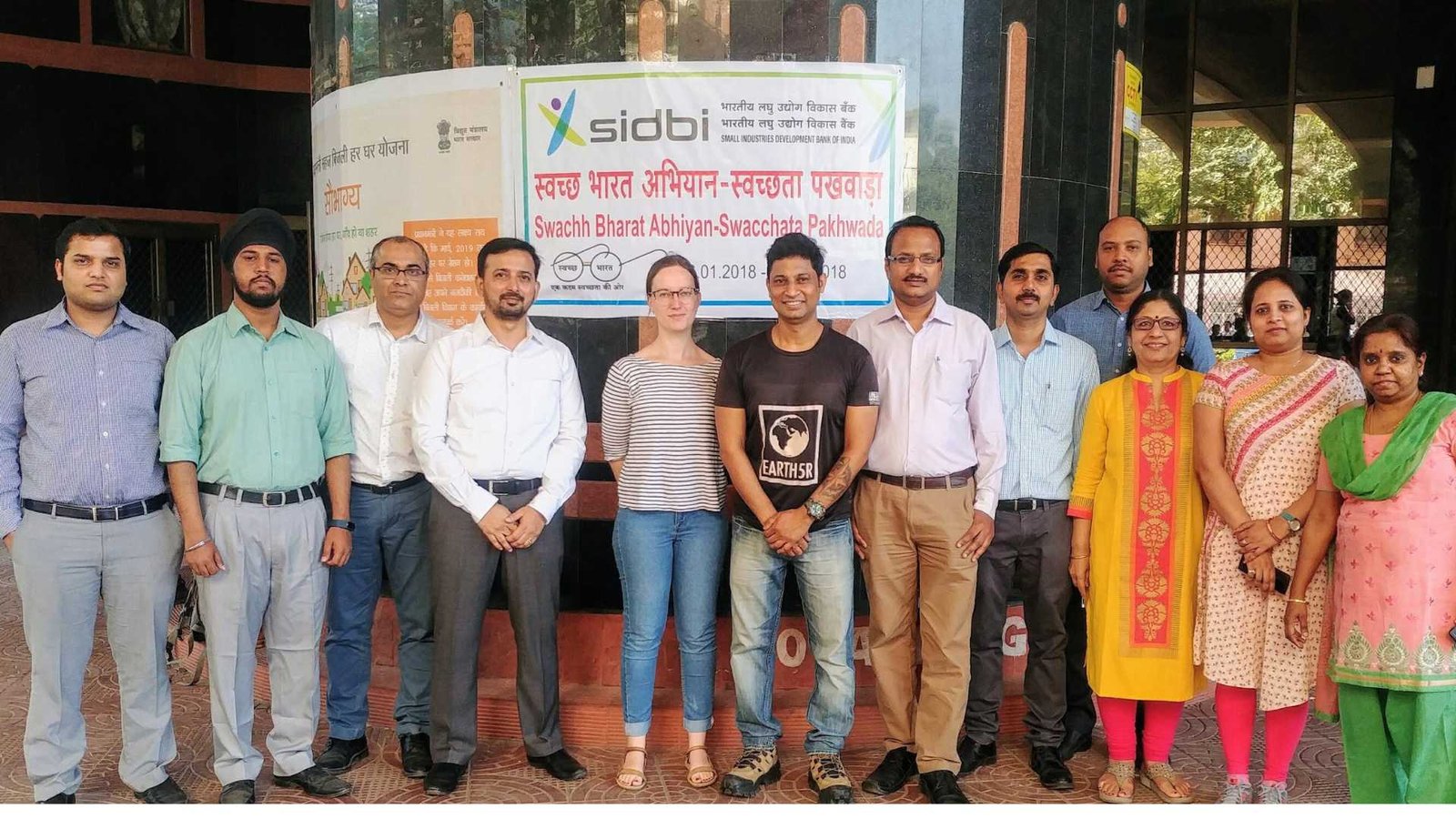
- The allocation is rising faster than delivery capacity. A 40% annual increase in environmental CSR funding is not matched by a 40% increase in organisations able to run continuous field operations, which means capital is chasing a limited pool of credible implementation partners.
- Average project size favours substantive programmes. At ₹56.47 lakh average, the typical CSR project is now large enough to fund infrastructure, staffing and a full annual cycle — not merely a one-day drive — provided the implementing partner can absorb and deploy it operationally.
- Unspent CSR carries statutory consequences. Amounts not spent must be transferred to specified funds or ring-fenced for ongoing projects within defined periods, so boards face real pressure to identify partners who can deploy budget on schedule rather than return it.
- Foreign subsidiaries face the same obligation. Indian subsidiaries of multinational parents are treated identically and must spend within India through an implementing agency registered via Form CSR-1, which channels global sustainability budgets into domestic field programmes.
- Environmental projects now carry dual reporting value. The same programme can satisfy Schedule VII CSR obligations while feeding waste, water and emissions disclosures under BRSR, which materially improves the internal business case relative to single-purpose spending.
Why Most River Cleanup CSR Projects Stall After Year One
The failure mode in this sector is remarkably consistent, and it is not a funding failure. A corporate budget sponsors a drive, volunteers assemble, a quantity of waste is removed, photographs are taken, and within weeks the site returns to baseline. The following year the sponsor either repeats the exercise at another location or concludes that river work does not produce durable outcomes. What actually failed was the operating model, and specifically the assumption that removal alone constitutes an intervention.
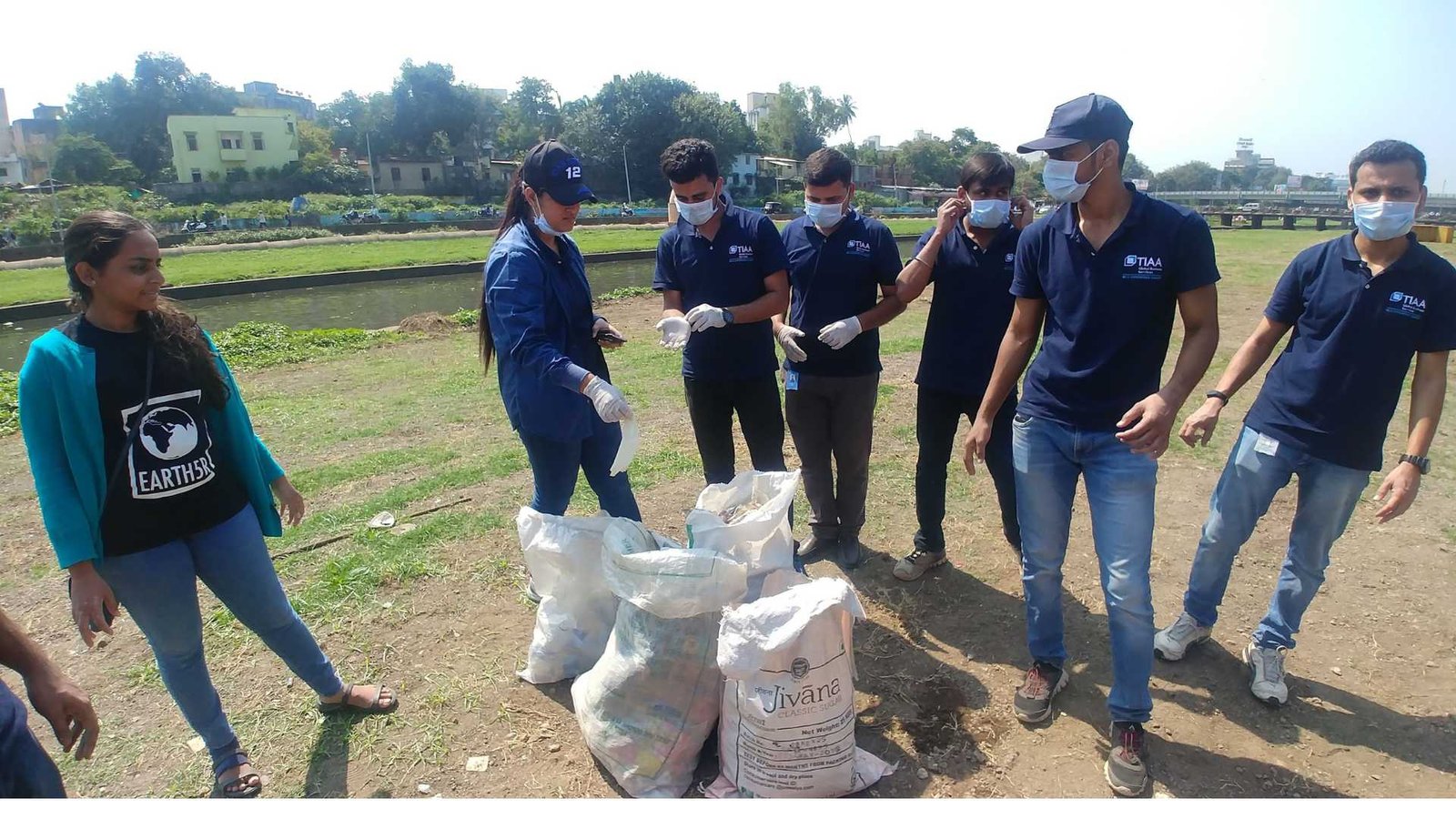
- Removal without source reduction is arithmetic that never closes. If inbound load continues at its prior rate, any single extraction event is erased within days, and the programme is committed to an indefinite treadmill. Reducing what arrives — through household segregation and business engagement in the catchment — is the only mechanism that changes the underlying trend.
- No disposition pathway means waste is relocated, not resolved. Programmes that collect without contracted recyclers, aggregators or processing capacity create an unmanaged pile at the riverbank, which frequently returns to the environment and generates a second problem for the sponsor.
- Volunteer-only models cannot address sub-surface or high-flow load. Community drives operate at the surface and in fair weather. Monsoon surge, submerged accumulation and floating mats at scale require equipment, trained operators and a permanent site presence that volunteering alone cannot supply.
- Absence of local livelihood integration guarantees discontinuity. When no one in the catchment derives income from the programme, participation ends when the sponsoring campaign ends. Where waste collectors and upcyclers earn from it, the operation has a constituency that sustains it between funding cycles.
- Activity reporting is not impact reporting. Photographs and headcounts cannot be reconciled against ESG disclosures, EPR obligations or a board-level impact review, so even genuinely successful field work fails to convert into the reporting value that justified the spend.
The distinction that matters is between a cleanup event and a cleanup operation. An event removes a quantity of waste once. An operation changes the rate at which waste arrives, processes what it collects, employs people locally, and produces a record the sponsor can use. Only the second is a programme.
What River Cleanup CSR Project Execution Actually Requires
Execution in this sector is a specialist discipline, and it is where most well-funded programmes come apart. The work spans hydrology, waste characterisation, municipal permissions, informal-sector labour relations, logistics, recycler commercial terms, community mobilisation and data systems — capabilities that rarely sit inside a single corporate CSR team or a general-purpose consulting firm. Understanding the actual operational scope is what separates a realistic programme design from an optimistic one.
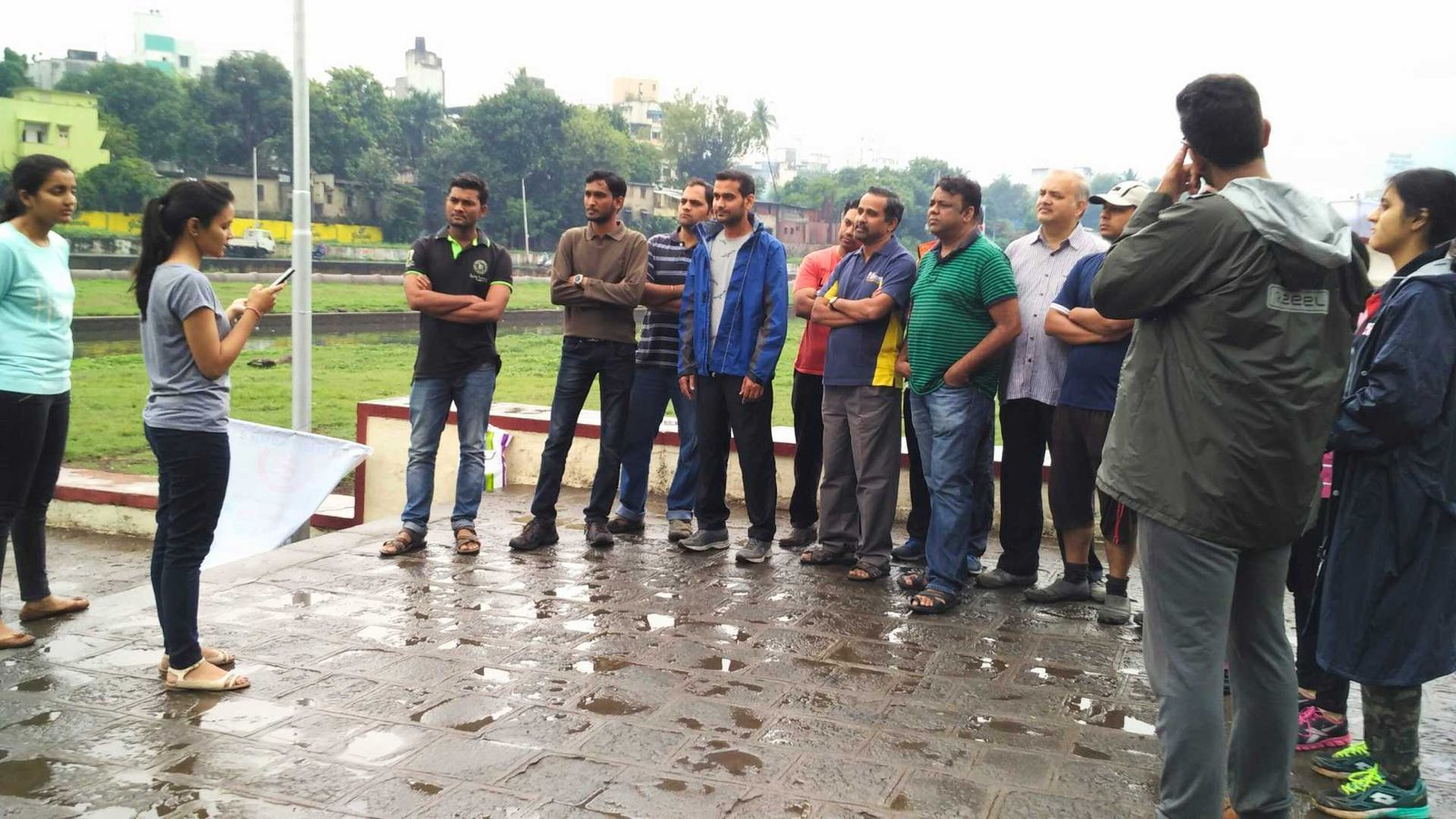
- Catchment characterisation before equipment selection. Mapping accumulation hotspots, seasonal flow variation, material composition by polymer and existing municipal operations determines where infrastructure goes and what it must handle. Siting decisions made without this baseline intercept the wrong fraction at the wrong point, and the error is expensive once installed.
- Municipal permissions and interface management. Working in a river requires access permissions, coordination with existing desilting contracts, agreed dumping and transfer arrangements, and a functioning relationship with the urban local body — each of which takes months to secure and continuous effort to maintain.
- Informal-sector integration on fair terms. Waste collectors already operate in every Indian catchment. A programme that competes with them fails; one that formalises them — fair rates, safety equipment, skill development, reliable payment — gains an experienced workforce and community legitimacy simultaneously.
- Contracted downstream capacity before collection begins. Recyclers for high-value polymers, co-processing or pyrolysis routes for low-value fractions, and transport with defined transfer documentation all need to be commercially agreed in advance, or recovered material has nowhere to go.
- Year-round staffing through monsoon and dry season. Indian urban rivers behave very differently across the year. Continuous operation requires permanent local staff, equipment maintenance schedules and contingency plans for flood conditions — not a roster of volunteer weekends.
- A data layer built in from day one. Geotagged, timestamped capture of volumes, participation and material movement at the point of collection is what converts field activity into something a sponsor can report. Retrofitting it onto a running programme is far harder than building with it.
Inside the Mithi: An Integrated River Cleanup CSR Project
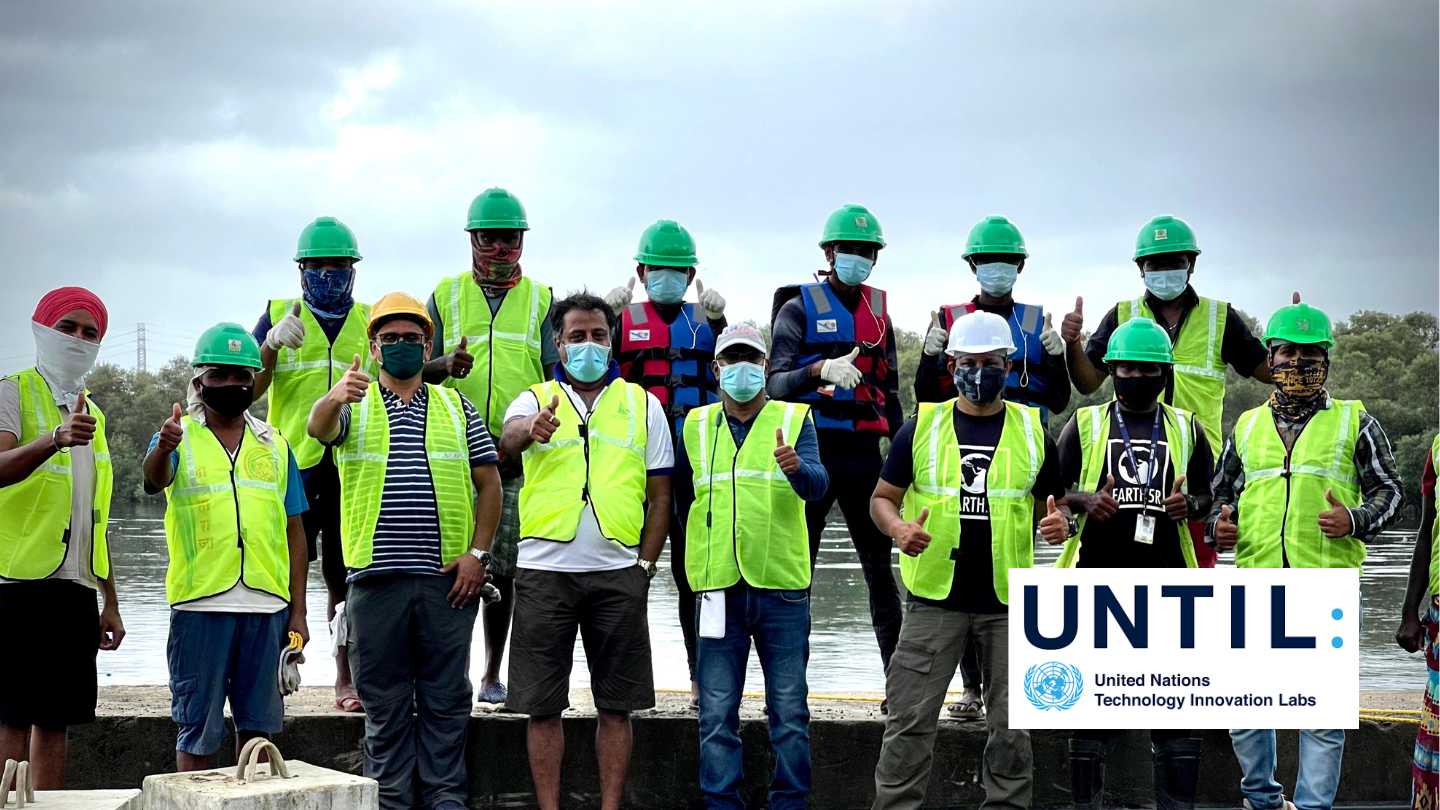
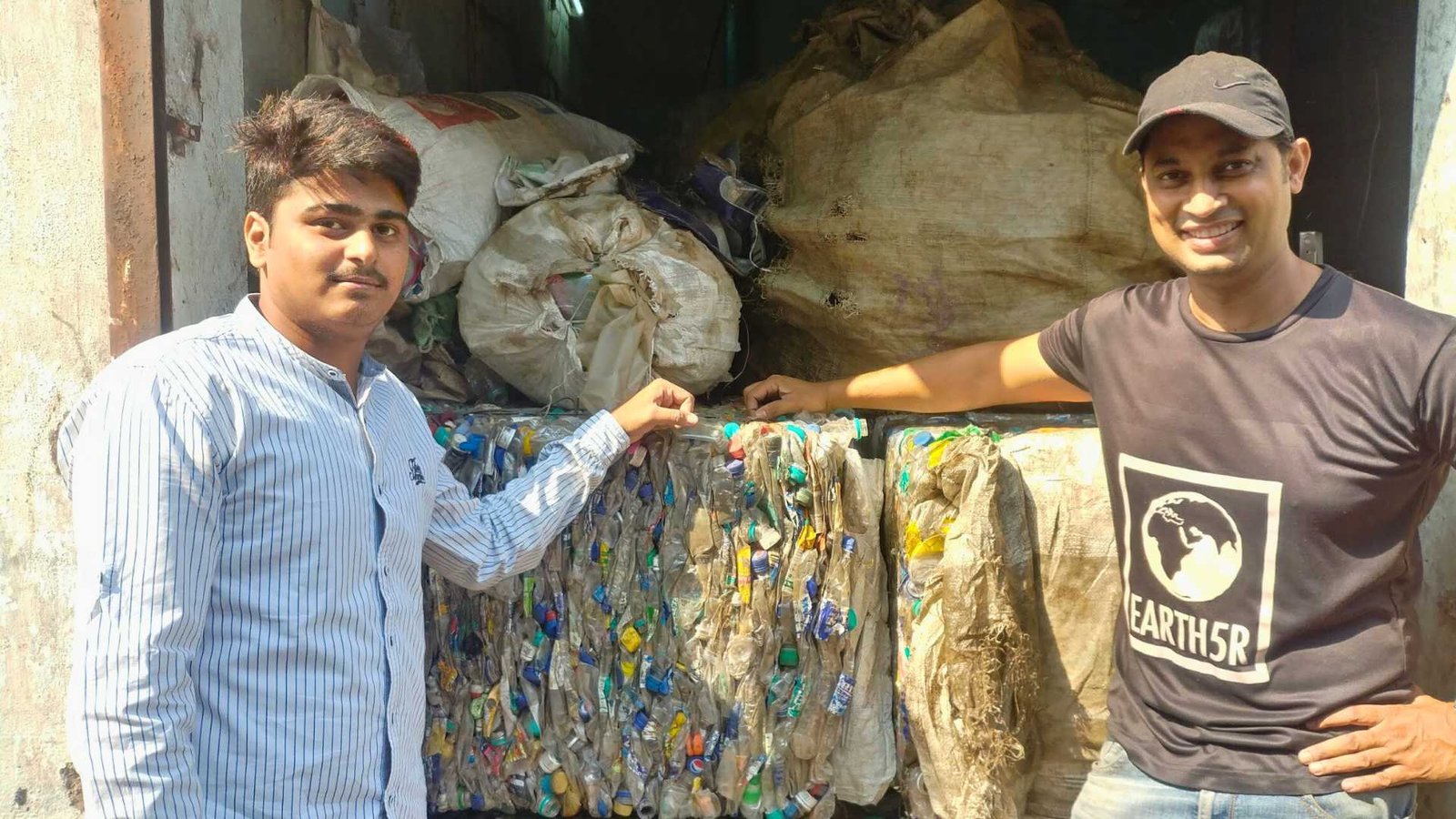
The Mithi River programme is Earth5R’s reference implementation of that operating model, and it demonstrates each of the components above running together over four continuous years. It was launched in October 2020 in collaboration with United Nations Technology Innovation Labs, Huhtamäki Oyj, VTT Technical Research Centre of Finland, RiverRecycle and the Mumbai municipal authority, supported by approximately €0.6 million in corporate funding — Earth5R being one of five recipients selected globally under that programme.
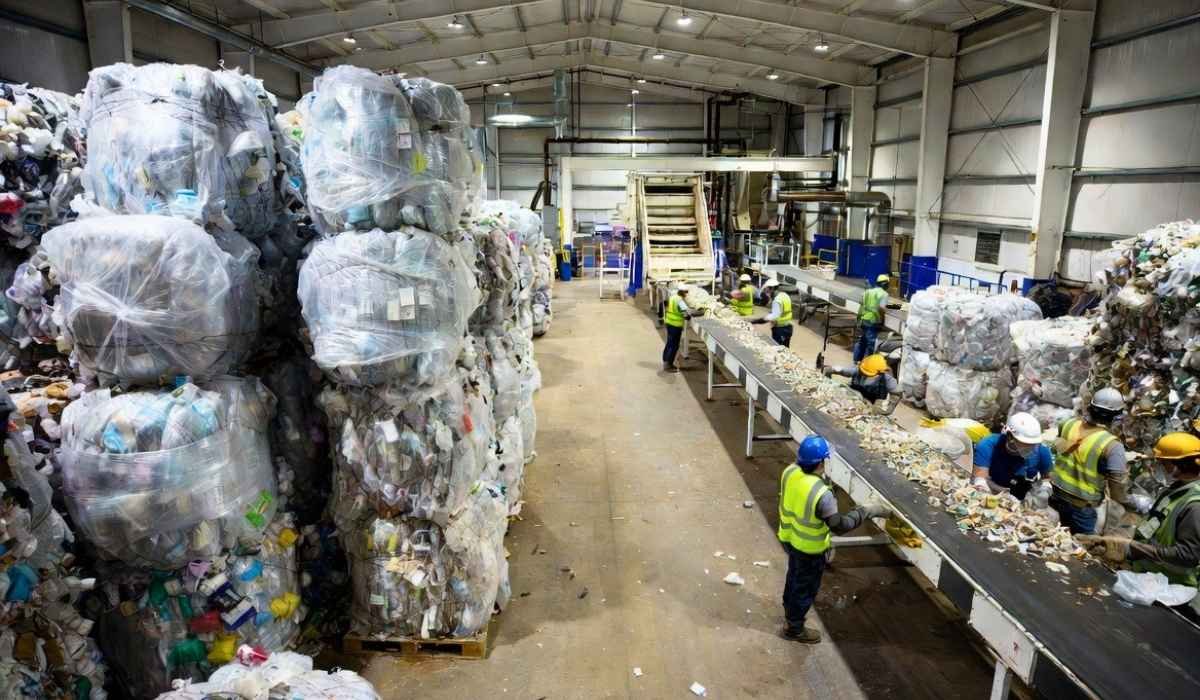
The core asset of the river plastic recovery system is a solar-powered unit positioned to intercept floating debris and convey it to the bank for processing. Material is segregated, washed, dried and shredded on land. High-value polymers route to mechanical recycling; low-value fractions are processed through EU-approved pyrolysis to industrial-grade oil. The unit runs entirely on renewable energy, so the recovery operation does not import a diesel footprint into the impact it reports. Drone mapping conducted before and after the intervention provides the spatial record against which progress is assessed.
| Measure | Daily | Monthly | Annual | Cumulative |
|---|---|---|---|---|
| Total waste recovered | 10 t | 300 t | 3,600 t | 11,100 t |
| Plastic fraction | 4 t | 120 t | 1,440 t | 4,440 t |
| Solar unit contribution | ~7 t | ~210 t | ~2,520 t | — |
| CO₂e avoided (project estimate) | — | — | ~2,160 t | 6,660 t |
| Households and businesses trained | — | — | — | 10,000 + 500 |
| Volunteers engaged | — | — | — | 15,000+ |
Carbon figures are calculated by the programme from recovered tonnage using standard landfill-diversion factors and are reported as project estimates. They are not equivalent to third-party certified emission reductions, which require separate accredited verification.
Four design choices distinguish this from a conventional drive, and each is a deliberate response to a failure mode described earlier.
- Extraction is continuous rather than episodic. A fixed recovery unit operating daily produces a time series instead of a set of events, which allows seasonal load, monsoon surge and upstream behavioural change to be distinguished from one another. Episodic drives cannot produce a trend line, and a trend line is what a sponsor needs to know whether the intervention is working.
- Source reduction runs in parallel with extraction. Roughly 10,000 families and 500 businesses in the catchment have been trained in segregation and circular economy practice, which reduces inbound load and progressively improves the unit economics of the recovery operation itself.
- Downstream disposition is designed alongside collection. Segregation, washing, shredding, mechanical recycling and pyrolysis are specified as part of the same system, so recovered material has a defined destination rather than becoming an unmanaged pile at the riverbank.
- Field data is captured at source through the Earth5R application. Activity is geotagged and timestamped at the point of collection, anchoring reported volumes to a place and a moment. This is what allows the programme’s output to enter a sponsor’s ESG reporting rather than only its communications material.
Proof Across Water Bodies: Three River Cleanup CSR Projects
A single flagship project is a demonstration; three sustained across different cities, funding structures and durations is a delivery capability. Earth5R’s water-body portfolio runs from a four-year weekly programme at Powai Lake through a six-year community-led operation on the Mula Mutha in Pune to the technology-led Mithi intervention. The value of the comparison is that it shows the same operating disciplines producing results at very different scales and budget levels.
| Programme | Mithi River, Mumbai | Powai Lake, Mumbai | Mula Mutha, Pune |
|---|---|---|---|
| Duration | 2020–2024 | 2018–2023 | 6 years |
| Model | Solar recovery unit + community | Weekly volunteer + segregation | Community-led weekly |
| Waste recovered | 11,100 t | 58.24 t | 112.32 t |
| CO₂e avoided (estimate) | 6,660 t | 78.04 t | 150.52 t |
| Volunteer hours | — | 29,120 | 24,960 |
| Circular economy value | — | ₹2.91 lakh | ₹5.61 lakh |
| Community reach | 15,000+ volunteers | 50,000+ residents | Sustained local base |
Carbon values are project estimates using a 1.34 t CO₂e per tonne landfill-diversion factor. Circular economy value reflects recyclate realised at approximately ₹5 per kilogram, accruing to local waste collectors.
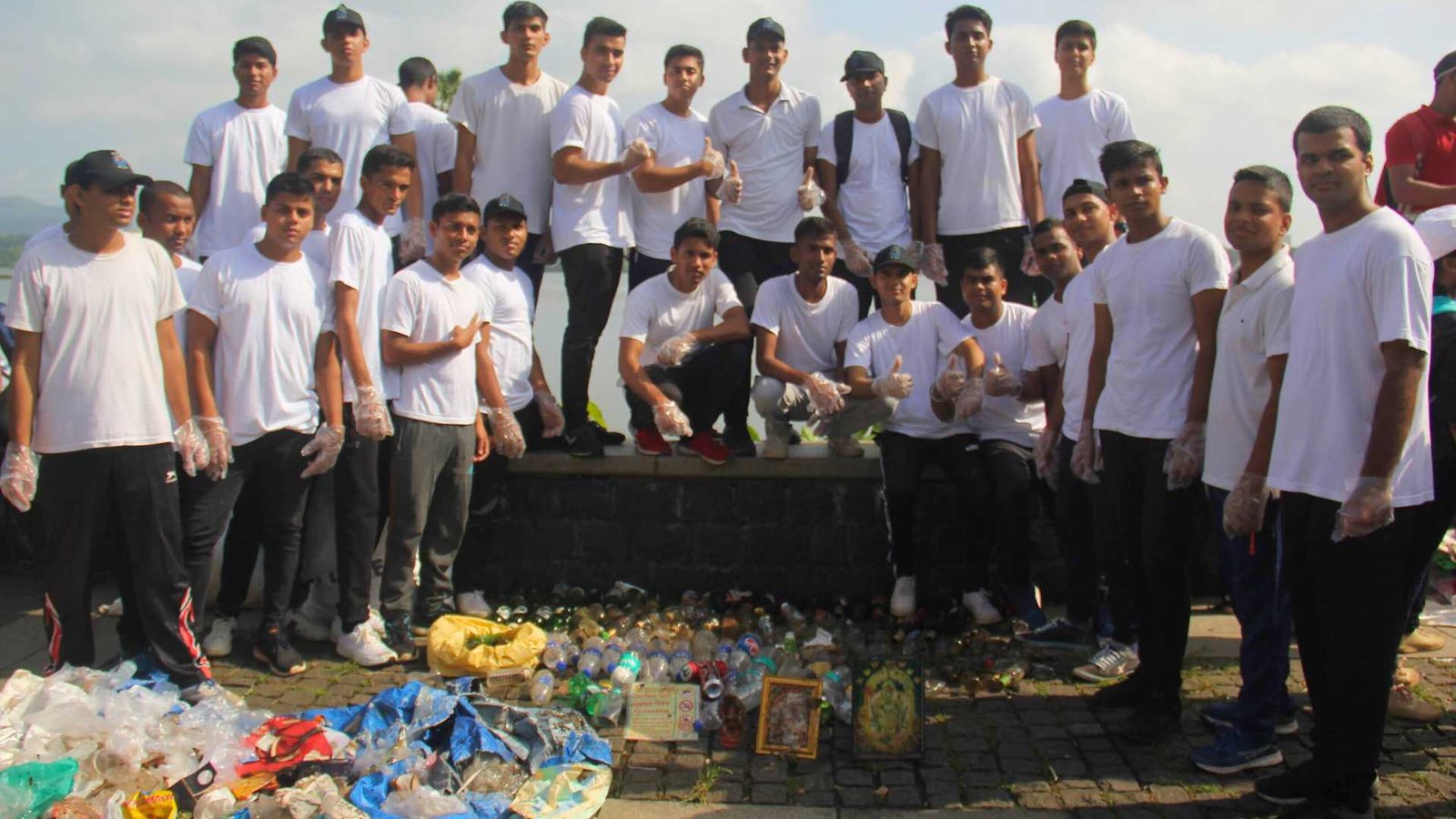
The Powai programme is instructive because its results came from persistence rather than capital. An average of 70 volunteers gathered every Sunday for four years, sorting collected waste into single-use plastics, metals, glass, electronic and medical waste, then weighing and recording each category to track patterns over time. Alongside this, 208 educational events reached more than 50,000 local residents. The recorded outcome was a 35% reduction in dumping around the lake and the integration of over 50 local waste collectors into a structured recycling economy.
Domain Depth Beyond Rivers: Sector CSR Delivery Record
River restoration is one application of a broader capability. Earth5R designs and runs field programmes across the full range of Schedule VII environmental activities and sector-specific ESG needs, which matters to corporate sponsors for a practical reason: most companies do not have a single environmental objective. A manufacturer needs waste, water and energy interventions; an IT services firm needs employee engagement at scale; a mining operation needs restoration and community programmes. Depth across those categories is what allows a partner to serve a company’s whole environmental agenda rather than one project within it.
| Sector programme | Intervention | Recorded outcomes |
|---|---|---|
| IT services — solar access | Urban solar street lighting paired with off-grid rural solar lamps | 50 solar street lights installed; one solar lamp to a tribal family per street light |
| Sports & lifestyle — carbon | App-tracked city-wide walk, cycle and run challenge with monthly recognition | Real-time personal carbon offset data used in the sponsor’s environmental reporting |
| Mining & metals | Reforestation, water conservation, renewable transition, waste segregation | 1.2M trees over 2,500 ha; ~50,000 t CO₂ offset annually; 500M litres water saved; 5,000 green jobs |
| Automobile manufacturing | Waste diversion, water recycling, end-of-life vehicle recovery | 10,000 t waste diverted; 30,000 t CO₂ reduced annually; 100M litres water saved; 50,000 vehicles recycled |
| Agriculture | Sustainable farming, residue-to-pellet conversion, financial literacy | 108,000 farmer engagements in one year; ~₹12M annual pellet income; 20 cooperatives formed |
| Electronics — e-waste | Twice-monthly collection drives with student volunteer cohorts | 72 t e-waste recovered; 103.68 t CO₂ avoided; 28,800 volunteer hours |
Outcomes are drawn from Earth5R programme records across sector engagements. Carbon and economic values are project estimates calculated from recorded activity using standard conversion factors.
Two patterns run through this portfolio and are worth naming explicitly, because they are what a sponsor is actually buying.
- Environmental and social outcomes are designed together, not traded off. The solar programme paired an urban safety intervention with rural energy access; the mining work generated 5,000 green jobs alongside 1.2 million trees; the river programmes created livelihoods for waste collectors while removing tonnage. Schedule VII spending that delivers on both axes reports better and lasts longer.
- Employee engagement is treated as a delivery mechanism, not a side benefit. App-based challenges, corporate sustainability competitions and certified training convert a company’s own workforce into programme capacity, which simultaneously improves internal engagement metrics and reduces the cost of field delivery.
Recovery Economics: Cost, Carbon and Circular Value
The financial logic of a sustained river plastic recovery programme only closes when several circular economy value streams are counted together. Assessed against any one alone the model looks marginal; assessed against all of them it becomes a rational allocation of CSR and compliance budget. This is the analytical step most proposals omit, and it explains why so many are funded once and never renewed.
The first stream is avoided cost. Diverting material from landfill removes tipping and handling expenditure that municipalities bear; in land-scarce Indian metros, tipping fees have been reported in the range of ₹800–1,200 per tonne. The second is material value: Earth5R’s field programmes have consistently recorded realisable recyclate value around ₹5 per kilogram for mixed streams, higher for clean segregated fractions. The third, increasingly the largest, is compliance value — recovery that can be reconciled against an EPR obligation.
| Value stream | Basis | Reference range | Requirement |
|---|---|---|---|
| Avoided landfill cost | Municipal tipping and handling | ₹800–1,200 / t | Weighbridge record at diversion point |
| Recyclate sale value | Mixed post-consumer stream | ~₹5 / kg | Sale invoice and material transfer note |
| EPR certificate value | Portal-traded, category dependent | ₹4,000–20,000 / t | Registered processor + auditor certification |
| Avoided environmental compensation | CPCB shortfall liability | ₹5,000 / t (year 1) | Reconciled annual return |
| Carbon abatement | Landfill diversion and recycling | ~1.34–1.5 t CO₂e / t | Accredited third-party verification |
| CSR obligation discharge | Schedule VII environmental sustainability | 2% of net profit | CSR-1 registered implementing agency |
Plastic EPR certificates carry no statutory floor or ceiling on the CPCB portal. Environmental compensation escalates to ₹10,000 per tonne in a second consecutive shortfall year and ₹20,000 in a third, with obligations carried forward.
Protecting the Investment: Verification, EPR and BRSR
Having built a programme that works, the remaining risk to a corporate sponsor is that its results cannot be defended. This is not a hypothetical concern in Indian waste management, and the regulatory response now underway makes evidence quality a live commercial issue rather than a governance nicety. Two public-record episodes illustrate what happens when reporting rests on documents that were never reconciled against physical activity.
The first concerns Extended Producer Responsibility certificates. Analysis released by the Centre for Science and Environment in October 2024, drawing on regulators’ own findings, reported approximately 700,000 fraudulent certificates generated by plastic recyclers — a volume described as 38 times the certificate-generation capacity of the recyclers concerned. CPCB imposed cumulative compensation of around ₹355 crore. The same assessment flagged end-of-life co-processing units collectively claiming 335.4 million tonnes per annum of processing against a registered capacity of 11.4 million tonnes.
Source: Centre for Science and Environment assessment of India’s EPR ecosystem for plastic packaging, October 2024. Bars are proportional to reported values.
The second concerns the Mithi catchment itself. In May 2025, Mumbai Police’s Economic Offences Wing registered an FIR naming 13 individuals and entities over desilting and channel works, alleging a loss to the municipal corporation of approximately ₹65.5 crore across tenders awarded between 2017 and 2023. Investigators have alleged forged memoranda for silt-disposal sites and the submission of recycled and doctored photographs through the civic body’s official application to evidence completed work. These are allegations under investigation; they have not been adjudicated, and those named retain the presumption of innocence.
The regulatory direction is now explicitly toward physical verification. On 31 March 2026, MoEFCC notified the Plastic Waste Management (Amendment) Rules, 2026 vide G.S.R. 237(E), introducing binding recycled-content obligations, reuse targets, revised end-of-life definitions and third-party certification of EPR claims by Registered Environment Auditors. Enforcement authority is being decentralised to urban local bodies and panchayats, and barcode-based traceability pushes provenance to the material level. For a corporate sponsor, this converges with BRSR waste disclosures into a single practical requirement.
- Capture at source, not reconstruction after the fact. Collection events recorded with location, time and mass at the moment they occur, by the people performing them. Documentation assembled at quarter-end cannot support an audit opinion, and the 2026 rules make that gap consequential.
- Mass balance reconciliation across every handover. Field-collected weight, facility intake weight, processed output and residue must reconcile, with variances explained. The absence of this control is what allowed claimed processing to exceed registered capacity by an order of magnitude nationally.
- Single-issuance integrity on recovered tonnage. The same verified kilograms should not support an EPR certificate, a plastic credit and a CSR impact claim simultaneously without disclosure. Systems that cannot enforce uniqueness will eventually double-count, whether or not anyone intends it.
- Evidence formatted for the frameworks that will consume it. Recorded tonnage mapped to EPR obligation categories, BRSR waste disclosures and the CSR annual report means one field programme discharges several reporting duties instead of generating a reconciliation problem.
Community as Infrastructure, Not Outreach
Community engagement is routinely classified as a soft component of environmental programmes — good for optics, peripheral to outcomes. In sustained river work that classification is analytically wrong. Community participation reduces the load requiring mechanical extraction, and load reduction is the only lever that changes the long-run cost curve. A recovery unit removes what arrives; source segregation determines how much arrives in the first place.
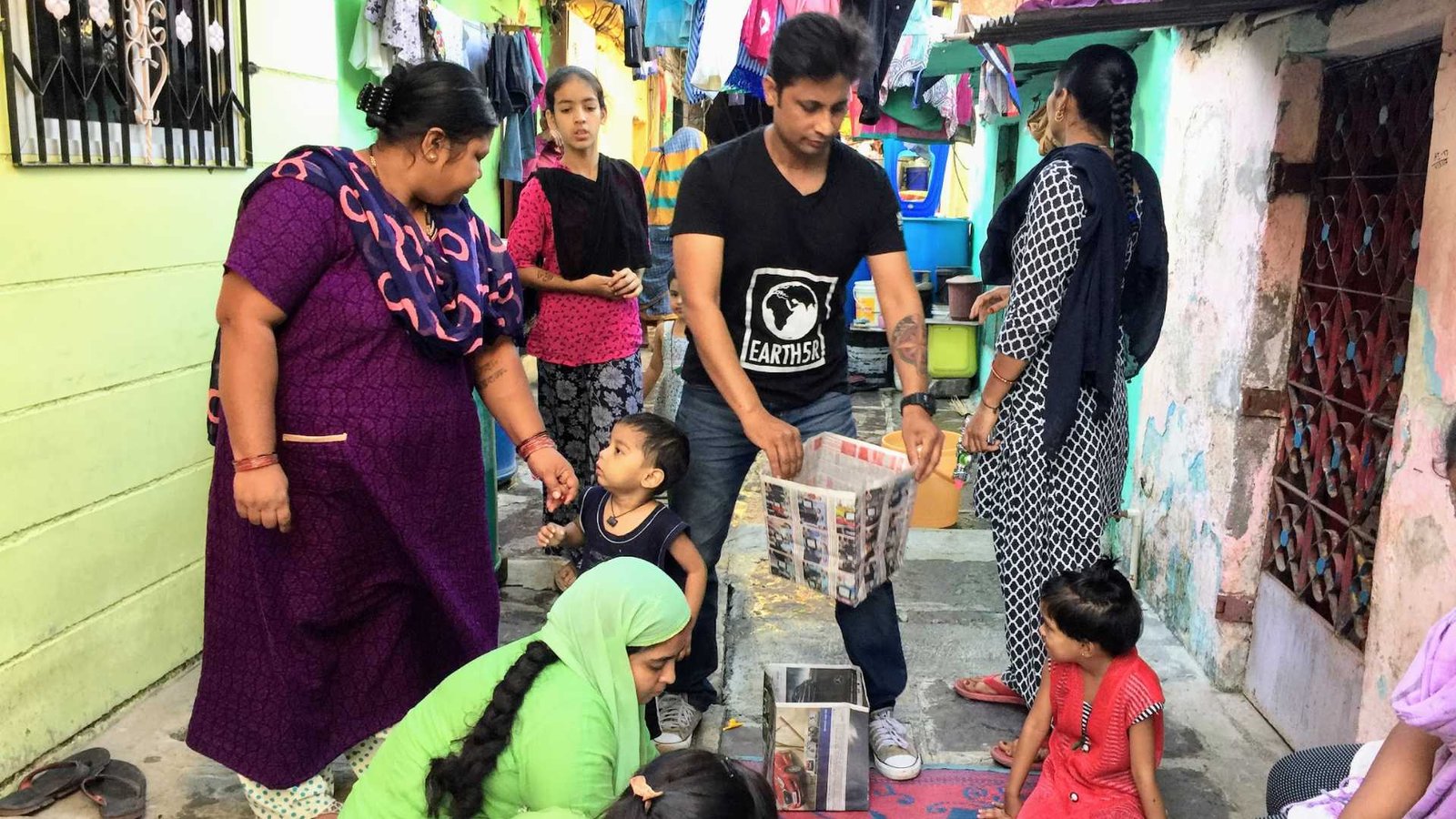
The Mithi programme applies Earth5R’s 5R framework — Respect, Reduce, Reuse, Recycle, Restore — through operational mechanisms rather than awareness campaigns alone. Households and businesses in the catchment are trained in segregation and circular practice; citizens are paid for segregated plastic handed over, creating a financial rather than moral incentive; and marginalised community members are trained to upcycle recovered material into saleable goods such as paper bags, lamps and handicrafts.
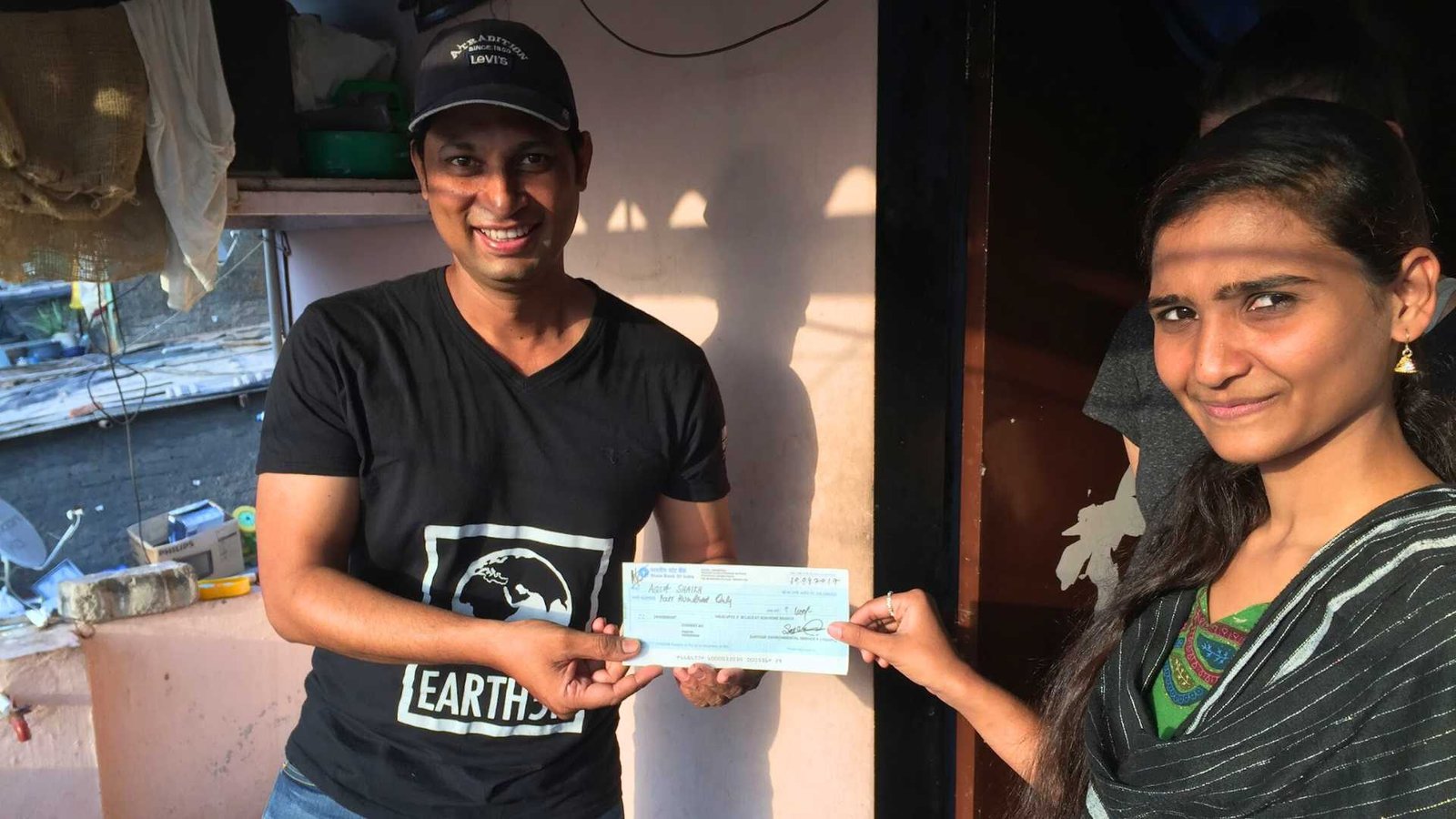
- Paid handover converts waste from a disposal cost into an asset. A price at the point of collection is a far more durable behavioural driver than appeal-based messaging, and it reaches households that awareness campaigns do not.
- Local livelihood integration produces institutional memory. Waste collectors and upcyclers who derive income from the programme have a direct interest in its continuity, which protects the intervention from the funding discontinuities that terminate most cleanup initiatives.
- Trained households generate cleaner feedstock. Source-segregated material commands higher recyclate value and requires less washing and sorting energy downstream, improving both unit economics and the carbon profile of the operation.
- Community presence functions as a distributed verification layer. People at the site daily are a check on reported activity that no photograph-based reporting system can replicate, and their participation is recorded in the same data environment as the extraction itself.
How Earth5R Enables Implementation at Scale
Earth5R is a Mumbai-based, UNESCO-recognised global environmental organisation working across more than 65 countries, structured specifically to close the distance between corporate sustainability commitment and delivered field outcome. Its positioning is as a CSR and ESG action partner: the organisation designs the programme, deploys and staffs it on the ground, runs the technology layer that records it, and prepares the evidence the sponsor reports against. The capability rests on a network of over one lakh volunteers, a Google-recognised mobile platform and more than a decade of continuous field operation.
Field deployment and programme management
Earth5R designs and operates on-ground programmes rather than advising on them from a distance. This spans site characterisation, infrastructure siting and operation, segregation and processing pathway design, community training, informal-sector integration, and continuous operation across monsoon and dry seasons. Programme management covers stakeholder coordination across municipal bodies, corporate sponsors, academic institutions and local organisations — the multi-party structure the CSR and ESG project portfolio is built around and that the Mithi programme demonstrates in practice.
Programme range across Schedule VII categories
The service architecture is deliberately broad, so that a single partner can address a company’s full environmental agenda. Each programme type carries defined impact metrics from the outset rather than retrofitted reporting.
| Programme type | Standard impact metrics |
|---|---|
| River plastic recovery, lake and beach cleanup campaigns | Kg waste removed; volunteer hours; volunteers engaged; GHG emissions avoided |
| Waste management and circular economy workshops | Reduction in waste to landfill; increase in recycling rate; tonnes CO₂ reduced |
| Water conservation and clean water access | Litres saved; percentage reduction in use; water bodies restored; people reached |
| Urban plantation and biodiversity | CO₂ sequestration rate; biodiversity index improvement; green space added |
| Renewable energy transition programmes | Kilowatts installed; corporate footprint reduction; share of energy shifted |
| Green skills and eco-entrepreneurship | Individuals trained; placement rates; startups incubated; jobs created |
| Sustainability training and certification | Employees certified; projects initiated by them; sustainability rating improvement |
| Corporate sustainability challenges | Energy saved; waste recycled; solutions proposed; participation rate |
Programmes are scoped to a sponsor’s materiality assessment and reporting calendar. Full service definitions are available through Earth5R’s CSR and ESG services documentation.
The technology and data layer
The Earth5R application captures field activity with geotagging and automated data collection, so volumes, participation and material movement are recorded at source rather than reconstructed. A management information dashboard provides real-time monitoring, customisable KPI reporting and geo-tagged validation of on-ground activity, cloud-accessible to sponsor teams. Drone survey supports spatial mapping and progress verification. This layer is what allows a programme to produce an audit trail rather than an activity report, and Earth5R’s sustainability innovation work continues to extend it toward material traceability and analytics.

Consulting, assessment and disclosure support
For companies with reporting obligations, tonnage alone is not the deliverable — a defensible disclosure position is. Earth5R’s ESG practice covers baseline measurement, materiality and gap analysis, proprietary TERRA Score™ scoring and CvR Gap™ analysis, and preparation of evidence packs that reconcile field data to reporting frameworks. This connects directly to plastic waste management ESG solutions and to sector engagements such as plastic waste recovery in the beverage industry.
Platform, partnership and capability transfer
The same data infrastructure supports a platform model in which corporates, consulting firms and municipal bodies access verified impact records and dashboards for their own reporting, and a capability model in which teams are trained to operate to the same standard. The BlueCities sustainability network extends the urban waterway model across cities, water conservation programmes address catchment-level quality alongside recovery, and sustainability training programmes build internal capacity. The breadth of engagement is visible across the sector programme portfolio and partner network.
The Transition Path Forward
Moving from episodic corporate cleanup spending to a sustained, reportable field operation is a sequenced transition rather than a single procurement decision. The sequence below reflects how the Mithi programme was actually built and how it is replicated in other catchments. Each stage produces an output the next depends on, which is why compressing or skipping steps tends to reproduce the failure modes described earlier.
- Characterise the catchment before specifying equipment. Map accumulation hotspots, seasonal flow variation, material composition and existing municipal operations. Siting decisions made without this baseline produce infrastructure that intercepts the wrong fraction at the wrong point, and the error is expensive to correct once installed.
- Secure permissions and downstream capacity in parallel. Municipal access, silt and waste transfer arrangements, and commercial agreements with recyclers and processors all have long lead times. Starting collection before these are in place is the most common cause of material accumulating with nowhere to go.
- Establish the measurement layer before scaling extraction. Deploy geotagged field capture, weighbridge protocols and reconciliation rules first, so the very first recovered tonne is already inside an evidence system. Retrofitting verification onto a running programme is significantly harder.
- Build community participation into the operating model. Train households and businesses in the catchment, establish paid handover channels, and integrate local livelihoods, so inbound load falls over time and cost per tonne improves rather than plateaus.
- Reconcile field data to CSR, EPR and BRSR frameworks. Map recorded tonnage and participation to Schedule VII reporting, EPR obligation categories and BRSR waste disclosures, and prepare the evidence pack an auditor or assurance provider will request.
- Replicate to adjacent catchments on the same data standard. Extend to further rivers and water bodies using identical instrumentation, so results are comparable across sites and aggregate reporting is credible at portfolio level rather than a set of incompatible local claims.
The role of policy, technology, partnerships and field execution
Policy creates the obligation and the funding: Section 135 directs 2% of profits toward Schedule VII activities, while the 2026 plastic rules set the verification standard for what evidence will be accepted. Technology supplies the instrumentation — geotagged capture, dashboards, mass-balance reconciliation, spatial survey — that makes the required evidence producible at acceptable cost. Partnerships supply what no single actor can: municipal permission and infrastructure access, corporate capital, community participation, and processing offtake. Field execution converts all three into recovered material and changed behaviour, and it is the component most frequently underestimated in programme design and underfunded in programme budgets.
How organisations can engage
Corporates and brand owners typically begin with a materiality and obligation assessment, then commission a catchment or sector programme sized to their CSR budget and ESG priorities. Companies with plastic packaging exposure add an EPR position review. Consulting and assurance firms partner on field execution and the data layer beneath advisory engagements they already hold. Municipal bodies engage where avoided desilting, landfill and flood-response costs carry the business case. Investors and foundations engage at portfolio level, where multi-site verified outcomes support credible aggregate reporting. Earth5R can be reached at community@earth5r.org, with current programme documentation across the CSR and ESG projects portfolio.
Frequently Asked Questions on River Cleanup CSR Projects
Does a river cleanup CSR project qualify under Schedule VII?
Environmental sustainability and ecological balance are listed Schedule VII activities under Section 135 of the Companies Act, 2013, and river and water-body restoration falls within that category. Spending must be routed through an implementing agency registered via Form CSR-1. Environmental sustainability received ₹3,397 crore of Indian CSR funding in FY2024–25, growing 40% year on year.
What does a sustained river cleanup CSR project cost?
It varies with catchment size, river plastic recovery infrastructure and duration. For context, the average Indian CSR project size in FY2024–25 was ₹56.47 lakh, while a technology-led urban river programme with a solar recovery unit, processing and community components has been funded at roughly €0.6 million in the Mithi case. Cost per tonne falls over time as source segregation reduces inbound load.
Why do most river cleanup drives fail to produce lasting results?
Because removal without source reduction, contracted disposition and local livelihood integration is a treadmill: inbound load continues at its prior rate and the site returns to baseline within weeks. A sustained operation changes the arrival rate, processes what it collects, and gives people in the catchment an economic reason to maintain it.
Can one programme serve both CSR and ESG reporting needs?
Yes, if it is instrumented for it. The same recorded tonnage, participation and emissions data can discharge Schedule VII CSR reporting, feed BRSR waste and water disclosures, and — where the sponsor has plastic packaging exposure — support an EPR position. This dual reporting value is a significant part of the internal business case.
How is impact measured and verified?
Through geotagged, timestamped capture of collection events at source, weighbridge records, documented material transfers to named recyclers or processors, and mass-balance reconciliation across each handover. The Plastic Waste Management (Amendment) Rules, 2026 introduced third-party certification of EPR claims by Registered Environment Auditors, making this evidence chain a regulatory expectation rather than a best practice.
Note on sources and claims. Operating figures for Earth5R programmes are drawn from programme records. Carbon values are project estimates calculated from recovered tonnage using standard landfill-diversion factors; they are not accredited third-party verified emission reductions, which require separate certification. The Mithi River desilting matter referenced in this article concerns allegations recorded in an FIR and subsequent proceedings that remain under investigation and have not been adjudicated by a court.
Programme partners. The Mithi River plastic waste cleanup project was delivered in collaboration with United Nations Technology Innovation Labs, Huhtamäki Oyj, VTT Technical Research Centre of Finland, RiverRecycle and the Mumbai municipal authority.