
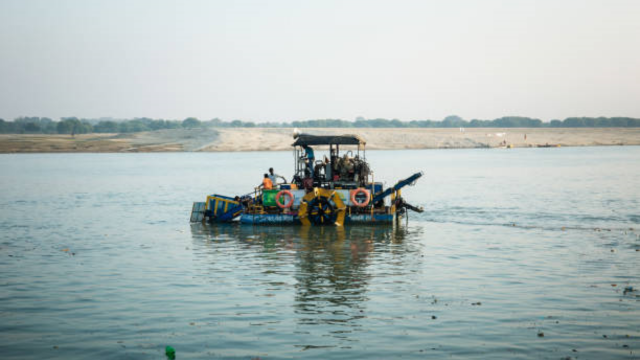
The Changing Face of River Cleanups
River cleanups have evolved dramatically from simple volunteer sweeps to complex, science-backed restoration projects. In earlier years, most efforts focused on manual trash removal using brooms and sacks, which offered short-term relief but little long-term change. Today, integrated approaches combine waste segregation, water quality monitoring, and community engagement to address root causes. These methods aim not only to make rivers look cleaner but also to improve ecological health and restore biodiversity.
India’s urban waterways such as the Yamuna River in Delhi, the Mithi River in Mumbai, and the Cooum River in Chennai highlight this shift. Once plagued by untreated sewage, these rivers are now part of projects that include scientific water testing and public awareness campaigns. Initiatives integrate waste management policies with local participation, showing that long-term success requires both systemic change and active citizen involvement.
Internationally, rivers like the Thames in London and the Chicago River have undergone similar transformations. Their success relied on combining policy reform with ecological restoration and public-private partnerships. These examples prove that urban rivers can recover when science, governance, and community-led action work hand-in-hand. The lesson is clear: cosmetic cleanups must evolve into comprehensive, multi-layered programs.
Modern cleanup models also prioritize biodiversity surveys to track the return of fish, birds, and native vegetation. By linking habitat restoration with waste management, projects ensure rivers remain ecologically resilient. Advanced tools like GIS mapping and remote sensing help target problem areas with precision. The integration of sustainability education fosters community stewardship beyond the cleanup day.
The shift is also cultural — clean rivers are no longer seen just as aesthetic assets but as lifelines for drinking water, livelihoods, and climate resilience. Storytelling through documentaries, photography projects, and local folklore revival adds emotional weight to scientific data. These narratives inspire people to join river adoption programs, making cleanups a community tradition rather than an occasional chore.
Ultimately, the changing face of river cleanups shows that success comes from blending science-based interventions, policy enforcement, and grassroots engagement. Short-term beautification gives way to systemic restoration when stakeholders commit to a shared vision. This transformation is not just about cleaning water — it’s about restoring ecosystems and ensuring future generations inherit healthy, living rivers.
Why Brooms Aren’t Enough
While broom-based cleanups create visible impact, they rarely address the deeper causes of river pollution. A large share of contamination comes from untreated sewage, industrial effluents, and stormwater runoff, which cannot be solved by surface-level waste removal alone. Without controlling upstream waste sources and ensuring sewage treatment, rivers quickly return to their polluted state.
Data from Central Pollution Control Board reports reveal that even after multiple cleaning drives, rivers like the Sabarmati and Ganga still face dangerously high BOD levels. The problem lies in unregulated discharges from both domestic and industrial sources. Cleanup events, while important for awareness, need to be paired with infrastructure upgrades like modern sewage treatment plants and strict effluent monitoring.
Another challenge is the widespread problem of solid waste mismanagement. Rivers often become dumping grounds for single-use plastics and construction debris, which cannot be removed effectively without waste segregation and recycling systems. Without targeting the waste at its source, broom cleanups simply move the problem downstream.
Poor enforcement of environmental laws further limits the effectiveness of manual cleanups. Despite legal frameworks like the Water (Prevention and Control of Pollution) Act, penalties for polluters are often weak or inconsistently applied. Strengthening regulatory oversight and introducing polluter-pays policies can create long-term deterrence.
There’s also the matter of public perception. Many see cleanups as a once-a-year civic duty rather than a continuous commitment. Changing this requires environmental education, community ownership, and integration of clean rivers into local culture. Without this cultural shift, even the most scientifically advanced cleanup will struggle to sustain its gains.
Ultimately, broom cleanups serve as a symbolic starting point, but true restoration depends on systemic interventions, technological solutions, and policy reforms. A healthy river system requires tackling pollution at its source, enforcing strong regulations, and fostering a sense of shared responsibility among citizens, industries, and governments.
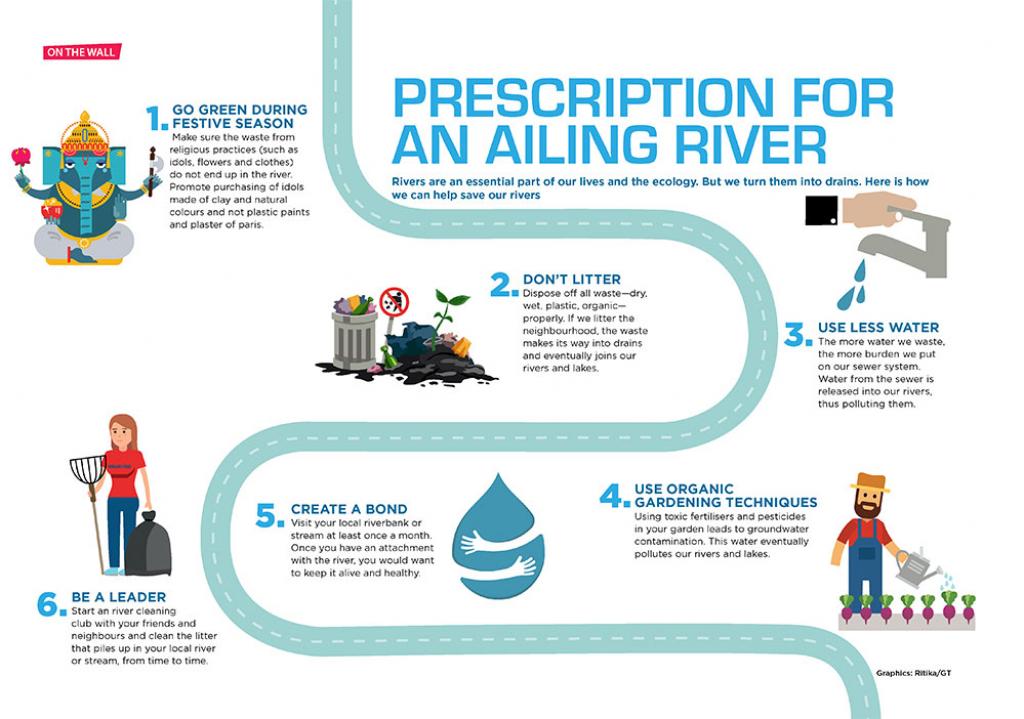
This infographic outlines six actionable steps individuals can take to protect and restore rivers, from reducing festive waste to using organic gardening methods. It emphasizes community engagement, sustainable habits, and personal responsibility in river conservation.
Science-Driven Cleanup Strategies
Modern river cleanups rely heavily on water quality testing to identify contamination sources and measure progress. Parameters such as Biochemical Oxygen Demand, Chemical Oxygen Demand, pH levels, and heavy metal concentrations provide insights into ecosystem health. By regularly collecting and analyzing data, cleanup teams can design targeted interventions that go beyond surface cleaning and directly address pollutant origins.
Geospatial tools like GIS mapping and remote sensing are increasingly used to pinpoint pollution hotspots. These technologies help locate illegal waste discharge points and areas of severe sediment contamination. With high-resolution imagery, planners can track changes over time and assess the effectiveness of restoration projects.
Innovations like real-time water sensors and automated sampling devices are transforming how data is gathered. These systems continuously monitor variables such as turbidity, nutrient loads, and dissolved oxygen, alerting authorities to sudden changes. By integrating this data into centralized monitoring platforms, cleanup operations can respond quickly to emerging threats.
Bioremediation techniques also play a vital role in scientific cleanups. Methods such as constructed wetlands and microbial degradation use natural processes to break down pollutants. These solutions are cost-effective, sustainable, and often enhance biodiversity alongside water quality improvements. When combined with riparian buffer restoration, they help stabilize riverbanks and reduce erosion.
Collaborations between research institutions and municipal bodies strengthen the scientific backbone of cleanup efforts. Universities provide technical expertise, while governments supply infrastructure and enforcement capabilities. Partnerships with non-profits ensure that science-driven strategies remain accessible and community-focused, bridging the gap between academic research and on-the-ground action.
Ultimately, science transforms river cleanups from one-off events into long-term restoration programs. Data-driven approaches enable precise targeting of resources, continuous monitoring, and transparent reporting. By embedding evidence-based decision-making into every stage, river conservation efforts can achieve measurable, lasting improvements in both water quality and ecosystem resilience.
Storytelling as a Catalyst for Change
Storytelling transforms river cleanups from technical projects into movements people want to be part of. Through narrative-based campaigns, communities can connect emotionally with the river’s history, struggles, and recovery journey. By weaving personal accounts of fishermen, boatmen, and local families into environmental advocacy, cleanup efforts gain depth and relatability.
Visual media plays a powerful role in spreading these narratives. Documentary films capture before-and-after transformations, while photojournalism highlights the stark contrast between polluted and restored stretches. Social media platforms like Instagram and YouTube amplify these visuals, reaching global audiences. When backed by accurate data from scientific monitoring, visuals become compelling evidence of progress.
Local culture is another vital storytelling channel. Reviving river-centric folklore and traditional festivals can reconnect communities to their waterways. Songs, street theatre, and community art projects make environmental messages accessible even to those outside formal education systems. These cultural touchpoints foster a sense of pride and belonging, which is key for long-term stewardship.
Involving schools in creative storytelling about rivers encourages younger generations to think beyond litter collection. Students can produce short films or design public awareness posters that blend art and science. Such projects not only raise awareness but also nurture environmental leadership skills, ensuring the next wave of river advocates is ready.
Storytelling also serves as a tool for advocacy and policy change. Well-documented stories of community-led cleanups have persuaded municipalities to adopt stricter pollution control measures. Combining emotional appeal with data-driven evidence creates a persuasive narrative that resonates with both citizens and decision-makers.
Ultimately, storytelling bridges the gap between science and society. While water testing and GIS mapping provide facts, stories give those facts meaning. By humanizing the river’s plight and recovery, storytelling makes cleanups not just a duty but a shared mission, turning passive observers into active river guardians.
Sustainability Education for Lasting Impact
Sustainability education ensures that river cleanup efforts lead to lasting behavioral change rather than temporary improvements. Programs rooted in environmental literacy teach communities how their everyday choices affect river health. Topics like waste segregation, water conservation, and plastic reduction help individuals take ownership of solutions. When paired with hands-on workshops, these lessons become practical habits rather than abstract concepts.
Schools are key partners in embedding sustainability into community culture. Integrating river ecology modules into science curriculums allows children to understand the links between biodiversity, pollution, and human health. Field visits to restored riverbanks give students first-hand experience of ecosystem recovery. Collaborations with local NGOs provide learning materials, teacher training, and project support to make lessons both engaging and impactful.
Community centers and public spaces can act as hubs for environmental training. Hosting sessions on composting or greywater reuse empowers residents to reduce the volume of waste and untreated water entering rivers. Partnering with municipal authorities ensures that these trainings are aligned with city-wide waste management and water treatment plans.
Digital tools are expanding the reach of sustainability education. Interactive mobile apps, e-learning platforms, and gamified challenges make environmental learning accessible to wider audiences. Online communities can share tips, track personal eco-goals, and celebrate milestones, reinforcing long-term engagement in river protection efforts.
Practical, skill-based learning ensures that people have the know-how to act. For example, teaching households to build rainwater harvesting systems or install low-flow fixtures directly reduces water stress on local rivers. Involving participants in citizen science projects further reinforces lessons, as people can see the measurable impact of their actions on water quality data.
Ultimately, sustainability education transforms cleanup participants into lifelong river stewards. By combining knowledge, skills, and community commitment, it ensures that rivers remain healthy long after the last bag of trash has been collected. This approach builds not just cleaner waterways, but more resilient and environmentally conscious communities.
Citizen Science in Action
Citizen science empowers ordinary people to contribute directly to environmental research, bridging the gap between professional scientists and the community. In river cleanup contexts, it involves residents collecting water samples, recording biodiversity observations, and reporting pollution incidents through accessible tools. This participatory approach not only generates valuable data but also deepens public understanding of river health.
Low-cost testing kits enable volunteers to measure parameters like pH, turbidity, and nitrate levels. The collected results can be uploaded to open data platforms where scientists and policymakers can analyze trends. This transparency fosters trust between communities and government agencies, ensuring that reported issues are acted upon.
Mobile technology has made citizen science more accessible than ever. Apps like mWater and Water Reporter allow users to log observations in real time, often with GPS tagging and photographs. These tools create interactive pollution maps that help identify recurring problem areas. Crowdsourced mapping not only informs cleanup strategies but also supports legal advocacy against chronic polluters.
Biodiversity monitoring is another key aspect of citizen science. Volunteers can document sightings of native fish species, migratory birds, and aquatic plants, contributing to conservation databases. Changes in species presence often indicate shifts in water quality, making these observations critical for long-term ecosystem assessment. Partnerships with wildlife organizations enhance data accuracy and reach.
Citizen science also has strong educational benefits. Participants gain hands-on experience with scientific methods while contributing to real-world problem solving. Schools that integrate field-based research into their curriculum produce environmentally aware students who can lead future conservation initiatives. This hands-on learning strengthens both personal and collective responsibility for river health.
Ultimately, citizen science turns communities from passive beneficiaries into active custodians of their waterways. By blending local knowledge, digital tools, and scientific rigor, it creates a shared ownership model where everyone has a role in safeguarding the river. This collaborative approach is essential for maintaining long-term restoration success.
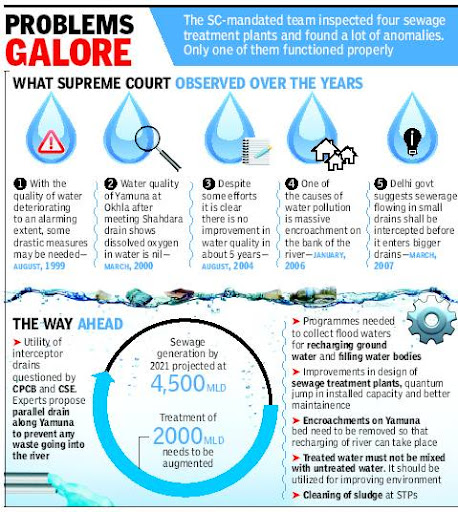
This infographic highlights the severe challenges in sewage treatment and water pollution, as observed by the Supreme Court over the years. It also outlines a way forward, emphasizing improved treatment capacity, efficient sewage management, and stricter pollution control measures.
Earth5R’s Integrated Approach
Earth5R has pioneered a multi-dimensional river restoration model that blends on-ground cleanup drives with scientific monitoring, community engagement, and sustainability education.
Instead of focusing solely on removing visible waste, the organisation addresses deeper issues like water pollution sources, urban waste mismanagement, and habitat degradation. This integrated framework ensures that cleanup efforts are backed by data, driven by citizen participation, and aimed at long-term ecosystem resilience.
The model starts with scientific assessment using water quality testing , biodiversity surveys, and GIS mapping of polluted stretches. Earth5R teams, in partnership with local universities and environmental labs, collect baseline data before planning interventions. This ensures that every cleanup drive has measurable targets and can be tracked for impact over time.
Community mobilisation is at the heart of Earth5R’s approach. The organisation works with residents’ associations , school eco-clubs, and youth volunteer groups to build a network of river guardians. Training sessions cover waste segregation, recycling techniques, and sustainable alternatives. This community ownership increases participation and ensures efforts continue beyond official cleanup events.
Education plays a dual role—raising awareness and providing practical skills. Earth5R integrates citizen science into its school programs, teaching students how to test water, record biodiversity, and upload findings to open data platforms. Workshops on composting, plastic alternatives, and green entrepreneurship give participants tools to reduce their own ecological footprints while influencing others.
A key innovation is Earth5R’s use of technology for transparency and scalability . Through mobile apps and GIS dashboards, citizens can log waste collected, water quality readings, and cleanup locations. This crowdsourced data is shared with municipal bodies to guide policy and track compliance. By making data publicly accessible, Earth5R builds trust and encourages accountability among all stakeholders.
The result is a circular, community-led restoration system where science, education, and action reinforce one another. By combining grassroots involvement, digital innovation, and ecological restoration principles, Earth5R ensures that rivers are not just cleaned but restored and protected for the long term. This integrated approach is proving to be a scalable model for urban river regeneration across India and beyond.
Scaling Impact Through Partnerships
Earth5R recognises that large-scale river restoration requires strong alliances between government bodies, corporations, educational institutions, and civil society. Through public-private partnerships, the organisation channels resources, expertise, and influence to reach more communities and cover longer stretches of rivers. This collaborative structure accelerates cleanups, boosts policy adoption, and ensures sustainability initiatives reach deeper into urban neighbourhoods.
A key driver in this expansion is corporate social responsibility (CSR) funding, which supports waste management infrastructure, awareness campaigns, and research-based interventions. Earth5R collaborates with industry leaders to implement projects under SDG 6: Clean Water and Sanitation and SDG 14: Life Below Water, ensuring measurable impact on both local ecosystems and global sustainability targets.
Partnerships with universities bring academic rigour to citizen science initiatives, allowing students to conduct field surveys and data analysis. This collaboration not only generates valuable datasets for policy-making but also nurtures a new generation of environmentally conscious leaders. Field-based internships further bridge theory and practice, enabling students to experience river restoration in real-world conditions.
Earth5R also engages with municipal corporations and urban development authorities to integrate waste segregation systems and circular economy models into city planning. By sharing data dashboards from cleanup drives, the organisation helps local governments track pollution sources, enforce compliance, and prioritise restoration budgets where they are needed most.
Internationally, Earth5R partners with global environmental networks and development agencies to exchange knowledge, adapt restoration models to diverse geographies, and secure funding for transboundary river systems. This cross-border collaboration fosters innovation, from plastic waste upcycling to nature-based solutions, making the approach relevant beyond India’s borders.
The strength of Earth5R’s partnership strategy lies in its ability to connect grassroots activism with policy influence, corporate investment, and academic research. By weaving these networks together, the organisation not only scales its operations but also creates a resilient framework that can sustain river regeneration for decades to come.
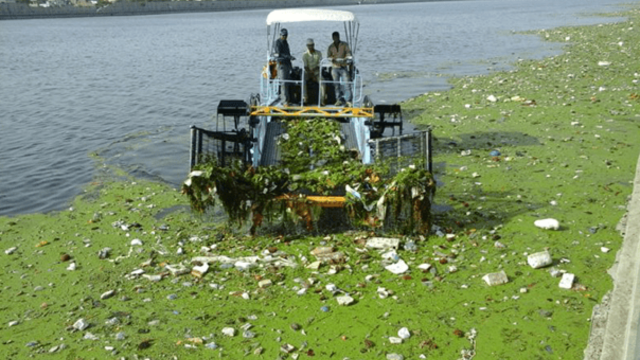
Measuring Success Beyond Cleanup Metrics
Traditional river cleanup campaigns often measure success in terms of waste collected or kilometres of riverbank cleared. While these are important, Earth5R emphasises a broader approach that includes water quality improvements, biodiversity revival, and community engagement levels. By tracking multiple sustainability indicators, the organisation gains a clearer picture of long-term environmental health rather than short-term cleanups.
Scientific monitoring is central to this strategy. Water testing kits and GIS mapping tools are deployed to collect data on chemical pollutants and microplastic levels. Partnering with research laboratories, Earth5R analyses trends over months and years to assess whether pollution sources have been reduced or merely shifted elsewhere. This scientific baseline is essential for policy recommendations.
Biodiversity tracking involves documenting the return of native fish species and aquatic plants that had previously declined due to pollution. Using citizen science platforms, volunteers record sightings and upload geotagged images, creating an open-access database for environmental researchers. These ecological metrics help demonstrate whether the ecosystem is truly healing.
Social impact is measured through surveys and focus group discussions that assess changes in public attitudes towards waste management. Tracking behavioural shifts — such as households adopting segregation at source — reveals whether awareness campaigns are resulting in sustained action. These insights are critical for refining education strategies.
Economic metrics are equally important. By working with local businesses and municipal corporations, Earth5R measures how much income is generated from upcycled materials and eco-tourism. This demonstrates how river restoration can create green jobs and sustainable livelihoods, strengthening the case for investment.
Ultimately, the organisation’s success framework aligns with UN Sustainable Development Goals, particularly Goal 6 and Goal 14. By reporting results transparently through impact dashboards and open data portals, Earth5R ensures that progress is visible, measurable, and replicable. This approach builds trust with stakeholders and inspires other communities to adopt similar models
The Future of River Restoration
The next phase of river restoration will rely heavily on integrated watershed management and nature-based solutions. Instead of one-off cleanups, cities will adopt long-term ecosystem recovery plans, incorporating floodplain rejuvenation, wetland creation, and riparian buffer zones. This shift from reaction to prevention will ensure rivers stay clean beyond human intervention.
Technology will play a critical role in this transition. AI-powered water monitoring systems, drones for river mapping, and IoT-based pollution sensors will provide real-time data on contamination sources. These innovations will allow swift responses to spills, illegal dumping, and seasonal pollution surges. As technology costs drop, even smaller communities will have access to advanced monitoring tools.
Community involvement will remain at the heart of future projects. Citizen science initiatives and volunteer stewardship programs will ensure people feel a sense of ownership over their rivers. Partnering with schools and youth-led organisations will keep environmental consciousness alive across generations, turning today’s students into tomorrow’s river guardians.
Policy frameworks will need to evolve alongside these efforts. Governments will be urged to adopt stricter pollution control regulations and incentivise green infrastructure projects. International collaborations such as the Global River Partnership will help share expertise, funding, and technology across borders, making large-scale restoration achievable.
Economic models will also shift. Circular economy principles will be embedded into cleanup operations, ensuring that collected waste is recycled or upcycled into marketable products. Eco-tourism linked to restored rivers will provide revenue streams that can fund ongoing maintenance, making restoration self-sustaining rather than donor-dependent.
Ultimately, the future lies in merging science, storytelling, and sustainability education into one cohesive movement. As more cities adopt this integrated approach, rivers will no longer be seen as dumping grounds but as vital lifelines. The journey from polluted to pristine will become a blueprint for how humanity can heal its relationship with nature.
Conclusion: River Cleanups Beyond Brooms: Integrating Science, Storytelling, and Sustainability Education
The future of river restoration depends on community participation as much as on scientific innovation. Without strong public engagement, even the most advanced cleanup technologies will have limited long-term impact. Building a culture where every citizen feels responsible for their local waterway is the foundation of lasting change.
By integrating nature-based solutions with policy reforms, we can move from reactive cleanup to proactive river health management. Wetland restoration, riparian planting, and floodplain revival are just a few strategies that deliver ecological, social, and economic benefits simultaneously.
Education remains a powerful driver of this transformation. When schools and youth-led programs adopt hands-on water stewardship, they create generational change. Pairing the environmental curriculum with citizen science projects ensures students don’t just learn about sustainability—they actively practice it.
Ultimately, restoring rivers is about rebuilding our relationship with nature. Combining storytelling with data-driven insights helps connect people emotionally and intellectually to the cause. With the right mix of innovation, collaboration, and awareness, clean and thriving rivers can become the global norm.
Frequently Asked Questions: River Cleanups Beyond Brooms- Integrating Science, Storytelling, and Sustainability Education
What does “Beyond Brooms” mean in the context of river cleanups?
It refers to going beyond traditional surface cleaning and incorporating scientific analysis, community education, and long-term restoration strategies.
Why are manual river cleanups not enough to solve pollution problems?
Because they only address visible waste, while deeper issues like water contamination, industrial discharge, and habitat destruction remain.
How does science improve the effectiveness of river cleanups?
Science enables water quality testing, pollution source mapping, and data-driven restoration plans that prevent recurring damage.
What role does storytelling play in river conservation?
Storytelling inspires emotional connection, making people more likely to take part in and support long-term conservation efforts.
How can sustainability education help protect rivers?
It teaches communities the ecological importance of rivers and practical ways to reduce pollution at the source.
What is citizen science in river restoration?
Citizen science involves local volunteers collecting environmental data, which scientists use to monitor and improve river health.
How does Earth5R contribute to integrated river restoration?
Earth5R combines cleanups with education, technology, and policy advocacy to ensure lasting impact on river ecosystems.
Can schools be involved in river cleanups?
Yes, schools can integrate river projects into their curriculum, giving students hands-on environmental stewardship experience.
How can technology track river pollution?
Through drones, sensors, and satellite mapping, technology can detect changes in water quality and identify pollution sources.
Why is community participation essential for river cleanups?
Because sustainable change happens when local people take ownership of protecting and restoring their waterways.
What are nature-based solutions for river restoration?
They include restoring wetlands, planting native vegetation, and reconnecting rivers to their natural floodplains.
How can policy reforms support river restoration?
By enforcing stricter pollution controls, incentivizing eco-friendly practices, and funding large-scale restoration projects.
What is the link between climate change and river health?
Climate change affects rainfall patterns, increases flood risks, and alters ecosystems, making rivers more vulnerable.
How can individuals reduce river pollution in daily life?
By avoiding single-use plastics, using eco-friendly products, and properly disposing of waste.
What industries contribute most to river pollution?
Industries like textiles, chemicals, mining, and agriculture often release pollutants into rivers without proper treatment.
How can storytelling be used in community workshops?
By sharing real-life success stories, cultural river traditions, and visual media to connect people emotionally to the cause.
What is the economic benefit of river restoration?
Healthy rivers support fisheries, tourism, agriculture, and can boost property values in surrounding areas.
Are there global models of successful river cleanups?
Yes, examples include the Thames River in the UK and the Rhine in Europe, both restored through combined efforts.
How can NGOs and governments work together on river cleanups?
By sharing resources, aligning goals, and coordinating community engagement and scientific research.
What is the ultimate goal of integrated river cleanups?
To create a self-sustaining river ecosystem where pollution is prevented, biodiversity thrives, and communities benefit.
Call to Action: Join the Movement Be a Guardian of Our Rivers
Rivers are the lifelines of our communities, carrying water, culture, and biodiversity. Yet, they face unprecedented threats from pollution, overuse, and neglect. It is no longer enough to simply clean the visible waste. We must adopt holistic approaches that address the root causes of river degradation.
You can play a vital role in protecting these waterways by participating in local cleanup drives, supporting citizen science projects, and advocating for stronger environmental policies. Every small action contributes to a larger movement that ensures our rivers remain healthy for generations to come. Your voice and your effort matter.
Engage with community organizations, schools, and local leaders to bring sustainability education into public life. Share stories that inspire change, encourage youth to participate, and foster a culture of environmental responsibility. When communities unite, the impact becomes powerful and long-lasting.
The time to act is now. Our rivers cannot wait for another decade of neglect. By combining science, storytelling, and sustainability education, we can restore balance to our ecosystems and strengthen our relationship with nature. Together, we can transform river restoration from a one-time event into a lifelong commitment.
~Authored by Barsha Sharma