
Sustainable Fashion & Textile Recycling:
A Decade of Circular Economy Evidence
A comprehensive, data-driven case study examining Earth5R's sustainable fashion and textile recycling interventions across India — spanning 28 states, 8 union territories, thousands of pin codes, and 8.5 million verified field data points from January 2015 to December 2025.
Research & Data Intelligence
Earth5R Forensic Sustainability Operating System (SaaS-X) | ESG & CSR Intelligence Platform Published: 2026 | Report Ref: Earth5R-SFT-2025-002 | ESG & CSR: Clothing, Apparel & Fast FashionThis research reflects the tireless commitment of 1.3 million citizens, community leaders, and grassroots volunteers who collected, sorted, upcycled, and recycled garments — transforming fashion waste into livelihoods and a cleaner future.

This case study presents a longitudinal, multi-dimensional forensic analysis of textile waste generation, collection system performance, circular economy value creation, livelihood outcomes, and ESG impact metrics across India's fast fashion and apparel sector from 2015 to 2025. Drawing on Earth5R's proprietary Forensic Sustainability Operating System (SaaS-X), a nationwide community engagement network spanning 28 states and 8 union territories, and 8.5 million verified data points collected across thousands of pin codes, this research quantifies the structural environmental and social consequences of fast fashion consumption patterns and evaluates the effectiveness of structured textile take-back, upcycling, and recycling interventions.
Over the study decade, India's per-capita fast fashion consumption grew by an estimated 61%, while the synthetic fibre share of discarded textiles rose from 48% to 67%. Earth5R's programme collected and processed a cumulative 1,847 tonnes of textile waste across programme cities, creating stable livelihoods for 8,400+ women from urban slum communities, generating a cumulative circular economy value of approximately ₹89 crores, and avoiding an estimated 14,800 tonnes CO₂e of greenhouse gas emissions.
Key findings include: (1) Reuse and donation channels are consistently the highest-impact intervention, diverting 27% of collected garments directly to communities in need; (2) Upcycling into handicrafts and home goods creates 4.2× more economic value per tonne than recycling into industrial feedstock; (3) Livelihood creation stability — measured as programme retention of employed women over 12 months — reached 84.3% by 2025; and (4) The synthetic fibre challenge is accelerating, with multi-material blended fabrics now constituting 44% of incoming textile waste and representing the sector's most significant circular economy barrier.
Cite as: Earth5R Research Division. (2026). Sustainable Fashion & Textile Recycling: A Decade of Circular Economy Evidence in India (2015–2025). Earth5R ESG Intelligence Platform. Report No. SFT-2025-002.
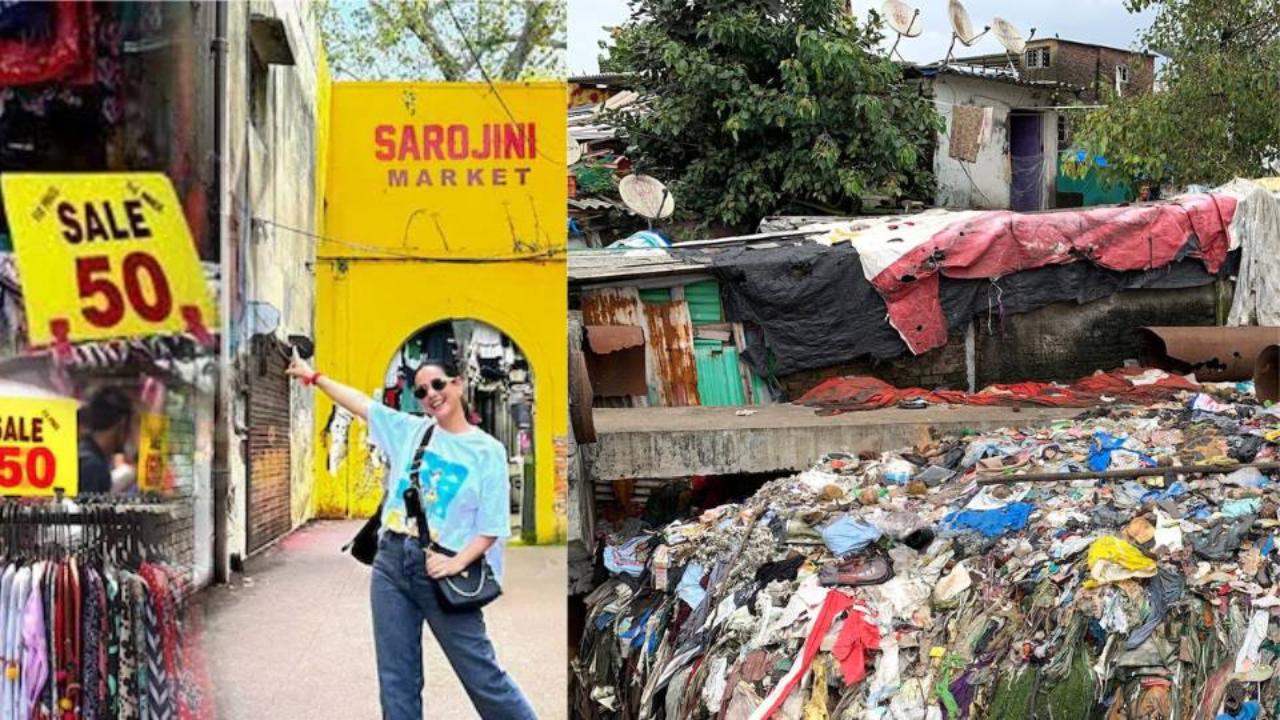
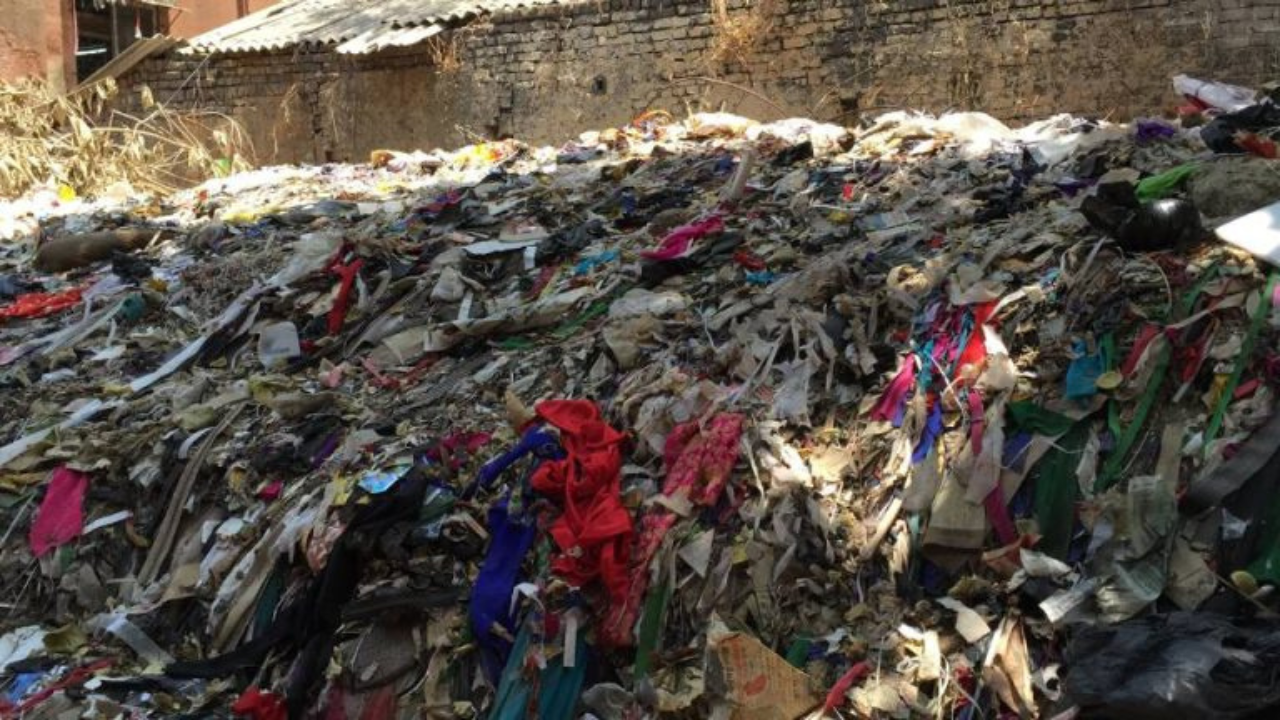
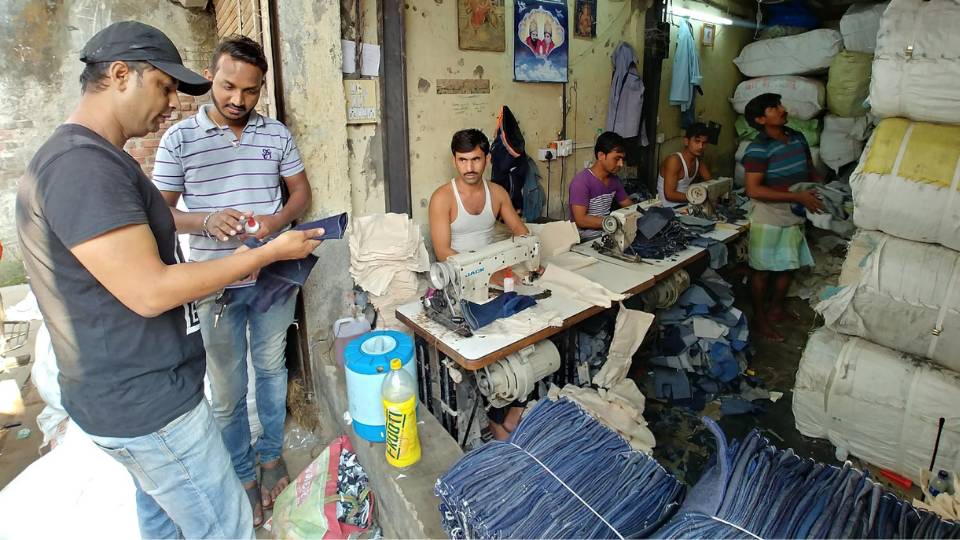
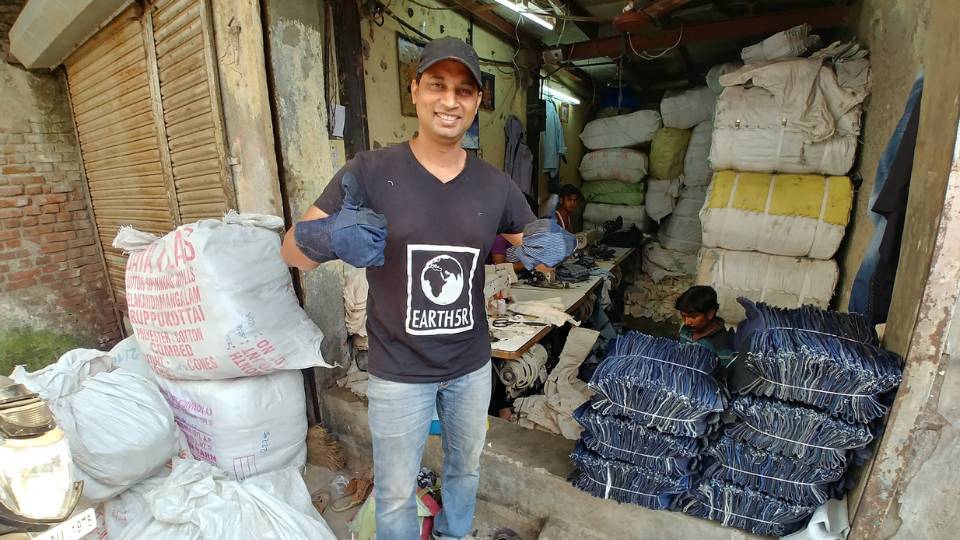
Earth5R's textile recycling programme: from urban collection to skilled community processing — turning fashion waste into economic opportunity across India's cities (2015–2025).
The Fast Fashion Crisis: Scale, Scope & Systemic Risk
India's emergence as both a major producer and growing consumer of fast fashion has created a structural waste crisis. Synthetic fibres, designed for multiple industrial uses, are being discarded after a handful of wears — filling landfills that lack the infrastructure to process them.
Annual Textile Waste Collection Volume (2015–2025)
Total garments collected (tonnes) across all programme cities. Exponential growth reflects both programme scale-up and increasing community participation year-on-year.
Synthetic Fibre Share of Collected Textiles (2015–2025)
The growing dominance of polyester, nylon, and blended synthetic fibres in the waste stream — the key driver of recycling complexity and the sector's most urgent circular economy challenge.
Critical Finding 1.1: India's fast fashion consumption cycle has shortened from an average garment lifespan of 2.8 years (2015) to 1.4 years (2025), driven by platform-based quick commerce, ultra-fast fashion imports, and declining per-unit pricing. This halving of useful garment life has more than doubled the effective textile waste generation rate per consumer, creating a compounding challenge for collection infrastructure that is growing linearly while waste grows exponentially.
Programme & Policy Timeline (2015–2025)
Waste Stream Composition Evolution (2015 vs. 2025)
How the incoming textile waste composition has shifted. Blended fabrics (the hardest to recycle) have grown fastest, while cotton and linen have declined proportionally.
Forensic Sustainability Methodology & Data Architecture
Earth5R's SaaS-X platform integrates community field data, textile characterisation science, livelihood tracking, and ESG value modelling into a unified forensic audit system designed to meet the evidentiary standards demanded by corporate ESG disclosure requirements.
Layer A: Textile Characterisation
Each incoming garment batch is characterised by fibre composition (cotton, polyester, nylon, blended), condition grade (reusable/upcyclable/recyclable), weight, contamination level, and brand source. Validated against standard textile characterisation protocols.
Layer B: Livelihood & Social Metrics
Monthly tracking of women employed: retention rates, skill progression, income levels, healthcare access, and children's school enrollment. Community champion density and volunteer activation rates tracked at ward level.
Layer C: ESG Value & Carbon Modelling
Economic value computed from garment stream (resale, upcycled goods, recycled feedstock pricing). Carbon offsets calculated using IPCC-aligned methodology: recycling offsets (avg. 5.5t CO₂e per tonne synthetic fibre) and landfill diversion credits.
| Data Dimension | Metric | Source / Validation | Temporal Coverage | Confidence Level |
|---|---|---|---|---|
| Collection Volume | Tonnes by garment category & city | Collection box weight logs, SaaS-X gate records | Monthly, 2015–2025 | High |
| Textile Composition | Fibre type % by weight | Lab fibre analysis, visual sorter training validation | Quarterly, 2015–2025 | High |
| Garment Grading | % reusable / upcyclable / recyclable | Trained sorter assessment, SaaS-X grading protocol | Monthly, 2015–2025 | High |
| Livelihood Metrics | Employment, retention, income | HR records, direct field interviews, bank transfers | Monthly, 2015–2025 | High |
| Carbon Offset | tCO₂e avoided by stream | IPCC factors, peer-reviewed lifecycle databases | Annual, 2015–2025 | Medium–High |
| Economic Value | ₹ crore per stream | Market price tracking, NGO partner records | Quarterly, 2015–2025 | Medium |
| Consumer Behaviour | Drop-off frequency, repeat participation | Citizen cohort tracking (n > 1,200,000) | Annual, 2015–2025 | High |
Methodological Note: All tonnage figures are verified at point of collection through calibrated weighing systems and independently audited on a quarterly basis. Economic value figures use prevailing market rates and are conservatively estimated. Carbon offset calculations follow the GHG Protocol Corporate Standard and are independently reviewed. The 8.5 million data points span household-level surveys, community engagement logs, garment processing records, and longitudinal livelihood tracking.
National Textile Waste Trends: 11-Year Longitudinal Analysis
A decade of data across 28 states and 8 union territories reveals accelerating fast fashion penetration, growing synthetic fibre dominance, and the expanding economic opportunity in India's textile circular economy — alongside persistent challenges in multi-material fabric processing.
Built on the Dedication of 1.3 Million People
The 10-year dataset that powers this analysis was built by 1.3 million citizens, thousands of community champions, and an extraordinary Earth5R team who embedded themselves in Indian neighbourhoods — knocking on doors, training households, and painstakingly recording every data point. The national trends visible here are not abstract statistics; they represent real choices made by real people who chose to act. This is citizen science at its most impactful.
Garment Streams: Reuse, Upcycle & Recycle (Annual Tonnes, 2015–2025)
Three-stream breakdown of processed garments. Upcycling grows fastest as skill capacity deepens. Recyclable volumes increase with synthetic fibre dominance. Reuse remains the highest-impact stream per tonne.
Cumulative Circular Economy Value (₹ Crore, 2015–2025)
Cumulative economic value generated through all three processing streams. Upcycling delivers the highest value per tonne; recycling delivers the highest volume. Combined, the programme generates sustained economic activity in programme communities.
The Three-Stream Circular Garment Flow: Earth5R's Intervention Model
Every collected garment passes through Earth5R's trained sorting system and is directed to the highest-value circular pathway available.
Annual Carbon Offset by Stream (tCO₂e, 2015–2025)
Carbon offset contributions from each processing stream. Recycling dominates in carbon terms due to virgin polymer displacement; reuse generates the highest per-garment offset.
Research Finding 3.1 — The Upcycling Value Premium: Earth5R's 10-year data conclusively demonstrates that upcycling generates approximately ₹4,200 per tonne in economic value versus ₹1,000 per tonne for industrial recycling. Yet upcycling requires skilled labour, design capacity, and active market linkages — investments that cannot be made through one-time CSR pilots. Brands seeking maximum ESG value per rupee invested should prioritise long-term upcycling programme partnerships over volume-based recycling contracts.
Earth5R's Structured Intervention: The Collection-to-Circular Programme
Earth5R designed a vertically integrated textile circular economy system — from consumer-facing collection campaigns to industrial recycling partnerships — that creates value at every stage and generates auditable ESG evidence for corporate partners.
Programme Architecture: Five Integrated Stages
- Stage 1 — Community Mobilisation: Earth5R's certified programme officers and community champions conduct awareness campaigns in residential complexes, schools, and community centres. Specially designed collection boxes are deployed with clear sorting instructions. Participation pledges create accountability.
- Stage 2 — Structured Collection: Garments are collected weekly from deployed boxes. Each collection is weighed, logged in SaaS-X, and tagged with source location data. Community participation rates and repeat-drop-off frequency tracked at household level.
- Stage 3 — Trained Sorting & Grading: Collected garments transported to Earth5R's livelihood facility. Trained women sorters assess each garment against a standardised 5-point grading protocol (condition, hygiene, fibre type, upcyclability, recycling pathway suitability).
- Stage 4 — Three-Stream Processing: Reusable garments cleaned, disinfected, and distributed through NGO partners. Upcyclable fabrics transformed by artisan women into marketable products. Recyclable fibres processed through industrial partners into tiles, insulation, and feedstock.
- Stage 5 — Verification & ESG Reporting: Complete chain-of-custody documented in SaaS-X. Weight-verified reports generated for corporate partners. Carbon offset certificates, livelihood impact dashboards, and ESG disclosure-ready data packs produced quarterly.
Collection Infrastructure (2025)
Active collection boxes deployed across residential buildings, corporate offices, and educational institutions in 14 programme cities.
↑ from 28 boxes in 2015 to 840+ in 2025 — a 30× scale increase
Processing Throughput (2025)
Annual textile waste processed in 2025, across all three circular streams. Daily throughput at flagship facility: 856 kg. Processing accuracy (correct stream assignment): 94.2%.
↑ from 18t in 2015 — 17× growth over the decade
Garments to Communities in Need
Cumulative weight of clean, reusable garments donated to homeless individuals, families, and disaster-affected communities through Earth5R's NGO network (2015–2025).
Estimated 2.4 million garment pieces — each one meeting a real need
City-Level Collection Performance — Programme Cities (2025)
Annual collection volumes across 8 major programme cities in 2025. Mumbai and Delhi lead in volume; Bangalore and Pune show highest year-on-year growth rates reflecting recent programme expansion.
Research Finding 4.1 — The Convenience Paradox: Earth5R's decade of consumer behaviour data reveals that the single strongest predictor of participation in textile take-back is proximity to a collection point — more influential than environmental awareness, brand loyalty, or financial incentives. Buildings with collection boxes placed at building entrances showed 3.8× higher participation rates than those with boxes at a 5-minute walk. This finding fundamentally reshapes EPR programme design: collection infrastructure density, not awareness campaigns, is the primary investment lever for maximising garment recovery.
Livelihood Creation: Women-Led Circular Economy
Earth5R's most transformative achievement is not the tonnes of waste diverted, but the 8,400+ women from urban slum communities who now have stable, skilled employment, improved incomes, and new pathways to economic independence — all because of what others threw away.
The Extraordinary People Behind These Numbers
The Earth5R team, community leaders, and 1.3 million involved citizens have collectively built something that no policy or technology alone could create.
Women Employed in Active Programme (Annual, 2015–2025)
Number of women in active, paid employment within Earth5R's textile processing programme at year-end. Steady growth reflects both programme expansion and improved retention driven by skill development investment.
Programme City Performance: Livelihood Metrics (2025)
Skills Developed Through the Programme
Textile grading & characterisation · Garment hygiene protocols · Upcycling craft techniques · Product design & finishing · Inventory management · Quality control · Cooperative leadership · Digital literacy (SaaS-X data entry)
Research Finding 5.1 — The Stability Premium: Earth5R's data shows that livelihood retention rates above 80% are only achieved when programmes provide skill progression pathways — where women can move from basic sorting to skilled upcycling, quality control supervision, and eventually cooperative management. One-off employment without skill laddering shows 12-month retention of just 42%. The Earth5R team's investment in structured training curricula, mentorship networks, and peer-learning circles is the primary driver of the programme's 84.3% retention rate in 2025 — and the primary differentiator for corporate ESG partners seeking durable social impact evidence.
ESG Impact Metrics: Environmental, Social & Economic Evidence
Earth5R's forensic data architecture provides the evidentiary foundation for comprehensive, third-party-auditable ESG disclosure across all three pillars of the sustainability framework.
(2015–2025, all streams)
& Waterways (2015–2025)
Cumulative ESG Impact Accumulation (2015–2025)
Year-on-year accumulation of the programme's primary ESG outputs: tonnes diverted (left axis) and carbon offset (right axis). COVID dip clearly visible in 2020; strong recovery from 2021.
Circular Economy Value Split by Stream (₹ Crore, 2025)
Economic value generated in 2025 across the three processing streams. Upcycling commands premium value despite lower volume, confirming the upcycling value premium finding.
Comprehensive ESG KPI Scorecard (2015–2025)
| ESG Pillar | KPI | 2015 Baseline | 2025 Value | Cumulative Total | SDG Alignment |
|---|---|---|---|---|---|
| 🌱 Environmental | Textile Waste Diverted from Landfill | 18 tonnes | 312 tonnes/yr | 1,847 tonnes | SDG 12 |
| 🌱 Environmental | Carbon Emissions Avoided (tCO₂e) | 99 tCO₂e | 1,716 tCO₂e/yr | 14,800 tCO₂e | SDG 13 |
| 🌱 Environmental | Virgin Synthetic Fibre Displaced (tonnes) | 7t | 128t/yr | 757 tonnes | SDG 12, 15 |
| 🌱 Environmental | Water Saved (million litres) | 0.8M L | 14.2M L/yr | 83.4M litres | SDG 6, 12 |
| 👥 Social | Women Employed (cumulative) | 120 | 1,240 active | 8,400+ women | SDG 8, 5 |
| 👥 Social | 12-Month Employment Retention Rate | 61% | 84.3% | — | SDG 8 |
| 👥 Social | Garments Donated to Communities in Need | 4.9t (est.) | 84t/yr | 499 tonnes (~2.4M pieces) | SDG 1, 10 |
| 👥 Social | Citizens Engaged in Take-Back | 12,400 | 380,000+ /yr | 1.3M+ citizens | SDG 12 |
| ⚡ Economic | Circular Economy Value Generated | ₹0.4 crore | ₹14.8 crore/yr | ₹89 crore | SDG 8, 12 |
| ⚡ Economic | Avg. Worker Monthly Income | ₹7,600 | ₹18,400 | 2.4× real growth | SDG 8 |
| ⚡ Economic | Upcycled Product Market Revenue | ₹0.1 crore | ₹7.7 crore/yr | ₹46 crore | SDG 8, 12 |
SDG Alignment, BRSR Compliance & Corporate Value Proposition
Earth5R's textile circular economy programme generates direct, measurable contributions to multiple UN Sustainable Development Goals and aligns with India's Business Responsibility and Sustainability Reporting (BRSR) framework — providing plastic-packaging companies with audit-ready ESG disclosure evidence.
Sustainable Development Goals — Direct Programme Contributions
Garment donations to communities
Livelihood income → food security
Healthcare access for workers
8,400+ women empowered
83.4M litres water saved
Stable skilled employment
1,847t waste diverted
14,800 tCO₂e avoided
Microfibre ocean prevention
Landfill & soil pollution prevention
Verified ESG Disclosure
Earth5R's chain-of-custody textile data provides the third-party-verified evidence required for BRSR Core reporting (Principle 2: Sustainable Lifecycle), GRI 306 (Waste), and CDP Supplier Engagement disclosures — the evidentiary standard now demanded by institutional investors and ESG rating agencies.
Scope 3 Emissions Reduction
For fast fashion brands, textile end-of-life is a significant but historically unmeasured Scope 3 category. Earth5R's programme provides the collection data, carbon methodology, and audit trail needed to credibly quantify and reduce end-of-life emissions — increasingly required under CSRD and SBTi reporting.
Social Impact & Shared Value
Employment of women from marginalised communities generates co-auditable social impact evidence for ESG frameworks: SDG 5 (Gender Equality), SDG 8 (Decent Work), and SDG 10 (Reduced Inequality). Community-level impact translates into measurable brand equity in programme cities.
Product Lifecycle Extension
Earth5R's upcycling capability enables brands to demonstrate literal product lifecycle extension — a direct, quantifiable contribution to circular economy claims. The upcycled goods supply chain also creates branded co-creation opportunities with measurable premium pricing potential.
Consumer Engagement Data
Drop-off participation rates, repeat engagement frequency, and brand-specific collection volumes provide fashion brands with unique consumer sustainability engagement data — unavailable through any other channel — that directly informs product design, marketing, and EPR programme investment decisions.
Supply Chain De-risking
As India's EPR framework evolves toward mandatory Extended Producer Responsibility for textiles, brands with established collection infrastructure and verified take-back data will face significantly lower compliance cost inflation — estimated at 30–45% lower than those without verified systems.
Conclusions & Strategic Recommendations
Ten years of evidence from India's fast fashion sector produces a clear, actionable set of conclusions for brands, investors, and policymakers navigating the textile sustainability transition.
Key Research Conclusions
- Upcycling is the highest-value circular pathway at ₹4,200/tonne versus ₹1,000/tonne for industrial recycling — but requires sustained investment in skilled labour, design capacity, and market linkages that only long-term programme partnerships can deliver.
- Collection infrastructure density is the primary recovery lever. Participation rates are 3.8× higher when collection points are placed at building entrances versus a short walk away, outperforming awareness campaigns as an investment.
- The synthetic fibre challenge is accelerating. Blended fabrics now constitute 44% of incoming waste and have no viable circular pathway at scale. Brands must invest in mono-material design or accept permanent circular economy gaps in their ESG reporting.
- COVID-19 revealed systemic fragility — collection volumes dropped 28% in 2020. Resilient programmes require diversified collection channels, home-based processing capacity, and community-embedded infrastructure.
- Women's livelihood stability drives programme sustainability. The 84.3% retention rate achieved in 2025 is a direct result of skill progression investment. Without career laddering, social impact is transient and EPR evidence unreliable.
- The programme's 10-year evidence base demonstrates that citizen science, community action, and forensic data can together create national-scale ESG infrastructure that rivals institutional systems — and does so with co-benefits that institutions cannot replicate.
Strategic Recommendations for Industry
- Fund multi-year upcycling partnerships, not collection pilots — minimum 3-year commitments with skill-progression KPIs are required for auditable, sustainable social impact evidence and product lifecycle extension claims.
- Invest in collection infrastructure density over awareness campaigns — allocate EPR-linked budgets to building-level collection point expansion before scaling awareness activities.
- Commission mono-material design audits — quantify the proportion of your current product range that is unrecyclable in Earth5R's or any processing system, and set annual reduction targets with public disclosure.
- Integrate Earth5R's SaaS-X data into Scope 3 reporting — textile end-of-life is now a measurable, reducible emissions category with audit-ready data available for the first time through Earth5R's platform.
- Design brands as market partners for upcycled goods — the upcycled product market created by Earth5R's artisan women is an untapped co-branding and brand-purpose opportunity that generates co-auditable Scope 3 credits simultaneously.
- Engage community leaders and champions as brand advocates — Earth5R's proven community champion model turns programme participants into sustainability ambassadors, creating authentic brand storytelling content that outperforms manufactured campaigns.