
Sustainable packaging is no longer a niche choice. By 2025 it is a commercial and regulatory priority for brands, retailers and policymakers. The global sustainable-packaging market is growing fast; forecasts show strong expansion in the decade ahead, driven by consumer demand and tighter rules.
Policymakers are moving first. The EU’s Packaging and Packaging Waste Regulation (PPWR) entered into force in February 2025 and tightens recyclability, labelling and reuse requirements. That law is already pushing designers to favour mono-materials and recyclable formats.
Business models are changing too. Reuse and refill pilots from retail refill stations to TerraCycle’s Loop system are growing because reuse can drastically cut material and lifecycle impacts when logistics work. Analysts call 2025 a potential tipping point for scaled reuse.
What this means for readers: expect to see more mono-material pouches, paper-based barriers, compostable trials, edible coatings (e.g., Apeel) and reusable packaging pilots. The next sections unpack the top 20 innovations, the evidence behind them, and what brands and policymakers should do next.
Why 2025 Is a Turning Point?
2025 marks a decisive shift in the global conversation on sustainable packaging. What was once a trend is now policy, market expectation and corporate strategy. Across continents, regulators are tightening packaging laws, investors are demanding measurable climate impact, and consumers are actively choosing brands that show proof , not just promises of sustainability.
The year has become a convergence point: scientific innovation, circular-economy legislation and investor pressure are all aligning to force packaging redesign at scale. The European Union’s landmark Packaging and Packaging Waste Regulation (PPWR) officially entered into force in February 2025. It sets legally binding targets for recyclability and reuse, requiring that all packaging on the EU market be recyclable “in practice and at scale” by 2030.
This new framework has global implications. Multinational brands rarely design for one region alone; PPWR standards are becoming a de facto global benchmark for sustainable packaging design.
Policy Push: EPR and Regulatory Momentum
Across the world, Extended Producer Responsibility (EPR) is reshaping the economics of packaging. Under EPR, producers are financially responsible for the end-of-life management of the packaging they put on the market. In 2025, India, Canada, and several U.S. states are implementing or updating national EPR frameworks, while the EU’s rules require that at least 10 percent of packaging for beverages, food, and personal-care products be reusable by 2030.
For brands, this means new costs if packaging is not designed for recycling, and new incentives to invest in reuse and recyclable formats. Retailers and manufacturers now see circular packaging as a compliance need rather than an optional sustainability project.
Market Momentum and Consumer Demand
The sustainable-packaging market is entering an accelerated growth phase. According to The Sustainable Packaging Global Market Report 2025–2035 , the industry is projected to expand significantly from 2025 onwards as global brands commit to “net-zero supply chains” and sustainable materials.
Research by McKinsey & Company also shows a marked behavioural shift: more than 60 percent of U.S. consumers in 2025 say that sustainable packaging influences their purchase decisions up from 35 percent five years ago. This changing preference is echoed in Europe and Asia, where sustainable packaging is often tied directly to brand trust and ESG scores.
Investor Pressure
Institutional investors are also linking sustainability to capital access. ESG-focused funds are demanding quantifiable reductions in packaging waste and Scope 3 emissions. This makes packaging redesign a financial imperative as well as an environmental one.
Technology and Systems Thinking
2025 is also the year when packaging innovation moves beyond materials to encompass systems. Companies are combining material science with digital tools and data analytics to track, trace and recover packaging at scale.
QR codes and smart labels are helping consumers sort packaging correctly, while data from reuse systems are being used to optimise reverse logistics.
The Ellen MacArthur Foundation’s Global Commitment 2024 report emphasises that reuse and refill systems are entering “mainstream pilot phase” worldwide. Major brands in personal care and food retail have launched or expanded refill and take-back programmes, while retailers experiment with in-store refill walls and container-return schemes.
This is a significant shift from previous years, when most sustainability efforts focused only on replacing plastic with “greener” single-use alternatives. The new thinking recognises that material substitution alone cannot solve packaging waste. The challenge is systemic; inking design, infrastructure, logistics, and consumer participation.
The Circular Economy Becomes Operational
As 2025 unfolds, circular-economy principles are being translated into measurable corporate practices. The Ellen MacArthur Foundation’s findings show that brands using reuse and refill systems can reduce packaging waste by up to 70 percent over multiple use cycles. At the same time, chemical-recycling and advanced-sorting technologies are closing the gap for hard-to-recycle materials. While these solutions are still capital-intensive, their maturation in 2025 signals an inflection point for the sector.
Key Takeaway
2025 is the year when packaging sustainability becomes policy-driven, market-demanded, and technology-enabled.
Regulations are forcing accountability, consumers are rewarding transparency, and technology is providing traceability. Companies that invest early in design-for-recyclability, reuse systems, and credible material innovations will define the next decade of sustainable packaging.
Top 20 Innovations for 2025
The packaging industry in 2025 is no longer only about what material you use; it’s about how easily it can return to the system. The first five innovations highlight the biggest shifts in material design, recyclability, and production logic.
1. Mono-Material Packaging
Traditional flexible packaging often combines aluminium, PET, and polyethylene in layered films. These multi-layer laminates are almost impossible to recycle efficiently. The shift toward mono-material packaging; packaging made from a single polymer family is one of the clearest sustainability wins of 2025.
A mono-material pouch or tray allows sorting plants to process it without complex separation. In 2025, companies such as Mondi Group and Amcor launched fully recyclable polyethylene (PE) and polypropylene (PP) mono-material films for snacks and ready-meals.
Why it matters:
Recycling rates rise dramatically when materials are easier to identify and separate. According to the Sustainable Packaging Coalition , mono-material designs can increase recyclability rates by up to 40 percent compared with composite laminates.
Evidence and example:
A European Commission life-cycle analysis (2024) shows that replacing mixed laminates with mono-material PP can cut carbon emissions by 16–20 percent across the packaging life cycle.
Design takeaway:
Mono-material packaging performs best when paired with clear on-pack recycling labels and compatible barrier coatings that maintain shelf life.
2. Lightweighting and Minimal Design
Reducing material thickness and component count , “lightweighting” is a silent but powerful innovation. Brands are removing unnecessary layers, using thinner films, and cutting down cap or lid sizes.
The result is lower material use, smaller carbon footprints, and reduced shipping weight. For instance, Coca-Cola Europacific Partners reported in 2025 that redesigning its 500 ml PET bottles with 15 percent less plastic saved nearly 10,000 tonnes of PET per year across its supply chain.
Why it matters:
Each gram saved scales massively across millions of units. The Carbon Trust notes that even a 5 percent reduction in packaging weight can translate to a 3 percent cut in transport-related emissions.
Example:
Online retailers such as Amazon India have shifted from bubble-wrap mailers to paper-based envelopes, trimming both weight and plastic waste.
Design takeaway:
Lightweighting succeeds when performance and product protection remain intact ; structural integrity and moisture barriers must still meet safety standards.
3. Bio-Based Plastics and Plant Feedstocks
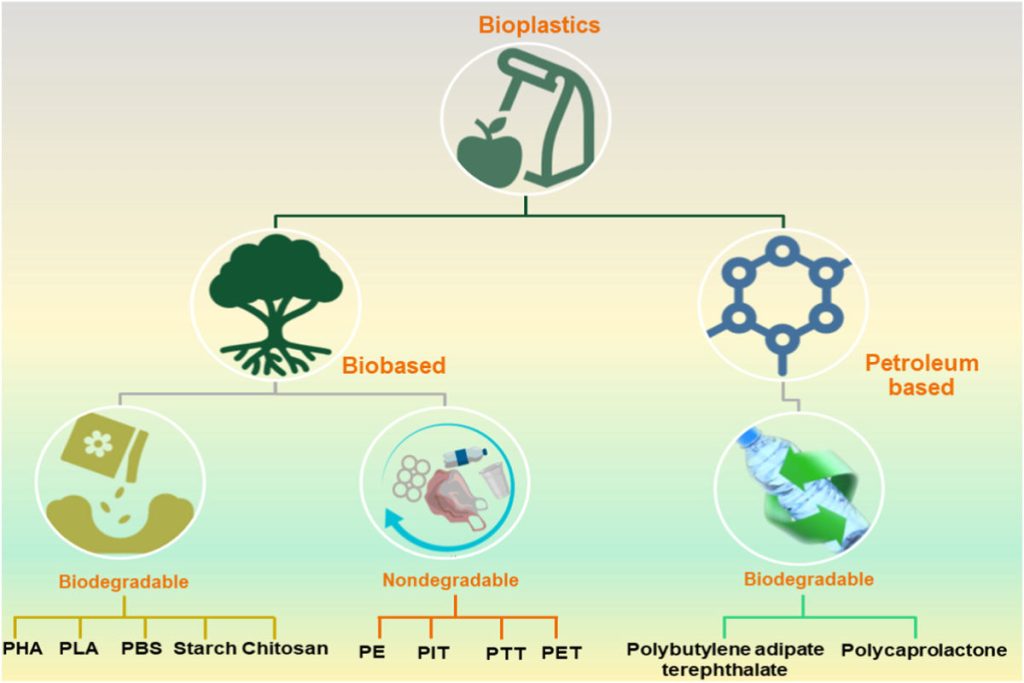
Fossil-derived polymers dominate global packaging. But 2025 sees rapid growth in bio-based plastics made from renewable sources such as sugarcane, cassava, and corn starch. These are chemically similar to conventional plastics but derived from biomass.
Major materials include bio-PET, PLA (polylactic acid), and PE from sugarcane ethanol. Brazil, Thailand, and India are scaling facilities to produce these polymers at competitive cost.
Why it matters:
Bio-based plastics can reduce fossil-carbon dependency and lower cradle-to-gate emissions. A 2024 IEA Bioenergy report estimated that switching 25 percent of plastic packaging to bio-based alternatives could cut global GHG emissions from packaging by 200 million tonnes CO₂e annually.
Case study:
Danone and Nestlé Waters partnered with Origin Materials to develop a plant-based PET bottle that’s chemically identical to conventional PET but with a 30 percent smaller carbon footprint.
Caveat:
Bio-based doesn’t automatically mean biodegradable. Policymakers now emphasise full life-cycle accounting including land-use impacts and end-of-life management to avoid unintended trade-offs.
4. Compostable and Biodegradable Films (Seaweed, Starch & PHA)
Beyond recyclability, compostable materials are designed to safely return nutrients to soil. The most promising new feedstocks come from seaweed, starch, and polyhydroxyalkanoates (PHAs), polymers naturally produced by microorganisms.
Seaweed-based packaging firms like Notpla (U.K.) and Loliware (U.S.) have commercialised edible or home-compostable films that dissolve in water or degrade within weeks.
Why it matters:
Seaweed grows rapidly, requires no fertiliser or freshwater, and captures carbon while it grows, creating a low-impact raw material.
5. Mycelium and Fungi-Based Protective Packaging
Mycelium; the dense root network of mushrooms is now an industrial feedstock for packaging. It grows within agricultural waste (like hemp hurd or rice husk) to form protective, foam-like shapes.
In 2025, startups such as Ecovative Design (U.S.) and BioFab (NZ) supply mycelium packaging for electronics, cosmetics, and wine shipping. In India, IIT-Madras scientists unveiled prototypes made from paddy waste bound with mushroom mycelium, offering a biodegradable alternative to expanded polystyrene (EPS).
6. Reuse and Refill Systems at Scale
The most visible shift in 2025 is from disposable to reusable packaging. Instead of discarding containers, consumers and retailers are adopting return–refill loops that keep durable packaging in circulation.
7. Packaging-as-a-Service (Asset Models)
Brands are reframing packaging as a managed asset rather than a consumable. Companies provide durable containers, track their use digitally, and recollect them for cleaning and redistribution.
Why it matters:
Asset-based systems create recurring brand engagement while keeping materials in a closed loop. They are also EPR-friendly, since ownership stays with the producer.
8. Advanced Recycling and Depolymerisation
Advanced or chemical recycling breaks plastics down to their original monomers for reuse in virgin-grade applications. This technology addresses mixed or contaminated plastics that mechanical recycling cannot handle.
Why it matters:
Advanced recycling complements, not replaces, mechanical systems. Policymakers, including the European Commission, are developing sustainability criteria for chemical recycling outputs to ensure real carbon benefits.
9. Design for Recyclability (“Recyclable by Design”)
Good design can make packaging recycling-ready before it reaches the bin. The 2025 trend is to standardise materials, avoid incompatible inks and adhesives, and ensure easy disassembly.
Policy driver:
The EU PPWR requires that by 2030 all packaging be “recyclable in practice and at scale.” That phrase links design decisions directly to infrastructure reality. if a package cannot be sorted and recycled today, it will soon be non-compliant.
10. Digital Traceability and Smart Labelling
The digital layer is becoming as important as the physical package. Smart labels and QR codes now carry recycling instructions, material IDs, and provenance data, turning each package into a mini-database of its own life cycle.
Why it matters:
Digital traceability connects the entire chain from material supplier to recycler and provides data for EPR compliance and carbon accounting. For consumers, it translates complex sustainability data into actionable instructions.
11. Smart sensors and freshness indicators (reduce food waste)
Smart packaging now goes beyond QR codes. Sensors embedded in films or labels can detect gases, temperature abuse, or biochemical markers of spoilage. These devices let retailers and consumers act on real-time freshness data. That reduces food waste and improves food safety.
Why it matters:
Food loss is a major emissions source. Extending or verifying shelf life lowers waste and the associated GHGs.
Evidence and Case:
Researchers published a robust sensor system for continuous gas monitoring in 2024, showing practical, disposable gas-sensor tags for food spoilage detection. The work demonstrates battery-free sensing concepts that are moving from lab to pilot.
Practical takeaway:
Use freshness sensors in high-value perishables (seafood, meat, cut fruit). Pair sensors with retailer inventory systems to prioritise near-expiry stock and reduce disposal.
12. Water-soluble and removable labels & adhesives (improve recycling yield)
Labels and adhesives commonly contaminate recycling streams. New adhesives dissolve or wash off easily in recycling processes. This keeps bottles and containers clean and improves sorted material quality.
Why it matters:
Contaminated streams lower recycling yields and raise processing costs. Removable labels increase the purity of recycled feedstock.
Evidence & case:
Avery Dennison has published technical guides and pilot products that target wash-off and removable adhesives for glass and PET recycling. Their 2024 product guides describe adhesives engineered to wash off during standard recycling operations. Patents and product literature back the technology.
Practical takeaway:
Specify wash-off or heat-removable adhesives for bottles and jars. Test the label/adhesive combination on local recycling process conditions before scale-up.
13. Fiber-based high-barrier paper and coated board (replace plastics in many uses)
Paper and board regained strategic importance in 2025. New barrier coatings and fibre constructions let paper replace plastics in trays, pouches and cups. These options are renewable and widely recyclable in many jurisdictions.
Why it matters:
Paper often has higher recycling rates than plastics. High-barrier paper widens paper’s application to oily or wet goods while keeping recyclability.
Evidence & case:
Stora Enso and other pulp-and-paper firms now offer barrier-coated paperboard for demanding food applications. Their technical pages and product guides document food-grade barrier boards designed for recycling. Independent papers show pigment-coated boards can provide barrier functions while keeping recyclability.
A market analysis shows barrier-coated flexible paper packaging is growing quickly due to demand in food & beverage markets.
Case example:
Stora Enso’s Natura Shape™ tube and other barrier board products have been adopted for cosmetics and some food lines to replace multilayer plastics. Product documentation and press releases describe >80% fibre content designs intended for recycling
Practical takeaway:
Consider barrier-coated paper where grease or moisture resistance is needed. Verify local paper recycling rules for coated fibres and choose aqueous or polymer coatings designed for recycling.
14. Active packaging: oxygen scavengers, antimicrobial coatings and edible coatings
Active packaging interacts with the product. It can absorb oxygen, release antimicrobials, or scavenge moisture. The aim is to extend shelf life and reduce preservatives or food waste.
Why it matters:
Longer shelf life means less food thrown away. That reduces the total environmental footprint per consumed unit.
Evidence & case:
Recent reviews and applied research document active coatings and oxygen-scavenging sachets that reliably extend shelf life for meat, bakery and ready meals. Industry pilots combine active films with modified atmosphere packaging to extend shelf life by days to weeks depending on product. Scientific reviews of intelligent and active packaging detail fabrication methods and food-safety validation.
Practical takeaway:
Use active packaging for fragile, high-waste products. Validate food-safety and regulatory compliance (food contact approvals) before market launch.
15. Reusable transit packaging and pooled logistic systems (RPCs & pooling)
The movement of goods benefits from reusable transit packaging. Reusable plastic crates (RPCs) and pooled trays circulate across suppliers, wholesalers and retailers. Pooling reduces single-use corrugate and shrink-wrap for transport.
Why it matters:
Transport packaging often accounts for large volumes of single-use material. Pooling and RPCs cut waste and often reduce total lifecycle impacts when reuse cycles are high.
Evidence and case:
IFCO’s studies and academic reviews show RPC systems can reduce solid waste and energy use substantially. One widely cited IFCO assessment reported RPC solutions can generate large reductions in waste and energy use across fresh produce supply chains. Peer-reviewed analysis of RPCs indicates strong environmental benefits when sanitized and cycled effectively.
Companies such as CHEP and IFCO run global pooling networks and publish impact summaries. CHEP and similar providers show case data on emission and waste reductions for pooled pallets and crates in logistics.
Practical takeaway:
Use RPCs for fresh produce and high-volume routes. Track reuse cycles and sanitation energy to ensure net environmental benefits. Pooling works best where reverse-logistics are reliable.
16. Edible packaging and dissolvable films
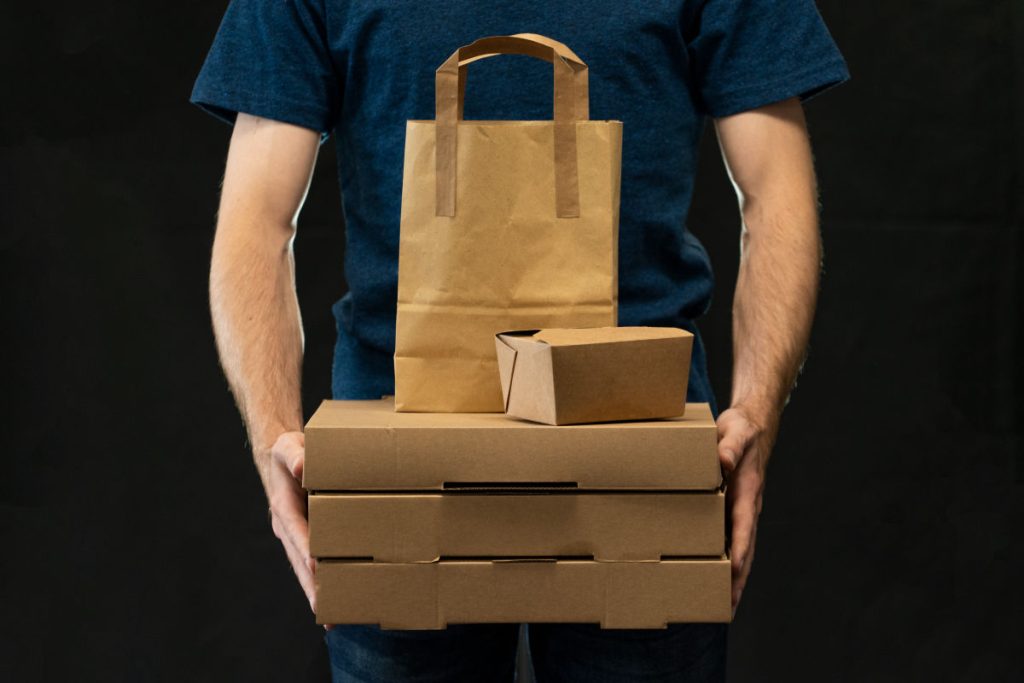
It is the packaging you can safely eat or that dissolves harmlessly in water (seaweed, starch, alginate films).
Why it matters: Eliminates disposal for some single-use items and reduces marine litter risk if mis-discarded.
Case studies & evidence:
- Notpla (UK) produces seaweed-based films and sachets that biodegrade quickly and have been trialled with foodservice operators. Notpla’s product pages and press coverage describe commercial pilots and biodegradability testing.
- Loliware markets seaweed-derived straws and single-use items made with SEA Technology™; patents and industry writeups document their compostable properties.
- Academic work on alginate and seaweed-derived films (2024–2025) shows promising film properties and lower marine persistence vs conventional plastics.
Practical takeaway: Use edible or dissolvable films for short-life, single-use foodservice items (cups, sachets). Always match claims to local composting/waste systems and label clearly to avoid contaminating recycling streams.
17. E-labels, verification and material transparency (On-Pack Labels & Digital Product Passports)
It is the standardised on-pack recycling labels plus digital product passports (DPPs) that carry composition, recyclability and end-of-life data.
Why it matters: Clear, verifiable information reduces consumer confusion, improves sorting, and supports EPR/DPP compliance.
Case studies & Evidence:
- The EU Digital Product Passport is already embedded in EU policy planning (Ecodesign/DPP frameworks), aiming to require DPPs for many products and to increase transparency across value chains. The EU page summarises intent and timelines.
- The On-Pack Recycling Label (OPRL) in the U.K. provides standardised consumer guidance and has been shown to increase correct sorting where widely adopted. Industry documentation outlines how OPRL works.
- Independent legal/NGO briefings (e.g., ClientEarth) warn against vague recycling claims and stress the need for verified, standardised labelling to avoid greenwash.
Practical takeaway: Adopt standardised on-pack labels (OPRL or local equivalents) and prepare for DPP requirements in export markets (EU). Invest in traceable data collection now to meet upcoming regulations and avoid misleading claims.
18.Certification, verified eco-labels and anti-greenwash mechanisms
It includes Independent verification and eco-labels that confirm recyclability, recycled content, or compostability under standard conditions.
Why it matters: Consumers and regulators increasingly distrust unverified claims; credible labels allow brands to prove sustainability.
Evidence & examples:
- NGO and regulatory investigations (e.g., ClientEarth) show that unverified recycling claims mislead consumers and may breach consumer protection law; this increases pressure for third-party verification.
- Industry certification schemes (e.g., FSC for fibre, DIN CERTCO / OK Compost for compostability) set standards brands can use to verify claims. These schemes publish test protocols and certified product lists. (General authority pages and scheme documentation.)
Practical takeaway: Use third-party certification for material claims (recycled content, compostability, fibre sourcing). Avoid vague language like “eco,” “green” or “biodegradable” without clear evidence and certification.
19. Local feedstock and circular solutions for emerging markets (India focus)
There are packaging solutions that use abundant local feedstocks (bagasse, rice husk, agricultural waste) and business models suited to local logistics.
Why it matters: Solutions that match local materials and waste management realities scale faster and avoid export of inappropriate tech.
Case studies & evidence:
- IIT Madras published and publicised work on mycelium-based composites grown on agricultural waste; press releases describe prototypes and biodegradability tests. These local research programs show promising regional solutions for India’s agri-waste streams.
- Indian companies and researchers are scaling bagasse-based tableware and paperboard solutions; market reports note rising adoption in foodservice and FMCG due to cost and local availability. (Industry press & product pages.)
Practical takeaway: Prioritise locally available feedstocks and test materials under local climate and waste-management conditions (monsoon, humidity, compost facilities). Support pilots with local collection and industrial composting pathways.
20. Brand-scale case studies: pilots that moved toward mainstream adoption
These are concrete brand examples that scaled pilots into meaningful business practice; showing feasibility.
Why it matters: Case studies provide hard lessons on costs, logistics, and consumer acceptance. They prove what is possible at scale.
Examples:
- Apeel (produce shelf-life coatings): Apeel’s plant-derived coatings extend fruit and vegetable shelf life and have been piloted/supplied to retailers globally. The Ellen MacArthur Foundation documents Apeel as a circular example that reduces food waste by slowing dehydration and oxidation.
- Amazon; right-sizing and frustration-free packaging: Amazon’s public sustainability pages document continuous reductions in unnecessary packaging and the expansion of right-sized, recyclable solutions. Amazon reports concrete reductions in plastic packaging in recent annual updates.
- Dell & Ecovative; mycelium protective inserts: Dell piloted mycelium packaging (via Ecovative) to replace EPS inserts in selected laptop shipments; this pilot is widely cited as an early commercial proof point. Company and industry writeups document Dell’s trials and outcomes.
- Loop / TerraCycle; reuse pilots with retailers: Loop’s collaborations with Carrefour, Tesco and large FMCG brands show reuse systems functioning across retail networks, with documented reuse cycles and pilot findings reported in industry reviews.
Practical takeaway: Study the operational choices these brands made: supply-chain partners, reverse-logistics models, consumer incentives, and clear metrics (reuse cycles, waste avoided). Use these case studies as templates; not one-size-fits-all solutions.
Measuring Impact
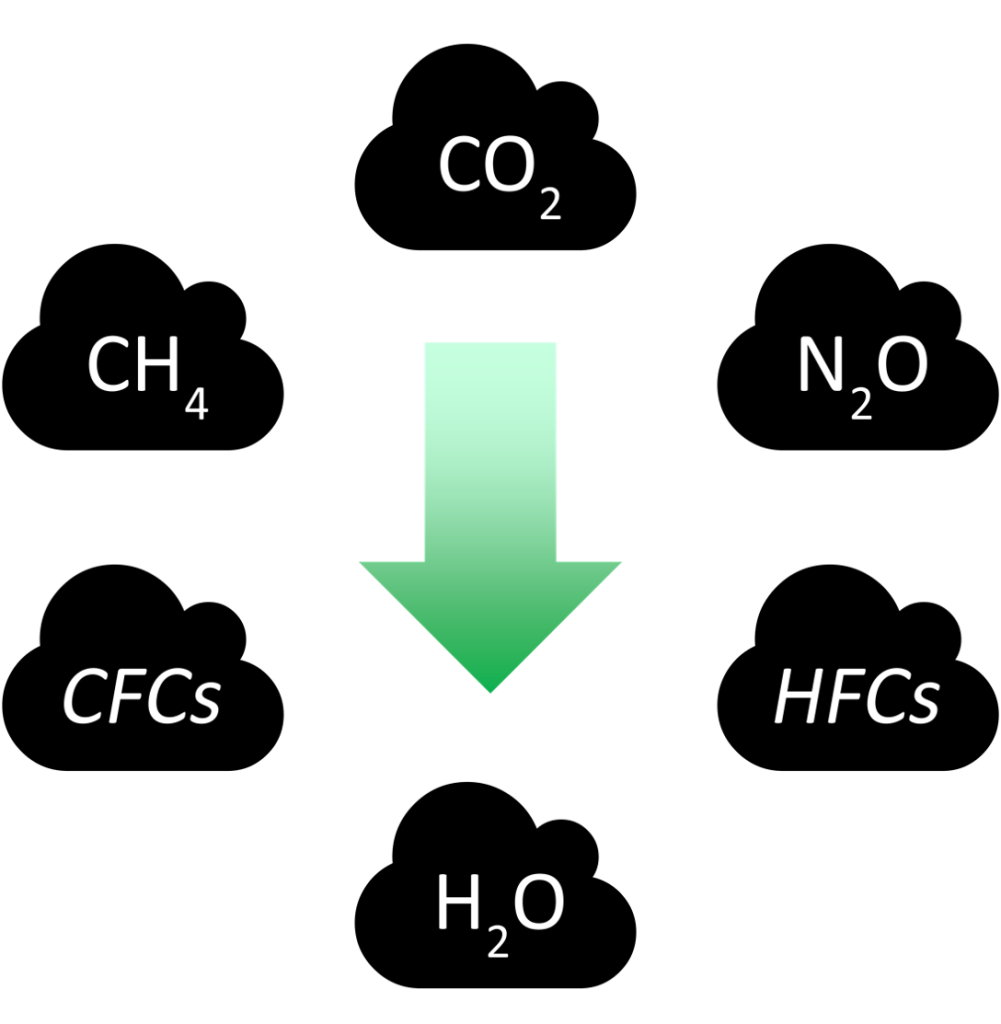
Policy targets and bold pledges make headlines but real sustainability depends on data that can be measured, compared, and verified.
In sustainable packaging, evidence means numbers: greenhouse gas savings, material efficiency, recyclability, and waste avoided. Yet, as 2025 unfolds, one truth becomes clear; not all “eco-packaging” is equally effective once the full life cycle is counted.
Metrics That Matter (Core KPIs)
Every credible sustainability claim needs measurable indicators. Below are the core Key Performance Indicators (KPIs) now used across industry, academia, and EPR reporting systems. These metrics are widely referenced in LCA databases (Ecoinvent, PlasticsEurope) and corporate ESG reports.
1. Greenhouse Gas Emissions (GHG per functional unit)
Definition: Total CO₂-equivalent emissions over a package’s life cycle from raw material extraction to end-of-life treatment.
Why it matters: GHG intensity shows the net climate benefit (or cost) of switching from one material to another.
Example: A 2024 review of plastic waste life-cycle assessments published on ScienceDirect reported that both bio-based PET and mechanically recycled PET generally show significant greenhouse-gas (GHG) reductions compared with virgin PET, with most studies indicating potential emission savings ranging from roughly 20 % to 50 %, depending on energy sources and recycling efficiency.
Brands report GHG intensity (kg CO₂e/kg packaging or per use cycle) under Scope 3 supply chain emissions.
2. Material Intensity (grams per functional unit)
Definition: The total mass of material used to deliver the same product function.
Why it matters: Lightweight packaging often cuts resource use and transport emissions without changing recyclability.
Example: The Carbon Trust highlights that reducing packaging weight directly lowers the carbon footprint of transport because lighter loads consume less fuel. While the exact impact depends on material type and distance travelled, life-cycle assessments typically show that a 10 % reduction in packaging weight can cut transport-related emissions by around 5–10 %, assuming vehicle loads and routes remain constant.
KPI used in circular-design audits to compare different packaging formats (glass, PET, paper).
3. Recycled Content and Recyclability (%)
Definition: Share of packaging made from post-consumer recycled material and actual recyclability “in practice and at scale.”
Why it matters: Recycled content reduces virgin feedstock demand and GHG emissions.
Example: The PPWR stipulates that all packaging placed on the EU market must be designed to be recyclable by 1 January 2030, by complying with specific “design for recycling” criteria, and that packaging must meet assigned recyclability performance grades (A-C, i.e., ≥ 70% recyclable by weight) in order to remain market-eligible.
In addition, the Regulation mandates that packaging must be compatible with national and EU-wide collection, sorting, recycling infrastructure and waste-streams (i.e., “recyclable at scale” by 2035) ensuring that design aligns with actual recovery systems.
Quantified as % recycled material (by mass) and % collection and reprocessing rate.
4. End-of-Life Performance (Recovery, Composting, Energy Recovery)
Definition: Percentage of packaging that is effectively collected and processed into secondary materials, compost, or energy.
Why it matters: A compostable film that ends up in landfill provides little sustainability benefit.
Usage: Reported in EPR submissions and verified through waste-audit studies.
5. Food-Waste Reduction Potential (Product Preservation Impact)
Definition: Avoided food waste attributable to improved packaging design or active packaging functions.
Why it matters: The FAO estimates food waste contributes 8–10% of global GHG emissions more than aviation. Packaging that prevents spoilage can offset its material footprint.
Example: According to publicly available sources, Apeel’s plant-based coating applied to produce (including avocados and citrus) has been shown to extend shelf life by roughly two to three times compared with untreated fruit
Usage: Expressed as percentage of product saved or emissions avoided per tonne of food preserved.
6. Circularity Index (Composite Indicator)
Definition: Measures how effectively materials stay in circulation through reuse, recycling, or composting.
Why it matters: Indicates system-level efficiency not just material substitution.
Example: The Ellen MacArthur Foundation recommends “Circular Material Flow Index” calculations based on real recovery data.
Bottom line:
Metrics make sustainability measurable but only if they reflect reality, not marketing. Companies are now expected to publish auditable LCA data alongside environmental claims, a trend driven by EU green-claims regulation and investor ESG scrutiny.
Policy and Business Implications: Turning Metrics into Action

By 2025, packaging sustainability is about compliance, competitiveness, and investor confidence. As the EU Packaging and Packaging Waste Regulation (PPWR) and global Extended Producer Responsibility (EPR) systems take effect, brands and policymakers must prove circularity through data, not slogans. The pressure is regulatory, financial, and consumer-driven, success depends on aligning design, logistics, and disclosure with measurable impact.
For Brands: The Sustainable Packaging Strategy
1. Design for Circularity
The PPWR’s 2030 recyclability standards set a global benchmark. Leaders use Design-for-Recycling (DfR) scorecards and “4R” frameworks (reduce, reuse, recycle, recover) to link packaging redesign with lower carbon and waste.
Metrics: recyclability %, recycled content, GHG intensity.
2. Adopt Reuse and Refill Models
Refill systems are shifting from pilots to policy norms. The Ellen MacArthur Foundation notes reuse can cut virgin material use by up to 70%. Start with closed-loop pilots.
Metrics: reuse cycles, return rates, lifecycle emissions.
3. Integrate Digital Traceability
QR codes and Digital Product Passports (DPPs) boost compliance and consumer transparency. Nestlé’s 2024 pilot in Japan raised correct recycling rates by 12%.
Metric: % of SKUs with traceable lifecycle data.
4. Disclose Verified Environmental Data
Under the EU Green Claims Directive (2024), sustainability claims need scientific proof. Brands publishing LCAs gain investor trust.
Metric: CO₂e/tonne, verified recyclability.
5. Collaborate Across the Value Chain
Join alliances like the Circular Plastics Alliance or India Plastics Pact to harmonize materials, labelling, and recovery standards.
Metric: % of packaging meeting recyclability guidelines.
For Policymakers & Investors
Governments must strengthen EPR, expand recycling infrastructure, and mandate data disclosure. Investors should reward verified impact, fund reuse tech and traceability, and adopt standardized ESG frameworks to track circular growth.
Regional Spotlight: India (and Kerala): Context and Opportunities
India is a pivotal market for sustainable packaging, shaped by rapid consumption growth, strong agri-waste streams, and tightening policy. Success here demands locally adapted, circular solutions that align with both infrastructure and culture.
Policy & Regulatory Context
India’s Plastic Waste Management (Amendment) Rules, 2022 strengthened Extended Producer Responsibility (EPR), shifting accountability to producers and brand owners. In FY 2023–24, India’s recycling target for plastic packaging was ~6.15 million tonnes, with ~4.64 million tonnes achieved (Packaging Gateway). The CPCB’s EPR portal (eprplastic.cpcb.gov.in) tracks producer compliance.
A 2024 MoEFCC draft notification proposes recycling targets for paper, glass, and metals and mandates QR/barcodes on packaging from 2026–27.
Kerala’s Opportunity
Kerala’s educated consumers, strong local governance, and robust MSME base position it to lead in low-waste models. Early alignment with EPR and circular design could help local brands and converters gain a first-mover advantage.
Local Innovation
India’s abundant agri-waste bagasse, rice husk, coconut coir, banana stems—offers feedstock for biodegradable packaging. Examples include IIT Madras’s mycelium-based EPS alternative and Karnataka Milk Federation’s biodegradable sachets from corn-starch and sugarcane. Kerala could leverage similar residues to develop packaging start-ups using local materials.
Market & Infrastructure
Cost pressures in FMCG and rising EPR fees push companies toward scalable, affordable solutions. Integrating India’s informal recycling sector with formal EPR systems will be crucial. Despite national progress, infrastructure gaps persist ,FY 2023–24 saw recycling rates below targets.
Strategic Actions
- Use regional feedstocks (bagasse, coir, rice husk).
- Pilot reuse/refill or take-back schemes.
- Register early on CPCB’s EPR portal and adopt digital tracking.
- Partner with SPCBs and recyclers for real end-of-life recovery.
- Tap Kerala’s start-up ecosystem to scale agri-waste-based packaging for domestic and export markets.
Risks, Trade-offs, and Common Pitfalls
Even the best packaging ideas can fail when they meet real markets. Common pitfalls include greenwash, system mismatch, and false solutions that swap one problem for another.
1. Greenwash: Using vague claims like “eco-friendly” without proof. Under the EU Green Claims Directive (2024), all claims must be backed by LCAs or third-party data. Up to 40 % of green claims remain misleading (ClientEarth 2024). Publish verified metrics and certifications (FSC, RecyClass).
2. Compostable Confusion: Compostables help only where infrastructure exists. The OECD (2024) warns mis-sorted bioplastics disrupt recycling. Label clearly and coordinate with waste systems.
3. Infrastructure Mismatch: Without local collection and reprocessing, even “recyclable” materials become waste. Only 9 % of global plastics are recycled (OECD 2024). Assess system readiness before launch.
4. Ignoring Regional Realities: Imported models often fail in emerging markets. IIT Madras studies show local agri-waste materials (bagasse, coir) cut costs and emissions 20–30 %.
5. Over-engineering: Complex multilayer or electronic packs block recyclability. McKinsey (2025) finds simple mono-materials perform best at scale.
Key Takeaway
In 2025, innovation without verification is the fastest route to failure.
The most sustainable packaging is the one that works within real infrastructure, under real conditions, and with real data to back it up.
Future-ready brands will treat sustainability not as an aesthetic choice but as a measurable, auditable design principle.
How to Read a Packaging Claim
In 2025, shelves are full of packaging that claims to be “eco,” “green,” or “biodegradable.”
But not all claims mean what they seem. The difference between a recyclable success story and greenwash confusion often lies in a few words or a missing symbol.
1. Look for Verified Recycling Labels; Not Just Arrows
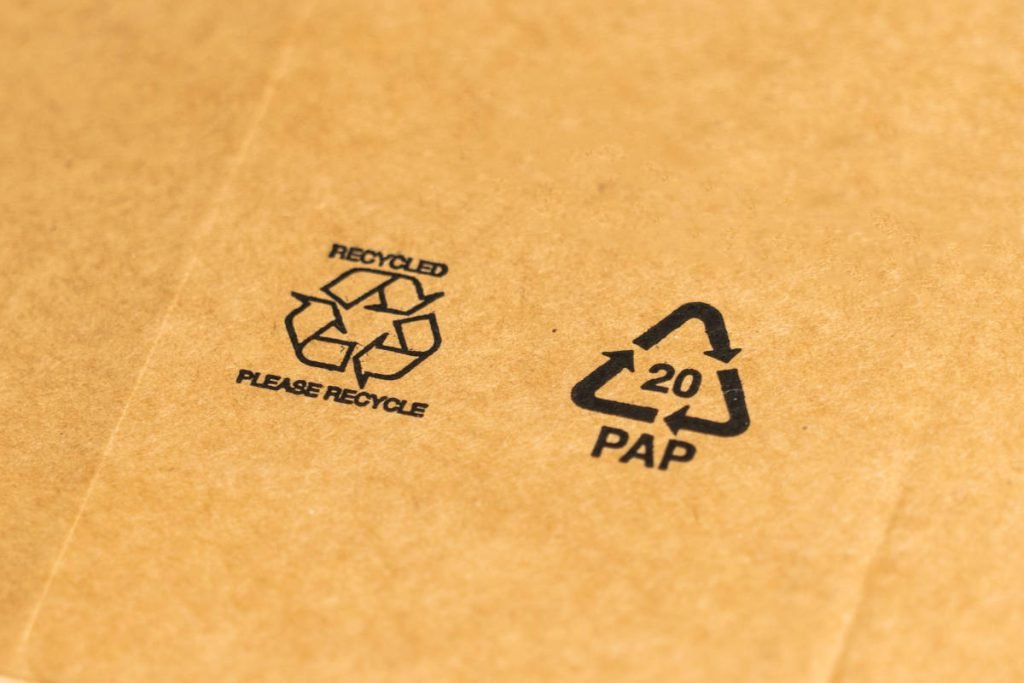
Those three chasing arrows (the recycling symbol) don’t guarantee recyclability.
In many countries, it simply identifies the type of plastic (resin code), not whether it can be recycled locally.
What to look for:
- In India: labels stating “Recyclable under PWM Rules, 2022” or EPR code from the CPCB.
- In the UK or EU: the OPRL (On-Pack Recycling Label) or Mobius loop paired with “Recycle at store / widely recycled” tags.
- Avoid vague terms like “eco-friendly” or “planet safe” without a credible logo.
Quick test: If the label doesn’t mention where or how to recycle ; it’s probably not recyclable in practice.
2. Check for QR Codes or Digital Product Passports (DPPs)
Modern sustainable packaging often includes QR codes that link to verified recycling or material data.
Scanning these codes reveals exactly what material you’re holding and how to dispose of it correctly.
Why it matters:
- The EU’s upcoming Digital Product Passport (DPP) standard to be rolled out from 2027 will embed verified material, carbon, and recyclability data in every package.
- Many brands already pilot this: Nestlé Japan’s 2024 QR-label system raised correct sorting rates by 12%.
Consumer tip: Scan before you toss the information is usually live and location-specific.
3. Read the Fine Print: Compostable ≠ Recyclable
“Compostable” doesn’t mean “biodegradable,” and neither means it belongs in your regular bin.
What to know:
- Home compostable packaging can degrade in backyard compost under 20–30°C.
- Industrial compostable packaging requires high heat (55°C+) , available only in industrial composting plants.
- If compostables mix into recycling bins, they contaminate plastic streams and reduce recovery yields.
Quick rule:
If you don’t have a compost bin or your city doesn’t collect organics dispose of compostable packaging with general waste unless labelled “home compostable.”
4. Verify Certification Logos
Trust logos that come from independent certifiers, not decorative designs.
Common credible marks include:
- FSC® / PEFC® for responsibly sourced paper and cardboard.
- OK Compost / TÜV Austria for industrial or home compostability.
- RecyClass / Plastics Recyclers Europe for verified recyclability.
- EPR registration numbers in India under PWM Rules.
Why it matters:
Certification ensures claims are audited and traceable ; a key guardrail against greenwash.
Consumer tip: Search certification codes online. Most certifiers publish valid product lists to verify authenticity.
5. Ask “Recyclable Where?” Local Infrastructure Matters
A package may say “100% recyclable”, but if your city lacks the right facilities, it won’t be recycled.
For example:
- Flexible films and sachets are technically recyclable, but many municipal systems don’t collect them.
- Glass is infinitely recyclable but only if collected unbroken and sorted by colour.
Consumer action:
- Check your city’s recycling guidelines especially for plastic types #3–#7.
- Support brands that design packaging “recyclable in practice and at scale” (the EU’s new gold standard).
- In India, look for brands registered on the CPCB EPR portal (publicly searchable).
6. Be Wary of Over-Engineered “Green” Designs
Sometimes, too much innovation can make a package less sustainable. Multi-layer compostable pouches, metallized “bio” coatings, or mixed-material caps can’t be separated by recyclers.
What to do:
- Prefer simple mono-material packaging (one type of plastic or paper).
- Avoid packs combining “paper + plastic film” unless marked recyclable or returnable.
- Choose refill or return systems whenever possible.
Why it matters:
Simpler materials reflect higher recycling rates which indicates lower carbon footprint.
Key Takeaway
Consumers have more power and more data than ever before.
By reading labels critically, scanning QR codes, and verifying claims, you can reward brands that do the hard work designing for recyclability, disclosing their metrics, and building packaging that truly closes the loop.
In sustainability, the most powerful question is often the simplest:
“Recyclable; where, and by whom?”
Future Outlook: 2025–2035; The Decade of Circular Transition
The Future of Packaging: 2025–2035
By 2035, packaging will evolve from a static object to a smart, traceable node in the circular economy. The decade ahead will decide how fast the world scales from pilot sustainability to mainstream circularity.
1. Regulation Leads, Markets Follow
The EU Packaging and Packaging Waste Regulation (PPWR) sets the global benchmark: by 2030, all EU packaging must be recyclable “in practice and at scale.” Similar frameworks under EPR laws in India, the U.S., and OECD nations are driving data-backed accountability. Companies that align early will gain compliance and investor advantage.
2. Reuse Scales with Infrastructure
Loop, Algramo, and others show that reuse works when return rates exceed 70% and logistics are low-carbon. The EU targets 10–15% reusable packaging by 2030, while emerging markets focus on localised reuse loops such as schools and e-commerce systems.
3. Bio-Based Materials Mature
Bio-PET, PLA, and mycelium composites will shift from hype to LCA-verified bio-circularity. The IEA Bioenergy Report projects that replacing 25% of fossil plastics with bio-alternatives could cut CO₂e by 200 million tonnes annually.
4. Digital Product Passports (DPPs)
By 2027, every EU package will carry digital data on materials, recycled content, and end-of-life handling. Consumers will scan packaging for recyclability info; regulators will use the same data for audits.
5. Advanced Recycling Evolves
Chemical and enzymatic recycling will complement mechanical systems for complex waste, but only when powered by renewables and verified by LCAs.
6. Localisation Drives Emerging Markets
India and Southeast Asia will lead regional circular ecosystems using agri-waste feedstocks (bagasse, coir, mycelium).
7. Finance and Consumers Close the Loop
Investors will tie capital to circular metrics, while consumers; scanning, sorting, and refilling will become active enablers of circularity.
Conclusion: From Innovation to Integration
The decade ahead will determine whether sustainable packaging becomes an everyday reality or remains a high-cost ideal.
The innovations of 2025 from mono-material films and mycelium foam to digital traceability and reuse systems show that science and design can work together.
But the transformation depends on system integration: design aligned with policy, infrastructure, and behaviour.
The most forward-looking brands are already shifting from “eco-friendly packaging” to “evidence-friendly packaging.”
Because by 2035, the real measure of success won’t be what a package claims
It will be what the data proves.
FAQ: Sustainable Packaging: Top 20 Innovations for 2025
What is sustainable packaging?
Sustainable packaging refers to materials and designs that reduce environmental impact throughout their life cycle from raw material extraction to disposal or reuse. It focuses on recyclability, renewable resources, minimal waste, and verified data on performance.
Why is 2025 considered a turning point for sustainable packaging?
Because multiple global policies such as the EU Packaging and Packaging Waste Regulation (PPWR) and national EPR laws in India and the U.S. take effect in 2025, forcing all major brands to redesign packaging for recyclability, reuse, and traceability.
What are mono-material packages, and why are they important?
Mono-material packaging uses only one type of material (like all-polyethylene) rather than multi-layer laminates. This simplifies sorting and recycling, reducing contamination and improving recovery rates by up to 40%.
Are compostable materials always the best option?
Not necessarily. Compostable materials only deliver environmental benefits if industrial composting systems exist. Without proper infrastructure, they may end up in landfills and release methane instead of decomposing safely.
What’s the difference between recyclable, biodegradable, and compostable packaging?
- Recyclable: can be reprocessed into new material through sorting and recycling systems.
- Biodegradable: breaks down naturally but not always safely or completely.
- Compostable: breaks down under specific conditions into compost that enriches soil.
How does reuse or refill packaging work?
Consumers return durable containers to retailers or refill stations. The packaging is cleaned and reused multiple times, reducing virgin material use by up to 70% when logistics and return rates are efficient.
What are bio-based plastics?
They are plastics made from renewable feedstocks like corn starch, sugarcane, or cassava instead of fossil fuels. They can lower carbon footprints but still require proper end-of-life management to avoid pollution.
How can smart packaging reduce food waste?
By using freshness sensors or oxygen indicators that monitor product quality in real time. For example, sensor-embedded labels can alert retailers before spoilage, preventing waste and unnecessary emissions.
What is the role of Digital Product Passports (DPPs)?
DPPs store verified sustainability data ; material composition, recycled content, disposal instructions directly on a package via QR codes. They will become mandatory in the EU by 2027 and are key to traceable recycling.
Why are greenwashing claims such a concern?
Greenwashing misleads consumers by using unverified or vague environmental claims. Under new EU and Indian regulations, companies must now back all green claims with life-cycle assessments or third-party certification.
What packaging materials are emerging in India and Kerala?
Researchers and startups are developing packaging from local agri-waste such as bagasse, rice husk, coir, and mycelium. IIT Madras, for instance, has created biodegradable packaging from mushroom mycelium and paddy waste.
What are the biggest barriers to circular packaging in emerging markets?
Infrastructure gaps , limited recycling, composting, and waste segregation systems. Without these, even recyclable or compostable packaging cannot deliver its intended environmental benefits.
How can consumers identify trustworthy packaging labels?
Look for verifiable marks such as FSC (for paper), OK Compost (for biodegradability), TÜV Austria, or RecyClass. Avoid vague terms like “eco” or “planet safe” without official certification.
Can advanced recycling solve the plastic waste problem?
It helps but isn’t a silver bullet. Chemical recycling can recover 60–70% of plastic material, but it’s energy-intensive and still developing. It works best when powered by renewable energy and combined with mechanical recycling.
Why is local context so critical in sustainable packaging?
Because packaging must match the region’s waste-management infrastructure. A compostable film that works in Sweden might fail in India if composting systems are absent. Local feedstocks and disposal pathways are essential.
How are investors influencing packaging innovation?
Investors are linking access to capital with verified environmental data. Under frameworks like CSRD and ISSB, companies must disclose packaging LCAs, recyclability scores, and EPR compliance to qualify for green finance.
What can policymakers do to strengthen packaging sustainability?
They can harmonise EPR rules, invest in waste infrastructure, and enforce transparent data reporting. Bans alone are insufficient; recycling and composting systems must be upgraded for real impact.
What should consumers do to make responsible packaging choices?
Scan QR codes, read labels carefully, and prefer mono-material or refill options. Ask brands how their packaging is recovered; “Recyclable where?” is the key question.
How will sustainable packaging evolve by 2035?
By 2035, packaging will be digitally traceable, data-verified, and circular by design. Bio-based materials, reuse systems, and digital product passports will be mainstream, supported by strong global regulations and investment flows.
What is the single most important takeaway from 2025’s packaging revolution?
That sustainability must be measurable. True progress comes not from slogans or colors but from data; emissions saved, materials recovered, and systems that work at scale.
Act Now: Turn Sustainable Packaging from Promise to Practice
The future of packaging is already being written in lab reports, policy documents, and the everyday choices we make as consumers and businesses.
Every package you design, sell, or discard tells a story about the world you want to live in.
If you’re a brand: redesign for reality, not rhetoric.
Audit your packaging portfolio, publish your recyclability data, and join collaborative reuse or recovery systems.
If you’re a policymaker: build infrastructure that matches innovation.
Circular packaging needs composting plants, collection networks, and data transparency not more bans and broken promises.
If you’re a consumer: read the label, scan the QR code, and vote with your purchase.
Support the brands that prove their impact, not just print it.
Small actions close big loops.
Refill once. Reuse twice. Recycle right and demand that companies do the same.
Together, we can make 2025 the year packaging stopped being waste and started being part of the solution.
Authored by- Sneha Reji