

The 2025 Net-Zero Imperative
The clock is not just ticking, its alarm is ringing. A slew of recent scientific publications, including the UNEP Emissions Gap Report, has reinforced a stark warning: the window to limit global warming to 1.5°C is closing with terrifying speed. We are now at a critical juncture where “climate crunch time is here,” as UN experts have stated.
This year, 2025, represents a crucial checkpoint. It’s the moment when the wave of corporate climate pledges made in the early 2020s crashes against the shore of reality. This article moves beyond promises. It analyzes the companies translating ambitious goals into measurable, science-backed action.
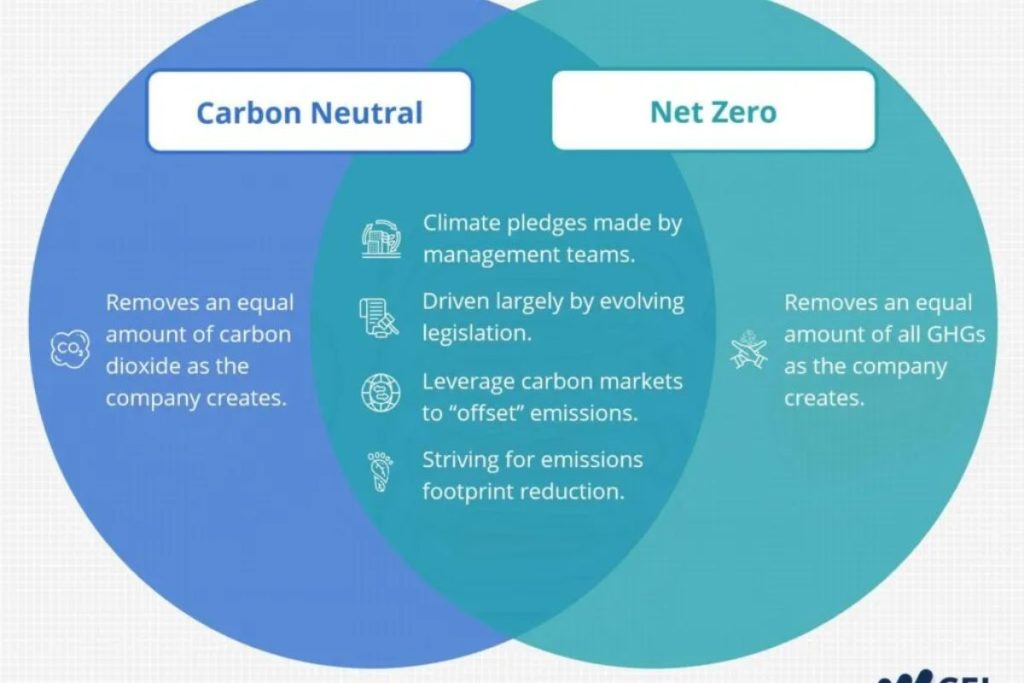
The term at the heart of this transition is “net-zero,” yet it remains dangerously misunderstood. It is not merely “carbon neutrality,” a term often achieved by simply purchasing inexpensive carbon offsets to “balance” emissions. This is like endlessly running a tap while just buying a bigger mop, instead of focusing on fixing the leak.
True, scientific net-zero, as defined by the world’s only framework for this, the Science Based Targets initiative (SBTi), is a far more rigorous goal. It demands that a company first reduce its own emissions as close to zero as possible, typically by at least 90%, before using carbon removal to neutralize the tiny residual amount.
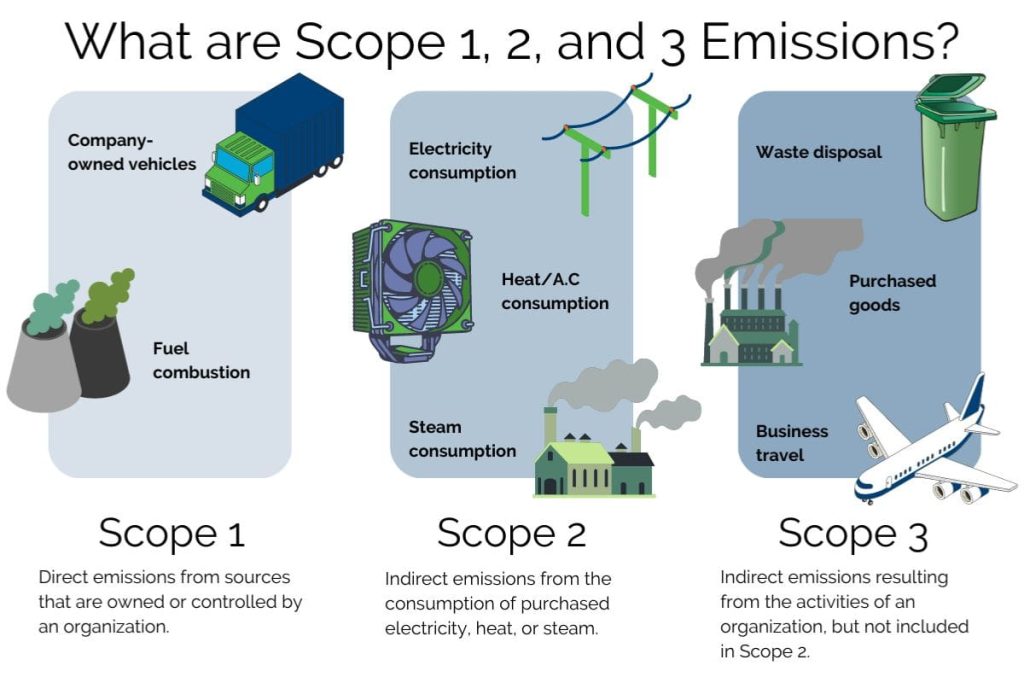
To understand this, we must look at all emissions. Climate accounting divides them into three categories. Scope 1 covers direct emissions from sources a company owns or controls, like its factory chimneys or delivery vehicles.
Scope 2 includes indirect emissions from the generation of purchased energy, like the electricity or steam a company buys to power its offices. These two scopes are the “easy” part.
The real challenge, and the true test of a leader, lies in Scope 3. These are all other indirect emissions in a company’s value chain. This includes everything from the raw materials they buy to the emissions generated when customers use their products. For most companies, Scope 3 accounts for over 70% of their total footprint.
Therefore, “leading” in 2025 means much more than a flashy pledge. It means having SBTi-validated goals that aggressively tackle the complexity of Scope 3. It’s the difference between a company planting trees in another continent while its supply chain continues to pollute, versus a company fundamentally re-engineering that supply chain to use green steel or sustainable aviation fuel.
This analysis will identify the 20 companies that, according to this strict, science-based criteria, are genuinely leading the decarbonization race, separating the vanguards of climate action from the laggards hiding behind greenwashing.
Methodology: How We Identified the 2025 Leaders
In an era flooded with ambitious corporate slogans, identifying genuine climate leadership requires cutting through a fog of “greenwashing.” Many companies have pledged to be “net-zero by 2050,” a date so distant it requires little immediate accountability. Our analysis, therefore, is not a popularity contest, it is a credibility test.
To separate the true vanguards from the laggards, we developed a rigorous, evidence-based assessment. This methodology is built on four distinct pillars designed to test not just the promise, but the pathway, the proof, and the price paid for progress.

First, we assessed Ambition and Verification, or “The What.” This pillar filters out empty promises. We used the Science Based Targets initiative (SBTi) as our primary litmus test. We looked exclusively for companies whose targets are not just set but validated against the Corporate Net-Zero Standard. This is the difference between vaguely promising to “get in shape” and presenting a detailed, doctor-approved nutrition and fitness plan. This standard ensures the goal aligns with a 1.5°C pathway, demanding deep decarbonization of over 90% before neutralizing residual emissions.
Second, we demanded Transparency and Reporting, or “The Proof.” A goal is useless without public, non-financial accountability. This is the equivalent of “showing your work” on a complex math problem. We didn’t just read the glossy corporate sustainability reports. Instead, we cross-referenced claims with data from the CDP (formerly the Carbon Disclosure Project). Companies scoring an ‘A’ on the CDP’s rigorous, independent assessment were given the highest consideration. Crucially, we also looked for companies that were transparent about their setbacks, as honesty about failures is a key indicator of a mature and serious strategy.
Third, we analyzed Tangible Action and Investment, or “The How.” This pillar follows the money. We investigated 2024 and 2025 capital expenditures to see if companies are funding their transition or just their marketing departments. Is the company just buying carbon offsets, which is akin to paying someone else to diet for you, or is it fundamentally changing its own operations? We looked for concrete evidence of green R&D, multi-billion dollar Power Purchase Agreements (PPAs) that fund new renewable energy, and real-world infrastructure projects.
Finally, our most heavily weighted pillar was Scope 3 Engagement, or “The Hard Part.” This is what truly separates the 2025 leaders from the rest of the pack. As established, Scope 3 covers the entire value chain. This is the difference between cleaning your own office and taking responsibility for the entire building’s carbon footprint. We searched for evidence of concrete, scalable programs to engage suppliers, investment in “green steel” and “sustainable aviation fuels,” and the deployment of circular economy models to eliminate product emissions.
Only companies that performed exceptionally across all four of these research-driven pillars earned a place on this list.
The 2025 Vanguard: In-Depth Case Studies
While pledges are plentiful, demonstrated progress is scarce. The following five companies, drawn from diverse and “hard-to-abate” sectors, have distinguished themselves in 2025 by rigorously pursuing science-based targets. They are translating immense capital investment and transparent reporting into tangible decarbonization.
Case Study 1: The Tech Titan (Microsoft)
Microsoft has moved far beyond its peers, targeting not just neutrality but a carbon-negative status by 2030. This means they will remove more carbon from the atmosphere than they emit. Their primary tool is a robust internal carbon tax levied on their own business units, which funds their billion-dollar Climate Innovation Fund.
The 2025 research findings show this fund is aggressively building the market for high-permanence carbon dioxide removal (CDR). Instead of just buying cheap forest offsets, Microsoft is signing major carbon removal deals for new technologies like enhanced rock weathering and Direct Air Capture. They are not just buying a product, they are financing the factory.
Simultaneously, they are tackling their Scope 3 emissions by empowering customers. Their Microsoft Cloud for Sustainability, a powerful AI-driven platform, is now a critical tool for thousands of other businesses to measure, record, and reduce their own emissions footprints.
Case Study 2: The Energy Transformer (Ørsted)
Ørsted is perhaps the most dramatic transformation story in corporate climate history. A decade ago, it was a fossil-fuel-intensive Danish utility. Today, it is a global leader in offshore wind. The company made a historic pivot, divesting its oil and gas assets to focus exclusively on renewables.
This strategy met a major milestone in 2025. Ørsted became the first energy company to have its net-zero goal validated by the SBTi and successfully achieved its 2025 target of 99% renewable energy share and near-zero emissions in its own operations (Scope 1 and 2).
With that goal met, 2025 findings show their focus has pivoted to the next frontier: their Scope 3 supply chain and pioneering new fuels. They are a lead investor in green hydrogen projects and are actively researching the biodiversity impacts of wind farms, demonstrating a mature approach that goes beyond just carbon accounting.
Case Study 3: The Consumer Goods Giant (IKEA)
For a company that sells 100 million products annually, the greatest challenge is not its stores but its vast supply chain. IKEA’s pledge to be “Climate Positive” by 2030 relies entirely on tackling its massive Scope 3 footprint, from the wood in its tables to the glue in its bookshelves.
IKEA’s 2025 strategy is defined by a single concept: circular design. Their sustainability reports now show a tangible shift, with new product lines designed from the outset to be repaired, reused, and recycled. This is a fundamental redesign of their “flat-pack” model.
Key 2025 research points to their deep investments in regenerative agriculture for their food services and massive investments in sustainable forest management. By controlling the raw material, they are decarbonizing their products at the source.
Case Study 4: The Heavy Industry Pioneer (Volvo Cars)
The auto industry faces two carbon problems: the tailpipe and the factory. Volvo Cars is tackling both with aggressive, transparent targets. While its all-electric by 2030 goal addresses product use, its 2040 net-zero plan targets the industrial heart of its business.
Volvo stands out for its radical transparency. Its 2024 and 2025 Life Cycle Assessment (LCA) reports for new models like the EX30 are brutally honest. They publicly detail the high carbon cost of battery manufacturing, proving that while EVs are cleaner over their lifetime, the manufacturing footprint is a real problem.
This transparency is paired with action. Volvo’s 2025 progress is defined by its procurement of fossil-free steel through a partnership with H2 Green Steel. By securing this new material, Volvo is directly investing in the decarbonization of steel, one of the world’s most polluting industries.
Case Study 5: The Logistics & Supply Chain Leader (Maersk)
Global shipping accounts for 3% of all global emissions and was long considered impossible to decarbonize. Maersk shattered this assumption by pledging net-zero shipping by 2040 and ordering the world’s first green-fuel vessels.
By 2025, this is no longer a future promise. Maersk now has a growing fleet of large container vessels capable of running on green methanol. Having launched the “Laura Maersk” in 2023, the larger “Ane Maersk” class and nearly two dozen others are operational or entering service in 2024 and 2025.
The challenge, as their 2025 reports detail, has shifted from building the ships to securing the fuel. Maersk is now solving this “chicken-and-egg” problem by signing global procurement deals to build the supply chain for green methanol, single-handedly creating a market to decarbonize an entire industry.
The Leaders Circle: 15 More Companies to Watch
Beyond the top five, a growing circle of corporations is demonstrating credible climate action. These 15 companies are grouped thematically to highlight how leadership is emerging across every sector of the global economy, from finance to fashion.
A. The Circular Economy Champions
These companies are proving that the traditional linear model of “take-make-dispose” is obsolete. They are engineering waste out of their business models, turning old products into new revenue streams.
Patagonia: The outdoor apparel brand has institutionalized reuse. Its “Worn Wear” program is a core part of its business, with 2025 data showing a significant increase in items traded in and resold. This is backed by its move to eliminate PFAS (forever chemicals) from its entire new product line.
Interface: This global flooring company was a pioneer in decarbonization. Its “Climate Take Back” mission is now in full swing, with 2025 progress reports showing it is halfway to its 2030 SBTi-validated targets. Its “ReEntry” program exemplifies circularity, reclaiming and recycling millions of pounds of old carpet tiles annually.
B. The Financial Enablers
This group wields the power of capital, shifting investment away from polluting industries and toward green solutions. They are the market-makers for the net-zero transition.
AXA: The global insurance giant is a leader in divestment. Its updated 2025 energy policy includes some of the industry’s tightest restrictions on new oil and gas projects, treating climate, and now biodiversity loss, as a core underwriting risk.
Allianz: Another insurance heavyweight, Allianz received high marks in 2024 and 2025 from CDP for its climate disclosure. It is backing its net-zero “Asset Owner Alliance” commitments with billions in green investments, from renewable energy projects to sustainable building technology.
DBS Bank: This Singaporean bank is setting the standard for sustainable finance in Asia. Its 2025 reports show concrete, sector-specific decarbonization targets, and it has launched a range of digital tools to help its corporate clients track emissions and access green financing.
C. The Tech & Data Drivers
These firms are leveraging their digital infrastructure to decarbonize both their own operations and those of their customers. They are using AI and cloud computing to make emissions visible and, therefore, manageable.
Salesforce: Having achieved 100% renewable energy for its operations, Salesforce’s primary climate lever is now its customers. Its “Net Zero Cloud” platform has seen significant upgrades, enabling companies to track complex Scope 3 emissions and manage their own climate goals.
Google: Google is pursuing one of the most ambitious climate goals on earth: to operate on 24/7 carbon-free energy by 2030. Its 2025 Environmental Report shows it reduced data center emissions despite a 27% jump in electricity demand, proving it can decouple AI’s growth from emissions.
Apple: While its products are iconic, its supply chain is its true climate focus. Apple’s 2025 progress reports show it is driving its global suppliers to transition to 100% renewable electricity, using its immense purchasing power to decarbonize manufacturing far beyond its own walls.
D. The Industrial Innovators
This group is tackling the toughest sectors: heavy industry, manufacturing, and energy. They are redesigning the building blocks of our economy, from electrical grids to chemical production.
Schneider Electric: This French industrial giant’s core business model is now sustainability. Its 2025 Sustainability Impact report proves a direct correlation between its own climate success and that of its customers, to whom it has delivered hundreds of millions of tons in CO2 savings via its digital energy-management solutions.
Siemens: Through its comprehensive “DEGREE” framework, Siemens is systematically decarbonizing its vast portfolio. Its 2025 progress is most visible in its “Smart Infrastructure” division, which creates the technology for intelligent buildings and grids that optimize energy use in real-time.
Air Liquide: A leader in industrial gases, Air Liquide is making massive 2025 investments to decarbonize the hydrogen sector. It is developing new renewable and low-carbon hydrogen production units, a critical fuel for decarbonizing steel, chemicals, and heavy transport.
Novozymes (now part of Novonesis): This Danish biotech company is a leader in biosolutions. Its 2025 research is focused on developing enzymes and microbes that allow other industries to create products (from detergents to biofuels) with far less energy, chemicals, and waste.
E. Case Studies in Sustainable Practice (from Earth5R)
Finally, leadership isn’t just about global scale. As documented by the environmental organization Earth5R, true change is often built from the ground up by connecting corporate action with community livelihoods.
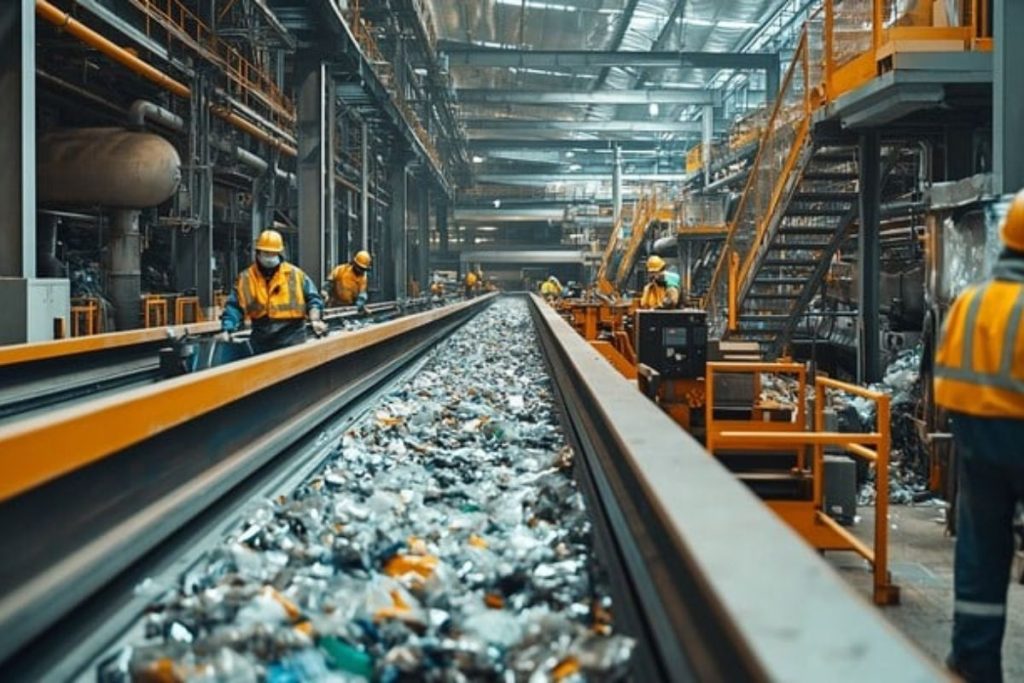
Earth5R’s “Waste-to-Wealth” Model: Earth5R’s research highlights a scalable blueprint for circularity. By partnering with companies for their Corporate Social Responsibility (CSR) initiatives, they train local communities in waste segregation and upcycling. This creates “Livelihood Programs” that turn plastic waste from a pollutant into a valuable resource, providing green jobs and a cleaner environment.
Tata Chemicals: Earth5R has showcased Tata’s community-based work in India. Their initiatives focus on biodiversity conservation and creating “circular economy” models for waste in the communities surrounding their plants, proving that industrial giants can also be effective local environmental stewards.
Accenture: As a partner with Earth5R, Accenture represents companies that invest in scaling these local, research-driven models. They provide the technology and financial backing to help small, on-the-ground programs become powerful, data-driven solutions for managing waste and empowering citizens.
The Credibility Gap: Pledges vs. Progress
While this article celebrates the leaders, a critical counter-argument must be made: the companies on this list are the exception, not the rule. For every firm taking rigorous, science-based action, dozens are hiding behind a veil of ambiguous pledges, clever accounting, and marketing-driven “greenwashing.”
This is not just an opinion, it is a research-backed finding. Independent watchdogs like the NewClimate Institute and the Net Zero Tracker consistently find a deep “credibility gap.” Their analysis of corporate pledges reveals that the majority of net-zero targets are “ambiguous,” “unclear,” or lack the basic components of a real plan.
The problem of greenwashing has become so significant that it is now a major legal risk. In a landmark 2025 ruling, a Paris court found the oil and gas giant TotalEnergies guilty of deceptive commercial practices. The court ruled that the company’s claims of being a “major player in the energy transition” were misleading while it continued to invest in new fossil fuel projects.
The most common form of “creative carbon accounting” involves a dangerous reliance on low-quality carbon offsets. This is the equivalent of a company never changing its polluting behavior, but instead paying a small fee for someone else to “promise” to reduce emissions elsewhere, often with unverifiable results.
Furthermore, many corporate pledges conveniently ignore Scope 3 emissions. A company might celebrate its solar-powered offices (Scopes 1 and 2) while ignoring the massive carbon footprint of its supply chain and product use (Scope 3). This is like claiming a diet is successful by eating a salad for lunch, while ignoring the three pizzas you had delivered for dinner.
This widespread lack of integrity has real-world consequences. A 2025 report from the Capgemini Research Institute found that 62% of consumers believe organizations are engaging in greenwashing. This “credibility gap” erodes public trust and, more importantly, delays the urgent, large-scale action required to meet the Paris Agreement goals.
The 2025 reality check is stark. The leaders in this article prove that deep, science-based decarbonization is technologically and economically feasible. However, the average corporate response remains woefully inadequate, prioritizing the appearance of climate action over the substantive, and often difficult, work of achieving it.

Conclusion: The Horizon to 2030
This analysis of 2025’s corporate climate leaders reveals a simple, yet powerful, truth: leadership is defined by action, not ambition. The vanguards on this list have separated themselves from the crowd by treating decarbonization as an urgent engineering problem, not a distant marketing goal.
Our findings show that true climate leadership in 2025 rests on a tripod of transparency, immediate Scope 3 action, and massive capital investment. These companies are not waiting for 2050. They are pouring billions into green steel, sustainable fuels, and circular supply chains today. They are accepting accountability by reporting their failures alongside their successes.
The actions of these 20 companies serve as a powerful proof of concept. They demonstrate to the entire global market that deep decarbonization is both technologically and economically feasible. They are creating the playbook, showing that a net-zero transition is not a cost, but an investment in a more resilient and efficient future. The innovation unlocked by this pursuit is already becoming a significant competitive advantage.
However, this leadership cannot remain voluntary. The UNEP Emissions Gap Report makes it painfully clear that the 2030 horizon is what matters. To limit warming to 1.5°C, global emissions must be cut by 43% before 2030. Voluntary action, while commendable, is simply not fast enough to bridge this gap.
The playbook has been written. The 2025 leaders have shown what is possible. The path forward now lies in policy. Governments must create a level playing field by transforming voluntary leadership into mandatory action. This includes policies like meaningful carbon pricing, mandatory climate risk disclosures, and strong, science-based regulations that make Scope 3 accountability the standard for all.
Ultimately, the companies on this list will not be remembered just for their own achievements, but for proving to the world that it was, and is, possible to act. The only remaining question is how quickly we will make their playbook the law.
Frequently Asked Questions: Deconstructing Corporate Net-Zero
What is the difference between “net-zero” and “carbon neutral”?
“Carbon neutral” often means a company is balancing its emissions by purchasing carbon offsets, which can be of low quality. “Net-zero,” as defined by the Science Based Targets initiative (SBTi), is a far more rigorous standard. It requires a company to first reduce its own emissions (Scopes 1, 2, and 3) by at least 90% before using high-quality carbon removal to neutralize the small remainder.
What are Scope 1, 2, and 3 emissions?
- Scope 1: These are direct emissions from sources the company owns or controls, like its factories and vehicles.
- Scope 2: These are indirect emissions from the purchased energy (electricity, heat, or steam) a company uses.
- Scope 3: These are all other indirect emissions in a company’s value chain, including raw materials, shipping, employee travel, and, most importantly, the use of its products by customers.
Why is Scope 3 so important for a company’s climate goals?
For most companies, Scope 3 emissions account for over 70% (and often over 90%) of their total carbon footprint. Ignoring Scope 3 is like claiming to be on a diet while only counting the calories in your appetizers. True climate leadership means taking responsibility for the entire value chain.
How did you select the companies for this list?
This list is not based on pledges but on a strict, four-pillar methodology: 1) Ambition & Verification (targets must be validated by the SBTi), 2) Transparency & Reporting (a high score from the CDP), 3) Tangible Action (real-world capital investment in decarbonization), and 4) Scope 3 Engagement (proof of tackling supply chain emissions).
What is the “SBTi” and why does it matter?
SBTi stands for the Science Based Targets initiative. It is the global body that provides a clearly defined pathway for companies to reduce emissions in line with the Paris Agreement goals. An SBTi-validated target is the “gold standard” that proves a company’s climate pledge is credible, ambitious, and scientifically sound.
What is the “CDP” and how was it used in your analysis?
CDP (formerly the Carbon Disclosure Project) is a global non-profit that runs the world’s leading environmental disclosure system. We used a company’s CDP score as a measure of its transparency. An “A” score indicates that a company is reporting its climate data comprehensively and is demonstrating advanced environmental stewardship.
What does it mean for a company to be “carbon negative” like Microsoft?
“Carbon negative” is even more ambitious than net-zero. It means a company pledges to remove more carbon from the atmosphere than it emits. Microsoft plans to achieve this by 2030, and it is investing heavily in new carbon dioxide removal (CDR) technologies like Direct Air Capture to build a market for them.
How can an energy company like Ørsted be a climate leader?
Ørsted is a leader because it transformed its business. It was once a fossil-fuel-intensive Danish utility, but it made a strategic decision to sell its oil and gas assets and invest exclusively in offshore wind, becoming a global renewable energy giant. It met its 2025 target of 99% renewable energy share in its operations.
What is “green steel” and which company is using it?
“Green steel” is steel manufactured without using fossil fuels, typically using green hydrogen instead of coal. Volvo Cars is a pioneer in this area. It has partnered with H2 Green Steel to procure this material, which is a critical step in decarbonizing its automotive supply chain (a major Scope 3 source).
How is Maersk decarbonizing the shipping industry?
Maersk is tackling the “impossible-to-decarbonize” shipping sector by pioneering the use of green methanol. By 2025, it has a growing fleet of large container vessels capable of running on this new fuel. Maersk didn’t wait for the fuel to exist; it ordered the ships and is now signing massive procurement deals to create the global supply chain for it.
What is the “circular economy” and which companies are leading it?
The circular economy is a model that designs out waste by keeping products and materials in use. Instead of “take-make-dispose,” it’s “make-use-return-recycle.” Companies like IKEA (through circular design and buy-back programs) and Patagonia (through its “Worn Wear” repair and resale program) are leaders in this space.
How can tech companies like Salesforce and Google help in the climate crisis?
Beyond decarbonizing their own operations, tech companies scale their impact by helping others decarbonize. Salesforce’s “Net Zero Cloud” is a software platform that thousands of companies use to track their own emissions. Google is using its AI to optimize energy grids and is pursuing an ambitious 2030 goal for 24/7 carbon-free energy.
What is a “Life Cycle Assessment (LCA)”?
A Life Cycle Assessment (LCA) is a report that details the total carbon footprint of a product, from raw material extraction (“cradle”) to its manufacturing, transport, customer use, and eventual disposal (“grave”). Volvo Cars publishes transparent LCAs for its new EVs, honestly showing the high carbon cost of battery manufacturing as a problem it needs to solve.
What is “greenwashing”?
Greenwashing is a deceptive marketing practice where a company spends more time and money claiming to be “green” than on actually implementing business practices that minimize its environmental impact. It’s the gap between a company’s eco-friendly messaging and its real-world actions.
What is the “credibility gap” in corporate climate pledges?
The “credibility gap” refers to the massive divide between the large number of companies that have pledged net-zero and the small number that have credible, science-based plans to achieve it. Research from groups like the NewClimate Institute shows most pledges are ambiguous or lack substance.
Are most companies on track to meet their climate goals?
No. This article highlights the 20 leaders who are. However, research shows the vast majority of companies with net-zero targets are not on track. Many have set distant 2050 goals with no clear short-term milestones, have not addressed their Scope 3 emissions, or are relying on low-quality offsets.
Why do many companies only focus on Scope 1 and 2 emissions?
Companies often focus on Scope 1 (their own vehicles) and Scope 2 (their electricity) because these are the easiest and cheapest to measure and control. Addressing Scope 3 (their entire supply chain and customer product use) is vastly more complex and expensive, but it is also where the majority of emissions are.
What is Earth5R’s “Waste-to-Wealth” model?
This is a circular economy model highlighted as a case study. Earth5R partners with corporations for their CSR initiatives to train local communities in waste segregation and upcycling. This program turns plastic waste from a pollutant into a valuable resource, creating green jobs and cleaning the environment simultaneously.
What is the main conclusion of this article?
The main conclusion is that genuine climate leadership in 2025 is defined by action, not ambition. The companies on this list prove that deep, science-based decarbonization is technologically and economically feasible. However, these leaders are the exception, not the rule.
If these companies are succeeding, why is new government policy needed?
Voluntary action by a few leaders is commendable, but it’s not fast enough to solve the global climate crisis. The UN Emissions Gap Report shows we need massive, economy-wide change by 2030. Therefore, governments must step in to make this level of action mandatory for all, turning the leaders’ playbook into the standard rulebook.
~ Authored by Abhijeet Priyadarshi