
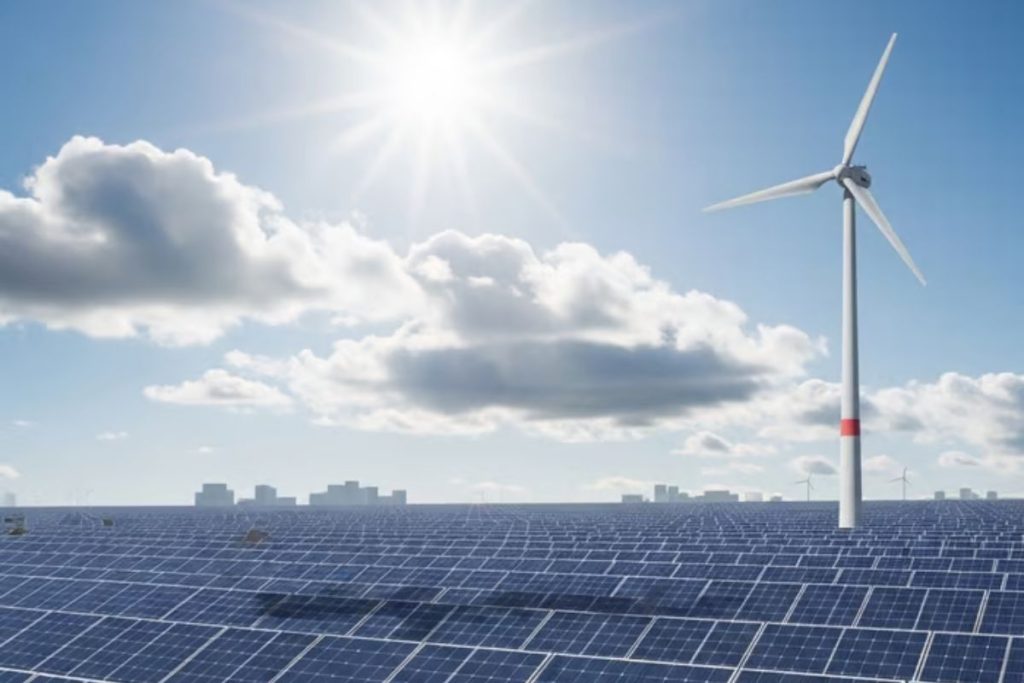
The Boardroom’s New Power Play: Why Renewable Energy is Now Core Business Strategy
For decades, corporate environmental efforts were often relegated to a footnote in an annual report, a small budget within the Corporate Social Responsibility (CSR) department. Today, that narrative has been completely rewritten. The global energy transition, which the International Renewable Energy Agency (IRENA) projects will require investments of over $5 trillion annually, has moved from the periphery to the very center of strategic planning.
The adoption of clean energy is no longer just an ethical choice but a decisive business imperative. This shift is as fundamental as the digital revolution was two decades ago. Initially, having a corporate website was a novelty; now, a sophisticated digital strategy is essential for survival. Similarly, renewable energy has evolved from a “green” badge to a cornerstone of financial resilience and market leadership.
This paradigm shift isn’t driven by a single factor, but by a powerful confluence of forces that make a compelling business case. The conversation in the boardroom is no longer about the cost of going green, but about the profound risk of being left behind. The argument for this transition stands firmly on three interconnected pillars that appeal directly to any forward-thinking executive.
- Pillar One: Unprecedented Economic and Financial Viability The most significant driver is simple economics. The cost of renewable technologies has plummeted at a staggering rate. According to research from financial advisory firm Lazard, the cost of utility-scale solar photovoltaics has fallen nearly 90% over the last decade. This makes renewables the cheapest source of new electricity generation in many parts of the world, directly undercutting fossil fuels. For businesses, this translates into long-term, predictable energy costs, acting as a powerful hedge against the notorious price volatility of coal, oil, and natural gas.
- Pillar Two: Enhanced Operational and Market Resilience Beyond cost savings, renewable energy provides crucial operational stability. Generating power on-site, such as with rooftop solar panels, reduces a company’s dependence on an often-strained public grid, mitigating risks from outages. Furthermore, this transition builds immense brand value. Modern consumers, particularly Millennials and Gen Z, actively seek out and reward sustainable brands. A report from NielsenIQ highlights that sustainability is a key purchase driver, meaning a commitment to clean energy is now a powerful tool for customer acquisition and loyalty.
- Pillar Three: Growing Regulatory and Environmental Imperatives Finally, external pressures from governments and investors are making inaction untenable. With the global push to meet climate targets outlined in the Paris Agreement, regulations like carbon taxes and emissions trading schemes are becoming increasingly common. Simultaneously, the financial world is placing a heavy emphasis on Environmental, Social, and Governance (ESG) criteria. Investors now view companies with a high carbon footprint as carrying significant long-term risk, making access to capital contingent on a credible sustainability strategy.
Decoding the Power Sources: A Business Guide to Renewable Technologies
Once a business commits to renewable energy, the next critical step involves navigating the diverse landscape of available technologies. This is not a one-size-fits-all decision. The optimal choice depends heavily on a company’s geographical location, energy consumption profile, available space, and specific industry. Making an informed choice is akin to selecting the right tool for a job, where precision leads to the best results.
Solar Photovoltaics (PV): The Ubiquitous Powerhouse
Solar power is arguably the most recognizable and accessible renewable technology for businesses today. At its core, it operates on the photovoltaic effect, a process where semiconductor materials in a solar panel convert sunlight directly into electricity. Think of it as an artificial leaf, perpetually harnessing the sun’s energy to power operations instead of creating sugars.
The economic case for solar is undeniable. Data consistently shows a dramatic drop in its Levelized Cost of Energy (LCOE), a metric that measures the lifetime cost of building and operating a power plant. The latest analysis from BloombergNEF confirms that solar is the cheapest source for new-build electricity in most major countries. This cost reduction, combined with steady increases in panel efficiency documented by research institutions like the National Renewable Energy Laboratory (NREL), makes solar a financially sound investment.
For businesses, applications are versatile. Rooftop panels on warehouses or office buildings, solar carports that provide both power and shade, and large-scale solar farms contracted through Power Purchase Agreements (PPAs) are all common strategies. The technology’s scalability means it can be adapted for a small retail store or a massive manufacturing plant.

Wind Energy: Harnessing Atmospheric Power
For businesses with the right geography, wind energy presents a powerful option. Large turbines convert the kinetic energy of wind into mechanical power, which is then converted into electricity. While often associated with vast, rural landscapes, wind solutions can be tailored for corporate needs, especially for industries with high, constant energy demands.
The viability of wind is measured by its “capacity factor,” the ratio of actual electrical energy produced to the maximum possible output over a period. This factor is highly dependent on location, a detail thoroughly mapped by organizations like the Global Wind Atlas. For companies not located in these prime wind corridors, Virtual Power Purchase Agreements (VPPAs) offer a brilliant alternative. Through a VPPA, a company can invest in an off-site wind farm and receive renewable energy credits, achieving its sustainability goals without needing to build any physical infrastructure.
Waste-to-Energy & Bioenergy: The Circular Economy Approach
Perhaps the most integrated renewable solution is waste-to-energy, a technology that embodies the principles of a circular economy. Instead of viewing organic waste as a liability requiring disposal, this approach treats it as a valuable fuel source. Processes like anaerobic digestion use microorganisms to break down materials like agricultural residue or food scraps in an oxygen-free environment, producing a biogas that can be burned to generate electricity and heat.
This technology offers a dual benefit, simultaneously solving waste management challenges and creating a reliable energy source. It is particularly transformative for industries such as food processing, large-scale agriculture, and manufacturing. A study by the World Biogas Association highlights the immense potential for these sectors to reduce operational costs and create closed-loop systems. Imagine a dairy farm powering its entire operation using manure, or a food factory running its machinery on the energy derived from its own vegetable peelings.
Other Notable Technologies: Reliable but Situational
While solar, wind, and bioenergy are the most widely applicable, other powerful technologies like geothermal and hydropower are crucial parts of the renewable mix. Geothermal taps into the Earth’s natural heat, while hydropower utilizes the force of flowing water. Both are known for their exceptional reliability, providing consistent “baseload” power. However, their deployment is highly dependent on geography, making them excellent niche solutions for businesses in regions with specific geological or hydrological features.
From Blueprint to Kilowatts: A Strategic Roadmap for Implementation
Transitioning to renewable energy is not an off-the-shelf purchase; it is a strategic construction project for a company’s energy future. A successful shift requires a methodical, step-by-step approach, moving from initial analysis to full-scale operation. This roadmap ensures that the chosen solution is not only environmentally sound but also technically feasible and financially optimized for the long term.
Step 1: The Foundation of a Comprehensive Energy Audit
Before any solar panel is installed or any turbine is considered, the first step is an introspective one. A business must conduct a comprehensive energy audit, which serves as a diagnostic blueprint of its current consumption. This process goes beyond simply looking at electricity bills; it involves a detailed analysis of when, where, and how energy is used across all operations, identifying peaks, troughs, and areas of inefficiency.
Following internationally recognized frameworks like the ISO 50001 standard for energy management provides a structured way to conduct this audit. The findings from this initial stage are crucial. They not only reveal the scale of the required renewable system but often uncover immediate cost-saving opportunities through improved efficiency, providing a financial win even before the main project begins.
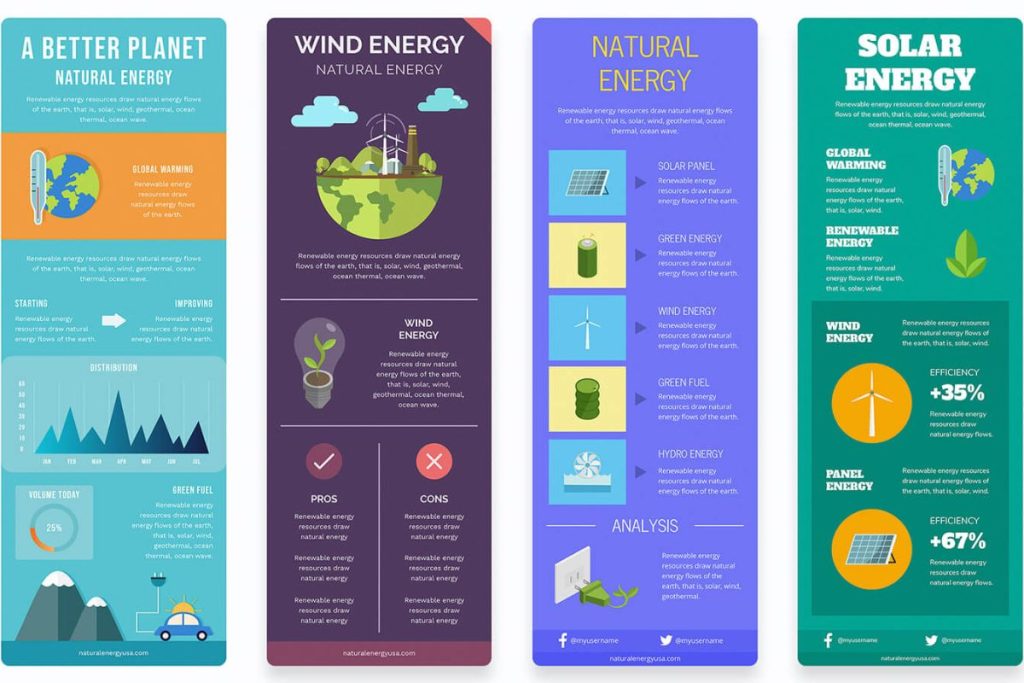
A quick visual guide to the primary sources of renewable energy and their benefits for a sustainable future.
Step 2: Selecting the Optimal Adoption Model
With a clear picture of its energy needs, a business can then evaluate the different ways to procure renewable power. This choice is a critical decision that balances capital investment, risk, and control.
For companies seeking full ownership and long-term returns, On-Site Generation is the most direct path. This involves a capital expenditure (CapEx) to install and own a system, like a rooftop solar array. While it requires an upfront investment, it offers maximum control and the most significant long-term savings. Think of it as buying a home instead of renting; the initial cost is higher, but you build equity and are insulated from future price hikes.
A vastly popular alternative is the Power Purchase Agreement (PPA). Under this model, a third-party developer installs, owns, and operates a renewable energy system on the business’s property at no upfront cost. The business simply agrees to purchase the generated power at a fixed, often discounted, rate for a long term, typically 15-25 years. This model has supercharged corporate adoption by removing the initial capital barrier.
For businesses with unsuitable sites or multiple locations, the Virtual Power Purchase Agreement (VPPA) provides a flexible, financial solution. A company invests in a large-scale off-site project, like a distant wind farm, and in return receives renewable energy credits and a financial hedge against electricity price swings. Finally, Renewable Energy Certificates (RECs) offer a market-based instrument, allowing a company to purchase the “green” attributes of renewable energy to offset its consumption from the grid, a mechanism well-established on platforms like the Indian Energy Exchange (IEX).
Step 3: Navigating Finance, Incentives, and Policy
Financing this transition has never been more accessible. A growing number of financial institutions offer specialized “green loans” with favorable terms for renewable projects. Beyond private financing, government incentives play a pivotal role. Many countries offer significant support, such as India’s ambitious National Solar Mission, which provides a framework of subsidies and policies to encourage solar adoption.
Businesses must research and leverage available mechanisms like tax credits, accelerated depreciation benefits, and grants. These incentives can dramatically shorten the payback period of an investment, fundamentally improving the project’s financial profile and making the decision to switch even more compelling.
Step 4: Partner Selection, Installation, and Integration
The final step is execution. The success of a renewable energy project hinges on the quality of the partners chosen to build it. Vetting and selecting a reputable EPC (Engineering, Procurement, and Construction) firm is paramount. These specialized companies manage the entire project lifecycle, from detailed system design and equipment sourcing to physical installation and grid connection.
A skilled EPC partner ensures the system is not only installed correctly but is also seamlessly integrated with the business’s existing electrical infrastructure. Post-installation, a robust monitoring system is put in place to track performance, ensuring the project delivers the projected energy output and financial returns for years to come.
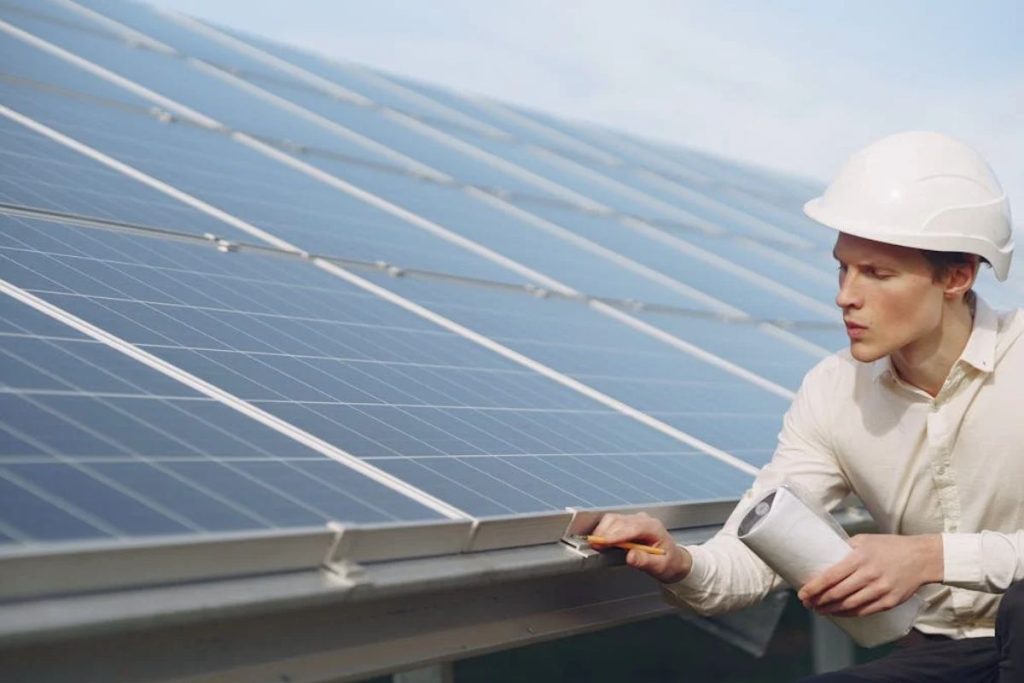
From Theory to Impact: Case Studies in Corporate and Community Sustainability
The strategic roadmaps and technological blueprints for renewable energy come to life through real-world application. Examining successful case studies, from large multinational corporations to grassroots community projects, provides invaluable lessons in execution, impact, and innovation. These stories bridge the gap between abstract plans and tangible results, offering a powerful testament to the viability of a green transition.
The Earth5R Model: Lessons from the Ground Up
True sustainability often begins at the community level. Organizations like Earth5R, an environmental group focused on citizen-led initiatives, demonstrate how sustainable practices can be woven into the fabric of a community. Their work provides a powerful micro-level analogy for the macro-level changes businesses seek to implement. The core lesson is that sustainability is as much about people as it is about technology.
One common project model involves tackling energy poverty in underserved communities through decentralized solar power. By training local citizens to install and maintain solar lighting or small micro-grids, these initiatives deliver clean energy while also building valuable skills and fostering a sense of ownership. For a large business, this grassroots approach offers a lesson in scalability and employee engagement; pilot projects at a single facility can prove a concept before a global rollout, and engaging employees in the process can amplify its success.
Similarly, Earth5R’s focus on the circular economy, particularly through waste management, holds direct relevance for businesses. Programs that train communities to segregate waste and convert organic matter into biogas for fuel showcase a closed-loop system in action. This demonstrates how a liability, such as waste, can be transformed into a valuable asset. The business parallel is clear: by auditing its own waste streams, a manufacturing firm can uncover opportunities to generate its own energy, drastically cutting both disposal and electricity costs.
Corporate Adoption: From Tech Giants to Factory Floors
While grassroots projects provide inspiration, the actions of global corporations demonstrate scalability and immense financial commitment. Tech giants have become leaders in this space, driven by massive data center energy needs and intense public scrutiny. Companies like Google and Microsoft have pursued a goal of matching 100% of their annual electricity consumption with renewable energy purchases.
They achieve this not through a single method but with a sophisticated portfolio of Power Purchase Agreements (PPAs) and Virtual Power Purchase Agreements (VPPAs). As detailed in their annual environmental reports, this strategy allows them to fund the creation of new renewable capacity around the world, effectively greening the grids on which they depend. This portfolio approach is a masterclass in risk management and strategic energy procurement.
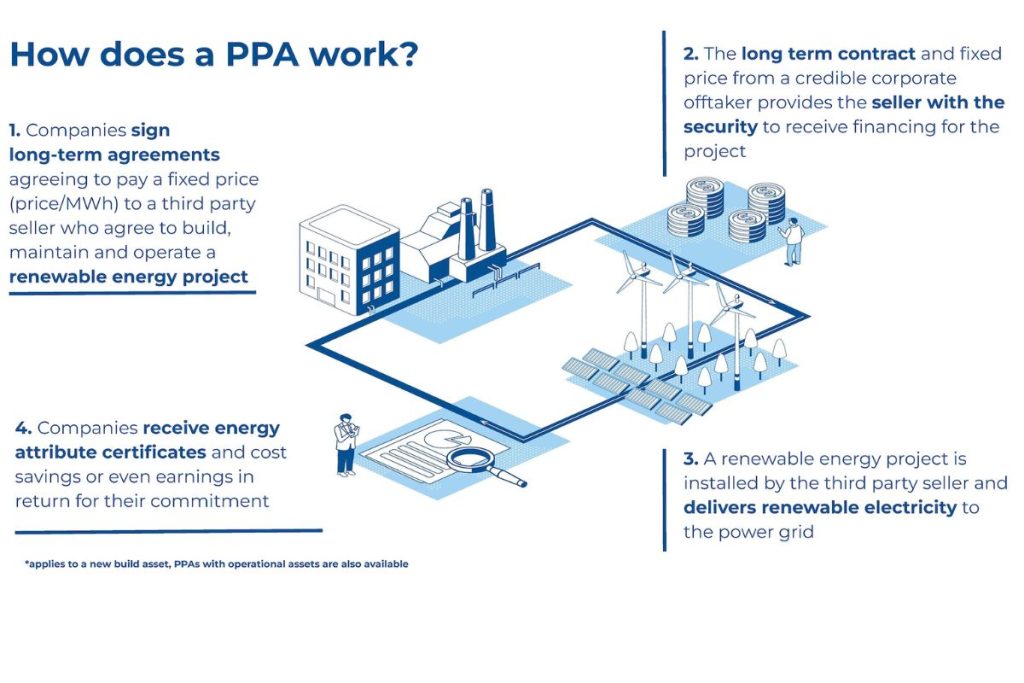
This chart illustrates how a Power Purchase Agreement (PPA) allows businesses to adopt renewable energy with no upfront cost.
However, the renewable transition is not limited to the tech sector. Consider the tangible example of a large manufacturing firm. By installing a multi-megawatt solar array on its expansive factory rooftop, such a company can directly slash its operational expenditure. Industry data from sources like the Council on Energy, Environment and Water (CEEW) consistently shows that the payback period for such commercial investments can be as short as five to seven years. After this period, the electricity generated is virtually free, providing a significant competitive advantage for decades to come.
Future-Proofing Your Strategy: Overcoming Challenges and Embracing Innovation
The path to a fully renewable energy strategy is one of continuous improvement, not a single destination. While the business case is clear, decision-makers must navigate legitimate challenges. However, the same spirit of innovation that has made renewables so affordable is now delivering powerful solutions to these hurdles, turning potential obstacles into strategic opportunities for the future.
Addressing the Inevitable Hurdles
The most frequently cited challenge for solar and wind power is intermittency, the simple fact that the sun doesn’t shine at night and the wind doesn’t blow on command. This variability has historically posed a challenge for businesses that require a constant, uninterrupted power supply. Furthermore, the initial capital expenditure (CapEx) for on-site systems, though rapidly decreasing, can still represent a significant financial decision.
Navigating these issues requires foresight and planning. Companies must also stay attuned to a dynamic regulatory landscape, where policies and incentives can shift. Yet, these challenges are not roadblocks; they are known variables that can be managed with the right technology and strategic planning, much like a manufacturer manages fluctuations in its supply chain.
The Next Frontier of Corporate Renewables
The future of corporate energy strategy is being defined by a new wave of technologies that work in concert with renewables to create a system that is not only clean but also smarter, more reliable, and more resilient than its fossil-fuel-based predecessor.
- The Game-Changer of Battery Storage The definitive answer to intermittency has arrived in the form of Battery Energy Storage Systems (BESS). These systems are analogous to a corporate water tower, storing excess solar or wind energy generated during peak production times and discharging it when needed, ensuring a seamless flow of power 24/7. The economics are becoming increasingly favorable, with the International Energy Agency (IEA) reporting a dramatic fall in the cost of lithium-ion batteries. Pairing renewables with storage transforms a variable power source into a firm, dependable asset.
- The Intelligence of AI and Smart Grids The integration of Artificial Intelligence (AI) is making corporate energy systems predictive and proactive. Smart grid technologies, powered by AI algorithms, can analyze weather forecasts, historical consumption data, and real-time electricity market prices. This allows a business to automate its energy use, for instance, by charging its battery fleet when grid power is cheapest or selling stored energy back to the grid during peak demand for a profit. This elevates a company from a mere energy consumer to an active, intelligent participant in the energy market.
- The Promise of Green Hydrogen Looking further ahead, Green Hydrogen is emerging as a critical solution for industries that are difficult to electrify, such as steel manufacturing, aviation, and long-haul shipping. Produced by using renewable electricity to split water molecules, green hydrogen is a completely clean fuel. While still in a nascent stage, organizations like the Hydrogen Council project that it will play a vital role in decarbonizing the global economy, offering businesses in heavy industry a clear path toward a sustainable future.
By embracing these innovations, businesses can design an energy strategy that is not just prepared for the future, but is actively shaping it.

Conclusion: The Inevitable Transition
The evidence is conclusive: the corporate transition to renewable energy has crossed the threshold from a niche environmental initiative to a mainstream economic imperative. The journey outlined has shown that this is not a choice between profitability and sustainability, but a strategic pathway to achieving both. The narrative is no longer one of cost, but of value creation and risk mitigation.
What was once the domain of Corporate Social Responsibility has now become a central pillar of corporate strategy. It is a fundamental engine for financial performance, brand leadership, and long-term resilience. From the irrefutable economics of solar and wind to the circular efficiency of waste-to-energy systems, the tools are available, proven, and financially viable.
The roadmap is clear, and the examples of successful adoption, from global tech giants to local manufacturing plants, remove any doubt about its feasibility. The challenges that remain, like intermittency, are actively being solved by a wave of innovation in battery storage and smart grid technology.
For business leaders today, the imperative is to move from consideration to action. The first step on this transformative journey is not a leap of faith, but a logical calculation. The call to action is simple: begin with a comprehensive energy audit to understand your needs, and explore the powerful options that will not only green your operations but fortify your bottom line for decades to come, aligning your business with the global push toward the UN Sustainable Development Goals.
Frequently Asked Questions
Isn’t renewable energy still too expensive for a small or medium-sized enterprise (SME)?
This is a common and outdated misconception. Thanks to massive technological advancements, the Levelized Cost of Energy (LCOE) from solar has plummeted, making it the cheapest source of new electricity in many regions.
Furthermore, financial models like the Power Purchase Agreement (PPA) are specifically designed to eliminate the initial capital barrier. This allows a business of any size to adopt renewables with zero upfront cost, paying only for the cheaper, cleaner electricity produced.
What is the typical return on investment (ROI) for an on-site solar project?
The ROI varies based on location, system size, government incentives, and local electricity rates. However, many commercial solar projects see a full payback period of just five to seven years. After this period, the electricity generated is essentially free, leading to significant savings for the next 20+ years of the system’s lifespan.
Which renewable technology is best for my business?
This depends entirely on your specific circumstances. Rooftop solar PV is the most versatile and widely adopted solution for businesses with available roof space. Companies with high organic waste output, like food processors or farms, may find bioenergy ideal. Wind power is excellent for businesses in specific geographies with consistent wind resources.
What is a Power Purchase Agreement (PPA)?
A PPA is a financial agreement where a developer arranges for the design, permitting, financing, and installation of a renewable energy system on a customer’s property at little to no cost. The business then purchases the power generated by the system at a fixed rate that is typically lower than the local utility’s retail rate.
What happens on cloudy days or when there’s no wind?
This is known as intermittency. Most business renewable systems remain connected to the main electrical grid. When your on-site system isn’t producing enough power, you seamlessly draw electricity from the grid. When you produce excess power, you can often sell it back, a process known as net metering.
Do I need a battery storage system?
While not always necessary initially, a Battery Energy Storage System (BESS) is becoming a crucial component. It allows you to store excess energy generated during the day for use at night or during power outages, providing energy independence and resilience. As battery costs continue to fall, they are becoming a standard part of new installations.
What is the very first step I should take?
The first and most critical step is to conduct a professional energy audit. This will give you a detailed understanding of your company’s energy consumption patterns and identify the most impactful areas for improvement. This data forms the foundation of a smart renewable energy strategy.
How does switching to renewables improve my brand image?
Modern consumers and business partners increasingly prioritize sustainability. Publicly committing to and adopting renewable energy enhances your brand’s reputation, marking you as a forward-thinking and responsible leader. This can be a powerful differentiator in a competitive market, attracting both customers and top talent.
What are Renewable Energy Certificates (RECs)?
A REC is a market-based instrument that represents the property rights to the environmental, social, and other non-power attributes of renewable electricity generation. One REC is created for every megawatt-hour (MWh) of electricity generated. Businesses can purchase RECs to offset their carbon footprint even if they cannot install their own systems.
What is the difference between a PPA and a Virtual PPA (VPPA)?
In a standard PPA, you buy the physical power produced by a system, usually on your property. In a VPPA, you don’t receive the physical electricity. Instead, you enter into a financial contract to support a large, off-site renewable project (like a wind farm) and receive the RECs, helping you meet sustainability goals while hedging against energy price volatility.
How much maintenance do solar panels require?
Solar panels are remarkably low-maintenance as they have no moving parts. The main requirement is periodic cleaning to ensure dirt and debris don’t obstruct sunlight. Most EPC (Engineering, Procurement, and Construction) firms offer long-term maintenance packages as part of their service.
Are there government incentives available in India to help businesses switch?
Yes, the Indian government actively promotes renewable energy through various policies. Schemes under the Ministry of New and Renewable Energy (MNRE) often include provisions for accelerated depreciation, tax benefits, and subsidies, which can significantly reduce the net cost of a renewable energy project for a business.
Can my business use its own waste to generate power?
Absolutely. If your business produces significant organic waste from processes like food manufacturing, agriculture, or paper production, you are a prime candidate for a waste-to-energy or bioenergy system. This technology creates a circular economy, turning a disposal cost into a valuable energy asset.
How does renewable energy contribute to my ESG score?
Adopting renewable energy directly and significantly improves the “Environmental” component of your Environmental, Social, and Governance (ESG) score. A high ESG score is increasingly used by investors to assess a company’s long-term risk and resilience, potentially leading to better access to capital and lower borrowing costs.
How long does a typical commercial installation take?
The timeline varies with project complexity and size. A straightforward rooftop solar installation can take a few months from initial consultation to final commissioning. Larger or more complex projects involving significant engineering or grid upgrades may take longer.
What is a “circular economy” approach to energy? A circular economy is a model of production and consumption that involves reusing, repairing, and recycling existing materials and products for as long as possible. In energy, this is exemplified by waste-to-energy systems, where a business’s waste stream is repurposed to create the very energy needed to power its operations.
Is green hydrogen relevant for my business today?
For most businesses, green hydrogen is a future technology. However, for companies in hard-to-abate sectors like heavy manufacturing, chemicals, or long-haul transport, it represents the most promising future pathway to full decarbonization. Following its development is a smart, long-term strategic move.
Can a business really become 100% renewable?
Yes, it is achievable, as demonstrated by leading global corporations. It typically requires a portfolio approach: on-site generation for daily needs, supplemented by battery storage for reliability, and often combined with off-site PPAs or VPPAs and REC purchases to cover the remaining consumption.
Does installing a renewable system increase my property value?
Studies have generally shown that properties with integrated renewable energy systems, particularly solar, have higher property values and are more attractive to potential buyers or tenants. The system is viewed as a long-term, cost-saving capital improvement.
How do I find a reliable company to install my system?
Look for a reputable EPC (Engineering, Procurement, and Construction) firm with a long track record of successful commercial installations. Check for certifications, read case studies, ask for customer references, and ensure they provide a comprehensive warranty for both the equipment and the workmanship.
From Insight to Action: Power Your Business’s Future Today
You have seen the research, understood the technologies, and reviewed the strategic roadmap. The case is clear: transitioning to renewable energy is the single most powerful lever a business can pull for long-term profitability, operational resilience, and market leadership. The question is no longer if you should make the switch, but how you will secure your competitive advantage by doing so.
Don’t let the scale of the opportunity cause inaction. The most transformative journeys begin with a single, informed step. Your immediate action is to commission a comprehensive energy audit. This simple diagnostic is the foundation of a successful strategy, revealing your unique consumption patterns and unlocking immediate efficiencies.
The leaders in your industry are already moving. Seize the opportunity to take control of your energy costs, insulate your business from market volatility, and build a brand that resonates with a new generation of conscious consumers.
Start your renewable energy journey today. The future won’t wait.
~ Authored by Abhijeet Priyadarshi