

The Dawn of a New Financial Era: Sustainable Finance’s Unstoppable Rise
The world is at a crossroads, confronted by the escalating realities of climate change, profound social inequality, and unprecedented biodiversity loss. These are not distant threats, but present-day challenges that are fundamentally reshaping our global economy. In response, a quiet but powerful revolution is underway in the world of finance, shifting capital and priorities at a pace that few could have predicted a decade ago.
This revolution has a name: sustainable finance. It is rapidly transitioning from a niche interest for ethically-minded investors into the dominant, driving force of the global financial system. The period between 2026 and 2030 will not just be a continuation of this trend, it will be the critical inflection point where sustainability becomes the undisputed cornerstone of prudent and profitable investment strategy.
The numbers behind this shift are staggering. According to a comprehensive analysis by PwC, assets under management (AuM) incorporating Environmental, Social, and Governance (ESG) factors are projected to skyrocket in the coming years. Some forecasts suggest the market could command over $40 trillion in assets by the end of this decade, signaling a seismic reallocation of global capital.
Think of this transformation not as a fleeting trend, but as a fundamental rewiring of the financial system, much like the digital revolution reshaped communication and commerce. Just as companies that ignored the internet were left behind, firms and investors who overlook sustainability metrics will soon find themselves managing obsolete risks and missing out on the greatest value-creation opportunities of our time.
This article will demonstrate that the impending dominance of sustainable finance is not based on speculation, but on a powerful convergence of forces. We will explore how inescapable regulatory pressures, a historic shift in investor demand, irrefutable evidence of financial outperformance, and game-changing technological advancements are cementing a new reality where sustainability and profitability are two sides of the same coin.

The Closing Net: How Global Regulations Are Making Sustainability Non-Negotiable
The era of treating sustainability as a voluntary, “nice-to-have” corporate initiative is definitively over. A powerful and intricate web of regulations is descending upon global capital markets, transforming sustainable reporting from a public relations exercise into a core component of legal and fiduciary duty. This regulatory push is the single most important catalyst that will cement sustainable finance’s dominance by 2026.
Think of this shift as being similar to the establishment of universal financial accounting standards a century ago. What was once a chaotic landscape of inconsistent corporate reporting became a structured system of trust and comparability. Today, sustainability disclosure is on the exact same trajectory, moving rapidly from a confusing “alphabet soup” of voluntary frameworks to a globally harmonized and mandatory system of accountability.
Leading this charge is the European Union. Its ambitious EU Taxonomy acts as a scientific, rules-based dictionary, providing a clear definition of what qualifies as an environmentally sustainable economic activity. Its influence, known as the “Brussels Effect,” extends far beyond Europe, compelling multinational corporations and global asset managers to align their operations and investments with its stringent criteria.
While the EU set the initial pace, the creation of a truly global standard is now solidifying under the IFRS Foundation’s International Sustainability Standards Board (ISSB). The ISSB’s standards are designed to create a universal baseline for sustainability-related financial disclosures, allowing investors to compare companies consistently across borders. With major economies from the UK to Brazil and Japan already on paths to adopt these standards, we are witnessing the birth of a global language for ESG data.
Even in the United States, which has traditionally been slower on federal mandates, the direction of travel is clear. The Securities and Exchange Commission’s (SEC) climate disclosure rules represent a landmark shift. They signal that climate-related risk is now officially recognized as a material financial risk, compelling thousands of publicly traded companies to integrate climate considerations into their formal financial reporting and strategic planning.
Perhaps the most revolutionary concept being embedded in these new rules is “double materiality.” This principle, central to Europe’s Corporate Sustainability Reporting Directive (CSRD), fundamentally alters the scope of corporate responsibility. It forces companies to report not only on how sustainability issues impact their financial bottom line, but also on how their own operations impact society and the environment.
This two-way perspective ensures a holistic view of a company’s value and risk profile, making it impossible to ignore real-world consequences. It moves accountability from a narrow shareholder focus to a broader stakeholder perspective that includes employees, communities, and the planet itself.
Finally, regulators are adding sharp teeth to these rules with a global crackdown on “greenwashing,” the practice of making exaggerated or false sustainability claims. Regulations like the EU’s Sustainable Finance Disclosure Regulation (SFDR) impose strict labeling and transparency requirements on investment products. Across the world, financial authorities are levying significant fines and launching high-profile investigations, making the reputational and financial cost of misleading investors higher than ever.
By the time 2026 arrives, this regulatory architecture will be largely cemented. For companies and investors, navigating the world of finance without robust, verifiable sustainability data will be not just imprudent, it will be impossible. Compliance will no longer be optional; it will be a fundamental license to operate in the global economy.

The Power of the Purse: How Shifting Investor Demands Are Redefining Value
If global regulation is the formidable “stick” pushing companies towards sustainability, then a seismic shift in investor demand is the irresistible “pull” drawing capital in the same direction. The very definition of financial value is being rewritten, not by governments, but by the people and institutions who own the world’s assets. This powerful mandate from investors is a core reason sustainable finance is poised for market dominance.
At the heart of this transformation is The Great Wealth Transfer, a monumental event that will see an estimated $84 trillion pass to younger generations, primarily Millennials and Gen Z, by 2045. This is not merely a transfer of money, it is a profound transfer of ideology. Numerous studies, including insightful reports from Morgan Stanley, consistently show that these younger investors are far more likely to insist that their portfolios align with their social and environmental values.
For this rising cohort of investors, the purpose of capital is not just to generate returns, but to create positive, measurable impact. They see no conflict between doing well and doing good, and they are actively divesting from companies with poor environmental records or questionable labor practices.
This change in investor appetite is analogous to the consumer-driven shift towards organic food or electric vehicles. What began as a niche market for a passionate few has exploded into a mainstream force that incumbents must adapt to or risk becoming obsolete. The financial services industry is now facing the same ultimatum: cater to the demand for sustainability or lose the next generation of clients.
This movement is not confined to young, individual investors. The world’s largest institutional investors, the financial titans who manage trillions in pension funds, insurance assets, and sovereign wealth, are leading the charge. For them, integrating ESG factors is no longer a matter of ethics, but a crucial evolution of their fiduciary duty.
These institutions, guided by long-term horizons, recognize that unmanaged risks like climate change and social instability represent clear and present dangers to their portfolios. Organizations like the UN-supported Principles for Responsible Investment (PRI), whose signatories now represent over $120 trillion in assets, are embedding sustainability into the very core of investment analysis.
Simultaneously, a revolution is happening at the retail level. The rise of fintech and accessible trading platforms has democratized investing, empowering millions of everyday people to vote with their capital. Consistent fund flow data from research firms like Morningstar reveals that even during periods of market volatility, investors are channeling billions into funds designated as sustainable, signaling a durable and growing preference.
Ultimately, this groundswell of demand is rooted in a pragmatic understanding of risk and opportunity. Investors increasingly see that companies ignoring sustainability are exposing themselves to significant financial peril, from “stranded assets” in the fossil fuel industry to brand damage from supply chain controversies. Conversely, companies leading in the transition to a low-carbon, equitable economy are seen as more resilient, innovative, and better positioned for long-term growth.
By 2026, the message from the market will be unmistakable. The collective voice of investors, from a teenager on a trading app to a multi-trillion-dollar pension fund, has created a powerful, unified mandate. For the financial industry, meeting this demand is no longer a business opportunity, it is a fundamental requirement for survival.
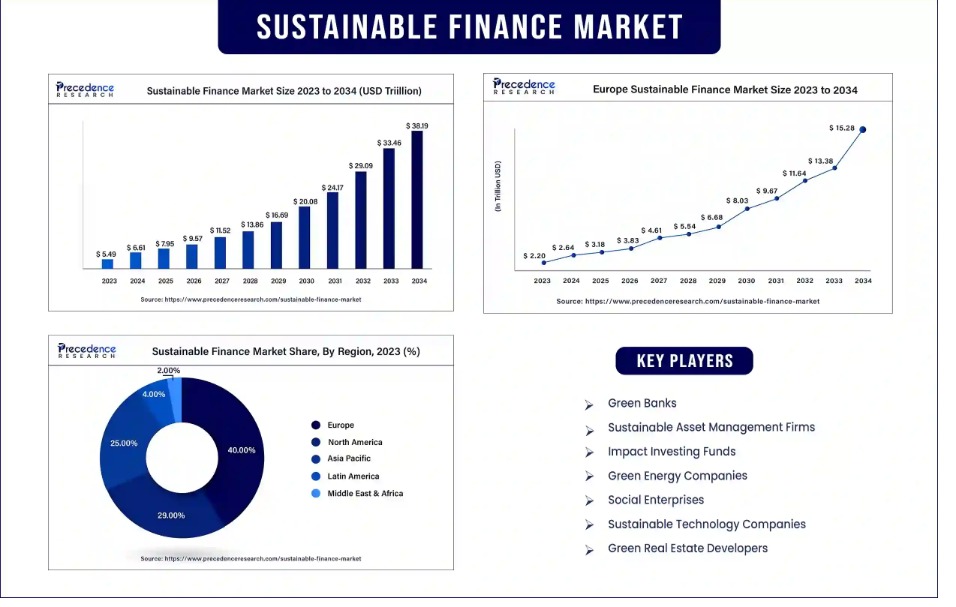
Visual evidence of the unstoppable momentum: Market data projects the sustainable finance sector will more than quadruple in a decade, highlighting its explosive global growth.
The Profitability Proof: Debunking the Myth of Sacrificed Returns
For years, the most significant barrier to the adoption of sustainable finance was a deeply entrenched myth: that prioritizing ethics and the environment required a direct sacrifice of financial returns. Today, a vast and growing body of empirical evidence has not only debunked this myth, but has begun to prove the opposite is true. Integrating sustainability is increasingly a key ingredient for superior financial performance.
The debate is being settled by overwhelming data. A landmark meta-analysis from the NYU Stern Center for Sustainable Business, which reviewed over 1,000 academic studies published between 2015 and 2020, found a consistent positive correlation between ESG and corporate financial performance. This research makes it clear that the narrative of a trade-off is outdated and unsupported by modern financial analysis.
Viewing sustainability as a mere cost center is an obsolete perspective. It is more accurate to see it as a direct indicator of operational excellence, much like workplace safety was viewed decades ago. Once considered only an expense, strong safety protocols are now universally recognized as a driver of efficiency, reduced risk, and higher profitability. In the same way, strong ESG management is now understood as a hallmark of a resilient, innovative, and well-run company.
This resilience is not just theoretical; it has been proven during times of crisis. Analysis from financial institutions like S&P Global and Morningstar during the market volatility of the early 2020s consistently found that funds with high sustainability ratings often experienced smaller losses and recovered more quickly than their conventional counterparts.
The financial benefits extend directly to a company’s balance sheet. A growing body of research shows that corporations with strong ESG ratings often benefit from a lower cost of capital. Lenders and equity investors view these companies as less risky and better prepared for future challenges, from regulatory shifts to supply chain disruptions, and are therefore willing to provide capital at more favorable rates.
Beyond simply screening for risk, a dynamic segment of the market is actively seeking to create benefits. Impact investing, which directs capital to enterprises solving social and environmental problems, is surging. The Global Impact Investing Network (GIIN) has sized this market at over a trillion dollars, and it continues to attract significant capital from investors who demand both financial returns and measurable positive outcomes.
By 2026, the conversation in investment committee meetings will have fundamentally changed. The question will no longer be “Can we afford to integrate sustainability?” but rather, “Can we afford not to?” The accumulated evidence overwhelmingly suggests that sustainable finance is not about sacrificing returns, it’s about securing them for the long term.
The Digital Backbone: How Technology is Powering a New Era of Sustainable Finance
The entire sustainable finance revolution hinges on one critical commodity: trusted, verifiable data. For years, progress was hampered by information that was often self-reported, outdated, or inconsistent. Now, a powerful wave of technological innovation is building the digital backbone that makes sustainable finance not just possible, but powerful and precise.
This technological shift is comparable to the moment financial markets moved from paper ledgers to digital spreadsheets and databases. What was once a slow, manual, and opaque process is becoming automated, transparent, and immediate. Technology is transforming ESG data from a collection of vague corporate statements into a stream of verifiable, actionable intelligence.
At the forefront of this change is Artificial Intelligence (AI) and big data. Sophisticated algorithms can now analyze terabytes of unstructured information from thousands of sources in real-time. They can scan satellite imagery to detect deforestation in a company’s supply chain, analyze news reports for early warnings of labor disputes, or gauge public sentiment from social media, providing a dynamic picture of a company’s ESG risks and opportunities.
This capability, detailed in reports by firms like Deloitte, moves analysis beyond static annual reports. It gives investors a live dashboard on corporate behaviour, allowing them to make decisions based on what a company is doing right now, not what it claimed to be doing a year ago.
To solve the crucial issue of transparency, blockchain technology is emerging as a ledger of trust. In the context of green finance, its potential is immense. A green bond issued on a blockchain can provide an unchangeable, public record that tracks every dollar from the investor to the specific wind turbine or water purification plant it was meant to fund, as explored by the World Economic Forum. This offers a powerful antidote to greenwashing.
Finally, the Internet of Things (IoT) provides the on-the-ground, physical evidence. Smart sensors placed on factory smokestacks can provide real-time, verifiable carbon emissions data, while advanced meters can monitor a company’s water consumption with pinpoint accuracy. This flow of hard data replaces corporate estimates with indisputable facts, fundamentally improving the quality of sustainability reporting.
Technology is the essential engine driving this new financial paradigm. It is building an infrastructure of integrity and transparency, ensuring that as we move towards 2030, investment decisions will be guided by clear, credible, and constant data on a company’s true impact on the world.
From the Ground Up: How Local Action Is Defining the Future of Sustainable Finance
While sustainable finance operates at the scale of trillions of dollars in global markets, its true success is measured by its tangible impact on communities and ecosystems. The environmental organization Earth5R provides a powerful blueprint for how these high-level financial concepts can be translated into grassroots action, demonstrating a model where ecological and social returns drive financial viability.
Earth5R’s work in creating sustainable livelihoods through a circular economy is a prime example. Their income-generating waste management projects in various Indian cities are not just clean-up drives, they are micro-enterprises. By training local residents and informal waste collectors in proper waste segregation and upcycling, they transform discarded plastic and other materials from a liability into a valuable asset.
This model, detailed on their environmental projects page, has resulted in the diversion of thousands of tonnes of waste from landfills while creating sustainable incomes for community members. It is a perfect illustration of the “E” (Environmental) and “S” (Social) of ESG investing, proving that positive environmental action can and should generate economic value for the people who need it most.
The organization also bridges the gap between large-scale corporate finance and local communities. In their collaboration with the State Bank of India (SBI), one of the country’s largest issuers of green bonds, Earth5R conducted a massive awareness program. This initiative educated citizens on the importance of green finance and how instruments like green bonds fund critical projects in renewable energy and water conservation.
This partnership demonstrates a vital symbiotic relationship. While major institutions raise capital for large-scale green infrastructure, Earth5R provides the crucial “last-mile” connection, ensuring public buy-in and building a culture of sustainability from the bottom up. Their work provides the social license and understanding needed for these financial instruments to succeed.
Perhaps one of their most ambitious undertakings, the cleanup of Mumbai’s Mithi River, showcases how ecological restoration is a form of long-term investment. By mobilizing thousands of volunteers and systematically removing and segregating waste, they not only improve the river’s health but also unlock economic value from recycled materials, laying the groundwork for a future, cleaner “blue economy.”
Through these actions, Earth5R and similar organizations prove that sustainable finance is not an abstract theory for trading floors. It is a practical framework that, when applied at the community level, can restore natural capital, empower citizens, and build a truly resilient and equitable economy from the ground up.
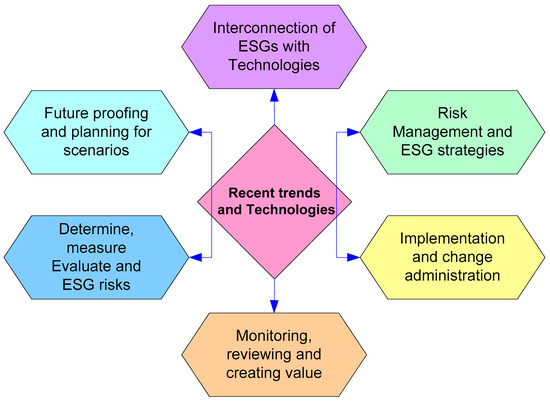
Technology acts as the central engine, driving every key function of a modern ESG strategy from risk management to long-term value creation.
Navigating the Headwinds: Challenges on the Path to Dominance
The journey of sustainable finance toward complete market dominance is not without its hurdles. To be clear, significant challenges remain that require diligent and collaborative solutions. These include persistent gaps in corporate sustainability data, the complex process of achieving universal adoption of reporting standards, and the continuous battle against sophisticated “greenwashing.”
These issues, often highlighted in analyses by bodies like the Organisation for Economic Co-operation and Development (OECD), are real and demand attention from regulators and market participants alike. They represent the natural growing pains of a financial revolution that is maturing at an accelerated pace.
It is helpful to view this period as analogous to the early days of the commercial internet. That era was also marked by chaos, a lack of unified standards, and speculative bubbles. Yet, no one doubted the underlying power of the technological shift. The fundamental direction of travel was clear then, just as it is for sustainable finance today.
The unstoppable momentum created by the convergence of global regulation, massive investor demand, proven financial performance, and technological innovation has already carried the market past a critical tipping point. These core drivers are now too powerful and too embedded in the system to be reversed by the remaining challenges.
Therefore, the dominance of sustainable finance is no longer a matter of ‘if,’ but precisely ‘how’ and ‘when.’ The years leading to 2030 will be defined not by a debate over its legitimacy, but by the focused, industry-wide effort to smooth these frictions as sustainability solidifies its role as the undisputed future of finance.
The New Mainstream: A Future Forged by Sustainable Finance
The evidence presented is conclusive. The impending dominance of sustainable finance is not the product of a fleeting trend, but the outcome of a powerful and irreversible convergence of forces. A global regulatory framework has laid down the rules, while a historic shift in investor demand has dictated a new direction for capital.
This great realignment is built on a solid foundation of proof, with years of data now demonstrating that sustainability and profitability are intrinsically linked. It is being accelerated by a technological revolution that is replacing opaque estimates with transparent, real-time data, making true accountability possible for the first time.
The period between 2026 and 2030 will be remembered as the inflection point, the moment when these forces combined to irrevocably alter the landscape of global markets. During these years, sustainability will complete its transition from a niche consideration or a separate asset class into the core operating system of modern finance.
For investors, corporate leaders, and policymakers, the path forward is clear. The challenge is no longer to build the case for sustainable finance, but to lead the integration of its principles into every decision. This is the urgent and essential work of building a global economy that is not only profitable, but also resilient, equitable, and aligned with the profound challenges and opportunities of our time, as envisioned by global frameworks like the UN Sustainable Development Goals.
Frequently Asked Questions
What exactly is sustainable finance?
Sustainable finance is the process of taking Environmental, Social, and Governance (ESG) considerations into account when making investment decisions. It goes beyond traditional financial analysis to include factors related to climate change, labour practices, and corporate transparency to generate long-term value and positive societal impact.
Why is the 2026–2030 period considered so critical for sustainable finance?
This period is seen as a crucial inflection point because the powerful forces driving sustainable finance—mandatory global regulations, peak investor demand from a new generation, proven financial outperformance, and transformative technology—will all mature and converge, moving it from a niche market to the undisputed mainstream of the global financial system.
Isn’t this just another name for ethical investing?
While it has roots in ethical investing, sustainable finance is broader and more financially rigorous. It is not just about avoiding “bad” companies; it is about using ESG data to identify well-managed, resilient companies that are better positioned for long-term risks and opportunities, making it a core part of prudent financial strategy.
What is the single biggest driver making sustainable finance mandatory?
The most significant driver is the global wave of mandatory regulations. New rules from the EU, the U.S. SEC, and the global ISSB are transforming sustainability reporting from a voluntary exercise into a legal requirement, making ESG data as fundamental as traditional financial data.
You mentioned the “ISSB.” Why is it a game-changer?
The International Sustainability Standards Board (ISSB) is a game-changer because it is creating the first truly global baseline for sustainability disclosure. This resolves the long-standing problem of a confusing “alphabet soup” of standards, allowing investors to reliably compare companies across different countries and industries.
What is “double materiality” and why does it matter?
Double materiality is a revolutionary principle requiring companies to report on two perspectives: how sustainability issues affect the company’s financial health, and how the company’s own operations impact the environment and society. It forces a holistic view of a company’s real-world footprint and is a cornerstone of new European regulations.
Who is primarily driving the investor demand for sustainable options?
The demand is coming from all corners of the market, but a major force is the “Great Wealth Transfer.” Younger generations like Millennials and Gen Z, who are set to inherit trillions of dollars, show a much stronger preference for aligning their investments with their values, fundamentally reshaping the priorities of the wealth management industry.
Why are large institutional investors like pension funds so focused on sustainability?
Large institutional investors have very long-term investment horizons. They see sustainability issues like climate change not as distant ethical concerns, but as significant financial risks that could harm their portfolios over time. For them, integrating ESG is an essential part of their fiduciary duty to protect their clients’ assets.
Do I have to sacrifice returns to invest sustainably?
No. This is an outdated myth. A vast body of research, including major meta-analyses of over 1,000 academic studies, now shows a consistent positive correlation between strong ESG performance and strong financial performance. Well-managed sustainable companies often exhibit lower risk and higher operational efficiency.
How do sustainable investments perform during market downturns?
Research has shown that sustainable funds have often been more resilient during periods of market volatility. They tend to invest in companies with stronger risk management and governance, which helped them experience smaller losses and recover more quickly during recent market shocks.
What is the difference between ESG investing and impact investing?
ESG investing typically involves integrating ESG data to manage risk and identify opportunities within a broad portfolio. Impact investing is a distinct strategy where capital is intentionally directed towards projects or companies that aim to generate a specific, measurable positive social or environmental impact alongside a financial return.
How is technology helping to solve the problems in sustainable finance?
Technology is solving the biggest historical problem: a lack of reliable, timely, and verifiable data. It acts as the digital backbone, using AI, Big Data, Blockchain, and IoT to transform sustainability data from opaque corporate reports into a transparent, real-time stream of actionable intelligence.
What role does Artificial Intelligence (AI) play?
AI is crucial for analysis. It can process vast amounts of unstructured data—from satellite images of deforestation to news reports on labour practices—to give investors a real-time understanding of a company’s ESG performance that goes far beyond what a company self-reports.
How does the work of an organization like Earth5R connect to global finance?
Organizations like Earth5R provide a crucial “proof of concept” on the ground. They demonstrate how the principles of sustainable finance can be applied to create tangible, measurable outcomes, like building circular economies from waste and empowering local communities. They bridge the gap between multi-trillion dollar global markets and real-world impact.
What is “greenwashing” and is it still a major risk?
Greenwashing is the act of making false or misleading claims about a product’s or company’s environmental credentials. While it remains a risk, regulators are cracking down with strict new rules (like the EU’s SFDR) and heavy fines, making the financial and reputational cost of getting caught much higher than before.
What are the biggest challenges still facing sustainable finance?
The main challenges are the “growing pains” of a rapidly maturing market. These include closing the final gaps in corporate data, achieving full global adoption of new standards, and staying ahead of increasingly sophisticated greenwashing tactics.
Is this trend limited to Europe and North America, or is it global?
While Europe was an early leader, this is a truly global phenomenon. The adoption of the ISSB’s global baseline standards by countries across Asia, South America, and beyond, coupled with growing investor demand worldwide, confirms that sustainable finance is becoming the new international standard.
As a small business owner, why should I care about this?
You should care because sustainable finance will increasingly affect your access to capital and your position in supply chains. Banks are integrating ESG criteria into lending decisions, and large corporations are demanding sustainability data from their suppliers. Embracing sustainability can become a competitive advantage.
How can I, as an individual investor, get involved?
It has never been easier for individual investors. Most major investment firms now offer a wide range of sustainable or ESG-focused mutual funds and ETFs. Additionally, numerous fintech platforms and robo-advisors allow you to easily build a portfolio that aligns with your specific social and environmental values.
What is the ultimate goal of sustainable finance?
The ultimate goal is to create a global financial system that is not only profitable but also resilient and equitable. It aims to correctly price long-term risks and opportunities, directing capital towards innovations and business models that can solve the 21st century’s most pressing environmental and social challenges.
Shape the Future of Finance
You have seen the evidence. The convergence of regulation, demand, performance, and technology is not just an abstract trend; it is the dawn of a new economic reality. This transformation, however, is not a spectator sport. It will be actively shaped by the choices that investors, leaders, and consumers make today.
For the investor, the call is to ask the critical questions. Challenge your financial advisor. Scrutinize the sustainability credentials of your portfolio and demand the transparency that new regulations are making possible. Align your capital not just with your financial goals, but with the future you wish to inhabit.
For the corporate leader, the imperative is to move beyond mere compliance. Seize the strategic advantage that sustainability offers to innovate, attract the best talent, and build a resilient enterprise that is fit for the challenges and opportunities of the coming decade.
The dominance of sustainable finance is not just a prediction; it is an invitation to participate in the most significant reallocation of capital in modern history. The future is being financed today. Be an architect of it.
~ Authored by Abhijeet Priyadarshi