Polluted rivers are usually described as environmental disasters.They are also business signals.
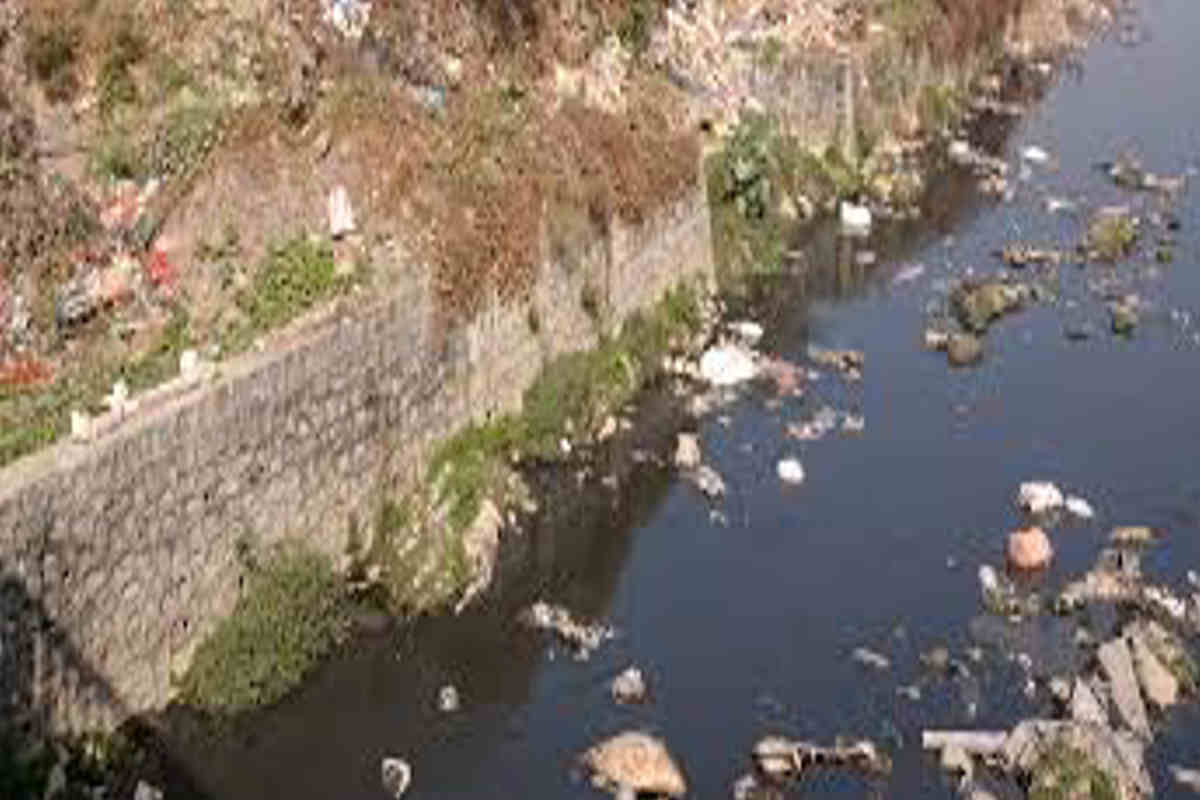
A river becomes heavily polluted when multiple city systems fail at the same time.Solid waste collection breaks down. Segregation fails at the household level. Sewage is discharged without treatment.Industrial effluents slip through weak monitoring.Stormwater drains carry plastics, organics, and silt directly into waterways.
This is why the world’s most polluted rivers are not random locations.They are the most visible endpoints of broken value chains.And broken value chains are where profitable opportunities emerge.
Not the kind of profit that comes from one-time cleanups.The real profit comes from redesigning systems so that waste stops entering rivers, resources are recovered, health costs fall, and outcomes can be measured and verified.
Earth5R’s work is built on this idea.River cleaning works best when it is linked to community waste management, sustainability education, and upstream prevention.That is how river restoration becomes a repeatable model, not a recurring crisis.
River pollution is an economic problem, not only an environmental one
Water pollution reduces economic output.It damages agriculture, disrupts industry, increases treatment costs, and raises healthcare burden.
The World Bank’s research on water quality shows that severe upstream pollution can act as a headwind on downstream economic growth, with losses that can be large in heavily polluted areas.
This matters because rivers are not decorative ecosystems.They are economic infrastructure.A polluted river forces cities to spend more on:
Water treatment chemicals and energy.Pipeline flushing and maintenance.Disease response and public health services.Drain cleaning and flood response.Land remediation and ecosystem repair.
These expenses do not appear in a single line item.They appear everywhere across a city’s budget.When a problem generates recurring costs across multiple sectors, markets form around solving it.That is what is now happening around river basins.
Waste growth and wastewater gaps are turning rivers into crisis corridors
Two global trends are accelerating river pollution.
The first is waste volume growth.UNEP’s Global Waste Management Outlook 2024 projects municipal solid waste generation rising from about 2.1 billion tonnes in 2023 to 3.8 billion tonnes by 2050, while warning that the global annual cost of waste, including hidden costs, could rise to about USD 640.3 billion by 2050 without urgent action
The second is untreated wastewater.UN agencies have consistently highlighted that a large share of global wastewater is discharged untreated, much of it ending up in rivers. When waste systems and wastewater systems fail together, rivers become the default transport channel.They carry away society’s inefficiencies.
From a business perspective, this creates a predictable pattern.As waste grows, governments tighten regulation.As regulation tightens, monitoring and compliance markets expand.As compliance markets expand, infrastructure investment follows.As infrastructure improves, land values and economic activity increase around restored waterways.
Polluted rivers are where this transition is starting, because the costs of inaction have become too visible to ignore.
Why the worst rivers often produce the strongest business cases
The most polluted rivers are often the most profitable opportunity zones because three conditions are present at once.
Regulatory inevitability
When pollution threatens drinking water and public health, governments cannot avoid intervention indefinitely.This creates an eventual pipeline of spending, enforcement, and compliance requirements.
Economic density
The worst rivers often flow through dense cities, industrial corridors, and high-growth regions.That density means more customers for solutions and larger financial upside when river health improves.
Fragmentation of pollution sources
River pollution typically comes from thousands of small sources rather than one large source.Fragmentation creates inefficiency, but it also creates demand for integrators, aggregators, and platform models that can coordinate actions across households, businesses, and institutions.
This is why river restoration is shifting from “environmental charity” to “infrastructure and services economy.”
Rivers are aggregation corridors, and aggregation lowers recovery cost
One reason rivers create economic opportunity is simple.They aggregate waste.
Plastic, textile fragments, packaging, and mixed debris that are scattered across an urban area often end up concentrated in drains, floodplains, and riverbanks.That concentration reduces collection cost per kilogram, if recovery is organised and safe.
Research has shown that river transport plays a major role in moving plastics from land to sea. A widely cited study in Science Advances estimates that more than 1,000 rivers account for a large share of global riverine plastic emissions into the ocean, with small urban rivers and drains among the most polluting.
This matters for business because “where the flow is concentrated” is where interception becomes efficient.If a city can intercept and recover waste before it moves downstream, it can reduce marine pollution, reduce flood risk, and create a steady stream of recyclable material for the circular economy.
Profit pool 1: Plastic interception, recovery, and recycled material supply chains
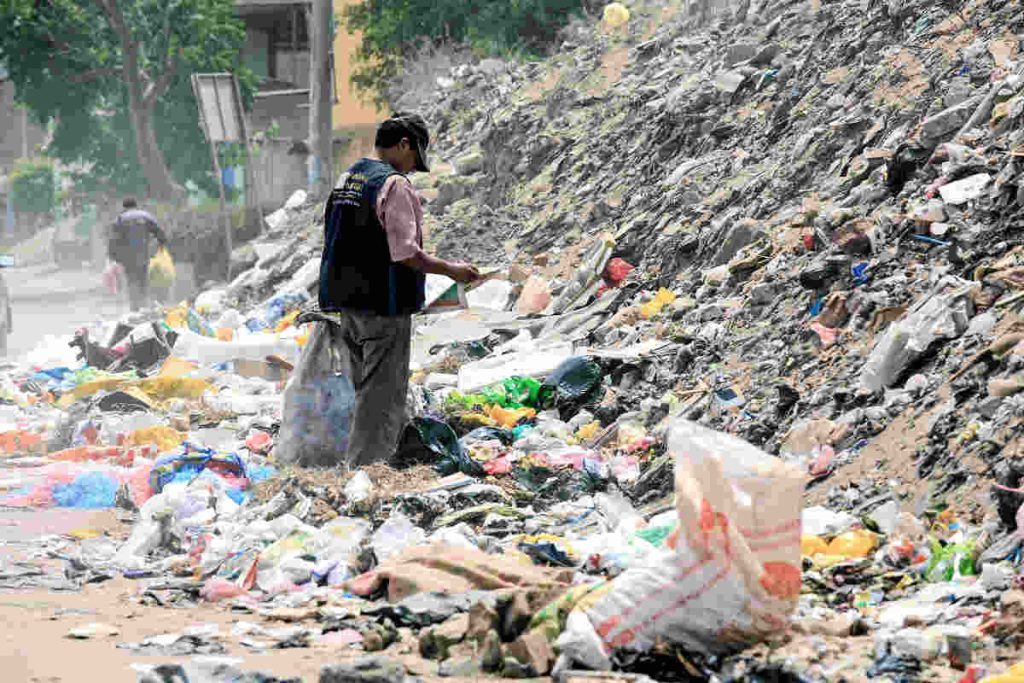
Plastic is the most visible river pollutant and one of the most monetisable, but only when quality is controlled.
OECD’s Global Plastics Outlook reports that plastic waste more than doubled from 156 million tonnes in 2000 to 353 million tonnes in 2019, and that only 9 percent of plastic waste was ultimately recycled after accounting for losses.
This is not just an environmental failure.It is a supply chain opportunity.
Brands and manufacturers are under growing pressure to increase recycled content, reduce leakage, and comply with emerging policies such as Extended Producer Responsibility.
That pressure turns recovered plastic into a strategic input, not merely waste.
But river plastic is not automatically valuable.River plastic is often contaminated, degraded by sunlight, and mixed with organics.This is why the highest-profit models are not “cleanup-only” models.
The strongest models combine:
Upstream waste segregation.Neighbourhood-level dry waste recovery systems.River interception for leakage control.Sorting and aggregation with quality standards.Partnerships with authorised recyclers and processors.
This is where Earth5R’s approach fits.Earth5R’s river cleanup work is designed to link cleanups with upstream waste management and community participation so that recovery quality improves over time and leakage declines at source.
In business terms, the value is not just in the recovered plastic.The value is in building a repeatable system that produces predictable quality, because predictable quality attracts stable buyers.
Profit pool 2: EPR compliance, traceable recovery, and verification services
As plastic policy evolves, producers are increasingly required to finance collection and recycling.This expands the market for recovery services that can be measured and verified.
OECD has documented how EPR is used to shift waste management responsibility upstream and create structured funding for collection and recycling systems.In practice, EPR creates demand for:Collection networks.Material recovery infrastructure.Auditable tracking systems.Third-party verification.Impact reporting.
Rivers become priority zones because river leakage is visible and politically sensitive.
If a brand can fund verified interception and recovery that reduces leakage into a river basin, it improves compliance and reputation at the same time.
This is where a well-run NGO-business partnership can become a durable service model. The NGO provides community mobilisation, local trust, and on-ground execution.The business provides financing, standards, and downstream processing partnerships.
Profit pool 3: Wastewater treatment, reuse contracts, and water security services
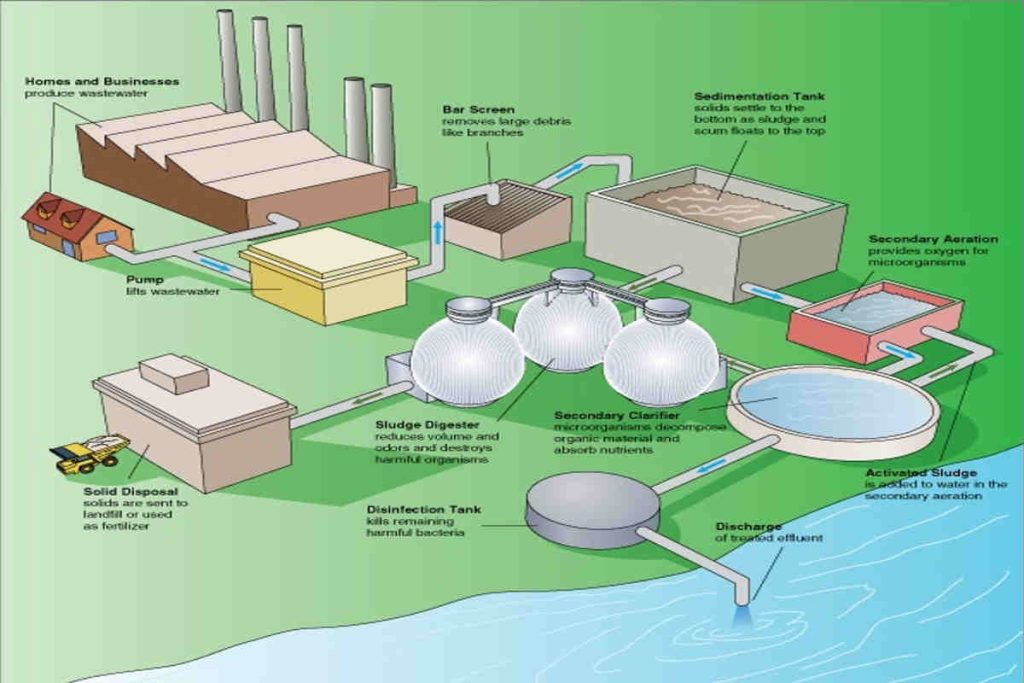
A major share of river pollution is sewage and wastewater.The economic opportunity is not only to treat it, but to convert it into a reusable resource.
The International Water Association has repeatedly emphasised the shift toward treating wastewater as a source of recoverable water, energy, and nutrients, aligning water utilities with circular economy principles.
Water reuse is becoming more important because freshwater risk is increasing.
Industries that depend on reliable water supply increasingly invest in treated wastewater reuse to stabilise operations.
The business models here are service-based.
Industrial reuse supply agreements.Decentralised treatment for campuses, townships, and large developments.Performance-based operating contracts for municipal treatment plants.
Water quality monitoring and compliance subscriptions bundled with treatment.
Polluted rivers indicate that “wastewater is being lost into ecosystems.”
That loss is a market gap.The more severe the pollution, the stronger the pressure to build treatment capacity and reuse infrastructure, because the costs of leaving wastewater untreated rise over time.
Profit pool 4: Nutrient recovery, organics diversion, and the circular bioeconomy
Rivers polluted by organic waste and sewage often suffer from high biochemical oxygen demand, low dissolved oxygen, and ecosystem stress.This is also a sign that nutrients and organics are being wasted.
Organics diversion and composting can reduce river loading and reduce methane generation from landfills.The IPCC recognises that waste sector interventions such as diversion and improved treatment can reduce greenhouse gas emissions, including methane.
From a business perspective, organics create multiple value paths:
Compost markets for urban landscaping and peri-urban agriculture.Biogas and energy recovery for institutional systems.Reduced drain maintenance costs when wet waste is diverted.Lower treatment costs when rivers receive less organic loading.
The monetisation is often strongest when organics systems are decentralised, because wet waste is heavy and expensive to transport.Community composting and decentralised processing reduce transport costs and prevent leakage.
Earth5R’s sustainability education and waste management work is built around upstream behaviour and local systems, which is essential for organics recovery to stay low-cost and reliable.
Profit pool 5: Flood risk reduction and stormwater resilience through waste control
Many cities underestimate the link between solid waste and flood risk.Plastic and debris clog storm drains and narrow river channels.During heavy rains, this causes urban flooding.The World Bank has explicitly noted that investments in solid waste management can help prevent clogging of drains, which can reduce flood risk.
This creates a powerful “avoided cost” business case.Flood damage is expensive.It affects households, businesses, insurance claims, and municipal budgets.When river pollution prevention reduces flood risk, the value is not limited to waste sales.
It includes avoided infrastructure damage and avoided disaster response cost.This is why river basin programs are increasingly being linked to resilience financing and urban infrastructure planning.
For businesses, this expands the customer set beyond environment departments.
Disaster risk management agencies, urban development authorities, and resilience funds become relevant payers.
Profit pool 6: Environmental data, monitoring, and compliance platforms
As governments and investors demand measurable outcomes, environmental data becomes an asset.
The World Bank’s “Quality Unknown” initiative is itself evidence of this shift, using data to reveal how water quality affects economic outcomes and to make pollution visible for decision-makers. Data-driven river management creates recurring markets for:
Sensor deployment and maintenance.Laboratory testing services.Remote sensing and analytics.Compliance reporting for industries and municipalities.
ESG disclosure support for corporates.
Impact verification for CSR and climate-linked programs.UNEP highlights the growing role of environmental data in governance and sustainability decision-making. This is an attractive market because it is scalable, recurring, and often higher margin than physical cleanup alone.
The strongest models bundle data with action.Data without implementation becomes reporting.Implementation without data becomes unprovable.Earth5R’s integrated model, combining on-ground action with measurable outcomes, fits this direction of travel because it supports both execution and verification.
Why health costs turn river restoration into an unavoidable investment
Businesses and governments act faster when health costs become visible.
WHO’s drinking-water fact sheet highlights that unsafe drinking water, sanitation and hygiene contribute to large diarrhoeal disease burdens, and that diarrhoea remains preventable with improved water and sanitation.
When a river is polluted, the disease burden often increases through contaminated water sources, poor sanitation, and flood-related exposure.Health costs drive three investment behaviours:
Governments invest in sewage and sanitation infrastructure.Employers invest in prevention to reduce absenteeism and healthcare spend.Insurers and urban planners invest in risk reduction.This shifts river restoration from “nice to have” to “economic necessity.”
Why the profitability is in prevention plus recovery, not cleanup alone
One-time river cleanups are valuable for awareness and emergency response.But they are not stable businesses.They also do not stop pollution from returning.
Investable river opportunities typically combine:
Upstream prevention, including segregation and collection.Midstream interception, including drain and riverbank capture.Downstream treatment and recovery, including recycling and authorised processing.Continuous monitoring and verification.
This model creates recurring cash flows.Service contracts, compliance funding, EPR flows, and verified impact payments are all recurring.It also creates defensible value because it reduces leakage and improves system reliability.
Earth5R’s river cleanup model emphasises this systems approach by linking cleanup to upstream waste management and sustainability education, which is critical for prevention.
India’s governance landscape makes community models even more important
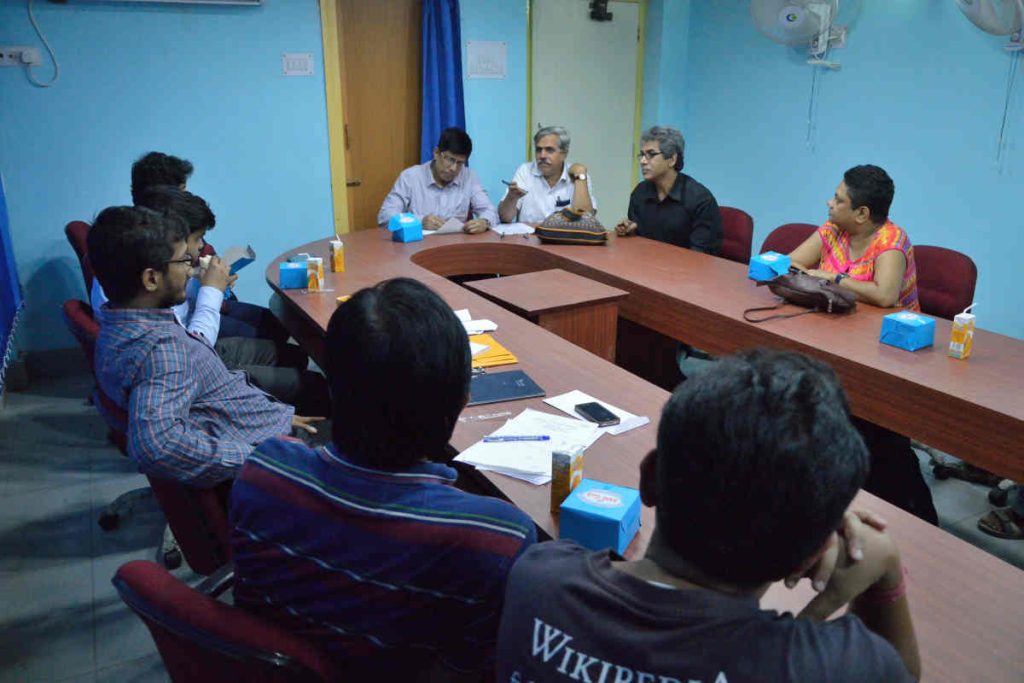
In India, river pollution is often shaped by fragmented responsibility.
Municipal bodies handle waste.State agencies manage pollution control.Urban development authorities manage drains.Water utilities manage supply and treatment.Industries interface with multiple regulators.Communities often sit outside the decision loop.
This fragmentation creates gaps where pollution leaks through.
It also creates space for community-led models that operate across boundaries.Communities can improve segregation.Local groups can monitor dumping hotspots.Citizen reporting can improve enforcement.Local recovery systems can reduce drain load.
This is where an environmental NGO becomes more than a campaigner.It becomes a system integrator at the community level.Earth5R’s work is structured around empowering communities so that environmental action becomes continuous, not occasional.
The transition asset idea: polluted rivers are undervalued now, essential later
Polluted rivers look like liabilities today.They impose costs and political risk.But as regulation tightens, water scarcity increases, and ESG expectations grow, restored rivers become economic assets.
They support reliable water supply.They reduce disaster risk.They improve public health outcomes.They raise land values and urban attractiveness.They reduce long-term municipal expenditure.This is the transition asset logic.
Investing in river restoration early often looks expensive in the short term, but it is cheaper than continued remediation and crisis response in the long term.UNEP’s waste cost projections and the World Bank’s water quality growth impacts both reinforce this direction.
What a serious, investable river opportunity looks like
A credible river opportunity has structure.
It starts with a defined river stretch or basin zone, with mapped pollution sources.It includes upstream interventions that reduce daily inflow of waste and wastewater into rivers.It establishes authorised channels for recovered materials.It includes monitoring, reporting, and transparent metrics.
It builds partnerships with municipalities, producers, institutions, and communities.It has funding that supports operations for years, not weeks.
The goal is not to “clean a river once.”The goal is to build a model that keeps the river cleaner every month, even as the city grows.That is the difference between cosmetic cleanup and economic transformation.
Earth5R’s business perspective: communities are the missing infrastructure
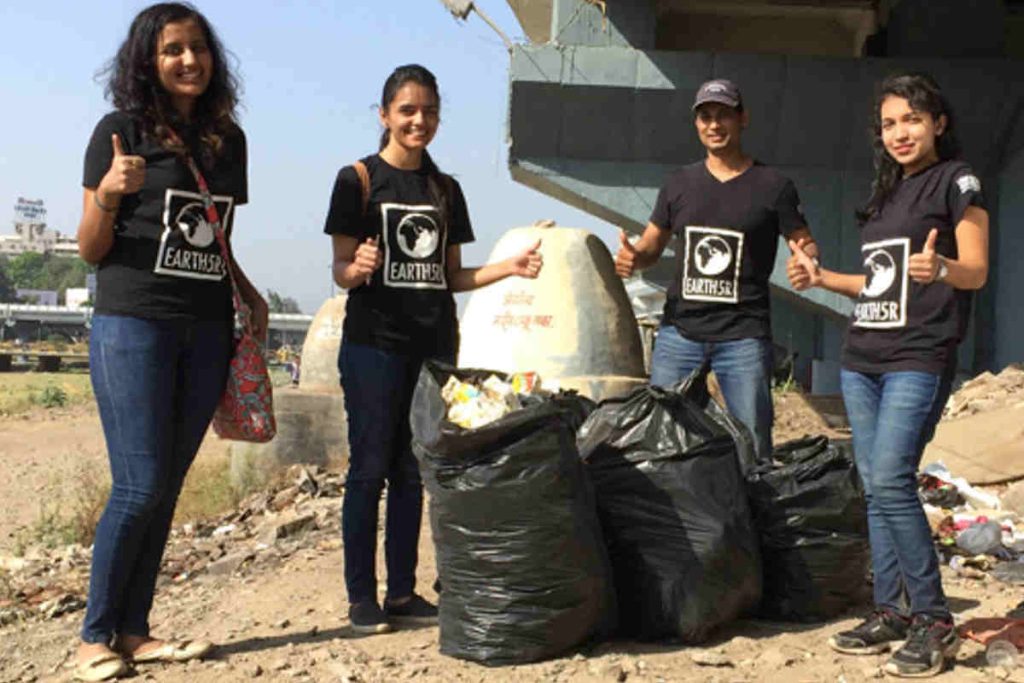
Most river strategies fail because they treat communities as passive waste generators. Earth5R treats communities as operating infrastructure.
When households segregate waste, downstream recycling becomes cheaper.When local groups monitor dumping, enforcement becomes easier.When citizen education improves behaviour, leakage declines.When local livelihoods are linked to recovery, systems become self-reinforcing.
That is why Earth5R’s river work is connected to waste management and sustainability education.It is not accidental.It is the core economic logic.
A community-led model is also more resilient.Centralised systems can fail at a single point.
Community systems replicate across neighbourhoods, and failure in one area does not collapse the whole system.In business terms, that lowers operational risk.
The profit is in fixing the system, not reacting to the symptom
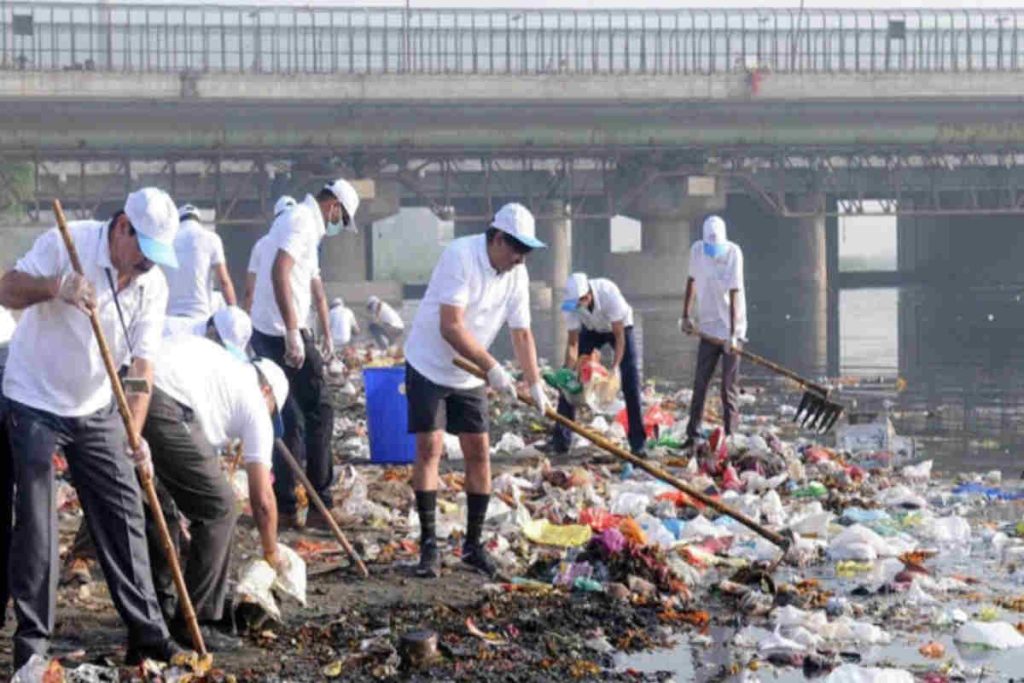
The world’s most polluted rivers are profitable opportunities because they expose the biggest system failures at the largest scale.
The World Bank shows water quality affects economic growth in ways that are measurable and severe in heavily polluted areas.UNEP shows waste volumes and costs are rising sharply without urgent system reform.
OECD shows enormous material value is lost when plastic recovery fails. WHO highlights the preventable disease burden linked to unsafe water and inadequate sanitation and hygiene.
Research shows rivers are key transport pathways for plastic emissions, meaning interception and upstream prevention are highly leverageable.These are not abstract environmental concerns.They are market signals.
Polluted rivers are telling cities and economies one clear truth.The old model of waste, wastewater, and enforcement is no longer viable at today’s scale.The profitable opportunities are not in romantic riverfront projects alone.They are in practical systems: prevention, recovery, reuse, monitoring, and verified outcomes.
Earth5R’s model is designed for exactly this kind of transformation, by combining community participation with waste management, sustainability education, and river restoration.
Cleaner rivers are achievable when cities choose integrated systems over fragmented action.
FAQs on Why the World’s Most Polluted Rivers Are Also the Most Profitable Opportunities
Why are the world’s most polluted rivers also seen as profitable opportunities?
Because heavy pollution signals large-scale inefficiencies in waste, wastewater, and urban systems, creating sustained demand for prevention, recovery, and monitoring solutions.
How does river pollution directly impact economic growth?
It increases healthcare spending, reduces labour productivity, damages agriculture and fisheries, and raises water treatment and infrastructure costs.
Why do polluted rivers attract more investment attention than cleaner rivers?
They are usually located in dense urban and industrial regions where regulatory pressure, public scrutiny, and economic stakes are highest.
What role does waste management failure play in river pollution?
Most river pollution originates from poor solid waste segregation, inadequate collection, and untreated sewage entering drains and waterways.
How does plastic pollution in rivers create circular economy opportunities?
Plastics aggregate in rivers, reducing recovery costs and creating supply streams for recycled materials under circular economy and EPR frameworks.
What is Extended Producer Responsibility and why is it important for river restoration?
EPR shifts the cost of waste recovery to producers, creating stable funding for plastic interception, recycling, and pollution reduction in river basins.
Why is wastewater considered a resource rather than just pollution?
Wastewater contains reusable water, energy, and nutrients that can be recovered through treatment and reused for industrial and non-potable applications.
How does water scarcity increase the value of polluted river restoration?
As freshwater becomes scarce, restoring rivers and reusing treated wastewater becomes essential for urban and industrial water security.
What health impacts make river pollution economically costly?
Contaminated rivers increase waterborne diseases, long-term health risks, and public healthcare expenditure, making prevention more cost-effective than treatment.
How does organic waste contribute to river pollution and climate change?
Organic waste increases biochemical oxygen demand in rivers and generates methane in landfills, a potent greenhouse gas.
Why is flood risk linked to polluted rivers?
Plastic and debris clog drains and river channels, reducing flow capacity and increasing urban flooding during heavy rainfall.
How does river restoration reduce disaster-related economic losses?
Cleaner rivers improve drainage efficiency, reduce flood damage, and lower emergency response and infrastructure repair costs.
What business opportunities exist in environmental monitoring of rivers?
Water quality sensors, testing services, compliance reporting, and ESG data platforms offer scalable and recurring revenue models.
Why are community-based models critical for river restoration success?
Communities influence daily waste generation and disposal, making them essential for reducing pollution at source and sustaining long-term outcomes.
How does Earth5R integrate communities into river restoration?
Earth5R links river cleaning with waste management, sustainability education, and local participation to prevent pollution upstream.
Why do one-time river cleanups fail to deliver long-term value?
They remove visible waste but do not stop continuous inflow from upstream sources, causing pollution to return quickly.
What makes river restoration an investable long-term solution?
Recurring service contracts, compliance funding, EPR flows, and avoided health and infrastructure costs create stable economic returns.
How do polluted rivers affect real estate and urban development?
Polluted rivers depress land values, while restored rivers improve liveability, attract investment, and raise property prices.
What does it mean to call polluted rivers “transition assets”?
They are currently undervalued liabilities that will become essential economic assets as regulation, scarcity, and ESG pressures increase.
Why is prevention more profitable than cleanup alone?
Preventing pollution reduces recurring costs, improves recovery efficiency, and delivers long-term economic and environmental benefits.
How can organisations collaborate with Earth5R on river restoration?
By partnering on community-led waste management, river cleaning, sustainability education, and measurable impact programs that deliver economic and environmental returns.
Turn Polluted Rivers Into Engines of Sustainable Value
Polluted rivers are no longer just environmental liabilities.They are clear signals that urban systems need redesign, not repair.
Cities, corporates, investors, and institutions now have a choice.Continue spending on fragmented cleanups and emergency responses, or invest in integrated systems that prevent pollution, recover resources, and deliver measurable outcomes.
Earth5R works at the intersection of river restoration, waste management, and community participation.Its approach turns daily behaviour change into long-term environmental and economic impact.
Partner with Earth5R to build community-led river cleaning and waste management programs that reduce health costs, improve urban resilience, and create lasting value.
Visit Earth5r to collaborate on restoring rivers while strengthening sustainable growth.
Authored by- Sneha Reji