
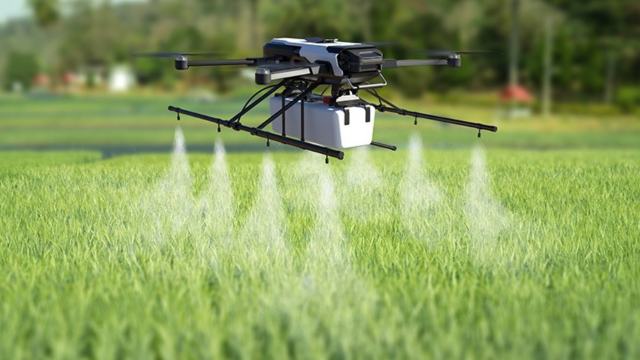
What Smart Farming Means in the Organic Context
Organic farming, by its very definition, is rooted in traditional wisdom and ecological balance, but as global agricultural demands grow and climate uncertainties intensify, smart farming is emerging as its indispensable ally. Smart farming in the organic context refers to the integration of Internet of Things (IoT), Artificial Intelligence (AI), and climate data analytics to optimise cultivation without compromising soil health, biodiversity, or chemical-free standards.
According to a 2019 FAO report, global organic farmland has expanded by over 50% in the last decade, but productivity gaps remain compared to conventional farming. This is where smart farming bridges the divide by enhancing resource efficiency, predicting pest attacks, and managing climate risks, while still preserving organic integrity.
For instance, a study published in the Journal of Cleaner Production highlights how precision irrigation and sensor-based fertigation can reduce water consumption by 30% in organic vegetable farms, maintaining yields while aligning with sustainability goals. These practices are collectively termed Organic Precision Agriculture (OPA), which combines traditional permaculture principles with modern sensor-based insights. As explained by Earth5R’s Urban Sustainability Model, such integrated approaches are crucial for food security in urban-rural networks.
Moreover, smart farming in the organic context also extends to traceability and certification processes. Blockchain-linked IoT devices can log each input application, irrigation cycle, and climatic parameter, thereby making organic certification audits transparent and fraud-proof. A pilot by AgriDigital in Australia revealed that blockchain-integrated smart farms reduced certification overheads by 40%, enabling small organic farmers to access premium markets with confidence.
Thus, smart farming is not a replacement for traditional organic wisdom; rather, it is an enabler that enhances its efficiency, market value, and resilience against climate volatility. In the coming years, as sustainable agriculture becomes synonymous with digital agriculture, organic farmers who integrate IoT sensors, AI predictions, and hyper-local climate data will lead the transformation towards what experts call “Regenerative Smart Farming.”
IoT Devices for Irrigation, Temperature, and Soil
Across India’s fragmented farmlands, a silent revolution is underway as Internet of Things (IoT) devices transform traditional organic cultivation into data-driven ecosystems. The role of IoT in agriculture is well documented by McKinsey’s Digital Agriculture report, which states that sensor-based interventions can improve resource use efficiency by up to 40%.
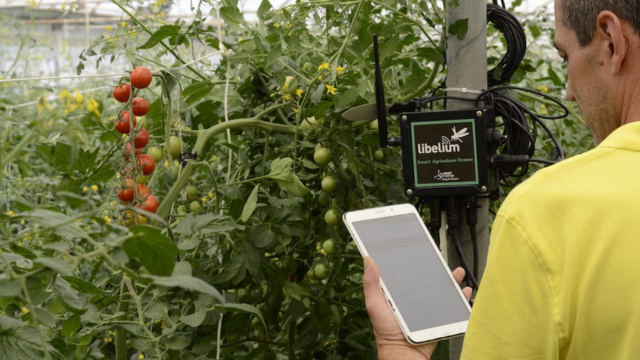
For organic farmers, irrigation is one of the most critical operations, especially because organic systems often avoid chemical growth enhancers that buffer against drought stress. Soil moisture sensors connected via low-power wide-area networks (LPWAN) provide real-time insights into root zone hydration levels.
A study by the Indian Council of Agricultural Research (ICAR) demonstrated that sensor-controlled drip irrigation in organic tomato cultivation in Maharashtra reduced water usage by 28% while increasing yield by 17%, simply by preventing under- or over-irrigation.
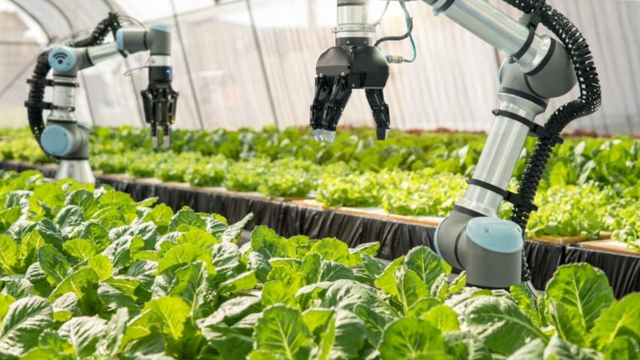
Temperature and humidity sensors are equally vital. For instance, IoT-integrated greenhouses for organic lettuce farming in Himachal Pradesh use temperature sensors to trigger automated ventilators. This ensures internal temperatures remain below 28°C, preventing bolting and preserving leaf tenderness. A case study by Earth5R on rooftop organic farms in Mumbai highlighted how sensor-based temperature monitoring combined with shade net adjustments reduced plant stress during peak summer by 35%, enhancing vegetable quality and shelf life.
Another critical IoT application is soil nutrient monitoring. Companies like Teralytic have developed wireless soil probes with 26 sensors that measure nitrogen, phosphorus, potassium, salinity, pH, and moisture across depths. For organic farmers, such data enables targeted use of natural amendments like compost tea, neem cake, or biochar, thereby maintaining nutrient balance without violating organic standards.
Imagine an organic ginger farmer in Kerala using a network of soil temperature and moisture sensors connected to a smartphone app. The app alerts him that his rhizomes require irrigation tonight due to increasing soil temperature and falling moisture levels. This eliminates guesswork and prevents fungal rot, ensuring better yields with minimal inputs. Such examples underscore that IoT devices act as a digital extension of a farmer’s intuition, ensuring every litre of water and every handful of organic manure is optimally utilised.
AI Tools for Pest Forecasting and Crop Planning
While IoT devices collect field data, Artificial Intelligence (AI) processes this data into actionable insights, marking the next leap in organic smart farming. AI tools for pest forecasting have already proven transformative. For instance, the AI-powered app “Plantix” developed by PEAT GmbH has over 10 million downloads globally, helping farmers diagnose crop diseases simply by uploading a photograph.
A 2021 study published in Computers and Electronics in Agriculture demonstrated that AI models using convolutional neural networks (CNNs) achieved 94% accuracy in detecting early blight and late blight in organic tomatoes, enabling farmers to prevent spread through targeted pruning and biocontrol sprays. Without such AI support, visual identification often occurs only after significant crop damage.
Beyond pests, AI-driven crop planning models integrate historical yield data, soil health records, and climate forecasts to recommend optimal sowing times and crop rotations. IBM’s Watson Decision Platform for Agriculture has been piloted in Indian organic cotton farms to advise farmers on ideal sowing dates based on monsoon forecasts, reducing crop failure risk by 25%. As IBM explains, such integration enhances profitability and sustainability in smallholder systems.
Consider an organic rice farmer in Odisha who inputs soil nitrogen data, upcoming rainfall predictions, and varietal preferences into an AI platform. The model recommends planting short-duration indigenous varieties to match delayed monsoon onset, preventing yield loss and preserving traditional biodiversity. It is akin to having a personal agronomist available 24/7, democratising knowledge and bridging gaps in extension services.
At Earth5R’s recent Blue Cities Sustainability Meetup, experts discussed how AI models combined with IoT-enabled insect traps can predict locust attacks with 85% accuracy, allowing organic farmers to prepare physical barriers or introduce ducks as natural predators in rice fields. This synergy of AI precision and organic wisdom exemplifies the future of farming.
Leveraging Climate Data to Prevent Loss
In a world where climate volatility is rewriting agricultural calendars, organic farmers stand to lose the most due to their dependence on natural inputs and biological pest control cycles. Leveraging climate data, therefore, is not a luxury but an operational necessity for organic cultivation today.
According to the Intergovernmental Panel on Climate Change (IPCC) Sixth Assessment Report, global warming of 1.5°C to 2°C will disproportionately impact smallholder farmers in tropical regions, with rainfall variability threatening sowing schedules and harvest stability. For organic farmers, who often avoid synthetic growth enhancers that mitigate stress, this becomes a question of survival.
Integrating hyper-local climate data, available from sources such as the India Meteorological Department or NASA’s POWER agro-climate datasets, enables farmers to adjust sowing dates, irrigation schedules, and crop selection proactively. For instance, organic paddy farmers in Andhra Pradesh used village-level rainfall forecasts to delay transplantation by 10 days during erratic monsoons in 2022, preventing seedling mortality and ensuring a successful harvest.
Moreover, climate data integration can guide pest management strategies. Warmer winters, for example, allow certain pest populations to overwinter and emerge earlier. AI tools like IBM’s Watson, when integrated with climate forecasts, can predict such pest cycles with high accuracy, as documented in this IBM research report. This predictive power empowers organic farmers to prepare neem oil sprays or pheromone traps in advance rather than reacting post-infestation.
At Earth5R’s climate-resilient farming workshops, farmers in Uttarakhand learned to use satellite-based temperature forecasts to protect organic strawberry crops from sudden frost by installing low-cost polyethylene tunnels overnight. Without this intervention, frost damage could have wiped out nearly 80% of the crop, destroying livelihoods.
Imagine climate data as the farmer’s weather sense amplified a thousandfold – a digital monsoon guru predicting when to sow, when to irrigate, and when to harvest, preserving yield and income in an unpredictable world.
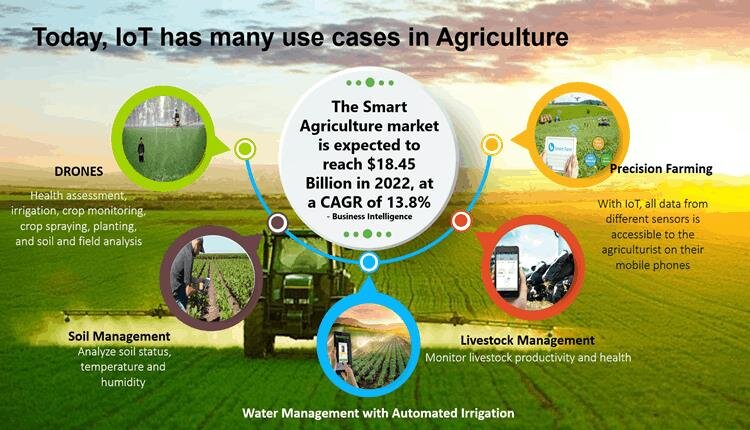
This infographic highlights the diverse use cases of IoT in agriculture, from drones and precision farming to soil, livestock, and water management. It shows how smart agriculture is driving a multibillion-dollar market by enhancing productivity, efficiency, and real-time decision-making in organic cultivation.
Predictive Modelling for Yield and Revenue
The integration of IoT, AI, and climate data culminates in predictive modelling tools that transform raw data into practical decisions about yield and revenue expectations. For organic farmers, who operate on thinner margins and lack risk buffers such as crop insurance or government subsidies in many developing countries, these models provide crucial foresight.
Predictive models analyse soil health data, weather forecasts, crop growth stages, and historical yield records to estimate likely harvest volumes. For instance, a 2020 study published in Computers and Electronics in Agriculture demonstrated that AI models incorporating real-time soil moisture and NDVI satellite data predicted rice yields in India with an accuracy of over 85%. Such models are now being adapted for organic systems, where yields depend not only on agro-climatic conditions but also on the effectiveness of organic pest management and soil amendments.
Beyond yields, revenue forecasting models integrate market demand, historical pricing trends, and export-import data to estimate earnings. The Food and Agriculture Organization’s e-Agriculture community highlights how Ethiopian organic coffee cooperatives use mobile-based predictive revenue models to plan cooperative-wide investments and negotiate better contracts with international buyers.
At Earth5R’s Smart Farming BlueCities initiative, the integration of predictive modelling with community-supported agriculture (CSA) models is underway. In pilot projects, farmers receive weekly revenue forecasts linked to real-time consumer demand, aligning farm output with urban household subscriptions to minimise waste and maximise income.
Thus, predictive modelling does not replace a farmer’s wisdom; rather, it expands it by quantifying uncertainties into informed decisions, building a safety net for organic farming in an unpredictable climate and market landscape.
Challenges in Rural Connectivity and Tech Literacy
While the promise of IoT and AI-powered organic farming shines bright, a darker reality persists in the form of poor rural connectivity and digital illiteracy, particularly in developing countries. The World Bank’s World Development Report 2021 highlights that only about 35% of rural households in India have access to stable internet, and the situation is even worse in Sub-Saharan Africa.
For organic farmers, whose work is deeply intertwined with natural cycles and often geographically remote, a lack of reliable internet prevents real-time data utilisation. A study by the Indian Council for Research on International Economic Relations (ICRIER) showed that only 19% of smallholder farmers use smartphones for agricultural decisions, despite widespread mobile ownership. This gap is due to factors like poor network coverage, low digital literacy, and lack of content in local languages.
Consider an organic vegetable farmer in rural Jharkhand who installs IoT soil moisture sensors to optimise irrigation. However, without stable internet to transmit this data to AI-based decision apps, the sensors become expensive ornaments rather than productivity tools. As The Hindu BusinessLine explains, bridging this digital divide is key to ensuring equitable smart farming benefits.
Digital literacy is another critical bottleneck. Farmers familiar with traditional methods often view complex dashboards and app-based recommendations with suspicion. Earth5R’s Green Citizen Program found that combining hands-on demonstrations with vernacular video tutorials increased adoption rates of digital tools by 45% among women organic farmers in Maharashtra.
Imagine if a brilliant AI pest forecast arrives on an app dashboard, but the farmer cannot interpret it or trusts a neighbour’s experience over an unfamiliar digital suggestion. This highlights why technology access must be coupled with targeted training, local language support, and culturally rooted extension services to empower rather than overwhelm farmers.
In essence, smart farming will remain a utopia unless the fundamental challenges of rural connectivity and digital literacy are resolved through systemic investments and inclusive education.
Real-World Applications: India, Brazil, Kenya
Despite these challenges, real-world applications of smart organic farming are emerging globally, proving that innovation, when localised, is scalable and impactful.
In India, the state of Sikkim, declared 100% organic in 2016, has piloted IoT-based irrigation scheduling in ginger farms through the North East Centre for Technology Application and Reach (NECTAR). Sensors monitored soil moisture and activated drip lines only when necessary, reducing water use by 25% and enhancing rhizome size by 18%. Earth5R’s urban composting projects also integrate IoT temperature sensors in aerobic compost units to optimise decomposition for organic fertiliser production in peri-urban organic farms.
In Brazil, the Embrapa Digital Agriculture initiative has integrated AI models for pest forecasting in organic soybean and sugarcane plantations. According to Embrapa’s research publications, these models predict the occurrence of major pests like Diabrotica and Spodoptera with up to 90% accuracy, enabling the timely deployment of biocontrol agents and reducing crop losses by 22% in pilot regions.
Meanwhile, in Kenya, the startup Illuminum Greenhouses has transformed smallholder organic horticulture with solar-powered IoT greenhouses equipped with automated drip irrigation and climate control sensors. As reported by TechCrunch, farmers using these systems increased tomato yields by 30-50% while saving nearly 60% water compared to open-field organic cultivation.
A powerful example comes from Earth5R’s BlueCities model pilot in Kenya, where urban rooftop organic gardens equipped with IoT soil sensors supply fresh produce to community kitchens, creating a closed-loop, low-carbon food system that combines sustainability with technology.
These cases illustrate that smart organic farming is not limited to large agribusinesses. When IoT and AI tools are localised, simplified, and integrated with traditional knowledge, even the smallest organic farmer can reap their benefits, improving livelihoods while protecting planetary health.
Open-Source Platforms for Small Farmers
While proprietary IoT and AI systems dominate the agricultural technology market, open-source platforms are emerging as powerful enablers for small organic farmers who cannot afford high subscription fees or imported hardware. These platforms democratise access to digital tools, fostering inclusivity and innovation at the grassroots.
One notable example is FarmOS, an open-source farm management system developed with support from the US Department of Agriculture. FarmOS allows farmers to record crop plans, soil tests, irrigation schedules, pest observations, and harvest data in a customisable online dashboard. Organic farmers can integrate sensor data from Arduino-based IoT devices into FarmOS, creating cost-effective smart farm systems tailored to local contexts. As detailed in FarmOS documentation, farmers can build their modular systems with community support instead of relying on expensive proprietary solutions.
In India, the Digital Green platform has pioneered open-source digital video libraries in local languages, enabling farmers to share best practices on organic pest management, composting, and biofertiliser preparation. Their approach combines community video with digital data collection, leading to a sevenfold increase in adoption of sustainable practices among farmers, according to a study published in The Journal of Development Studies.
Earth5R’s Green Intelligence initiative leverages open-source mapping tools like QGIS and data visualisation software such as R Shiny to train urban farmers and rural organic cooperatives in monitoring soil health, rainfall patterns, and water contamination. In one Mumbai slum redevelopment project, rooftop organic farmers used these tools to identify seasonal microclimatic variations, enabling them to choose appropriate vegetable varieties and optimise yields.
Imagine an organic turmeric farmer in Odisha collaborating with a local university to build DIY soil nutrient sensors using Arduino kits, uploading data onto an open-source dashboard to monitor nitrogen and potassium levels. Instead of waiting for expensive lab tests, the farmer makes real-time decisions on compost or green manure applications, thus closing the knowledge gap that often hinders organic productivity.
Open-source platforms embody the spirit of collaborative innovation, ensuring that technology empowers even the most marginalised farmer rather than widening existing inequalities.
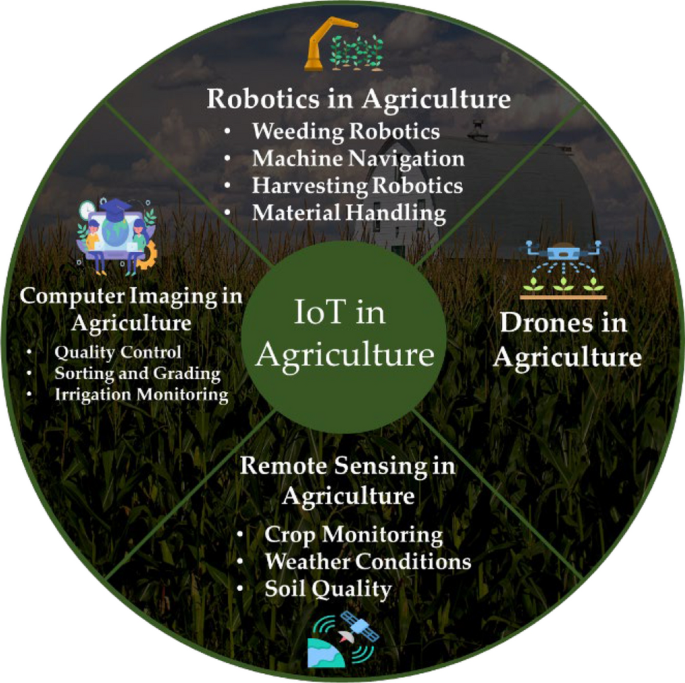
This infographic illustrates how IoT is revolutionising agriculture through robotics, drones, computer imaging, and remote sensing applications. By integrating these technologies, organic cultivation becomes more efficient, precise, and climate-resilient
What CSR and Startups Can Build Together
The integration of IoT, AI, and climate data into organic farming presents a fertile ground for Corporate Social Responsibility (CSR) initiatives and agri-tech startups to collaborate towards systemic impact. While startups bring disruptive technology and agile solutions, CSR arms of corporations can scale these pilots into community-wide transformations through funding, training, and policy advocacy.
For instance, the Tata Trusts’ Internet Saathi program, originally aimed at rural women’s digital literacy, has indirectly supported smart farming adoption by equipping women farmers with smartphone skills to access agri-apps and IoT dashboards. Such programs, when targeted towards organic farming communities, can create digitally empowered ecosystems that integrate traditional ecological knowledge with modern precision tools.
Startups like AgNext have pioneered AI-based quality assessment tools for spices, grains, and milk, enabling organic farmers to receive fair prices based on transparent, digital quality verification. Partnerships with CSR foundations can scale these tools to cooperatives in remote regions, eliminating middleman exploitation and improving farmer incomes. As explained in AgNext’s case studies, AI-based grading reduced post-harvest losses by up to 20% in pilot regions.
Earth5R’s CSR-Startup collaboration model proposes building Tech-Training Hubs where startups provide open-source or affordable tech solutions, while CSR funds community training, digital literacy programs, and infrastructure such as solar-powered routers for internet connectivity in off-grid organic farms. In their BlueCities project, this model has facilitated rooftop farming IoT pilots in Mumbai slums, combining climate resilience with nutrition security.
In essence, CSR and startups together can build an organic farming ecosystem where technology is not an external imposition but an integrated extension of traditional practices, accelerating the shift towards sustainable, climate-resilient agriculture.
Vision for a Smart Organic Farming Ecosystem
The vision for a smart organic farming ecosystem extends beyond gadgets and algorithms; it is about creating an equitable, resilient, and regenerative food system that blends ancient ecological wisdom with modern technological intelligence. In this envisioned future, every organic farmer, whether cultivating turmeric in Odisha or strawberries in Himachal Pradesh, will have access to affordable IoT devices, AI-based decision support systems, and hyper-local climate forecasts.
Imagine a network where soil moisture sensors, pest detection cameras, and satellite climate data feed into a central AI platform, translating raw data into actionable insights in local languages. Farmers receive daily messages advising on irrigation, organic pest interventions, and optimal harvest windows, while cooperatives use predictive revenue models to plan collective marketing strategies and storage logistics. As FAO’s Digital Agriculture Transformation Agenda emphasises, such integration will ensure food security, income stability, and climate resilience for smallholders.
This vision also involves community ownership of technology platforms. Open-source dashboards, maintained collaboratively by farmer-producer organisations, universities, and startups, will ensure data sovereignty and prevent monopolisation by large corporations. Earth5R’s BlueCities regenerative agriculture model exemplifies this by training communities in managing IoT-monitored urban farms as micro-enterprises, combining environmental restoration with income generation.
Moreover, a smart organic ecosystem must be rooted in climate justice and biodiversity preservation. AI crop models will prioritise indigenous varieties adapted to local soils and weather patterns, while blockchain-integrated traceability tools will guarantee fair pricing and organic authenticity in domestic and global markets. As highlighted in a recent UNDP report on digital agriculture, digital tools must amplify rather than erase traditional agroecological knowledge.
Finally, startups and CSR initiatives will fuel the ecosystem’s growth by co-creating affordable, user-friendly innovations while governments establish rural broadband, digital literacy programs, and supportive policies for organic-smart integrations. In this ecosystem, technology does not replace the farmer’s instinct but enhances it, transforming organic farming into a climate-resilient, economically rewarding, and environmentally restorative enterprise.
Towards Regenerative Intelligence
The integration of IoT, AI, and climate data into organic cultivation is no longer a futuristic vision; it is a pragmatic necessity. As this article has explored, smart farming empowers organic systems to remain productive, profitable, and resilient amidst climate uncertainties, pest outbreaks, and market volatilities.
From Indian turmeric farms using soil moisture sensors to Kenyan organic tomato farmers adopting solar-powered IoT greenhouses, examples abound of how technology and tradition together build food systems that nourish both people and the planet.
However, to realise this regenerative intelligence at scale, it is imperative to bridge digital divides, promote open-source solutions, and foster collaborations between startups, CSR foundations, governments, and farming communities. Only then will smart organic farming truly fulfil its promise as an inclusive pathway to food security, rural prosperity, and ecological restoration in a warming world.
FAQs On Farming with Intelligence: Integrating IoT, AI, and Climate Data into Organic Cultivation
What is smart farming in the context of organic agriculture?
Smart farming in organic agriculture refers to integrating technologies like IoT, AI, and climate data analytics to enhance efficiency, productivity, and climate resilience without compromising organic principles of soil health and biodiversity.
How can IoT devices benefit organic farmers?
IoT devices such as soil moisture sensors, temperature monitors, and automated irrigation controllers provide real-time data to optimise resource use, improve crop health, and reduce wastage, which is crucial in organic farming where inputs are limited and expensive.
Are IoT devices affordable for small organic farmers?
While proprietary IoT solutions can be costly, open-source sensor kits and community-funded initiatives have made IoT devices more affordable for small organic farmers, especially when integrated through cooperatives or CSR programs.
How does AI help in pest management for organic crops?
AI tools analyse images and field data to detect pest infestations early, enabling organic farmers to deploy natural interventions like neem sprays or predator insects before the pest spreads and causes major damage.
Can AI improve crop planning in organic farming?
Yes, AI integrates soil health data, climate forecasts, and historical yield records to recommend the best sowing times, crop rotations, and organic input schedules, enhancing productivity and risk management.
Why is climate data important for organic cultivation?
Organic farming is highly dependent on natural rainfall and seasonal cycles. Climate data helps farmers predict weather variability, plan sowing and harvest dates, and prevent losses from droughts, floods, or unseasonal frosts.
How does predictive modelling work for yield and revenue forecasting?
Predictive models use AI algorithms to analyse factors like soil moisture, temperature, growth stage, and market prices to estimate likely harvest volumes and expected income, enabling better financial planning for farmers.
What are the connectivity challenges for smart organic farming?
Many rural regions lack stable internet connectivity, preventing real-time data transmission from IoT devices to AI dashboards. This digital divide limits the benefits of smart farming for remote organic farmers.
How does digital literacy affect smart farming adoption?
Low digital literacy, especially among older farmers or women with limited smartphone access, makes it difficult to use complex apps and dashboards, requiring targeted training and local language support for adoption.
What open-source platforms can organic farmers use?
Platforms like FarmOS and Digital Green offer free tools for farm management, data recording, and knowledge sharing, enabling farmers to integrate digital technologies without high subscription costs.
How is smart farming applied in India’s organic sector?
States like Sikkim have piloted IoT irrigation systems, while startups provide AI-based quality assessment tools for organic spices and produce, helping farmers improve productivity and market access.
What are some examples of smart organic farming in Brazil?
Brazil’s Embrapa Digital Agriculture program uses AI models to predict pest attacks in organic soybean and sugarcane fields, allowing timely biocontrol interventions and reducing crop losses significantly.
How is smart farming used in Kenya’s organic sector?
Kenyan startups like Illuminum Greenhouses equip small organic farmers with solar-powered IoT greenhouses that automate irrigation and climate control, increasing yields while conserving water.
What role do CSR initiatives play in smart organic farming?
CSR programs fund digital literacy training, infrastructure like rural broadband, and subsidised IoT devices, enabling small organic farmers to access and utilise smart farming technologies effectively.
How can startups and CSR work together for organic farmers?
Startups can develop affordable, user-friendly tech solutions, while CSR initiatives fund community deployment, training, and infrastructure, creating an ecosystem that scales innovation sustainably.
Can predictive models be used for organic certification traceability?
Yes, blockchain-integrated IoT systems can log organic input usage and farming practices in real-time, making certification audits transparent, efficient, and fraud-proof.
Is smart farming sustainable for the environment?
Smart farming reduces water usage, optimises organic input application, and prevents crop losses, making it a sustainable solution that aligns with ecological farming principles.
What is the future of smart organic farming?
The future involves an integrated ecosystem where technology amplifies traditional knowledge, creating regenerative, climate-resilient, and economically viable organic food systems globally.
How does Earth5R support smart organic farming?
Earth5R conducts training programs integrating IoT and AI tools for rooftop and peri-urban organic farms, using open-source platforms to democratise technology access for community sustainability.
Where can farmers learn more about smart organic agriculture?
Farmers can access resources from platforms like Digital Green, FarmOS, Earth5R’s Green Intelligence Program, and FAO’s digital agriculture publications to begin their smart organic farming journey.
Empower the Future of Organic Farming
The integration of IoT, AI, and climate data into organic cultivation is not just a technological upgrade – it is a pathway to building resilient, productive, and sustainable food systems for the future. If you are a policymaker, startup founder, CSR leader, researcher, or organic farmer, now is the time to collaborate and co-create smart farming solutions that are affordable, accessible, and inclusive.
Join the movement towards regenerative intelligence. Support digital literacy initiatives, invest in open-source farming technologies, and advocate for rural connectivity infrastructure to ensure that no organic farmer is left behind in the journey towards climate-resilient, data-driven agriculture. Visit Earth5R’s Green Intelligence Program to learn how you can contribute or adopt these solutions in your community today.
-Authored by Pragna Chakraborty