
Why Urban Water Security Depends on Rural Partnerships
Urban water challenges such as rapid urbanization, industrial growth, and climate change have made secure supply a pressing concern. Cities rely on upstream watersheds, aquifers, and rural catchments that regulate flow. When neglected, these landscapes degrade, raising treatment costs and reducing quality. Reports by UNESCO stress that cooperation with farmers is essential.
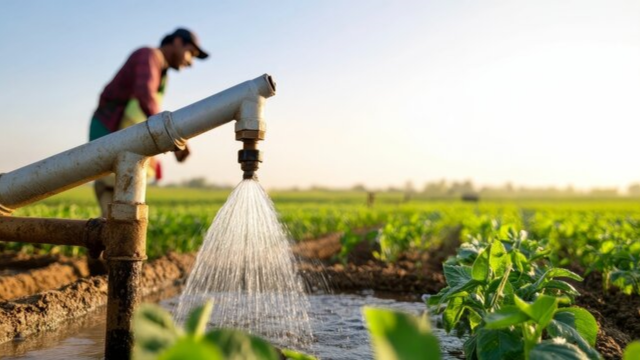
Rural farming zones directly shape urban water security through irrigation, soil health, and fertilizer use. Unsustainable practices increase aquifer depletion and nutrient runoff. Data from the FAO highlight how chemical inputs reduce groundwater quality. Conversely, soil conservation and agroecology maintain balance. Aligning farmers with city water needs ensures safer, more reliable supply.
Ignoring this rural–urban nexus causes serious risks. Deforestation, fertilizer runoff, and pesticide use disrupt watershed resilience. The World Bank estimates billions in urban damages from degraded ecosystems. Water crises like Cape Town’s Day Zero prove city supply can collapse. Without proactive support for farmers, cities inherit risks of scarcity and flooding. Partnerships are a safeguard against such vulnerabilities.
Urban demand will rise by more than 50% by 2050, as industries and populations expand. At the same time, groundwater is rapidly declining, particularly in Indian metros. NITI Aayog warns that many cities face acute crises without recharge zones. Rural aquifers replenished by rain-fed agriculture remain vital lifelines. Collaborative investment in recharge, afforestation, and sustainable irrigation secures future availability.
Models where cities reward rural sustainability are already effective. New York’s watershed program pays farmers to cut pollutants, saving billions. Similar programs in Costa Rica and Kenya prove PES schemes work globally. For cities like Bengaluru, where shortages recur, farmer–city partnerships are vital. Such arrangements align ecological protection with economic benefits.
The future of secure cities depends on recognizing farmers as water stewards. United Nations University stresses that urban systems cannot survive without upstream care. Earth5R demonstrates how citizen involvement strengthens alliances. Farmers must be supported as ecosystem managers, not just crop producers. Long-term collaboration ensures resilient, equitable, and safe water supplies for both cities and villages.
The Blue-Green Connection: Linking Agriculture and City Water Supply
The term “blue-green connection” reflects the link between water systems and agricultural landscapes. Cities depend on upstream farming regions for drinking water, irrigation flows, and aquifer recharge. UNEP notes that deforestation and poor cultivation weaken this connection. When green zones decline, blue water sources collapse, leaving cities exposed to scarcity.
Watersheds regulate flows that supply both rural farms and urban households. Rainfall, forest cover, and soil retention collectively sustain rivers and aquifers. Agricultural choices like fertilizer use or pesticide spraying directly impact city water quality. Research by IWMI shows that sustainable rural practices enhance resilience across entire basins.
Urban populations often overlook how farming choices affect their taps. Excessive groundwater pumping, chemical runoff, and erosion undermine flows. Studies from NITI Aayog reveal urban India’s high vulnerability to rural overuse. Without cooperative watershed management, cities spend more on treatment plants. Partnerships align urban demand with rural stewardship.
Examples of this link are visible worldwide. California struggles as drought-stricken agriculture drains city reservoirs. São Paulo faced crisis when upstream farming reduced rainfall infiltration. In India, Cauvery basin disputes highlight rural-urban tensions over supply. These cases prove that cities cannot isolate themselves from agricultural impacts. The water future is shared.
Collaborative approaches demonstrate success. New York City’s watershed program pays farmers to reduce pollution, cutting costs dramatically. Latin America’s PES schemes protect critical catchments for urban supply. Kenya’s Nairobi Water Fund shows farmers safeguarding water through incentives. These models reveal the power of rural-urban agreements.
Ultimately, the blue-green connection stresses interdependence, not separation. UNESCO advocates joint water governance linking city councils, farmers, and civil society. Earth5R applies this by connecting citizens with watershed protectors. By valuing agriculture as water infrastructure, urban areas secure sustainability. The connection must evolve into a structured, equitable partnership ensuring resilience for both ends.
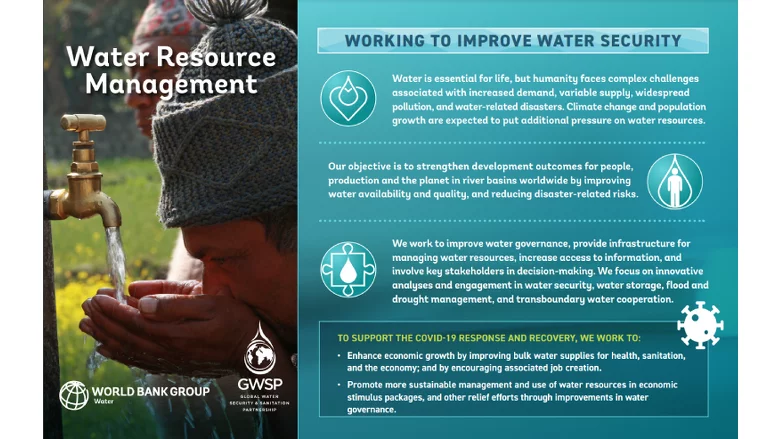
The infographic explains how effective water resource management enhances security by improving governance, infrastructure, and disaster resilience. It highlights the World Bank Group’s efforts to link water security with sustainable growth, health, and post-COVID-19 recovery.
Sustainable Farming Practices that Protect Watersheds
Organic farming reduces reliance on synthetic fertilizers, pesticides, and herbicides, which often contaminate rivers. Research from FAO shows that chemical-free agriculture improves soil health and enhances groundwater recharge. Farmers adopting composting and bio-fertilizers prevent runoff that damages urban supplies. These practices strengthen ecosystem resilience across watersheds.
Soil-first methods like mulching, cover crops, and minimum tillage maintain fertility while reducing erosion. Healthy soils absorb rainwater and store moisture, stabilizing aquifers for cities. UNEP emphasizes that degraded soils increase flood risk downstream. By improving carbon storage, these practices also contribute to climate adaptation. Thus, soil care doubles as watershed care.
Agroforestry integrates trees with crops, creating natural buffers against erosion and pollution. Riparian vegetation along rivers filters contaminants before they reach city water. WWF notes that tree cover enhances infiltration and reduces sedimentation. In India, community agroforestry projects have restored degraded riverbanks. Such mixed-use landscapes support biodiversity while improving long-term water quality.
Rainwater harvesting on farms helps capture monsoon flows for recharge. Techniques like check dams, farm ponds, and percolation tanks replenish groundwater essential for urban supply. NITI Aayog highlights these decentralized methods as critical for drought-prone regions. Farmers practicing water-efficient irrigation also reduce waste. These localized systems scale up to stabilize entire watersheds.
Circular economy principles close nutrient and water loops between farms and cities. Organic waste recycling, biogas production, and compost markets reduce dependence on chemicals. Urban food waste can be transformed into compost for fields through waste-to-resource models. This not only cuts landfill pollution but also safeguards rural soils. Circular solutions strengthen rural-urban cooperation in water conservation.
Sustainable farming acts as natural water infrastructure. OECD stresses that watershed health depends on farmer incentives. Earth5R promotes eco-friendly agriculture through citizen engagement and training. Aligning farmers with city needs ensures water remains clean, abundant, and affordable. Such practices make agriculture not only a food provider but also a protector of urban water security.
How Cities Benefit from Cleaner Rivers and Lakes
Cleaner rivers lower the costs of water treatment for cities. Studies by the World Bank show that polluted water forces utilities to spend billions on filtration and chemicals. WHO links untreated sources to disease outbreaks that burden health systems. When upstream farming reduces runoff, urban governments save on infrastructure and improve reliability. UNESCO stresses prevention is cheaper than cure.
Public health improves significantly when waterways are clean. Waterborne diseases like cholera and typhoid often spread through contaminated supplies. UNICEF highlights that children are most vulnerable in cities with unsafe water. Cleaner rivers reduce dependency on bottled sources, making drinking water accessible to all. By supporting farmers who adopt sustainable practices, cities strengthen long-term community health.
Healthy rivers also protect cities from extreme events. Wetlands, floodplains, and riparian zones absorb excess rainfall, lowering flood intensity. IPCC warns that degraded catchments worsen droughts by reducing infiltration. Cities with intact watersheds, like Portland, report higher resilience. Partnering with farmers to restore ecosystems shields urban areas from climate shocks. UNEP advocates green buffers as cost-effective resilience tools.
Cleaner water bodies offer direct economic benefits. Tourism, recreation, and cultural events flourish around rivers and lakes. Property values rise near clean waterfronts, generating municipal revenue. Studies in Europe show that urban riverside restoration boosts local economies. Cleaner rivers also attract investments in businesses dependent on quality water. Thus, ecosystem health translates into urban prosperity.
Urban industries benefit directly from sustainable water management. Textiles, breweries, and pharmaceuticals rely on clean, consistent supply. Polluted rivers increase operational costs through higher filtration and wastewater treatment. FAO notes that agricultural sustainability reduces industrial risks. Collaborative models align economic productivity with watershed protection. Cities thus gain resilience in both food and manufacturing sectors.
Ultimately, cleaner rivers and lakes ensure urban water security. Reports by UN Water emphasize that source protection is the first defense for cities. Earth5R demonstrates how community-led cleanups improve both ecological and social outcomes. Citizens benefit from healthier environments while governments save on infrastructure. By investing in upstream sustainability, cities secure affordable, safe, and equitable water supplies for decades.
Earth5R’s Role in Building City–Farmer Water Alliances
Earth5R promotes collaborative water governance by linking urban citizens, rural farmers, and local governments. Its model emphasizes citizen-led sustainability programs that restore ecosystems while creating livelihoods. Earth5R’s initiatives bridge the disconnect between city demand and rural stewardship. Through awareness campaigns and skill-building, the organization builds shared responsibility for water.
Workshops organized by Earth5R train farmers in sustainable agriculture, waste reduction, and soil health practices. At the same time, they engage city residents through citizen science and participatory monitoring. This dual approach fosters empathy and understanding across rural-urban divides. By involving diverse stakeholders, Earth5R ensures that water conservation is seen as a shared mission rather than a rural burden.
Pilot projects supported by Earth5R have demonstrated tangible benefits. In collaboration with CSR programs, funds from urban industries are directed to watershed-friendly farming practices. Farmers receive incentives to adopt techniques that reduce runoff and enhance recharge. Meanwhile, cities gain reliable, cleaner water supplies. This ecosystem of mutual benefit highlights the effectiveness of structured partnerships.
Data-driven monitoring is central to Earth5R’s approach. By using GIS mapping, remote sensing, and AI analytics, projects track improvements in water quality. Transparent results help maintain accountability between farmers, governments, and urban residents. Reports shared through open platforms allow citizens to see the impact of their contributions. This transparency builds long-term trust in collaborations.
Earth5R also focuses on creating trust through community storytelling. Farmers share their challenges with urban volunteers in dialogue forums, making water issues more relatable. City residents often underestimate how agricultural runoff affects their taps. By fostering empathy, these conversations encourage shared ownership. This human connection ensures that partnerships extend beyond transactions into authentic alliances.
Through its citizen-first approach, Earth5R turns water conservation into a collective movement. OECD highlights that co-ownership models are essential for sustainable governance. Earth5R’s community action programs empower people to act as guardians of rivers, not just consumers. Farmers gain recognition as water managers, while cities secure clean supplies.
Payment for Ecosystem Services: Rewarding Farmers for Water Stewardship
Payment for Ecosystem Services (PES) is a model where farmers, communities, or landowners receive compensation for protecting water sources. WWF explains that farmers provide ecosystem services by conserving soil, planting trees, and reducing runoff. Cities, industries, or governments fund these efforts to ensure clean and reliable water supply. PES aligns rural livelihoods with urban water security goals.
Successful PES examples exist worldwide. New York City invested in watershed farmers rather than expensive filtration plants. In Costa Rica, farmers receive direct payments for maintaining forests that supply rivers. Kenya’s Nairobi Water Fund rewards upstream farmers for reducing erosion. These cases show PES is financially viable and ecologically beneficial.
In India, PES can address critical issues of groundwater depletion, deforestation, and river pollution. Studies by NITI Aayog highlight that cities like Bengaluru, Chennai, and Delhi face severe water stress due to unsustainable catchments. Farmers could be incentivized to adopt organic farming, plant riparian buffers, and conserve soil. Such schemes would directly improve urban resilience.
CSR funding provides a pathway for PES in India. Corporate Social Responsibility policies mandate companies to invest in sustainability, and water stewardship projects qualify. Earth5R has connected corporate funds to rural conservation through citizen-led initiatives. This ensures accountability, transparency, and measurable results. Linking CSR with PES offers scalable, replicable water protection models for cities nationwide.
Beyond payments, PES creates long-term trust. Farmers feel valued as ecosystem stewards, not just as crop producers. Urban residents see tangible returns in reduced treatment costs and improved supply. UNEP stresses that PES should integrate equity, ensuring fair compensation for smallholders. Inclusive design prevents elite capture and secures widespread participation.
Ultimately, PES represents a shift in how society values nature. UNESCO frames it as paying for services we already depend on but often overlook. Farmers who protect rivers are as critical as engineers who build pipelines. Earth5R advocates PES to merge ecology, economy, and equity. If widely adopted, it could transform India’s urban water crisis into a story of collaboration and resilience.
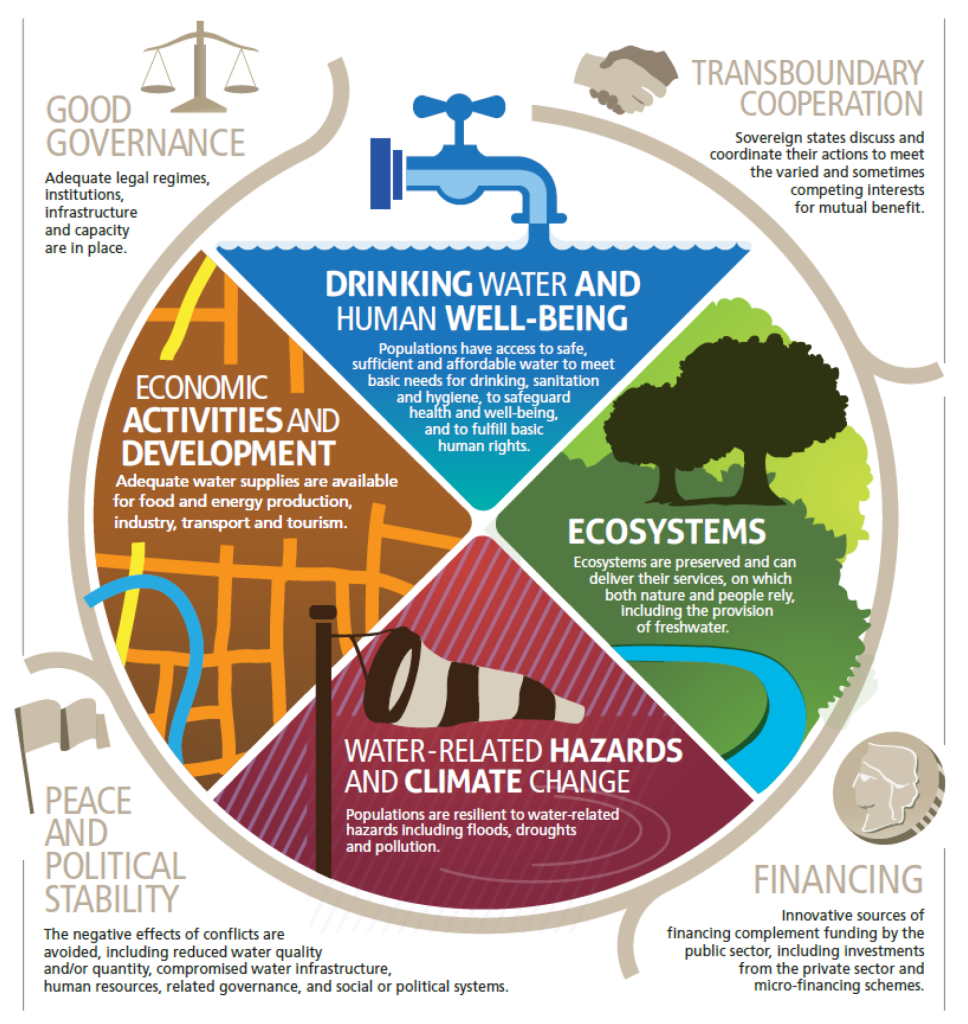
The infographic highlights the interconnected role of governance, cooperation, ecosystems, climate resilience, financing, and development in ensuring water security. It emphasizes how sustainable water management supports human well-being, peace, and economic stability.
Case Studies of Successful Urban–Rural Water Partnerships
India offers clear examples where rural-urban cooperation strengthened water security. In Bengaluru, partnerships with farmer groups helped revive lakes critical for city supply. Pune mobilized citizens and farmers to clean rivers feeding municipal systems. NITI Aayog stresses such collaborations reduce stress on overstretched groundwater. They highlight a new model for urban resilience.
Global cases reinforce these lessons. New York City invested in upstream farmers instead of building billion-dollar treatment plants. In Costa Rica, national PES schemes protect forests that feed rivers for hydropower and drinking water. Brazil’s São Paulo crisis showed what happens when catchments are ignored. These examples confirm prevention is always more cost-effective.
African models highlight PES in action. Kenya’s Nairobi Water Fund compensates upstream farmers for reducing soil erosion. South Africa’s Working for Water creates rural jobs while removing invasive species that deplete water. Uganda runs pilot PES schemes to conserve forests supplying urban centers. These programs show partnerships can deliver both ecological and social benefits.
Challenges also emerge in poorly designed collaborations. Mexico City has faced difficulties balancing rural farmer needs with urban demands. China’s watershed programs sometimes lacked consistent funding, leading to farmer disinterest. In India, short-term schemes often collapsed without long-term community trust. These lessons stress the importance of continuity, equity, and transparent monitoring.
Key ingredients for success include consistent financing, community participation, and measurable outcomes. World Bank reports highlight that urban utilities benefit most when local farmers are compensated fairly. UNDP notes that partnerships must combine ecological restoration with poverty alleviation. Successful cases prioritize win–win strategies where rural sustainability improves urban security.
For India, scaling such partnerships is crucial. Earth5R advocates citizen-driven approaches combined with CSR funding to support farmers. Cities can adopt PES models based on global best practices while tailoring to local needs. UNESCO emphasizes adapting case studies into national strategies. These collaborations prove that secure cities and thriving villages go hand-in-hand when water is managed collectively.
Earth5R’s Citizen-Led Initiatives for Watershed Protection
Earth5R has pioneered citizen-powered models to protect watersheds and urban rivers. In Mumbai, its volunteers organized clean-up drives around lakes supplying drinking water. Through Earth5R’s BlueCities program, communities engage in monitoring pollution and restoring wetlands. These efforts combine data collection, action, and awareness to tackle systemic issues.
In Chennai, Earth5R helped mobilize residents around polluted urban ponds connected to aquifers. Volunteers conducted waste segregation workshops with farmers using nearby catchments. Citizen science initiatives tracked water quality and biodiversity recovery. These partnerships ensured long-term community ownership, preventing restored waterbodies from sliding back into neglect.
The organization also integrates CSR funding into its projects. Corporates contribute under mandatory CSR compliance rules, while communities design the action plans. For example, projects in Pune supported farmers to reduce fertilizer runoff into rivers. By linking industry, urban citizens, and farmers, Earth5R ensures shared accountability. This blend of funding and grassroots energy multiplies impact across watersheds.
Citizen-driven monitoring plays a central role. Using Earth5R’s Citizen Science App, locals upload data on river pollution, plastic waste, and illegal dumping. These reports feed into municipal dashboards and alert authorities for faster responses. Farmers too contribute observations on soil erosion and irrigation patterns. By combining crowdsourced evidence with official records, cities gain real-time insights into watershed health.
Education is another pillar of Earth5R’s strategy. Awareness workshops teach communities about sustainable farming, composting, and protecting riverbanks. Schools and colleges are engaged to create a new generation of environmental stewards. Farmers receive training in organic farming and water-efficient irrigation. By blending knowledge sharing with direct action, Earth5R strengthens the social fabric around watershed conservation.
The impact is visible across India. From Delhi’s Yamuna clean-up campaigns to Bengaluru’s lake revival, Earth5R initiatives have restored degraded ecosystems. Partnering with UN agencies, NGOs, and local governments, they create replicable models. These citizen-led efforts prove that when communities unite with farmers, watersheds thrive and urban water security strengthens.
Policy and Funding Models Supporting the Blue-Green Pact
Strong policy frameworks are essential for sustaining urban–rural water partnerships. In India, programs like the Jal Jeevan Mission and Atal Bhujal Yojana focus on water access and groundwater management. Internationally, models such as New York City’s watershed protection program showcase how investing in upstream farmers is cheaper than building treatment plants. Such policies integrate ecosystem services into urban planning.
Funding mechanisms play a critical role in scaling these initiatives. Green bonds and blended finance are being used globally to support watershed projects. In India, the National Adaptation Fund on Climate Change finances farmer-friendly water schemes. Cities can also pool resources through public-private partnerships that align municipal goals with corporate responsibility. These diverse models ensure projects remain financially viable over time.
Payments for Ecosystem Services (PES) are gaining momentum as a tool for fairness and accountability. Cities like Bengaluru could pay farmers to protect lake catchments from pollution. Globally, Costa Rica’s PES scheme is a leading example where landowners are rewarded for ecosystem stewardship. This approach links climate resilience with financial incentives, motivating farmers to adopt water-friendly practices.
Policy integration must also ensure equity and inclusivity. Water governance frameworks emphasize involving women, indigenous groups, and smallholder farmers in decision-making. The UN Water Action Decade stresses collaboration across all sectors. By embedding inclusivity, policies prevent urban–rural divides from widening. Inclusive governance builds stronger trust between cities and farming communities.
Technological innovation is another area where funding models are evolving. Smart solutions like IoT water monitoring, satellite mapping, and AI for water forecasting are increasingly financed by development banks. These technologies help detect pollution hotspots and optimize watershed restoration. Policy-driven subsidies make it possible for both farmers and cities to access these innovations.
Global cooperation further strengthens the Blue-Green Pact. Platforms like the UNESCO International Hydrological Programme, World Water Council, and Global Environment Facility fund transboundary water projects. These models can be adapted to India’s urban–rural context. When national policies align with global frameworks, cities and farmers both benefit from shared knowledge, resources, and long-term stability.
The Road Ahead: Scaling Partnerships for National Water Security
India’s water crisis demands solutions that scale beyond local projects. Programs like the National Water Mission and Har Ghar Jal aim to provide universal access while ensuring resource sustainability. To achieve this, cities must deepen ties with rural communities managing watersheds. Inspired by New York City’s watershed model, India can invest in farmer partnerships as a cost-effective water security strategy.
Scaling requires robust financing mechanisms tailored to India’s context. Instruments like green climate funds, blue bonds, and CSR funding can channel resources into watershed protection. Municipalities could adopt payment-for-services models that reward farmers. By linking these approaches with public-private partnerships, long-term funding for city–farmer alliances can be secured.
Technology will play a decisive role in scaling the Blue-Green Pact. Tools like remote sensing, AI-powered hydrological forecasting, and GIS mapping can help cities track upstream water health in real time. Platforms such as India-WRIS are already offering open-source water data. By integrating these systems into national planning, water partnerships can move from reactive responses to predictive management.
Education and citizen engagement are equally vital in scaling efforts. Initiatives like Earth5R’s citizen-driven projects show how communities can take ownership of watershed protection. Campaigns under Jal Shakti Abhiyan highlight water conservation as a shared responsibility. If schools and urban institutions embed water literacy in their programs, national awareness will rise, driving more support for rural partnerships.
Policy integration is key to ensuring that local models expand nationally. Frameworks like India’s Draft National Water Policy 2021 emphasize demand management and decentralized governance. By aligning this with SDG 6: Clean Water and Sanitation, India can harmonize domestic policies with global priorities. Strengthening federal–state coordination will further enable consistent adoption across regions.
The road ahead lies in creating a resilient water economy built on collaboration. With support from global environment funds, UNESCO’s IHP, and World Bank initiatives, India can unlock international expertise. Nationally, scaling farmer partnerships will require policies that value water as an ecosystem service. Together, cities and farmers can safeguard water security for over a billion people.
Conclusion: The Blue-Green Pact- Cities Partnering with Farmers for Water Security
India’s water future depends on building bridges between its cities and farmers. As urban centers grow, demand on rivers and aquifers will intensify, making partnerships with rural communities essential for resilience. Programs like the Jal Jeevan Mission and National Water Mission already show how collective action can scale. A sustainable water economy will emerge only when upstream and downstream stakeholders work together.
The Blue-Green Pact emphasizes the value of collaboration, where farmers safeguard watersheds and cities reward their stewardship. Successful global examples, like New York’s watershed protection program, prove this model’s effectiveness. If replicated in India with tools such as payment-for-ecosystem services, both rural and urban communities will thrive. Such collaboration transforms water from a contested resource into a shared asset.
Technology and innovation will play an equally pivotal role in securing future water systems. Platforms like India-WRIS enable better watershed mapping, while AI-powered water forecasting supports predictive planning. Integrating these into municipal governance ensures cities anticipate challenges instead of reacting to crises. Strong digital systems will allow real-time monitoring and early interventions.
Finally, citizen participation remains the foundation of sustainable water security. Movements like Earth5R’s community-led projects show that local action can scale into national change. Combined with Jal Shakti Abhiyan campaigns and global support from initiatives like UNESCO’s IHP, India can lead the world in water partnerships. By uniting people, policy, and technology, the Blue-Green Pact can truly safeguard water for generations.
Frequently Asked Questions: The Blue-Green Pact- Cities Partnering with Farmers for Water Security
What is the Blue-Green Pact?
The Blue-Green Pact is a framework where cities and farmers collaborate to secure water resources by protecting watersheds, rivers, and lakes through sustainable practices.
Why is urban water security dependent on rural areas?
Most cities rely on rivers, lakes, and aquifers located in rural or forested regions. Without rural watershed protection, cities face shortages and poor water quality.
How do farmers contribute to water security?
Farmers protect soil, prevent erosion, adopt water-efficient irrigation, and reduce chemical runoff, all of which safeguard water sources for downstream urban populations.
What are sustainable farming practices for water security?
Techniques like organic farming, drip irrigation, crop rotation, agroforestry, and soil conservation reduce water pollution and ensure long-term watershed health.
How do cities benefit from cleaner rivers and lakes?
Cleaner water reduces treatment costs, improves public health, supports industries, and creates recreational spaces, boosting both economy and quality of life.
What role does Earth5R play in this pact?
Earth5R mobilizes citizens, corporations, and communities to protect rivers, restore ecosystems, and connect urban stakeholders with rural water stewards.
What is Payment for Ecosystem Services (PES)?
PES is a system where farmers are financially rewarded for managing land in ways that maintain clean water, biodiversity, and ecosystem health.
Can you give examples of successful urban–rural water partnerships?
New York City’s watershed protection program and Latin American city–farmer agreements are strong examples where rural protection benefits urban supply.
What are citizen-led initiatives for watershed protection?
These include community river clean-ups, tree plantations, water harvesting projects, and local monitoring efforts driven by residents and NGOs.
How can policy support the Blue-Green Pact?
Policies can provide funding, enforce watershed protection laws, incentivize sustainable farming, and formalize city–farmer agreements.
What are funding models for water partnerships?
They include municipal taxes, CSR contributions, green bonds, and international climate finance supporting urban–rural collaborations.
How does climate change affect urban water supply?
Unpredictable rainfall, floods, and droughts intensify water stress, making watershed partnerships more critical to ensure resilience.
What is the role of technology in water partnerships?
GIS mapping, AI forecasting, water quality sensors, and mobile apps enable better planning, monitoring, and transparency in water management.
How do rural communities benefit from city partnerships?
They receive income for ecosystem services, access to markets, better infrastructure, and improved livelihoods while safeguarding natural resources.
Can citizens in cities directly help farmers in water security?
Yes, by supporting community programs, volunteering in watershed projects, reducing water waste, and advocating for farmer-focused policies.
Why should businesses care about the Blue-Green Pact?
Industries need secure water supply for operations. Supporting water partnerships enhances brand sustainability and ensures long-term business continuity.
What challenges exist in building city–farmer water alliances?
Barriers include lack of trust, fragmented governance, funding shortages, and weak policy enforcement. Overcoming these needs transparency and collaboration.
How does the Blue-Green Pact relate to the SDGs?
It aligns with Sustainable Development Goals on clean water, climate action, sustainable cities, life on land, and partnerships for the goals.
Can this model be scaled nationally in India?
Yes, through integrated watershed management, national policy reforms, and replication of successful state-level and city-level partnerships.
What is the road ahead for water security in India?
The future lies in scaling city–farmer partnerships, integrating advanced technology, mobilizing citizens, and creating long-term funding mechanisms.
Call to Action: Building the Blue-Green Future Together
The time to act is now. Cities and farmers must join forces to protect the very lifeline that sustains us all — water. Every drop saved, every watershed protected, and every community mobilized brings us closer to a secure future. By standing together, we can bridge the urban–rural divide and safeguard resources for generations ahead.
Communities have the power to drive this change. From citizen-led clean-up drives to collective rainwater harvesting projects, simple actions at the local level can create ripples of transformation. When residents, schools, businesses, and farmers unite around a shared vision, they build resilience against water scarcity and pollution.
Policy and leadership play an equally critical role. Governments, corporations, and institutions must provide support, funding, and recognition to those working tirelessly to protect watersheds. By creating enabling frameworks and ensuring accountability, leaders can amplify community efforts and scale up impact nationwide.
The Blue-Green Pact is not just an environmental initiative — it is a social contract for survival and prosperity. Let us commit to protecting rivers, empowering farmers, and securing urban water systems. Together, we can create a future where every city thrives, every farmer prospers, and every citizen has access to clean and abundant water.
~Authored by Barsha Sharma