
The End of the Linear Line: India’s Urgent Pivot to a Circular Economy
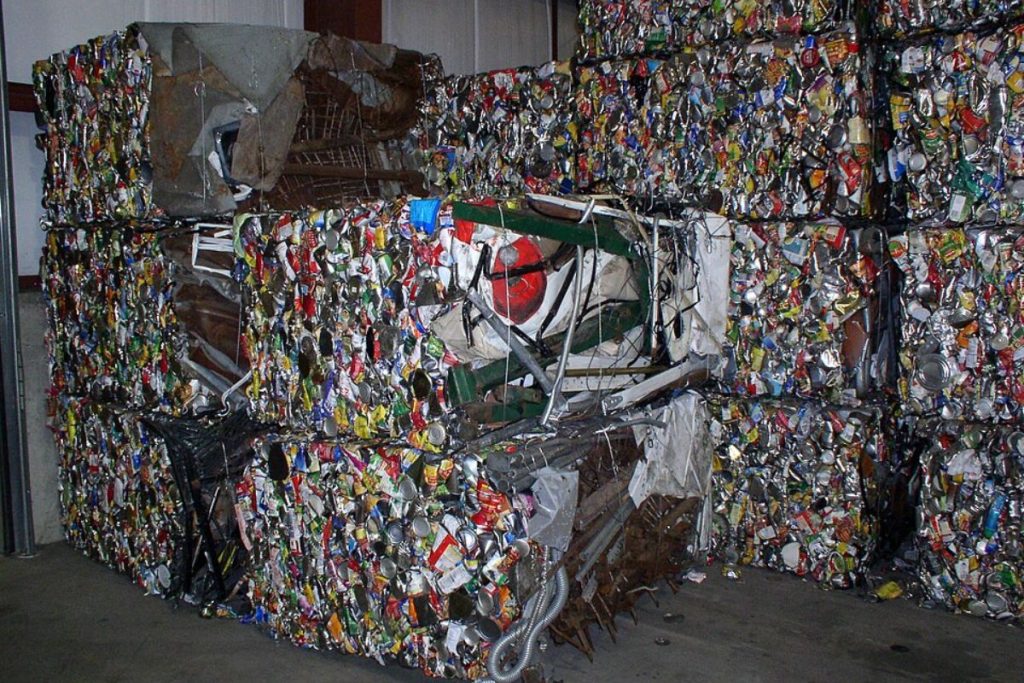
Towering over the Delhi skyline, the Ghazipur landfill is not just a mountain of refuse, it is a 40-metre-high monument to a failing system. This system, the linear economy, is the engine of our modern world, built on a simple and devastatingly flawed premise: “take-make-dispose.”
In a nation of 1.4 billion people, this model has reached its logical and environmental breaking point. India, one of the world’s fastest-growing economies, is grappling with spiraling resource consumption and a waste generation crisis that chokes its rivers, pollutes its air, and overwhelms its urban landscapes.
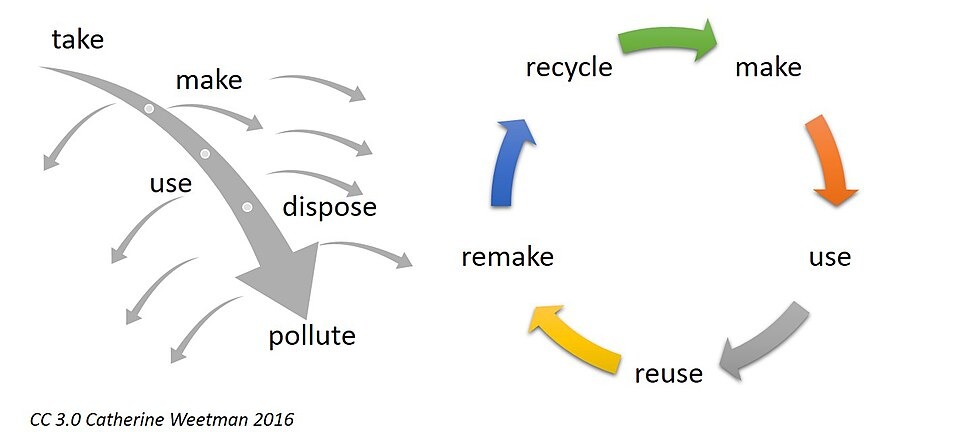
The linear economy operates like a one-way street with a dead end. We extract finite resources like minerals and water, process them into products often designed for obsolescence, and then dump them in landfills or oceans when we are done. This model is inherently unsustainable, and its costs are no longer abstract.
But what if that street was a circle? This is the promise of the Circular Economy (CE), a new, research-backed paradigm gaining traction across India. It’s a systemic shift designed to ‘close the loop,’ eliminating waste and pollution, keeping materials in use at their highest value, and regenerating natural systems.
This isn’t just a glorified word for recycling. The circular economy is a total redesign of our economic operating system. It involves everything from creating products that are easy to repair and remanufacture to shifting business models from selling products to offering services, such as “subscribing” to lighting instead of buying lightbulbs.
India’s adoption of CE is not merely an environmental policy, it is a fundamental reimagining of economic growth itself. It’s a strategic move from resource-intensive GDP to inclusive, resilient, and sustainable development.
To understand this national transition, we must look to the front lines. This deep dive explores the shift through the proven, citizen-led model of Earth5R, a leading environmental organization. Their work provides a powerful, data-driven microcosm of this change, demonstrating how to turn India’s greatest challenge, its waste, into tangible social and economic wealth.
The Macro Shift: India’s Top-Down Framework
This grassroots movement is not happening in a vacuum. The Indian government is actively laying the policy groundwork, creating a powerful top-down push. The NITI Aayog, the government’s premier think tank, has formulated comprehensive strategy papers, identifying the circular economy as a key to unlocking immense economic value and environmental benefits.
This high-level vision is backed by hard-hitting regulations. The Plastic Waste Management (Amendment) Rules, for instance, are phasing out many single-use plastics and, most critically, enforcing Extended Producer Responsibility (EPR).
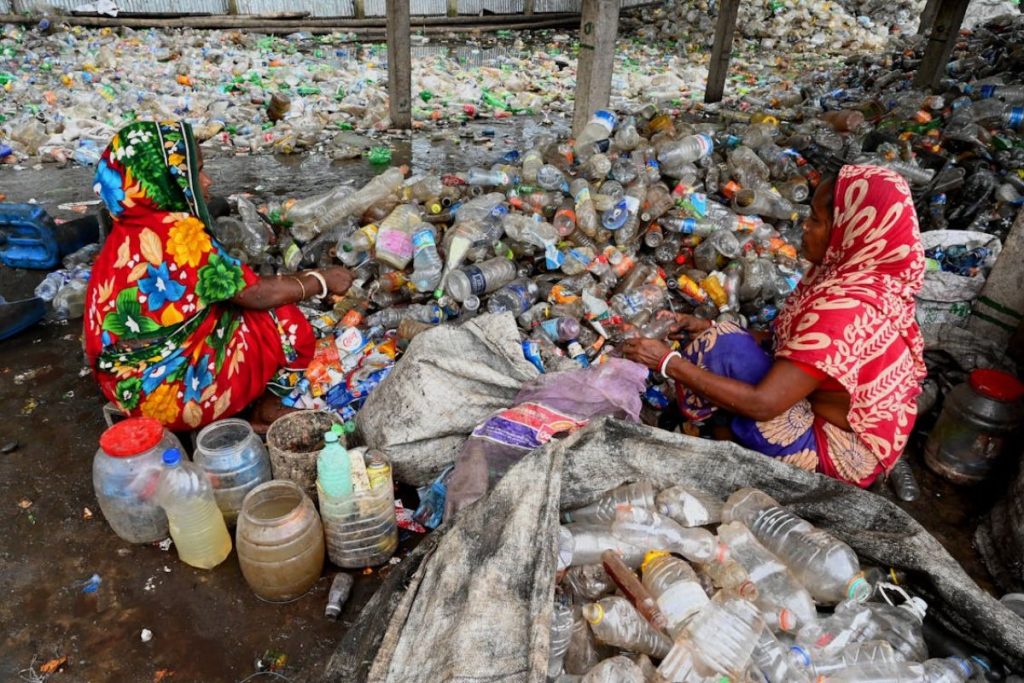
This legal framework of EPR is a game-changer. It makes manufacturers financially and logistically responsible for the entire lifecycle of their products, from creation to post-consumer collection and processing. This single policy forces companies to innovate in packaging, design for recyclability, and invest in reverse supply chains.
The drivers are twofold. Economically, research suggests the circular economy represents a multi-trillion-dollar opportunity for India by 2050, unlocking new business models in repair, refurbishment, leasing, and resource recovery.
Environmentally, it’s a necessity. A circular model is critical if India is to meet its ambitious climate commitments (Nationally Determined Contributions) under the Paris Agreement, as it effectively decouples economic growth from emissions-heavy resource extraction.
Yet, these top-down policies, while crucial, are only half the story. A gap often exists between national strategy and on-the-ground reality, between policy papers in New Delhi and the waste segregation habits of a household in Mumbai.
How do you operationalize a circular economy in a complex urban slum? How do you empower citizens to become active participants, not just passive subjects? This is the ‘missing middle’ where true transformation occurs. It’s here, at the grassroots, that organizations like Earth5R are writing the playbook for India’s circular future.
The Earth5R Deep Dive: A Citizen-Led Model for Circularity
If national policy provides the blueprint for India’s circular shift, then grassroots organizations build the house. To see how this transformation is being implemented, one must look to the work of Earth5R, one of India’s largest environmental organizations. Their success provides a powerful, research-backed model for turning policy into practice.
From 5Rs to ACT: The Grassroots Playbook
The Earth5R philosophy is anchored in a holistic “5Rs” framework: Respect, Reduce, Reuse, Recycle, and Restore. This extends the traditional 3Rs to include a foundational respect for nature and a final goal of active ecological restoration.
But a philosophy alone doesn’t change a city. Earth5R operationalizes this vision through a practical, three-pronged strategy: the ACT (Awareness, Collaboration, Training) model. This model is the engine of their work, a scalable method for transforming passive citizens into proactive environmental leaders and, critically, for building a circular economy from the ground up.
‘A’ for Awareness: Making the Invisible, Visible
The first step in solving any problem is making people see it. Earth5R excels at moving environmental issues from the abstract to the tangible, using data and direct action to drive community-level behavior change.
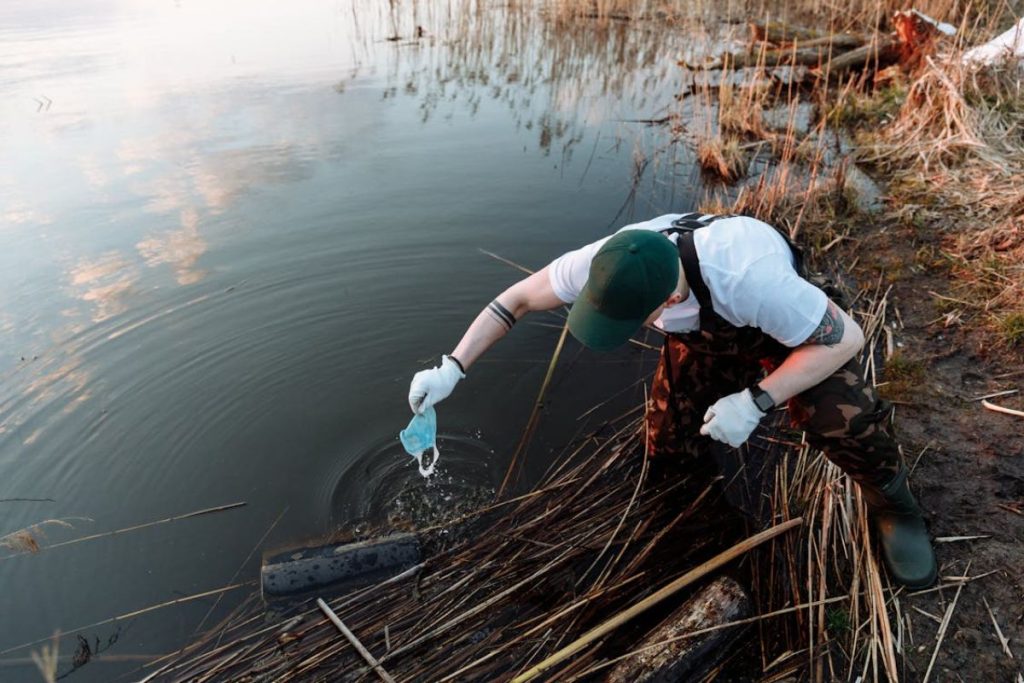
Consider the Powai Lake cleanup in Mumbai, a multi-year effort that became a landmark case study in citizen mobilization. This was not simply a weekend cleaning drive. By mobilizing thousands of volunteers, Earth5R systematically removed over 58 tonnes of waste from the lakefront over four years.
This direct action serves a dual purpose. First, it physically restores the local ecology. Second, it functions as a large-scale citizen science and waste auditing project. When a community sees 58 tonnes of its own plastic pulled from a beloved lake, the problem of “waste” becomes intensely personal and visible, creating an undeniable mandate for change.
This awareness campaign is now amplified by technology. The Earth5R App is a critical tool in their arsenal. It allows volunteers to log their hours, map local waste hotspots in real-time, and track their collective impact, measuring everything from trees planted to carbon emissions saved. This gamifies sustainability and, most importantly, provides the verifiable, transparent data that policymakers and corporations need to see.
‘C’ for Collaboration: The Public-Private-People Partnership
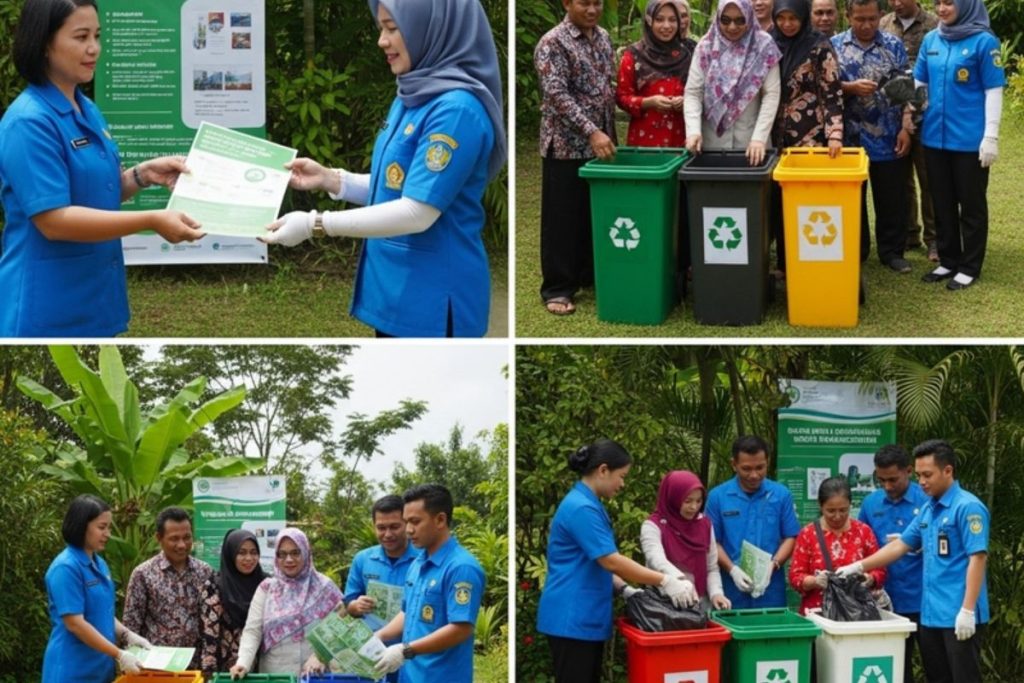
Awareness creates the will for change, but collaboration provides the means. Earth5R has masterfully positioned itself as the crucial bridge connecting corporations, government bodies, and local communities, creating what can be called a “Public-Private-People Partnership.”
In the new era of Extended Producer Responsibility (EPR), companies are legally mandated to manage the waste their products create. The challenge, however, is the “last mile.” How does a multinational corporation efficiently collect and process its packaging from thousands of scattered neighborhoods and slums?
This is where Earth5R steps in. In one high-impact partnership with a leading European water brand, their collaborative program recovered 2,500 tons of plastic. This wasn’t just an environmental win, it was a socio-economic one, creating 1,200 livelihood opportunities for local waste workers and offsetting 4,200 metric tons of CO2.
The model is adaptable. A CSR partnership with construction giant Larsen & Toubro saw Earth5R implement a horticulture program in Mumbai slums, training 1,400 families to grow saplings. Another project with a major electronics manufacturer to tackle the complex e-waste stream recovered 25 tonnes of hazardous waste, generating an estimated ₹50 lakhs (approx. $60,000 USD) in circular economy value.
Through these collaborations, Earth5R acts as a vital “last-mile implementer.” They channel corporate and public funds, which are mandated by laws like EPR and CSR (Corporate Social Responsibility), directly into programs that deliver measurable, verifiable, and community-centric results.
‘T’ for Training: Forging Circular Livelihoods
This final pillar, Training, is the most transformative. It is here that the circular economy’s promise of “reimagined growth” becomes a reality. This section moves beyond environmentalism and becomes a story of economic empowerment.
The focus is on India’s most vulnerable urban communities, such as the slums of Jawahar Nagar, Kurla, and Sakinaka in Mumbai. These areas are often seen only as sources of waste, but Earth5R sees them as hubs of untapped human potential.
The intervention is direct. Earth5R teams enter these communities and conduct intensive training programs, focusing primarily on empowering local women. Residents are trained in the science of waste segregation, composting, and, most importantly, upcycling. This is the art of turning “waste” into “wealth.”
Discarded plastic wrappers, textile scraps, and old newspapers are systematically transformed into high-quality, sellable products like handbags, home decor, and accessories. These items are then sold, creating a sustainable and independent revenue stream for the community.
The research-backed findings from these programs are staggering. One such sustainable community program generated a direct community income of ₹22,99,500 (approx. $27,500 USD) just from the sale of segregated recyclable materials.
But the total value created is even more significant. When factoring in the reduced costs of landfilling, the value of the upcycled products, and the new incomes, Earth5R calculated that the program created a total of ₹4,52,87,375 (approx. $540,000 USD) in circular economy value.
This is the circular economy in action. It is not hypothetical. It is a decentralized, community-owned business model that formalizes the informal waste-picking sector, providing dignity, safety, and stable incomes. It proves, in hard economic terms, that waste is not a problem to be “managed,” but a valuable resource waiting to be unlocked.
Analysis: How Grassroots Models Are Reimagining Indian Growth
The Earth5R model is more than a series of successful environmental projects, it is a working prototype of India’s new economic engine. By focusing on citizen-led action, it offers a compelling, research-backed analysis of how the circular economy redefines the very concept of “growth” from the bottom up.
Decoupling Growth from Consumption
For centuries, the formula for economic growth has been simple: GDP rises in lockstep with the consumption of virgin resources. To grow, a nation had to extract, process, and consume more. This is the iron cage of the linear economy. The Earth5R model provides the key to unlock it.
This is the principle of decoupled growth, a state where economic value increases while resource use and environmental impact decrease. It’s the holy grail of sustainable development.
Consider the slum livelihood projects. When a community turns tonnes of textile waste into sellable handbags, it generates new income and new products. This is economic value creation. Simultaneously, it prevents that waste from entering a landfill, reducing pollution and the need for new virgin materials.
The economy grows, but the environmental footprint shrinks. The Earth5R model proves, on a micro-level, that India can get richer without consuming the planet. It severs the toxic link between prosperity and pollution.
From Informal to Genuinely Inclusive Growth
India’s recycling system has a hidden, and often tragic, backbone: the informal sector of waste pickers. These individuals, often marginalized, perform one of the most critical civic duties, yet they face exploitation, hazardous conditions, and social stigma.
A circular economy that ignores this human element is not truly circular, it is just a more efficient linear model. Here, the Earth5R model demonstrates a shift from informal exploitation to genuinely inclusive growth.
Rather than replacing this workforce, the model integrates and formalizes it. By training local community members, especially women, as “Livelihood Champions” or “Circular Economy Fellows,” it transforms a precarious job into a green-collar profession.
This transition provides dignity, stable incomes, and safe working conditions. It brings a marginalized workforce into the formal economy, ensuring that the profits from “going green” are distributed equitably. This is not just growth, it is inclusive growth, where the benefits of development are shared by all.
Building Capital Beyond GDP
Perhaps the most profound shift is in how we measure success. The old model was obsessed with a single metric: Gross Domestic Product (GDP). This flawed yardstick famously counts a toxic chemical spill and the subsequent cleanup as two positive economic activities.
The new model of growth, as demonstrated by Earth5R, is measured in a far richer way. It focuses on building two types of capital that GDP completely ignores: social and natural.
Earth5R’s Neighborhood Sustainability Hub (NSH) model is a perfect example. When volunteers from diverse backgrounds unite to clean Powai Lake for years, they are not just removing trash. They are weaving social capital, building community cohesion, and fostering a shared sense of civic trust. This social fabric is the true, resilient wealth of a nation.
Simultaneously, the work actively builds natural capital. By restoring ecosystems like the Pallikaranai Wetlands in Chennai or cleaning the Mithi River, the model enhances the natural assets that provide clean air, water, and flood protection, services worth billions.
This new vision of growth is measurable, just not by old tools. Its success is calculated in Social Return on Investment (SROI), in tonnes of CO2 offset, in litres of water protected, and in the number of livelihoods created. This is a 21st-century balance sheet, one that finally understands that an economy is only as healthy as its people and its planet.
The Road Ahead: Scaling the Circular Revolution
The Earth5R model, and others like it, provide a powerful, research-backed blueprint for change. However, scaling these proven, hyperlocal victories into a national standard is India’s next great challenge. The journey from a successful pilot project in a Mumbai slum to a systemic, nationwide circular economy is fraught with complexity.
The primary hurdle is often fragmented urban governance. India’s cities are managed by a patchwork of municipal corporations and state bodies, often with overlapping jurisdictions. This fragmentation can make it difficult to implement the standardized, integrated waste management systems that a true circular economy demands.
Furthermore, while citizen action is potent at the community level, a lack of widespread consumer awareness remains a barrier. For the circle to truly close, consumers must do more than just segregate waste. They must become conscious participants, actively demanding products designed for repair and creating a market for goods made from recycled materials.
This entire model also hinges on massive investment in reverse logistics. Creating a national network to efficiently collect, sort, and re-process millions of tonnes of diverse post-consumer waste, from tiny plastic sachets to complex e-waste, requires a robust infrastructure that is still in its infancy.
Despite these challenges, the momentum is undeniable. This deep dive into the Earth5R model confirms that India’s circular economy shift is not merely a policy tweak but a genuine paradigm change. It is a fundamental, on-the-ground rethinking of value, waste, community, and growth itself.
The most critical lesson from the front lines is this: the most effective, resilient, and just solutions are not exclusively top-down. They are bottom-up, citizen-led, and community-owned. Top-down policies like Extended Producer Responsibility (EPR) create the incentive for change, but grassroots models provide the mechanism for that incentive to create real social and environmental value.
The circular economy, therefore, represents India’s single greatest opportunity to build a future that is not just prosperous, but also equitable, resilient, and restorative. It is a chance to leapfrog the polluting development path that defined the 20th century.
Ultimately, this shift redefines growth by proving that India’s “waste” is simply a misplaced resource. It proves that the nation’s 1.4 billion people are not a problem to be managed, but the greatest possible resource for driving that change.
Frequently Asked Questions (FAQs)
What is the “linear economy” mentioned in the article?
The linear economy is the traditional “take-make-dispose” model. It involves extracting raw materials, manufacturing products from them, using those products, and then discarding them as waste, often in landfills or as pollution.
What is the “circular economy” and how is it different?
The circular economy is a systemic alternative designed to “close the loop.” Its goal is to eliminate waste by designing products for longevity, repair, and reuse. Materials are kept in circulation at their highest value for as long as possible, and natural systems are regenerated.
Why is India shifting towards a circular economy?
India is shifting to address the crises of the linear model: massive waste generation (like the Ghazipur landfill), resource depletion, and pollution. The circular economy offers a research-backed strategy for sustainable economic growth, resource security, and meeting climate commitments.
What is Extended Producer Responsibility (EPR)?
EPR is a government policy that makes manufacturers financially and logistically responsible for the entire lifecycle of their products, including their collection and processing after consumers discard them. It’s a key driver pushing companies to design for recyclability.
What role does NITI Aayog play in this shift?
NITI Aayog, the Indian government’s premier think tank, has been instrumental in creating the top-down strategy. It has formulated comprehensive papers that identify the circular economy as a massive economic opportunity and a path to sustainable development.
Who is Earth5R, the focus of the deep dive?
Earth5R is one of India’s largest environmental organizations. The article uses it as a “deep dive” case study to show how national circular economy policies are being successfully implemented at the grassroots, citizen-led level.
What are the “5Rs” in Earth5R’s philosophy?
The 5Rs are Respect, Reduce, Reuse, Recycle, and Restore. This framework expands the traditional 3Rs to include a foundational respect for nature and a final goal of actively restoring ecosystems, not just managing waste.
What is Earth5R’s “ACT” model?
The ACT model is Earth5R’s core operational strategy for implementing its goals. It stands for Awareness, Collaboration, and Training—a three-pronged approach to turn passive citizens into active agents of change.
How does Earth5R use “Awareness” to drive change?
It uses direct action and citizen science to make environmental problems visible. For example, the Powai Lake cleanup, where volunteers removed 58 tonnes of waste, served as a powerful “waste audit” that mobilized the entire community.
How does Earth5R collaborate with corporations?
Earth5R acts as a crucial “last-mile implementer” that connects corporations with communities. It helps companies meet their legal EPR and CSR mandates by channeling their funds into measurable, on-the-ground projects, like plastic recovery and e-waste collection.
How does Earth5R’s “Training” pillar create “circular livelihoods”?
This is a key part of their model. Earth5R trains local communities, especially women in urban slums, in waste segregation, composting, and “upcycling” (turning waste materials into sellable products like bags and handicrafts), thereby creating new, sustainable incomes.
What is “upcycling” as mentioned in the article?
Upcycling is the process of transforming waste materials or discarded products into new items of higher quality or environmental value. This is different from downcycling, which breaks a material down into a lower-grade raw material.
What were the financial results of Earth5R’s livelihood projects?
The article cites a single program that generated ₹22.99 lakhs in direct community income from selling recyclables and a total of ₹4.52 crores in overall “circular economy value” when factoring in new products and reduced landfill costs.
What does “decoupling growth from consumption” mean?
This is a core concept of the circular economy. It means creating a system where an economy can grow (i.e., generate more value, income, and prosperity) without consuming more virgin resources or creating more pollution.
How does this model create “inclusive growth”?
Instead of displacing the informal waste-picker sector, this model integrates and formalizes it. By training these workers as “Livelihood Champions,” it provides them with dignity, safer working conditions, and stable, higher incomes, ensuring the benefits of the green economy are shared.
What is “social capital” and how is it built?
Social capital refers to the networks, shared values, and trust within a community that allow it to function effectively. It’s built through collaborative actions like the community-led cleanups, where citizens unite for a common purpose, strengthening community bonds.
What is “natural capital” in this context?
Natural capital refers to the world’s stock of natural assets, which include soil, air, water, and all living things. The Earth5R model builds this capital by actively restoring ecosystems, such as cleaning lakes and rivers, which provide essential services like clean water.
What are the main challenges to scaling the circular economy in India?
The article identifies three main challenges: fragmented urban governance (making standardized systems difficult), the need for greater widespread consumer awareness, and the lack of massive investment in “reverse logistics” (the infrastructure to collect and process all the waste).
Why is a “bottom-up” or “citizen-led” approach so important?
A bottom-up approach is vital because it creates community ownership and ensures solutions are practical for the local context. While top-down government policies (like EPR) create the incentive for change, citizen-led models provide the mechanism to make that change happen effectively.
What is the main argument of the article?
The main argument is that India’s shift to a circular economy is a complete “reimagining of growth.” It’s not just an environmental policy but a new economic model that, as proven by Earth5R, can create wealth that is inclusive, resilient, and restorative by treating waste as a resource and empowering citizens as agents of change.
Be the Change: Join the Circular Revolution
The shift to a circular economy isn’t a spectator sport; it’s a call to action. As the deep dive into Earth5R’s model shows, real change is powered by citizens. It doesn’t start in a boardroom, it starts in your home, your community, and your daily choices.
You don’t have to wait for a new policy. You can start today. Segregate your waste. Ask questions about the products you buy—are they built to last? Can they be repaired? Support businesses that embrace circularity.
Find a local environmental group, join a cleanup drive, or simply start a conversation with your neighbors. The data is clear: individual actions, when multiplied by millions, create the unstoppable momentum that will redefine India’s future. The revolution is here. Be a part of it.
~ Authored by Abhijeet Priyadarshi