
The Great Indian Waste Paradox: A Crisis of Scale Meets a Revolution of Intent
India is grappling with a paradox. On one hand, it faces a staggering waste crisis of Himalayan proportions. On the other, a quiet and determined revolution is underway, turning mounds of trash into symbols of systemic change. This is not just a story of policy, but of people.
The numbers are stark. Every single day, urban India generates approximately 1.7 lakh tonnes of municipal solid waste, according to 2021-22 data from the Central Pollution Control Board (CPCB). The real challenge, however, lies in what happens next. Of this vast amount, only about 91,512 tonnes, or 54%, is actually treated. The rest, over 78,000 tonnes per day, finds its way into towering landfills and illegal dumpsites.
These are not just inert “waste mountains” like the infamous Ghazipur landfill in Delhi. They are active biogeochemical reactors releasing a cocktail of toxins. Research published in PubMed has conclusively linked residential proximity to landfills with a significantly higher prevalence of respiratory illnesses, eye irritation, and stomach problems. Toxic leachate, a black liquid oozing from the waste, seeps into the ground, contaminating groundwater with heavy metals like lead and cadmium, posing a silent threat to public health.
For decades, the national approach was a linear one: collect the waste and dump it somewhere else. This “out of sight, out of mind” philosophy is what created the crisis. The turning point came with a one-two punch of policy and public will. The Swachh Bharat Mission (SBM), launched in 2014, was the cultural catalyst, making sanitation and waste a topic of national discourse.
But the true legal powerhouse of this revolution is the Solid Waste Management (SWM) Rules, 2016. Unlike their predecessors, these rules fundamentally shifted the responsibility of waste. For the first time, the law made source segregation a mandatory duty for every single waste generator, from individual households to large corporations.
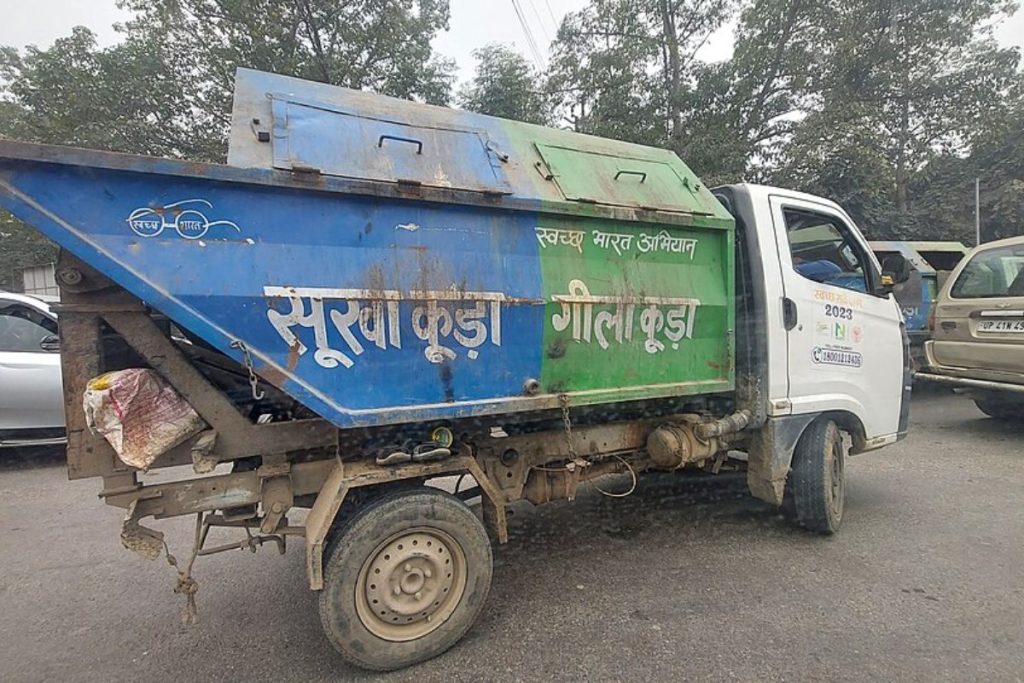
The SWM Rules mandated a simple, yet revolutionary, three-bin system: biodegradables (wet waste), dry waste (plastic, paper, metal), and domestic hazardous waste (diapers, batteries, expired medicine). This legal framework was the blueprint, asserting that waste is not waste until it is wasted. By separating at the source, “trash” becomes “resource.”
This is where our “Earth5R Deep Dive” begins. This article is not just a ranking of India’s cleanest cities. It is a research-driven analysis of why they are succeeding, viewed through the powerful, grassroots-tested framework of Earth5R, a global environmental organization. Earth5R’s model is built on a practical, community-centric approach to building a circular economy.
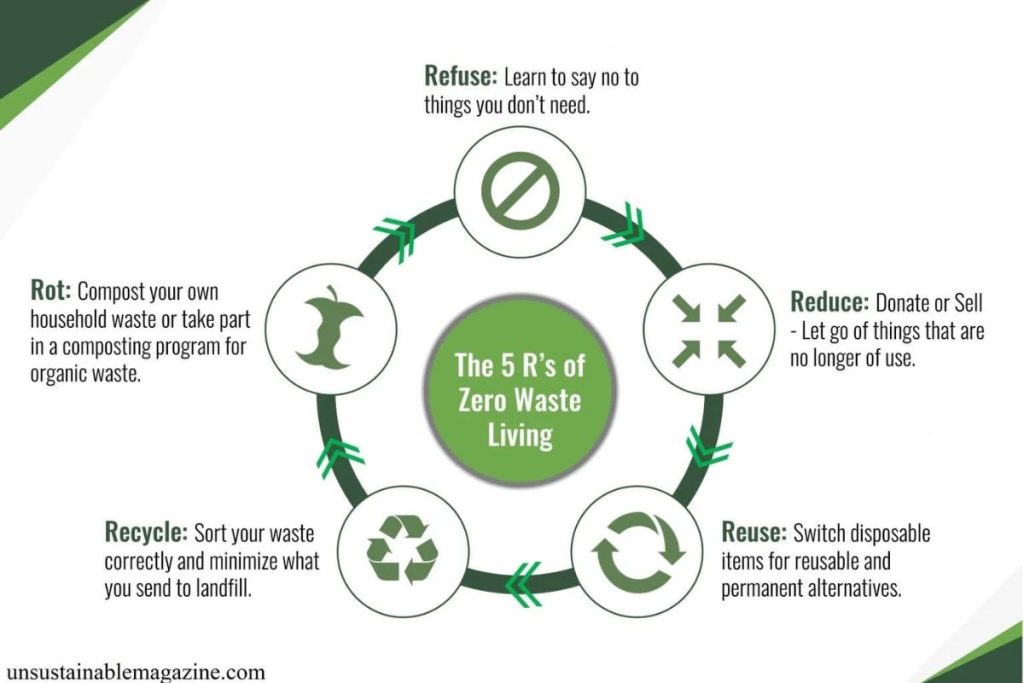
This framework is grounded in two core concepts. First are the 5Rs: Refuse, Reduce, Reuse, Repurpose, and Recycle. This hierarchy prioritizes preventing waste before it is ever created.
Second, and more critically, are its core operating principles:
- Community-Led Action: The belief that sustainable change is not top-down, but bottom-up, driven by training and empowering local citizens.
- Livelihood Generation: Integrating the informal sector, such as ragpickers and waste workers, into the formal system, turning waste management into a tool for social and economic upliftment.
- Circular Economy: A scientific system where waste is meticulously segregated and channeled back into the economy as valuable resources, aiming for a “zero-waste” or “zero-landfill” model.
The 10 cities we will explore have not just built better landfills or bought more trucks. They have, in essence, successfully scaled these very principles. They are the living proof that Earth5R’s community-level model is not just a small-scale ideal but the only viable and sustainable blueprint for a zero-waste India.
The 10 City Deep Dive
Section 1: The Gold Standards: How Indore and Ambikapur Mastered the Zero-Waste Blueprint
While many cities are taking steps, two stand out as true pioneers that have fundamentally solved the waste equation. They are not just managing waste, they are processing nearly 100% of it, proving that a “zero-landfill” India is not a distant dream but a present reality.
1. Indore, Madhya Pradesh: The Gold Standard
For seven consecutive years, Indore has been the undisputed champion, holding the #1 rank in India’s national cleanliness survey, Swachh Survekshan. This is not an accident, but the result of a rigorous, scientific system built on what officials call “the Indore Model.”
The city’s masterstroke is its flawless 6-bin segregation at source. Residents are trained to separate waste into six distinct categories: wet, dry, plastic, e-waste, domestic hazardous, and sanitary waste. This hyper-segregation is collected daily by a fleet of 100% door-to-door, GPS-tracked vehicles, leaving no room for error.
The impact is profound. Indore is a “zero-landfill city” that processes 100% of its 1,900 tonnes of daily waste. A key research finding on its model points to its “waste-to-wealth” success. Its massive biomethanation plants convert organic waste into enough bio-CNG to run over 150 city buses, a perfect analogy for a circular economy in motion. The city also earns crores in revenue from selling compost and carbon credits.
From the Earth5R perspective, Indore is the ultimate expression of “Rethink” and “Recover.” The city’s leadership rethought its entire system, viewing waste not as a liability to be dumped, but as a high-value resource stream to be recovered.
This municipal-scale success is built on the exact same principle Earth5R instills at the citizen level in its Mumbai projects. Whether in one high-rise building or an entire city of 3.5 million, the foundation is non-negotiable: meticulous source segregation is the bedrock of any successful circular economy.
2. Ambikapur, Chhattisgarh: The People-Powered Model
If Indore is the champion of “municipal will,” Ambikapur is the champion of “people power.” This small city in Chhattisgarh created a decentralized, community-owned marvel that has achieved a 100% “zero-landfill” status.
The city’s success is its Solid & Liquid Resource Management (SLRM) model. The system is not run by a large corporation, but by 470 women from local Self-Help Groups (SHGs). They are the entrepreneurs and operators of this revolution.
These women manage 17 SLRM centers, where they meticulously sort the city’s waste into an astonishing 156 different categories. This ensures that every possible item, from specific grades of plastic to different types of metals, is sold to recyclers for its maximum value.
The model’s most visible success is the “Sanitation Park.” The city’s 16-acre landfill, once a toxic dump, has been completely remediated and transformed into a lush public park. The SHGs generate significant monthly revenue from selling recyclables, making the entire system economically self-sustaining.
This is a perfect, city-wide case study of Earth5R’s core principles of “Community Empowerment and Livelihood Generation.” Ambikapur proves that empowering local communities, especially women, is the most resilient path to sustainability.
This city-wide system is a macro-version of the Livelihood Programs Earth5R operates in Pune and Mumbai, which train women from low-income groups to become “green entrepreneurs.” Both models prove the same powerful thesis: when you invest in people, they build a sustainable, and profitable, future.
The Mega-Cities Taming the Waste Mountain
If Indore and Ambikapur are agile models of perfection, India’s mega-cities are the super-tankers of waste. Turning them around requires immense force, technological prowess, and a different scale of thinking. The challenge is not just processing waste, but managing the sheer, relentless volume produced by millions.
Yet, cities like Surat, Pune, and Navi Mumbai are proving that even the largest behemoths can be steered toward sustainability, creating powerful systems that blend technology, social inclusion, and citizen action.
3. Surat, Gujarat: The Tech-Driven Processor
Surat, Gujarat, consistently holding the #2 rank in Swachh Survekshan, is a powerhouse of high-tech processing. This industrial giant tames its massive waste stream not just with political will, but with world-class, large-scale infrastructure.
The city has achieved 100% door-to-door collection and an incredible 100% processing of its municipal solid waste. Research from its smart city mission highlights its pioneering success in Construction & Demolition (C&D) waste recycling, creating usable bricks, paver blocks, and aggregates from tonnes of daily debris.
In the Earth5R framework, Surat exemplifies the principles of “Recycle” and “Recover” at an industrial scale. It has built the essential, heavy-duty backend infrastructure that a circular economy needs to function, ensuring that segregated waste has a place to go.
This top-down infrastructure is the perfect counterpart to the bottom-up, granular work Earth5R conducts in high-density areas like Dharavi, Mumbai. Surat’s plants are the large-scale recipients for the very materials that Earth5R’s localized plastic recovery models help collect, proving both ends of the chain are vital.
4. Pune, Maharashtra: The Power of Social Inclusion
Pune, Maharashtra, presents a groundbreaking hybrid model that is, perhaps, the most socially inclusive in India. Its success is built on a foundation of dignity and partnership, proving that waste management is as much a social issue as an environmental one.
The city’s waste management is co-managed by SWaCH (Solid Waste Collection and Handling), a cooperative that is India’s first wholly-owned enterprise of self-employed waste-pickers. This is not a charity, but a formal, paid contract between the municipality and its “green entrepreneurs.”
The SWaCH model has integrated thousands of informal waste-pickers into the formal economy, providing them with stable livelihoods, social security, and, most importantly, dignity. They are no longer “rag-pickers” but respected partners who are the city’s first line of defense in segregation.
This model is the living embodiment of the Earth5R core principle of “Livelihood Integration.” It formalizes and respects the “invisible” environmentalists who have always been the backbone of India’s recycling chain. This city-wide partnership directly reinforces the goals of Earth5R’s own green jobs programs in Pune, which train local women, proving that environmental goals and social empowerment are one and the same.
5. Navi Mumbai, Maharashtra: The Planned City’s Success
As a planned city, Navi Mumbai had an advantage, and it has capitalized on it brilliantly. The city secured the #3 rank in Swachh Survekshan 2023, demonstrating what’s possible with a clean slate, robust infrastructure, and strong public will.
Navi Mumbai’s success lies in its stringent enforcement of source segregation, resulting in clean, bin-free commercial areas and high citizen participation. A key research point is its successful biomining and remediation of its old dumpsite in Turbhe, reclaiming acres of valuable land.
This model powerfully showcases two key 5R principles. It champions “Reduce” at the source through citizen awareness, and “Recover” by processing not just new waste, but also healing the environmental damage of the past.
This formal system’s success is the perfect partner to the hyper-local work Earth5R conducts in nearby Mumbai urban slums, like those in Kurla. While the municipality manages the macro-system, Earth5R’s teams intervene at the micro-level, tackling waste in high-density areas before it can leak into the environment or overburden the municipal system.
The Rising Stars and Innovators
Beyond the established champions, a new cohort of “Rising Stars” is pioneering innovative solutions tailored to their unique urban landscapes. These cities demonstrate that the revolution is not one-size-fits-all. They are innovating in energy recovery, legacy waste remediation, and specialized waste streams, adding critical new chapters to India’s sustainable playbook.
6. Vijayawada, Andhra Pradesh: The Waste-to-Energy Pioneer
Vijayawada has established itself as a leader by aggressively tackling the final, most difficult fraction of waste: the non-recyclable, non-compostable remainder. Its model is a strong push towards becoming a “bin-free” city, with 100% door-to-door collection.
The city’s key innovation is its successful implementation of waste-to-energy (WTE) technology. A 2022 research paper highlights its 600-tonnes-per-day WTE plant, which processes residual waste to generate electricity, reducing the final volume sent to landfills by over 90%.
In the Earth5R framework, this model heavily utilizes the “Recover” principle, which stands for recovering energy from waste that cannot be managed higher up the chain.
This WTE solution is the crucial final step in a complete waste hierarchy. It complements the “Refuse, Reduce, and Recycle” work championed by Earth5R’s “Zero-Waste” framework in corporate and residential training. Earth5R’s programs focus on maximizing reduction and recycling first, so that only the absolute minimum residual waste, as seen in Vijayawada, needs to be sent for energy recovery.
7. Bhopal, Madhya Pradesh: The Model of Remediation
Following the footsteps of its neighbor Indore, Bhopal has implemented a robust segregation and processing model. But its unique, research-backed success story is in healing the wounds of the past. Bhopal is a national leader in biomining and remediating legacy waste.
The city has successfully reclaimed acres of land from its old, unscientific dumpsites. This complex process involves excavating the decades-old compacted waste, segregating its components (like soil, plastic, and metal) using large trommels, and safely processing each fraction.
This model is a powerful, real-world example of what Earth5R calls the “Regenerate” or “Restore” principle. It goes beyond managing today’s waste and actively works to undo historical environmental damage, giving land back to the community.
This large-scale municipal restoration is the macro-equivalent of the citizen-led cleanup drives Earth5R organizes at critical urban ecosystems, like the Mithi River and Powai Lake in Mumbai. Both demonstrate a deep commitment to not just preventing future pollution, but actively restoring the health of the environment.
8. Chandigarh: The Planned City’s Green Solution
Chandigarh, India’s first planned city, leverages its organized structure to implement highly efficient, specialized waste management systems. While its segregation of dry and wet waste is robust, its real innovation lies in managing its vast horticultural and garden waste.
Given its green cover, the city generates tonnes of green waste daily. Instead of dumping or burning it, Chandigarh has institutionalized large-scale composting of this stream, [turning leaves and branches into valuable manure](httpsG_Search:{queries:[<ctrl46>Chandigarh garden waste management success<ctrl46>]}) that is then reused in its own public parks.
This exemplifies the “Recycle” principle (specifically for organic waste) and “Rethink” (designing a solution for a city-specific waste stream). It’s a perfect circular model for urban greening.
This municipal-level composting is a scaled-up version of the composting Earth5R teaches individuals through its “Home Equals Planet” project. While Chandigarh composts for its parks, Earth5R trains citizens to compost at home, proving that the principle of recycling organic nutrients is fundamental to sustainability at every level.
9. Visakhapatnam, Andhra Pradesh: The Coastal Champion
As a major coastal and port city, Visakhapatnam’s waste management challenge is twofold: managing its urban waste and protecting its fragile marine ecosystem. It has risen to this challenge by integrating “smart city” technology with strong citizen engagement.
The city, often called Vizag, uses a GPS-monitored fleet for 100% door-to-door collection and leverages citizen feedback apps for real-time grievance redressal have been lauded, particularly its focus on keeping its extensive coastline clean, which has earned it top ranks for clean beaches.
This blend of technology and community action is a perfect match for Earth5R’s “Scalable Solid Waste Management System for Smart Cities.” Earth5R’s model also emphasizes using digital tools for training and monitoring, proving that technology is a key enabler for citizen action.
Furthermore, Vizag’s focus on its coast is a municipal-scale version of the [beach cleanup programs Earth5R has partnered. Both initiatives prove a vital point: protecting our urban water bodies, whether a beach or a river, requires a dedicated partnership between smart governance and an empowered citizenry.
10. New Delhi (NDMC): Tackling the Capital’s Challenge
New Delhi, a sprawling metropolis, is a city of contrasts. While the larger city struggles with infamous landfill mountains, the New Delhi Municipal Council (NDMC) area, the nation’s capital, operates as a model of excellence.
The NDMC has consistently been ranked as the cleanest “city” (within a city) by achieving 100% door-to-door collection, mechanized sweeping on all its major roads, and deploying smart, sensor-based bins.
The success of the NDMC highlights the critical need for Earth5R’s community-based approach in other parts of the city. The NDMC’s formal, top-down success is a model for organized areas, while [Earth5R’s community training in urban slums.
Part 3: Conclusion – The Blueprint for a Zero-Waste India
The deep dive into India’s 10 leading cities reveals a clear and consistent truth. The “waste management revolution” is not being driven by a single technology, a single policy, or a silver-bullet solution.
Our research synthesizing these case studies shows that sustainable success, whether in Indore or Ambikapur, Pune or Surat, rests on an unshakeable, three-pillared foundation.
First is Political and Administrative Will, the top-down resolve seen in Indore to meticulously execute a systemic overhaul. Second is Deep Community Ownership, the bottom-up, people-powered model of Ambikapur, where citizens are not just participants but partners. Third is Livelihood Integration, the “social inclusion” model of Pune, which proves that environmental sustainability and economic empowerment must go hand-in-hand.
This brings us to the final, and most important, takeaway of this Earth5R deep dive. These 10 cities, in their own unique ways, have all proven the same thing.
The grassroots-tested, community-led model of Earth5R is not just a small-scale “project” for a single neighborhood or a corporate campus. It is, in fact, the only scalable and sustainable blueprint for a zero-waste India. The future of waste management lies not in building bigger landfills, but in treating waste as a resource, empowering citizens as its guardians, and ensuring that every action we take creates a circle of both environmental and social value.
FAQs: India’s Waste Management Revolution
What is the scale of India’s daily municipal solid waste (MSW) generation?
Urban India generates approximately 1.7 lakh tonnes of MSW every day. A significant challenge remains, as only about 54% of this collected waste is actually treated, with the rest ending up in landfills.
Why are India’s landfills considered a major health concern?
They are not just piles of trash; they are active biogeochemical reactors. They release toxic leachate that contaminates groundwater with heavy metals and emit gases linked to respiratory illnesses, eye irritation, and other health problems for nearby residents.
What is the core mandate of the Solid Waste Management (SWM) Rules, 2016?
The SWM Rules, 2016, were a legal game-changer. They made source segregation of waste (into wet, dry, and domestic hazardous) a mandatory duty for every single waste generator, from households to businesses.
What is the “Earth5R Deep Dive” framework used in this article?
It’s an analytical lens used to understand why these cities are succeeding. It analyzes their success based on Earth5R’s core principles: the 5Rs (Refuse, Reduce, Reuse, Repurpose, Recycle), community-led action, livelihood generation, and building a circular economy.
Why is Indore consistently ranked #1 in India for cleanliness?
Indore’s success is built on a rigorous, city-wide system. This includes its famous 6-bin source segregation model, 100% door-to-door collection with GPS-tracked vehicles, and 100% processing of its daily waste into resources like bio-CNG and compost.
What is the “Ambikapur Model” of waste management?
It is a “people-powered,” decentralized model. The city’s Solid & Liquid Resource Management (SLRM) centers are managed entirely by women’s Self-Help Groups (SHGs), who sort waste into 156 categories and earn revenue from selling recyclables. This has made Ambikapur a zero-landfill city.
How does Pune’s waste management model promote social inclusion?
Pune’s model is a unique hybrid. The city has a formal contract with SWaCH (Solid Waste Collection and Handling), a cooperative that is India’s first wholly-owned enterprise of waste-pickers. This integrates the informal sector, providing thousands with dignified livelihoods and stable incomes.
How does Surat, a mega-city, manage to process 100% of its waste?
Surat complements its 100% door-to-door collection with a massive, high-tech processing backend. It is a leader in large-scale waste-to-energy, compost plants, and, notably, recycling its Construction & Demolition (C&D) waste into usable building materials.
What is “biomining” and which cities are using it effectively?
Biomining is the scientific process of excavating and processing legacy waste from old, unscientific dumpsites. This reclaims valuable land and heals past environmental damage. Bhopal and Navi Mumbai are cited as leaders in successfully remediating their old landfills through this method.
What is a “waste-to-energy” (WTE) plant, as seen in Vijayawada?
A WTE plant is a facility that processes non-recyclable, non-compostable residual waste to generate electricity. Vijayawada’s pioneering plant takes this final fraction of waste and reduces its volume by over 90%, preventing it from ending up in a landfill.
How does Chandigarh handle its unique “green waste” problem?
As a city with extensive green cover, Chandigarh generates large volumes of horticultural waste. It has institutionalized a large-scale composting system that turns this garden waste (leaves, branches) into valuable manure, which is then reused in the city’s public parks.
What makes Visakhapatnam a “Coastal Champion”?
Vizag integrates “smart city” technology (like GPS-monitored trucks and citizen feedback apps) with a strong focus on protecting its marine ecosystem. It has earned top ranks for its clean beaches, proving that urban management and environmental protection can go hand-in-hand.
Why is the NDMC area of New Delhi so much cleaner than the rest of the city?
The New Delhi Municipal Council (NDMC) area operates as a model of excellence. It has 100% door-to-door collection, mechanized sweeping, and smart bins. It also uses decentralized biomethanation plants to convert market vegetable waste directly into energy.
What are the three common pillars of success found in all 10 cities?
The article identifies three common themes:
- Political and Administrative Will (a top-down commitment, like in Indore).
- Deep Community Ownership (a bottom-up, people-powered model, like in Ambikapur).
- Livelihood Integration (a focus on social inclusion, like in Pune).
Does Indore’s “6-bin segregation” include sanitary waste?
Yes. Indore’s advanced model trains residents to separate waste into six categories: wet, dry, plastic, e-waste, domestic hazardous, and sanitary waste, ensuring that even difficult waste streams are managed properly.
How did Ambikapur’s women’s SHGs become self-sustaining?
By meticulously sorting waste into 156 categories, they are able to sell the segregated, high-quality recyclable materials for their maximum value. This generates enough revenue to pay their salaries and make the entire system economically self-sufficient.
What is the connection between Earth5R’s model and these successful cities?
The article concludes that these 10 cities have, in essence, successfully scaled the very same principles that Earth5R implements at the grassroots level. They prove that a community-led, livelihood-focused, circular economy is the most viable blueprint for a zero-waste India.
What happens to the old landfills in cities like Ambikapur and Bhopal?
They are remediated and reclaimed. Ambikapur’s 16-acre landfill was converted into a public “Sanitation Park.” Bhopal has also reclaimed acres of land by biomining its old dumpsite, healing past environmental damage.
Is a “zero-landfill” city actually possible in India?
Yes. This article highlights Indore and Ambikapur as existing, real-world examples of “zero-landfill” cities. They prove that with the right combination of political will, community participation, and segregation, it is possible to process 100% of waste and send nothing to a dumpsite.
What is the final takeaway of the article?
The main takeaway is that the future of waste management in India is not about building bigger landfills. It lies in treating waste as a resource, empowering citizens as partners, and ensuring every action creates both environmental value (a cleaner planet) and social value (livelihoods).
Join the Revolution: Your Home Is the Frontline
The waste revolution in India isn’t just happening in municipal offices and processing plants. It is being won in kitchens, living rooms, and local communities, one household at a time. The success of Indore, Ambikapur, and Pune is not a distant headline; it is a proven blueprint that you can implement right now.
Don’t wait for the system to change. Be the change.
Start today. Pick two bins and begin the simple, powerful act of source segregation. Put your vegetable peels, leftover food, and tea leaves in a “wet” bin. Put your plastic wrappers, bottles, and paper in a “dry” bin.
This single action, when multiplied by millions, is the fuel that powers every successful model in this article. You are not just sorting trash; you are creating value, empowering a waste-picker, and building the circular economy from the ground up.
Start a compost bin on your balcony. Refuse that extra plastic bag. Find a local recycling center. These are the principles that Earth5R’s “Home Equals Planet” program champions, and they are the exact same principles that turned a 16-acre landfill in Ambikapur into a public park.
The blueprint for a zero-waste India exists. These 10 cities have laid the path. Now, it’s your turn to walk it.
~ Authored by Abhijeet Priyadarshi