

From Data-Driven Audits to Community-Led Action, a New Generation of Employees Is Forging the Path to Corporate Sustainability.
A significant gap persists between the ambitious climate pledges made by global corporations and the tangible, verifiable actions taken to achieve them. This “say-do” gap, widely documented in sustainability reporting, not only undermines public trust but also breeds a corrosive cynicism within the workforce.
For decades, corporate social responsibility, or CSR, was a top-down directive. It was often relegated to a separate department and rolled out through polished marketing campaigns. This model is proving insufficient. It frequently feels disconnected from daily operations and is increasingly viewed by a discerning workforce as “greenwashing,” a superficial gloss on business as usual.
This failure now carries a direct human resource cost. Research from firms like Gartner highlights that a new generation of employees, particularly Millennials and Gen Z, demand more than just a paycheck. They actively seek purpose-driven work and are increasingly willing to leave companies whose values do not align with their own personal commitment to sustainability.
A new, more powerful model of climate leadership is emerging, not from the boardroom, but from the ground up. This is the core of the Earth5R insight: true engagement is not passive; it is an active, data-driven, and community-integrated process. The most profound changes happen when employees are empowered to move from being participants to becoming “intrapreneurs” for the climate.
This shift is not unlike a change from a passive audience to an active cast. Instead of simply watching the company’s “green” performance, employees are now helping to write the script, direct the action, and measure the results themselves. They are using their unique positions, whether in procurement, logistics, or marketing, to ask challenging questions and propose innovative solutions.
This article will explore seven specific, research-backed pathways where employees are taking on this new leadership role. We will examine how they are leveraging structured, on-the-ground frameworks, like the one developed by Earth5R, to transform corporate climate ambiguity into measurable, community-focused action.
The New Corporate Imperative: Why Employee Leadership Matters
Fostering employee-led climate action is no longer a niche, “feel-good” initiative. It has become a core business imperative, driven by a fierce war for talent and a profound shift in workforce psychology. The companies that thrive in the next decade will be those that harness the internal passion of their people.
The business case begins with talent. Reports from Deloitte and other researchers consistently show that a company’s environmental and social (ESG) impact is a primary factor for Gen Z and Millennial job-seekers. A 2024 study on worker preferences found that a majority of employees, especially in these younger cohorts, would consider a pay cut to work for a company that aligns with their personal values on climate.

Conversely, a perceived gap between a company’s stated values and its actual operations is a powerful driver of attrition. This makes the nurturing of internal climate leaders a critical strategy for both recruitment and retention, directly impacting the bottom line by reducing turnover and attracting top-tier candidates.
However, attracting talent is only half the battle. To unlock the innovation required for deep, systemic change, companies must understand two key psychological drivers: self-efficacy and psychological safety.
First, employees must possess “green self-efficacy,” a concept rooted in the work of psychologist Albert Bandura. This is the individual’s belief that their actions can make a genuine, measurable difference. When an employee believes their contribution is just a drop in an indifferent ocean, they remain passive. But when they are shown a clear path to impact, their motivation to act increases dramatically.
Second, the organization must provide what Harvard’s Amy Edmondson calls “psychological safety.” This is the shared belief within a team that it is safe to take interpersonal risks. In a sustainability context, this means an employee in procurement feels safe to question a long-standing, unsustainable supplier, or an engineer feels safe to propose a “wild” new idea for waste reduction, all without fear of ridicule or professional repercussion.
This is precisely where structured frameworks provide their value. The Earth5R model, for example, is built upon pillars of Awareness, Collaboration, and Training (ACT). This model doesn’t just ask employees to “be greener.” It systematically builds their self-efficacy by providing deep training in complex topics, and it creates psychological safety by fostering collaborative, project-based teams. It provides a safe, structured platform for turning passive concern into effective, data-driven action.
The Seven Pathways to Employee Climate Leadership
The shift from passive participant to active climate leader manifests in distinct, measurable ways. As employees gain the tools and confidence, their leadership evolves, moving from simple, internal actions to complex, external ecosystem-building.
Way 1: Building “Green Literacy” as a Leadership Tool
The first pathway begins with knowledge. Employee leadership is moving beyond basic awareness, like recycling posters, to a deep and functional “green literacy.” This involves actively understanding complex topics like carbon accounting, circular economy models, and ESG frameworks.
A UNESCO report on climate education highlights a significant skills gap in the global workforce. Employees cannot lead on issues they do not fundamentally understand. This is where targeted training becomes a leadership tool, not just a compliance exercise.
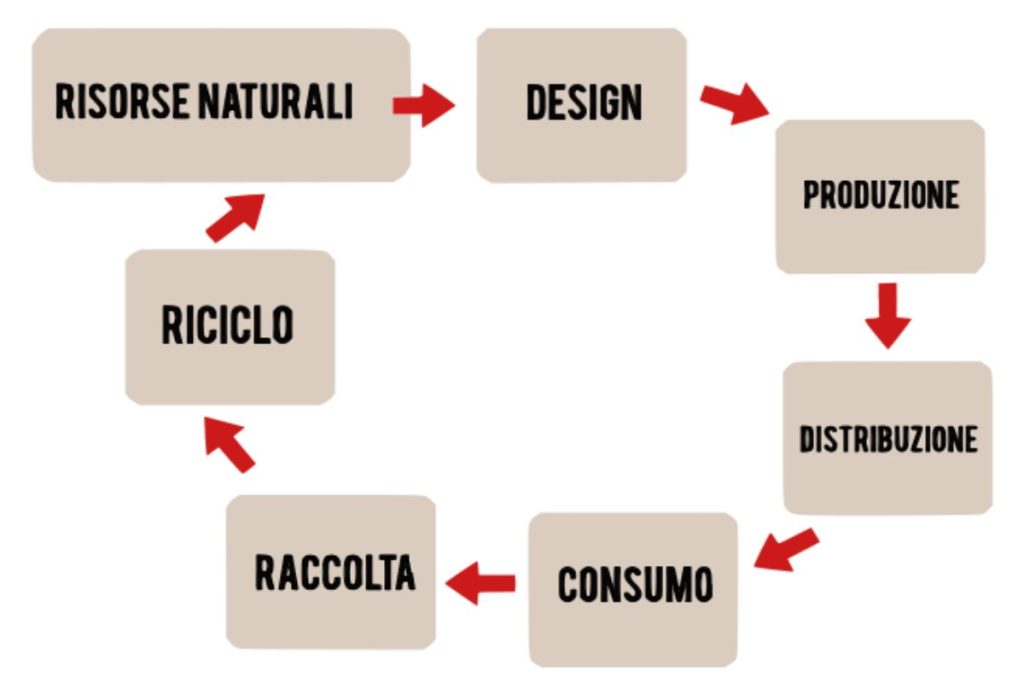
Infographic illustrating the Circular Economy model
This is the “Training” pillar of Earth5R’s model. Their structured modules, which have trained thousands in sustainability and waste management, are designed to create specialists. An employee in procurement with this literacy will ask different, more effective questions about a supplier’s practices than one in marketing.
Way 2: Driving Internal Audits with “Citizen Science”
The second pathway turns concern into data. Instead of waiting for expensive third-party consultants, empowered employees are forming “Green Teams” and using simple tools to conduct internal audits of waste, energy consumption, and water usage.
This mirrors the global trend of citizen science, where public participation helps gather massive, localized datasets. This same principle, when applied inside a company, is incredibly powerful.
The Earth5R App is a key example of this principle in action. Employees can use the app to map plastic hotspots in their own community or conduct rapid waste surveys in their office building. This geotagged, time-stamped, and verifiable data provides an undeniable baseline, turning an anecdotal complaint into an actionable business case for facility managers.
Way 3: Championing the Circular Economy from Within
Third, employee leaders are becoming internal champions for the Circular Economy. They are actively challenging their company’s “take-make-dispose” linear model, which has been the default for a century.
This is not just about recycling. It is about fundamentally questioning procurement practices, product design, and waste streams. The business opportunity for this shift is vast, with research from bodies like the Ellen MacArthur Foundation identifying trillions of dollars in value.
This principle is central to Earth5R’s “Waste into Wealth” programs. Corporate case studies show how employee-supported initiatives, aiming for “Zero Waste” goals, can create entirely new, circular systems. These programs successfully divert tons of material from landfills and, in many cases, create new local jobs from what was once considered worthless.
Way 4: Leveraging Technology for Radical Transparency
In an age of widespread skepticism about “greenwashing,” employees are demanding a fourth pathway: radical transparency. Leadership in this context means providing proof, and technology is the only way to do so at scale.
Employees are pushing for and adopting platforms that track, measure, and verify climate actions in real-time. This demand aligns perfectly with new regulatory pressures, such as the Business Responsibility and Sustainability Reporting (BRSR) framework in India, which requires verifiable data.
Earth5R’s platform provides this “verifiable digital footprint.” A corporate dashboard, fed by live data from the employee app, allows ESG teams to prove their impact to investors and stakeholders. This move to adopt verifiable tech is often championed by internal leaders who are tired of vague, unproven sustainability claims.
Way 5: Innovating Climate-Positive Products & Services
Fifth, this new leadership moves beyond simply reducing harm to actively creating positive good. Employees in R&D, product development, and marketing are finding ways to embed sustainability into the company’s core-value proposition.
This is a critical shift. Purpose-driven, sustainable product lines are increasingly outperforming their traditional counterparts, as noted in research from Harvard Business Review and others on the business case for purpose.
The Decathlon case study is a prime example of this in action. Employees helped co-create a city-wide challenge, tracked via the Earth5R app, which encouraged active lifestyles like cycling and walking. This initiative directly linked their core product (sports) with a measurable climate action (offsetting 1,500 tons of CO2).
Way 6: Engaging the Supply Chain as “Sustainability Ambassadors”
The sixth pathway demonstrates a sophisticated level of leadership by looking outside the company’s own four walls. These leaders recognize that for most businesses, the majority of emissions (known as Scope 3 emissions) lie within the supply chain.
They are finding creative ways to engage external partners, from raw material suppliers to last-mile delivery drivers. This has a powerful multiplier effect, turning the entire supply chain into a force for change.
Earth5R’s work in the quick commerce industry shows this model’s potential. The framework trains delivery personnel, the company’s most visible ambassadors, to also engage their local communities in waste segregation and collection. This effectively extends the company’s climate leadership into the very neighborhoods it serves.
Way 7: Bridging Corporate Action with Community Livelihoods
Finally, the seventh and most profound pathway bridges corporate action with community livelihoods. This is the pinnacle of employee leadership, as it skillfully connects the “E” (Environment) with the “S” (Social) of ESG.
This advanced approach uses corporate resources to solve environmental problems in a way that simultaneously creates sustainable livelihoods for vulnerable communities. This connection to social justice and measurable impact has a profound effect on employee engagement, purpose, and brand loyalty.
This is Earth5R’s most unique strength. Case studies like those with Hexaware, where employees helped install solar street lights for off-grid tribal families, or Larsen & Toubro, which involved employees in urban horticulture programs, exemplify this model. This transforms corporate action from simple volunteering into a sustainable, co-created partnership.
The Enablers: How Companies Can Foster This Leadership
This powerful, bottom-up energy cannot succeed in a vacuum. The responsibility for climate action does not rest solely on the shoulders of passionate employees. For this potential to be fully realized, it must be met with genuine, structural support from the top.
Management’s role is to act as an enabler, not just a gatekeeper. This begins with providing the most critical resource: time. Companies leading in this space, like Patagonia, institutionalize this support through policies like paid volunteer hours or dedicated “green time.” This signals that sustainability work is not just an extracurricular activity, but a valued part of the job.
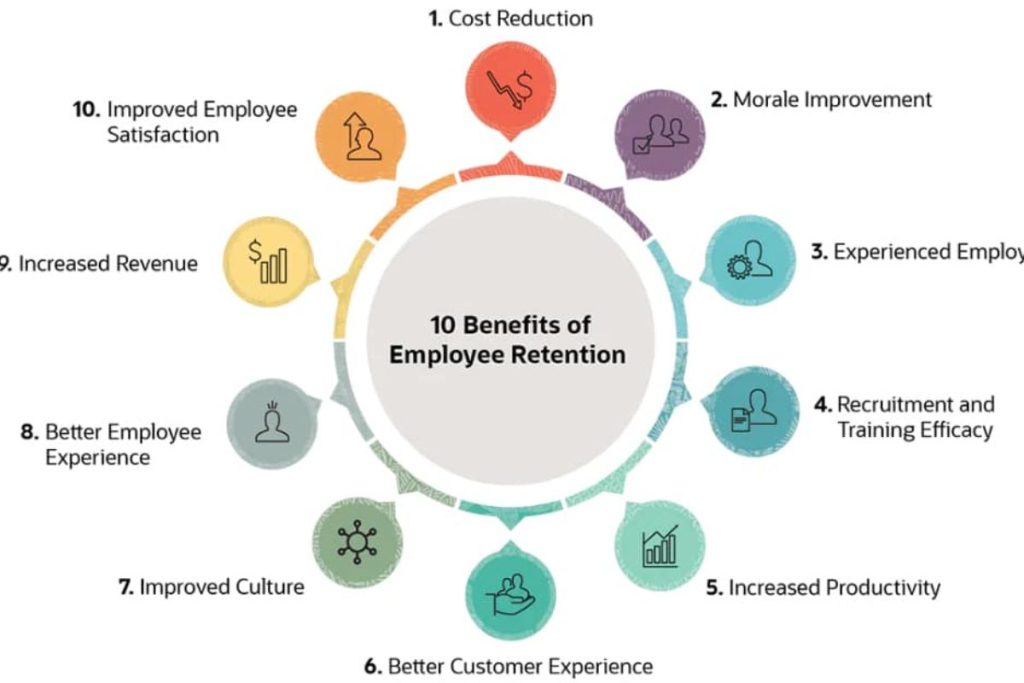
10 Benefits of Employee Retention
Beyond time, employees need effective tools. A digital suggestion box or an annual, one-off survey is insufficient to drive real change. They need dedicated platforms for action. This is where tools like the Earth5R platform become essential, providing a “sandbox” for employees to collaborate, track their projects, and measure their impact in real-time.
Finally, what is measured and recognized gets done. Creating a culture of positive reinforcement is vital. Research from Gallup on employee engagement shows that recognition is a profound motivator.
This can be achieved through gamification, such as the “green points” system used by Earth5R, which rewards tangible actions. It also includes public acknowledgment in company-wide communications, linking individual or team efforts directly to the organization’s broader ESG goals. When leadership actively celebrates these intrapreneurs, it gives others permission to step up.
Conclusion: The Future is an ‘Action’ Platform
The journey of the new corporate climate leader is a clear progression, moving from internal knowledge to external, systemic impact. It begins with building personal “green literacy” and quickly evolves into gathering hard data, championing circular models, and demanding transparent technology.
This leadership gains momentum as it infuses sustainability into core products and extends its influence into the supply chain. It reaches its most profound expression when it connects corporate resources directly to community livelihoods, creating a cycle of shared social and environmental value.
The central Earth5R insight is this: true corporate sustainability is not a static, annual ESG report or a set of distant goals. It is a dynamic, living, and measurable platform for daily action, driven by the collective energy of the entire workforce.
The transformation does not begin when a company sets a net-zero target. It begins the moment employees are given the right tools, the specific training, and, most importantly, the trust to lead from exactly where they are.
Frequently Asked Questions
What is the “say-do” gap in corporate climate action?
This refers to the significant difference between the ambitious climate pledges corporations publicly announce and the tangible, verifiable actions they actually take to achieve those goals.
Why is the traditional top-down CSR model failing?
It often feels disconnected from daily operations and is increasingly seen by employees as “greenwashing,” or superficial marketing, rather than genuine commitment. This leads to employee cynicism and disengagement.
What is the “Earth5R Insight” mentioned in the article?
The insight is that the most effective corporate climate leadership comes from the bottom up. It posits that true engagement is an active, data-driven, and community-integrated process led by empowered employees, not a passive, top-down directive.
Why are employees, especially Gen Z, so important for corporate sustainability?
This generation demands purpose-driven work and will often choose employers based on their genuine environmental and social values. They are a driving force in the “war for talent,” pushing companies to move beyond pledges to real action.
Why is employee-led climate action a “business imperative”?
Beyond ethics, it’s a critical strategy for talent recruitment and retention. Companies that fail to engage their workforce on sustainability risk higher employee turnover and difficulty attracting top-tier candidates.
What is “green self-efficacy” and why does it matter?
It’s an employee’s personal belief that their individual actions can make a genuine, measurable difference. Without it, employees remain passive, but with it, they become motivated to act and lead initiatives.
What is “psychological safety” in a sustainability context?
It’s the shared belief that employees can challenge the status quo, such as questioning an unsustainable supplier or proposing a “wild” new green idea, without facing fear of ridicule or professional repercussions.
How does a framework like Earth5R’s ACT model help?
The ACT (Awareness, Collaboration, Training) model systematically builds employee leadership. It provides the “Training” for green literacy, the “Collaboration” tools for psychological safety, and the “Awareness” platform to create self-efficacy.
What is “green literacy” and how does it differ from basic awareness?
Basic awareness is just knowing about recycling. Green literacy is a deep, functional understanding of complex topics like carbon accounting, circular economy models, and ESG frameworks, enabling employees to make informed, high-impact decisions.
How are employees using “citizen science” within their companies?
They are forming “Green Teams” and using tools, like the Earth5R App, to conduct their own internal audits. They map waste hotspots, track energy use, and gather verifiable data to build a business case for change.
What does it mean for employees to “champion the Circular Economy”?
It means they are actively challenging the company’s linear “take-make-dispose” model. They advocate for “Waste into Wealth” programs, question procurement, and help design systems where waste is eliminated or reused.
Why is “radical transparency” important for employee leaders?
In an age of greenwashing, employees are demanding proof of a company’s claims. They are championing technology platforms that track, measure, and verify climate actions in real-time, providing irrefutable data.
How can employees innovate “climate-positive” products?
Employees in R&D or marketing can embed sustainability into the company’s core offerings. A key example is Decathlon, where employees helped create a city-wide fitness challenge that linked their sports products to a measurable CO2 offset.
What are Scope 3 emissions and how are employees addressing them?
Scope 3 emissions are all indirect emissions that occur in a company’s value chain, such as from suppliers or logistics. Employee leaders are addressing this by engaging their supply chain partners, like delivery drivers, and training them as “sustainability ambassadors.”
What is the “pinnacle” of employee leadership described in the article?
This is when employees bridge the “E” (Environment) with the “S” (Social) of ESG. They lead initiatives that use corporate resources to solve environmental problems while simultaneously creating sustainable livelihoods for vulnerable communities.
What role does technology, like the Earth5R App, play in employee leadership?
Technology is the enabler. It provides a platform for employees to gather verifiable data, track their impact in real-time, and collaborate on projects. It moves their efforts from anecdotal to data-driven.
How does this new employee action move beyond simple volunteering?
Simple volunteering is often a one-time, disconnected event. This new leadership is about co-creation and systemic change, such as helping install solar lights for tribal families or integrating waste management into community horticulture programs.
Is employee passion enough to create change?
No. The article stresses that this bottom-up passion must be met with top-down support. Management must provide the “enablers” for this leadership to succeed.
What must companies do to “enable” employee leadership?
Companies must provide three key enablers: resources (like paid time for sustainability work), tools (like platforms for action), and recognition (like gamification or public acknowledgment) to foster a positive culture.
What is the article’s final message about the future of corporate sustainability?
The future of sustainability is not a static annual report. It is a dynamic, living, and measurable platform for daily action, driven by the collective energy of a trained, trusted, and empowered workforce.
Join the Movement: From Employee to Climate Leader
The transformation detailed in these seven pathways is already underway. The question for leaders is no longer if employees will drive the climate agenda, but how companies can harness this incredible potential. The question for employees is no longer what can be done, but how to begin.
The tools and frameworks exist. The passion is present. The time to bridge the gap between corporate pledges and tangible action is now.
Start today. Empower your teams, provide them with the tools to measure their impact, and build a culture where every employee has the agency to become a true climate leader.
~ Authored by Abhijeet Priyadarshi