
The Silent Crisis: Unpacking the Global Impact of Post-Harvest Waste
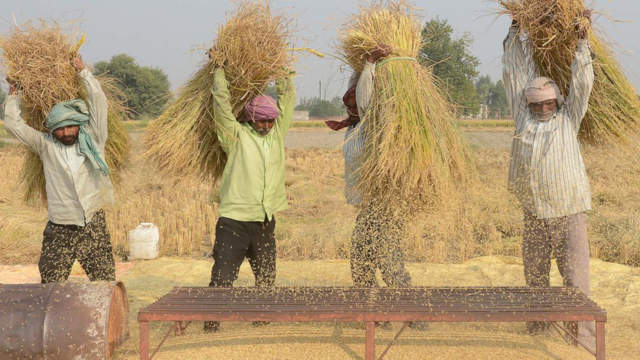
In the sprawling fields surrounding Varanasi and across rural India, a farmer’s year of hard labour culminates in the harvest. Yet, for millions of smallholder farmers, this moment of potential prosperity is often the beginning of a silent, devastating crisis. A significant portion of their produce is lost long before it reaches a dinner plate, creating a paradox where food scarcity and agricultural waste coexist.
The scale of this problem is staggering. According to the Food and Agriculture Organization (FAO), approximately 14 percent of all food produced globally is lost between harvest and retail. This isn’t just a matter of discarded food; it represents a colossal waste of resources and a critical threat to the livelihoods of those who feed us. The environmental toll is also immense, with food loss acting as a major driver of climate change.
This article explores this deep-seated issue of post-harvest waste. It will introduce the pioneering work of organizations like Earth5R, which are tackling this challenge with community-centric models. Their focus is on making essential tools and knowledge accessible to farmers right here on the ground.
The Science of Spoilage: An Unseen Race Against Time
Once a fruit or vegetable is separated from its parent plant, it begins a natural process of decay. It’s a race against time, governed by biological and environmental factors. The primary culprits are microorganisms like bacteria and fungi that thrive on the nutrient-rich tissues of fresh produce.
The post-monsoon heat and humidity here in Uttar Pradesh dramatically accelerate this microbial growth. Research shows a tomato stored at 30°C spoils several times faster than one at a cooler 12°C. This is precisely why the lack of cold storage facilities in our rural areas proves so catastrophic.
Furthermore, mechanical damage is a critical catalyst for spoilage. Imagine a fruit’s skin as its only armour; traditional and rudimentary harvesting tools can easily cause bruises and cuts. Each point of injury then becomes an open gateway for pathogens to invade and colonise the crop.
A study on mango harvesting, for example, showed how even a small drop causes internal bruising that isn’t visible for days. This physical damage, coupled with poor handling on bumpy rural roads, essentially “injures” the crop and makes it far more vulnerable.
The challenge is then compounded by wider infrastructural gaps. A lack of paved roads, poor storage options, and fragmented supply chains all delay the journey from the farm to the market. This lost time ultimately gives decay a winning head start.
The Ripple Effect: Quantifying the Human and Environmental Cost
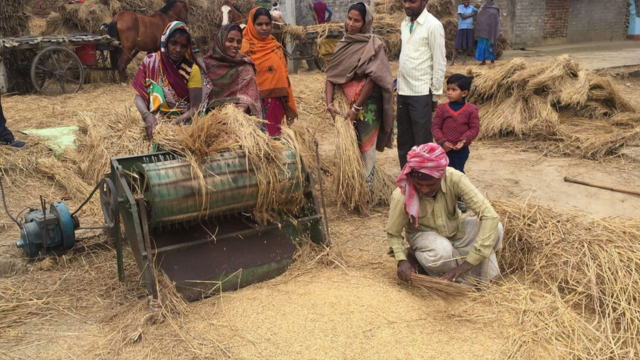
The consequences of post-harvest loss ripple outwards, extending far beyond the farm gate here in Uttar Pradesh. For a smallholder farmer, this loss translates directly into economic devastation. It’s a waste of the capital invested in seeds, fertilisers, water, and months of back-breaking labour.
For a family living on the margins, losing a significant part of their crop can be the difference between stability and a crushing cycle of debt. This is a heavy burden felt in villages all around Varanasi each harvest season.
The impact on food security is equally profound. In a nation still grappling with malnutrition, losing millions of tonnes of nutritious food is a tragedy. The very communities that produce this food often suffer from a lack of access to a diverse diet, a problem made worse by their own harvest losses.
The environmental toll completes this grim picture, as all the resources used to grow the lost food are wasted. The amount of water used globally to produce food that is never eaten is equivalent to the annual flow of the Volga River.
Moreover, when agricultural waste decomposes in landfills, it releases methane, a greenhouse gas over 25 times more potent than carbon dioxide. The UN Environment Programme (UNEP) has highlighted that food loss and waste generate 8-10% of global greenhouse gas emissions, making this an urgent climate priority.
It is a crisis of income, nutrition, and environmental sustainability. It demands solutions that are not only innovative but also deeply rooted in the realities of rural life right here on our doorstep.
Earth5R’s Holistic Blueprint for a Greener Harvest
In response to the multifaceted crisis of post-harvest loss, a new model of intervention is taking root here in Uttar Pradesh. This approach looks beyond single-point solutions, seeking instead to cultivate a resilient agricultural ecosystem from the ground up. It is a necessary shift to tackle the problem at its very source.
At the forefront of this movement is Earth5R, a global social enterprise headquartered in India. Their philosophy is not merely to plug the gaps in the food supply chain. They are working to fundamentally redesign it based on the principles of a circular economy.
This approach views waste not as an endpoint but as a valuable resource, and it empowers local communities as the primary agents of change. By focusing on the entire lifecycle of food production, from soil health to final consumption, Earth5R is building a sustainable framework that inherently reduces waste before it even begins.
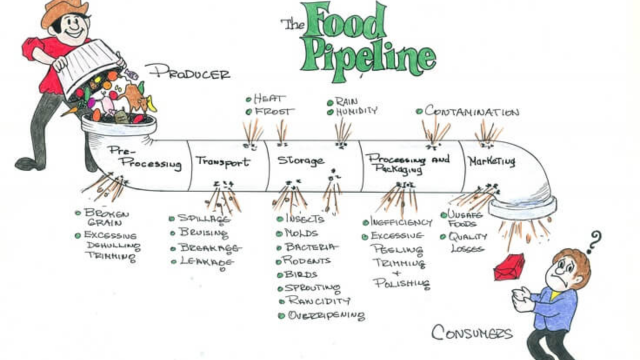
The “leaky” food pipeline: Visualizing how crops are lost between the farm and the consumer.
Beyond the Harvest: A Multi-pronged, Soil-to-Market Approach
The core of Earth5R’s strategy lies in a simple understanding: a healthy harvest begins with healthy soil. Their programs champion regenerative agriculture, a system of farming that enriches our local soils and improves biodiversity. Farmers are trained in organic practices like composting and creating bio-fertilisers, shifting away from chemical inputs that degrade the land over time.
This approach is not just an environmental ideal; it is backed by robust science. Research from institutions like the Rodale Institute has conclusively shown that healthy, organic soils produce more resilient crops. These plants grow with stronger cell walls, making them naturally more resistant to pests and spoilage after being harvested.
Think of it as the agricultural version of preventative medicine. A healthier plant is inherently better equipped to withstand the stresses of storage and transportation. This resilience is a key factor in reducing losses long after the harvest is complete.
This focus on circularity is most evident in Earth5R’s “Waste to Wealth” programs. Here in villages around Varanasi, the organisation teaches farmers to convert agricultural residue into valuable compost. This initiative tackles two of our region’s biggest problems at once.
First, it prevents the harmful practice of crop burning, a major source of air pollution across Northern India each winter. Second, it creates a closed-loop system where the “waste” from one harvest becomes the nutrient-rich foundation for the next.
This model of a circular economy in action reduces the need for expensive chemical fertilisers, cutting costs for farmers. By creating value from what was previously discarded, Earth5R fosters both economic resilience and environmental stewardship at the grassroots level.
The Technology Catalyst: Connecting Farmers with the Earth5R App
Bridging the knowledge gap in the remote rural areas around Varanasi remains a significant challenge. To overcome this, Earth5R has leveraged digital technology through its dedicated Earth5R App. This platform serves as a powerful tool for training, monitoring, and engaging the local community.
For a farmer in a nearby village, the app acts as a direct line to experts and a library of best practices. It covers everything from preparing organic pesticides to implementing effective water conservation techniques. The app also allows for real-time data collection, enabling the organisation to measure and scale its impact effectively.
It’s a 21st-century solution to an age-old problem, using connectivity to bring crucial information to those who need it most. By placing this knowledge directly into the hands of farmers, Earth5R democratises access to sustainable practices, ensuring its impact isn’t limited by geography.
This holistic blueprint—combining soil science, circular principles, and modern technology—lays the essential groundwork. It prepares communities to tackle the more specific, mechanical challenges of the harvest itself.
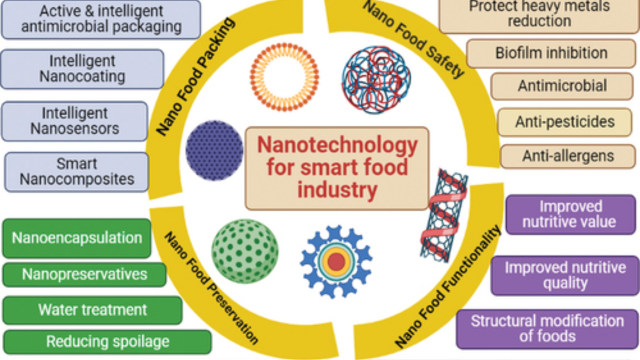
While advanced science like nanotechnology is shaping the food industry’s future, the most impactful solutions for farmers today are often far more accessible.
The Missing Link: Democratising Access to Affordable Harvesting Tools
While healthy soil and sustainable practices create resilient crops, the journey from plant to market presents another critical hurdle: the harvest itself. It is at this stage that a significant portion of potential income is lost, not to pests or blight, but to the sheer mechanics of gathering the crop. Bruises, cuts, and breakages caused by inefficient tools can quickly turn a bumper crop into a financial disappointment.
This is where appropriate technology emerges as the missing link in the fight against post-harvest waste. Scientific studies, including those published by the International Food Policy Research Institute (IFPRI), have repeatedly shown a direct correlation between improved harvesting equipment and a reduction in food losses. The evidence confirms that the right tools make a tangible difference.
The challenge for our farmers, however, is not a lack of innovation but one of simple access. For a smallholder farmer here earning a few dollars a day, a state-of-the-art mechanical harvester is as unattainable as a spaceship. The real need is for tools that are affordable, durable, and designed for the realities of small-scale farming in our region.
Earth5R’s Strategy: From Innovation to Grassroots Implementation
Recognising this critical gap, Earth5R is positioning itself not as a manufacturer of tools. Instead, they act as a crucial facilitator—an organizational catalyst that connects innovation with the farmers who need it most. Their entire strategy is built on their core strength of deep community engagement and trust.
Instead of a top-down approach, they work to build sustainable local ecosystems where technology can be shared and maintained. One of the most promising models for communities here in the Varanasi region is the establishment of a community-based tool bank. This concept functions much like a public library for a village or a farmer producer organisation.
A collection of essential tools—such as manual seed threshers, solar dryers, or improved collection crates—is owned collectively. Individual farmers can then rent this equipment for a nominal fee. This model of democratising access to efficiency drastically lowers the barrier for adopting modern practices.
Crucially, this intervention extends beyond simply providing hardware. Earth5R understands that a tool is only as effective as the person wielding it. Drawing on their extensive experience, they integrate comprehensive education on tool usage, maintenance, and repair into their community programs.
To create a self-sustaining model, they also train local youth to become “tool mechanics.” This ensures the equipment lasts for years and reduces any dependency on outside help. It is a model designed for long-term, local resilience.
Furthermore, Earth5R leverages its network to forge strategic partnerships with agricultural startups, academic institutions, and government bodies. Working with our local Krishi Vigyan Kendras (KVKs), for example, allows them to vet and source the most effective and affordable tools. This ensures the technology introduced is both impactful and perfectly suited to the needs of our communities.
Case in Point: The Solar Bubble Dryer in Rural Uttar Pradesh
To understand the transformative potential of a single, appropriate tool, consider the challenge of drying harvested grain right here in Varanasi. As we’ve seen just these past few weeks, unexpected post-monsoon showers can ruin a crop laid out to dry in the open. A local farmer might lose 15-20% of their rice or wheat harvest to moisture and pests during this vulnerable period.
Now, introduce the Solar Bubble Dryer—an innovation developed by the International Rice Research Institute (IRRI). It is a long plastic bubble, inflated by a small fan, which traps solar heat to dry grains faster and more hygienically. Crucially, it completely protects the harvest from rain, insects, and birds.
Through a community tool bank facilitated by an organisation like Earth5R, a group of 20 local farmers could gain access to one such dryer. Instead of each farmer risking their individual harvest, they can pool their resources and use the dryer in rotation. This ensures everyone’s crop is brought in safely.
A farmer like Ramesh Singh, who previously lost several quintals of rice each season, could now dry his entire harvest securely in a fraction of the time. Research on the dryer’s efficacy shows it can reduce grain losses during this phase by over 50%. It also significantly improves grain quality, fetching a higher price at the market.
“For the first time,” one could imagine Ramesh saying, “I don’t have to look at the sky with fear after my harvest. This dryer is not just plastic; it’s peace of mind.” This example powerfully illustrates how a simple, affordable, and shared piece of technology can deliver a monumental impact. When introduced through a trusted community-led framework, it can transform a farmer’s income and food security.
Voices from the Field: Earth5R’s Model in Action
Abstract models and strategies find their true meaning in the tangible impact they have on people’s lives. The work of Earth5R across India provides a compelling look at how their holistic, community-driven philosophy translates into measurable change. By empowering local residents to become leaders in sustainability, their projects create a ripple effect, addressing environmental challenges while fostering economic resilience. These case studies from Maharashtra and our own state of Uttar Pradesh offer a ground-level view of how tackling waste and empowering communities are fundamental to solving the post-harvest crisis.
Case Study 1: The Circular Economy in Practice in Powai, Maharashtra
In the urban locality of Powai, Mumbai, an Earth5R project offers a powerful blueprint for us. Their solid waste management program trained local residents and waste workers to systematically segregate organic waste from households and markets. This initiative, detailed in reports on the Earth5R website, provides a clear model for action.
Instead of being sent to overburdened landfills, this organic matter was redirected to local composting sites. Through hands-on workshops, citizens learned to convert their daily kitchen and garden scraps into nutrient-rich compost. The project successfully showcases a critical principle: transforming waste into a valuable community asset.
The analogy for a farming village here near Varanasi is direct and powerful. Imagine applying this same model to the agricultural residue we see after every harvest—the stalks, leaves, and unsellable produce. These are the materials typically left to rot or be burned in the fields.
By implementing a similar community composting system, a village can convert tonnes of this ‘waste’ into organic fertiliser. This closes the loop on agricultural nutrients, enriching the soil for the next planting season. It’s a crucial alternative, especially as we head towards the winter months when crop burning severely impacts our air quality.
The Powai project proved that when a community has the knowledge and system to manage its own waste, it reaps both environmental and economic benefits. It’s a testament to a simple idea: the solution to our waste problem, whether on a city street or a local farm, lies in redefining it as a resource.
Case Study 2: Empowering Women for a Sustainable Future in Uttar Pradesh
Right here in our own state of Uttar Pradesh, the challenges of rural life are deeply intertwined with the social and economic status of women. Earth5R’s Livelihood Program provides a stellar example of how social empowerment is a direct pathway to reducing post-harvest inefficiencies. The program focuses on training women from marginalised communities to create sustainable products and establish small-scale enterprises.
A key part of this training involves skills like creating bio-fertilisers and, crucially, food processing. The women learn the art of value addition—turning raw agricultural produce into marketable goods like pickles, jams, or dried spices. This empowers them with the tools for economic self-sufficiency.
This approach tackles post-harvest loss head-on. When a portion of the current tomato harvest is at risk of spoiling due to a market surplus, these trained women can process it. They create sun-dried tomatoes or chutney, giving a perishable product a longer shelf life and a much higher market value.
This is not just waste reduction; it is wealth creation. By equipping women’s self-help groups with these skills, the program fosters economic independence through sustainable enterprise. An article on Earth5R’s livelihood training highlights that when women earn an income, they reinvest it in their families, driving profound community development.
From a small room in a village near Varanasi, a group of empowered women can thus become a critical node in our local food system. They are actively preventing loss while building a more resilient and equitable local economy for everyone.
The Path Forward: Scaling Impact for a Resilient Food Future
The journey from a seed in the soil to food on a plate is fraught with challenges, yet the evidence is clear: the devastating cycle of post-harvest waste is not inevitable. The crisis stems from a complex mix of biological processes, infrastructural gaps, and a lack of access to the right technology. The work of organisations like Earth5R, however, provides a powerful counter-narrative.
By integrating circular economy principles and acting as a vital bridge to affordable tools, their model offers a comprehensive blueprint for a more equitable food system. The case studies show that when farmers are equipped with knowledge and community support, the results are transformative. We see increased incomes, improved food security, and a healthier local environment.
However, scaling this impact from successful pockets of innovation to a nationwide movement presents its own set of hurdles. The primary challenge is creating sustainable financial models and robust policy support for the widespread adoption of these solutions.
This requires collaboration between government bodies, financial institutions, and the private sector. Together, they can create the subsidies, low-interest loans, and market linkages needed to incentivise these sustainable practices. It is about building an ecosystem that supports progress.
As reports from institutions like the National Bank for Agriculture and Rural Development (NABARD) highlight, strengthening Farmer Producer Organizations (FPOs) is a critical step. These collectives have the scale to invest in shared resources like community tool banks. The opportunity also lies in leveraging digital infrastructure to deliver training directly to farmers, a path Earth5R is already paving.
Ultimately, cutting post-harvest waste is about more than just saving food. It is about honouring the immense labour of our farmers and rebuilding our food systems on foundations of sustainability and justice. The path forward requires a unified effort to ensure every farmer, from the fields surrounding our city of Varanasi to the farthest corners of the nation, has the tools and knowledge to secure their future.
Frequently Asked Questions: Post-Harvest Waste and Earth5R’s Solutions
What is the core issue described as the “silent crisis” for farmers?
The silent crisis is post-harvest waste, where a significant portion of a farmer’s harvested crops is lost to spoilage and damage before it can be sold or consumed, leading to devastating financial losses and threatening their livelihood.
How much of the world’s food is estimated to be lost between harvest and retail?
According to the Food and Agriculture Organization (FAO) of the United Nations, approximately 14 percent of the world’s food is lost during the post-harvest stage.
What are the primary scientific reasons for post-harvest spoilage?
The primary reasons are biological factors, such as the growth of microorganisms like bacteria and fungi, which is accelerated by high temperature and humidity, and mechanical damage like bruises and cuts that provide entry points for pathogens.
How does improper harvesting equipment contribute to food loss?
Rudimentary or traditional tools can easily cause mechanical damage like cuts, bruises, and abrasions on produce. This damage compromises the protective skin of the crop, making it highly susceptible to decay and spoilage.
What are the major economic consequences of post-harvest loss for a small farmer?
It leads to a direct loss of potential income and a waste of the capital invested in seeds, water, and labor. For families on the margin, this can mean the difference between economic stability and falling into a cycle of debt.
How does post-harvest waste impact the environment?
It wastes all the natural resources (like land and water) used to grow the food. Furthermore, when agricultural waste decomposes in landfills, it releases methane, a potent greenhouse gas that contributes significantly to climate change.
What is the core philosophy behind Earth5R’s approach to solving this crisis?
Earth5R’s philosophy is based on the principles of a circular economy, where waste is viewed as a resource. They focus on building a holistic, sustainable agricultural ecosystem from the ground up, led by empowered local communities.
What is regenerative agriculture, and how does it help reduce waste?
Regenerative agriculture is a system of farming that enriches soil health and biodiversity. According to the article, healthier soils produce stronger, more resilient crops that are naturally more resistant to pests and spoilage after harvest.
What is Earth5R’s “Waste to Wealth” program?
It’s a program that trains farmers and communities to convert agricultural residue and organic waste into valuable resources like compost. This creates a closed-loop system, reduces pollution from crop burning, and cuts costs for farmers.
What role does the Earth5R app play in their strategy?
The app serves as a digital tool for training, monitoring, and community engagement. It provides farmers in remote areas with access to expert knowledge on sustainable practices, bridging the information gap.
Why are affordable, appropriate tools considered the “missing link”?
Because while sustainable farming can produce healthy crops, significant losses still occur during the physical act of harvesting. Appropriate tools that prevent damage are crucial, but they must be affordable and accessible to small-scale farmers.
What is a “community-based tool bank”?
It is a model where a collection of essential, modern harvesting tools is owned collectively by a village or farmer group. Farmers can rent the equipment for a small fee, giving them access to technology they couldn’t afford individually.
How does Earth5R ensure the long-term success of providing tools?
Beyond just providing hardware, they integrate comprehensive training on tool usage, maintenance, and repair. They also train local youth to become mechanics, creating a self-sustaining support system.
What is the Solar Bubble Dryer and how does it help farmers?
It’s an innovation from the IRRI that uses a plastic tunnel to trap solar heat, drying grains faster and more hygienically than open-sun drying. It protects the harvest from rain, pests, and birds, significantly reducing losses during the drying stage.
How does the case study from Powai, Maharashtra, relate to rural farming?
The Powai project, which trained residents to turn urban organic waste into compost, provides a direct blueprint for how farming villages can manage agricultural residue, turning post-harvest waste into valuable fertiliser.
In the Uttar Pradesh case study, how does empowering women help reduce post-harvest loss?
The program trains women in skills like food processing and value-addition. This allows them to turn surplus or perishable produce (like tomatoes) into marketable goods with a longer shelf life (like chutney), directly preventing waste and creating wealth.
What are the main challenges to scaling up these solutions nationwide?
The primary challenges include creating sustainable financial models, securing policy support from the government, and fostering collaboration between private and public sectors to provide subsidies, loans, and market access.
What role do Farmer Producer Organizations (FPOs) play in this solution?
FPOs are seen as critical for scaling up because these farmer collectives have the organizational capacity and scale to invest in shared resources, such as community tool banks and storage facilities.
What is the ultimate goal of cutting post-harvest waste, according to the article?
The ultimate goal is not just about saving food but about honoring the labor of farmers, ensuring they can secure their future, and rebuilding the food system on a foundation of sustainability and justice.
Besides tools, what two other key elements does Earth5R’s model provide to farmers?
The model provides farmers with essential knowledge through training and digital platforms and a supportive community structure to ensure the sustainable adoption of new practices and technologies.
Empower a Farmer Today
The challenge of post-harvest waste is immense, but the solution begins with a single action. The farmers in the fields around Varanasi, and across India, are not asking for handouts; they are asking for a fair chance to see their hard work nourish our communities. You can be part of that chance.
Support organizations like Earth5R that are on the ground, creating real, sustainable change. Educate yourself and others about the importance of reducing food waste in your own home. Advocate for policies that support smallholder farmers and make appropriate technology accessible.
Whether you volunteer your time, donate to fund a community tool bank, or simply spread the word, your action can help turn a harvest of loss into a harvest of hope.
~Authored By Abhijeet Priyadarshi