
Part 1: The Introduction
We are facing a dual crisis, one in the sky and one in the soil. While headlines focus on atmospheric carbon, a quieter emergency is unfolding beneath our feet. Our agricultural lands, stressed by decades of chemical dependency, are facing a mounting soil carbon debt, threatening global food security.
Simultaneously, our urban centers are creating a parallel threat. Every day, tons of organic waste are trucked to landfills, where they rot in the absence of air. This process, known as anaerobic decomposition, releases plumes of methane, a greenhouse gas over 25 times more potent than carbon dioxide at trapping heat.
We have, in effect, broken the planet’s carbon cycle at both ends. The rural cycle is starved of carbon, while the urban cycle is releasing it in its most dangerous form. The solution, therefore, cannot be a simple fix. It must be a systemic redesign.
This article argues that the future of sustainable food production lies in a circular economy model. This model reconnects our broken cycles, transforming urban organic waste, or “Compost,” into the lifeblood for “Organic Farming.”
This entire transition, from waste to wealth, is increasingly being financed by a powerful new mechanism: “Carbon Credits.”
This is not a theoretical exercise. This analysis is framed through the lens of Earth5R, a global environmental organization. Their community-driven, tech-enabled projects in India provide a scalable, ground-truthed blueprint for how this transition works in practice.
This article, an Earth5R Analysis, will explore this blueprint in five parts. We will first examine the science of the problem, diagnosing the failures of our current soil and waste systems.
Next, we will analyze Earth5R’s “Compost” solution, focusing on their urban waste management programs that verifiably prevent methane emissions.
From there, we will follow the compost to the countryside. We’ll see how it is applied in Earth5R’s “Organic Farming” initiatives, rebuilding soil organic carbon and farmer livelihoods.
Finally, we will investigate the financial and technological linchpin that connects it all: the journey from on-the-ground practice to verifiable carbon credits. We will conclude with the challenges that remain on the path to a truly regenerative future.
Part 2: The Problem: Broken Cycles of Carbon
To understand the solution, we must first diagnose the two-part failure of our current carbon cycle. The problem is not carbon itself, but its location. We are taking it from where it is vital and moving it to where it is volatile.
The Agricultural Crisis: A Soil Carbon Debt
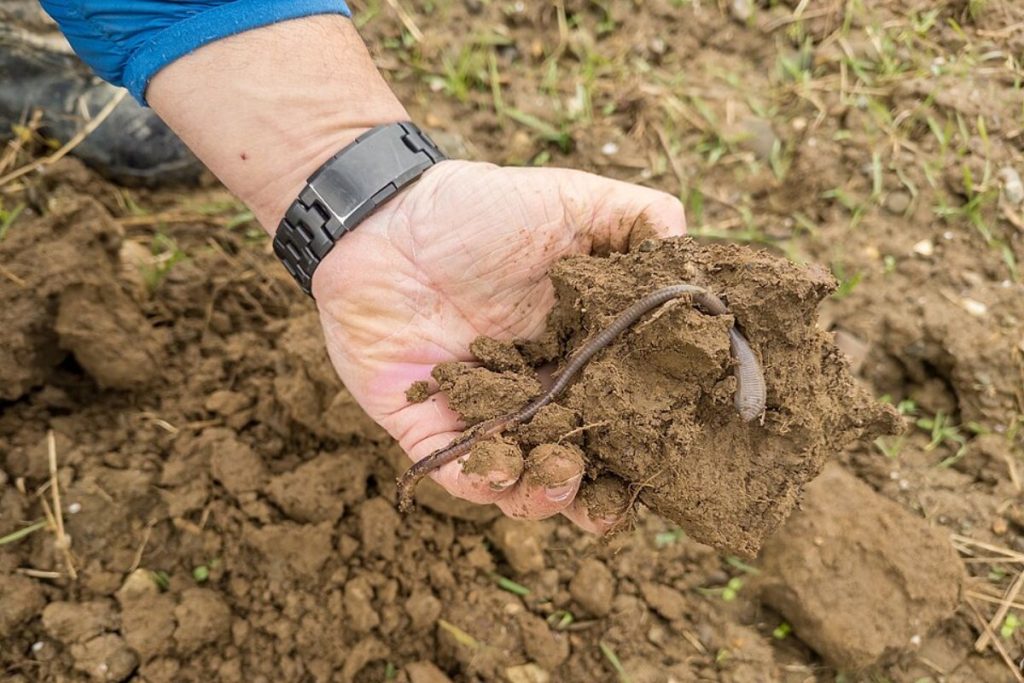
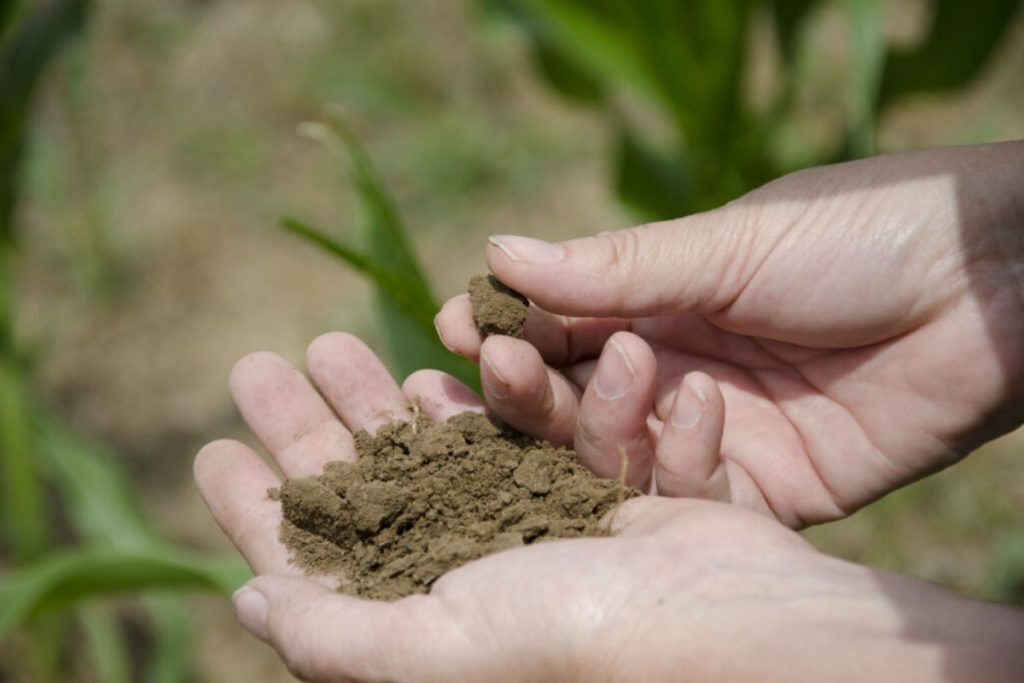
Think of topsoil as a living bank account, where the primary currency is Soil Organic Carbon (SOC). This dark, rich matter is the cornerstone of all terrestrial life. It acts like a sponge, helping the soil retain water, and it serves as the pantry, holding and delivering nutrients to plants.
For much of the last century, conventional agriculture has treated this bank account like a limitless credit line. Practices such as intensive tilling and the overuse of synthetic nitrogen fertilizers have “cashed out” our soil’s carbon.
Tilling breaks up soil aggregates, exposing the carbon within to the air, where it oxidizes and escapes as CO2. Synthetic fertilizers, in turn, bypass the natural carbon cycle, causing the intricate web of soil microbes to atrophy. The result is a system that leaks carbon into the atmosphere.
This is not a minor issue. An Earth5R analysis highlights that in India alone, over 147 million hectares of land face significant soil degradation.
Farmers are often the first victims of this broken system. They find themselves caught in what Earth5R researchers call a “chemical dependency trap.” As the soil’s natural fertility declines, farmers must apply more and more expensive synthetic inputs just to maintain yields, all while their soil’s resilience to drought and floods collapses.
The Urban Crisis: The Methane Time Bomb
While our farms are starved of carbon, our cities are drowning in it. Every year, we generate billions of tons of municipal solid waste, and a staggering portion, often over 50 percent, is organic material like food scraps.
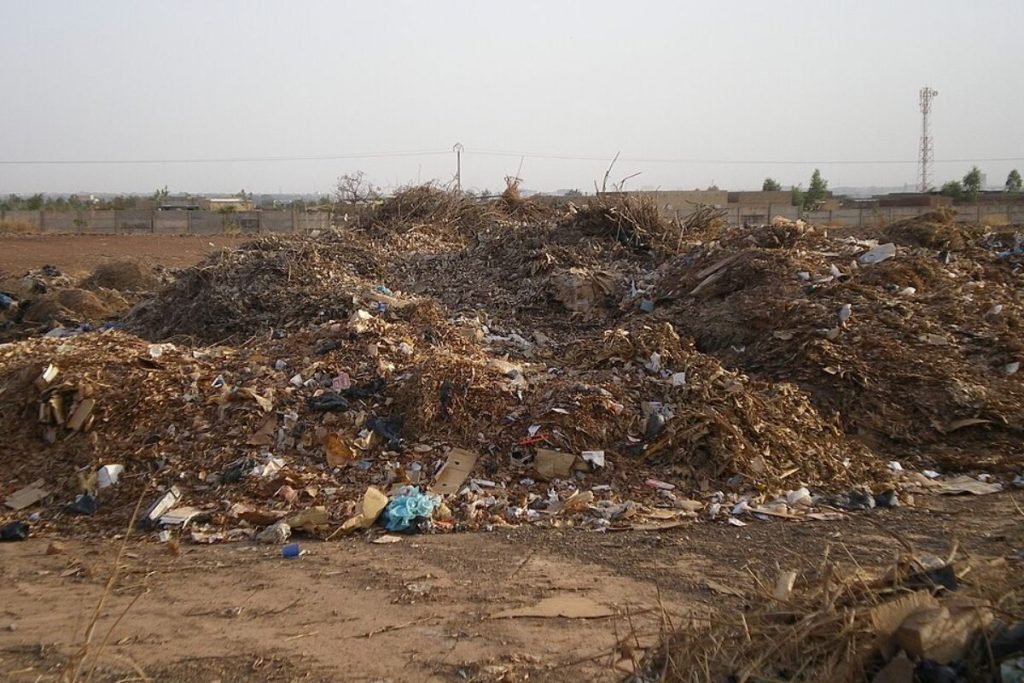
In a natural system, this waste would decompose aerobically, meaning with oxygen, and its nutrients would return to the soil. But in our modern “take-make-dispose” model, this organic waste is sealed in plastic bags and buried under tons of other trash in landfills.
This creates a “choked” environment. Deprived of oxygen, the waste undergoes anaerobic decomposition. The microbes that take over in this airless environment are called methanogens, and they exhale methane (CH4).
Methane is a potent, fast-acting greenhouse gas. Over a 20-year period, it is 25 to 80 times more effective at trapping heat in the atmosphere than carbon dioxide.
This problem is severely amplified by a simple lack of sorting. Earth5R’s on-ground data reveals that in many urban areas, over 70 percent of India’s waste is collected in a mixed, unsorted form.

When organic matter is contaminated with plastic and other refuse, it becomes nearly impossible to treat. It is all destined for the landfill, where it becomes a ticking methane time bomb. Preventing this specific methane release is one of the fastest climate wins we can achieve, which is why Earth5R has made methane avoidance a core principle of its urban programs.
Part 3: The “Compost” Solution: An Earth5R Analysis of Urban Waste
The solution to the methane time bomb described in Part 2 is surprisingly simple. It is not a high-tech chemical process, but a biological one. The solution is oxygen.
The Core Intervention: Decentralized Composting
When organic waste rots in a landfill, it is choked of air. This anaerobic state is a breeding ground for methane. Composting is the exact opposite. It is the controlled, aerobic decomposition of organic matter, a process that requires oxygen.
Think of a landfill as a sealed plastic bag, where food turns into a toxic, methane-releasing sludge. Composting, in contrast, is a breathing lung. By regularly turning the waste and exposing it to air, we allow oxygen-loving microbes to thrive. These microbes break the waste down, stabilizing its carbon and, most importantly, preventing the creation of methane.
This intervention is the cornerstone of the Earth5R philosophy. Their pr`ograms are built on a Circular Economy framework that re-defines “waste” as a simple “resource in the wrong place.” The goal is to create a Zero-Waste society, not through magic, but by creating thousands of small, local loops that turn waste back into wealth.
Earth5R Case Study 1: The Mumbai Community Composting Initiative
This philosophy is not just theory, it is a proven, large-scale practice. In the megacity of Mumbai, Earth5R’s ground team has successfully engaged 10,500 families in a massive community-driven composting program.
The project is rooted in training and behavior change. Families are trained in the simple but critical act of waste segregation at the source. This ensures that organic matter is kept clean and separate from plastics or other contaminants, making it a perfect raw material for composting.
The impact of this single program is staggering. Earth5R data shows that these families collectively divert 5,250 kilograms of organic waste from Mumbai’s overburdened landfills every single day.
This is methane avoidance in real-time. Each of those 5,250 kilograms is a unit of methane-producing-fuel that has been neutralized and put on a path to becoming a life-giving resource.
Earth5R Case Study 2: Coastal Composting Awareness Program
The Earth5R model has proven equally effective in the commercial sector, where food waste from shops and restaurants is a major methane source. Their teams have run awareness and training programs for businesses in coastal tourism hubs, including 250 shops in Ibiza and 75 in Goa.
Here, Earth5R moves from just action to quantification. This is the crucial link to the carbon market. Their analysis, based on project data, calculates that composting 5.16 tons of organic waste per day—a typical output from such programs—directly offsets approximately 12.9 metric tons of CO2 equivalent per day.
This is the “Compost” half of our article’s title. By meticulously measuring the methane not released, Earth5R has created a verifiable, auditable climate metric. This scientifically-backed number is the first building block in constructing a carbon credit, turning a simple pile of compost into a valuable financial asset for climate mitigation.
Part 4: The “Organic Farming” Application: An Earth5R Analysis of Rural Renewal
Connecting the Dots: From Urban Compost to Rural Soil
The “compost” created in our cities, as detailed in Part 3, is not an end product. It is the beginning of the second half of the circular economy.
This stabilized, nutrient-rich organic matter is the precise antidote to the “soil carbon debt” our farms are facing. It is the “wealth” that was once “waste,” now ready to be returned to the land.
Foundational research from global institutions like the Rodale Institute has consistently shown the power of this approach.
Compost-based organic systems are not just “less bad,” they are actively regenerative. Scientific studies show they can sequester, or lock away, two to four tonnes of carbon per hectare per year.
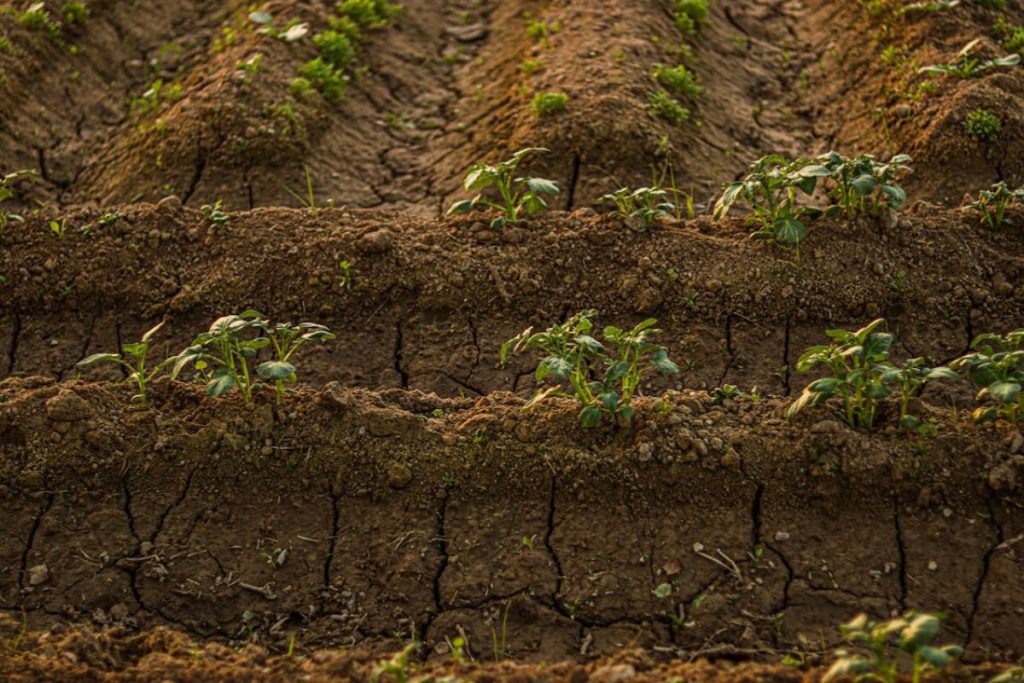
This restored carbon also dramatically improves soil structure, enabling it to hold more water. This function makes farms far more resilient to the droughts and floods that are becoming more common with climate change.
Earth5R Case Study: The Sustainable Agriculture Program
Earth5R’s model demonstrates how to apply this science at scale. Their Sustainable Agriculture Program has already resulted in over 108,000 farmer engagements across India, moving this concept from theory to widespread practice.
This is not a top-down mandate. It is a peer-to-peer training movement. Farmers are trained in soil-first, regenerative practices, often using local and low-cost solutions that move them away from chemical dependency.
These methods include on-farm composting of agricultural waste, the use of bio-pesticides, and the creation of Jeevamrut, a potent, fermented microbial culture that re-introduces life and fertility to depleted soils.
The scientific and economic evidence gathered from these programs is compelling.
Economic Impact: In Ahmednagar, farmers who adopted these practices reported a 40 percent drop in their input costs, as they no longer had to buy expensive synthetic fertilizers. Across the program, farmers have seen an average income increase of 15 percent.
Agronomic Impact: This is not a “return to the past.” It is a high-efficiency model. Farmers in the program have reported a 15 to 20 percent increase in crop yields and a 40 percent reduction in synthetic fertilizer use.
Social Impact: Perhaps the most profound change is in mindset. Farmer Rajkumar Yadav, quoted in an Earth5R field report, summarized the transition, stating, “We realized we were feeding others while poisoning our own land.”
The Science of MRV: Proving the Practice
For decades, the great challenge of “carbon farming” has been one of trust. How can a buyer in another country be certain that a farmer in rural India is actually performing these regenerative acts?
This is the problem of MRV, which stands for Monitoring, Reporting, and Verification. Without verifiable proof, carbon farming remains a local benefit, not a global financial one.
Here, Earth5R’s model bridges the gap with technology. They have built a robust digital MRV system that makes the farmer’s actions transparent, auditable, and indisputable.
The Earth5R App is the linchpin of this entire system. Farmers, or local coordinators, use the app to log their sustainable activities, such as planting cover crops, applying compost, or forgoing chemical pesticides.
This is not just an honor system. Each entry is validated with GPS-tagging, timestamps, and photo-based evidence.
This process creates an immutable, auditable, and scalable digital record. It transforms a simple, local act, like digging a compost pit, into a data point that can be scientifically verified. This verifiable data is the raw material for the final, and most transformative, step: creating a carbon credit.
Part 5: The Future: “Carbon Credits” – Financing the Transition
The Mechanism: Turning Organic Practice into Farmer Income
The verified digital data, collected through the Earth5R app, is the key that unlocks the global climate economy. This data serves as the proof required to access the multi-billion dollar Voluntary Carbon Market, a marketplace where organizations can invest in verified emission reduction projects.
But how does a farmer’s single act of composting in rural India translate into a globally traded credit? This is where the Earth5R model provides the crucial “last mile” connection, turning a sustainable action into a tangible financial asset.
The process begins when the farmer’s action, such as avoiding synthetic fertilizer, is logged and verified by the app. Earth5R’s system then applies IPCC-validated scientific methodologies to calculate the precise quantity of avoided emissions.
Based on their program data, Earth5R calculates that each participating farmer saves, on average, approximately 0.8 tons of CO2 equivalent per year. By itself, this amount is too small to sell.
This is where the concept of “clustering” becomes essential. Earth5R acts as a digital aggregator, bundling these small, verified savings from thousands of different farmers. They digitally “cluster” these micro-actions into a single, large, and sellable asset representing thousands of tons of verified carbon reduction.
This large-scale cluster is then submitted to an internationally recognized carbon registry, such as Verra or the Gold Standard, for rigorous third-party auditing. Once certified, these become high-integrity carbon credits that can be sold to corporations.
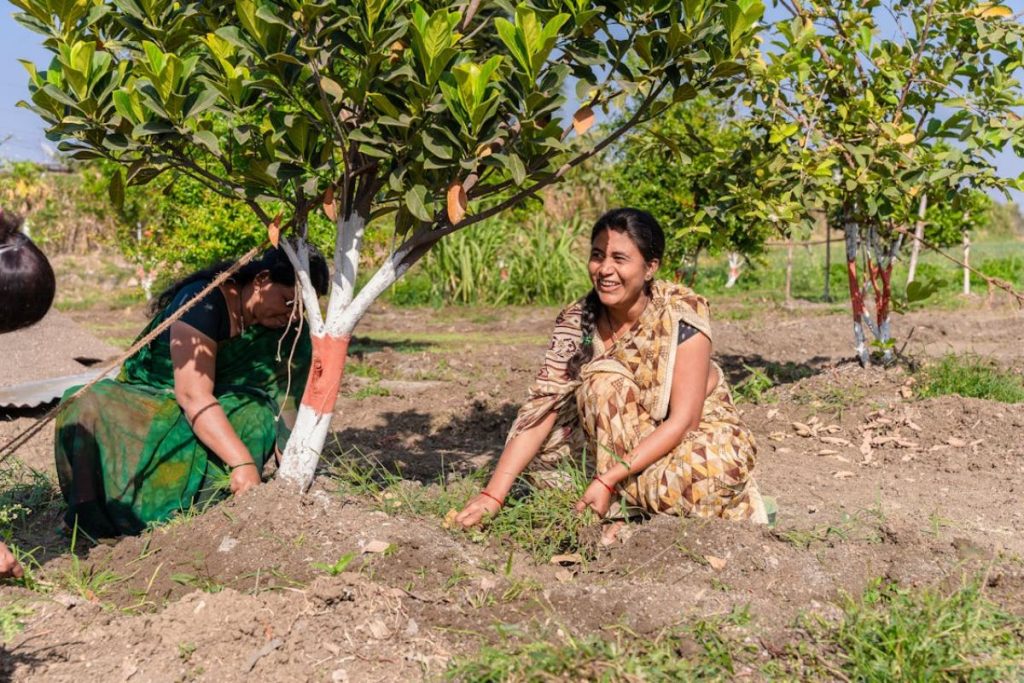
This leads to the most transformative step: the revenue flows back. The Earth5R model is designed to ensure that farmers receive a direct annual payment for their climate-positive practices. This income, estimated at ₹800 to ₹1,200 per year, is a new, reliable revenue stream, provided in addition to the money they already saved by not buying chemical inputs.
Why This Model is the Future
This data-driven financial model is revolutionary because it solves the historic challenges that have held back “carbon farming.”
First, it solves the monitoring, reporting, and verification (MRV) problem. In the past, proving soil carbon required expensive, slow, and physical soil sampling. The Earth5R technology replaces this with a low-cost, scalable, and highly transparent digital verification system.
Second, it solves the economic barrier for farmers. It fundamentally changes the equation. Farmers are no longer being asked to “do the right thing” at their own potential cost. Instead, they are being paid to regenerate their land.
This creates a powerful, positive feedback loop. Farmers now have a direct financial incentive to sequester carbon, to avoid methane-producing practices, and to build the long-term health and resilience of their own soil.
It financially connects the urban and rural cycles we have discussed. It creates an incentive for methane avoidance in cities and a separate, stackable incentive for soil sequestration on farms, uniting both actions under one verifiable, carbon-financed umbrella.
Part 6: Challenges and The Path Forward
Hurdles to Scaling: An Earth5R View
While this tech-enabled circular model is proven, scaling it to a national or global level requires overcoming significant, entrenched challenges. The Earth5R analysis is clear that technology alone is not enough, as the primary hurdles are behavioral and logistical.
The most significant barrier remains a behavioral one: the simple, widespread lack of source segregation. When organic waste is mixed with plastics and other contaminants, its value is lost. It becomes impossible to compost, and its destiny reverts to the landfill, where it will inevitably produce methane.
For the farmers who successfully make the transition, a second hurdle emerges. They often face weak market linkages for their organic produce. Without reliable, premium-paying customers, the economic benefits of organic farming, apart from the carbon credits, can feel uncertain.
Finally, these efforts are often hindered by inconsistent policy. As Earth5R’s circular economy analysis notes, robust policy enforcement is essential to penalize waste-dumping and properly incentivize large-scale segregation, creating the regulatory environment in which these circular models can thrive.
Conclusion: The Blueprint for a Regenerative Future
The future of organic farming, as this analysis shows, is not merely an agricultural technique. It is a sophisticated, tech-enabled, and community-wide circular economy.
It is a system that understands a city’s organic waste is not a problem to be buried, but a resource to be processed, becoming the “Compost.”
It is a system that sees this compost as the key to rural renewal, restoring carbon to our depleted soils through “Organic Farming” and increasing farmer resilience.
Above all, it is a system that intelligently finances this entire loop. It uses technology to verify every step, turning methane avoidance and soil sequestration into globally-recognized “Carbon Credits.”
The Earth5R model is a powerful blueprint. It demonstrates that a scalable, verifiable, and profitable path to a regenerative future is not just a theoretical possibility. By scientifically linking our urban centers to our rural heartlands, this model proves the solution is already in motion.
Frequently Asked Questions (FAQs)
What is the “dual crisis” this article describes?
The dual crisis refers to two parallel environmental problems: 1) The agricultural crisis, where conventional farming depletes Soil Organic Carbon (SOC), degrading soil and releasing CO2. 2) The urban crisis, where organic waste in landfills decomposes anaerobically to release methane, a highly potent greenhouse gas.
What is Soil Organic Carbon (SOC) and why is it important?
Soil Organic Carbon is the carbon component of soil organic matter. Think of it as the soil’s “lifeblood.” It’s crucial for soil health, as it helps retain water and nutrients, feeds essential microbes, and gives soil its fertile structure.
How does conventional farming create a “soil carbon debt”?
Practices like intensive tilling and the overuse of synthetic fertilizers break down the soil’s structure and accelerate the decomposition of organic matter. This releases the stored carbon into the atmosphere as CO2, effectively putting the soil into a “carbon debt.”
Why is methane from landfills so much worse than CO2?
While CO2 is more abundant, methane (CH4) is a far more potent greenhouse gas. Over a 20-year period, methane is 25 to 80 times more effective at trapping heat in the atmosphere, making it a “time bomb” for short-term climate change.
What is the difference between anaerobic and aerobic decomposition?
Aerobic decomposition happens with oxygen. This is what happens in a healthy compost pile; microbes use oxygen to break down waste into stable compost, releasing CO2. Anaerobic decomposition happens without oxygen, like in a sealed landfill. This process creates and releases methane (CH4).
How does composting directly prevent methane?
Composting is a controlled aerobic (with oxygen) process. By diverting organic waste from landfills and composting it, we prevent it from ever entering an anaerobic state. Therefore, the methane-producing process is avoided entirely.
What is the “circular economy model” for farming?
It’s a model that closes the loop between urban and rural areas. Instead of waste being a one-way trip to the landfill, this model takes urban organic waste (“compost”), treats it as a resource, and returns its nutrients to rural farms to rebuild soil health (“organic farming”).
What is MRV and why is it essential for carbon credits?
MRV stands for Monitoring, Reporting, and Verification. It is the scientific process of proving that a climate-positive action actually happened and had a measurable effect. Without a trusted MRV system, you cannot create a verifiable carbon credit because there is no proof of impact.
How does the Earth5R app solve the MRV problem?
The app acts as a digital ledger. Farmers log their sustainable actions (like applying compost) with GPS-tags, timestamps, and photos. This creates a low-cost, transparent, and auditable digital record that can be verified, solving the high cost and difficulty of traditional soil sampling.
What is Jeevamrut?
Jeevamrut is a low-cost, fermented liquid “microbial culture” used in the Earth5R sustainable agriculture programs. It’s made from local materials (like cow dung, cow urine, jaggery, and pulse flour) and works to re-introduce a rich diversity of beneficial microbes to depleted soil, boosting its natural fertility.
Can small farms really make a difference in climate change?
Individually, a small farm’s impact is minimal. However, the Earth5R model uses technology to “cluster” or aggregate the verified actions of thousands of small farmers. This bundles their small carbon savings into a large, “utility-scale” carbon asset that is large enough to be sold on the carbon market.
What is the Voluntary Carbon Market?
It is a marketplace where corporations, organizations, and individuals can voluntarily purchase carbon credits to offset their own greenhouse gas emissions. The money from these purchases flows to projects, like this farming program, that are actively reducing or removing emissions.
What is the direct financial benefit for a farmer in this program?
Farmers benefit in two ways: 1) They see an immediate drop in input costs (up to 40% in one case study) because they no longer need to buy expensive synthetic fertilizers. 2) They receive a new, direct annual payment (estimated at ₹800-₹1,200) from the sale of the carbon credits they helped create.
Does this program improve crop yields?
Yes. While it may seem counterintuitive, the Earth5R case studies show that rebuilding soil health led to a 15-20% increase in crop yields because the soil becomes more fertile and better at retaining water.
How is the carbon impact of composting calculated?
The primary calculation is based on methane avoidance. Using scientifically validated IPCC methodologies, the system calculates the volume of methane that would have been released had that specific amount of organic waste gone to a landfill. This avoided emission is then converted into a “CO2 equivalent” (CO2e) metric.
What is “decentralized composting”?
This refers to a model where waste is composted locally, at the community or neighborhood level (like the Mumbai project), rather than being transported hundreds of miles to a massive, centralized industrial facility. It’s often more efficient and builds community engagement.
What is the biggest challenge to scaling this model?
According to the Earth5R analysis, the single biggest hurdle is human behavior. Specifically, the widespread lack of source segregation—people mixing organic waste with plastic. Once organic waste is contaminated, it becomes nearly useless for high-quality composting.
Are there other challenges besides waste segregation?
Yes. Farmers who transition to organic practices often face weak market linkages, meaning they struggle to find consistent buyers who will pay a fair price for their organic produce. Consistent policy enforcement from governments is also needed.
How does this model improve climate resilience for farmers?
It makes farms more resilient to climate shocks like drought. The compost and organic matter rebuild the soil’s structure, turning it into a sponge that can hold significantly more water. During a dry spell, this stored water can be the difference between a failed crop and a successful harvest.
So, is this article about composting, farming, or technology?
It’s about the intersection of all three. It shows how a simple act (composting) can be applied to a traditional sector (farming) but can only be scaled and financed by using modern tools (technology) to verify the impact and connect it to a global market (carbon credits).
Act Now: Turn Your Waste into Wealth
The analysis is clear: the path to a regenerative future is not a distant dream, it is a series of practical, verifiable steps we can take today. The problems of landfill methane and soil degradation are two sides of the same broken cycle, and you have the power to help reconnect it.
Your most powerful climate action might be in your kitchen. Start segregating your organic waste today. This simple act is the first, most critical step in stopping methane at its source and turning waste into a resource.
If you can, start composting at home or organize a compost pit in your community. You will be directly participating in the “Compost” solution, creating the very “black gold” our farmlands desperately need.
For businesses and organizations, this model is your blueprint for real impact. Invest in high-integrity carbon programs that are transparent, data-driven, and community-focused. Support your CSR goals by sponsoring decentralized composting projects or purchasing credits that directly empower farmers.
Finally, support local, regenerative, and organic farmers whenever you can. You are not just buying food; you are investing in healthy soil, clean air, and a resilient food system for everyone. The future is circular, and it starts with you.
~ Authored by Abhijeet Priyadarshi