
Bharati
Marathe
Environmental Architect · IGBC Accredited Professional
An architect who turned sustainability from a personal practice into a movement. Bharati Marathe was part of Earth5R's co-founding team, led its early community composting and waste programmes in Mumbai, and today brings sustainable design into architecture education as Faculty and Research Cell Head at Dr. Baliram Hiray College of Architecture, Mumbai. Her writing argues that every city's environmental crisis begins with decisions made at the drawing board.

Bharati Marathe is an architect by profession with a Masters in Environmental Architecture and an IGBC Accredited Professional credential from the CII-Indian Green Building Council. After her bachelor's degree in architecture she joined an architecture firm, where she developed a parallel interest in child development and education.
That interest led her to found Love of Learning (LOL), an institution for creative learning for small children, founded out of a love for children and their learning. She speaks extensively on child development, children's value systems, and the role children can play in changing society's beliefs.
She was part of the co-founding team of Earth5R with founder Saurabh Gupta, starting with local initiatives such as rejuvenating Powai Lake in Mumbai. At Earth5R, her interest in balancing human development, respect for the environment, and social responsibility became her professional journey.
Today she is Vice President and Head of Research and Innovation at Earth5R, Faculty and Research Cell Head at Dr. Baliram Hiray College of Architecture, Mumbai, and a knowledge partner in Project Earth Talk. She has also taught at Rachana Sansad Academy of Architecture. She works at the intersection of urban environmental practice, green building standards, and architectural education.
Sustainability at Home, on Site, in the Classroom, and in Research
Sustainable Lifestyle and Practices
Turned children's birthday parties into eco-friendly events with clean-up drives and tree planting, replacing return gifts with saplings. Segregates wet waste for composting and dry waste for recycling and upcycling at home, and transformed her own balcony into a green space as a model for urban greening.
Sustainability in Action
When Mumbai's municipal corporation directed large housing societies to segregate their own waste in 2017, she led Earth5R's response in Powai, including Raheja Vihar and Hiranandani: training housekeeping staff and building vertical composters from recycled oil drums. Her work spans Earth5R's research cell, Earth Talks, urban greening, circular economy, and women's empowerment programmes.
Teaching Sustainability in Architecture
Faculty and Research Cell Head at Dr. Baliram Hiray College of Architecture, Mumbai, teaching future architects that sustainable decisions taken at the design stage shape long-term environmental performance. Her academic work includes sustainable village tourism proposals with the Tourism Department, Maharashtra.
Research for Sustainable Built Environments
Mentors architecture theses through the full research process, from literature review and data collection tools to data analysis, inferences, and design proposals, promoting research that ensures sustainable built environments.

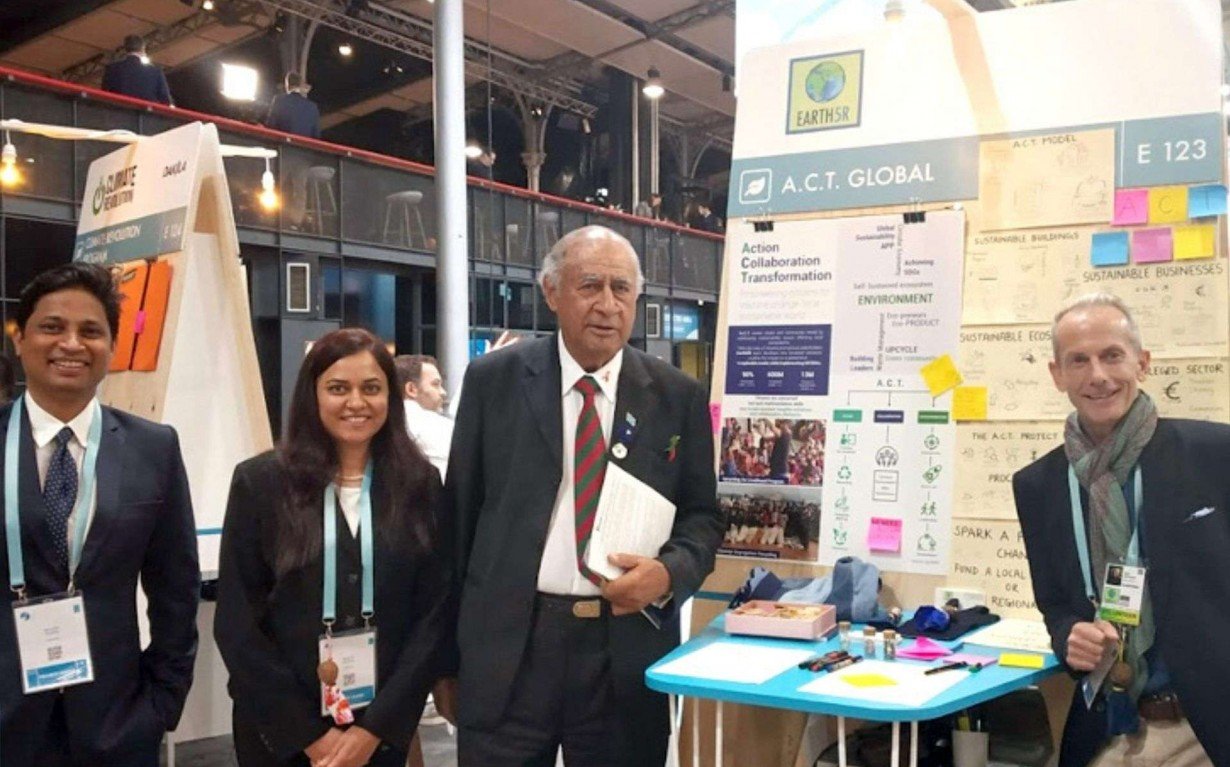
From Powai to Paris: The A.C.T. Project
As Vice President and Head of R&D, Bharati Marathe started Earth5R's first comprehensive waste management programme. The citizen-led A.C.T. model then grew into ACT Powai, turning a Mumbai locality into a living lab for sustainability.
A.C.T. was selected for the first edition of the Paris Peace Forum from over 840 applications: one of 119 projects worldwide and one of four from India. Bharati represented India in Paris with the Earth5R team. As she puts it, recognition followed evidence.
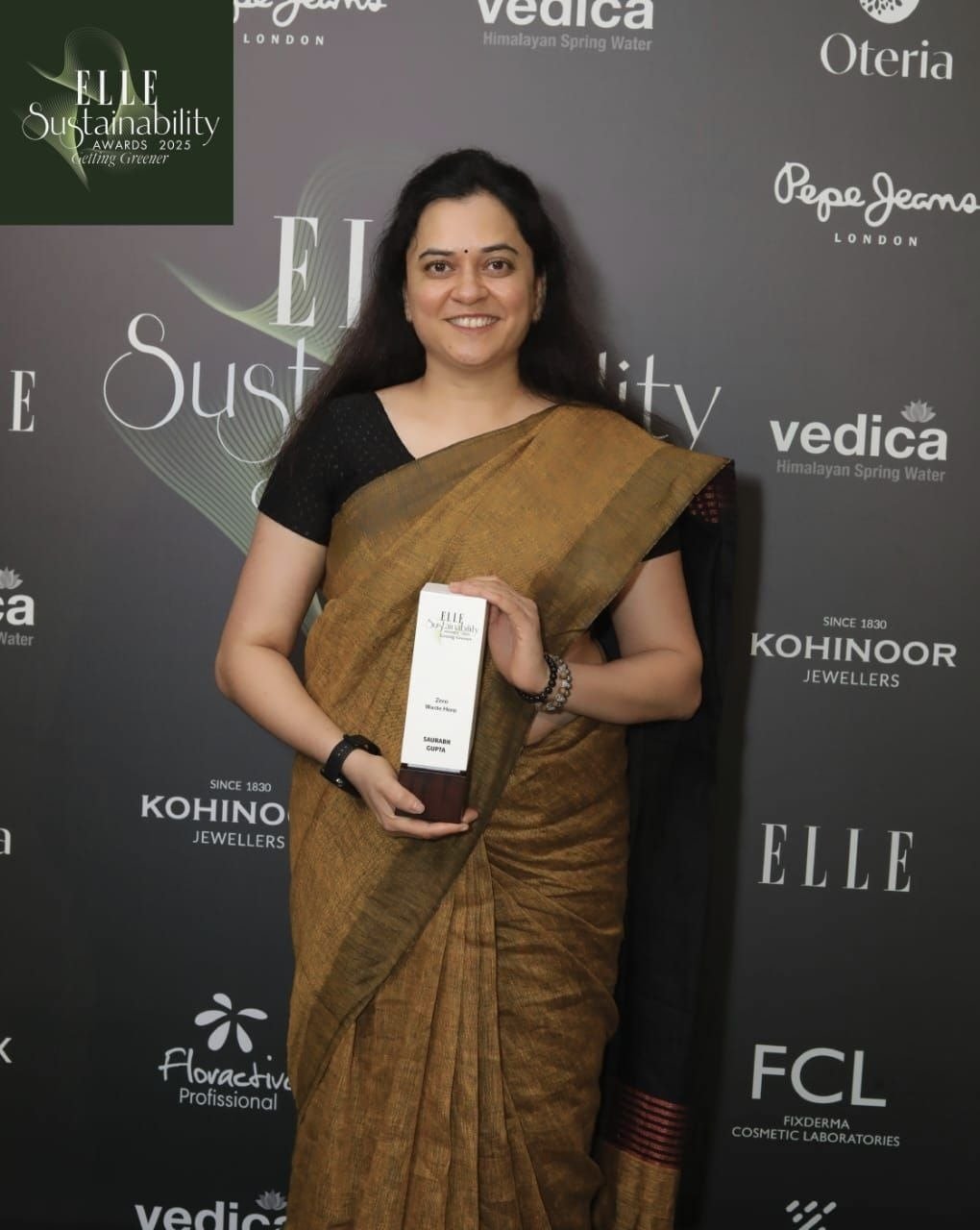
ELLE Zero Waste Hero, for Earth5R
At the ELLE Sustainability Awards 2025, which honoured India's leading sustainability changemakers, Bharati Marathe received the ELLE Zero Waste Hero award for Earth5R.
ELLE recognised Earth5R's citizen-led sustainability model, which combines environmental education, digital tools, and community action to promote zero-waste practices in over 150 cities.
For Bharati, it recognised work she has helped build from its earliest days: the community composting and waste management programmes she led in Powai.
Architect, Educator, Climate & Sustainability Leader
Earth5R & Sustainability
Vice President, Head of Research & Innovation
Part of Earth5R's co-founding team; leads its research and innovation, from early composting and waste programmes in Powai to the BlueCities river and urban sustainability initiative.
Knowledge Partner
Contributes as a knowledge partner to Project Earth Talk.
Speaker
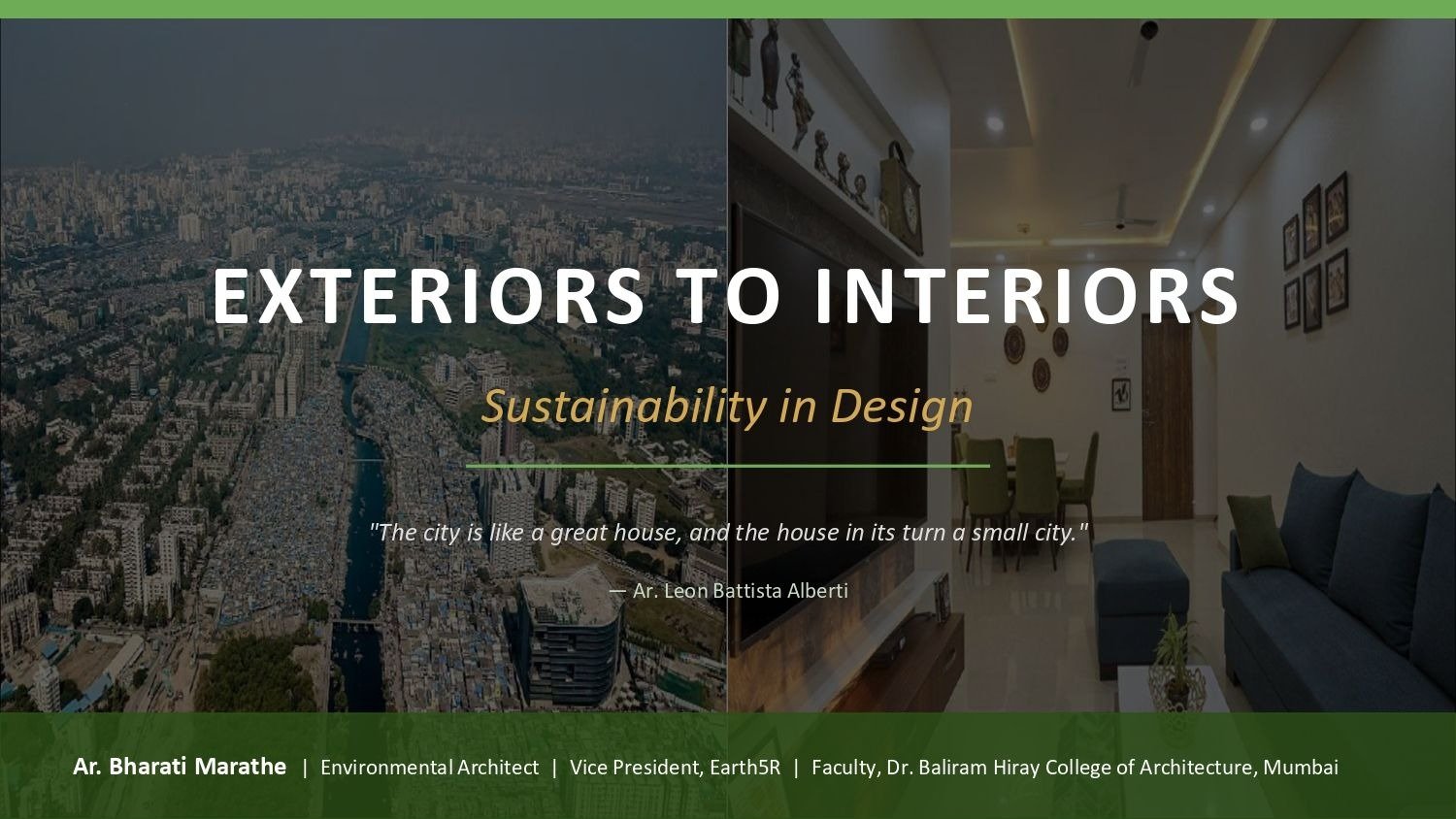
Spoke on "Exteriors to Interiors" at the International Conference on Sustainable Space Design at SVT College, SNDT Women's University (2026), on climate mitigation at APD Academy's Let's Change The Climate: Mitigation Matters (2024), and on her 12-year sustainability journey at the BlueCities India Sustainability Meetup (2025).
Architecture & Education
Faculty & Research Cell Head
Teaches sustainable design and heads the college's research cell, mentoring final-year dissertations with structured peer review, and delivers a lecture series on environmental architecture and sustainability for Master's students in Project Management. She has also taught at Rachana Sansad Academy of Architecture.
Workshop Lead, The Write Time
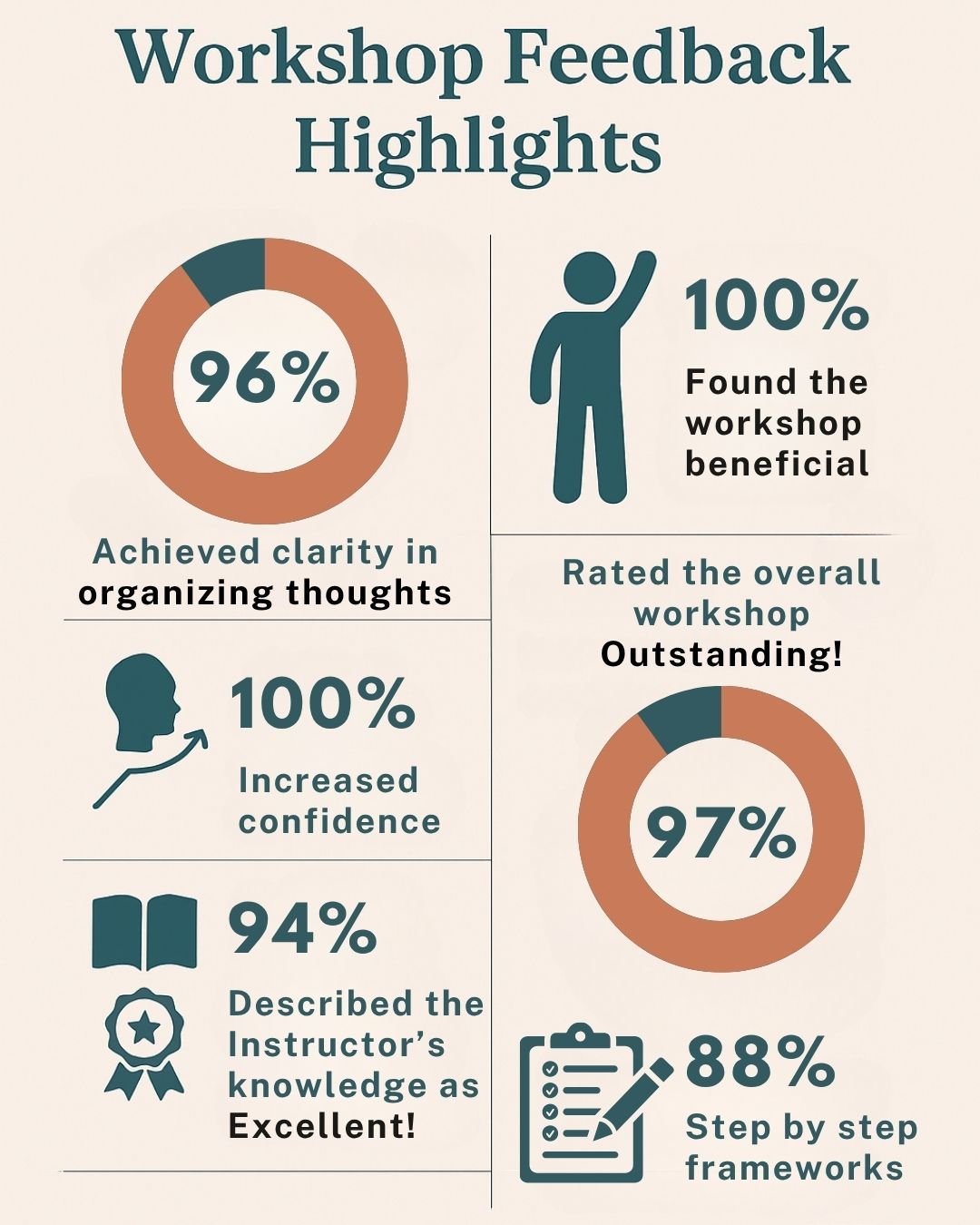
Research methodology for Bachelor of Architecture design dissertations; rated Outstanding by 97% of participants.
Founder
An institution based on creative learning for small children.
Architect
Joined an architecture firm after completing her Bachelor of Architecture. Also an IGBC Accredited Professional.
Her Point of View: Sustainability Is Decided at the Drawing Board
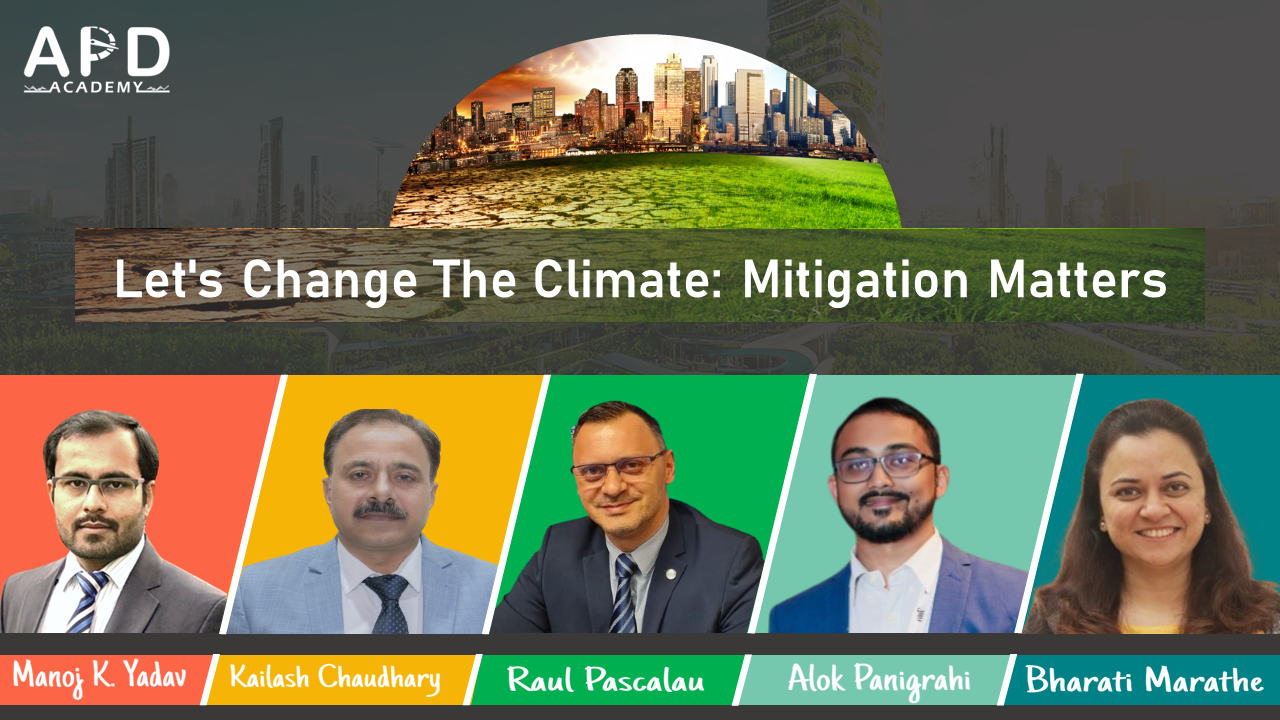
Let's Change The Climate: Mitigation Matters
On 10 March 2024, Bharati Marathe spoke at APD Academy's live audio event on climate action, alongside Manoj K. Yadav, Kailash Chaudhary, Raul Pascalau, and Alok Panigrahi.
The session brought together climate champions to discuss strategies to combat climate change, adaptation to its impacts, and innovative solutions, with a shared call to move from discussion to action.
She joined the panel as an environmental architect and researcher, bringing the built environment into a conversation often focused on energy and policy alone.
Green Buildings: Myth or Reality?
The label can certify what was built. The architect decides what is worth building.
Read the article ↗Green buildings are real, but certification cannot fix decisions made too late. In Mumbai, land economics push designs to maximise floor space, sacrificing orientation, shallow floor plates, and shading. Since those early choices fix most of a building's energy load, she argues regulation should tie floor area entitlement to thermal performance.
- Opens with a scene from her design studio: a student's climate-responsive project erodes step by step once maximum FSI enters the brief.
- Credits IGBC's Version 4.0 for making envelope performance mandatory, but notes it applies only to buildings that opt in, while Mumbai's mandatory DCPR 2034 sets no such condition.
- Links envelope-indifferent construction to Mumbai's rising land surface temperatures and urban heat costs.
- Poses direct questions to architects, developers, policymakers, and educators, citing Singapore's Green Mark floor-area incentive as a model worth adapting.
Every City's Environmental Crisis Begins inside a Room
Intentions do not reduce cooling loads. Calculations do.
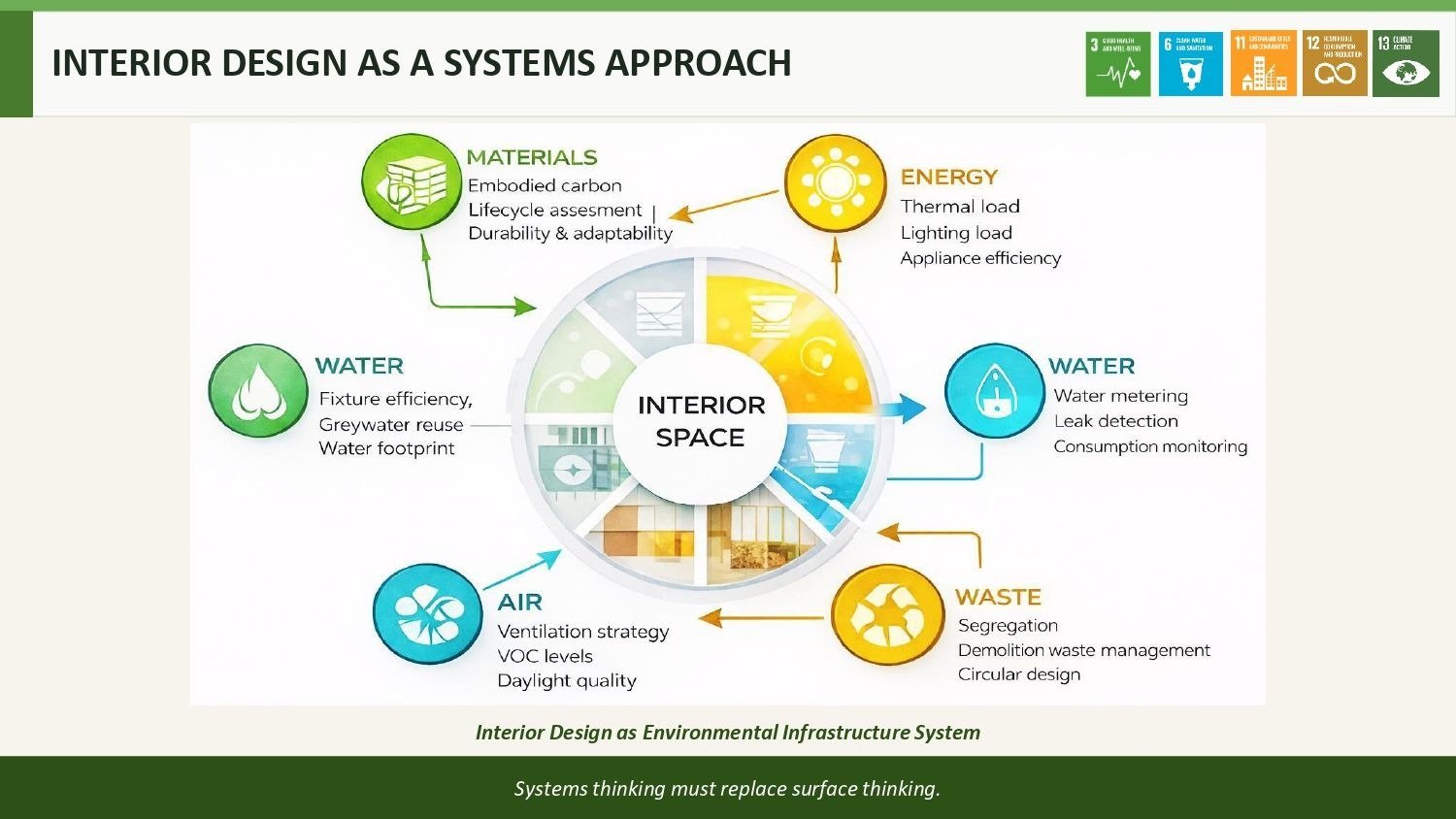
Read the article ↗Urban environmental crises start at the scale of a single room, which makes interior designers a missing link between city policy and real outcomes. Every room manages energy, water, air, waste, and materials, and each can be measured and specified before anything reaches site.
- Draws on Earth5R's 2017 Powai work: composters ran and residents were willing, yet segregation failed because government bins did not fit Indian kitchens.
- Notes the gap has widened under the Solid Waste Management Rules 2026, which require four-stream segregation at source.
- Sets out practical specifications for energy, low-VOC materials, water fixtures, and construction waste, using IGBC, GRIHA, ECSBC 2024, and BEE tools.
- Closes with her rule for the profession: measure, document, replicate.
Exteriors to Interiors
Interior design is not decoration. It is environmental infrastructure.
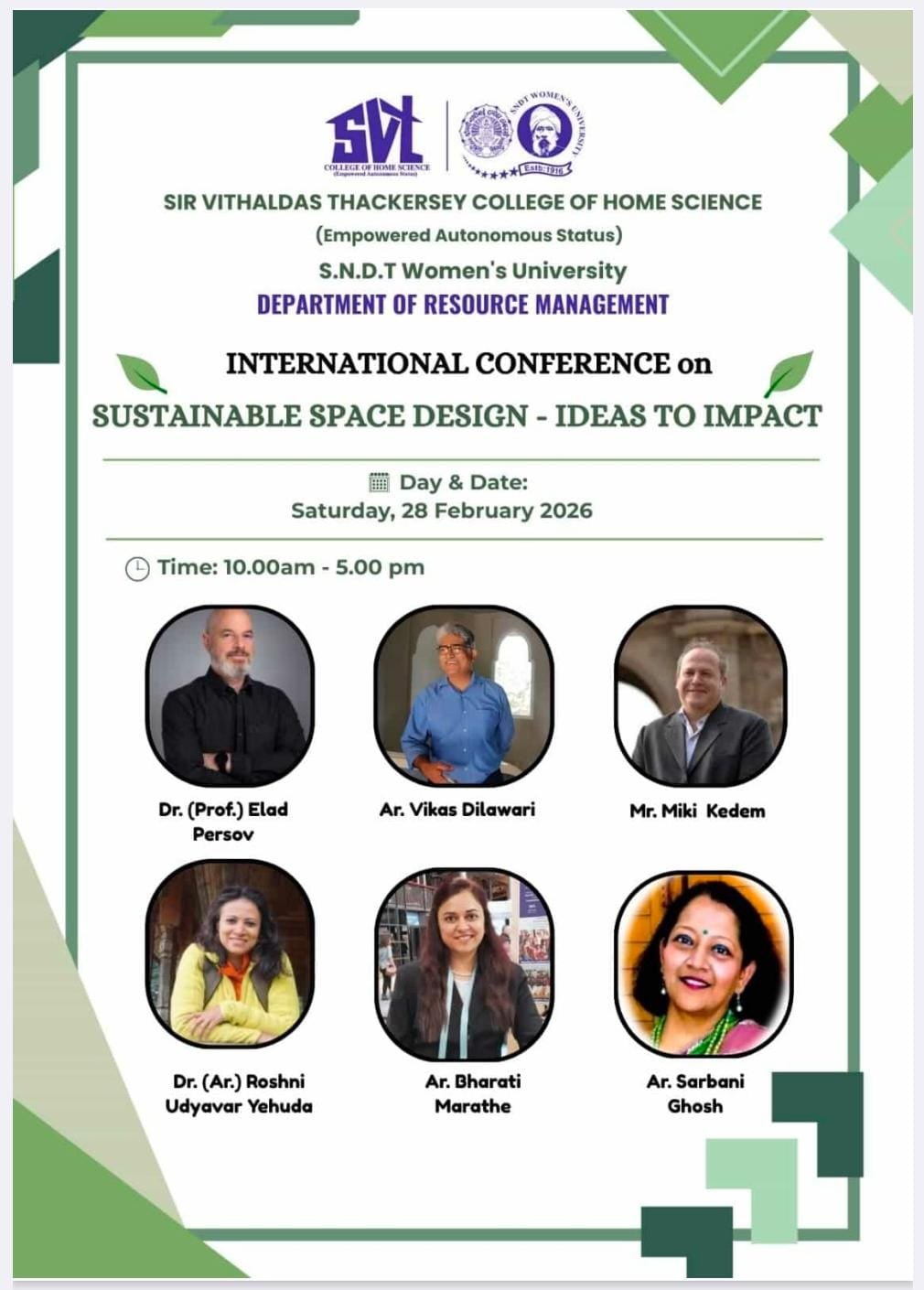
View the post ↗Cities and homes work as systems, so sustainable interiors are about designing flows of energy, water, air, materials, and waste, not adding plants or picking a "green" product. She presented this at the International Conference on Sustainable Space Design – Ideas to Impact, hosted by the Department of Resource Management at Sir Vithaldas Thackersey College of Home Science, SNDT Women's University, Mumbai.
- Used Earth5R's A.C.T. Powai project to show how community-scale circular patterns apply inside homes.
- Argued that design decisions must be quantifiable, materials judged on lifecycle impact, and ventilation, daylight, and thermal buffering calculated rather than assumed.
- As an IGBC Accredited Professional and design faculty, stressed that circularity must begin at the drawing board, at the scale of a neighbourhood or a single apartment.
- Shared the dais with her mentor Dr. Roshni Udyavar Yehuda, Ar. Vikas Dilawari, Dr. Elad Persov, Ar. Sarbani Ghosh, and Mr. Miki Kedem.
Earth5R: Hero in Waste Management 2025
Transforming waste from a liability into an opportunity.
View the post ↗Earth5R's waste work succeeds because it connects every scale, from household habits to neighbourhood systems to entire river clean-ups, combining education, technology, community leadership, and circular economy principles. That integrated approach earned national recognition at the ELLE India Sustainability Awards 2025.
- At household level, the Home Equals Planet initiative trained citizens in segregation and composting, with progress tracked on data dashboards.
- At community level, decentralised waste units in housing societies enabled composting at source and brought informal waste workers into formal systems.
- At city scale, clean-ups extended from beaches and lakes to Mumbai's Mithi River.
- Aligns the model with Swachh Bharat Mission and the Sustainable Development Goals, with implementation in Mumbai, Pune, Thane, and beyond.
The Power of Peer Review in Design Education
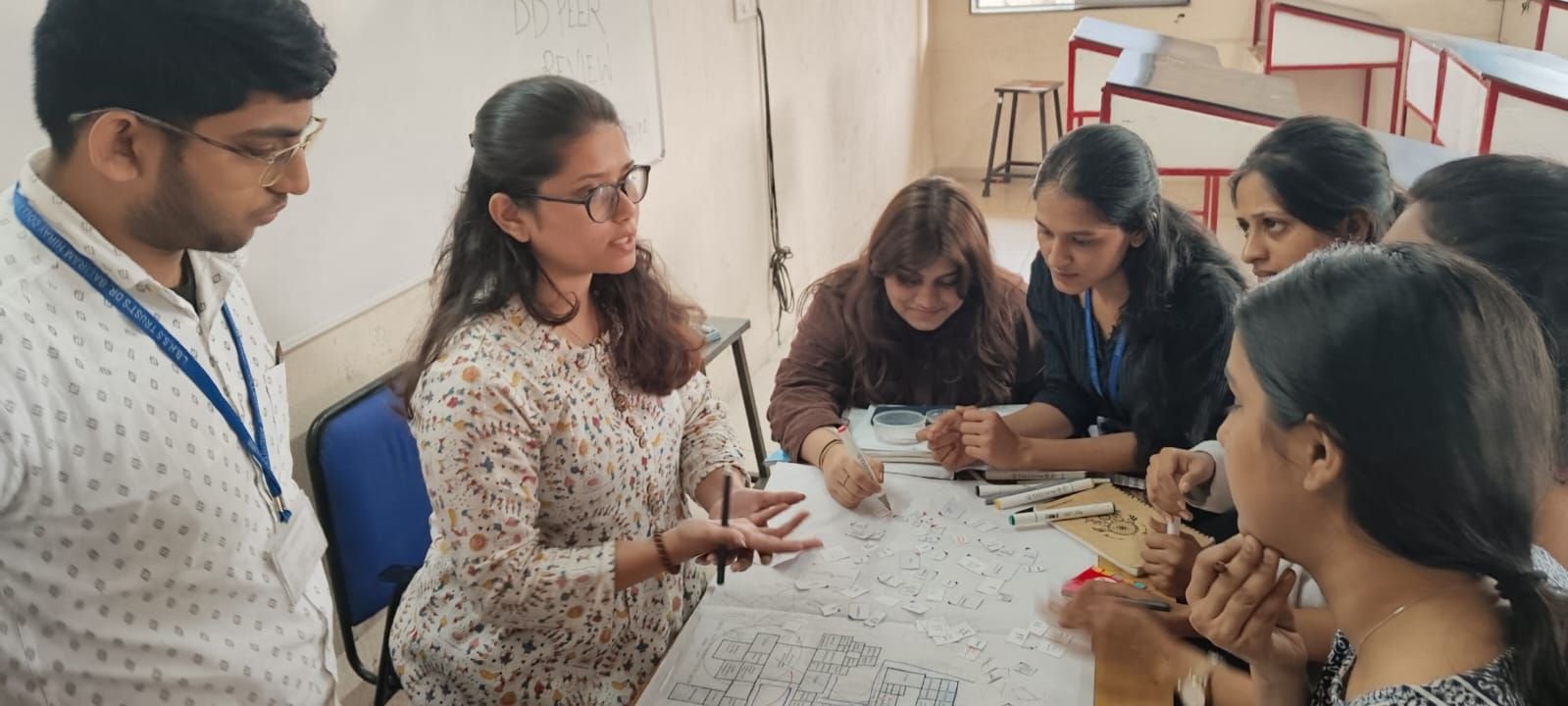
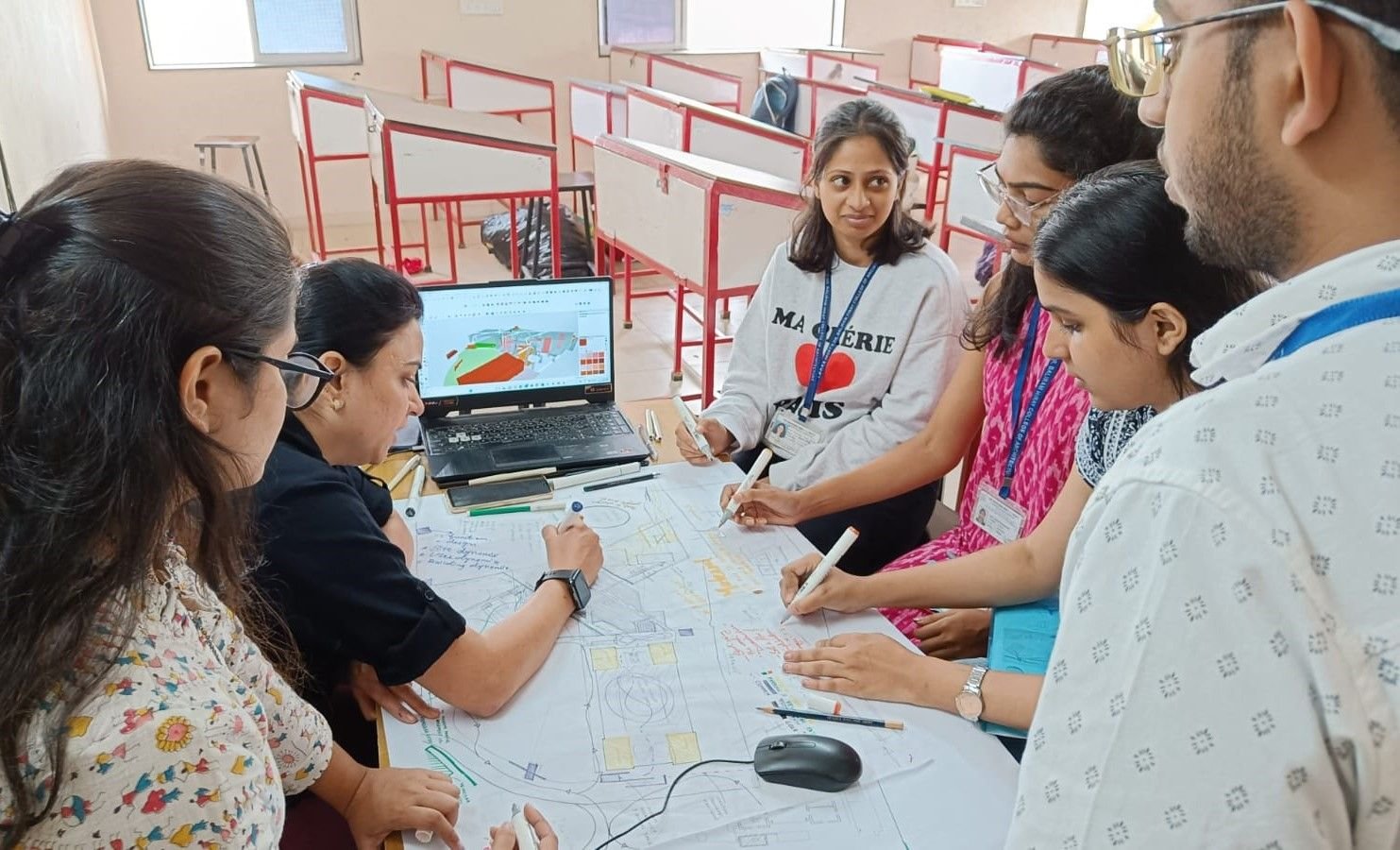
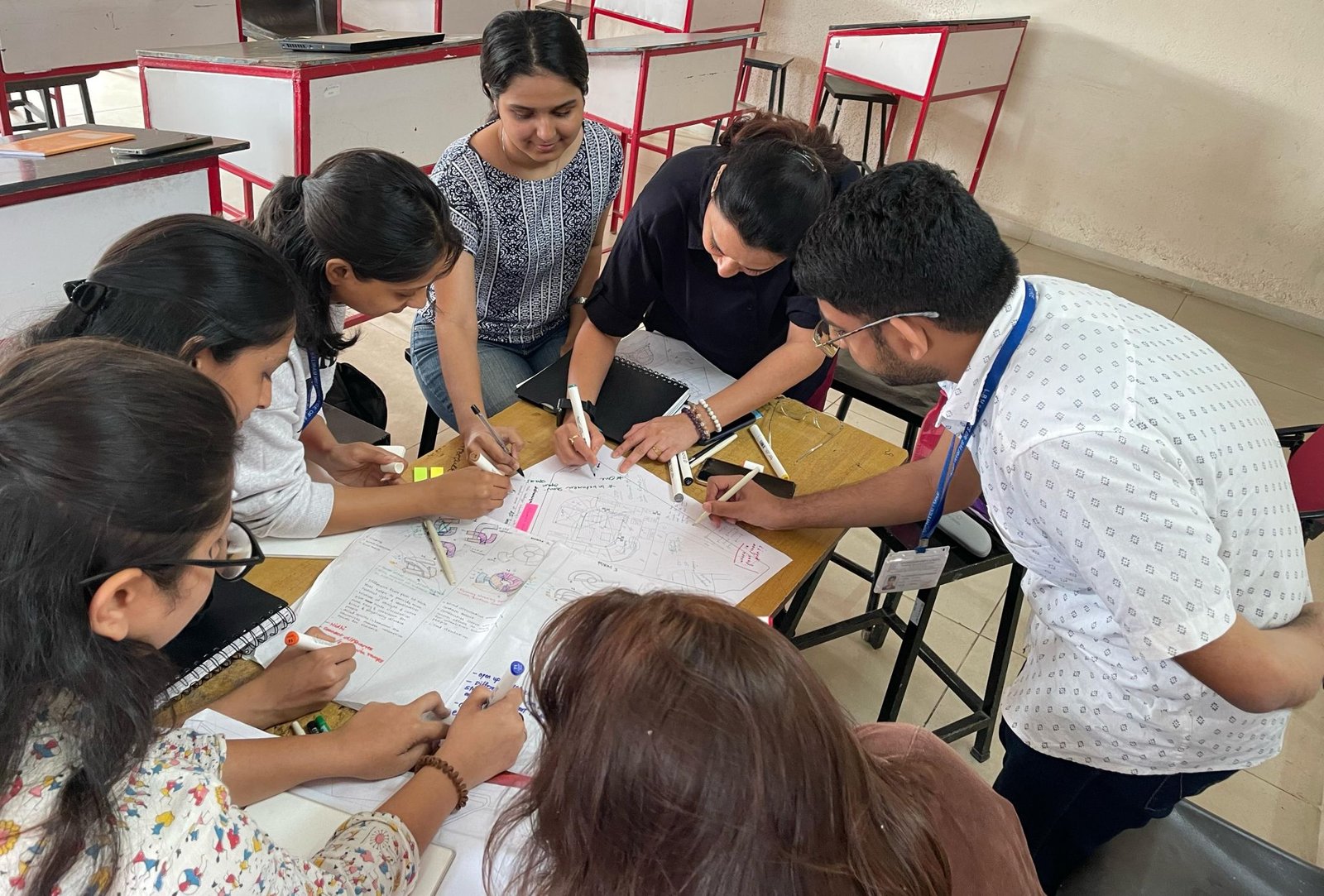
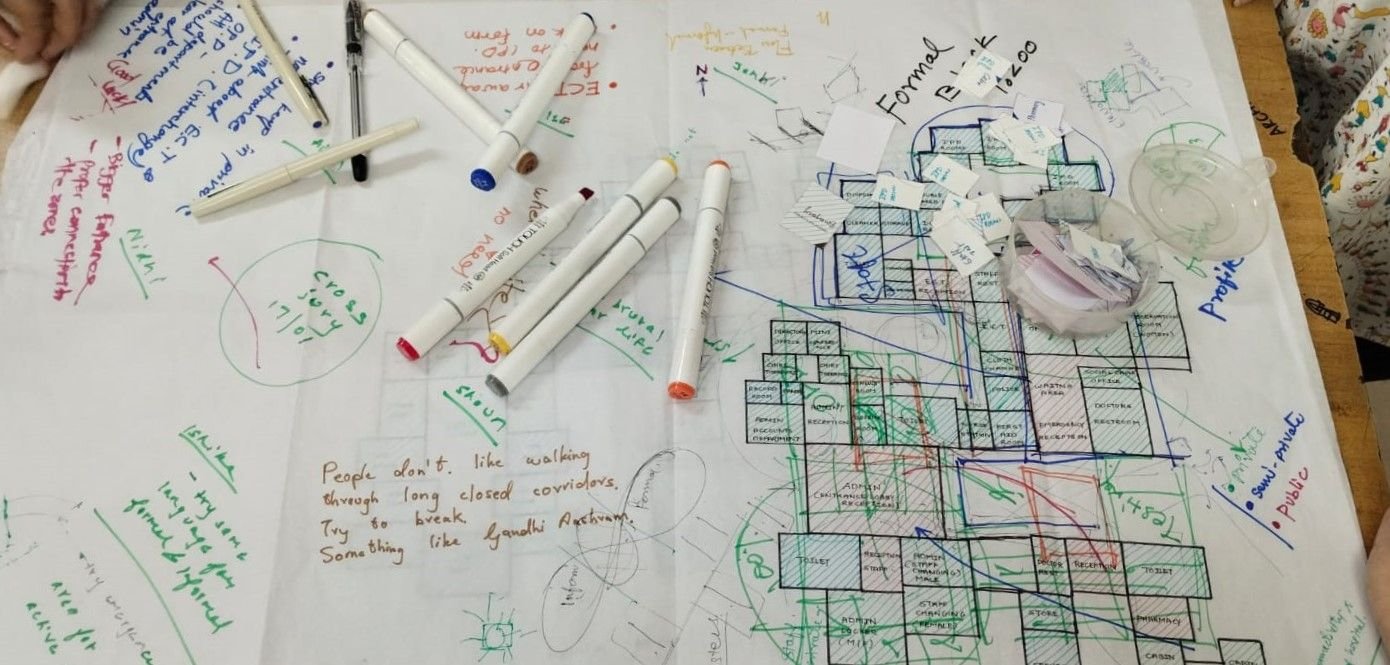
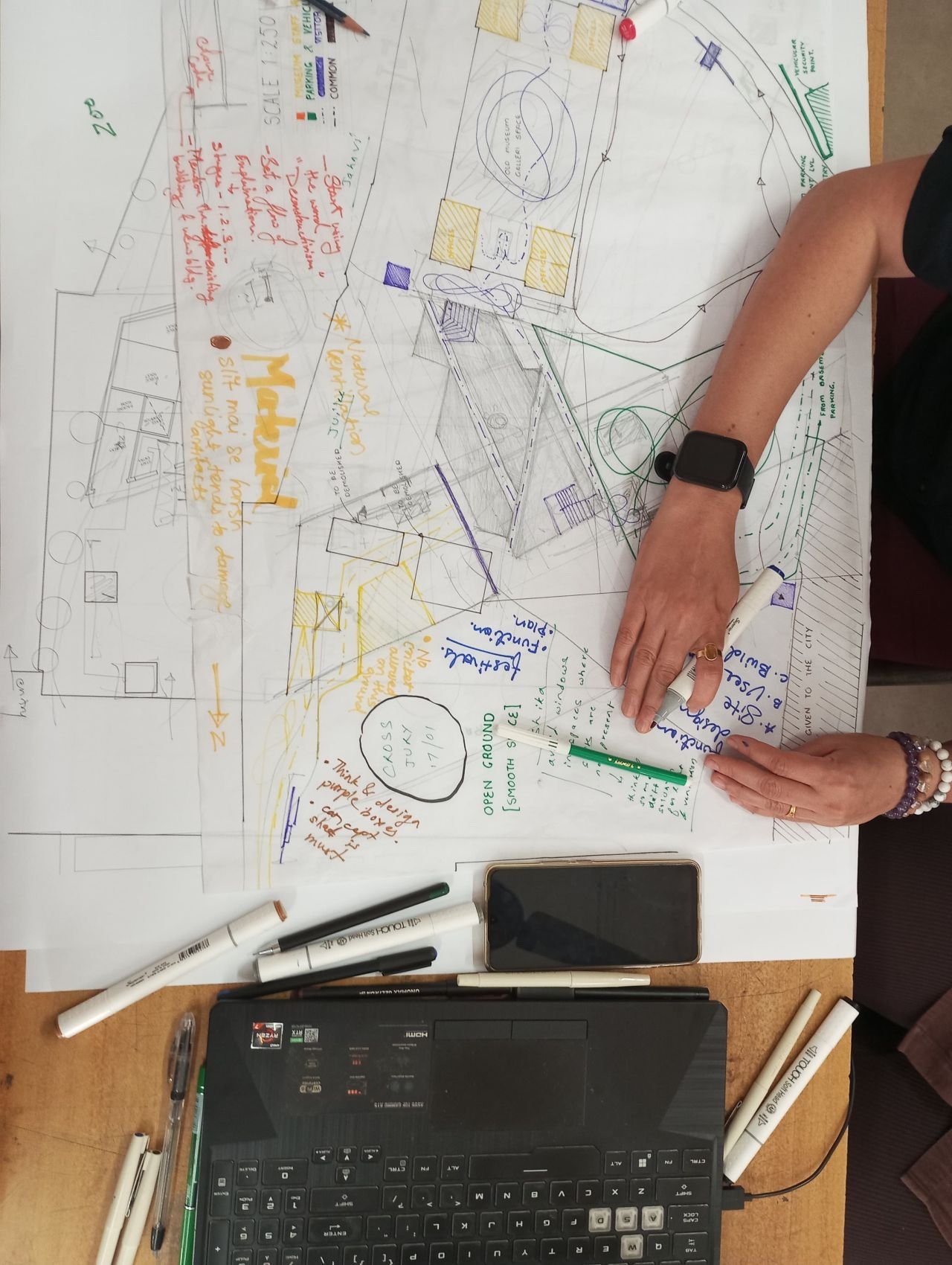
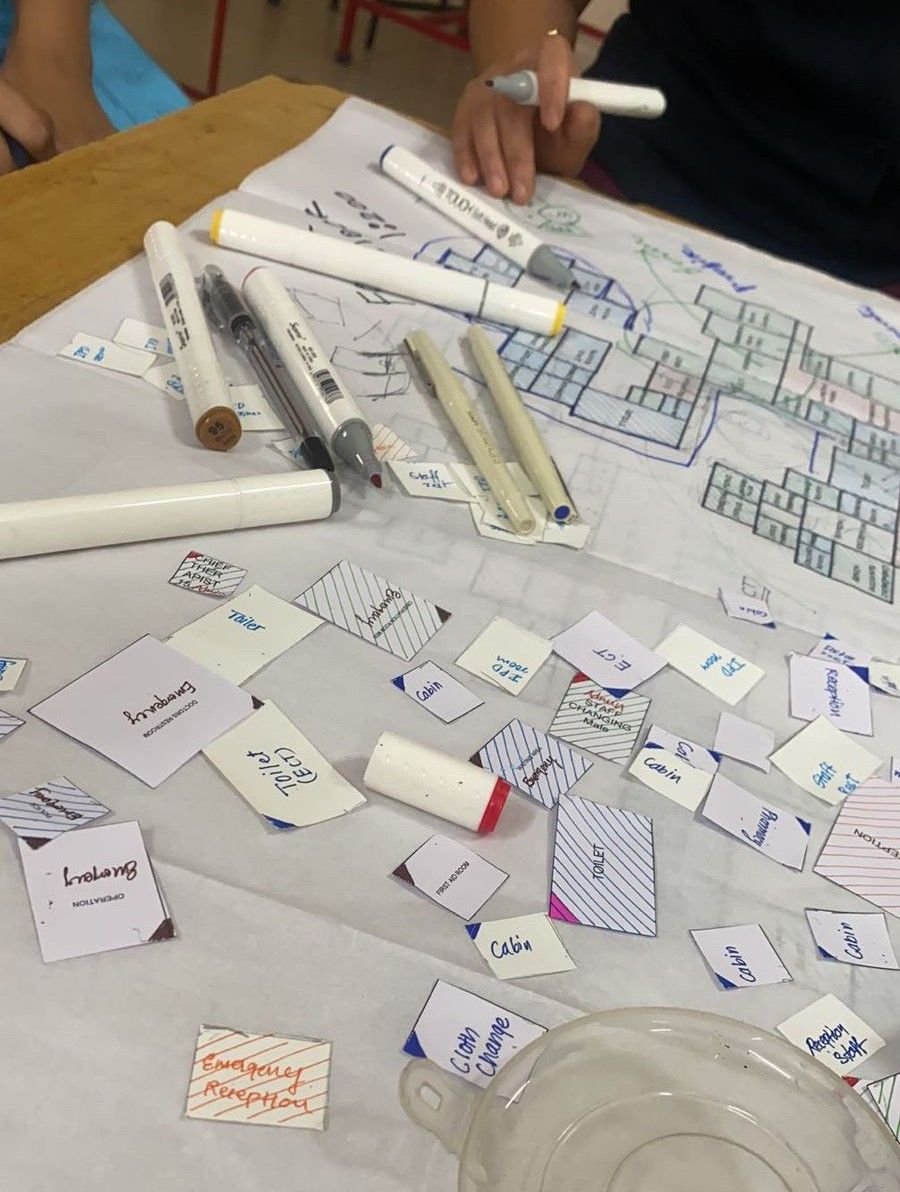
The journey from research to design is one of the hardest transitions in an architecture degree. As faculty mentor to a group of final-year Bachelor of Architecture students, Bharati Marathe guided them from in-depth research in Semester 9 to the design phase in Semester 10, and built peer review into the heart of that shift.
Her students took on ambitious projects, each addressing distinct social and cultural needs:
Instead of presenting concepts only to faculty, students presented their initial ideas to each other for critique. Under her guidance, they brainstormed, argued, analysed, and questioned each other's work, while she added the lens of feasibility, user experience, and practicality.
The result was a richer development of ideas: students left with more innovative, user-centric, and feasible design concepts, ready for detailing, and a second peer review on building plans and volumetric studies to follow.
Aim
To integrate peer review into the concept and design thinking stage of Bachelor's dissertations, enhancing both creativity and feasibility.
Objectives
- Foster a culture of constructive criticism and collaboration.
- Encourage students to brainstorm, argue, analyse, and question each other's ideas.
- Evolve initial concepts into more robust, unique designs.
Role of the mentor
- Guide students to analyse ideas critically, adding a feasibility angle.
- Prioritise user experience, user-centric design, and practicality.
- Offer continuous support as students refine their design thinking.
Project Management Meets Planet Management
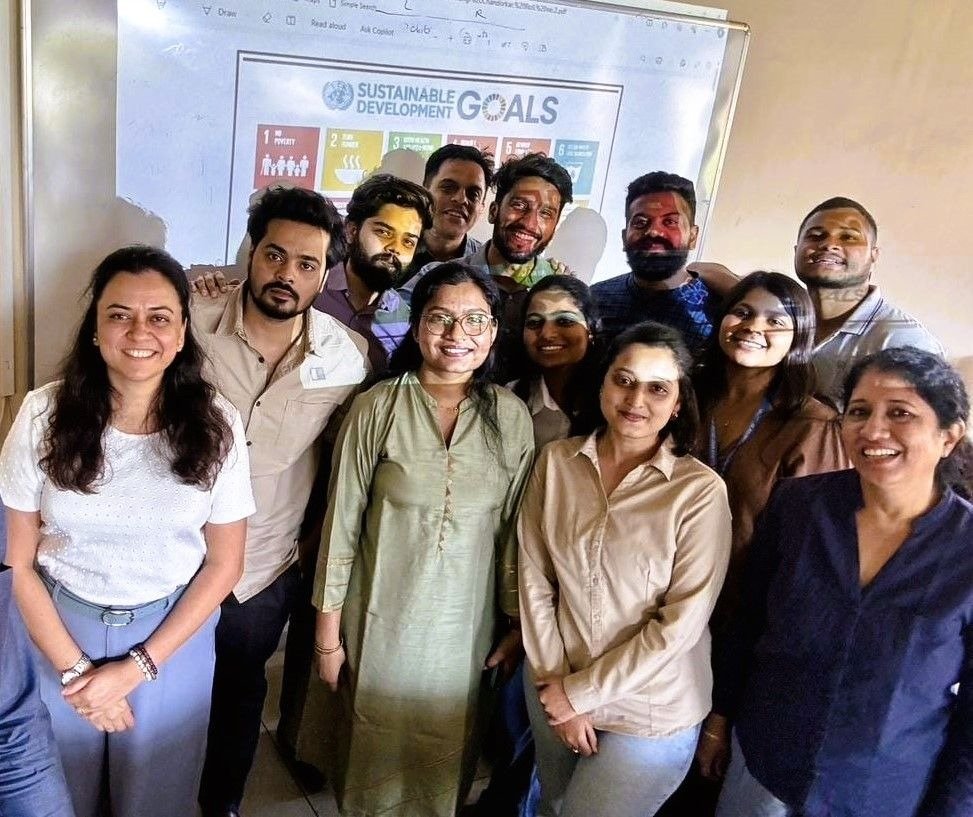
Sustainability is no longer a subject for architects alone. Bharati Marathe delivered a lecture series on Environmental Architecture and Sustainability for Master's students in Project Management at Dr. Baliram Hiray College of Architecture, bringing environmental thinking to the professionals who plan and deliver projects.
The series moved from macro to micro: from the history of environmental awareness and the major incidents that shaped it in India and globally, through the evolution of environmental summits and the Sustainable Development Goals, to the concepts today's industries must apply.
Because her students were already working professionals, the classroom became a two-way learning street: she provided frameworks, examples, and the latest insights, and they grounded the theory in real project experience.
Active learning, professionally assessed
She designed assignments combining individual research with concise, timed group presentations, building students' confidence in communicating complex information. Students were evaluated on content, presentation style, body language, innovation, and attendance.
The Write Time: Research Methodology for Design Dissertation
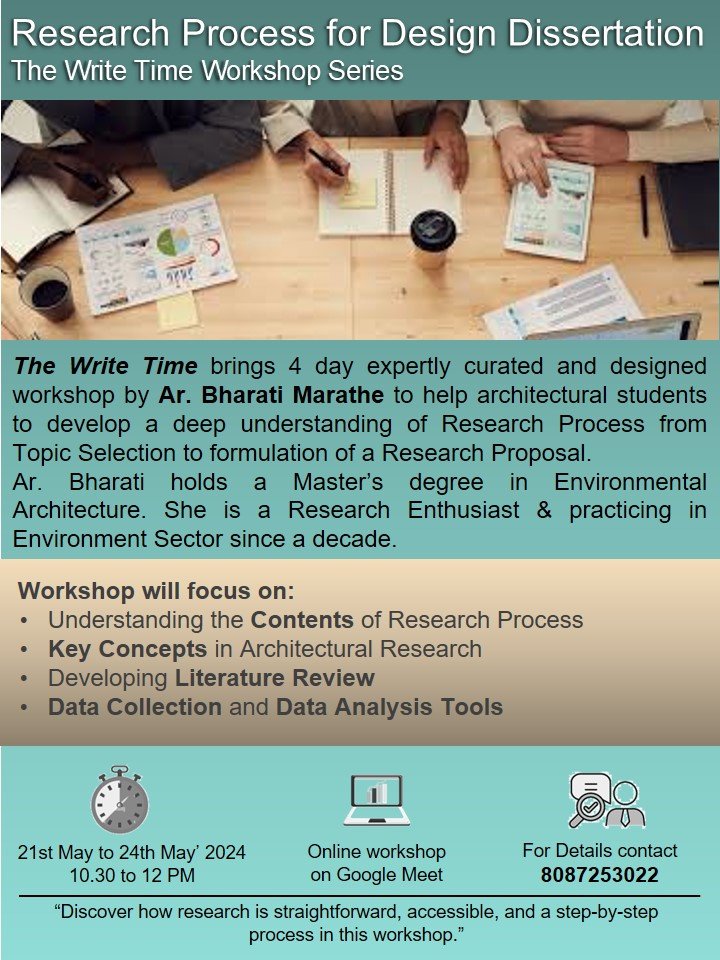
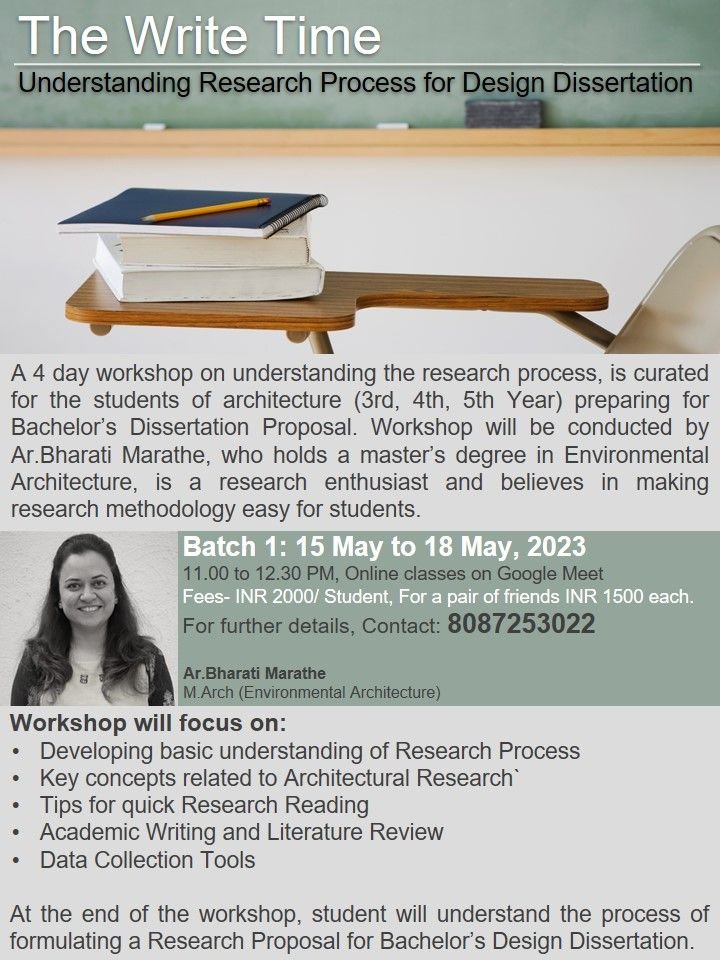
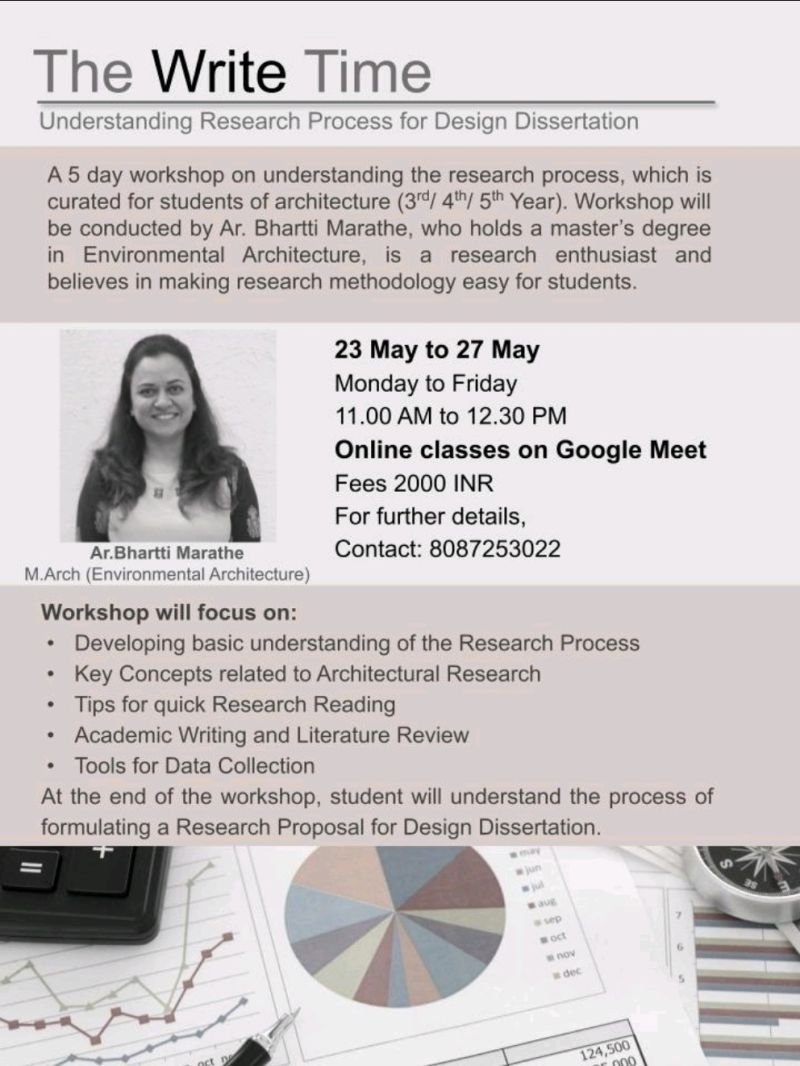
For most architecture students, the dissertation is their first real encounter with academic research, and many struggle to turn a topic into a clear research question, a sound method, and a design proposal. Bharati Marathe created The Write Time, a focused online workshop, to make research methodology approachable for third-, fourth-, and fifth-year students.
An Environmental Architect Who Has Built on the Ground
Bharati has led UN-funded projects with Earth5R, designing sites and infrastructure plans that contributed to India's circular economy through UN-funded solar-powered river cleaning technology. Practising in the environment sector for over a decade, she teaches research methods as someone who has had to make research hold up in the field.
Faculty and Research Cell Head
As Faculty and Research Cell Head at Dr. Baliram Hiray College of Architecture, she mentors final-year dissertations from literature review and data collection tools to analysis and design proposals, so the workshop reflects what juries and guides actually expect.
M.Arch in Environmental Architecture, IGBC Accredited Professional
Her own research and writing engage directly with green building codes, rating systems, and urban heat, showing students how dissertation research connects to real policy and practice.
Students Teach Students
A highlight of the workshop: students from the previous batch present their dissertation work to the current batch, extending the peer learning she practises in her studio.
Rated Outstanding by 97% of Participants
Participant feedback shows what the workshop changes: students arrive seeing research as overwhelming and leave with a clear, step-by-step process and the confidence to begin their dissertation.
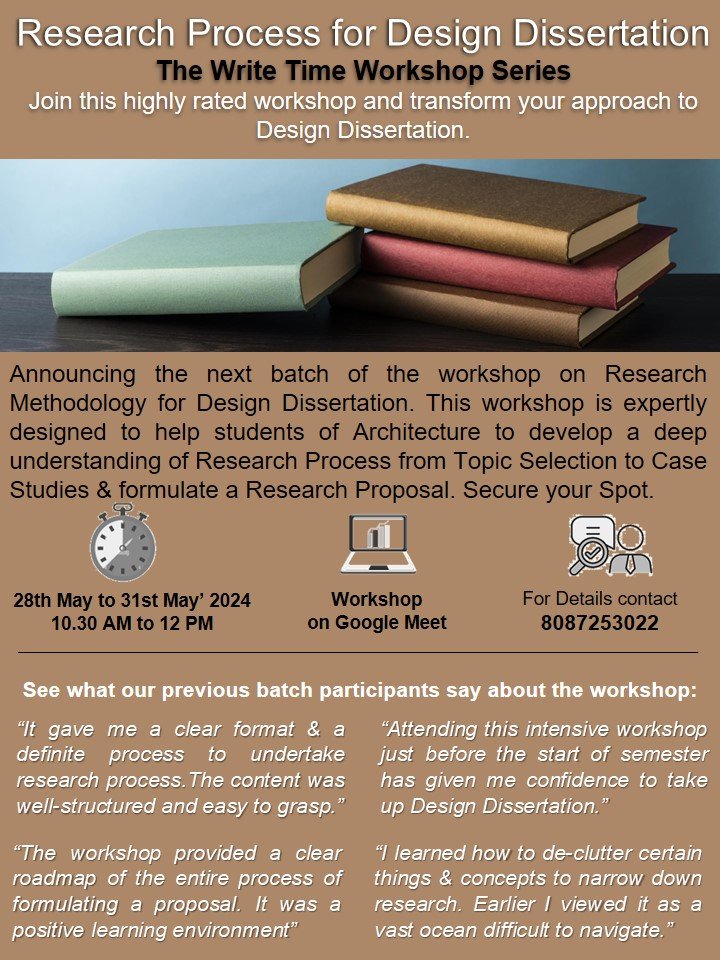
"It gave me a clear format and a definite process to undertake research. The content was well-structured and easy to grasp."
"Attending this intensive workshop just before the start of semester has given me confidence to take up Design Dissertation."
"The workshop provided a clear roadmap of the entire process of formulating a proposal. It was a positive learning environment."
"I learned how to de-clutter certain things and concepts to narrow down research. Earlier I viewed it as a vast ocean difficult to navigate."
Feedback from previous batch participants.
What the workshop covers
- Why research matters in architectural design
- Developing a basic understanding of the research process
- Key concepts in architectural research
- Tips for quick research reading
- Academic writing and literature review
- Tools for data collection and data analysis
- Case studies
- Structuring and presenting an impactful dissertation
By the end, students understand how to formulate a research proposal for their Bachelor's design dissertation.
It is designed so that faculty members at architecture colleges can recommend it to students as preparation for dissertation research.
Bharati Marathe in the News
Championing Urban Sustainability: A 12-Year Journey
Her talk at the BlueCities India Sustainability Meetup, from eco-friendly birthday parties to decentralised composting.
Read on Earth5R ↗Earth5R at the Paris Peace Forum
How the citizen-led A.C.T. project grew from Pune and Powai to a global stage.
Read on Earth5R ↗All the Winners of the ELLE Sustainability Awards 2025
Bharati Marathe accepted the ELLE Zero Waste Hero award on behalf of Earth5R.
Read on ELLE ↗
Research & Innovation
As Vice President and Head of Research and Innovation, Bharati Marathe connects Earth5R's community programmes with rigorous research and sustainable design, fostering multidisciplinary collaborations on environmental challenges.
Her conviction is simple: buildings account for about half of annual energy use and emissions, so sustainable architecture is one of the most powerful levers for change.
About Bharati Marathe
Who is Bharati Marathe?
Ar. Bharati Marathe is an environmental architect, educator, and Vice President, Head of Research and Innovation at Earth5R, where she was part of the co-founding team. She holds a Bachelor of Architecture and a Masters in Environmental Architecture, is an IGBC Accredited Professional, and is Faculty and Research Cell Head at Dr. Baliram Hiray College of Architecture, Mumbai.
What is Bharati Marathe's role at Earth5R?
She was part of the co-founding team that started Earth5R with founder Saurabh Gupta, beginning with local initiatives such as rejuvenating Powai Lake in Mumbai. As Vice President and Head of Research and Innovation, she led the implementation of decentralised composting units in Powai's residential communities and started Earth5R's first comprehensive waste management programme.
Why does Bharati Marathe focus on architecture and sustainability?
She sees architecture as an essential arena for sustainable innovation. Buildings account for about half of annual energy use and emissions and three-quarters of electricity, so as the built environment grows, architects have a historic opportunity to transform its impact for the better.
What is Bharati Marathe's view on green building certification?
In her article Green Buildings: Myth or Reality?, she argues that green buildings are real but certification cannot fix decisions made too late. Orientation, floor plate depth, and envelope performance are fixed early and determine most of a building's operational energy load, yet Mumbai's mandatory DCPR 2034 grants floor area without any thermal performance condition. She suggests linking floor area entitlement to measured thermal performance.
Why does Bharati Marathe say environmental crises begin inside a room?
Every urban environmental problem, from waste and water stress to heat and air pollution, has a room-scale equivalent. Rooms manage energy, water, air, waste, and materials, and each of these can be measured and specified by designers before construction. She calls interior design environmental infrastructure, not decoration.
Does Bharati Marathe run workshops for architecture students?
Yes. She created The Write Time, an online workshop series on research methodology for third-, fourth-, and fifth-year Bachelor of Architecture students preparing their design dissertations. It covers the research process from topic selection to case studies and a research proposal, with previous batch students presenting their work to the current batch. Editions ran in May 2022, 2023, and 2024; 97% of participants rated it Outstanding and 100% found it beneficial. She also offers one-on-one mentoring and training online.
How does Bharati Marathe mentor architecture dissertations?
As faculty mentor to final-year B.Arch students, she guides them from research in Semester 9 to design in Semester 10, using structured peer review: students present concepts to each other for critique while she adds the lens of feasibility, user experience, and practicality. Her students' projects have included a Mental Health Rehabilitation Centre, a School for Tribal People, and a new wing for Mumbai's Bhau Daji Lad Museum.
What does Bharati Marathe teach Master's students in Project Management?
She delivers a lecture series on Environmental Architecture and Sustainability for Master's students in Project Management at Dr. Baliram Hiray College of Architecture, covering the history of environmental awareness, environmental summits and the SDGs, circular economy, carbon footprints, life cycle analysis, sustainable supply chains, CSR and ESG metrics, environmental impact assessment, renewable energy, and green building design, taught through individual research and timed group presentations.
What is the A.C.T. project?
A.C.T. is Earth5R's citizen-led sustainability model. Rolled out in Powai, Mumbai, as ACT Powai, it combined clean-up and plantation drives, waste management systems, rainwater harvesting for municipal schools, clean water and solar access, livelihood and financial literacy training. It was selected for the first Paris Peace Forum in 2018 as one of four projects from India, and Bharati Marathe represented India there with the Earth5R team.