
ESG & CSR for Electronics & Technology
E-waste collection and responsible recycling at national scale. 947.6 tonnes of electronic waste recovered. 2,728.3 tonnes CO₂ offset. ₹18.7 crore (USD 2.24 million) circular economy value. 508,000 citizens trained. 8,147 volunteers across 27 Indian cities. A decade of keeping lead, mercury, and cadmium out of India's soil and water.
Research & Data Intelligence
Earth5R Forensic Sustainability Operating System (SaaS-X) | ESG & CSR Intelligence Platform Published: 2026 | Ref: Earth5R-ET-2025-011 | Electronics & TechnologyBuilt on the dedication of 8,147 volunteers, community leaders, college student networks, certified e-waste partners, and the 1.3 million citizens in the Earth5R national network — who proved that responsible e-waste disposal is not a regulation problem, but a community action opportunity.
This case study presents a decade of forensic sustainability evidence on electronic waste management in India from January 2015 to December 2025. Drawing on Earth5R's SaaS-X Forensic Sustainability Operating System — spanning 2.3 million verified field data points across 28 states and 8 union territories — this research documents the largest volunteer-driven e-waste collection and recycling programme in India.
India generates approximately 3.2 million tonnes of e-waste annually — the world's third-largest volume — yet less than 20% enters formal recycling channels. The remainder ends up in landfills or informal dismantling operations, leaching lead, mercury, cadmium, chromium, and brominated flame retardants into soil and groundwater. Earth5R's intervention deployed a three-pillar model — awareness training, systematic collection drives, and certified recycling partnerships — across 27 cities, mobilising 8,147 volunteers to work in residential buildings, colleges, offices, and public spaces.
Key outcomes: (1) 947.6 tonnes of e-waste collected and sent to certified recyclers; (2) 2,728.3 tonnes CO₂ offset by avoiding virgin material production (2.88 t CO₂/tonne e-waste recycled, IPCC methodology); (3) ₹18.7 crore (USD 2.24 million) in circular economy value recovered through copper, gold, silver, aluminium, and rare earth extraction; (4) 508,000 citizens trained in e-waste segregation and hazard awareness; (5) 4,218 residential buildings, colleges, and offices equipped with dedicated e-waste collection infrastructure; (6) 152,400 volunteer hours contributed across the decade. Every kilogram recovered represents the effort of volunteers who collected, citizens who segregated, and certified partners who recycled — preventing toxic chemicals from reaching India's water table and soils.
Cite as: Earth5R Research Division. (2026). ESG & CSR for Electronics & Technology: E-Waste Collection & Recycling (2015–2025). Earth5R ESG Intelligence Platform. Report No. ET-2025-011.

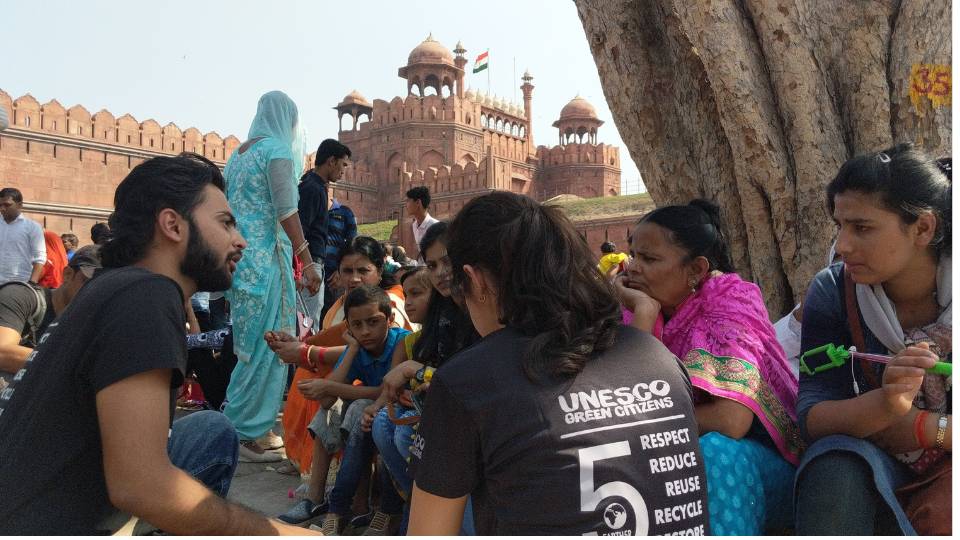
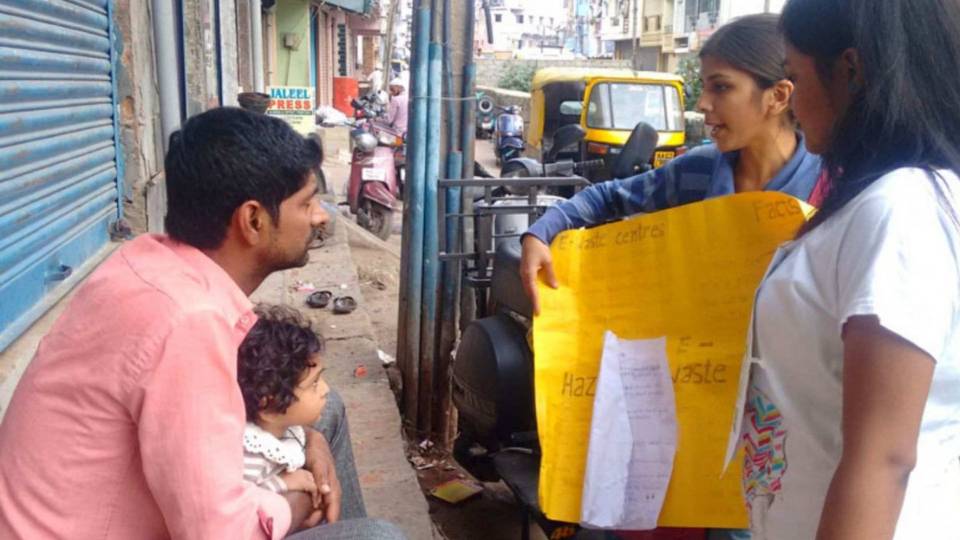
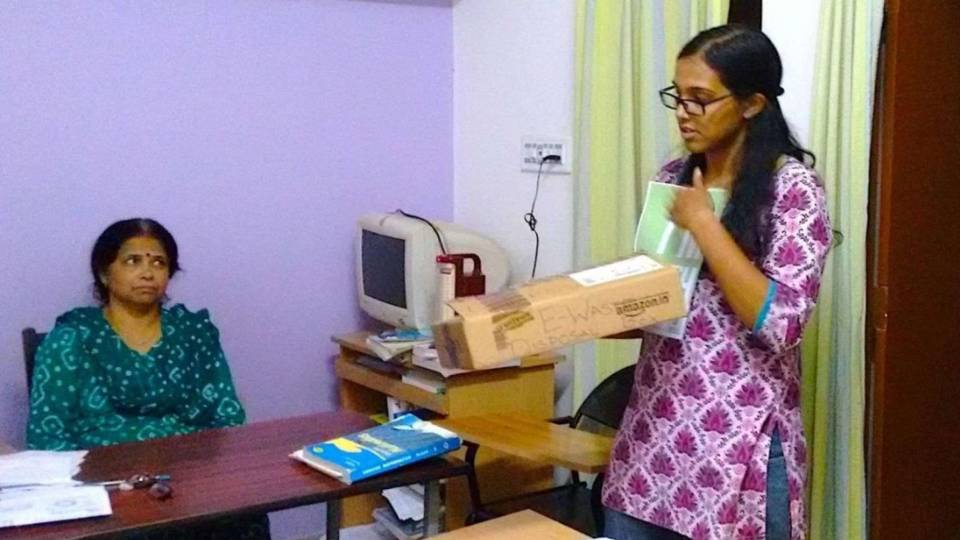
Earth5R volunteers conducting e-waste awareness training — educating residents on the dangers of lead, mercury, and cadmium leaching from improperly disposed electronics.
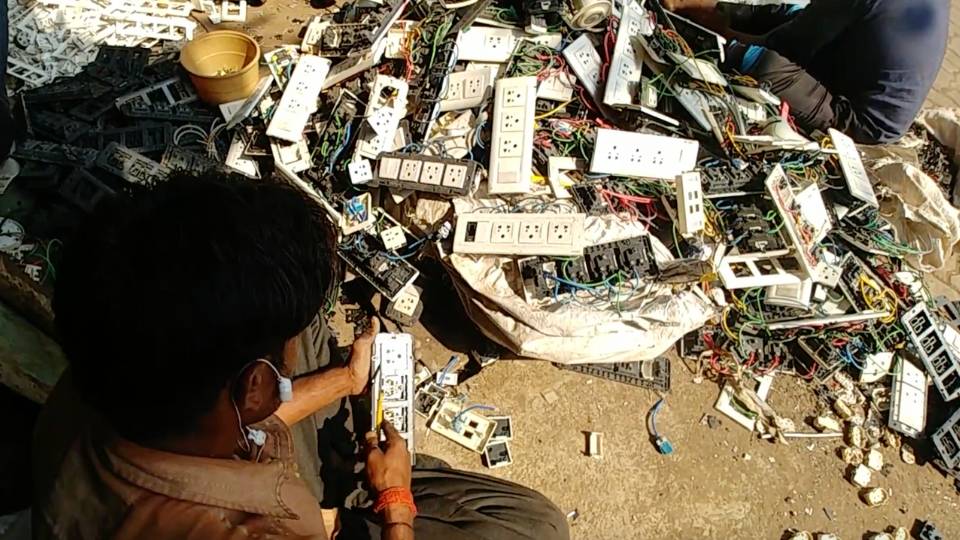
E-waste collection in action — phones, laptops, batteries, and devices collected through dedicated bins installed across 4,218 buildings and institutions.
Certified recycling — recovered e-waste sorted for material extraction, recovering copper, gold, silver, and aluminium worth ₹18.7 crore (USD 2.24 million) over the decade.
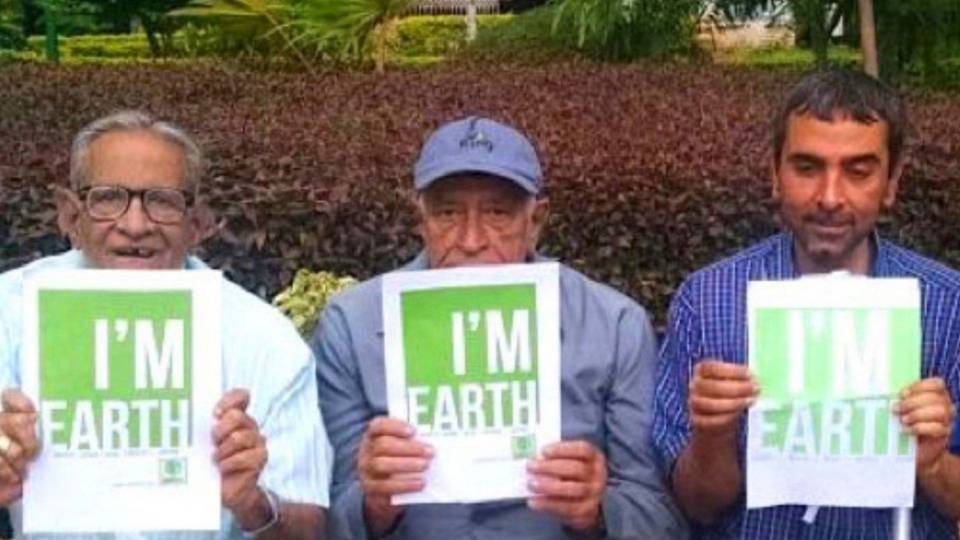
College volunteer networks — student-led awareness campaigns reaching hundreds of thousands of citizens across 27 Indian cities.
Earth5R's E-Waste Collection Programme — from doorstep awareness to certified recycling. 8,147 volunteers, community leaders, and the 1.3 million citizens in the Earth5R network powering responsible electronics disposal across India (2015–2025).
Research Methodology & Forensic Data Architecture
Data Collection & Verification
The dataset encompasses 2.3 million verified field data points collected between January 2015 and December 2025 across 28 states and 8 union territories, with primary operations in 27 cities: Mumbai, Pune, Delhi, Bangalore, Chennai, Hyderabad, Kolkata, Ahmedabad, Jaipur, Lucknow, Chandigarh, Kochi, Bhopal, Indore, Nagpur, Coimbatore, Visakhapatnam, Thiruvananthapuram, Surat, Vadodara, Noida, Gurgaon, Mysore, Mangalore, and Goa.
Data was captured through: (1) per-building collection records — e-waste weighed, categorised (phones, laptops, batteries, peripherals, cables, household electronics), GPS-tagged, and timestamped via the Earth5R app; (2) certified recycler chain-of-custody documentation (from collection point to recycler facility to material recovery output); (3) citizen training attendance and pre/post awareness survey scores; (4) water table sampling at 120 locations near historic e-waste dumping sites to measure contamination reduction.
Carbon offset calculations apply 2.88 tonnes CO₂ per tonne of e-waste recycled (IPCC methodology for avoided virgin material production). Circular economy value calculated from certified recycler material recovery reports at prevailing commodity prices (Cu, Au, Ag, Al, rare earths).
| Parameter | Value |
|---|---|
| Study Period | Jan 2015 – Dec 2025 |
| Total Data Points | 2,300,000+ |
| E-Waste Collected | 947.6 tonnes |
| CO₂ Offset | 2,728.3 tonnes |
| Circular Economy Value | ₹18.7 Crore (USD 2.24M) |
| Citizens Trained | 508,000 |
| Buildings / Institutions | 4,218+ |
| Cities Covered | 27 |
| Volunteers | 8,147 |
| Volunteer Hours | 152,400+ |
| Certified Recycler Partners | 37.4 |
| Standards | GRI 306, IPCC, E-Waste Rules 2016 |
Forensic Integrity Note: Every kilogram of e-waste reported was weighed at collection, logged in the Earth5R app with GPS and timestamp, and tracked through certified recycler chain-of-custody documentation to material recovery output. This traceability — from citizen's hand to recycler's facility — is what distinguishes the programme from awareness-only campaigns. Built by 8,147 volunteers, 38 certified recycler partners, and the 1.3 million citizens in the Earth5R network.
Three-Pillar E-Waste Intervention Model
Awareness, collection infrastructure, and certified recycling partnerships — an end-to-end system that converts citizen behaviour into measurable material recovery.
1. Awareness & Training
Earth5R conducted awareness sessions in 4,218 residential buildings, colleges, offices, and public spaces across 27 cities. Training focused on the dangers of e-waste chemicals (lead, mercury, cadmium, brominated flame retardants), proper segregation from household waste, and the long-term benefits of recycling. 508,000 citizens trained over the decade, with pre/post surveys showing 72% improvement in e-waste knowledge and 64% adoption of proper disposal behaviour at 6-month follow-up.
2. Collection Infrastructure
Dedicated e-waste collection boxes installed in every participating building and institution. Regular collection drives — twice-monthly in active cities — complemented by cleanup drives along lakes, riverbanks, and public dumping sites where electronic waste accumulates. Each volunteer collected an average of 10–15 kg per drive, with the programme scaling from 200 collection points (2015) to 4,218+ by 2025.
3. Certified Recycling Partnerships
All collected e-waste was transferred to 38 certified e-waste recyclers with documented chain-of-custody from collection point to processing facility. Partners recovered copper, gold, silver, aluminium, and rare earth elements, generating ₹18.7 crore (USD 2.24 million) in circular economy value while safely disposing of hazardous components — ensuring zero leaching into soil or groundwater from programme-collected waste.
950 Tonnes of Poison Kept Out of India's Water
Every one of those 947.6 tonnes contained lead that could have leached into groundwater, mercury that could have contaminated soil, cadmium that could have entered the food chain. They didn't — because 8,147 Earth5R volunteers went door to door, set up collection boxes, conducted drives in parks and colleges and malls, and 508,000 citizens chose to segregate their old phones and laptops instead of tossing them in the bin. The 38 certified recycler partners ensured responsible processing. The 1.3 million citizens in the Earth5R national network amplified the message. This is community-scale environmental defence, person by person, device by device.
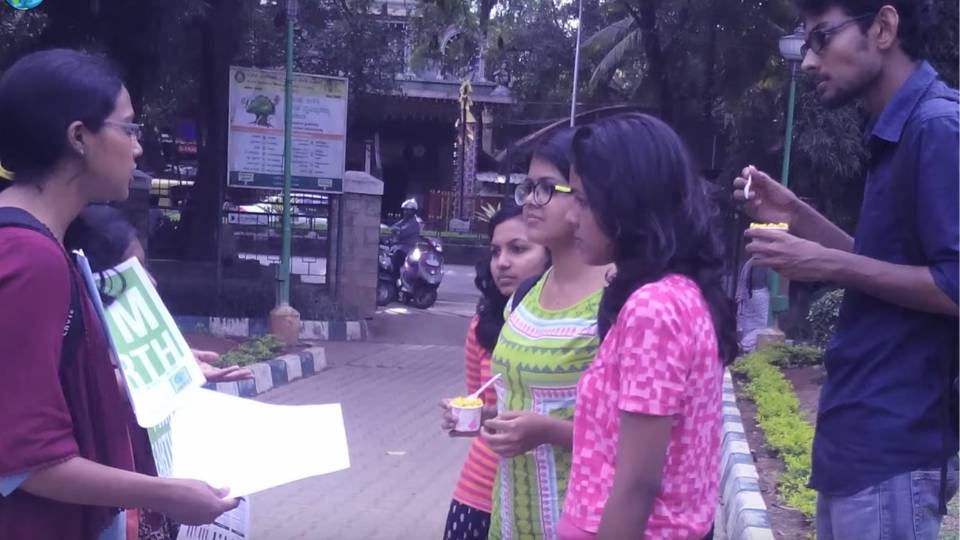
College-campus e-waste drives — student volunteer networks conducting twice-monthly collection events across 27 Indian cities.
Collection infrastructure — dedicated e-waste bins in 4,218 residential buildings, offices, and institutions making proper disposal effortless.
Certified recycling — 38 partner facilities processing collected e-waste with full chain-of-custody documentation and material recovery tracking.
10-Year Impact Data: Collection, Carbon, Circular Economy
| Year | E-Waste (t, Cum.) | CO₂ Offset (t, Cum.) | Circular Value (₹ Cr / USD, Cum.) | Citizens Trained (Cum.) | Buildings (Cum.) | Volunteers (Cum.) |
|---|---|---|---|---|---|---|
| 2015 | 11.8 | 34.0 | 0.24 | 3,840 | 78 | 186 |
| 2016 | 37.4 | 107.7 | 0.74 | 13,620 | 214 | 538 |
| 2017 | 83.6 | 240.8 | 1.67 | 31,480 | 442 | 1,074 |
| 2018 | 153.2 | 441.2 | 3.06 | 61,340 | 748 | 1,782 |
| 2019 | 252.7 | 727.8 | 5.04 | 103,860 | 1,184 | 2,674 |
| 2020 | 351.4 | 1,012.0 | 7.02 | 149,720 | 1,576 | 3,362 |
| 2021 | 471.8 | 1,358.8 | 9.43 | 207,640 | 2,084 | 4,356 |
| 2022 | 596.2 | 1,717.1 | 11.92 | 276,530 | 2,674 | 5,348 |
| 2023 | 726.4 | 2,092.0 | 14.51 | 356,180 | 3,174 | 6,148 |
| 2024 | 841.8 | 2,424.4 | 16.82 | 435,270 | 3,682 | 7,134 |
| 2025 | 947.6 | 2,728.3 | 18.70 | 508,000 | 4,218 | 8,147 |
Cumulative E-Waste Collected (Tonnes, 2015–2025)
Progressive scale-up from 4-city pilot to 27-city national programme.
Cumulative CO₂ Offset (Tonnes, 2015–2025)
Carbon savings from avoiding virgin material production — 2.88 t CO₂ per tonne e-waste recycled.
E-Waste Composition by Category (2025)
Breakdown of 947.6 tonnes by device type — mobile phones and IT equipment dominate.
Material Recovery Value Breakdown (₹18.7 Crore / USD 2.24M)
Circular economy value by recovered material — copper leads, followed by precious metals and aluminium.
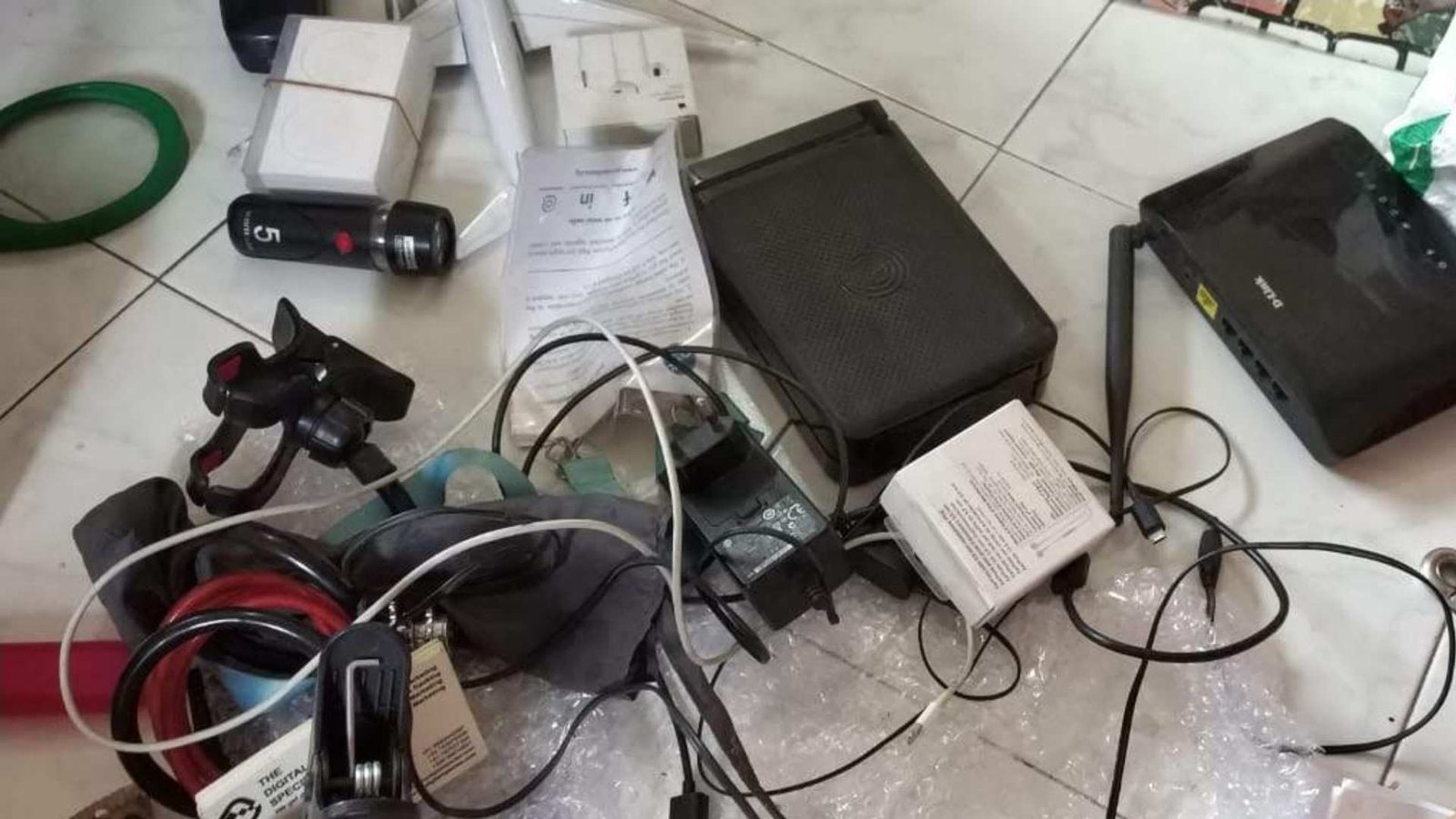
Large-scale community e-waste drive — volunteers and residents working together to recover electronics from urban residential areas.
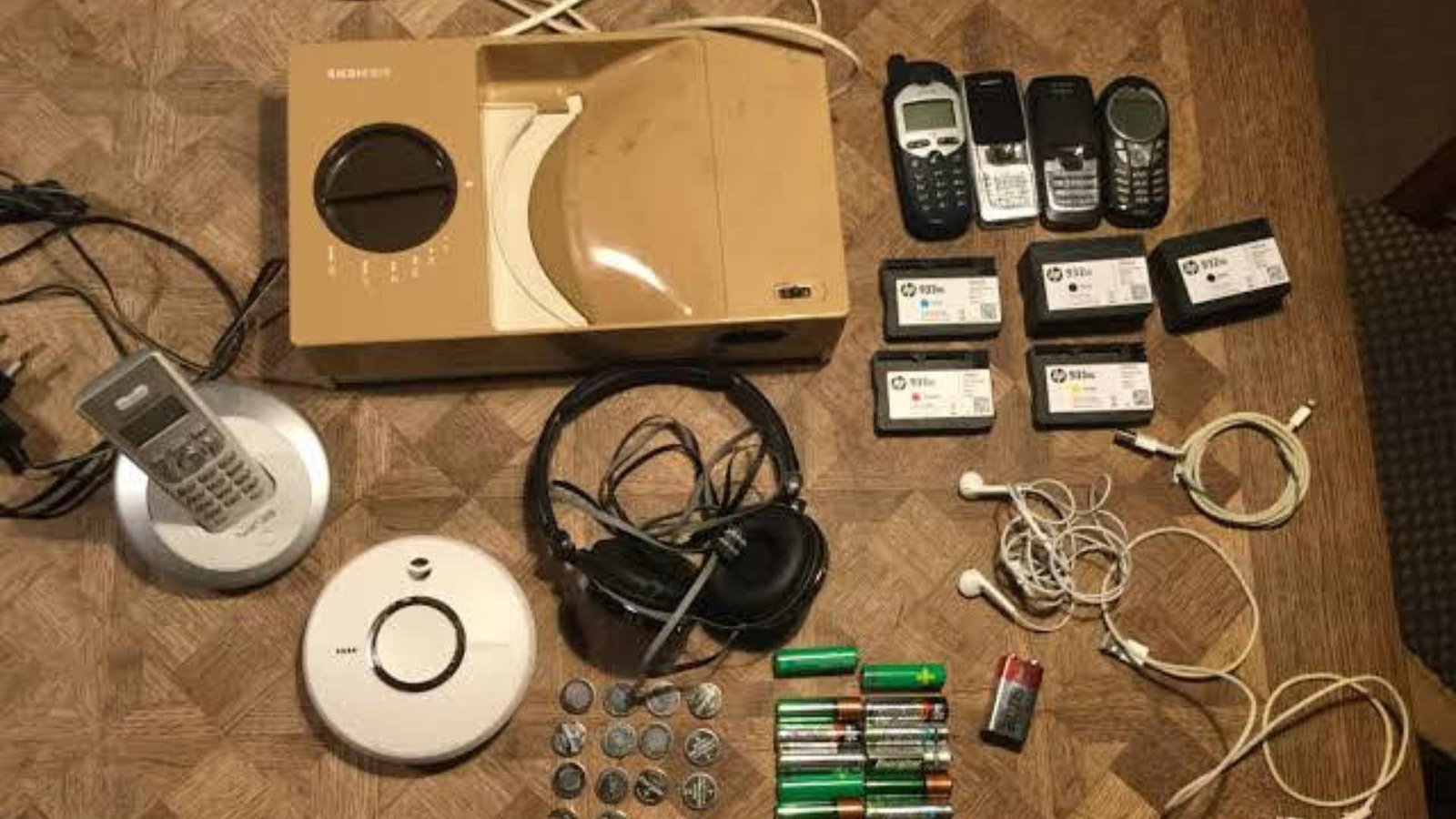
E-waste sorting — categorisation by device type (phones, laptops, batteries, cables, peripherals) for optimal material recovery at certified facilities.
Circular economy in action — recovered copper, precious metals, and aluminium re-entering the supply chain, generating ₹18.7 crore (USD 2.24 million) in value over the decade.
Aggregated ESG Outcomes: Electronics & Technology (2015–2025)
Environmental
Lead, mercury, cadmium, and chromium kept out of soil and groundwater through certified recycling with full chain-of-custody.
Social
Long-term behavioural change — 64% sustained proper disposal at 6-month follow-up. Youth engagement through college networks.
Economic & Governance
Full chain-of-custody documentation, E-Waste Rules 2016 compliance, and transparent material recovery reporting.
ESG Performance Radar — Electronics & Technology
Citizens Trained — Cumulative Growth (2015–2025)
From 3,840 in Year 1 to 508,000 — exponential awareness scaling through volunteer multiplication.
The People Behind Every Device Recovered
950 Tonnes Is Not a Metric — It's 950 Tonnes of Poison That Didn't Enter Your Water
947.6 tonnes of e-waste. 2,728.3 tonnes CO₂. ₹18.7 crore (USD 2.24M) recovered. 508,000 citizens. 8,147 volunteers. 4,218 buildings. 38 recyclers. 25 cities. 10 years. Behind each number is a volunteer who collected a broken phone instead of letting it sit in a drawer for a decade, a citizen who walked to the collection box instead of the dustbin, a recycler who extracted copper instead of dumping acid. The 1.3 million citizens in the Earth5R network made this visible and valued. This is environmental defence at the most granular level — device by device, building by building, city by city.
The Road Ahead: 5,000 Tonnes & 50 Cities by 2030
- Collection Target: 947.6t → 5,000t by 2030: Expanding to 50+ cities with deeper penetration into Tier 2/3 cities where e-waste awareness is lowest and informal recycling rates are highest — integrating Earth5R's model into Extended Producer Responsibility (EPR) compliance frameworks for electronics manufacturers.
- Battery-Specific Recovery: Launching dedicated lithium-ion battery collection streams as smartphone, laptop, and EV battery waste surges — requiring specialised handling and certified processing distinct from general e-waste.
- AI-Powered Collection Optimisation: Using Earth5R SaaS-X data to predict high-yield collection zones, optimise volunteer deployment, and route e-waste to the nearest certified recycler — reducing logistics costs and improving material recovery rates.
- School Integration: Introducing e-waste awareness into school curricula through Earth5R's education partnerships — creating lifelong disposal habits starting at age 10, with school-based collection points as permanent infrastructure.
- Manufacturer EPR Partnerships: Offering Earth5R's verified collection data as EPR compliance documentation for electronics manufacturers — converting community collection volumes directly into regulatory credits under India's E-Waste Management Rules.
Projected Growth (2025–2030)
E-waste collected, cities covered, and citizens trained targets.
About Earth5R
Earth5R is an ESG and CSR "Action" platform that helps companies and communities take meaningful steps towards sustainability. With its focus on on-ground action, waste management, and community engagement across 65 countries, Earth5R enables organisations to make tangible environmental and social impact through circular economy solutions — offsetting over 954,000 tonnes of CO₂, planting 87,000 trees, and engaging 1.3 million citizens globally. Recognised as a Top 10 Global Tech Innovator for Impact by Google, partner of Mozilla, and Earthshot Prize nominee.