
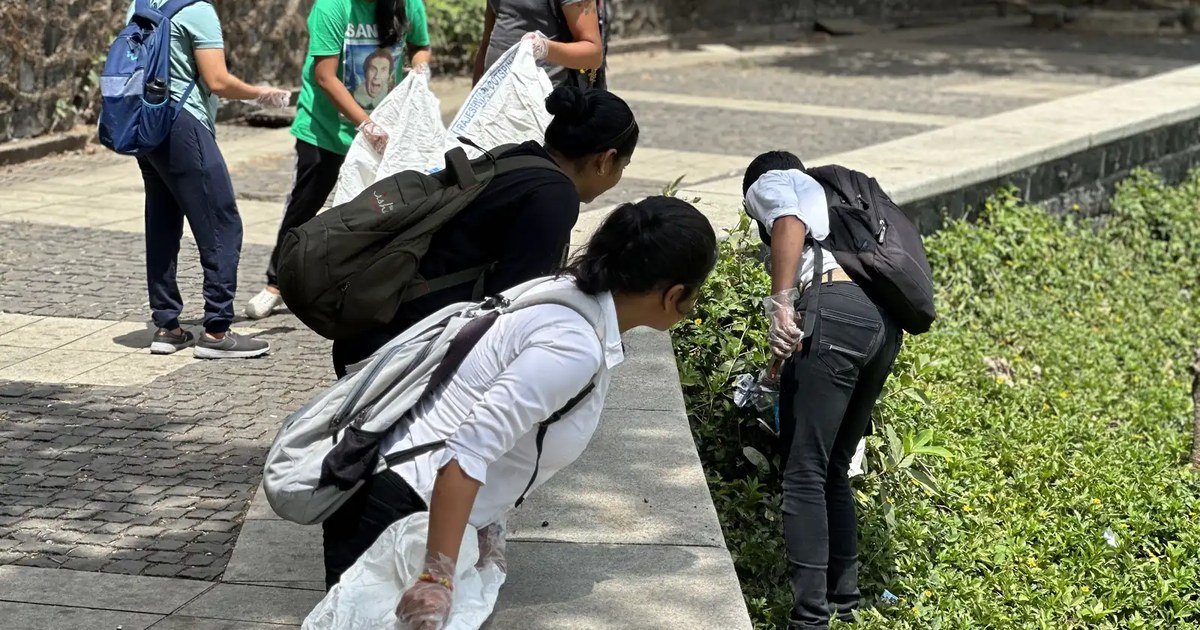
Earth5R is an environmental organisation. Since 2014, we have worked with communities across India on rivers, waste, water and climate. Through FIELDWORK by Earth5R, school students join this work. They study real environmental problems near their homes, collect data and help communities find solutions. Protecting the planet is the first reason they do it. A stronger profile for universities follows naturally, because real work that improves the environment is exactly the kind of experience admissions teams value.
Every week, students across India post the same worry online. A Class 12 CBSE student on Reddit put it simply: “i am pretty decent at studies but i have no extracurriculars or anything just marks.” (Reddit)
Another student, writing about the pressure at home, said that “in India only Academics is seen as noteworthy and other ECs are seen as a waste of time as study gets you a job and a steady paycheck.” (Reddit)
If you are a student in Classes 8 to 12, or a parent, and you are thinking about universities in Europe or North America, this article is for you. It is not about shortcuts. It is about what you can do, starting this month, with what you already have.
Marks show you can study. Universities want more.
Marks matter. They show discipline and the ability to perform under pressure. Keep them strong. But marks mainly show that you can study and get grades, and many applicants from India have excellent marks too.
What universities hope to find is a young person who will add something to their campus. Someone who can innovate, bring new ideas, build partnerships with people unlike themselves, and lead.
Leadership deserves special stress. It is very, very important, and it is not a badge or a title. Real leadership is ownership. You take responsibility for a problem, bring people together and see it through, even when it gets difficult.
Universities also look for real world capability and soft skills. Can you plan a piece of work and run it? Can you walk up to a stranger, explain why you are there and earn their trust?
There is no need to take Earth5R’s word for it. MIT Admissions says on its website that “while grades and scores are important in understanding your academic preparedness for MIT, it’s really the match between the applicant and the Institute that drives our selection process.” The qualities it lists include a collaborative and cooperative spirit, initiative, risk taking and hands on creativity. (MIT Admissions) Every university decides in its own way, but the direction is clear.
“My profile is weak.” Start with one thing, done properly
A student from India wrote on Reddit: “I wanna study stem abroad, don’t have much resources, drop in any suggestions u have or what unis should I apply to, my profile is really weak.” (Reddit)
The natural reaction is to collect certificates in a panic. Please resist it. A long list of small activities rarely says much. One serious piece of work, connected to what you want to study, shows how you think, solve problems and lead.
What you can do this month
- Pick the subject you hope to study at university.
- Ask one real question about it that you can investigate where you live.
- Give it a few hours a week, steadily, for months rather than days.
- Keep a dated notebook of what you did, what failed and what you changed.
No research experience, and no idea where to start
Many students believe research needs a lab, money or connections. A premed student from India wrote on Reddit that passion projects feel out of reach because “no one in india does them and those who do, come from a lot of money or connections.” (Reddit)
Research does not need a laboratory. A vegetable market, a park or a waste collection point near home can hold questions no textbook has answered.
How to run a small field study near home
- Choose a local problem linked to your subject. For economics, how vegetable prices move across a week in your local market. For environmental science, where the waste from your colony actually goes. For biology or medicine, local water sources or a health habit in your area. For computer science, a small tool people in your school would actually use.
- Write one clear question. “Is waste a problem?” is too broad. “How much of the waste from our building is separated at source, and why?” is a question you can answer.
- Plan safely. Do every field visit with a parent or guardian present. Ask permission before you photograph people or private places, and explain why you are there.
- Collect your own data. Short surveys, counts, photos and observations. Record where and when each entry was taken. A simple spreadsheet is enough.
- Talk to the people involved. Listen more than you speak.
- Write it up. A few pages on your question, method, findings, what did not work and what you would do next.
- Share it. Present it to a teacher, your school, a residents’ association or someone who works in the field, and note their feedback.
Be honest about your role. A Class 12 CBSE student on Reddit noted that “admissions officers can sometimes be skeptical of high school students, particularly international applicants, claiming substantial research experience.” (Reddit) In a Reddit discussion about paid research papers, one reply argued that papers lose their value “when it comes to research without verifiable and tangible output that was confirmed by reputable people.” (Reddit)
Your own data, dated records and someone credible who saw the work are your best protection.
Essays that sound like everyone else’s
A Class 11 student from India listed one goal as “having a good essay that doesn’t sound generic or copy-pasted.” (Reddit) A Cambridge applicant worried that their “personal statement seems well very. very plain at the least…” (Reddit)
Essays sound generic when there is nothing specific behind them.
How to turn real work into an essay story
- Write about one moment, not a list of achievements. The conversation that changed your question. The survey that failed. The day your data surprised you.
- Show your thinking, not only your actions. What did you believe before, and what do you believe now?
- Use your field notebook. Dated notes become essay material months later.
- Connect the moment to your subject. Why does it make you want to study this?
- Write it yourself. Readers can tell when a voice is not a young person’s own.
Getting a recommendation letter that means something
A student on Reddit wrote: “My school has no experience with international applications. After several requests, my principal finally agreed to provide school letterhead for my LORs. My teachers are willing to review and sign drafts I prepare.” (Reddit) Another student from India said: “My school doesn’t have a counsellor and honestly I don’t even know what the school reports need.” (Reddit)
A recommendation letter is only as strong as the relationship behind it.
How to ask well
- Choose teachers who taught you recently and know your work, not only your marks.
- Ask early, in person and politely, well before any deadline.
- Give them a short note with specific moments from their class and a link to your project write up.
- Tell them where you are applying and by when.
- If a teacher asks you to draft the letter, offer that note instead, and gently request that the letter stays in their voice.
A mentor who supervised your project can add a useful perspective alongside your school letters.
Standing out against international applicants
A student from India who shared their results wrote: “My biggest disadvantage was that I’m a very low efc international, from a very very well represented country.” (Reddit) A reply to an Indian Class 11 student was blunt: “Please be aware that your competitors in India have over the top phenomenal profiles.” (Reddit)
You cannot control how many people apply. You can control depth and honesty.
- Go deep, not wide. One area connected to your subject, sustained over time.
- Use your local context. A problem rooted in your own city is a strength. Nobody else has your neighbourhood.
- Show partnerships. Working with residents, a teacher, a local official or a small business is evidence of leadership.
- Apply to a balanced list of universities you would be happy at.
Cost and confusion about the process
A Class 11 ISC student wrote: “While we earn decently, it’s not enough to afford international tuition and living expenses. So, my only real option is to secure scholarships.” (Reddit) A Class 11 CBSE student shared, “I feel pretty lost about the admissions process and don’t really have any peers going through the same journey.” (Reddit)
Honest advice for families
- Get real figures from each university, including living costs and aid for international students.
- Nobody can promise an admission. Be careful of anyone who does, and never take on heavy debt because of a promise.
- A good degree in India followed by a master’s or PhD abroad is also a strong path.
- Real work done in school is never wasted. It helps in India and abroad, and later with jobs.
Balancing all this with board exams
A Grade 11 student preparing for IPMAT wrote: “I have roughly 18 months before applications and I’m struggling with how to allocate my time.” (Reddit) A Class 12 student titled a post, “My mom thinks applying abroad/SAT/ESAT is me ‘running away from hard work’.” (Reddit)
Boards come first. They are your foundation, in India and abroad.
- Small and steady wins. A few hours a week on one project adds up across a year or two.
- Protect exam months. Block them out completely and do heavier field work in the holidays.
- Start early. Class 8, 9 or 10 is a wonderful time to begin, because nothing is urgent yet.
- Parents, support without taking over. Be present for field visits and let the project stay your child’s own.
Where FIELDWORK by Earth5R fits
Everything above can be done without joining any programme. Some students, though, want an experienced mentor beside them.
Earth5R is a Mumbai based environmental organisation, recognised under UNESCO Green Citizens, running climate and sustainability programmes across India since 2014. Its founder, Saurabh Gupta, was conferred Young Leader India-France by French President Emmanuel Macron, and has spoken with Dr Julie Newman, Director of Sustainability at MIT, on the Sustainable Futures Podcast. Brune Poirson, Secretary of State for the Ecological and Solidary Transition in the French Government from 2017 to 2020, who championed the Anti-Waste Law for a Circular Economy, visited an Earth5R project site in Mumbai.
FIELDWORK is a mentored research programme for school students, from one month to four years. Students:
- do original research on a live Earth5R project in their subject
- carry out field research near home, with a parent or guardian present
- join research conversations with professors at MIT, Oxford, Cambridge and LSE
- attend career sessions on startups, AI tools and data science
- receive guidance on their statement of purpose and essays
Assignments are planned around school and board exams. Students receive a certificate, a recommendation letter and a verified research portfolio and profile. You can read more at earth5r.org/fieldwork.
Frequently asked questions
Is Class 8 or 9 too early to start?
No. Starting early lets you explore and change direction without pressure. Steady work over several years shows real depth.
Can a school student really do research without a lab?
Yes. Field research near home, with a clear question, honest methods and dated records, is real research.
Will a project take time away from board exam preparation?
Not if it is planned well. A few hours a week, with exam months kept free, is enough.
Is a certificate enough to strengthen an application?
On its own, a certificate says little. What matters is the work behind it and whether someone credible can speak about it.
How can parents help without taking over?
Be present during field visits, listen to what your child is curious about, and let the project and the writing remain theirs.
Marks open the first door. What lies beyond depends on what you are curious about, what you build and who you build it with. If you would like a mentor beside you on that journey, FIELDWORK by Earth5R is one place to begin.